
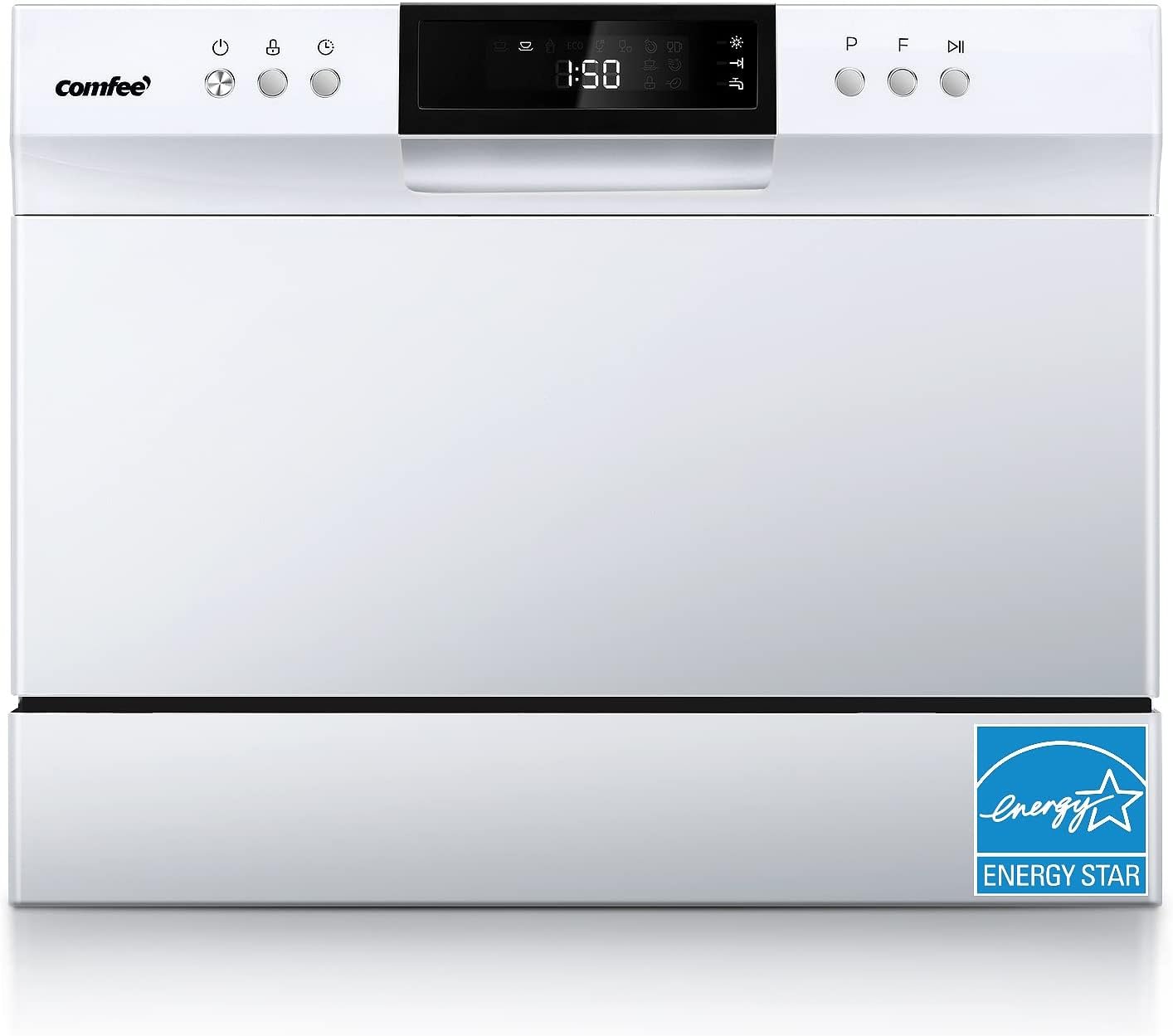
COMFEE’ Portable Mini Dishwasher, Energy Star Certified, for Small-Space Kitchens
COMFEE’’s Portable Mini Dishwasher distinguishes itself among compact cleaning appliances through an Energy Star certification paired with a six-place-setting capacity, a combination aimed squarely at renters, dorm residents, and RV owners who lack space for a full-size built-in unit. Kitchen size and layout play a direct role in dishwasher selection: apartments, studios, and mobile living spaces rarely accommodate a 24-inch built-in model, yet still generate enough daily dishware to make hand-washing tedious. For households of two to three people, a countertop unit like this COMFEE’ portable mini dishwasher, Energy Star rated, offers a middle ground between manual washing and a full-size appliance, provided its wash performance, noise output, and drying results meet daily expectations. Usage frequency matters as much as capacity — a unit run once or twice daily needs efficient water and energy consumption to avoid inflating utility use, while noise sensitivity becomes a bigger factor in studio apartments or open-plan living areas where the kitchen sits close to sleeping or working spaces. This review examines how the COMFEE’ CDC22P2AWW performs against these core buyer priorities using its published specifications, engineering design, and aggregated ownership feedback, without assuming installation or hands-on operation.
Quick Overview
| Feature | Details |
|---|---|
| Product Type | Portable countertop dishwasher |
| Model Number | CDC22P2AWW |
| Manufacturer | Midea (COMFEE’) |
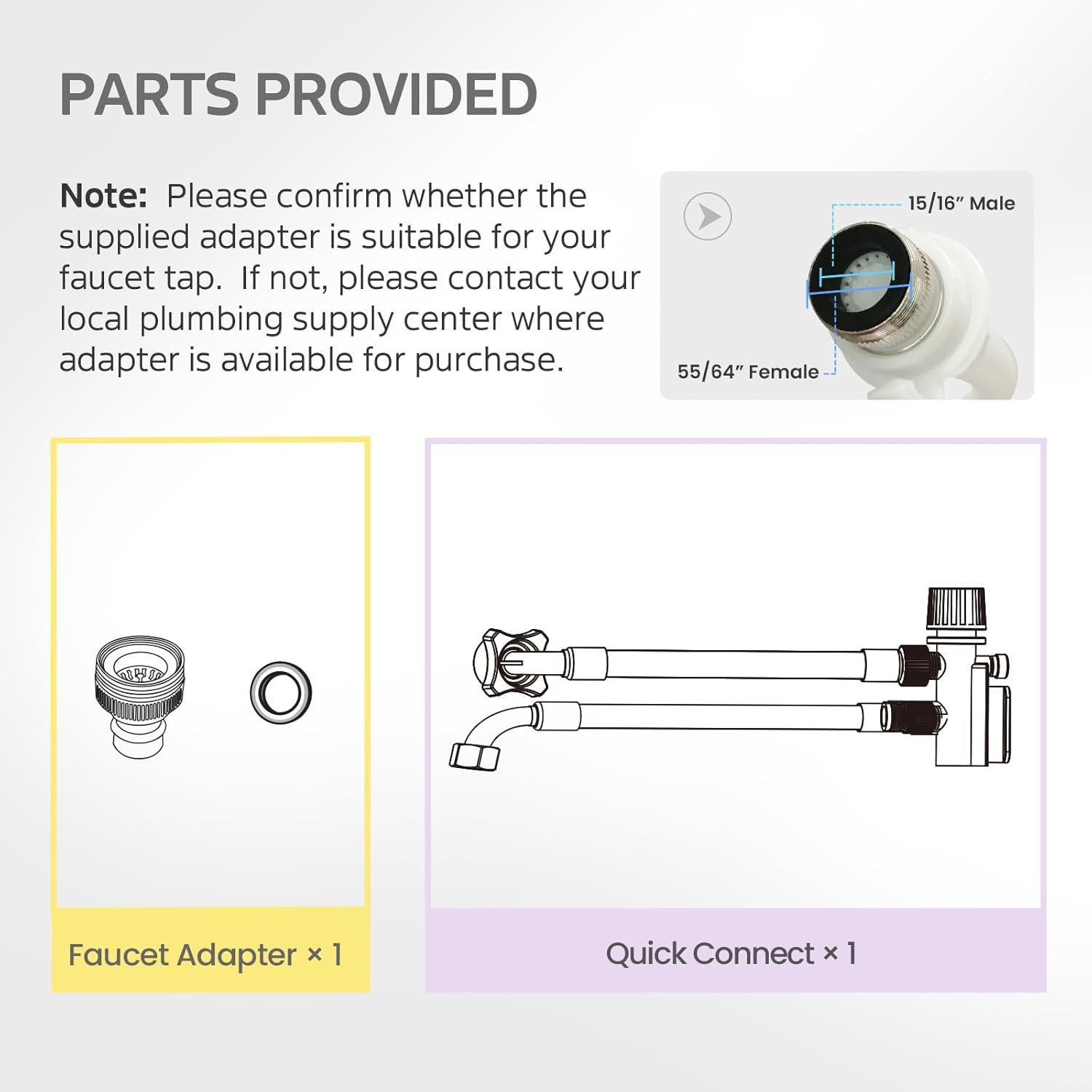
| Capacity | 6 place settings, up to 70 pieces of tableware, plates to 10 inches |
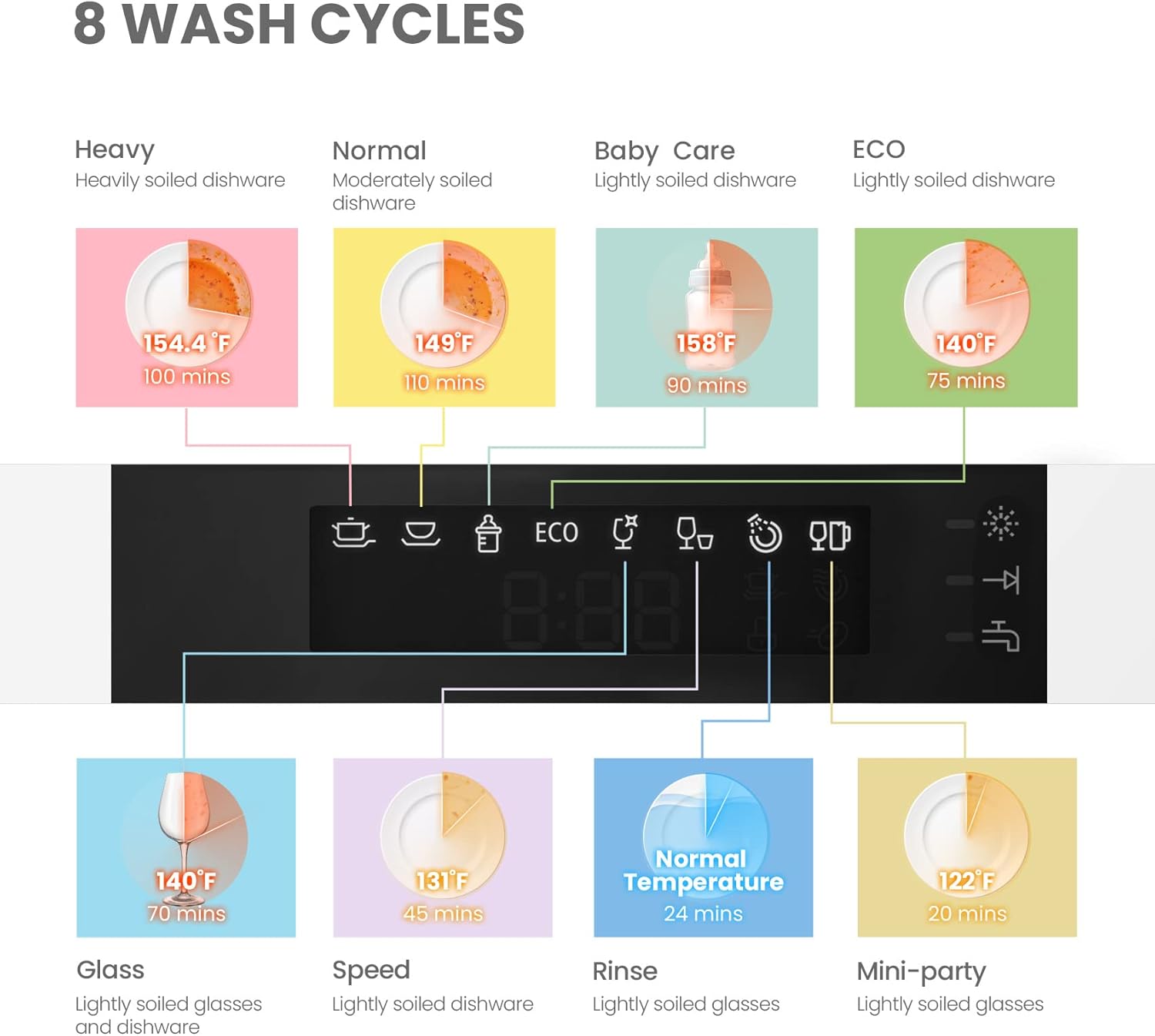
| Wash Cycles | 8 programs: Heavy, Normal, Baby-Care, ECO, Glass, Speed, Rinse, Mini-Party |
| Wash Technology | 12-nozzle, 360-degree spiral spray arm; wash temperature up to 154°F |
| Drying Method | Extra-drying function |
| Noise Level | 49 decibels |
| Energy Certification | Energy Star certified |
| Water Consumption | 2.77 gallons per cycle |
| Dimensions | 19.7″D x 21.6″W x 17.2″H |
| Weight | 46 pounds |
| Installation Type | Countertop; faucet-adapter or plumbed hose connection |
| Controls | Full panel with LED display |
| Special Features | Childproof lock |
| Included Components | Inlet hose, drain hose, faucet adapter, quick connect, user manual |
| Warranty | 1-year manufacturer warranty |
These specifications point to a dishwasher engineered for compact living rather than large family kitchens. The 6-place-setting capacity and 2.77-gallon water draw suit one- to three-person households running a cycle daily or every other day, while the 49-decibel rating makes operation less intrusive in studio layouts than most full-size machines. The dual installation options extend suitability to renters and mobile-living situations where permanent plumbing modification is not practical.

Cleaning Performance and Wash Coverage
Cleaning performance in a countertop dishwasher depends on spray arm design, water pressure, and temperature, since compact units must achieve full coverage within a smaller wash chamber than standard built-in models. The COMFEE’ CDC22P2AWW addresses this through a Heavy Program built around 12 spray nozzles and a 360-degree spiral spray arm, combined with wash water heated to roughly 154°F, a temperature range associated with effective grease and food-residue breakdown in dishwasher engineering generally. Eight distinct programs allow wash intensity to be matched to soil level rather than relying on a single generic cycle, which matters in a compact chamber where over-washing lightly soiled items wastes water and under-washing heavily soiled cookware leaves residue. This program flexibility is a meaningful differentiator among portable dishwashers, many of which offer only two or three cycle options.

Heavy-Duty Wash Cycle and Spray Coverage
The Heavy Program is positioned as the primary cycle for pots, pans, and baked-on food residue, relying on the 360-degree spiral spray arm to distribute water across all six place settings rather than concentrating flow on a single zone. Twelve nozzles spread pressure more evenly than a single rotating arm design, a common limitation in lower-cost countertop dishwashers.
Combined with the 154°F wash temperature, this configuration follows the same grease-cutting principle used in full-size residential dishwashers, where heat softens fats and oils so mechanical spray action can dislodge them. In a compact chamber, this heat-plus-pressure combination compensates for the shorter spray distance and smaller water volume compared to built-in units.
Cycle Options for Different Load Types
Beyond the Heavy Program, the unit offers Normal, ECO, Glass, Speed, Baby-Care, Rinse, and Mini-Party cycles, each calibrated for a different soil level or item type. The Glass cycle uses gentler water pressure and lower temperatures to reduce the risk of thermal shock or etching on stemware, while Baby-Care is built around higher-temperature sanitizing rinses suited to bottles and feeding accessories.
The Speed Program compresses the wash-rinse-dry sequence into roughly 45 minutes, trading some cleaning intensity for turnaround time, which suits lightly soiled daily loads rather than cookware with dried-on residue. This cycle breadth gives users more control over water and energy use per load than a single-cycle competitor would allow.
Capacity, Rack Design, and Place Settings
Countertop dishwashers must balance interior capacity against an overall footprint small enough for a kitchen counter or cupboard, and the COMFEE’ unit’s 6-place-setting rating reflects that compromise. Rated to hold up to 70 pieces of tableware, including plates as large as 10 inches in diameter, the wash chamber is proportioned for the daily output of one to three people rather than a full family meal cycle. At 19.7 inches deep, 21.6 inches wide, and 17.2 inches tall, the unit occupies roughly the footprint of a large microwave, a scale that keeps it viable for dorm rooms and RV galleys where full-size built-in dishwashers cannot fit. Rack layout within that footprint determines how efficiently the rated capacity translates into usable space for mixed load types.
Six-Place-Setting Capacity in Practical Terms
A six-place-setting rating translates to enough capacity for a full day’s dishes for two people, or a single dinner’s worth of plates, bowls, cups, and utensils for a small household of three. This scale positions the unit closer to a supplemental appliance for larger families and a primary dishwasher for singles, couples, or shared living situations such as dorms and small apartments.
Loading a countertop unit to its rated capacity typically requires more deliberate arrangement than a full-size dishwasher, since taller items like pots or serving bowls can occupy proportionally more rack space relative to the chamber’s smaller total volume.
Rack and Basket Configuration
The dishwasher basket is described as stainless steel while the rack structure uses plastic, a common material split in compact dishwashers where stainless resists moisture and detergent exposure in the main wash zone while plastic keeps overall unit weight down. At 46 pounds, the appliance remains light enough for countertop placement or repositioning between a table and a cupboard opening without requiring dedicated cabinetry.
This construction approach mirrors the weight and material logic used across most portable dishwasher designs, where full stainless interiors would add cost and weight disproportionate to the unit’s compact scale.
Noise Levels and Suitability for Open Kitchens
Noise output is a decisive factor for countertop dishwashers because they typically operate on an open counter rather than enclosed behind cabinetry, placing the sound source closer to living and working areas than a built-in unit’s insulated installation. The COMFEE’ CDC22P2AWW is rated at 49 decibels, a level roughly comparable to a quiet conversation or a running refrigerator, and below the 50-55 decibel range typical of many mid-tier built-in dishwashers. Because sound perception is logarithmic, even a few decibels of difference is noticeable in enclosed or open-plan spaces such as studio apartments, dorm rooms, or RVs where the kitchen sits adjacent to sleeping or working areas. This makes the noise rating one of the more relevant specifications for anyone evaluating the unit for small-space or shared living use.

49-Decibel Rating in Context
A 49-decibel rating sits toward the quieter end of the dishwasher category as a whole, though direct comparison depends on measurement standards, which can vary between manufacturers. In practical terms, this level is generally described as background noise rather than a disruptive sound, making daytime or evening cycles less likely to interfere with conversation, phone calls, or media playback nearby.
Without cabinet enclosure to dampen vibration and sound transfer, some of that base noise may carry across a small room more directly than the same decibel rating would in a built-in installation, a tradeoff inherent to countertop dishwasher designs generally rather than specific to this model.
Placement Considerations for Small Spaces
Because the unit sits exposed on a counter or table rather than recessed into cabinetry, placement location affects perceived noise and vibration. Positioning it on a stable, level countertop away from thin partition walls reduces sound transfer into adjacent rooms, which matters in studio apartments and RVs where living and sleeping areas are not separated by full walls.
The 46-pound weight and compact footprint make repositioning between a counter and a stored location straightforward, which can help households run cycles at times or locations that minimize noise disruption in shared or open layouts.
Drying System and Moisture Control
Drying performance in compact dishwashers is generally more variable than in full-size units, since smaller wash chambers hold less residual heat and often lack the heating elements found in larger built-in models. The COMFEE’ portable dishwasher addresses this with an extra-drying function layered onto its wash programs, intended to reduce residual moisture and water spotting on tableware and glassware once the wash and rinse phases complete. Materials also play a role: plastic interior components cool faster than stainless steel, which can leave more condensation on plastic dishware or rack surfaces compared to glass or ceramic items that retain heat longer. Understanding this drying behavior in advance helps set realistic expectations, since compact countertop units generally require occasional manual towel-drying, particularly for plastic items or during humid conditions.

Extra-Drying Function Performance
The extra-drying function is designed to extend heat exposure or add a condensation-drying phase after the main rinse, a common approach in compact dishwashers that lack a dedicated heating element for forced-air drying. This method relies on residual water temperature and chamber ventilation rather than active heat blowers, so drying results depend partly on ambient room temperature and humidity.
Glassware and ceramic dishes typically dry more completely than plastic items under this approach, since plastic loses heat faster and is more prone to retaining surface moisture at the end of a cycle.
Materials That Affect Drying Results
The plastic rack and interior structure, paired with a stainless-steel basket, create differing dry times across a single load. Stainless surfaces shed water more readily due to lower surface tension retention, while plastic components can hold visible droplets longer after the cycle ends, a pattern consistent across most compact dishwashers regardless of brand.
Opening the door slightly at the end of a cycle, a practice common to appliance care generally, can help residual steam escape and reduce spotting on items that remain damp, particularly for households running the Speed Program, which shortens the overall drying window.
COMFEE’ Portable Mini Dishwasher Energy Star Efficiency and Long-Term Reliability
Energy Star certification indicates that the COMFEE’ portable mini dishwasher meets federal efficiency benchmarks for water and electricity consumption relative to its capacity class, a relevant consideration for renters and small-space dwellers who pay utilities directly. Rated water consumption of 2.77 gallons per cycle is notably lower than the 3-4 gallons typical of many full-size Energy Star dishwashers, though the comparison is partly a function of the smaller six-place-setting capacity rather than superior efficiency alone. Long-term reliability in compact dishwashers depends heavily on consistent maintenance, since smaller water reservoirs and filtration paths are more susceptible to mineral buildup and food debris accumulation than full-size systems with larger sumps. A one-year manufacturer warranty is standard for the countertop dishwasher category, reflecting typical coverage terms rather than an above- or below-average commitment relative to competing portable models.
Energy Star Certification and Water Usage
The Energy Star label applied to this model reflects testing against federal efficiency standards for water and energy use per cycle, providing a standardized reference point for comparing the unit against other certified dishwashers regardless of size category. A published rate of 2.77 gallons per cycle supports lower per-load water draw than a typical hand-washing session for a comparable stack of dishes, particularly when a faucet is left running.
For households billed on metered water and electricity, running full loads rather than partial ones maximizes the efficiency benefit implied by the certification, since per-cycle consumption remains largely fixed regardless of load size.
Faucet-Adapter and Plumbed Installation
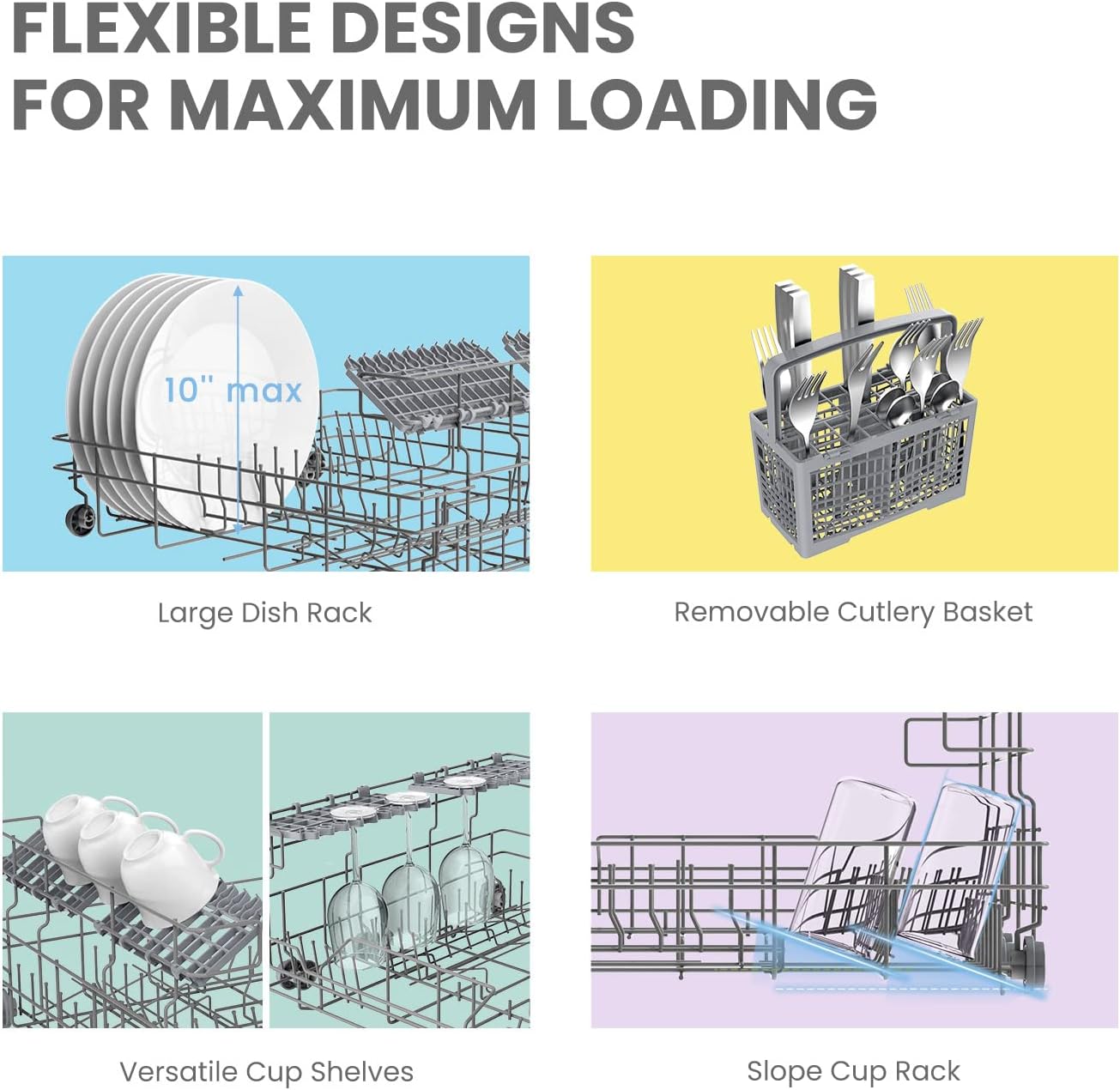
Installation flexibility is one of the more distinguishing characteristics of this model relative to fixed built-in dishwashers. It can connect directly to a kitchen faucet using an included adapter, avoiding permanent plumbing modification, or it can be connected via inlet and drain hoses in a manner similar to plumbed full-size units for a more permanent countertop or cupboard placement.
This dual approach suits renters and mobile-living situations such as RVs, where permanent plumbing changes are often restricted, while still accommodating apartment owners who prefer a fixed, plumbed connection for regular use.
Maintenance, Filter Care, and Durability Expectations
Compact dishwashers rely on a filtration system to trap food particles before water recirculates through the spray arms, and periodic filter cleaning is necessary to maintain wash performance and prevent odor buildup, a maintenance requirement common to the category rather than unique to this model. Mineral deposits from hard water can also accumulate faster in a smaller water reservoir, making occasional descaling relevant for households in hard-water regions.
The plastic-and-stainless-steel construction, childproof lock, and full control panel point to a build oriented toward durability within its intended use case of light-to-moderate daily cycling rather than the higher-volume demands of a large family kitchen.
Pros & Cons
Pros
- Eight distinct wash programs, including Baby-Care and Glass cycles, allow wash intensity and temperature to be matched to specific load types. This flexibility exceeds the two-or-three-cycle offering found on many comparable countertop dishwashers.
- The 360-degree, 12-nozzle spray arm combined with a 154°F wash temperature supports thorough grease removal despite the compact chamber size. This design applies the same heat-and-pressure principle used in larger built-in dishwashers.
- Energy Star certification and a 2.77-gallon water draw per cycle position the unit as comparatively efficient relative to its capacity class. This can be relevant for households monitoring utility consumption in metered rental units.
- A 49-decibel noise rating is quieter than many mid-tier built-in dishwashers, making it more suitable for open-plan or shared living spaces. Lower noise output reduces the likelihood of disrupting nearby activity during a wash cycle.
- Dual installation options, faucet-adapter or plumbed hose connection, extend compatibility to rental units, dorms, and RVs where permanent plumbing changes are not feasible. This flexibility is uncommon among some competing portable dishwasher models.
- A compact 46-pound, countertop-sized footprint allows the unit to be repositioned between a table, counter, or cupboard opening as needed. This portability suits users who need to move the appliance between locations.
- The childproof lock and full LED control panel add a layer of safety and program visibility uncommon in some entry-level countertop dishwashers. These features support use in households with young children.
Cons
- The six-place-setting capacity is intended for one to three people, limiting suitability for larger households that generate higher daily dish volume. Families needing to wash cookware for four or more people may find cycles more frequent.
- Compact drying performance can leave plastic items with residual moisture at the end of a cycle, since the unit lacks a forced-air heating element found in some full-size dishwashers. Manual towel-drying may occasionally be necessary.
- Exposed countertop operation means noise and vibration are not dampened by cabinetry, which can make even a 49-decibel rating more noticeable in very small or open rooms. This is an inherent limitation of countertop-style dishwashers rather than a unique drawback.
- The one-year warranty is standard for the category but shorter than the multi-year coverage sometimes offered on higher-priced full-size dishwasher lines. Extended reliability beyond that window depends on regular maintenance.
- Smaller reservoirs and filtration paths on compact dishwashers generally require more frequent manual filter cleaning and occasional descaling compared to full-size systems, an upkeep requirement that can be overlooked by first-time compact-appliance owners.
Final Verdict: Who This Dishwasher Is Best For (and Who Should Skip It)
The COMFEE’ CDC22P2AWW is best suited to individuals, couples, and small households of up to three people living in apartments, dorms, or RVs where a full-size built-in dishwasher is not physically or logistically feasible. Its combination of Energy Star certification, a 49-decibel noise rating, and dual faucet-adapter or plumbed installation options make it a practical fit for renters who need a flexible, low-noise appliance that can be installed without permanent plumbing changes. The eight-program cycle selection, including dedicated Baby-Care and Glass settings, adds versatility that is uncommon among similarly sized portable dishwashers in the 2026 countertop category.
Households with four or more people, frequent large cookware loads, or kitchens where a built-in dishwasher is already an option are likely better served by a full-size unit with greater capacity and typically longer warranty coverage. Buyers who prioritize completely spot-free drying without any manual towel finishing may also want to weigh compact drying limitations against full-size alternatives with forced-air drying systems. For its intended use case of light-to-moderate daily cycling in space-constrained living situations, the unit’s efficiency, noise profile, and installation flexibility represent a reasonable match for its target audience.

Frequently Asked Questions (FAQs)
How many place settings does the COMFEE’ portable mini dishwasher hold?
The COMFEE’ CDC22P2AWW is rated for six place settings, accommodating up to 70 pieces of tableware including plates up to 10 inches in diameter. This capacity is designed for one to three people rather than large family loads, making it comparable to a supplemental appliance rather than a primary dishwasher for bigger households. Loading efficiency depends on rack arrangement given the compact chamber size and mix of item shapes.
Is the COMFEE’ countertop dishwasher quiet enough for a studio apartment?
At a rated 49 decibels, the unit operates more quietly than many mid-tier built-in dishwashers, which commonly fall in the 50-55 decibel range. Because it sits exposed on a counter rather than behind cabinetry, some sound and vibration may still be noticeable in very small or open-plan rooms. Overall, its noise rating is generally considered favorable for studio apartments and shared living spaces.
Does the COMFEE’ dishwasher need to be connected to plumbing?
No permanent plumbing connection is required. The unit can be connected directly to a kitchen faucet using an included adapter, or installed with inlet and drain hoses similar to a plumbed full-size dishwasher for a more permanent setup. This dual installation approach makes it adaptable to rental units, dorm rooms, and RVs where modifying existing plumbing is not practical or allowed.
How does the extra-drying function work on this dishwasher?
The extra-drying function extends heat exposure or adds a condensation-based drying phase after the rinse cycle, since the unit lacks a dedicated forced-air heating element common in full-size dishwashers. Drying results vary by material, with glass and ceramic items typically drying more completely than plastic dishware. Some manual towel-drying may still be needed, particularly for plastic items or in humid conditions.
What wash cycles does the COMFEE’ CDC22P2AWW offer?
The dishwasher includes eight programs: Heavy, Normal, Baby-Care, ECO, Glass, Speed, Rinse, and Mini-Party. The Heavy Program uses a 360-degree spray arm with 12 nozzles and water heated to roughly 154°F for tougher food residue, while Speed compresses the full cycle to about 45 minutes for lightly soiled daily loads. This variety allows wash intensity to be matched to specific load needs.
Is the COMFEE’ portable dishwasher Energy Star certified?
Yes, the model carries Energy Star certification, indicating it meets federal efficiency benchmarks for water and electricity use relative to its capacity class. Rated water consumption is 2.77 gallons per cycle, lower than many full-size dishwashers, partly reflecting its smaller six-place-setting capacity. This certification is a relevant consideration for renters and small-space households that monitor utility consumption directly, especially in areas where water and power rates fluctuate seasonally.
What maintenance does a compact countertop dishwasher like this require?
Ongoing upkeep centers on the internal filter, which traps food particles and needs manual removal and rinsing on a regular schedule to avoid odor and reduced wash quality, a task typical of the entire countertop dishwasher category. Because the water reservoir is smaller than in a full-size unit, mineral scale from hard water can build up faster, so periodic descaling is worth scheduling in hard-water regions.
Who should avoid buying the COMFEE’ portable mini dishwasher?
Households of four or more people, or those with frequent large cookware loads, are likely better served by a full-size dishwasher with greater capacity. Buyers with a kitchen that already accommodates a built-in dishwasher, or who require completely spot-free drying without manual finishing, may also want to consider full-size alternatives with forced-air drying systems, larger interior volume, and longer manufacturer warranty terms.