
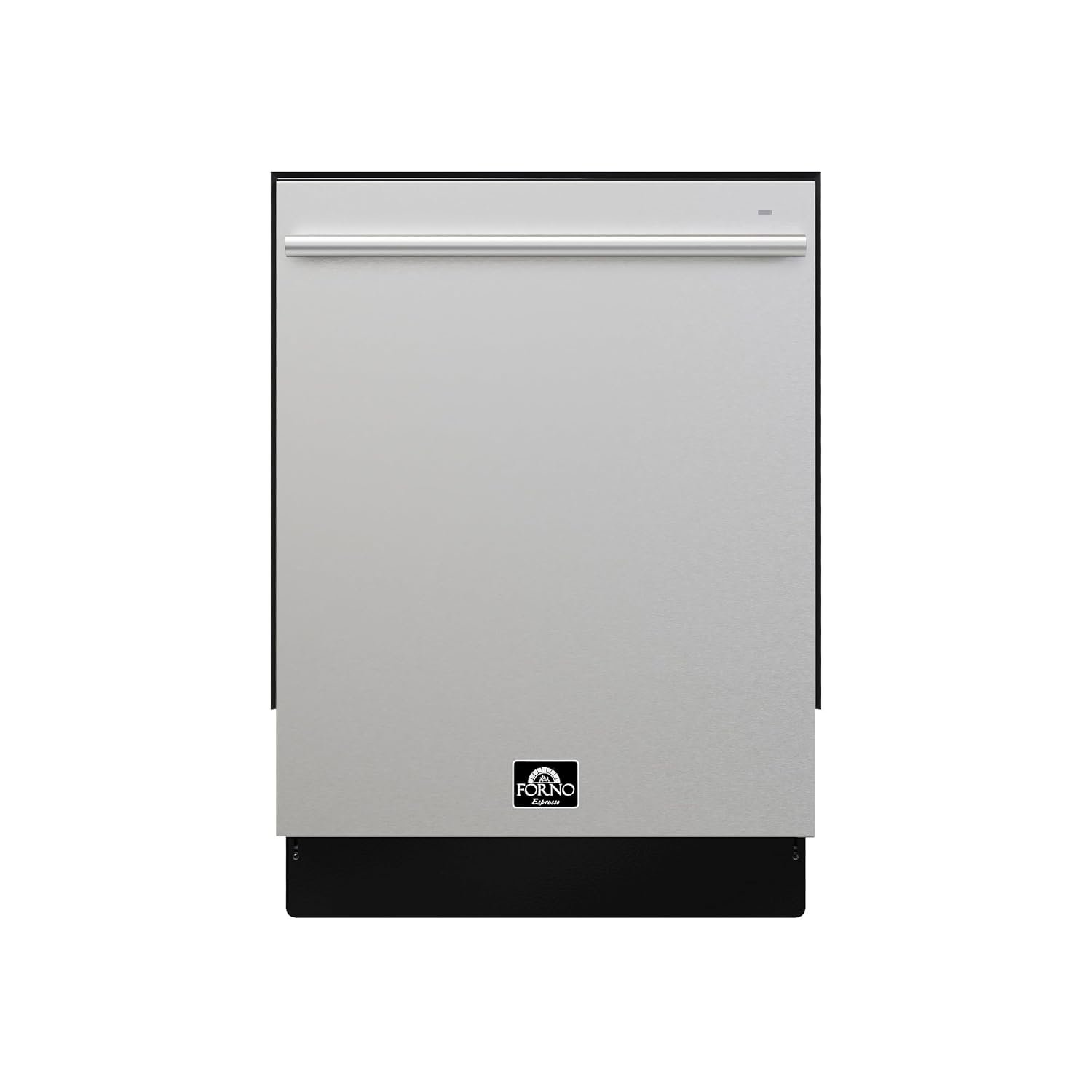
Why choosing the right dishwasher matters for home kitchens
Selecting a dishwasher shapes daily kitchen workflow, noise experience, and long-term utility use. Household size, meal patterns, and kitchen layout influence whether a compact 24-inch built-in model meets needs or a larger unit is required. Cleaning demands range from frequent light cycles for small households to heavy-soil capability for families preparing baked, greasy, or encrusted cookware; spray geometry, wash programs, and filtration directly affect soils removed. Noise sensitivity is critical for open-plan homes where a 52 dB rating determines perceived quietness near living areas. Energy and water efficiency expectations influence monthly utility patterns and environmental footprint; an ENERGY STAR certification signals baseline efficiency but installation and cycle selection also shape usage. Durability, interior materials, and rack flexibility determine long-term value and ability to adapt to glassware, pots, and atypical items. Understanding these factors helps align the Forno Romano 24-inch built-in dishwasher’s specifications—stainless steel tub, seven wash programs, adjustable racks, and 52 dB noise rating—with household priorities and constraints.
Quick Overview
| Feature | Details |
|---|---|
| Dishwasher type | 24-inch built-in, front-control style (stainless steel finish) |
| Capacity / Place settings | Standard 3-rack layout with silverware basket and stemware holder; manufacturer does not state exact place settings |
| Wash programs | 7 wash programs covering delicate, normal, heavy, and specialized cycles |
| Cleaning technology | Multiple spray arms, stainless steel tub, filtration system (manufacturer notes advanced filtration) |
| Drying method | Heating element with fan-assisted drying; hidden heating element noted |
| Noise level | 52 dB rated operation |
| Energy efficiency | ENERGY STAR certified |
| Dimensions / Installation | 24.21 x 23.43 x 33.7 inches; built-in installation intended |
| Warranty | Manufacturer warranty details not specified in product listing |
This quick feature table places the Forno Romano 24-inch dishwasher within the compact built-in category. The stainless steel tub, multiple wash modes, and three-rack configuration make it suitable for households seeking flexible loading and corrosion-resistant interiors, while ENERGY STAR certification and a 52 dB rating position it for energy-conscious consumers and semi-open kitchen layouts. Buyers should confirm place-setting capacity and warranty details with the seller or manufacturer before purchase.

Cleaning performance and wash coverage
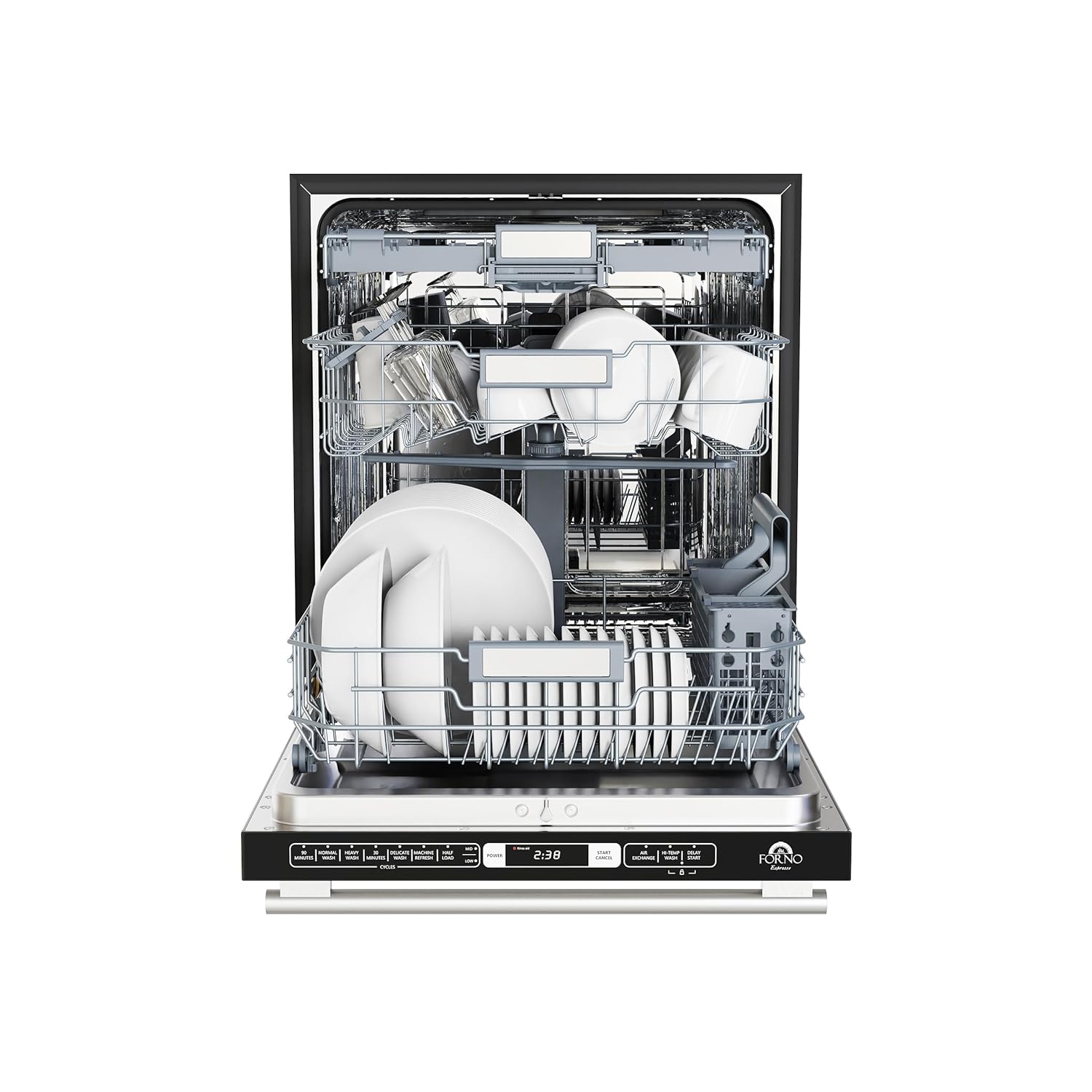
The Forno Romano 24-inch dishwasher pairs seven wash programs with a stainless steel tub and multiple spray arms to provide varied cleaning intensities across cycles. Spray arm placement and rotation dynamics determine coverage: properly positioned upper and lower spray arms plus a possible middle or specialized arm help create overlapping spray patterns that reach pans, glassware, and silverware. A stainless steel tub supports higher-temperature cycles and resists staining while maintaining structural stability for consistent spray alignment. Filtration is described as advanced, which suggests multi-stage screens or traps to prevent redeposition of soils; that filtration, combined with cycle selection and detergent chemistry, will influence soil removal on baked-on or greasy residues. Cycle length, soil sensors (if present), and water pressure interplay with the spray system to determine final cleanliness and rinse effectiveness across diverse loads.
Spray systems, arm layout, and coverage implications
Spray arm number and geometry influence how well detergents and water reach complex load patterns. A lowered or foldable third rack increases spray exposure for the lower racks but can shadow tall items; conversely, three full-length arms or a combination of rotating and targeted jets improve direct coverage for heavy-duty pots. The stainless steel tub supports higher wash temperatures without warping, which enhances detergent activation and soil loosening. Advanced filtration reduces recirculation of large particles; however, fine soils and starches rely on proper cycle selection and adequate water temperature. For heavily soiled pots, a heavy or power-wash program plus a high-temperature rinse will increase mechanical and thermal action to improve results.
Filtration, soil sensors, and detergent interactions
An ‘‘advanced filtration’’ claim typically indicates multi-stage filters and a coarse trap to catch food solids, protecting spray arms and pumps from clogging. Soil-sensing technologies, if included or available in similar models, adjust cycle duration and water usage based on turbidity detection, optimizing cleaning without excessive water or energy use. Detergent formulation and dosing complement mechanical action: enzyme-based detergents are most effective at breaking down protein and starch soils, while alkaline powders and tablets target fats and baked residues. Regular filter maintenance and correct detergent amounts improve consistent cleaning and reduce the likelihood of redeposition or cloudy glassware.
Capacity, rack design, and place settings
Rack design and flexibility dictate how many place settings fit within a 24-inch footprint and how diverse items are accommodated. The Forno Romano configuration lists a three-rack interior with a silverware basket, foldable lower tines, and a stemware holder for fragile glasses; this combination adds loading versatility by allowing alternating tall and wide items. A third rack typically provides space for utensils and shallow items, freeing room on the lower racks for pots and pans. Foldable tines permit nesting cookware while maintaining spray exposure. While the manufacturer does not publish a specific place-setting number, these features align with compact full-size 24-inch units that generally support a medium household’s daily dishware needs. Interior light activation on door opening improves visibility for loading and unloading in low-light kitchens.

Third rack usage and layout trade-offs
A dedicated third rack increases usable capacity for cutlery, spatulas, and small cups while enabling more efficient stacking on the lower racks. That additional level tends to reduce loading time and keeps silverware separated for improved wash access and rinsing. Trade-offs include reduced headroom for very tall stemware when the rack is installed, and potential obstruction of middle spray arms if oversized utensils are placed incorrectly. For households relying on frequent entertaining, the third rack offers faster turnover but requires attention to loading patterns to avoid shadowing or airflow restriction during drying.
Foldable tines, stemware holders, and fragile items
Foldable lower tines create adaptable spaces for cookware and mixing bowls, increasing flexibility for irregularly shaped items. A dedicated stemware holder stabilizes wine glasses to reduce clinking and prevent etching by minimizing lateral movement during wash cycles. Despite these features, delicate glassware can still be sensitive to cycle temperatures and detergent chemistry; selection of a gentle or glassware-specific program and lower-heat drying can help preserve clarity. The stainless steel tub provides consistent temperature stability and fewer contaminants compared with plastic interiors, which benefits fragile items by reducing staining risk.
Noise levels and suitability for open kitchens
A 52 dB rated noise level places this dishwasher in the moderately quiet category. Perceived noise depends on ambient room volume, cabinetry insulation, and proximity to living spaces; in open-concept homes, a 52 dB unit will be noticeable but not intrusive during typical conversation levels. Motor design, insulation panels, and vibration-dampening mounts contribute to noise attenuation—features commonly emphasized in quieter models. For households with baby naps, home offices, or frequent evening activity near the kitchen, the rating suggests acceptable performance but not whisper-quiet operation. Placement relative to living areas, under-counter mounting tightness, and adjacent cabinetry resonance can amplify or dampen perceived sound beyond the nominal decibel rating.

Understanding decibel ratings and real-world perception
Decibel values are logarithmic: a 10 dB increase is perceived roughly as twice as loud, so 52 dB compared to very quiet 44 dB models will seem appreciably louder. Rating context matters: 52 dB often corresponds to the ambient noise of a normal conversation at some distance, so a dishwasher running in a small studio or directly adjacent to a living area may be more intrusive than in a larger, well-separated kitchen. Acoustic performance also depends on the frequency profile of the dishwasher—low-frequency hums travel differently than higher-frequency whines—and on mounting and cabinetry. Buyers sensitive to noise should consider additional soundproofing in cabinetry or selecting a lower-decibel alternative if absolute quiet is a priority.
Installation factors that affect perceived noise
Built-in installation quality impacts vibration transfer and airborne sound. Secure leveling, anti-vibration feet, and correctly installed insulation behind the dishwasher cavity reduce structure-borne noise. Cabinet gaps, loose panels, or sympathetic resonance in thin cabinetry can amplify sound. Professional installation that ensures tight mounting and proper routing of supply and drain lines also helps maintain the rated acoustic performance. While the 52 dB rating provides a useful baseline, actual in-kitchen experience will vary with installation details and room acoustics.
Drying systems and moisture control
The Forno Romano dishwasher combines a hidden heating element with fan-assisted drying and an air exchange system that refreshes the interior periodically to curb odors. Heating elements add thermal energy to vaporize residual moisture, while fans distribute warm air to speed evaporation and reduce water spots on glasses and flatware. A hidden heating element reduces direct exposure of the element to racks and can minimize visible scorching or localized heat stress. The stated air exchange system that cycles the interior every two hours is intended to reduce trapped moisture and odor buildup between cycles; this is likely a low-power circulation or ventilation feature rather than an active dehumidification system.

How heating elements and fans interact with materials
Heating-assisted drying improves results on heat-tolerant items and metalware but can be less desirable for heat-sensitive plastics that may warp. Fan assistance increases convective heat transfer and reduces surface condensation more effectively than passive venting alone. Stainless steel tubs retain heat longer than plastic interiors, supporting drying by radiating heat back onto dishes after cycle completion. However, tightly nested items or recessed areas may still trap moisture; strategic loading and opening the door slightly after the cycle can enhance airflow for stubborn moisture pockets. Use of rinse aids commonly improves bead formation and reduces spotting on glassware regardless of drying method.
Odor control and air exchange considerations
Periodic air exchange helps lower humidity and dissipate trapped odors in the dishwasher cavity, which is beneficial for households running infrequent cycles or storing the unit closed between uses. Odor control systems vary in effectiveness: active charcoal filters or ozone systems (not specified here) offer different mechanisms than simple venting. The two-hour refresh interval suggests a passive or low-energy circulation approach that reduces stagnant air but does not replace routine cleaning of filters and seals. Regular cleaning of door gaskets, filter screens, and interior surfaces remains necessary to prevent biofilm and malodor formation.
Energy, water efficiency, maintenance, and durability
ENERGY STAR certification indicates that the dishwasher meets baseline energy and water efficiency targets for its size class, which typically means optimized cycle durations, soil-sensing features, and controlled water usage. The stainless steel tub enhances long-term durability, resisting corrosion and maintaining thermal stability under frequent high-temperature cycles. Maintenance demands center on routine filter cleaning, inspection of spray arm passages, and periodic gasket and seal care to prevent leaks and performance degradation. Pump and motor components, spray arm bearings, and control electronics represent typical wear points; build quality and parts accessibility influence repairability and total ownership longevity. Buyers should confirm warranty terms and parts availability to assess long-term serviceability.

Water usage patterns and ENERGY STAR implications
ENERGY STAR certification for dishwashers reflects combined energy and water performance during standardized test cycles; actual household water use will vary by cycle selection and load fullness. Short or eco cycles reduce consumption but can extend duration and rely on soil sensors for effectiveness, while heavy cycles use more water and energy to address stubborn residues. Proper loading and route cycles to match soil levels increases cleaning efficiency and avoids unnecessary repeat runs. Municipal water hardness and detergent choice also influence spotting and residue, affecting perceived efficiency when extra rinses are required.
Maintenance tasks, filter care, and long-term durability signals
Routine maintenance includes clearing food traps, rinsing coarse filters, and ensuring spray arm ports remain unobstructed; these tasks prevent recirculation of solids and maintain pump efficiency. Stainless steel interiors suggest better resistance to staining and odor retention compared with polymer tubs; however, regular descaling or manufacturer-recommended cleaning cycles help prevent mineral buildup. Attention to door hinges, racks, and coating on tines (if present) protects against premature wear. Accessibility of common replacement parts—filters, racks, pumps—affects repair costs and downtime, so buyers should verify service networks and warranty coverage for peace of mind.

Pros & Cons
Pros
- Flexible loading with three racks and foldable lower tines. The three-rack design and foldable tines increase usable capacity and allow accommodation of tall pots, stemware, and multiple small items without sacrificing spray exposure. This flexibility supports varied household loads and entertaining needs.
- Stainless steel tub for temperature stability and durability. A stainless steel interior resists staining and can withstand high-temperature cycles, improving thermal retention during wash and drying phases and extending interior longevity compared to plastic tubs.
- ENERGY STAR certified for baseline efficiency. Certification indicates the model meets recognized standards for energy and water use in its class, which benefits environmentally conscious buyers and aligns with efficiency expectations.
- Seven wash programs for versatile cleaning. Multiple cycle options allow selection of delicate, normal, or heavy washes tailored to load soil levels, improving cleaning outcomes across a range of dish types when matched with appropriate detergents.
- Heating element plus fan-assisted drying. Combined thermal and forced-air drying generally improves moisture removal over passive venting, reducing water spots and speeding readiness for unloading.
- Interior lighting for improved visibility. Door-triggered interior light eases loading and unloading in dim kitchens, reducing the chance of missed items or improper placement that can impair wash coverage.
Cons
- 52 dB rating may be noticeable in open-plan spaces. While not loud, a 52 dB profile is not ultralow and can be perceptible during quiet activities; extremely noise-sensitive households may prefer models rated nearer to the mid-40s dB range.
- Place-setting capacity not explicitly stated. The absence of a manufacturer-specified place-setting number requires buyers to estimate capacity from rack features; this can complicate comparisons for buyers prioritizing exact seat-for-seat replacement.
- Warranty details and parts availability unclear. Product listings that omit explicit warranty length or service network information make long-term reliability assessment less certain; buyers should confirm coverage before purchase.
- Air exchange odor control is limited by passive interval refresh. The two-hour refresh suggests a low-energy ventilation approach that helps reduce stale air but does not replace proactive cleaning of filters and seals for odor prevention.
Final Verdict: Who This Dishwasher Is Best For (and Who Should Skip It)
The Forno Romano 24-inch built-in dishwasher suits households seeking a compact, flexible dishwasher with a durable stainless steel tub, multiple wash programs, and energy-conscious credentials. It aligns well with medium-sized families or couples who value adjustable rack layouts, a dedicated third rack for utensils, and a moderate noise performance suitable for semi-open kitchens. The combination of fan-assisted drying and a hidden heating element supports effective moisture reduction for most glassware and metalware, while ENERGY STAR certification provides baseline assurance of efficient water and power use.
This model may be less appropriate for buyers requiring the quietest operation available, exact documented place-setting capacity, or explicit, extensive warranty information at the point of sale. Extremely noise-sensitive settings, such as studio apartments with adjoining sleeping areas or professional home offices adjacent to the kitchen, may prefer models with lower decibel ratings. Prospective purchasers should verify installation dimensions, warranty terms, and local service support prior to purchase to ensure the unit matches long-term maintenance expectations and kitchen layout constraints in 2026.

Frequently Asked Questions (FAQs)
How well does a 52 dB dishwasher perform in an open-plan kitchen?
A 52 dB dishwasher is moderately quiet and will be noticeable but generally not intrusive in open-plan kitchens. Perceived loudness depends on room size, cabinetry resonance, and proximity to living areas; it may be acceptable for families and casual living spaces but could be intrusive in very small or acoustically reflective environments. Installation quality and cabinet insulation can further reduce perceived sound.
Does a stainless steel tub improve cleaning and durability?
Stainless steel tubs improve thermal stability and resist staining compared with polymer interiors. Higher retained temperatures during rinse and wash cycles support detergent activation and drying, while stainless surfaces are less likely to harbor odors or discoloration. Long-term durability is typically better, though seals, racks, and mechanical components still require routine maintenance.
What maintenance does the filter system require?
Filters typically need regular rinsing of coarse screens and occasional removal for deeper cleaning to prevent clogging and recirculation of solids. Inspecting spray arm ports and traps for food debris helps maintain pump efficiency and spray coverage. Following manufacturer cleaning intervals and using recommended cleaning cycles or descalers for hard water extends component life.
How effective is fan-assisted drying combined with a heating element?
Fan-assisted drying with a heating element combines convective airflow and thermal energy to speed evaporation and reduce surface condensation. This approach generally improves drying on metal and heat-tolerant items and reduces spotting on glassware when combined with rinse aids. Heat-sensitive plastics may still retain some warping risk if high-temperature cycles are used.
What does ENERGY STAR certification indicate for dishwashers?
ENERGY STAR certification signifies the dishwasher meets set energy and water efficiency standards for its size class under standardized testing. It indicates better-than-standard performance for energy and water use during representative cycles, but actual household consumption will vary based on cycle choice, load fullness, and water hardness.
Is a third rack worth having in a 24-inch dishwasher?
A third rack adds dedicated space for utensils, spatulas, and small items, freeing lower-rack capacity for plates and pots. It can improve loading efficiency and reduce cycle counts for small loads. However, it reduces vertical clearance for very tall items and requires mindful loading to avoid obstructing spray coverage from middle spray arms.
How should tap water hardness affect dishwasher use?
Hard water increases mineral deposits and spotting on glassware and may reduce detergent effectiveness, prompting the need for rinse aid, descaling cycles, or water-softening solutions. Regular filter cleaning and occasional descaling are advisable in hard-water areas to maintain spray arm performance and prevent buildup within the tub and heating elements.
What should be confirmed before buying a built-in dishwasher?
Confirm cavity dimensions, installation requirements, and door clearance to ensure a proper fit. Verify warranty length and service access in the buyer’s area, check place-setting capacity if critical, and confirm whether necessary installation hardware is included. These steps reduce the chance of installation issues or unexpected service limitations.