
Introduction
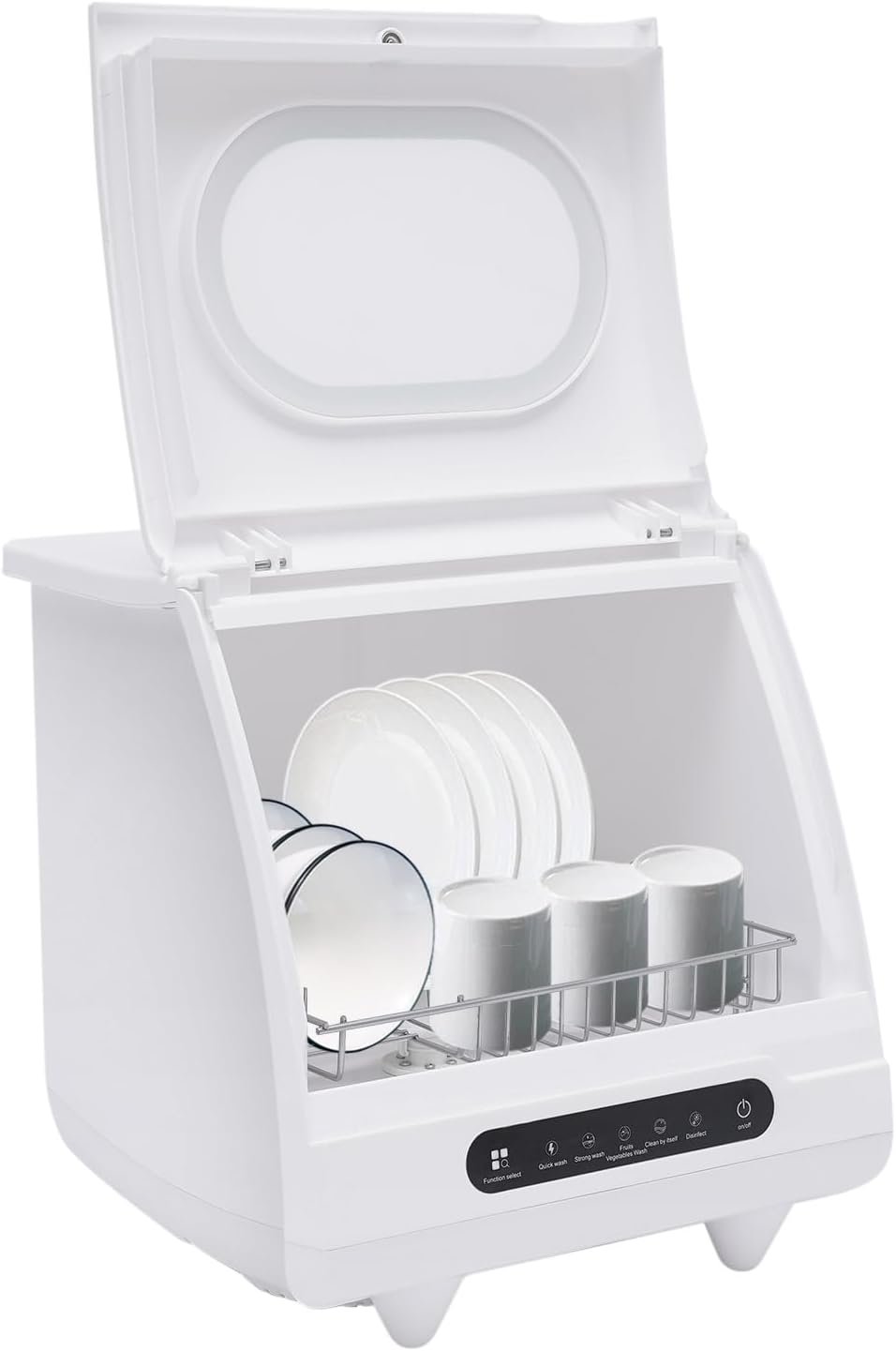
Choosing the right dishwasher matters for household workflow, noise levels, and long-term utility in compact kitchens. For apartments, RVs, or households with limited counter space, a countertop unit that balances cleaning performance, water efficiency, and quiet operation can reduce daily dishwashing time without demanding a full kitchen remodel. Selection should consider typical load size, frequency of use, and sensitivity to operational sound in open-plan living areas. Performance expectations hinge on spray coverage, filtration, and cycle variety, while durability depends on materials, motor design, and serviceability. Energy and water use are particularly relevant for renters and small households; lower per-cycle water consumption is advantageous but must be weighed against cycle effectiveness. Maintenance requirements such as removable filters, accessible hoses, and simple controls influence whether a compact dishwasher will be a practical addition. The following analysis uses manufacturer specifications, listed materials, and industry appliance principles to outline strengths, limitations, and buyer considerations for a compact, 6-place setting countertop dishwasher.
Quick Overview
| Feature | Details |
|---|---|
| Dishwasher type | Countertop portable dishwasher |
| Capacity / Place settings | Up to 6 full place settings; compact layout |
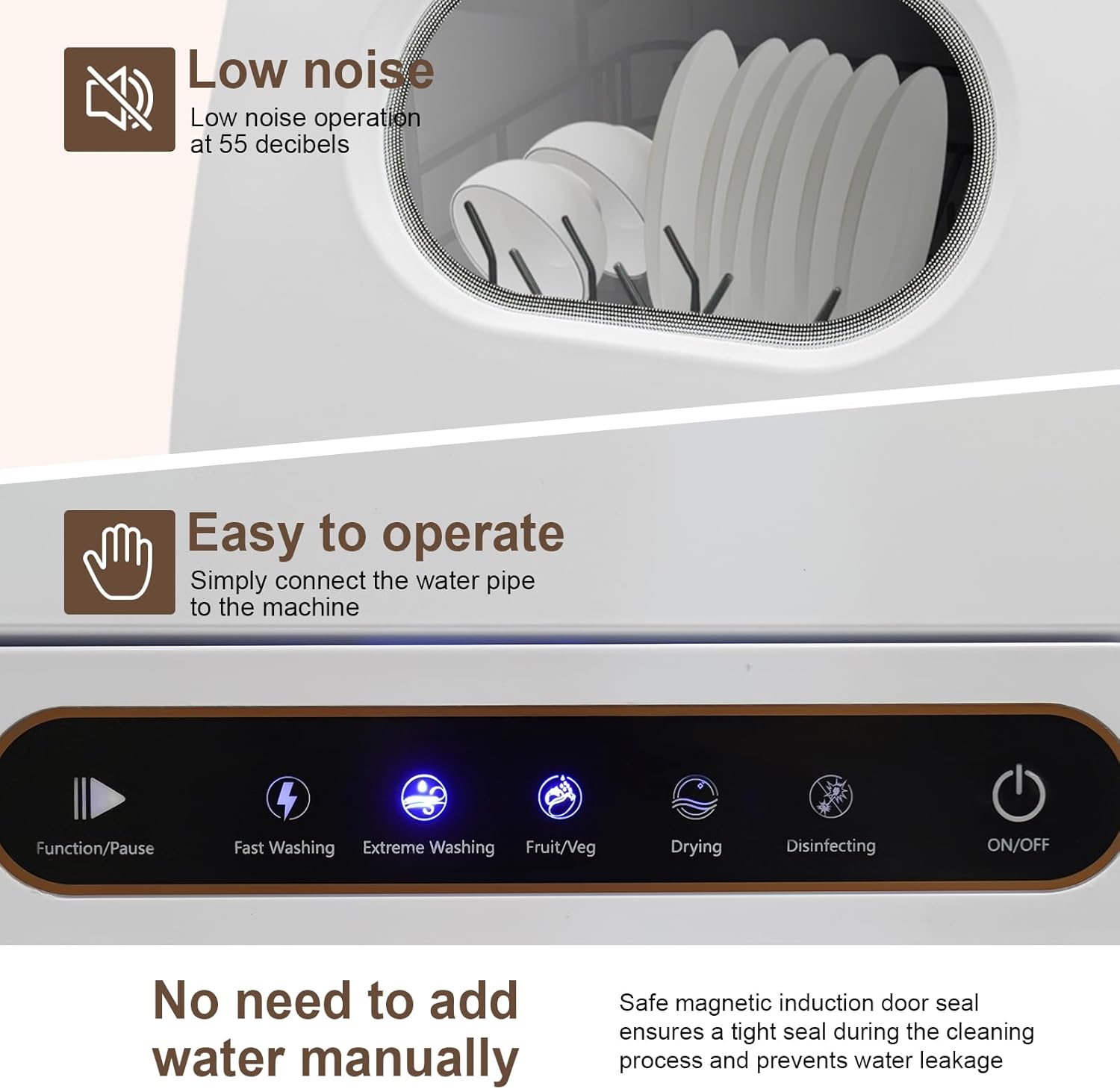
| Wash cycles | 5 intelligent wash programs (incl. Quick Wash 19 min) |
| Drying method | High-temperature rinse and air-dry approach; no dedicated heated-dry specification listed |
| Noise level | 55 decibels (manufacturer listed) |
| Energy / Water use | 800W motor, 110V; 1.32 gallons per cycle (manufacturer listed); no ENERGY STAR certification stated |
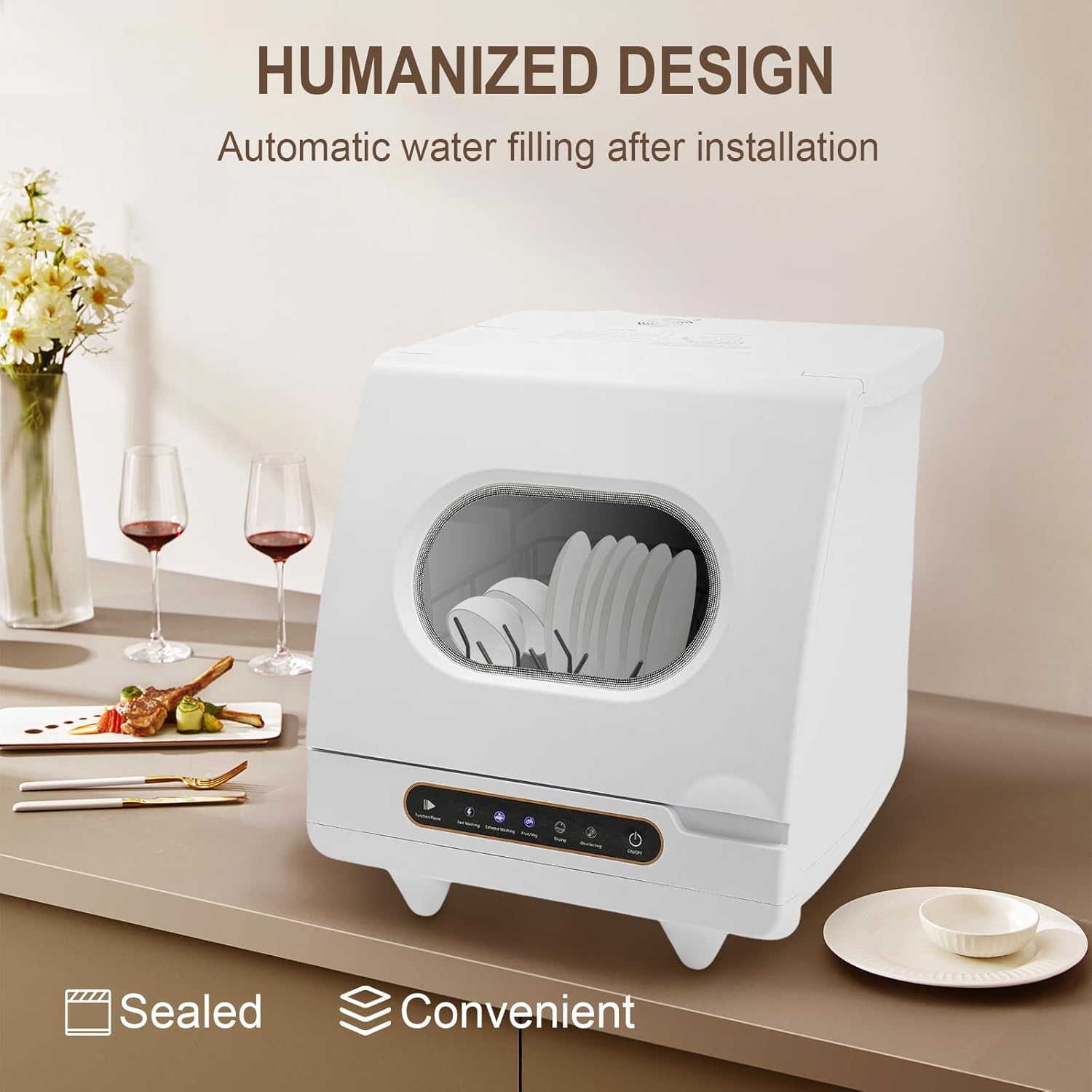
| Dimensions / Installation | 15.6″D x 15.4″W x 19.9″H; countertop installation with included inlet and drain hoses |
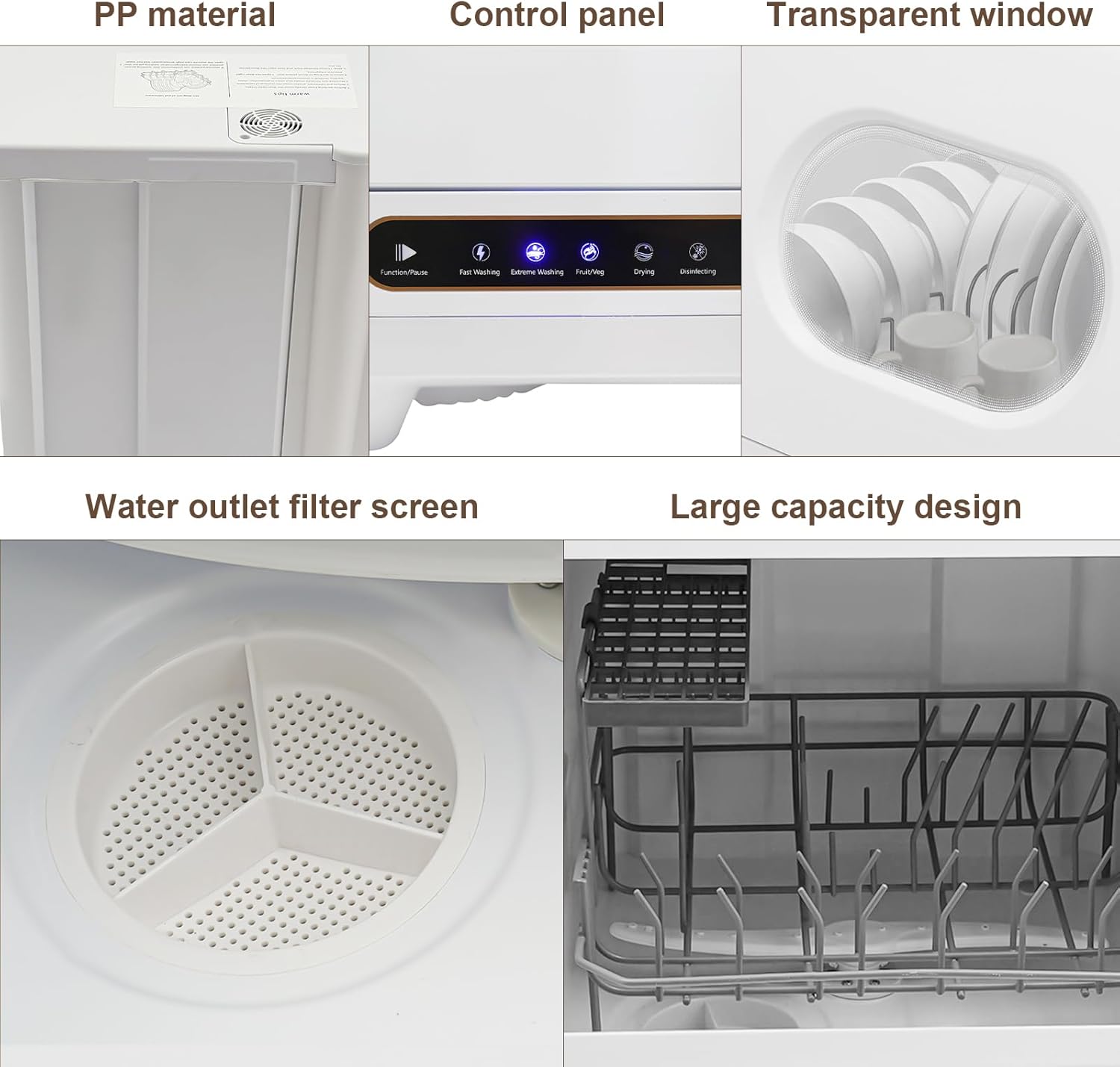
| Materials | ABS, Polypropylene (PP), Stainless Steel components |
| Included components | Dishwasher unit, water inlet hose, drain hose, English manual, mounting/installation accessories |
| Warranty | Not specified by manufacturer |
This quick summary maps the product to small-space households and mobile living. The compact footprint and six-place capacity suit single occupants, couples, and short-term stays where counter access is available. The low per-cycle water use and short Quick Wash option address frequent light loads, while listed materials and component inclusions indicate convenience for installation and routine upkeep. The absence of an ENERGY STAR listing and an unspecified dedicated drying system are notable when comparing to full-size or certified-compact alternatives.
Cleaning performance and wash coverage
The dishwasher’s cleaning effectiveness depends on spray arm design, cycle temperatures, water flow, and the five programmed cycles including a 19-minute Quick Wash. Spray coverage in compact countertop units typically uses one or two rotating spray arms or fixed nozzles positioned to reach stacked plates, cups, and utensils; coverage effectiveness is influenced by rack layout and item placement. High-temperature cycles can improve removal of food soils and reduce bacterial load through thermal sanitization, provided the thermostat and heater maintain adequate rinse temperatures. Filtration design and the removable filter play a role in reusing wash water within a cycle, preventing redeposition of debris on items. For users prioritizing removal of baked-on residue, cycle selection and pre-rinse practices will affect outcomes in this form factor.
Spray system and cycle variety
Spray dynamics in compact countertop dishwashers are constrained by internal volume and pump capacity; the listed 800W motor and configuration suggest a design optimized for moderate flow and pressure suitable for typical daily soiling. Multiple cycles allow tailoring of spray duration and intensity: shorter cycles reduce runtime for lightly soiled loads, while extended or high-temperature cycles increase soak and spray intervals to address stuck-on food. Spray arm geometry and nozzle placement determine direct coverage to vertical plates and angled cups; improper loading can block jets and reduce efficacy. Users should follow manufacturer loading guidance to maintain unobstructed spray paths and maximize cycle-specific performance.
Filtration and high-temperature sanitization
A removable filter is indicated in the product features, which is standard for countertop units to trap solids and protect pump components. Routine access for debris removal preserves water clarity within a cycle and prevents particulate redeposition. High-temperature wash options rely on the unit’s heater to reach and sustain elevated rinse temperatures; this assists in grease breakdown and enhanced microbial reduction compared to cold rinses. However, the absence of a certified sanitation claim means temperature control and cycle validation are manufacturer-stated features rather than third-party verified metrics. Proper detergent selection and pre-rinsing of heavily soiled cookware remain important for best results.
Capacity, rack design, and place settings
Capacity and rack configuration dictate what a compact dishwasher can accommodate on a typical cycle. The listed 6-place setting capacity aligns with many countertop models that prioritize vertical plate storage and limited cup and utensil accommodation. Rack geometry, tine spacing, and any removable inserts influence the ability to fit larger items such as small pots or tall glasses. Compact units often rely on efficient stacking and multi-use utensil baskets rather than full adjustable racks; this can impact flexibility for non-standard dishware. Users with diverse cookware or larger serving pieces will need to evaluate load compatibility against the specified internal layout. Knowing exact clearance heights and basket dimensions helps to predict real-world loading patterns for common household items.

Plate, cup, and cookware organization
Organizational features such as plate tines, cup ledges, and utensil baskets affect both capacity and wash results. Narrow tine spacing is useful for standard plates but may restrict thicker cookware. Cup placement near upper spray trajectories increases cleaning efficiency but depends on interior height; fragile glassware should be oriented to avoid contact with rotating elements. Lack of a folding or adjustable rack limits custom layouts, so a fixed configuration emphasizes routine loads of standard tableware. Users who frequently wash mixed loads—plates plus small pans—should consider the trade-offs between convenient capacity and the need to run multiple cycles for larger or awkward items.
Utensil and small-item accommodation
Countertop dishwashers manage utensils through dedicated baskets or trays; the listed inclusion of utensil handling suggests space for forks, knives, spoons, chopsticks, and small kitchen tools. Basket location relative to spray arms affects how effectively detergents and hot water reach utensil surfaces. Crowding utensils can shield adjacent items and impede drainage; separating cutlery and orienting handles down or following manufacturer guidance improves access to jets. For meal prep tools or fragile serving pieces, handwashing may still be recommended if items do not fit comfortably or risk contact with moving parts during cycles.
Noise levels and suitability for open kitchens
A manufacturer-listed noise level of 55 decibels positions the unit within the moderate range for countertop appliances. Acoustic perception depends on ambient room volume and open-plan layouts: 55 dB is comparable to a normal conversation and can be noticeable in quiet living areas. The claimed pure copper motor suggests an emphasis on smoother operation and potential longevity, though noise is a function of motor mountings, pump design, and internal insulation. For bedrooms adjacent to kitchens or small studio apartments, placement on a stable counter and rubber feet can reduce vibration transmission. Users sensitive to operational sound should consider cycle timing, choosing quieter and shorter programs when proximity to living spaces is a concern.

Interpreting the 55 dB rating in practice
Decibel ratings are measured under standardized conditions and can vary in home environments; the listed 55 dB indicates typical operating sound but not peak transient noise during pump startup or drain. Acoustic impact depends on cabinetry resonance, counter material, and room acoustics. In open-plan settings, sound may carry further compared with enclosed kitchens. Time-of-day use and overlap with quiet activities (sleep, phone calls) should guide when to run the dishwasher. If evening or overnight use is desired, selecting the shortest quiet cycle and placing the unit away from direct sleeping areas will mitigate interference.
Motor design and vibration control
A pure copper motor is often associated with effective electrical conductivity and heat dissipation in small appliances, which can contribute to consistent performance. Vibration control relies on secure mounting, balanced rotating components, and dampening materials within the chassis. The combination of ABS and stainless steel materials affects resonance characteristics: ABS panels may absorb some vibration while stainless steel interior surfaces reflect sound. Over time, loose fittings or worn damping pads can increase perceived noise, so periodic checks of mounting and hose connections help maintain the original acoustic profile.
Energy and water efficiency expectations, and drying systems
The dishwasher lists 1.32 gallons per cycle and an 800W motor at 110V, which indicates low per-cycle water use compared with typical handwashing volumes. Energy consumption depends on cycle length, heater duty cycle, and motor load; shorter Quick Wash cycles reduce runtime energy but may not reach the high temperatures of extended sanitizing cycles. No ENERGY STAR certification is stated, so energy efficiency should be inferred from motor wattage and cycle design rather than guaranteed third-party performance. Drying is described via high-temperature cleaning and air-dry tendencies; without a specified active heated-dry element, residual moisture can remain on items and plasticware. Users prioritizing complete dryness should expect some degree of towel drying or open-lid ventilation after cycle completion.
Water use and cycle selection trade-offs
The compact 1.32-gallon figure represents low volume per cycle and suits frequent, light loads. High-temperature or long soak cycles will use more energy to maintain elevated temperatures but may still consume a modest amount of water. For heavily soiled items, multiple cycles or pre-soaking may be necessary, which increases cumulative water and energy use. Selection of the appropriate program—quick rinse versus intensive—affects both cleanliness and resource use. Households balancing conservation with cleaning needs should plan cycle selection based on soil level rather than defaulting to the longest program.
Drying methods and moisture control limitations
Without a dedicated heated-dry specification, drying relies on hot rinse temperatures and subsequent air exchange. Stainless steel interiors retain heat better than plastic, aiding in evaporation, while plastic components cool quicker and can leave droplets. The transparent flip-up lid facilitates venting after the cycle to speed drying but may release heat and humidity into the kitchen. For glassware and plastic containers, some spotting or residual moisture is expected; a short manual towel-dry or brief open-lid airing period improves final dryness. Users who require fully dry, glass-clear results after every cycle should note this as a potential limitation of the design.
Maintenance, durability, and serviceability
Maintenance expectations center on the removable filter, accessible hoses, and durable materials listed—ABS, polypropylene, and stainless steel interiors. Regular cleaning of the filter prevents clogging and guarding the pump from debris, while periodic inspection of inlet and drain hoses reduces risk of kinks or leaks. The relatively light item weight (13.9 pounds) and included installation accessories simplify repositioning and servicing but may also reflect lighter internal components compared with built-in units. Long-term reliability depends on motor construction, pump seals, and the quality of electrical controls; all are influenced by manufacturing tolerances and component sourcing. Warranty information is not specified, so buyers should consider retailer policies and spare parts availability when evaluating serviceability.
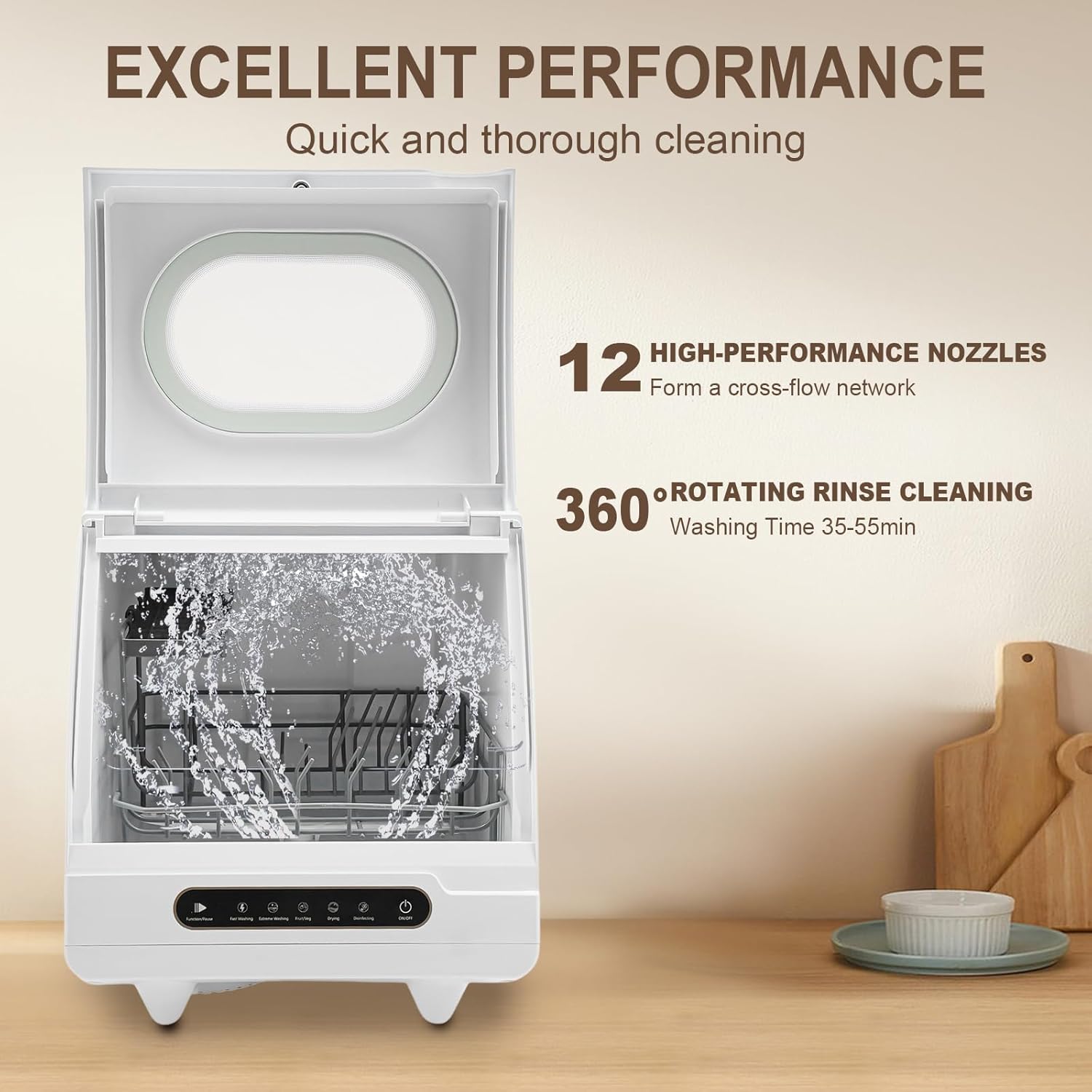
Filter access and routine upkeep
A removable filter is an expected feature on countertop dishwashers, facilitating removal of trapped food particles and easy rinsing. Routine maintenance includes clearing the filter after heavy loads and checking spray arms for blockage. Exterior and interior surfaces made from ABS and stainless steel are resistant to common household corrosion but require cleaning to prevent detergent buildup and mineral deposits, especially in areas with hard water. Using recommended detergents and occasional descaling cycles preserves component life and maintains spray performance.
Durability signals and replacement considerations
Materials such as stainless steel for the inner tub typically indicate better heat retention and corrosion resistance compared with full-plastic interiors. ABS and polypropylene external parts balance cost and impact resistance but may show wear over extended service life under high-temperature cycles. The pure copper motor listing suggests attention to motor core materials, though longevity is a function of thermal management, seals, and assembly quality. In the absence of manufacturer warranty details, consumers should review return policies and service networks, and consider spare-part accessibility for pumps, hoses, and control panels when planning long-term ownership.
Pros & Cons
Pros
- Compact footprint with six-place setting capacity: The countertop form factor and specified dimensions suit apartments, RVs, and small kitchens where built-in units are not feasible; the ability to handle six place settings supports single households or couples without frequent full-size loads.
- Five wash programs including a 19-minute Quick Wash: Multiple cycles provide flexibility for light rinses, standard washes, and more intensive cleaning, allowing users to match energy and time commitments to soil levels.
- Low per-cycle water use (1.32 gallons): The stated water consumption is lower than many handwashing equivalents, making it attractive for water-conscious users and environments with limited water availability.
- Materials and included hoses for straightforward installation: Stainless steel interior elements combined with ABS and PP external materials balance durability and weight; included inlet and drain hoses simplify setup in typical countertop arrangements.
- Removable filter for easier maintenance: A serviceable filter reduces the chance of pump blockages and facilitates routine cleaning to sustain wash performance.
- Transparent flip-up lid for cycle monitoring: The windowed lid allows visual confirmation of cycle progress without interrupting operation, aiding user confidence and timing.
Cons
- No ENERGY STAR certification listed: Energy efficiency is not third-party validated, so buyers seeking certified low-energy appliances may prefer other models with verifiable ratings.
- Drying system not explicitly specified: The absence of a dedicated heated-dry method likely leaves residual moisture on some items, requiring post-cycle towel drying or open-lid airing for complete dryness.
- Limited capacity for large cookware: The compact rack design and fixed dimensions restrict washing of large pots, roasting pans, and oversized serving ware, making separate handwashing necessary for those items.
- Noise level may be noticeable in very quiet spaces: A 55 dB rating is moderate for countertop appliances and can be perceptible in adjacent living or sleeping areas during operation.
- Warranty and service details not provided: Lack of specified warranty information can complicate long-term ownership decisions and assessment of replacement part availability.
Final Verdict: Who This Dishwasher Is Best For (and Who Should Skip It)
This countertop dishwasher aligns with the needs of compact living situations: single occupants, couples, short-term rentals, and RV users who require a plug-and-play dishwashing solution with modest capacity. The low per-cycle water use, quick program option, and included installation accessories make it a practical choice for frequent small loads where counter access exists and a built-in unit is not an option. Buyers seeking a product for standard tableware and glassware will find the six-place capacity and removable filter conducive to routine maintenance and efficient cleaning cycles.
Conversely, households that regularly wash large cookware, require certified energy efficiency, or prioritize fully dry dishes straight from the cycle should consider competing units with larger internal capacity, ENERGY STAR certification, or dedicated heated-dry systems. Noise-sensitive consumers in studio layouts or those requiring overnight quiet operation might also prefer lower-decibel alternatives or built-in solutions with superior insulation. Overall, the unit offers an accessible countertop option for space-constrained users who value compactness and water efficiency over large-load flexibility and advanced certified efficiency.
Frequently Asked Questions (FAQs)
How many place settings will this countertop dishwasher hold?
The unit is specified to accommodate up to six full place settings, which typically includes plates, utensils, cups, and chopsticks. Capacity depends on rack geometry and item sizes; oversized pans or tall glasses may reduce usable place settings and require separate washing.
Is the 55 dB noise rating suitable for open-plan living spaces?
A 55 dB rating is comparable to normal conversation and may be noticeable in very quiet open-plan areas. Placement on a stable counter, timing cycles away from quiet activities, and using shorter quieter programs can reduce perceived disruption in living or sleeping zones.
Does this dishwasher include a heated drying cycle?
Manufacturer information emphasizes high-temperature washing but does not specify a dedicated heated-dry system. Drying typically relies on residual heat from the hot rinse and air-drying; some residual moisture may remain on plastics and glasses after the cycle.
How water-efficient is this model compared with handwashing?
The dishwasher lists 1.32 gallons per cycle, which is lower than many handwashing scenarios for equivalent loads. Efficiency gains depend on load size and the need for multiple cycles; matching cycle selection to soil level maximizes water conservation benefits.
What maintenance is required to keep the dishwasher operating well?
Routine maintenance includes emptying and rinsing the removable filter, checking spray arms for blockages, and inspecting inlet and drain hoses for kinks or buildup. Periodic interior cleaning and descaling in hard-water areas preserves spray performance and component life.
Can this unit handle large pots and baking sheets?
The compact dimensions and fixed rack configuration limit compatibility with large pots and oversized baking sheets. While small cookware and standard plates fit the six-place layout, larger items may not fit and will likely require handwashing.
Is professional installation required for this countertop dishwasher?
The product includes a water inlet hose and drain hose, and is designed for countertop installation without built-in plumbing modifications. Typical setup involves connecting the provided hoses to a faucet or adapter; professional installation is generally not necessary for standard countertop configurations.
Are there any energy certifications for this model?
No ENERGY STAR or other third-party energy efficiency certification is listed in the product specifications. Energy expectations should be based on the 800W motor rating and cycle usage rather than certified performance metrics.