
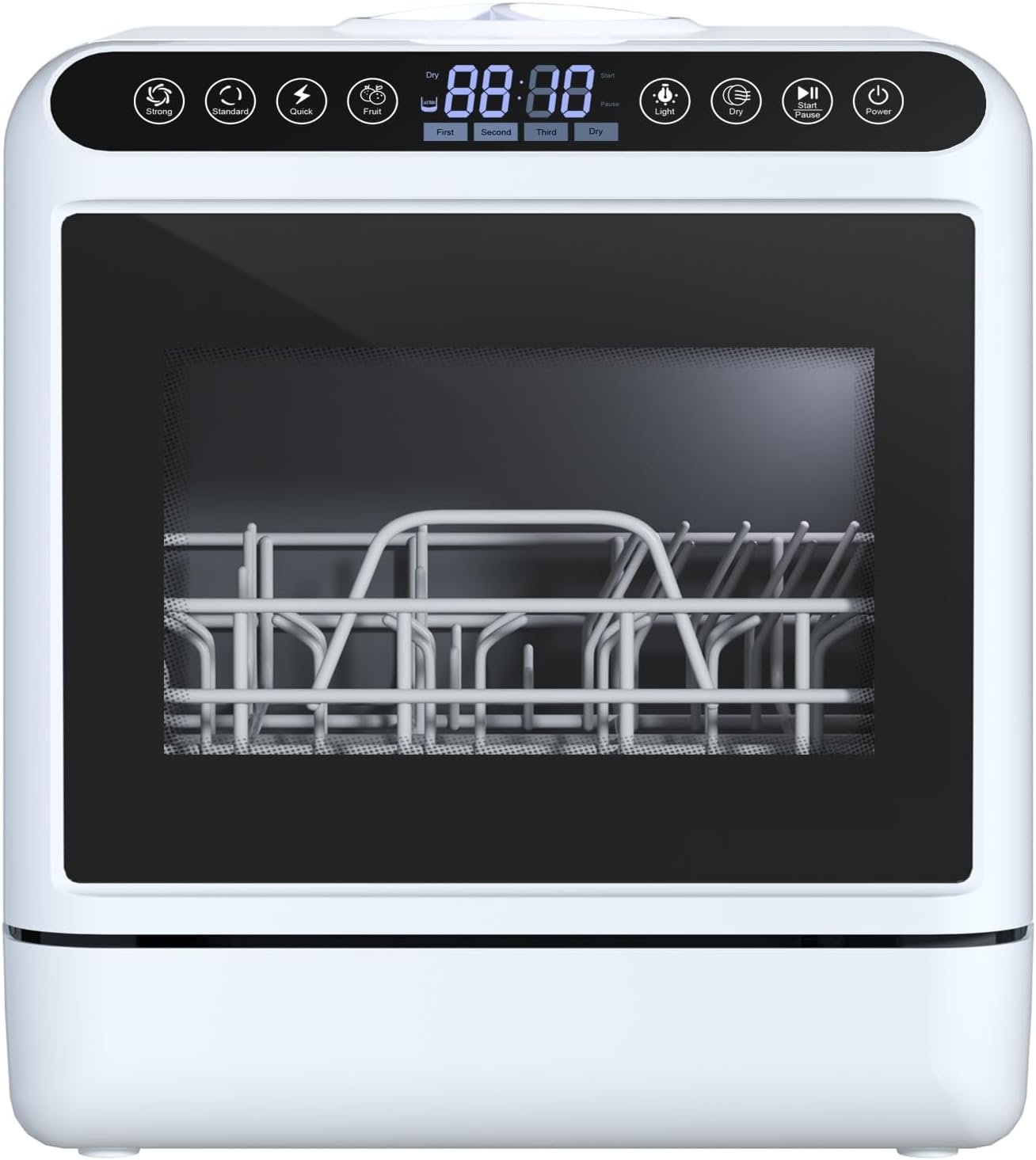
Choosing the right countertop dishwasher for small kitchens
Selecting an appropriate countertop dishwasher matters because the device must balance cleaning performance, space constraints, and routine household needs. Small households, apartment kitchens, and vacation homes often rely on portable units that avoid permanent plumbing changes while still handling regular loads. Key buyer considerations include the ability to remove baked-on food and sterilize items used by children, fit typical plate sizes, and operate at noise levels compatible with open living spaces. Energy and water efficiency expectations are important when the unit uses a built-in tank rather than a direct faucet feed, because tank capacity determines how many cycles can run before refilling. Frequent users should weigh cycle time variety and durability of plastic components against the convenience of a compact, plug-and-play machine. Noise sensitivity, drying performance, and maintenance requirements such as filter access and spray-arm cleaning will influence long-term satisfaction more than headline features alone.
Quick Overview
| Feature | Details |
|---|---|
| Dishwasher type | Countertop / Portable (no permanent hookup required) |
| Water capacity / place settings | Built-in 5 L water tank; manufacturer states capacity to hold over 40 pieces of cutlery; fits up to 11.8-inch plates with upper basket removed |
| Wash cycles and cleaning technology | 5 programs: Heavy, Normal, Delicate, Quick (28 minutes), Fruity; 3 high-pressure spray arms providing 360° coverage; claimed high-temperature and steam cleaning |
| Drying method | Air-dry function with delayed-start scheduling; LED indicator |
| Noise level rating | Not specified by manufacturer |
| Energy & water efficiency certifications | Not specified by manufacturer; features describe an “eco-friendly dual heating system” |
| Dimensions & installation type | Countertop form factor; portable faucet connection included; built-in tank allows placement away from sink |
| Materials & weight | Plastic construction; item weight listed at 15000 grams |
| Warranty | Not specified by manufacturer |
This summary translates manufacturer specifications into practical terms: the unit is aimed at users needing a compact countertop solution with flexible water supply modes, modest plate capacity when configured, and program options for quick or intensive cleaning. The built-in 5 L tank provides placement flexibility, while the three spray arms and program range indicate a focus on coverage and consumer convenience rather than heavy commercial loads.

Cleaning performance and spray coverage
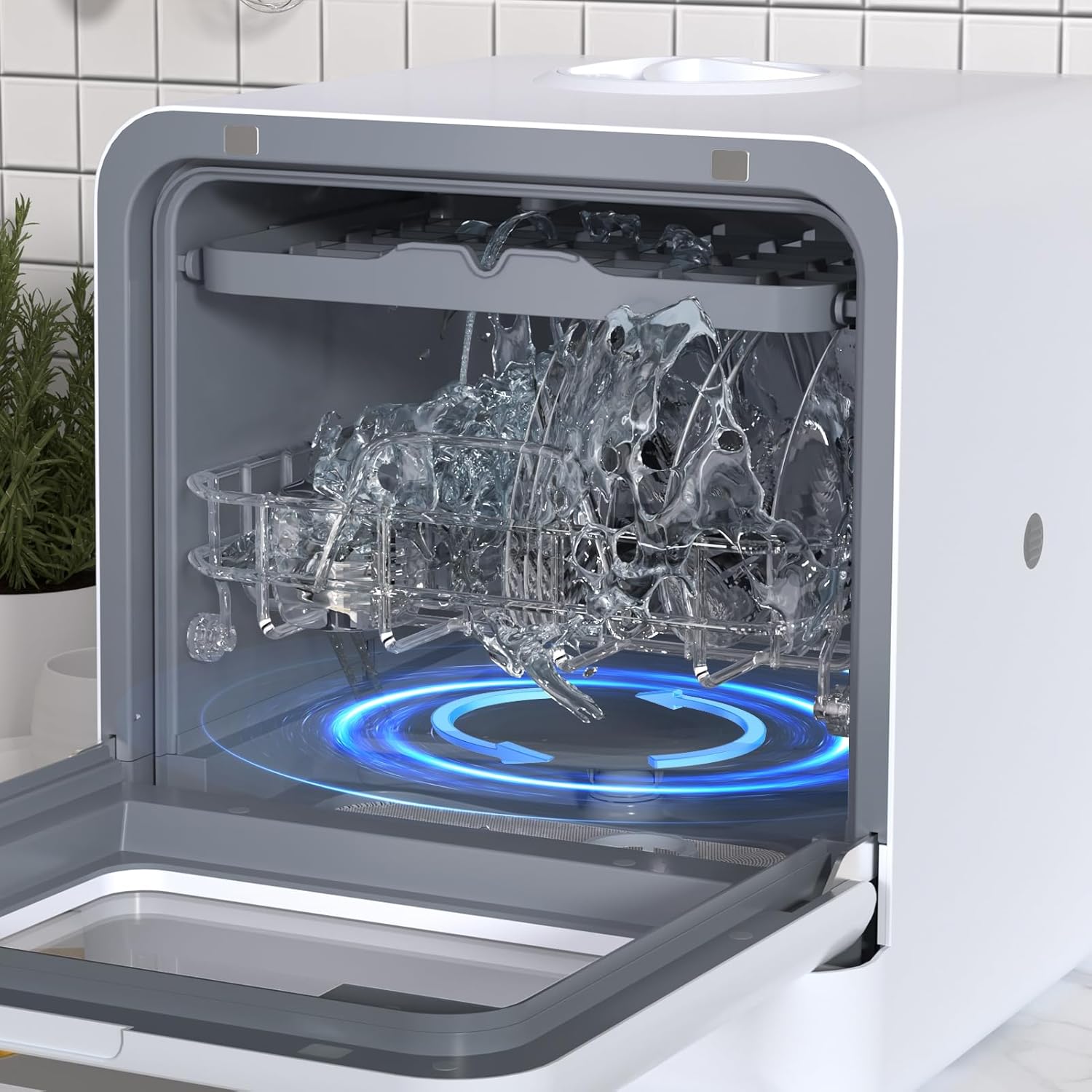
The dishwasher emphasizes multi-point spray coverage via three high-pressure spray arms and a 360-degree cleaning claim, which addresses a buyer priority: ensuring water and detergent contact all surfaces. Spray-arm count and placement directly affect hydrodynamic reach and turbulence within the tub; three arms increase intersection of jets and reduce shadowed zones compared with single-arm designs. Pairing that configuration with a filtration path to trap food particles helps maintain jet effectiveness across cycles. Cycle selection and pump output determine how effectively detergents are dispersed and rinsing completed. Manufacturers that pair spray design with a high-temperature or steam mode aim to loosen oils and sterilize surfaces, but actual soil removal depends on water temperature, detergent chemistry, and spray impingement energy.

Spray-arm design, pump dynamics, and coverage
Three spray arms can create overlapping jet patterns that improve clearance of food residues from flatware and plate faces. Effective coverage requires consistent pump pressure and unobstructed arm rotation; plastic housings and lightweight arms reduce inertia and can respond quickly to pressure changes but may flex under long-term use. The 360-degree coverage claim suggests jets are directed upward and horizontally to reach top-rack items if the geometry allows. Filtration ahead of the pump preserves nozzle performance by capturing particulate matter, while accessible nozzles simplify routine debris removal. For best cleaning, load items to avoid blocking spray paths and use appropriate detergents formulated for compact machines.
High-temperature cleaning, steam, and cycle selection
High-temperature and steam-assisted cycles are intended to increase cleaning chemistry efficiency by raising water temperature to soften soils and improve grease emulsification. Manufacturer notes indicate dedicated settings for heavy soils and a quick 28-minute option for lightly soiled loads; the heavy cycle combined with elevated temperature and sustained spray action generally provides improved removal of dried foods and milk residues. Steam phases can also aid in sanitizing glassware and baby items, though actual microbial reduction depends on temperature and exposure duration. Consumers should consider detergent compatibility with high-heat cycles and be mindful that plastic items may not tolerate sustained high temperatures.
Capacity, rack design, and place settings
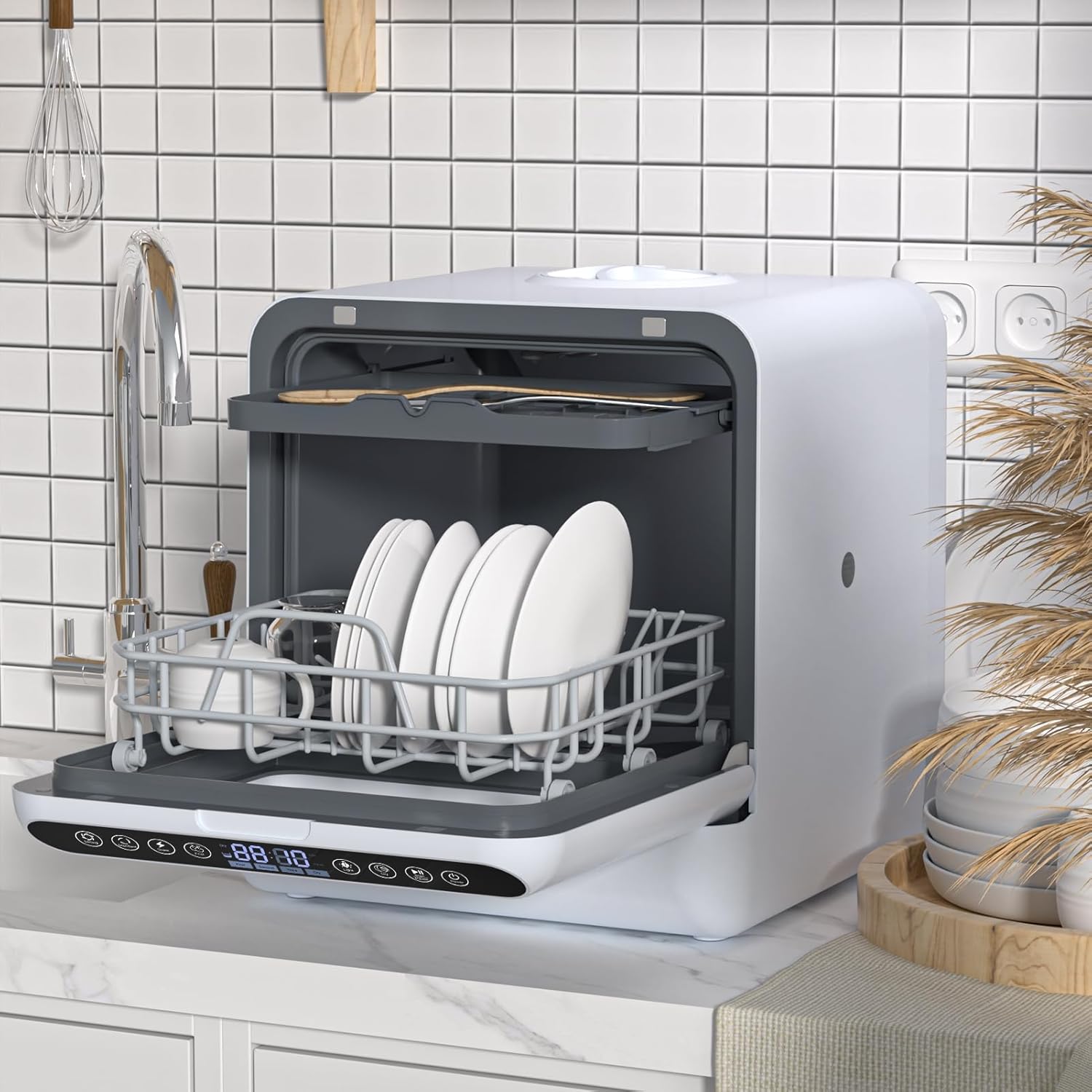
Capacity for countertop dishwashers is often described in informal units rather than standard place settings; this model cites over 40 pieces of cutlery and a two-tier shelf with five adjustable positions, which signals an emphasis on flexible internal arrangement. A two-tier approach maximizes vertical space for plates, bowls, and cups, while adjustable positions allow insertion of larger items when the upper basket is removed. The ability to accept 11.8-inch plates with basket removal provides a practical workaround for common dinnerware sizes that can be limiting in compact units. Rack coatings, basket partitioning, and dedicated cutlery holders influence how securely items are held and how effectively spray reaches them. For a family-like capacity claim targeting five to six members, users should compare typical daily dish volumes to the machine’s basket geometry and refill cadence dictated by the 5 L tank.

Two-tier shelf, adjustable positions, and plate accommodation
A two-tier shelf with multiple height positions enhances loading versatility and enables a balance between plate capacity and glass/bowl accommodation. Removable upper baskets are a common design choice to accept larger plates; when removed, the resulting clearance must be structurally stable and maintain spray access to lower-rack geometry. The capacity claim to hold 11.8-inch plates with the upper basket removed implies the tray spacing aligns with common dinnerware dimensions but requires manual reconfiguration. Effective rack design also minimizes nesting of bowls and prevents flatware from blocking jets. Durable rack coatings and reinforced pegs are important in tabletop units where plastic components carry most structural loads.
Cutlery, small items, and loading ergonomics
Cutlery capacity listed as over 40 pieces depends on how utensils are arranged and whether a dedicated basket or tray is present. Compact dishwashers often rely on vertical cutlery baskets or flat trays; each approach influences spray exposure and potential re-soiling between utensils. Small items like baby bottle parts or lids may benefit from specialized holders or mesh baskets to keep them within the main spray envelope. Lighting and LED indicators assist with loading decisions in low-visibility countertop locations. Users should plan cycles to avoid overcrowding, which reduces impingement energy at the surface and can lead to incomplete rinse or spot formation.
Noise levels and suitability for open-plan kitchens
Manufacturer materials do not specify a decibel rating for this model, so expectations should be formed from design features: compact countertop dishwashers typically use small, direct-drive pumps and plastic-lined tubs that can transmit vibration. Noise in portable units often stems from pump cavitation, motor brush noise, and resonance of exterior panels. Features that mitigate audible output include vibration-damping feet, insulated panels, and pump mounting design. The unit’s delayed start option (2–12 hours) and a quick 28-minute cycle can help schedule cycles during less-sensitive times. For households with open-plan living spaces or light sleepers, verifying published dB figures or comparing to similarly specified units is recommended before assuming quiet operation.
Expected acoustic sources and mitigation strategies
Primary noise sources in compact dishwashers are the wash pump and the water circulation path; turbulence in spray arms and solenoid valve operation contribute transient sounds. Plastic housings are lighter and can vibrate more than metal, potentially amplifying sound if internal bracing is minimal. Vibration isolation mounts and thicker panel materials reduce transmitted noise. Users in noise-sensitive environments might prefer scheduling wash cycles during periods of lower acoustic sensitivity or placing the unit on anti-vibration pads. Noise perception is also influenced by ambient room acoustics: open-plan rooms reflect and sustain sound more than enclosed kitchens.
Scheduling, quick cycles, and user expectations
The presence of a quick 28-minute cycle and a delayed-start window (2–12 hours) provides operational flexibility that can indirectly reduce perceived noise impact. Rapid cycles may concentrate washing and draining phases into a shorter timeframe, which can feel louder even if total noise energy is similar; conversely, evening scheduling shifts operation to times where household noise masks the machine. Buyers who require low-noise performance for overnight operation should seek models with published decibel ratings or compare consumer reviews that reference measured noise. Without a manufacturer dB figure, assume typical portable-unit audibility and plan placement accordingly.
Energy, water efficiency, drying systems, and maintenance considerations
The dishwasher’s eco-friendly dual heating system is described as simultaneously heating incoming water and water in the 5 L tank to optimize electricity use; this approach may reduce reheating losses by maintaining a warmer tank baseline. Built-in tank operation versus faucet hookup affects per-cycle water availability and refill frequency. Air-dry function and steam phases influence residual moisture management; air movement combined with heat helps evaporate remaining water, but full dryness can vary with load composition and detergent residues. Filter access and pump-clearing practices are necessary maintenance tasks for long-term performance. Plastic construction and compact components can constrain expected lifespan compared with heavier-duty metal-bodied machines, so routine cleaning of the filter, spray nozzles, and door seals will extend effective operation.
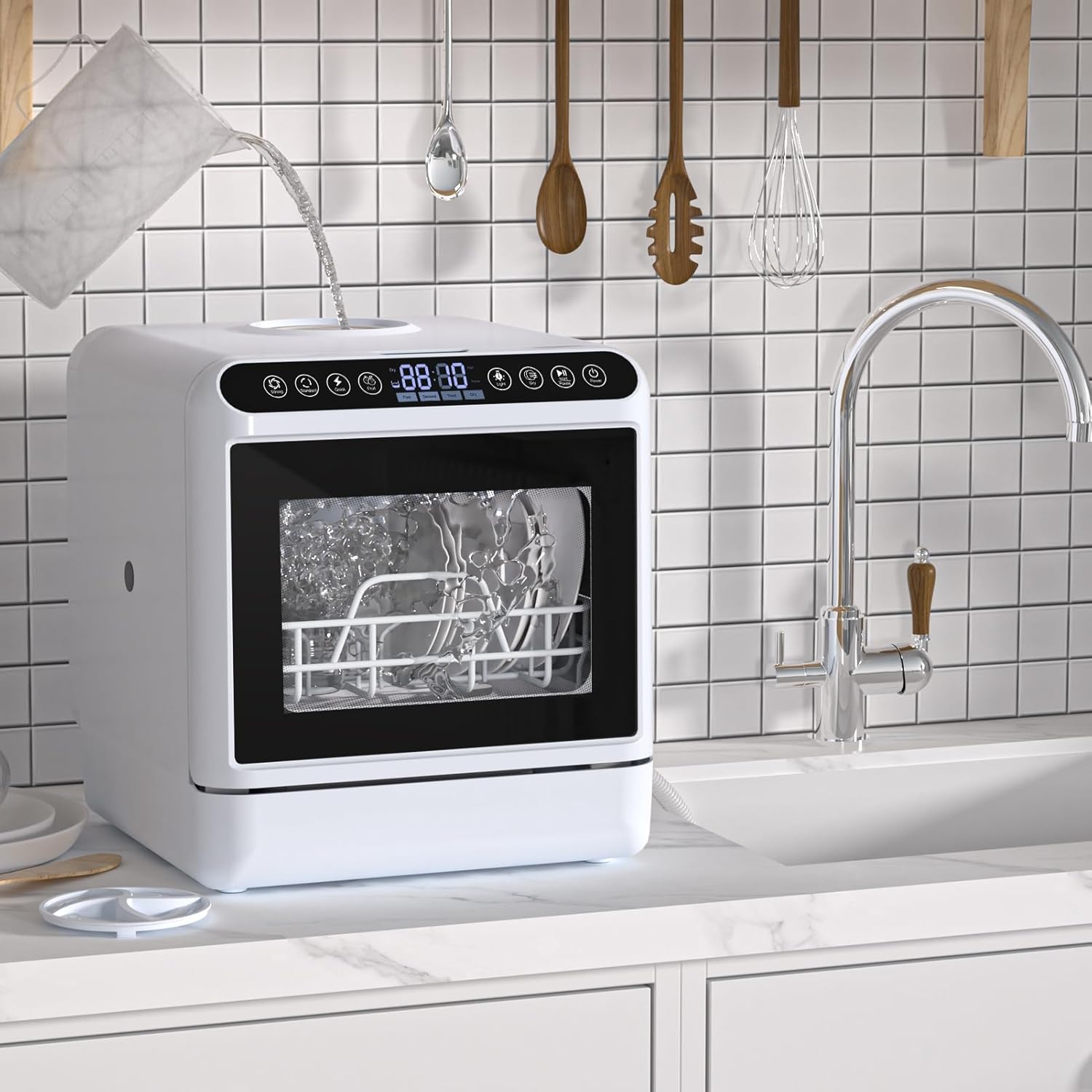
Dual heating, water handling, and cycle energy expectations
A dual-heating strategy that warms both incoming water and stored tank water can improve cycle efficiency by reducing the energy required to reach wash temperatures. However, absence of formal energy efficiency certification means comparative energy use against larger units is unclear. Tank mode enables countertop placement away from fixed plumbing and reduces dependency on faucet adapters; the faucet mode supports continuous refill for longer or heavier loads. Water consumption per cycle depends on pump flow rates, cycle length, and detergent sudsing behavior. Buyers focused on efficiency should consider the trade-off between refill frequency for a 5 L tank and the convenience of faucet-attached operation.
Drying performance, air-dry function, and moisture control
Air-dry functions rely on passive or low-energy forced-air movement to evaporate residual moisture; success depends on cycle-end temperatures, interior airflow, and load type. Steam-assisted cycles can condense and drain water effectively but may leave spots on glass if rinse aid and water hardness are not managed. Compact units often cannot incorporate high-power vented heaters due to size and energy constraints, so achieving bone-dry cutlery and plastics may require towel-drying or brief airing after cycle completion. Regular door-opening for ventilation following completion helps reduce trapped humidity and extends seal life.
Filter access, routine maintenance, and expected durability
Accessible filtration is essential in countertop machines because captured solids protect nozzles and pumps from clogging. Simple removable filters and clear access panels enable frequent cleaning to maintain spray performance. Plastic tub and component construction reduces weight but may be more prone to discoloration, micro-abrasion, and stress over many thermal cycles; gentle detergents and avoiding abrasive soils help preserve parts. Seals and hoses should be inspected periodically for hardening or cracks. Durability expectations should factor in usage frequency and adherence to recommended cleaning routines.
Pros & Cons
Pros
- Flexible installation options: Offers both a built-in 5 L water tank and a faucet inlet, enabling countertop placement away from sinks or direct connection to faucet plumbing. This flexibility suits renters and small kitchens where permanent installation is not feasible.
- Comprehensive spray coverage: Three high-pressure spray arms and a 360° coverage design increase the chance that flatware and plate faces receive effective water impingement, improving overall soil removal for varied loads.
- Multiple wash programs: Five distinct cycles (Heavy, Normal, Delicate, Quick, Fruity) allow tailoring of wash intensity and duration to soil level, which supports energy and water savings when lighter cycles are used.
- Compact but adjustable capacity: A two-tier shelf with five position adjustments and a removable upper basket enables accommodation of larger plates up to 11.8 inches and flexible arrangement for mixed loads.
- Eco-oriented heating approach: The described dual-heating system is intended to reduce energy waste by pre-warming tank water and incoming supply, which may improve cycle efficiency compared with single-source heating.
- Air-dry and delayed start options: Air-dry function and a 2–12 hour delayed start schedule add convenience for timing cycles around household activity and can minimize perceived noise during sensitive times.
Cons
- Lack of specified noise rating: No manufacturer-decibel figure is provided, making it difficult to assess suitability for open-plan living without third-party measurements or user reports.
- Plastic construction and weight concerns: A primarily plastic build reduces durability expectations compared with metal-bodied units and may show wear over prolonged, heavy use; item weight suggests lightweight construction that may transmit vibration.
- Unclear energy and water certifications: No ENERGY STAR or equivalent labeling is listed, so energy and water consumption comparisons must be inferred from component descriptions rather than verified ratings.
- Tank capacity limits continuous loads: A 5 L internal tank provides placement flexibility but requires periodic refilling for multiple consecutive cycles unless connected to a faucet, which may be inconvenient for high-frequency users.
- Manufacturer warranty and dimensions not specified: Absence of clear warranty and detailed dimensions in provided disclosures makes long-term service expectations and exact installation space planning less certain.
Final Verdict: Who This Dishwasher Is Best For (and Who Should Skip It)
This portable countertop dishwasher targets households needing a compact, flexible cleaning solution without permanent plumbing changes—renters, small families, and apartment dwellers who value adjustable rack geometry and multiple cycle options will find its combination of a 5 L tank and faucet hookup appealing. The three-spray-arm layout and high-temperature cleaning claim indicate that the product is designed to tackle a range of soils, from everyday plates to baby items, provided loading practices and detergents are appropriate. Buyers prioritizing convenience, quick cycles, and the ability to relocate the appliance will appreciate the portable form factor and adjustable shelving.
Conversely, those requiring certified low-noise operation for open-plan living spaces, high-duty commercial-level durability, or verified ENERGY STAR-class efficiency should consider models with published decibel figures, metal construction, and formal certifications. Households that run multiple large loads daily may find the 5 L tank limiting unless the unit is connected to a faucet for continuous water supply. Compared to similar compact countertop options available in 2026, this model offers practical flexibility and a strong feature set for small-to-moderate domestic use, while buyers who prioritize long-term robustness and independently verified energy/noise metrics may want to review alternatives.
Frequently Asked Questions (FAQs)
How does a 5L built-in water tank affect cycle frequency and placement?
A 5-liter built-in tank allows the unit to operate without a faucet connection, enabling placement away from sinks. Tank capacity determines how many wash cycles can run before a refill is needed; lighter cycles and efficient loading extend the number of uses per tank. For frequent or consecutive heavy loads, attaching the included inlet hose to a faucet provides continuous water supply and removes the need for repeated refilling.
Will three spray arms provide better cleaning than a single-arm design?
Three spray arms create multiple overlapping jet patterns that improve spray coverage across varied load geometries, reducing shadowed zones where soils can persist. Effective cleaning still depends on adequate pump pressure, unobstructed arm rotation, and a clean filtration pathway. Regular filter maintenance and strategic loading to prevent blocked jets are necessary to maintain nozzle performance and overall cleaning outcomes.
Is the air-dry function sufficient to leave dishes bone dry?
Air-dry functions in compact countertop models commonly use passive airflow or low-energy circulation to reduce residual moisture. While air-dry plus heat can significantly improve dryness, complete bone-dry results depend on load composition, rinse-aid use, and cycle-end temperature. Plastics and recessed items may retain moisture and could require brief manual drying or additional ventilation after cycle completion.
What maintenance tasks are essential to preserve performance?
Routine maintenance should include clearing food debris from removable filters, inspecting and wiping door seals, and checking spray nozzles for blockages. Periodic cleaning of the interior and running an empty cycle with a manufacturer-recommended cleaner helps prevent buildup. Inspect hoses and seals for hardening or cracks, and ensure the pump area remains free of large particulates to protect nozzle pressure and motor longevity.
How does the dual-heating system affect energy use and performance?
A dual-heating design that warms both incoming water and the internal tank can reduce energy needed to reach wash temperatures by maintaining a warmer baseline. This approach may improve cycle efficiency, particularly for heavy and steam-assisted programs, though absence of formal energy certification means comparisons to other models rely on component descriptions rather than verified labels.
Is this countertop dishwasher suitable for open-plan living areas?
Manufacturer materials do not provide a decibel rating, so suitability for open-plan living depends on tolerance for typical portable-unit noise sources such as pump and valve operation. Features like delayed start and quick cycles can reduce perceived disruption by timing operation for lower-sensitivity periods. Buyers highly sensitive to noise should seek models with published dB ratings or consult independent noise measurements before purchase.
Can the unit sanitize baby bottles and children’s dishes?
The model lists high-temperature and steam cleaning options intended to address tougher soils and to assist in reducing microbial presence on items like baby bottles. Actual sanitization effectiveness depends on achieved temperature, exposure duration, and correct loading to allow steam or heated water to contact all surfaces. Users should follow manufacturer guidance for items requiring higher thermal exposure and verify suitability for heat-sensitive plastics.
What are the limitations of plastic construction in portable dishwashers?
Plastic construction reduces weight and cost but may be less resistant to thermal cycling, abrasion, and long-term impact compared with metal tubs and frames. Over many cycles, plastic parts can show wear, discoloration, or stress cracking if exposed to aggressive detergents or sustained high temperatures. Regular maintenance, gentle detergents, and mindful loading practices mitigate premature degradation and extend service life.