
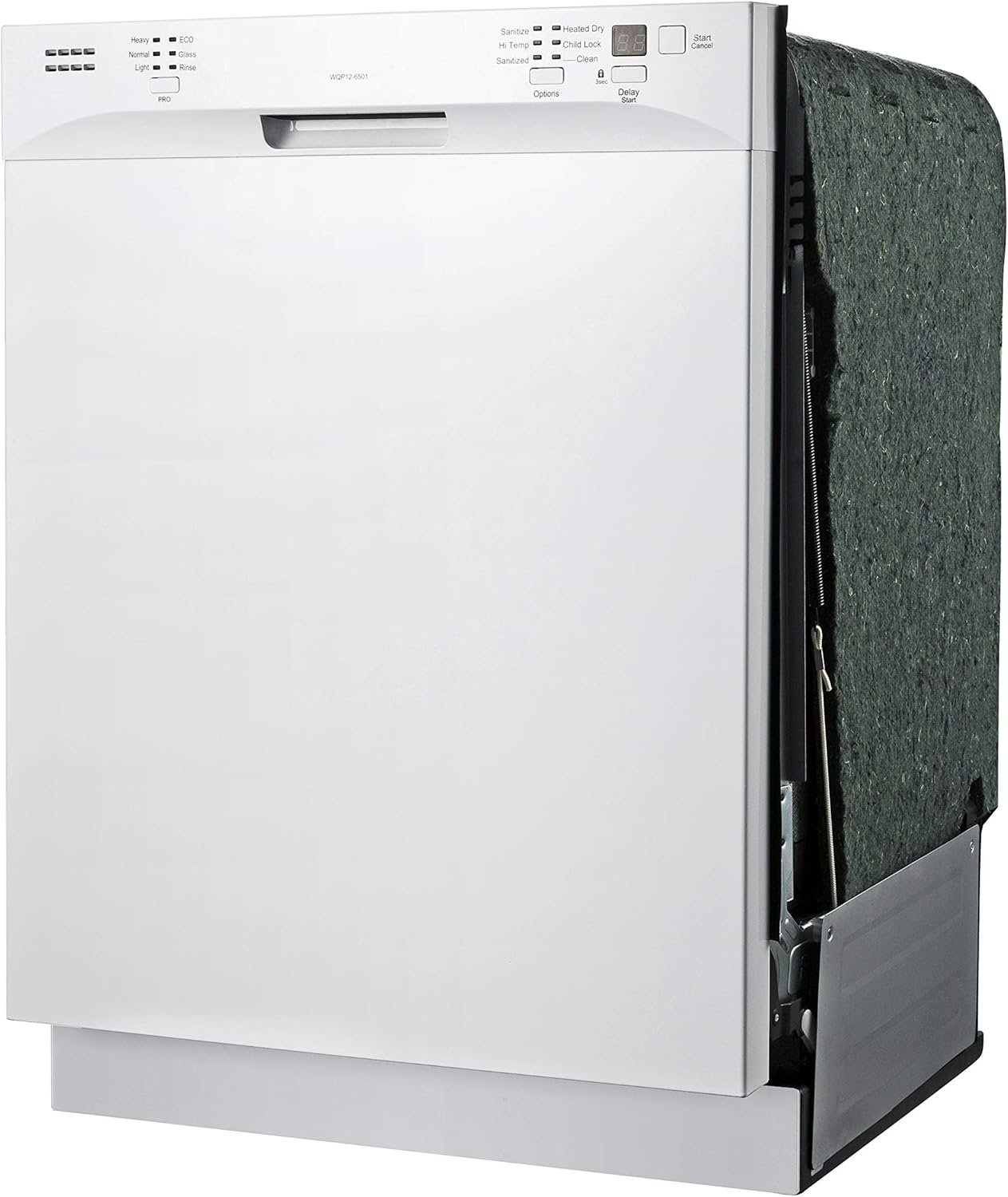
Why Dishwasher Selection Matters
Choosing a dishwasher is a balance of cleaning performance, kitchen layout compatibility, household size, and long-term efficiency. For households that generate frequent loads — from daily family meals to occasional entertaining — the right appliance must deliver consistent soil removal, adaptable rack geometry, and drying that limits residual moisture. Noise sensitivity is a key consideration for open-plan kitchens and living spaces where a nearly silent wash cycle preserves ambient comfort. Energy and water efficiency affect annual consumption profiles and environmental expectations, particularly for buyers prioritizing ENERGY STAR-rated machines. Durability and ease of maintenance influence ownership experience over multiple years, with interior materials and filter access affecting corrosion resistance and clog risk. Evaluating cycle options, tub construction, and documented specifications helps match a dishwasher’s capabilities to real household routines without needing experiential claims.
Quick Overview
| Feature | Details |
|---|---|
| Dishwasher type | Built-in, top-mount bracket design (24″ width) |
| Capacity / place settings | Up to 14 standard place settings |
| Wash cycles | 6 programs: Heavy, Normal, Light, Eco, Glass, Rinse |
| Drying method | Active heated drying (electric) |
| Noise level | 55 dBA rated operating noise |
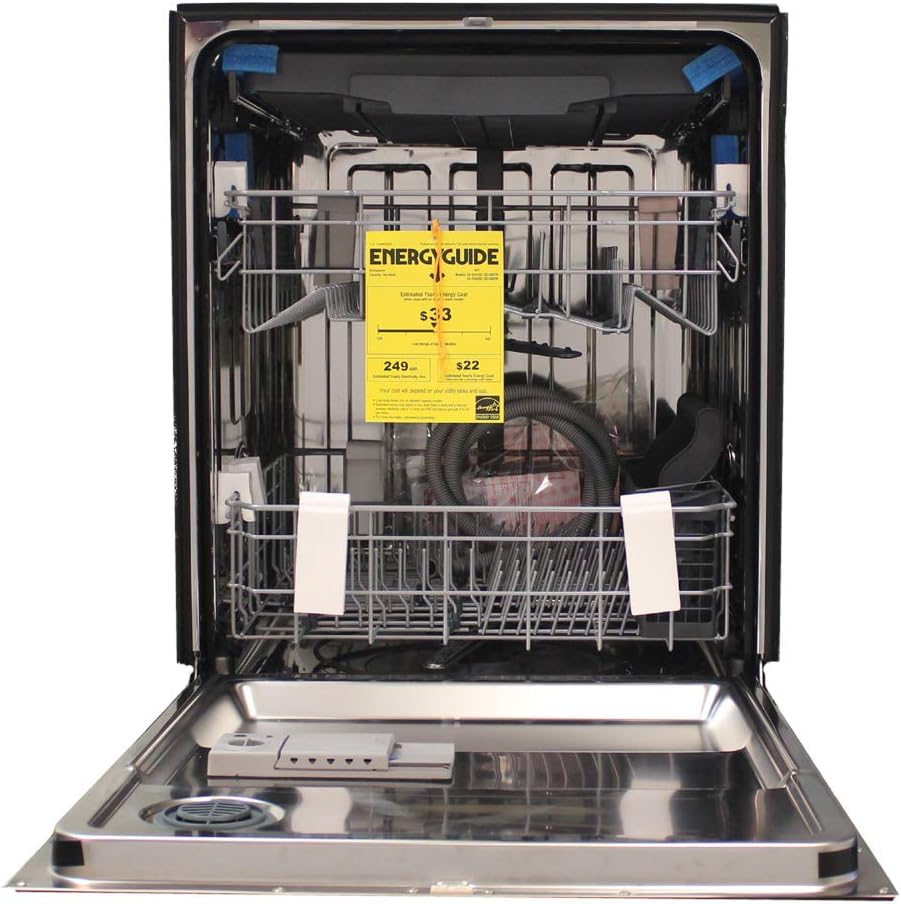
| Energy efficiency | ENERGY STAR certified; 249 kWh/year (manufacturer disclosure) |
| Dimensions & installation | Minimum cutout 24″ W x 24″ D x 35″ H; 23.89″D x 25.6″W x 33.74″H |
| Warranty | 1 year limited parts and labor |
This feature summary translates into a compact built-in dishwasher aimed at small to medium households. The 14-place setting capacity and tall stainless steel tub accommodate typical family dish loads while the six cycles and heated dry deliver flexible operation. ENERGY STAR certification and the stated annual energy figure indicate efficiency comparable to entry-level full-size models, with a 55 dBA rating positioning the unit as moderately quiet for kitchens that are not fully open to living areas.

Cleaning performance and wash coverage
The SD-6501W’s wash performance is framed by its six cycle options and the unit’s pump, spray-arm configuration, and filtration approach, which together determine spray coverage and soil removal potential. A heavier cycle combined with concentrated spray patterns and higher pump flow rates is generally required for baked-on soils, while Eco and Glass cycles use lower water and energy inputs for light soils and delicate ware. The stainless steel tall tub supports consistent water temperature retention during high-heat cycles, improving detergent activation. Filtration and automatic dispensers influence detergent contact time and re-deposition control, with cycle selection and rinse aid usage affecting final clarity on glassware and cutlery.

Spray arms, pump flow and filtration
Spray arm count and geometry are central to wash coverage; a two-level rack system with multiple rotating spray arms typically provides full-cavity distribution when arms are positioned under and between racks. The pump impeller size and motor wattage (840 watts specified) correlate to potential flow rates and pressure, influencing spray intensity on lower versus upper rack combinations. A stainless steel tall tub resists warping under heat, maintaining spray alignment over time. Filtration strategy — often a disposable or removable fine filter plus a coarse trap — helps prevent recirculation of large debris and maintains consistent spray performance when regularly cleaned.
Cycle options, detergent dispense and soil management
Cycle selection alters wash time, temperature, and water volume; Heavy and Normal cycles usually raise temperature and extend duration for enzyme-based detergents to work effectively on protein and starch residues. The automatic detergent dispenser choreographs timed release, reducing early dilution during pre-wash phases. Rinse aid indication supports final rinse sheeting to reduce spots and drying time. For users with mixed soils, strategic loading and selecting cycles aligned with soil level are essential to optimize cleaning without increasing water or energy consumption.
Capacity, rack design, and place-setting flexibility
Capacity assessment goes beyond the 14-place setting metric to consider rack adjustability, tine spacing, and accessory placement. A top cutlery tray that lays utensils flat can prevent small items from falling through and improve cleaning contact while freeing lower rack space for larger items. Upper and lower pull-out racks are standard, with the possibility of partially adjustable tines or folding rows to handle pans and stemware. The tall stainless steel tub increases vertical clearance for taller glasses and baking sheets when racks are lowered or tines folded. Real-world loading efficiency depends on how the rack geometry aligns with common household items and whether the top cutlery tray can be used in combination with regular loading patterns.

Top cutlery tray and utensil organization
A shallow top cutlery tray provides flat placement for slim or delicate utensils, reducing contact-based scratching and preventing small pieces from nesting within a basket. Flat placement can improve exposure to upper spray arms for better cleaning but may reduce upper-rack capacity for small cups or stemware. When used in routine cycles, the top cutlery tray removes the need for a traditional basket, which can increase lower-rack configuration flexibility for larger plates or pots. The tray design also speeds unloading of forks and spoons when utensils are evenly distributed and not nested.
Tall tub advantages for large items and flexible loading
The tall stainless steel tub increases usable internal height, allowing taller mixing bowls, cutting boards, and casserole dishes to fit without compromise. Stainless steel interior material retains heat better than plastics, supporting higher rinse temperatures and improved drying performance on selected cycles. Rack adjustment capability or fold-down tines multiplies loading permutations, enabling simultaneous accommodation of plates, bowls, and cookware. For households that frequently wash larger items, this geometry reduces the need for pre-rinsing or running partial loads.
Noise levels and suitability for open kitchens
A 55 dBA noise rating places the SD-6501W in a moderate-noise category; in practical terms, this level is audible but not intrusive in separate-kitchen layouts. In open-plan homes where kitchen and living areas are contiguous, a 55 dBA appliance will be noticeable during cycles and can compete with conversational or background TV volumes. Noise at this rating typically stems from motor operation, pump flow, and vibration transmitted through the cabinet and tub. Sound-insulating design features, such as thicker tub walls or damping mounts, reduce perceived noise; their presence in a given model impacts real-world suitability for quieter living spaces.

55 dBA in context: occupancy and activity considerations
Decibel ratings are measured under standardized conditions and relate to perceived loudness logarithmically; a 55 dBA unit is quieter than older high-noise models but louder than premium low-noise dishwashers rated below 45 dBA. For occupants sensitive to appliance noise, running cycles during non-quiet hours or selecting lower-intensity cycles can reduce disruption. In households where kitchen noise immediately abuts living or sleeping areas, choosing a lower-rated model or installing additional cabinetry insulation can mitigate audible impact.
Motor, vibration and cabinet transmission factors
Motor type, mounting, and the quality of anti-vibration hardware affect how much mechanical energy transmits into surrounding cabinetry. Higher motor wattage can correlate with stronger wash performance but also higher potential noise if not acoustically damped. A stainless steel tub, while durable, can transmit sound differently than composite tubs; the balance of rigidity and damping materials in door insulation and mounting points contributes to overall perceived noise. Periodic leveling and secure installation reduce rattles and vibration amplification over time.
Drying systems and moisture control strategies
The SD-6501W’s active heated drying employs an electric element to raise air temperature in the final phase, promoting water evaporation and sheeting when combined with rinse aid. Heated drying is effective for many dishware types but can lengthen cycle times and use additional energy compared with air-dry modes. Tub material and interior geometry influence condensational drying; stainless steel retains heat to assist evaporation but can also hold residual moisture in recessed areas. Using rinse aid and selecting appropriate drying options supports better water sheeting off glassware and cutlery, while loading methods that prevent pooling improve outcomes.

Heated drying performance and cycle trade-offs
Heated drying accelerates moisture removal by increasing final-rinse and post-rinse temperatures, which energize detergents and reduce surface tension for better water sheeting. The trade-off is that heating adds energy consumption and can slightly increase cycle duration. For plastics or lightweight items that can retain water, elevated temperatures may not fully eliminate droplets; careful loading and selecting lower-heat options for delicate plastics reduce warping risk. For households prioritizing rapid dryness, the active heated drying method provides more consistent results than passive condensation-only systems.
Rinse aid, tub material and residual moisture management
Rinse aid lowers surface tension on rinse water, encouraging uniform sheeting and reducing spotting and drying time. The stainless steel tall tub supports higher final-rinse temperatures and resists staining or odor retention, contributing to perceived dryness and cleanliness. Positioning of items to avoid horizontal surfaces where water can pool, and ensuring the filter and spray arms remain unobstructed, reduces localized moisture retention. Regular use of rinse aid in hard-water regions will measurably improve glass clarity and reduce mineral spotting after heated drying cycles.
Energy, water efficiency, maintenance and durability expectations
Energy Star certification and manufacturer-stated annual energy consumption (249 kWh/year) position this model within efficiency expectations for compact full-size dishwashers, with a reported water consumption of 2 gallons per cycle indicating low per-cycle usage relative to older models. Efficiency is influenced by cycle selection: Eco modes lower water and energy use but may extend duration. Maintenance of the filtration system and spray arms preserves efficiency over time by preventing blockages that force longer, more resource-intensive cycles. The stainless steel tub and tempered-glass components provide corrosion resistance and material durability, while a one-year limited warranty covers typical early-service needs.
Energy and water use considerations for household routines
Specified annual kWh and per-cycle water volumes frame likely consumption patterns but actual use depends on load frequency, cycle choices, and soil levels. Eco and glass cycles reduce energy and water per cycle at the expense of longer run times. Households with frequent small loads may offset efficiencies; batching loads preserves the ENERGY STAR advantage. The 249 kWh/year figure offers a baseline for comparison within similar-sized built-in units and highlights the importance of matching cycle selection to soil level and load size to keep consumption within expectations.
Filter access, routine maintenance and long-term reliability factors
A removable fine filter and coarse debris trap simplify routine cleaning and prevent spray clogging, which can degrade cleaning performance and increase cycle times. Regular inspection of spray-arm ports, gasket condition, and filter screens minimizes risk of poor water distribution and must be part of annual maintenance. Stainless steel interiors resist corrosion and staining, aiding longevity when combined with proper detergents and occasional interior cleaning. The one-year limited warranty covers parts and labor for manufacturing defects; longevity beyond that depends on installation quality, water hardness, use patterns, and adherence to maintenance recommendations.

Pros & Cons
Pros
- Durable stainless steel tall tub: The stainless steel interior resists corrosion and holds heat for improved wash and drying cycles, offering greater long-term material stability compared to polymer tubs. Regular care and appropriate detergents reduce staining risk.
- ENERGY STAR certification and modest annual kWh: Manufacturer-disclosed annual energy usage (249 kWh/year) and ENERGY STAR listing indicate baseline efficiency that aligns with environmentally conscious households when paired with eco cycle selection.
- 14 place setting capacity in a 24″ footprint: The unit provides family-sized capacity while fitting standard 24″ cabinetry openings, making it suitable for many kitchens with limited floor space.
- Top cutlery tray for flat utensil placement: The dedicated top tray prevents small utensils from falling through baskets and improves exposure to upper spray, streamlining loading and unloading patterns.
- Six wash programs for soil-specific cleaning: Offering Heavy, Normal, Light, Eco, Glass and Rinse cycles allows tailoring of water, temperature and time to soil levels and delicate ware.
- Heated drying system: The active electric heated drying option can reduce residual moisture on glassware and cutlery compared with passive drying modes, improving immediate usability after cycles.
- Moderate noise rating for enclosed kitchens: A 55 dBA rating is acceptable in separate or semi-enclosed kitchens, balancing performance and acoustic footprint.
- Compact dimensions and top-mount design: The specified cutout and top-mount brackets allow installation in many 24″ cabinetry openings where side-mount brackets are not required.
Cons
- 55 dBA may be noticeable in fully open-plan homes: While moderate, the noise level can be perceptible in living areas adjacent to an open kitchen, potentially disrupting quiet activities.
- Heated drying increases energy and cycle length: Active heated drying improves moisture removal but adds energy consumption and can extend runtime compared with condensation-only options.
- One-year limited warranty only: The warranty period covers typical early defects but is shorter than some premium models that offer extended coverage, placing more emphasis on build quality and maintenance for longevity.
- Top-mount installation only: Lack of included side-mount brackets restricts installation flexibility in cabinetry designed for side-mount models without aftermarket hardware.
- Reported per-cycle water figure is low but depends on cycle choice: The 2-gallon per-cycle disclosure applies to specific cycles and will vary with heavy or sanitizing cycles, affecting actual household water consumption.
Final Verdict: Who This Dishwasher Is Best For (and Who Should Skip It)
This model suits small to medium households seeking a compact built-in dishwasher with a stainless steel tall tub, a flat top cutlery tray, and the flexibility of six wash programs. The ENERGY STAR certification and manufacturer-stated annual energy figure make it a reasonable option for buyers prioritizing baseline efficiency within a 24″ footprint. The heated drying feature and adjustable racks serve families that value dry, ready-to-use tableware without extended air-dry times. For kitchens that are enclosed or semi-enclosed, the 55 dBA operating noise is acceptable and will blend into routine household sound profiles.
However, households with fully open-concept living areas or those requiring near-silent operation should consider models rated lower than 50 dBA. Buyers seeking extended warranty coverage or side-mount installation flexibility may prefer alternative models with longer manufacturer support and additional mounting hardware. Additionally, those with very heavy daily loads or specialized cleaning needs should compare pump flow and spray-arm designs among competing 24″ models to ensure alignment with heavier soil-management requirements in 2026.
Frequently Asked Questions (FAQs)
How effective is the SD-6501W at removing baked-on food compared with standard cycles?
Removal of baked-on food depends on cycle selection, water temperature, and spray intensity. Heavy cycles typically extend wash time and increase temperature to enhance detergent action and mechanical spray coverage. For stubborn residues, proper loading to expose surfaces to spray arms and pre-soaking when necessary will help; the unit’s pump power (specified at 840 watts) supports stronger flow during heavier cycles but results vary with soil type and detergent chemistry.
Is a 55 dBA noise rating suitable for an open-plan kitchen and living area?
A 55 dBA rating is moderately audible and acceptable in separate or semi-open kitchens. In fully open-plan living areas, a 55 dBA dishwasher will be noticeable and could interfere with low-volume conversations or media playback. Acoustic suitability depends on occupant sensitivity and room layout; lower-rated models (under 50 dBA) are preferable where minimal audible disruption is required.
Does the top cutlery tray improve cleaning and loading efficiency?
The shallow top cutlery tray allows flat placement of utensils, preventing small items from falling through and improving exposure to upper spray arms. This design often increases lower-rack flexibility for plates or cookware by eliminating a central basket, and it can speed utensil unloading. Effectiveness depends on tray capacity and user loading habits to avoid nesting and ensure water reaches all items.
How does the heated drying system compare to condensation-only drying?
Heated drying uses an electric element to raise final-phase temperatures, promoting faster evaporation and reducing residual moisture compared with condensation-only methods. Heated drying typically yields drier glassware and cutlery at cycle end but increases energy consumption and may extend cycle time. For plastics or heat-sensitive ware, reduced-heat options limit warping but may leave droplets that require towel drying.
What maintenance is required to keep spray arms and filters working efficiently?
Routine maintenance includes removing and rinsing the fine filter and coarse debris trap, clearing spray-arm ports of mineral deposits, and inspecting gaskets and seals for wear. Regularly checking for clogs and ensuring proper loading reduces spray obstruction. In areas with hard water, periodic descaling and use of rinse aid help maintain spray efficacy and prevent mineral buildup that can impede water flow and cleaning performance.
How do energy and water specifications translate to household usage?
Manufacturer-disclosed annual energy consumption (249 kWh/year) and per-cycle water usage provide baselines for comparison. Actual consumption depends on load frequency, cycle selection, and soil levels; Eco cycles reduce per-cycle use but extend runtime. Batching loads and matching cycle intensity to soil level help realize the efficiency benefits implied by ENERGY STAR certification and published figures.
Are there installation limitations to be aware of for this model?
The unit is designed for top-mount installation and includes top-mount brackets; side-mount brackets are not supplied. Minimum cabinet cutout dimensions are specified (24″ W x 24″ D x 35″ H) and must be met for proper fit. Buyers with cabinetry configured for side-mount brackets or nonstandard openings should verify compatibility or obtain appropriate hardware before installation.