
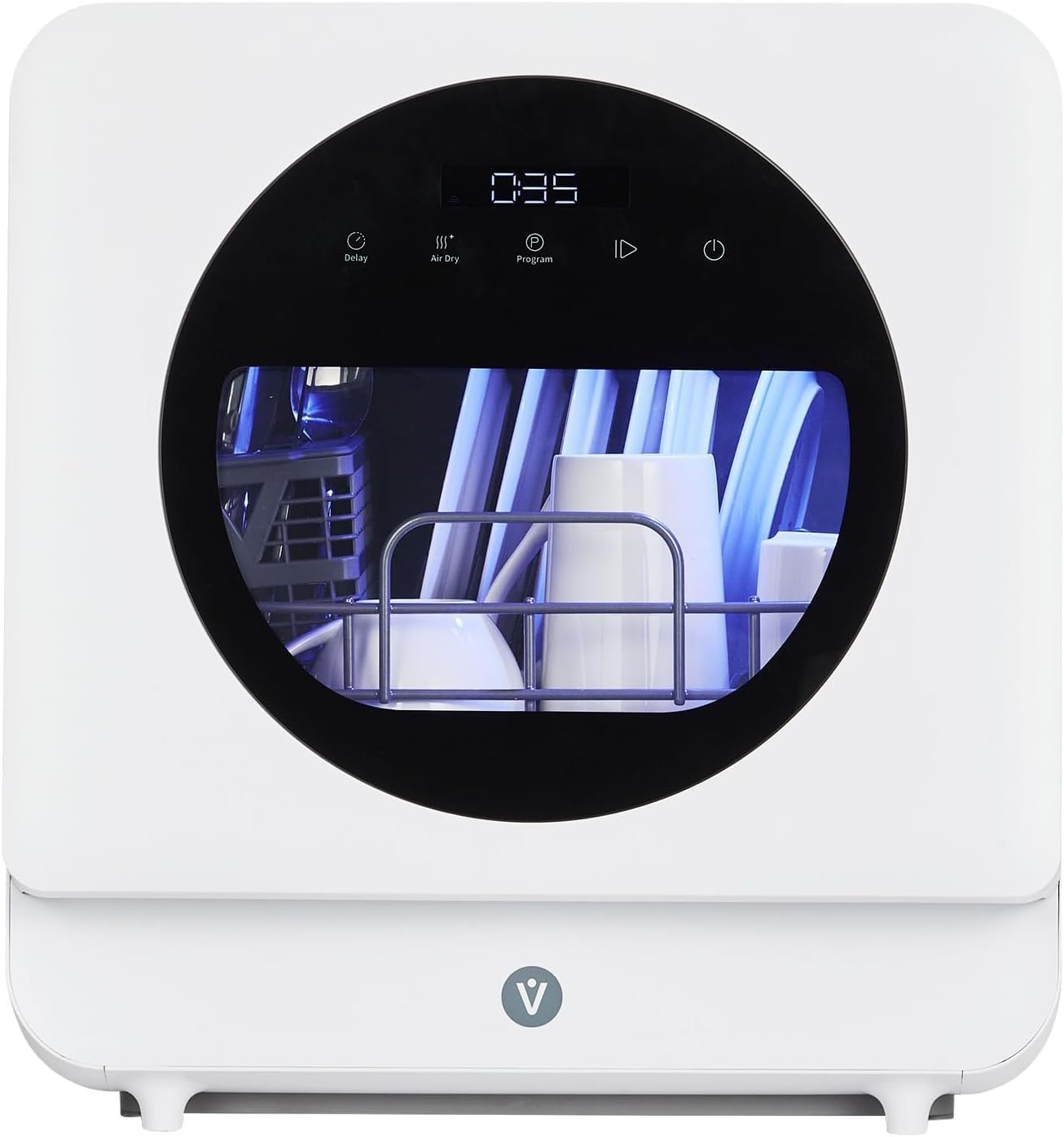
Why dishwasher choice matters for small kitchens and light-duty households
Choosing a dishwasher for a small kitchen or single household requires balancing cleaning performance, footprint, noise output, and resource use. Countertop and portable units like this model aim to deliver full wash cycles with minimal installation, but they trade capacity and some robustness compared with built-in alternatives. For buyers who prioritize compact size, occasional load flexibility, and low acoustic impact, a countertop unit with multiple wash programs and a sealed internal water tank can meet daily needs for plates, glasses, and light cookware while minimizing plumbing changes. Attention to spray geometry, filtration, and the drying method determines how consistently items emerge hygienic and dry. Noise sensitivity, frequency of heavy-soil loads, and expectations for long-term durability influence whether a compact model is a practical permanent solution or a temporary convenience for small apartments, RVs, or studios.
Quick Overview
| Feature | Details |
|---|---|
| Dishwasher type | Countertop / portable |
| Capacity | Built-in 5.3 L tank; fits approximately 2 place settings |
| Wash cycles | 6 programs: Intensive, Normal, Rapid (10 min), ECO, Glass, Rinse |
| Drying method | PTC hot-air drying (rated up to 162°F) with forced air circulation |
| Noise level | Rated 40 dB |
| Power / Voltage | 120 V; rated power consumption listed as 1000 W |
| Supply options | Built-in water tank or faucet inlet (self-priming) |
| Controls & features | Touch panel, LED display, 24-hour delayed start, cutlery basket |
| Dimensions | 18″ D x 17″ W x 18″ H; countertop installation |
This spec set positions the unit as a space-saving option for studios, dorms, RVs, and small households. The small tank and two-place capacity make it practical for light daily use or as a supplement to handwashing in tight kitchens, while the faucet hookup enables continuous operation where heavier cleaning is required.

Cleaning performance and wash coverage
The cleaning capability of a compact countertop dishwasher depends on spray arm design, pump pressure, and cycle tuning; those elements shape detergent dispersion, spray coverage, and soil removal. This model’s six-cycle layout gives options from rapid surface rinsing to an intensive program intended for more soiled items. Spray coverage in countertop machines typically relies on one or two rotating arms or fixed jets positioned to reach stacked items; effective coverage requires proper loading to avoid blocked jets. Filtration and recirculation loop design influence turbidity control during a cycle, and the presence of a dedicated rinse and higher-temperature cycles improves removal of fats and dried residues. For buyers, evaluating these design elements against typical soil levels defines expected cleaning outcomes.

Spray system and wash cycle implications
Compact units often use a single pump-driven spray assembly sized for limited internal volumes; this approach concentrates flow through fewer jets at higher velocity to achieve mechanical action. Cycle length, pump duty, and nozzle orientation determine whether the spray pattern reaches the back and underside of plates and the inside of bowls. Rapid cycles reduce soak time and depend more on detergent chemistry and high-velocity jets for soil suspension, while intensive modes extend soak and agitation for better removal of baked-on food. Performance is optimized when loading allows free rotation of spray arms and avoiding dense stacking that shades lower surfaces.
Filtration, detergent use, and water clarity
A small dishwasher’s filtration and recirculation system must balance particle capture against frequent water exchanges; washable coarse filters protect pumps from grit while finer screens trap suspended solids that cause redeposition. Compact machines with internal tanks recirculate a limited water volume, so filters need regular cleaning to prevent odor and performance decline. Detergent selection affects foaming and rinseability—formulations designed for low-water-volume cycles and standard salt or rinse aid systems help achieve clarity and minimize spotting. Regular filter maintenance and following manufacturer detergent guidance sustain wash quality over time.
Capacity, rack design, and place settings
Capacity claims for countertop dishwashers are typically expressed in place settings rather than liters; this model’s internal layout targets two place settings while allocating space for a cup or stemware level and a cutlery basket. Short-depth trays and upright tine spacing determine whether items like casserole dishes, tall mugs, or cooking utensils fit without obstructing spray. Rack design in compact units prioritizes vertical stacking and modularity to maximize usable volume, but rigid dimensions mean larger servingware and oversized pans are likely to require handwashing. For prospective buyers, realistic assessment of typical loads—plates, glasses, and a small set of pots—clarifies whether the rack geometry aligns with daily needs.

Loading patterns and common constraints
Effective loading in a two-place countertop dishwasher emphasizes separation of items so that spray arms and jets are not blocked; plates should face the spray, glasses positioned at the periphery, and cutlery placed in the provided basket with handles down to improve exposure. Fixed tine layouts can limit flexibility, so evaluating whether tines fold or offer alternate positions is important. The limited horizontal depth also means shallow bowls and small plates are better suited than deep stockpots. Expected load composition—such as frequent glassware or lightweight plastics—should guide the decision to invest in a compact unit versus a larger machine.
Cutlery basket and accessory considerations
A small cutlery basket provides organization but occupies valuable interior volume; placement often dictates whether small plates can be arranged efficiently. Removable baskets offer convenience for pre-rinsing and unloading, but they can restrict spray reach if not positioned properly. Accessories such as cup holders, small stemware racks, or removable trays increase versatility, yet each accessory reduces available space for other items. Buyers should anticipate trade-offs between accessory utility and overall capacity when considering how the dishwasher will fit routine meal cleanups.
Noise levels and suitability for open kitchens
A 40 dB rating positions this countertop dishwasher toward the quieter end of portable appliances, but perceived noise depends on frequency profile, mounting, and acoustic coupling to surrounding cabinetry and countertops. Compact machines with plastic housings and lighter frames may transmit vibration more readily than heavier built-in units; rubber feet, anti-vibration pads, and stable countertop placement reduce resonance. In open-plan living spaces, a continuous 40 dB source during cycles can be noticeable but generally remains below typical conversational levels. Buyers sensitive to mid-frequency motor whine or seeking near-silent operation should compare measured dB figures and consider placement options to minimize sound transmission in shared living areas.

Acoustic characteristics and practical implications
Decibel ratings summarize overall sound pressure but do not reveal tonal qualities that affect annoyance. Motor and pump tones, intermittent water inlet noise, and air exhaust from drying systems contribute differently to perceived loudness. For situational use—such as running cycles overnight or during quiet home-office hours—timers and a 24-hour delayed start allow scheduling during less disruptive periods. Additionally, countertop installation next to a window or on a resilient mat reduces transfer of vibration to cabinetry, helping to maintain a more discreet acoustic footprint in open kitchens.
Placement recommendations for minimal disturbance
Countertop dishwashers perform best on solid, level surfaces that distribute weight and dampen vibration. Placing the unit on a dense countertop material or adding a thin anti-vibration pad can reduce resonance. Ensuring inlet and drain hoses are not taut prevents pump strain and noise from water flow. In multiroom layouts, situating the unit away from sleeping areas or using cycle scheduling can mitigate disturbance. Buyers should verify hose lengths and ventilation clearance to avoid ad hoc placements that amplify operational sounds.
Drying systems and moisture control
Drying is a frequent pain point for compact dishwashers because limited internal volume and lower power budgets constrain passive heated drying systems. This model uses a PTC (positive temperature coefficient) hot-air drying element with forced circulation, enabling warmer and drier conditions inside the cavity compared with passive condensation techniques. Forced hot-air systems speed moisture removal from flat surfaces and the interiors of cups, but they depend on airflow paths that can be obstructed by dense loading. Elevated drying temperatures help reduce residual film and odor risk, while integrating a ventilation path and post-cycle drain prevents moisture entrapment. Buyers should consider how drying method performance aligns with typical material types such as plastics, which retain moisture longer than ceramics.

PTC hot-air drying mechanics and benefits
PTC elements self-regulate temperature and offer steady heat output with relatively fast warm-up times, which is advantageous in compact enclosures where targeted airflows can be effective. Combining PTC heating with a small circulation fan increases convective heat transfer, accelerating evaporation from dish surfaces. Because compact machines have less internal air to heat, the PTC approach reaches effective drying conditions quickly; however, strong airflow is necessary to carry moisture to an exhaust or to support condensation on cooler surfaces. The presence of a dedicated vent or active exhaust reduces humidity retention and potential for residual odors in the tank.
Managing moisture retention and spotting
Moisture control also hinges on rinse aid usage and cycle temperature. Higher rinse temperatures and rinse aids promote sheeting action and minimize spotting, while air-drying limitations can leave water pooling in tight geometries like lids, spouts, and cutlery cavities. Strategic unloading—opening the door slightly after cycle completion to permit warm air to escape or removing items prone to trapping water—improves final dryness. Regular housekeeping of door gaskets and the internal sump ensures condensate drains freely and prevents bacteria-favoring damp zones that could produce odors over time.
Energy and water efficiency expectations, maintenance, and durability
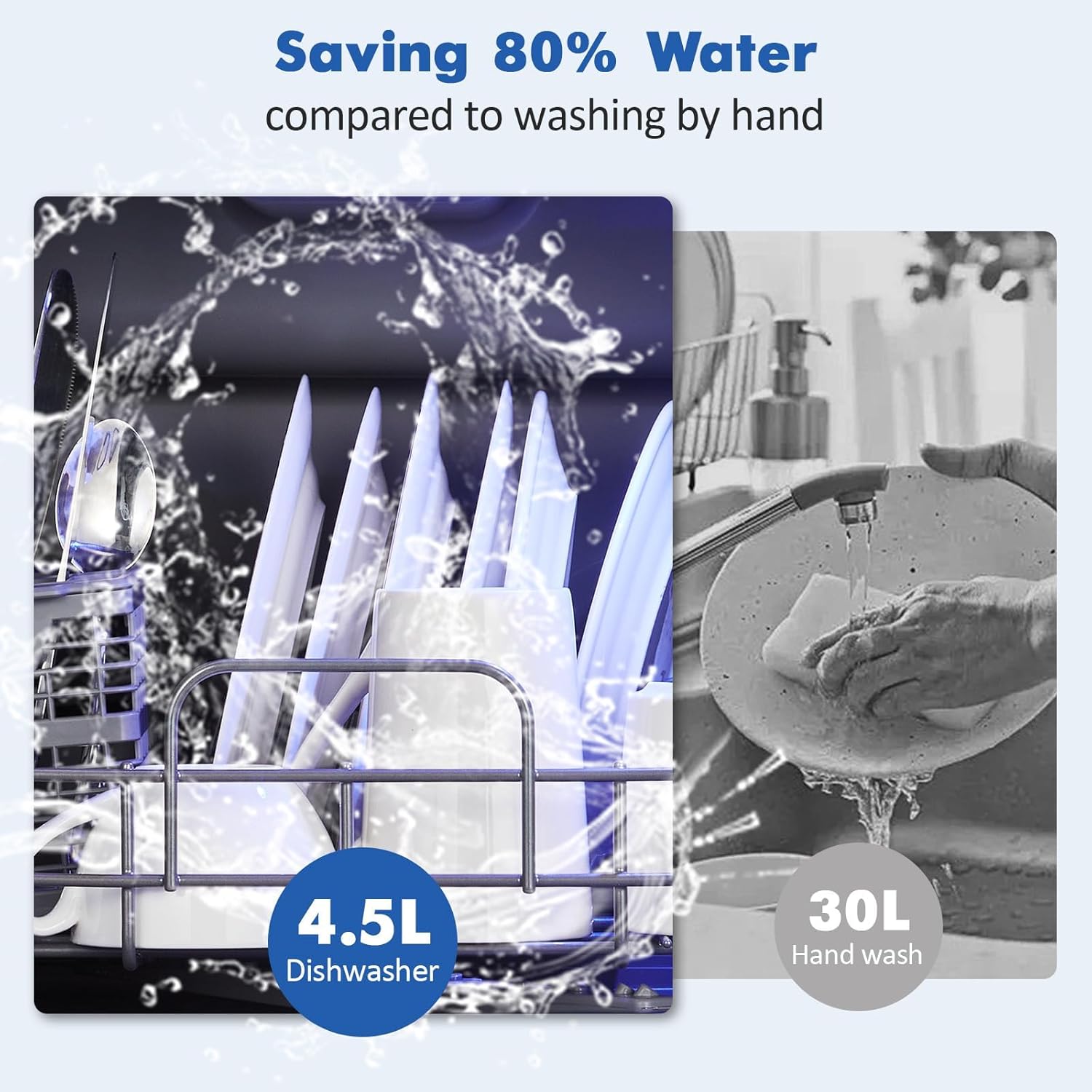
Compact countertop dishwashers trade scale for lower per-cycle water use but may consume comparable energy when heating water and powering drying elements. The listed 1000 W power rating indicates peak electrical draw during heating or pump operation, typical for small machines with built-in heaters. Water efficiency depends on program selection and whether faucet mode or the internal 5.3 L tank is used; ECO modes aim to reduce both water and energy by lengthening cycles while lowering heater duty. Maintenance cycles center on filter cleaning, descaling in hard-water areas, and inspecting inlet valves and hoses. Durability in compact models often depends on component quality—pump motor type, spray arm thickness, and door-seal robustness—so long-term reliability is tied to build materials and frequency of heavy-soil loads beyond the unit’s intended scope.
Electrical and water supply considerations
Operating from a standard 120 V circuit, the dishwasher’s heater and pump create transient load demands during peak phases; proper circuit capacity and grounded outlets are required for safe use. Using faucet mode allows continuous fresh-water exchange but introduces variable supply pressure effects on pump duty, while the internal tank restricts cycle-to-cycle water volume and necessitates manual filling for consecutive runs. In regions with hard water, periodic descaling protects heating elements and spray nozzles. Buyers should consider local water hardness and plan basic maintenance to sustain performance.
Filter care, access points, and serviceability
Easy-to-remove coarse filters and accessible pump housings simplify routine maintenance and extend mechanical life. Regular removal and rinsing of screens prevent solids from reaching the pump and reduce redeposition during cycles. Components such as inlet valves, hose fittings, and door latches are common wear points; choosing a model with replaceable parts and clear service access lowers long-term ownership risk. For buyers intending frequent heavy-soil washing, opting for a dishwasher with robust pump and thicker spray arms improves resilience compared with lighter-duty portable designs.

Pros & Cons
Pros
- Space-saving footprint and straightforward installation: The countertop form factor and dual water-supply options (5.3 L tank or faucet mode) enable immediate use without plumbing changes, which suits renters and transient living arrangements. The small external dimensions allow placement on narrow counters or inside utility closets.
- Multiple wash cycles for flexible cleaning: Six program options from Rapid (10 minutes) to Intensive and Glass provide tailored cleaning actions that address light rinsing, energy-saving ECO cycles, and delicate stemware care, improving versatility for varied daily loads.
- PTC hot-air drying for improved dryness: A forced hot-air drying system with a PTC element reaches elevated temperatures, enhancing moisture removal compared with passive condensation and reducing the need for manual towel-drying of most items.
- Low acoustic profile on paper: A 40 dB rating suggests relatively quiet operation for a portable machine, making it more acceptable in open living spaces than louder alternatives, especially when combined with scheduling features.
- Touch controls and 24-hour delay: LED touch-panel controls and a programmable delay start offer convenience for timing cycles during off-peak electrical periods or to align with household routines.
- Lightweight and portable design: At approximately 32 pounds, it is movable by two people for seasonal or space-changing needs, offering flexibility across different living scenarios.
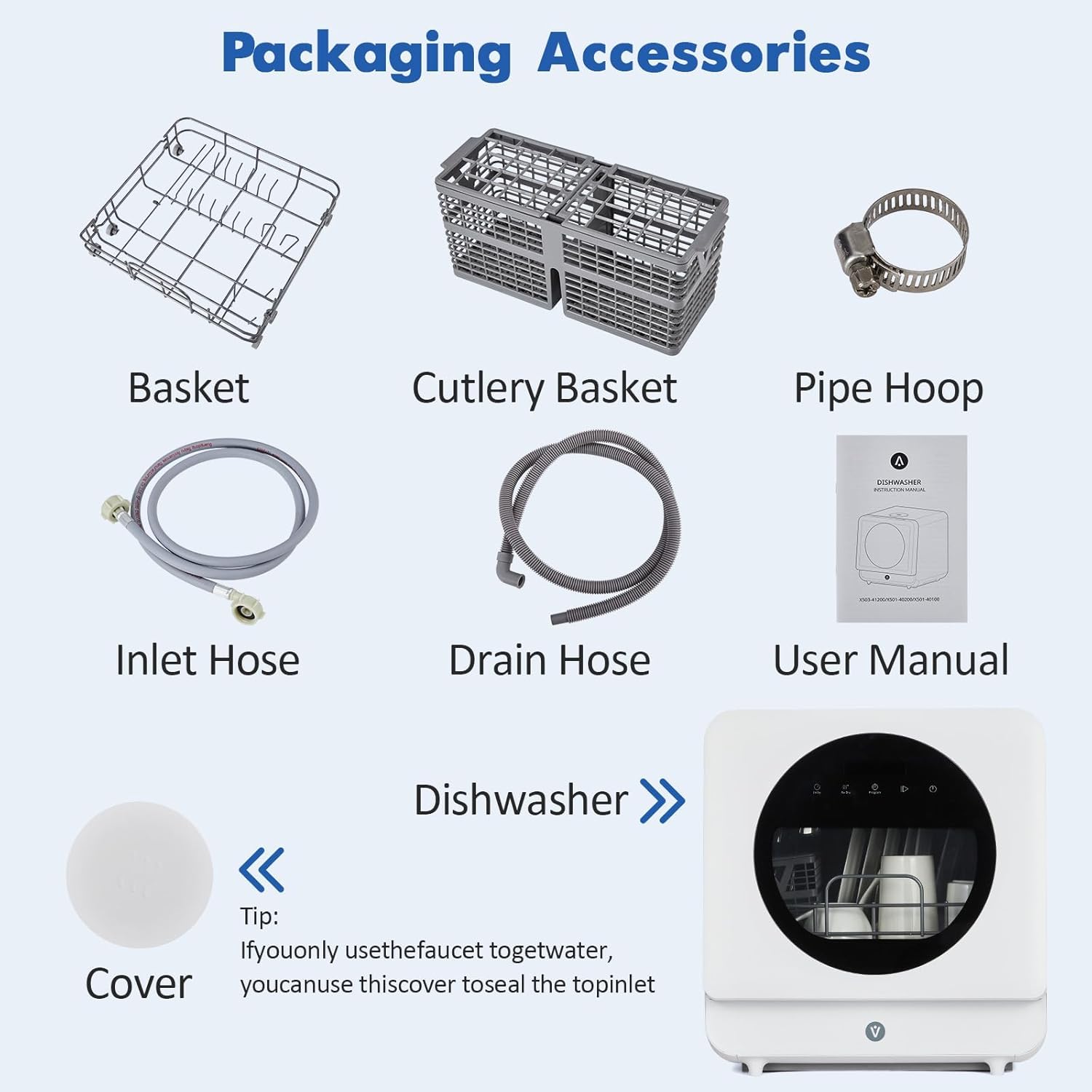
- Cutlery basket and compact rack layout: An included cutlery basket and organized internal layout support efficient loading of plates and glasses for the stated two-place capacity.
Cons
- Limited capacity for larger households: The two-place-setting target restricts usefulness for families or users who frequently prepare multi-course meals, forcing multiple cycles or partial handwashing for larger loads.
- Potential for reduced mechanical cleaning vs. full-size machines: A single small pump and compact spray assembly can limit spray coverage and mechanical force compared with larger dishwashers, making heavily baked-on soils more challenging to remove without pre-soaking.
- Drying performance depends on loading and item type: Although a PTC air-dry helps, plastics and deeply recessed containers may still retain moisture and require manual drying or additional ventilation after the cycle.
- Maintenance frequency and filter attention: The small internal tank and recirculation design make regular filter cleaning and sump inspection more critical to avoid odor buildup than in larger, higher-flow units.
Final Verdict: Who This Dishwasher Is Best For (and Who Should Skip It)
This countertop portable dishwasher fits single adults, couples, students, RV owners, and small households that prioritize minimal installation, compact footprint, and flexible water supply options. Its six wash programs, PTC hot-air drying, and 24-hour delayed start make it well-suited for kitchens where counter space is at a premium and loads are light to moderate—plates, cups, and occasional cookware. The 40 dB noise rating and touch controls support use in open-plan living areas when placement and scheduling are managed to limit disturbance. Resource-conscious users who favor short daily cycles and modest water use will find the ECO and Rapid modes useful for quick turnarounds.
Conversely, households that routinely clean large pots, baking trays, or full dinner settings should avoid this unit as a primary dishwasher due to its two-place capacity and constrained spray coverage. Buyers requiring near-silent operation, industrial-level durability for heavy daily loads, or a full-size rack configuration should consider integrated or larger portable alternatives. For the stated use cases—small living spaces and light meal cleanup—this model offers a compact balance of cleaning options, drying capability, and convenience, provided users adhere to recommended maintenance and realistic loading practices compared with full-size machines available in 2026.
Frequently Asked Questions (FAQs)
How many place settings can a countertop portable dishwasher typically accommodate?
Countertop portable dishwashers are designed for compact loads and typically accommodate between one and three place settings. Capacity depends on internal rack geometry and accessory layout; the discussed model targets approximately two place settings, making it suitable for singles or couples but not for large family meal cleanups.
Does a PTC hot-air drying system fully dry plastic items?
PTC hot-air drying increases internal air temperature and improves evaporation compared with passive condensation methods, but plastics often retain moisture due to lower thermal mass and hydrophobic surfaces. Plastics may need additional ventilation or brief towel drying after the cycle, while ceramics and glassware typically dry more completely with forced hot-air systems.
Is a 40 dB noise rating quiet enough for open-plan living spaces?
A 40 dB rating is relatively low and generally below conversational levels, making the unit acceptable for many open-plan setups. Perceived disturbance also depends on tonal frequency and surface-borne vibration; placing the unit on a stable countertop and using anti-vibration pads can reduce noise transmission in sensitive environments.
What maintenance is required to keep a compact dishwasher performing well?
Routine maintenance includes emptying and rinsing the coarse filter after several cycles, inspecting the sump area for debris, descaling heating elements in hard-water regions, and checking inlet hoses and valve seals for leaks. Regular attention prevents performance decline and odor buildup common in small internal-tank designs.
Can this type of dishwasher be used without a faucet connection?
Yes. Certain countertop models include a built-in water tank so they can operate without a direct faucet connection; the internal reservoir requires manual filling between cycles. Faucet mode remains available for continuous fresh water exchange when heavier cleaning is required or for consecutive runs.
How effective are rapid 10-minute wash cycles for soiled dishes?
Rapid cycles provide quick surface cleaning and are best for lightly soiled items or rinsing. They rely on high-velocity jets and detergent chemistry more than prolonged soak times, so heavily baked-on soils or greasy cookware typically require intensive cycles or pre-soaking to achieve comparable results.
What should be considered about energy use for countertop dishwashers with built-in heaters?
Compact dishwashers with integrated heaters can draw significant power during heating phases; a peak power rating (for example, around 1000 W) indicates electrical demand during wash and dry phases. Energy efficiency depends on chosen cycle, water temperature, and drying strategy, with ECO programs reducing heater duty and overall consumption per cycle.