
Why dishwasher selection matters
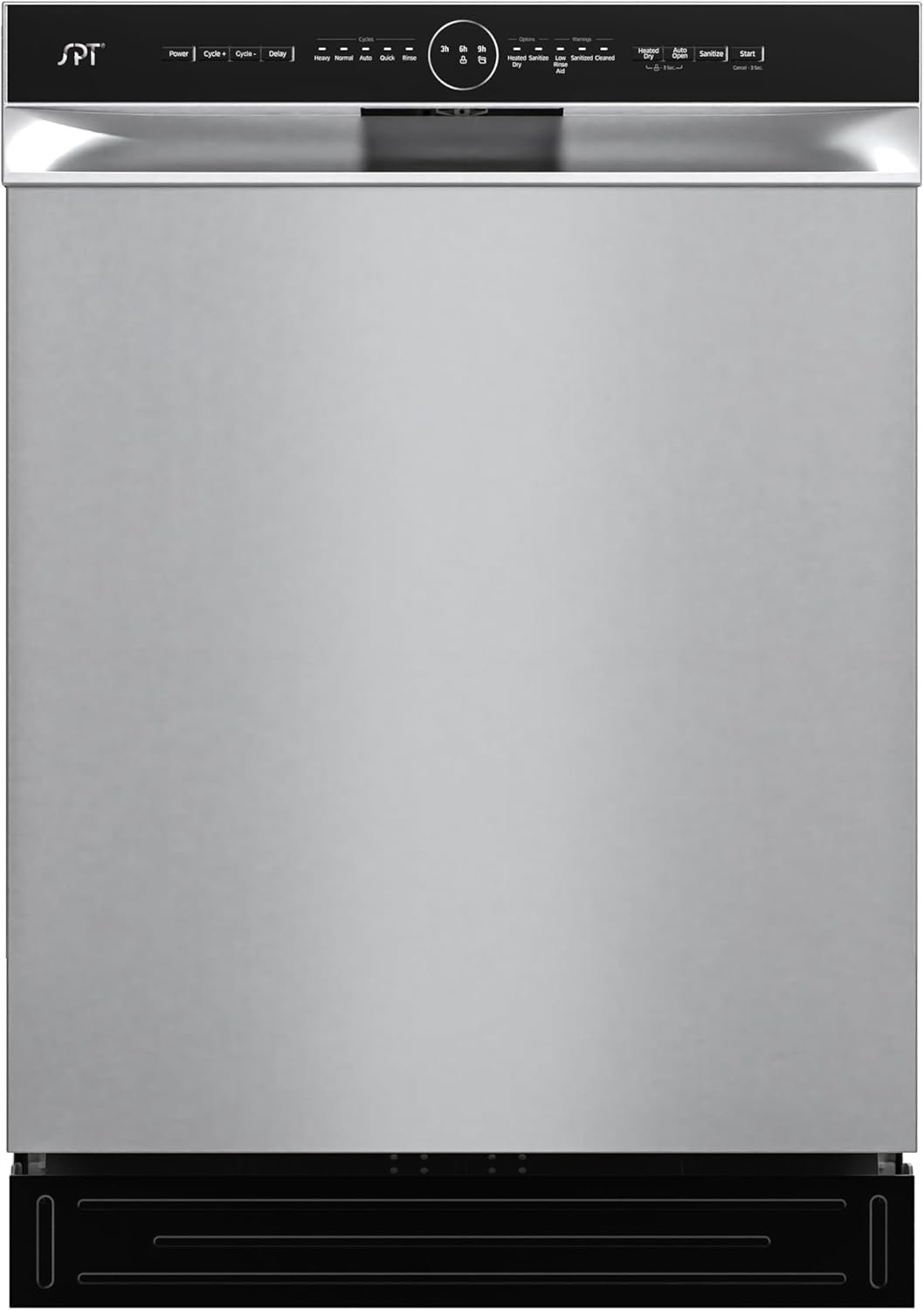
Selecting the right dishwasher influences daily kitchen workflow, utility usage, and long-term appliance satisfaction. Household size, meal patterns, and kitchen layout determine required capacity and rack flexibility; compact households often prioritize smaller water and energy footprints while larger families need robust load handling and cycle variety. Noise sensitivity and open-plan living areas drive attention to decibel ratings and vibration isolation. Cleaning expectations hinge on spray-arm design, filtration, soil-sensing technology, and available cycle temperatures. Drying performance and moisture control affect how integrated cabinetry and hand-drying habits intersect with dishwasher choice. Energy and water efficiency standards influence annual utility metrics and environmental impact, and build materials such as a stainless steel tub affect corrosion resistance and heat retention. Considering these factors together helps match a 24-inch built-in model to usage patterns, whether the priority is quiet operation, high-temperature sanitation, rapid cycles, or long-term durability in a frequently used kitchen.
Quick Overview
| Feature | Details |
|---|---|
| Dishwasher type | Built-in, 24-inch width, tall tub stainless steel interior |
| Capacity | Up to 12 standard place settings; approximately 7 gallons per cycle water use listed |
| Wash cycles & tech | 5 wash programs: Auto (Smart Wash soil sensor), Normal, Quick, Rinse, Heavy; Smart Wash automatic soil detection |
| Drying method | Heated Dry; optional Auto Open door function to improve drying |
| Noise level | 54 decibels (manufacturer specification) |
| Energy efficiency | ENERGY STAR certified; annual energy consumption listed at 240 kWh/year |
| Dimensions & installation | 22.7″ D x 23.6″ W x 33.75″ H; built-in installation, includes inlet and drain hoses |
| Interior & controls | Stainless steel tall tub; top cutlery rack; touch controls; detergent and rinse aid dispensers |
The table summarizes core hardware and performance-related specifications. For a small to medium U.S. household, the SD-6505SS’s 12-place setting capacity, Smart Wash soil detection, and tall stainless steel tub make it suitable for daily loads and occasional heavy cookware; the 54 dB rating positions it as mid-range for open-plan kitchens where absolute quiet is not the highest priority. ENERGY STAR certification and a listed 240 kWh/year provide baseline expectations for annual energy use.

Cleaning performance and wash coverage
The SD-6505SS centers cleaning around a Smart Wash system that detects soil level and load size to select an appropriate cycle and water flow pattern, paired with five program options including Heavy and Auto. A tall stainless steel tub aids heat retention and corrosion resistance, while multiple spray arms (typical in comparable designs) distribute water across both adjustable upper and lower racks. Filtration and detergent dispensing are managed by an automatic dispenser with a rinse aid reminder to maintain chemical distribution and spotting control. The combination of soil sensing, high-temperature sanitize capability (up to 156°F), and multiple cycle choices aims to balance residue removal, sterilization needs, and delicate item care across varied loads.

Spray distribution and soil-sensing implications
Spray arm placement and rotation geometry determine coverage for plates, glasses, and cookware; a two-rack dishwasher with a top cutlery tray relies on lower and upper spray arms to reach deep pans and upper glassware simultaneously. Soil-sensing systems adjust water volume and duration based on turbidity or conductivity readings, which can reduce under- or over-washing when calibrated correctly. Sanitize cycles that reach higher wash temperatures improve removal of grease and baked-on food by increasing detergent activation and thermal action. However, thick burnt residues often require pre-soaking or a Heavy cycle with higher water pressure and longer duration to achieve equivalent results.
Filtration, detergent dispensing, and residue control
An automatic detergent dispenser and rinse aid indicator contribute to consistent dosing; rinse aid reduces surface tension to minimize spotting and improve sheeting during the drain and dry phases. A removable coarse filter and finer microfiltration trap particulate matter to protect spray arms and pumps; routine filter cleaning prevents redeposition of solids. Where a dishwasher lists a stainless steel tub, heat retention during cycles helps maintain wash temperature but does not replace the mechanical action of spray patterns and filter upkeep needed for reliable spot-free outcomes.
Capacity, rack design, and place settings
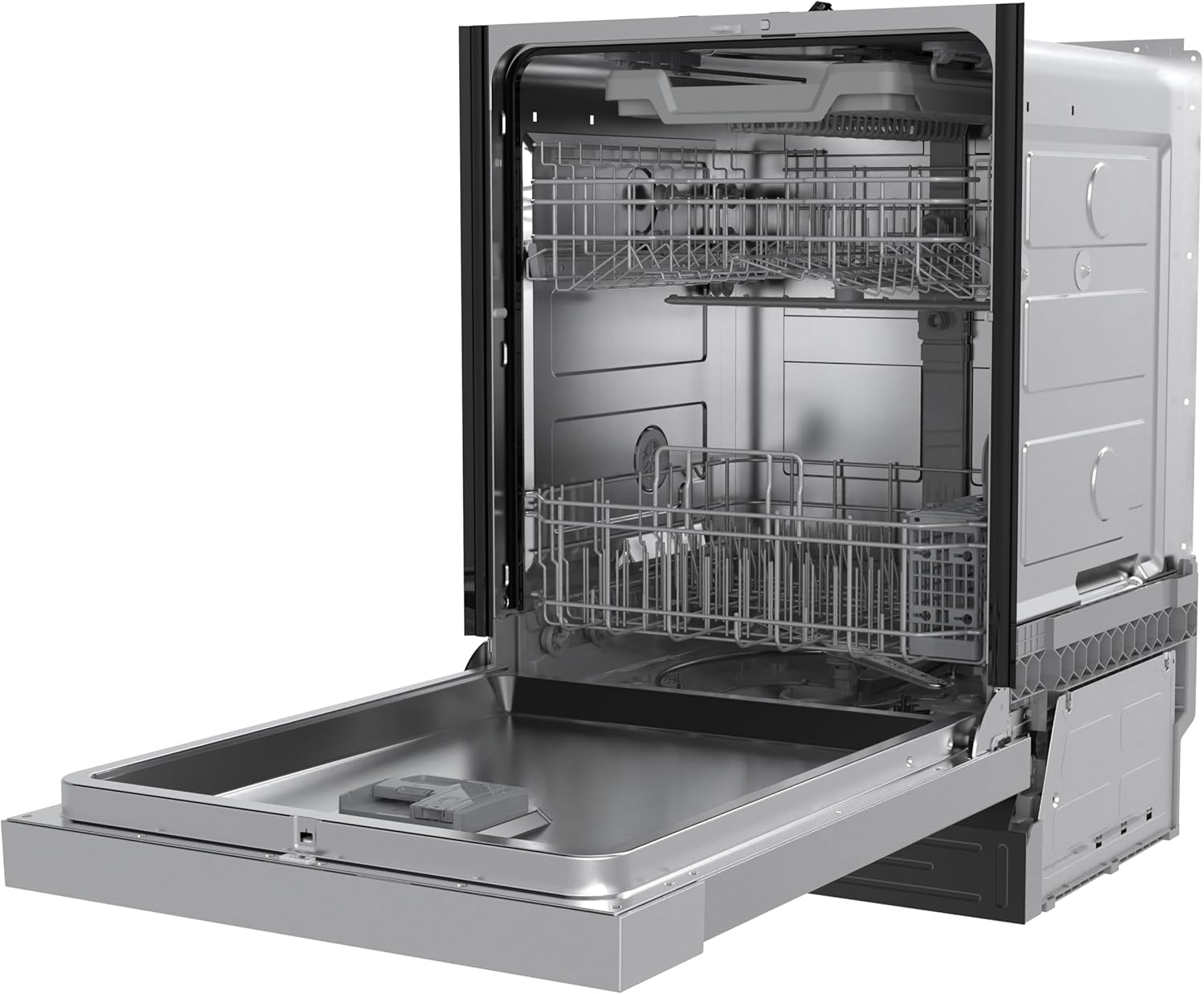
Capacity is a composite of place settings, rack adjustability, and usable interior volume. The SD-6505SS lists up to 12 standard place settings with two primary dish racks plus a top cutlery rack that allows flat placement of utensils which might otherwise fall through a basket. An adjustable upper rack provides flexibility for taller stemware or small appliances, while the lower rack is typically configured for plates, pots, and pans. The top cutlery rack frees lower rack space and improves tines layout, supporting better spray access to dinnerware. Overall, this configuration addresses the needs of couples and small families requiring mixed loads of glassware and cookware while preserving flexibility for occasional larger items.

Top cutlery rack benefits and space optimization
A dedicated top cutlery rack offers separation of silverware for improved drying and prevents nesting of spoons and forks, which can impede both cleaning and drainage. Flat placement reduces contact points and exposes more surface area to spray action and heated air. The trade-off is a loss of some vertical clearance on the upper rack; however, many kitchens benefit from the freed lower space for plates and small pans. For households frequently washing delicate glassware, the upper rack adjustability and insulated tub help stabilize stemware during cycles but careful loading remains important to avoid chipping.
Loading patterns for mixed and heavy cookware loads
Lower-rack design should accommodate large plates and pots with sufficiently spaced tines to allow detergent and spray access; the SD-6505SS’s two-rack layout plus specialized cutlery tray supports mixed loads but may require strategic placement of oversized pans to avoid blocking spray arms. Heavy-soil cycles with higher water pressure and extended durations improve cleaning for pots, though very large or oddly shaped items can limit capacity and spray coverage. Users planning frequent heavy cookware washing should expect to run targeted cycles or pre-rinse items to maintain consistent results and prevent recirculation of large food particulates.
Noise levels and suitability for open kitchens
Noise rating is a key consideration in open-plan or noise-sensitive environments. The SD-6505SS specifies a 54 dB noise level, which sits in a moderate range: audible in adjacent living spaces but quieter than many older models. Decibel measurements reflect standardized test conditions and may vary in installed environments depending on cabinetry fit, floor construction, and mounting. Vibration damping, motor insulation, and pump design further influence perceived sound. For households prioritizing near-silent operation—such as shared living spaces where conversation or television occur in close proximity—a sub-45 dB model will typically be preferable, whereas 54 dB is acceptable for kitchens isolated from main living areas or where some operational sound is tolerable.

Interpreting decibel ratings in real-world settings
Decibel differences are logarithmic: a 10 dB increase roughly doubles perceived loudness. At 54 dB, the dishwasher commonly produces background noise similar to a normal conversation at a distance. Built-in installation into cabinetry can either amplify or dampen noise depending on clearances and paneling. Solid mounting, anti-vibration pads, and proper leveling reduce rattles; poor installation gaps can create flanking paths for noise. Considering these factors alongside the 54 dB rating helps set realistic expectations for open-concept kitchens versus closed utility rooms.
Noise-related trade-offs with cleaning power
Higher wash pressures and more aggressive circulation typically increase noise; many manufacturers balance motor power and insulation to meet both cleaning requirements and sound targets. Smart Wash systems that modulate cycle intensity can produce quieter operation during light loads and ramp up for heavy soils. Sanitize cycles operating at elevated temperatures may not significantly change noise output but can extend cycle duration, resulting in prolonged background operation. Buyers should weigh tolerance for cycle length and intermittent sound variations against the need for stronger wash performance for heavily soiled items.
Drying systems and moisture control
Drying combines heated elements, cycle programming, airflow, and, in the SD-6505SS’s case, an optional Auto Open door function to improve evaporation. Heated Dry raises interior temperature during the final stage to assist moisture removal, while Auto Open releases trapped humid air by cracking the door at cycle end to speed moisture escape and reduce condensation on glasses and plastic. Rinse aid use further supports film sheeting and reduces water spots. Stainless steel interiors retain heat better than plastic, supporting extended drying efficacy, but plastic items and deep-set cups can still trap moisture and may not reach fully dry status without supplemental air circulation or shorter load sizes.

Heated Dry versus Auto Open performance implications
Heated Dry offers active thermal energy to encourage evaporation and can shorten the need for post-cycle towel drying; however, it increases energy use relative to air-dry modes. Auto Open is a passive enhancement that improves natural convection without sustained energy draw, useful for reducing residual moisture on plastics and recessed rims. Combining Heated Dry and Auto Open can yield better overall dryness, but users should note that Auto Open requires appropriate clearance and may not be desirable in all cabinetry finishes due to potential steam exposure at cycle end. Both methods benefit from proper loading to allow air movement.
Moisture control for mixed-material loads
Glassware and stainless-steel items tend to shed water more readily than plastics, which can retain droplets in recessed areas. Rinse aid, correct cycle selection, and strategic placement (cups angled to drain toward the sump) improve outcomes. Filters and a clean interior prevent redeposition of waterborne minerals that cause spotting. In hard-water areas, periodic use of rinse aid and higher-temperature cycles reduce scale buildup that can impair drying efficiency over time.
Energy, water efficiency, and maintenance
ENERGY STAR certification and the listed annual energy consumption of 240 kWh/year indicate the SD-6505SS meets baseline federal efficiency guidelines, while the listed 7 gallons per cycle provides a water-use reference point. Smart Wash soil sensing helps adapt cycles to avoid unnecessary water and energy use on light loads. Regular maintenance—cleaning filters, checking spray-arm holes, and monitoring the rinse aid dispenser—preserves hydraulic efficiency and prevents performance degradation. Included inlet and drain hoses simplify hookups but correct sealing and water-pressure compliance during installation are essential to avoid leaks or diminished performance. Routine inspection of door gaskets and the detergent dispenser ensures long-term operational integrity.

Filter maintenance and common upkeep tasks
Accessible coarse and fine filters trap food solids and protect pumps; periodic removal and rinsing prevent clogs and circulation loss. Spray-arm blockages from mineral deposits or food remnants reduce cleaning uniformity; simple cleaning with a brush or soaking in a mild descaling solution restores flow. The rinse aid dispenser and detergent compartment require occasional wiping to avoid buildup that can hinder proper dosing. Manufacturer-specified cleaning intervals and use of approved detergents and rinse aids minimize component wear and maintain warranty conditions.
Durability indicators and long-term reliability considerations
Stainless steel interiors resist corrosion and better withstand thermal cycling compared with plastic tubs, contributing to longevity. Motor and pump assemblies are common wear points; vibration isolation, adequate water filtration, and avoiding oversized loads that strain components extend service life. Electronic touch controls and sensors provide convenience but can be more costly to service than mechanical dials. Regular maintenance, correct loading, and adherence to recommended water pressure and temperature ranges support predictable performance over multiple years.

Pros & Cons
Pros
- Smart Wash soil sensing: Automated soil and load-size detection optimizes cycle selection and can reduce unnecessary water and energy use. This adaptive approach helps balance cleaning intensity with efficiency for diverse loads.
- ENERGY STAR certified with listed annual energy use: Meeting ENERGY STAR standards indicates baseline efficiency; the listed 240 kWh/year provides a measurable reference for household comparisons.
- Stainless steel tall tub: A stainless interior improves heat retention, resists staining and corrosion, and supports higher-temperature sanitize cycles without warping or discoloration.
- Top cutlery rack: The flat cutlery tray increases lower-rack capacity, improves utensil separation for better cleaning and drying, and prevents utensils from falling through traditional baskets.
- Multiple wash programs including sanitize: Five program selections plus a high-temperature sanitize option (up to 156°F) provide flexibility for delicate glassware, rapid rinses, and heavily soiled pots.
- Auto Open drying option: The door’s ability to open at cycle end enhances passive moisture release and improves drying results without continuous energy use.
- Compact 24-inch built-in footprint: The size fits standard cabinetry openings for kitchens where space optimization is required, enabling built-in installation in smaller layouts.
- Included hoses and touch controls: Provided inlet and drain hoses streamline installation logistics, while touch controls offer a modern, easy-to-clean interface.
Cons
- Mid-range noise level (54 dB): The specified noise rating may be perceptible in open-plan layouts and is louder than ultra-quiet models; noise-sensitive households may prefer models under 45 dB.
- Limited to 12 place settings: While sufficient for many households, larger families or those who entertain frequently may find the capacity restrictive relative to 24-inch models with deeper interior volumes or 24″ tall tub variations offering more flexible loading.
- Potential for residual moisture on plastics: As with many heated-dry systems, plastic items and recessed containers can retain moisture; reliance on Auto Open helps but may not eliminate all dampness.
- Electronic controls and sensors: Touch controls and soil sensors add convenience but can increase repair complexity and cost compared with simpler mechanical designs.
- Installation considerations for Auto Open: The Auto Open feature requires cabinet clearance and may expose surrounding finishes to additional steam; some installations may need adjustments to accommodate the door pop-open function.
Final Verdict: Who This Dishwasher Is Best For (and Who Should Skip It)
The SD-6505SS is well suited to small to medium U.S. households seeking a built-in 24-inch dishwasher with a stainless steel tall tub, flexible rack arrangement, and modern features such as Smart Wash soil sensing and a top cutlery rack. Buyers prioritizing ENERGY STAR-certified appliances with a balance of cleaning modes—including a high-temperature sanitize option—and those who value the space-saving benefits of a 12-place setting layout will find the model aligns with daily mixed-load needs. The Auto Open drying option paired with Heated Dry gives versatile drying strategies for households that favor reduced towel drying without constant energy draw.
This model is less appropriate for extremely noise-sensitive environments, multi-family homes with frequent large loads, or buyers seeking the absolute quietest operation; the 54 dB rating places it in a moderate noise class. Additionally, those requiring larger capacities or specialized rack layouts for oversized cookware should consider wider or higher-capacity alternatives. Overall, the SD-6505SS represents a feature-rich compact built-in dishwasher for kitchens that need reliable cleaning coverage, sensible energy performance, and practical drying options without stepping up to full-size, higher-capacity units.
Frequently Asked Questions (FAQs)
How effective is the Smart Wash soil sensor for improving cleaning results?
Smart Wash soil sensors adjust cycle duration and water usage based on detected turbidity or soil levels, which can improve cleaning consistency across mixed loads. By increasing temperature and pump activity for dirtier loads and shortening cycles for light loads, the system balances performance and efficiency; however, heavily burned-on residues may still require a Heavy cycle or pre-soaking for best results.
Is a 54 dB noise rating suitable for open-plan living areas?
A 54 dB rating represents a moderate noise level comparable to a normal conversation at distance. In open-plan layouts it will be noticeable but not intrusive for many households. For very noise-sensitive situations or rooms used for media and conversation directly adjacent to the kitchen, a model rated below 45 dB is recommended for near-silent operation.
Will the Auto Open door feature improve drying for plastic items?
Auto Open increases passive ventilation at cycle end by cracking the door to release humid air, which helps evaporation and reduces surface droplets on plastics. While it improves drying compared with closed-cycle air drying, some plastics and recessed items may still retain moisture and could require towel drying or additional drying time for fully dry results.
How often should filters and spray arms be cleaned to maintain performance?
Filters should be checked and rinsed every few weeks depending on load frequency and soil levels; more frequent cleaning is advisable after heavy cooking or when debris accumulation is visible. Spray-arm holes and ports should be inspected monthly and cleared of mineral deposits or lodged food with a soft brush to maintain consistent spray patterns and avoid reduced cleaning coverage.
Does the stainless steel tub affect energy and drying performance?
A stainless steel tub retains heat more effectively than plastic, supporting higher wash temperatures and aiding drying efficiency by holding thermal energy through the cycle. This improves sanitize cycles and can reduce condensation, but drying outcomes also depend on cycle selection, rinse aid use, and load arrangement for optimal airflow.
What should be considered when installing the SD-6505SS regarding cabinet clearance?
Built-in installation requires correct width, depth, and height clearances as specified by the manufacturer, and sufficient space for the Auto Open door to vent without obstruction. Proper leveling and solid mounting reduce vibration and noise transmission; verifying water inlet pressure and ensuring secure hose connections prevent leaks and support reliable performance.
How does ENERGY STAR certification influence expected energy use?
ENERGY STAR certification indicates the appliance meets baseline U.S. federal guidelines for energy efficiency, helping households expect lower energy consumption compared with non-certified models. The listed annual energy consumption (240 kWh/year) provides a reference for comparing similar units, though actual usage varies with cycle selection and frequency of operation.
Who should avoid purchasing a compact 12-place setting dishwasher like the SD-6505SS?
Households that entertain frequently, have large daily dish volumes, or require ultra-quiet operation should consider larger-capacity or quieter alternatives. Users with extensive oversized cookware or specific loading needs may find the 12-place layout restrictive and may be better served by wider or higher-capacity models with more flexible rack configurations.