
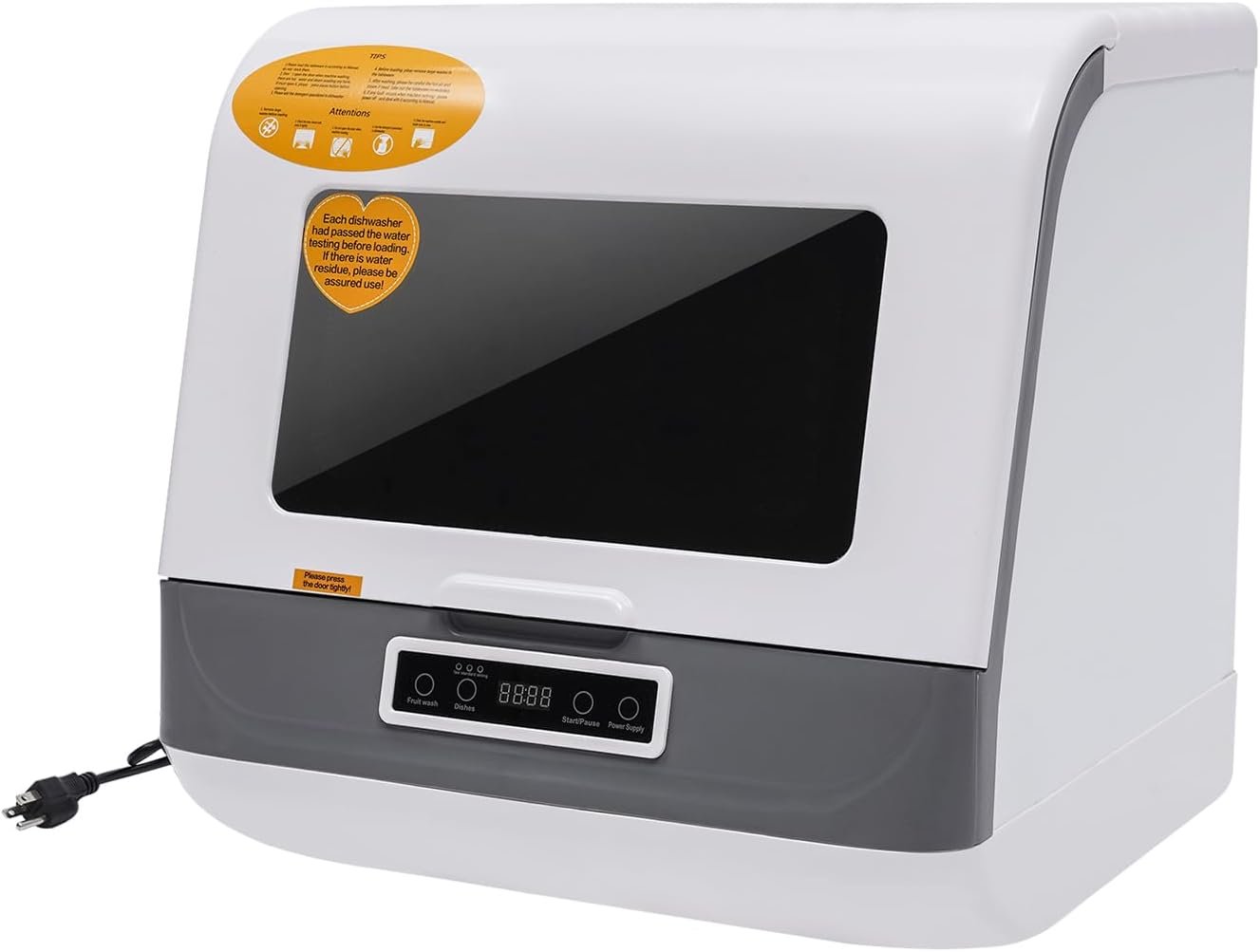
Why Dishwasher Choice Matters for Small Homes
Selecting the right dishwasher for a small household affects daily convenience, kitchen layout planning, and long-term appliance performance. Compact countertop models are intended for limited spaces—apartments, small houses, boats, and RVs—and choices should prioritize cleaning effectiveness, noise impact, and energy or water consumption. For occupants who run loads frequently or who have noise-sensitive open-plan kitchens, understanding spray coverage, cycle options, and decibel ratings helps align expectations. Equally important are capacity constraints and rack geometry: a unit with tight internal dimensions may clean dishes efficiently but could limit larger pans or serving platters. Finally, maintenance demands and durability matter for occupants who need low-upkeep fixtures; material choices like stainless steel interiors and accessible filtration systems will influence longevity and hygiene. These factors combined guide whether a countertop dishwasher will integrate smoothly into a particular living situation and meet the household’s routine cleaning needs.
Quick Overview
| Feature | Details |
|---|---|
| Dishwasher type | Countertop / Portable |
| Capacity | 8 liters internal capacity |
| Wash cycles | Quick Wash, Standard Wash, Strong Wash, Fruit Wash (4 cycles) |
| Spray & cleaning | Single spray arm with distributed small holes for multi-angle coverage (manufacturer disclosure) |
| Drying method | Not specified by manufacturer; small units typically rely on condensation or passive air-dry |
| Noise level | 55 decibels (manufacturer rating) |
| Energy | Rated at 800 watts; annual energy consumption listed as 800 watts in technical specs |
| Water connections | Included water pipe; simple countertop hookup required |
| Dimensions & weight | 17.72″D x 15.75″W x 17.32″H; 25.1 pounds |
| Material & finish | Stainless steel interior and exterior components disclosed |
| Controls | Touch controls |
| Warranty | Not specified in provided manufacturer disclosures |
This tabletop configuration is designed for compact environments where a full-size built-in unit is impractical. The 8-liter capacity and included bowl basket suit small loads and everyday dishes, while the four-cycle set supports light to heavy soils and a fruit wash option. The 55 dB rating indicates moderate operational noise; the listed dimensions and portable hookups mean quick placement without remodeling, making it appropriate for temporary or space-constrained installations.

Cleaning performance and wash coverage
The countertop dishwasher emphasizes spray-angle optimization through a single spray arm with multiple small holes that, per manufacturer details, aim to target dish surfaces from several angles. Effective cleaning in small units depends on pressure, nozzle geometry, and internal circulation; this model’s 800W heating and pump capacity should provide sufficient water pressure for common soils given correct loading and detergent selection. The provided wash modes—quick, standard, strong, and a dedicated fruit wash—allow different temperature and duration profiles, which affect soil dissolution and sanitization. Filtration and soil suspension strategies also shape outcomes: a well-designed removable filter and internal circulation pathway reduce redeposition and maintain consistent wash pressure between cycles, which helps manage grease and food residues on plates, glassware, and light cookware.

Spray arm design and pressure distribution
Spray arm geometry in compact dishwashers controls reach and impingement angle. Small holes distributed along the arm produce multiple jets that intersect at points within the cavity to dislodge soils; the effectiveness depends on pump flow and nozzle orientation. In a unit of this size, intentional nozzle angling and spacing are necessary to maximize coverage across stacked plates and bowls. A single-armed configuration can clean most everyday tableware when items are organized to expose surfaces to jets, but tightly nested pieces or obstructed utensils can create shadow zones that require repositioning or a stronger wash mode to compensate.
Filtration, soil suspension, and redeposition control
A dishwasher’s filtration system traps larger particles to prevent recirculation and protect drainage. Removable mesh or cartridge filters paired with a sump design promote sediment capture while allowing fine particles to remain suspended until removed by the drain. In compact models, filter area is limited, so regular cleaning of the filter and pre-rinsing heavily soiled items will preserve wash quality. Effective soil suspension also relies on consistent circulation: pump flow should keep particles moving toward the filter rather than settling on lower surfaces, which reduces the risk of redeposition and streaking on glassware during subsequent cycles.
Cycle selection and heat strategy for soil types
Cycle selection influences temperature, duration, and wash intensity—key factors for removing grease and baked-on residue. The quick wash is intended for lightly soiled items and shorter runs with lower water and energy use; the standard wash balances time and effectiveness for everyday loads; the strong wash uses extended runtime and higher temperatures for heavy soils. The fruit wash suggests a gentler program with lower temperatures or softer spray patterns to avoid damaging delicate items while rinsing residues. Correct detergent dosing and loading strategy augment these programs to achieve consistent cleaning results.
Capacity, rack design, and place settings
Capacity evaluation for countertop dishwashers should consider internal volume, usable rack area, and the shape of included baskets. An 8-liter internal capacity denotes a compact cavity that fits a limited number of place settings—typically enough for a small household’s single load of plates, glassware, and utensils. Rack design and included bowl basket determine how bowls and small cookware are oriented relative to spray jets; vertical tines, adjustable supports, or demountable baskets increase flexibility. Given the product dimensions and a bowl basket included, the unit likely accommodates cups, salad plates, and shallow bowls efficiently but may restrict full-size dinner plates, large sauté pans, or serving platters. Users who prioritize frequent small loads over occasional large-item cleaning will find this layout advantageous.

Internal volume versus real-world loading
Manufacturer-stated liters indicate cavity volume but do not directly equate to place settings. Compact countertop units trade depth and width for portability, so stacking strategy is key: plates placed along the sides and bowls placed angled toward the spray path optimize space. The included bowl basket enables grouped washing for small parts but takes up floor area, reducing the count of upright plates. Load planning that staggers items rather than nesting promotes better spray access, improving cleaning outcomes despite the limited cubic capacity.
Rack and basket geometry for mixed loads
Rack geometry dictates how mixed loads of glassware, plates, and small pots are secured. Vertical tines stabilize plates while open basket areas are useful for mixing utensils and small bowls. A removable or multi-purpose bowl basket increases versatility for irregular items but can reduce available plate capacity during a cycle. Fixed tines that don’t fold limit adaptation for larger cookware, so a compact dishwasher benefits from a design that balances dedicated spaces with modular components to handle diverse daily dishes.
Limits for cookware and specialty items
Countertop models commonly struggle with oversized pans and deeply nested bakeware due to limited height and spray reach. Heavy or heavily soiled pots may require pre-soaking or spot cleaning before a cycle. Items with non-removable handles, oversized lids, or very long utensils can block spray jets or create wash shadows. For households that occasionally need to clean larger cookware, supplemental handwashing or rotating loads between machine and sink may be necessary; this unit is best suited to regular tableware and light cookware rather than full-size kitchenware cleaning.
Noise levels and suitability for open kitchens
Noise rating informs placement decisions in open-concept living spaces. A 55 dB manufacturer rating places this countertop dishwasher in the moderate noise band—audible but generally quieter than conversation at close range. Perceived noise depends on frequency content: higher-pitched motor and pump sounds can appear more intrusive than steady low-frequency hums. In open kitchens or studio apartments, a 55 dB rating suggests the unit will be noticeable during operation, especially during high-energy wash or drain cycles. Strategic placement on a stable countertop, use of anti-vibration pads, and avoiding direct contact with cabinetry can reduce transmitted noise and vibration, making it more tolerable in shared living spaces.

Decibel rating interpretation and perceived loudness
Decibel ratings are logarithmic and represent a measure of sound pressure level under standardized conditions; a 55 dB listing indicates moderate sound output but does not capture tonal qualities. Perception varies with background noise: in a quiet night environment, 55 dB is more noticeable, while in a busy daytime kitchen it blends with ambient sounds. Comparative context matters: many full-size dishwashers advertise 44–50 dB for low-noise performance, so a 55 dB countertop unit is expected to be louder than the quietest built-ins but still within an acceptable range for frequent use in compact dwellings.
Component sources of noise and mitigation options
Primary noise sources include the wash pump, motor bearings, and water flow through valves and spray jets. Higher pump speeds for heavy wash modes increase sound output. Mitigation techniques include mounting isolation pads beneath the unit, ensuring level placement on a rigid surface, and avoiding metal-to-metal contact with cabinetry. Routine maintenance, such as checking for loose components and ensuring the water inlet hose is correctly installed without kinks, also reduces rattles and intermittent noises caused by mechanical play.
Suitability for overnight or bedtime operation
Running a 55 dB unit overnight depends on household tolerance for background noise. In multiroom apartments with bedrooms adjacent to the kitchen, the machine may be heard through thin walls, potentially disturbing light sleepers. For those with separate kitchen areas or who schedule cycles earlier in the evening, the unit’s noise profile is more manageable. Consideration of cycle duration, scheduling to non-sleep hours, or placing soft materials near the placement surface can help lower perceived disturbance during later runs.
Efficiency, drying, maintenance, and durability expectations
Evaluating long-term operating expectations requires attention to energy draw, water use, drying approach, and maintenance needs. The manufacturer lists an 800-watt rating, which reflects instantaneous power draw rather than annual consumption or water volume; small countertop models typically use less water per cycle than full-size machines, but efficiency depends on cycle selection and load size. Drying performance is not specified by the manufacturer; compact units commonly rely on condensation or passive air-dry rather than active heated drying, which influences residual moisture on plastics and glass. Durability considerations include stainless steel construction, pump and motor component quality, and ease of access to filters and hoses for routine maintenance—factors that determine long-term reliability in 2026 market expectations.

Energy and water efficiency expectations
An 800W heating and pump system indicates moderate electrical demand during active cycles. Energy use per cycle depends on runtime and heating duration; shorter quick cycles and lower-temperature programs reduce consumption. Water consumption is not specified, but countertop machines often run smaller water volumes than full-size units, making them suitable for households seeking smaller, more frequent loads. Lack of explicit ENERGY STAR or similar certification in provided disclosures means buyers should compare cycle duration and manufacturer water-use claims when evaluating long-term utility impacts.
Drying approaches and moisture control on loads
Without a specified active drying system, condensation or passive drying is the probable method. Condensation drying uses residual heat to evaporate surface moisture, which then condenses on cooler cavity walls and drains away; it is energy-efficient but slower and can leave droplets on plastics. Passive air-dry cycles end with the door slightly ajar or a lower final rinse temperature, reducing energy use at the expense of completely dry plastics. For optimal moisture control, proper loading to allow air circulation and selecting higher-heat final rinse options when available will improve drying outcomes.
Filter access, maintenance routines, and longevity indicators
Regular filter cleaning is essential for consistent performance in compact dishwashers where filtration area is limited. A removable mesh or cartridge filter that is simple to extract and rinse will reduce redeposition and maintain pump efficiency. Stainless steel interiors resist staining and corrosion better than painted or plastic-lined cavities, supporting longevity in humid environments. Durability also hinges on the quality of seals, hose fittings, and electrical components; periodic inspection of hoses for kinks, clamp integrity, and gasket condition will help prevent leaks and extend service life.

Pros & Cons
Pros
- Compact portable form factor suitable for small spaces. The countertop installation avoids permanent plumbing work and fits apartments, boats, or temporary kitchen layouts where built-in units are impractical.
- Stainless steel interior and exterior materials increase resistance to staining and corrosion. Metal construction supports durability and can tolerate higher rinse temperatures compared with basic plastic interiors.
- Multiple wash modes offer flexibility. Quick, standard, strong, and a fruit wash allow selection based on soil level, delicate loads, or hygiene-focused rinses, improving versatility for varied daily items.
- Targeted spray arm design for multi-angle coverage. Distributed small holes in the spray arm aim to reach dish surfaces from multiple angles, which can improve cleaning coverage when loads are arranged correctly.
- Included accessories and simple hookups simplify setup. The supplied bowl basket and water pipe reduce the need for additional purchases and enable immediate countertop use without remodeling.
- Moderate noise rating reasonable for many small-home settings. A 55 dB rating is audible but generally acceptable for daytime and non-sleep-time operation in compact dwellings.
Cons
- Limited internal capacity restricts larger cookware. At an 8-liter capacity, full-size pots, large baking sheets, and oversized platters may not fit, requiring additional handwashing or alternative scheduling.
- Drying method not specified and likely passive. Without an active heated drying system, plastics and taller glassware may retain moisture at cycle end and require towel drying for immediate use.
- No listed energy certifications in provided disclosures. The absence of ENERGY STAR or similar listings means buyers should evaluate cycle runtime and water usage claims to estimate efficiency.
- Noise may be noticeable in very quiet environments. While 55 dB is moderate, noise-sensitive households or those with adjacent sleeping areas might find the operating sound intrusive during late hours.
- Warranty details not specified by the manufacturer. Lack of clear warranty information increases the importance of purchase channel and extended protection considerations.
Final Verdict: Who This Dishwasher Is Best For (and Who Should Skip It)
This countertop dishwasher is best suited to individuals and small households that prioritize space savings, portability, and straightforward installation over the capacity of a full-size machine. It aligns with occupants of apartments, tiny homes, boats, and RVs who run frequent small loads of plates, glassware, and light cookware. The stainless steel construction, multiple wash modes, and included bowl basket make it a practical option for everyday dish cleanup where remodeling is not an option and counter real estate is available.
Those who should consider alternative options include households that regularly need to clean large pots, full dinner service loads, or items requiring a robust heated drying cycle. Open-plan homes with strict low-noise requirements or buyers seeking ENERGY STAR–rated efficiency may prefer larger built-ins or quieter models with documented certifications. For 2026 comparisons, this unit provides portable convenience and reasonable cleaning capability for limited loads but is not a drop-in replacement for higher-capacity, certified, or ultra-quiet built-in dishwashers.

Frequently Asked Questions (FAQs)
How many place settings fit in an 8-liter countertop dishwasher?
An 8-liter countertop dishwasher typically accommodates a small number of place settings—commonly enough for cups, small plates, bowls, and utensils for one to two people per load. Internal geometry and included baskets influence usable capacity more than liters alone; efficient loading with plates along the sides and bowls angled toward the spray jet maximizes usable space. Larger plates and cookware are often excluded due to limited height and width.
Is a 55 dB rating quiet enough for an open-plan kitchen?
A 55 dB rating is moderate: it will be noticeable in quiet environments but generally blends with normal kitchen activity. Perceived loudness depends on background noise and frequency content; high-pitched motor sounds can be more intrusive than steady low-frequency hums. For light sleepers or bedrooms adjacent to kitchens, choosing running times outside sleeping hours or using placement strategies to reduce vibrations will improve tolerance.
Does a countertop dishwasher require permanent plumbing?
Most countertop dishwashers use a flexible water inlet hose and drain into the sink or a supplied pipe, avoiding permanent plumbing modifications. The included water pipe enables temporary or semi-permanent hookups; installation typically involves connecting the inlet to a faucet adapter and positioning the drain hose into the sink. For permanent installations, plumbing adjustments can be made, but the unit is designed for portable use.
What drying performance can be expected without a heated dryer?
If a manufacturer does not specify an active heated drying system, expect condensation or passive air-dry results. Condensation drying uses residual heat to evaporate moisture and tends to be energy-efficient, but plastics and tall glasses may still retain droplets at cycle end. Allowing additional air circulation or selecting higher final rinse temperatures where available can improve drying, but hand-drying remains necessary for some items.
How often should filters and hoses be maintained on a compact dishwasher?
Regular maintenance is important for compact units with limited filtration area. Filters should be inspected and rinsed after every few cycles or after heavy loads to prevent clogging and redeposition. Inlet and drain hoses should be checked periodically for kinks, wear, or loose clamps. Establishing a simple routine—filter rinses weekly and hose inspections monthly—helps maintain wash performance and reduce leak risk.
Are countertop dishwashers typically energy and water efficient?
Countertop dishwashers often use less water per cycle than full-size machines, making them efficient for small loads. Energy efficiency depends on cycle duration, heating requirements, and whether a heated dry is used. Without a recognized energy certification listed, consumers should compare cycle times and manufacturer water-use statements when assessing efficiency. Choosing shorter cycles for lightly soiled loads reduces both energy and water consumption.
Can cookware with residues be cleaned effectively in a compact dishwasher?
Heavily soiled or baked-on cookware may challenge compact dishwashers due to reduced spray reach and cavity size. The strong wash mode increases temperature and runtime to tackle tougher soils, but pre-soaking or manual scrubbing may still be required for stubborn residues. For best results, scrape and rinse excessive debris before loading and use the strong cycle for heavier soils.
What should be considered for long-term durability of a portable dishwasher?
Durability factors include material choices like stainless steel interiors, quality of pumps and motors, seal and hose robustness, and ease of accessing components for maintenance. Regular cleaning of filters and gaskets, avoiding overloading, and ensuring stable placement reduce wear. Checking manufacturer disclosures for build materials and service information helps set realistic expectations for longevity.