ZLINE 18-in Dishwasher Review: Quiet, Efficient Cleaning
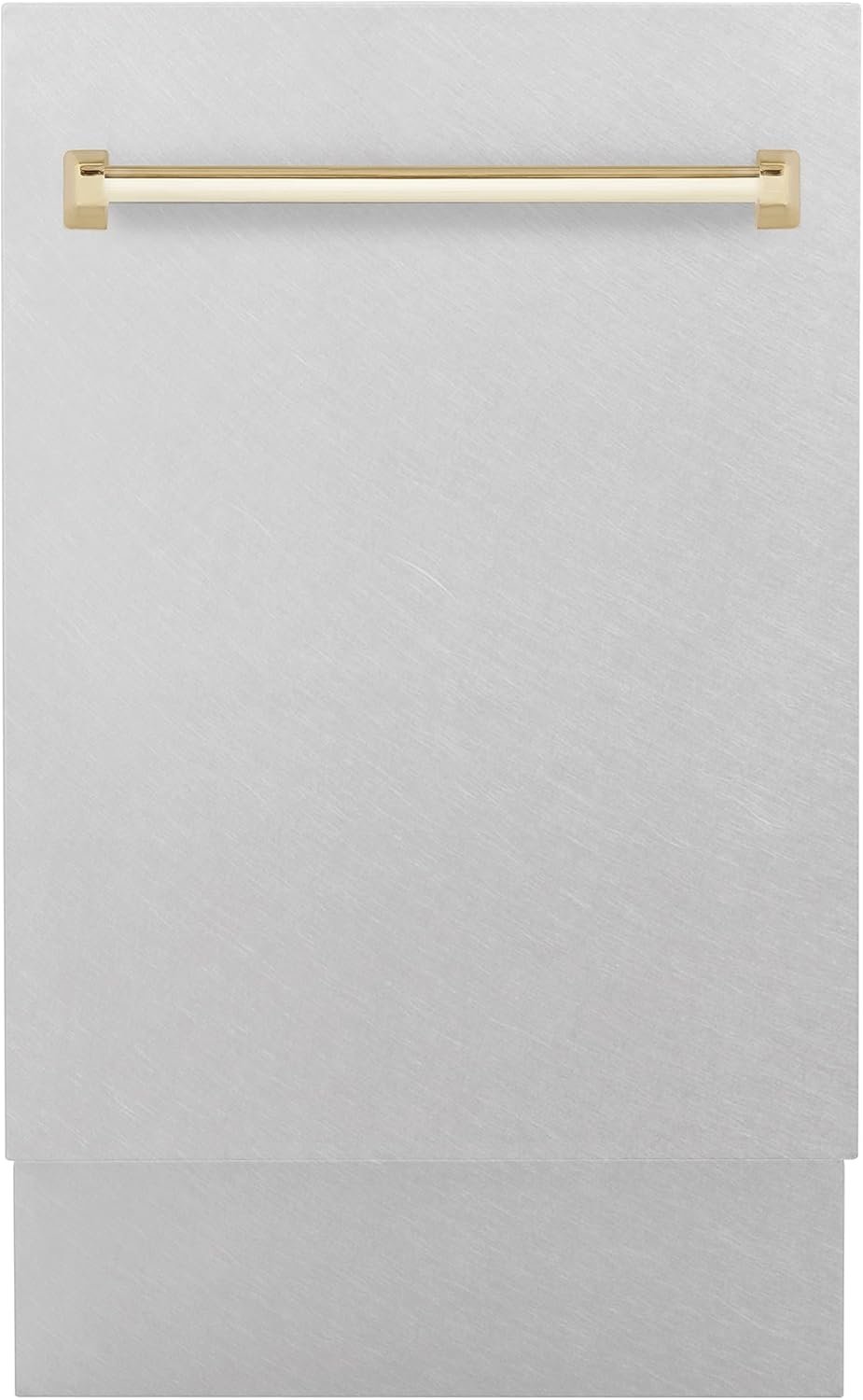
Choosing a dishwasher shapes daily kitchen workflow, impacts noise levels in open-plan homes, and influences long-term utility efficiency. Households with frequent meal preparation and larger cookware needs will prioritize cleaning coverage, cycle variety, and rack flexibility, while smaller kitchens and apartments often require compact dimensions and high cleaning efficiency per load. Sensitivity to ambient noise determines whether a 51 dBa rating is acceptable for a connected living space or needs further mitigation with cabinetry and placement. Energy-conscious buyers should evaluate water usage per cycle, drying method, and filtration design to anticipate maintenance intervals and potential residue. Materials and construction—304-grade stainless steel, three-rack layouts, and durable spray components—affect longevity and corrosion resistance in humid environments. Assessing these factors together helps match the ZLINE Autograph 18-in Tallac Series to household size, available space, and performance expectations without relying on anecdotal impressions.
Quick Overview
| Feature | Details |
|---|---|
| Dishwasher type | Built-in, 18-inch footprint, Autograph Tallac Series |
| Capacity | 10 Place Settings |
| Wash cycles and cleaning technology | 8 wash cycles; Smart Wash auto-sensing system; Intensive and Intensive Plus modes |
| Drying method | Heated Dry via internal heating element |
| Noise level | 51 dBa rated operation |
| Energy / water efficiency | Manufacturer-stated 3.2 gallons per load; designed to be energy-conscious |
| Dimensions and installation | 24.25″ D x 17.63″ W x 32.13″ H; top control built-in configuration |
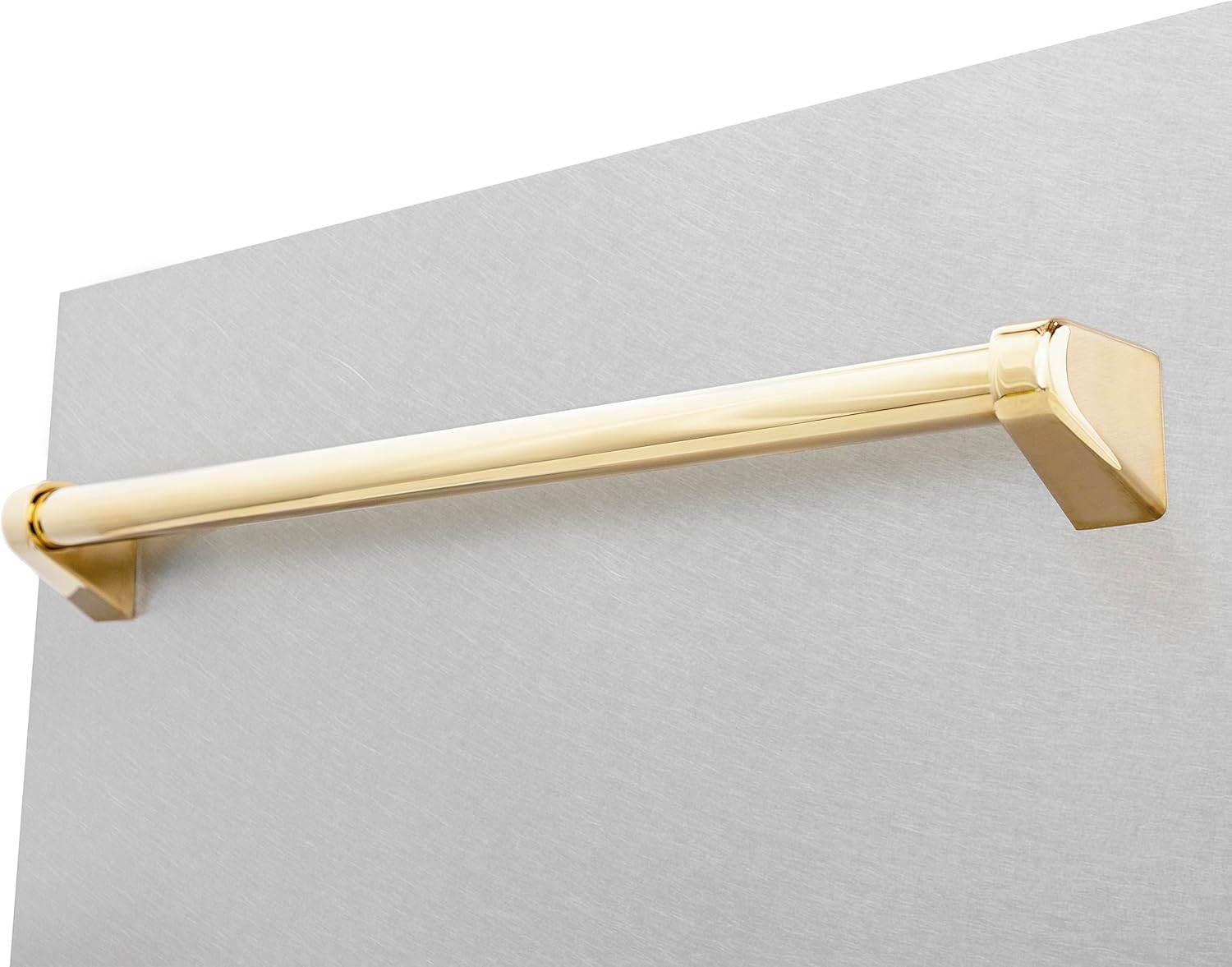
| Material and finish | 304-grade stainless steel interior; satin stainless exterior panel with polished gold handle |
| Capacity-specific features | 3-rack design including a 3rd rack |
| Warranty | Manufacturer warranty not specified |
This summary compiles the core specifications and functional claims so prospective buyers can quickly judge physical fit, load size, and operational footprint. The 10-place setting capacity and 18-inch width favor small to medium households, while the Smart Wash sensing and multiple cycles target varied soil levels without manual cycle guessing.

Cleaning performance and wash coverage
The ZLINE Autograph 18-in Tallac Series centers cleaning performance around a Smart Wash auto-sensing system, multiple spray arms and a multiple filter arrangement to manage soils across loads. The presence of Intensive and Intensive Plus modes indicates tailored pressure and time adjustments for stubborn residues, while the 50-minute Super Mode prioritizes quicker turnaround for moderately soiled loads. A 304-grade stainless steel interior supports higher rinse temperatures and resists staining, which helps thermal performance during heated cycles. Spray coverage and filtration design determine soil suspension and redeposition risk; the stated multiple filter system should reduce recirculation of large particles and protect wash pump components, promoting consistent spray arm throughput and cleaning distribution across the three racks.

Spray systems, pressure, and distribution
Spray arm configuration and pump output govern water distribution and mechanical action. Multiple spray arms and targeted jets increase the likelihood of water reaching tight clusters of utensils and nested plates in an 18-inch cavity where load density tends to be higher. Intelligent cycle selection that adjusts pressure and duration helps balance agitation and water usage; for heavily soiled cookware the Intensive modes extend time and pressure to increase mechanical cleaning without necessarily increasing overall water per cycle. Proper rack spacing and adjustable tines aid in preventing blocked jets and maintaining repeatable spray coverage across each load.
Filtration, soil management, and redeposition control
A multiple filter system separates larger food particles from recirculated water, which minimizes redeposition on rinsed items and reduces pump strain. Fine and coarse filtration stages are standard in models claiming multiple filters; coarse screens trap solids while finer meshes limit suspended particulates from reaching spray nozzles. Regular filter access and simple removal design support reliable performance; if filters become clogged, spray pressure and wash uniformity decline. The inclusion of multiple filters reduces the frequency of manual pre-rinsing for typical household loads but still requires routine attention for heavy-soil or large food waste scenarios.
Capacity, rack design, and place settings
Capacity is a central decision factor for households assessing whether an 18-inch dishwasher meets daily needs. The ZLINE Tallac Series lists 10 place settings and a 3-rack layout, a higher-density arrangement compared with two-rack compact units. The third rack provides dedicated space for cutlery, utensils, or shallow items, freeing lower racks for plates and bowls. Adjustable middle rack height or fold-down tines can improve accommodation for taller stemware or pots, and the 3-rack design benefits households that combine frequent dish loads with occasional cookware. Capacity claims should be evaluated against actual plate diameter, pot heights, and utensil baskets to avoid overloading, which reduces cleaning effectiveness and increases cycle time for intensive modes.

Rack layout, adjustability, and loading strategies
Rack geometry and adjustability determine how many usable items fit without obstructing spray arms. Folding tines and adjustable middle-rack positions allow taller items in the lower rack while making use of the third rack for small items that otherwise block spray paths. Strategic loading—placing bowls and cups facing down and avoiding overlap—maximizes exposure to jets in a compact footprint. For cookware-heavy households, removing the third rack in occasional cycles or using fold-flat tines helps accommodate large pots, although this model’s 18-inch width inherently limits maximum instrument size.
Place settings, utensil organization, and third-rack utility
A ten-place setting rating aligns with small family or couple households that prefer running full loads rather than daily partial loads. The dedicated third rack improves utensil organization and reduces nesting of silverware, contributing to more consistent cleaning and faster cycle completion when using shorter modes. The utility of the third rack depends on depth and clearance: shallow racks work best for utensils and lids, while deeper third racks risk shading from upper spray arms. The ability to place knives, measuring spoons, and slim travel mugs on the top tier prevents contact with delicate stemware below.
Noise levels and suitability for open kitchens
Noise is a significant factor in modern open-plan living. The ZLINE Tallac Series lists a 51 dBa operation level, which positions the unit in the quieter bracket of built-in dishwashers but still audible in adjacent living areas during active cycles. Sound rating alone does not fully predict perceived noise; mounting isolation, cabinetry fit, floor materials, and distance to seating areas influence how intrusive operation becomes. For households with frequent evening use or where the kitchen flows directly into living spaces, 51 dBa is generally acceptable but will be noticeable during quiet activities. Buyers sensitive to ambient sound should consider insulating cabinetry, decoupling mechanical anchors, or placing the dishwasher in less central cabinetry runs.

Decibel rating context and perceived quietness
A 51 dBa rating describes sound pressure under standardized conditions; perceived loudness is a function of environment and listener distance. In a large open living room, mid-frequency motor and pump noise may carry more than high-frequency water spray sounds, influencing perception. Installation factors such as gaps around the cabinet face, rigid mounting to framing, and adjoining reflective surfaces like tile or glass can amplify operational sounds. Conversely, enclosing the unit behind full-height cabinetry panels, insulating the cavity, or using soft-close draws can dampen reflections and reduce perceived loudness even when the decibel rating remains constant.
Noise-sensitive households and mitigation options
For households where early morning or late-night cycles must be nearly silent, 51 dBa units should be evaluated against ambient room noise during typical use. Mitigation options include running quieter cycles at off-peak times, using an adjacent closet or basement cabinetry when feasible, and ensuring proper installation with vibration-absorbing hardware. If absolute whisper-quiet operation is required, consider ultra-quiet models rated below 44 dBa, but weigh the trade-offs in capacity and feature set against the ZLINE’s compact footprint and specialized finish options.
Drying systems, moisture control, and interior materials
Drying performance intersects with cycle design, heating elements, interior materials, and venting strategy. The ZLINE Tallac Series specifies a premium Heated Dry mode that uses an internal heating element to raise interior temperature and accelerate moisture evaporation. A stainless steel tub retains heat longer than plastic alternatives, aiding condensation-based drying and reducing residual humidity. Heated Dry is effective for many dishes but may not fully dry plastics or deep-set cavities without aided air circulation or rinse aid; therefore the combination of heating elements and optimized cycle timing determines end-state dryness. Moisture control also influences long-term corrosion resistance and smell management, and stainless steel internals are preferable for resisting staining and maintaining thermal efficiency.

Heated element drying versus condensation methods
Heated element drying raises internal temperatures to promote evaporation and often shortens total program time compared with passive condensation cycles. In compact 18-inch interiors, heat concentrates quickly, improving evaporation rates for ceramics and glass. However, plastic items tend to retain moisture unless cycles include extended heated or fan-assisted phases. Condensation drying relies on stainless steel tub temperatures and cooler outer cabinetry to condense steam; it is generally more energy-efficient but slower. The inclusion of an active heated element allows the ZLINE model to better address mixed loads with heat-tolerant items.
Rinse aids, residual moisture, and maintenance implications
Rinse aids reduce surface tension and promote sheet-drainage of water, which significantly improves drying outcomes for both heated and condensation methods. For households with frequent plastic use, combining Heated Dry with a quality rinse aid improves results. Residual moisture trapped beneath lids or in utensil baskets can contribute to spotting or lingering odors; stainless steel interiors withstand repeated exposure without warping and are easier to sanitize. Regular descaling and filter maintenance preserve flow paths and heating element efficiency, reducing cycle time drifts or persistent dampness.
Energy and water efficiency expectations
Resource efficiency is a buyer priority, particularly in households with frequent loads. The ZLINE model states an energy-conscious design with a Smart Wash auto-sensing system and manufacturer-stated 3.2 gallons per load, which implies attention to minimizing water use while scaling cycle length and pressure to soil levels. Auto-sensing optimizes water and energy use by matching resources to soil conditions rather than fixed programs, but actual consumption depends on selected modes—Intensive and Intensive Plus extend time and energy for heavy soils. The 18-inch compact form factor typically yields lower absolute energy and water use per cycle compared with full-size units, but per-dish energy use depends on load fullness and cycle choices.
Auto-sensing and cycle efficiency trade-offs
Auto-sensing cycles improve baseline efficiency by avoiding unnecessary pre-rinse and by adjusting pump runtime, but they may extend cycle lengths when sensors detect concentrated soils. The trade-off between shorter quick cycles and longer energy-intensive intensive modes is important: running full loads on Eco or Smart Wash settings yields better per-item efficiency than multiple partial loads. The Smart Wash feature claims to balance water usage and cleaning effectiveness; buyers should expect variability in cycle duration depending on load composition and soil level.
Compact footprint and household utility impact
An 18-inch unit limits per-cycle capacity, often prompting more frequent runs in larger households, which can offset per-cycle savings. For small households or couples who run near-full loads, the compact footprint provides meaningful resource savings without sacrificing cleaning performance. Buyers should consider typical load profiles—frequency, soil level, and item types—when comparing lifecycle water and energy use between compact and full-size units.
Maintenance, filter requirements, and durability expectations
Maintenance expectations are influenced by filter accessibility, pump and motor design, and material selection. The ZLINE unit’s multiple filter system suggests staged filtration to protect pumps and maintain spray efficacy; regular cleaning of coarse and fine filters prevents performance degradation. A 304-grade stainless steel tub enhances corrosion resistance and life expectancy under repeated thermal cycles and detergent exposure. Bearings, seals, and spray nozzles are wear-prone components; access to replacement parts and manufacturer support affects long-term reliability. Buyers should anticipate simple periodic tasks—filter cleaning, gasket inspection, and occasional spray arm clearing—to sustain performance and avoid accelerated wear in high-use environments.

Routine maintenance tasks and intervals
Routine maintenance includes emptying and rinsing coarse filters after heavily soiled loads, checking fine filters monthly for buildup, and inspecting spray arms for blocked jets. Door gasket inspection and cleaning prevent mold and leak paths, especially in humid climates. Descaling and running a maintenance cycle with a manufacturer-recommended cleaning product on an occasional schedule preserves heat transfer and drain efficiency. Clear access to filters and tool-free removal designs reduce maintenance time and the likelihood of user neglect, preserving cleaning consistency and avoiding pump strain.
Durability factors and replacement considerations
Durability hinges on materials, motor type, and ease of part replacement. Stainless steel interiors and robust rack coatings resist corrosion and chipping compared with thin painted tubs. Pump and motor warranty coverage and the availability of OEM parts materially influence the total cost-of-ownership and downtime. Buyers in multi-unit households should prioritize models with serviceable components and straightforward part numbers to ensure timely repair, while owners who expect minimal maintenance should weigh extended warranty options where available.
Pros & Cons
Pros
- Elegant finish and compact footprint: The satin stainless steel panel with a polished gold handle offers a high-end look suited to upscale cabinetry while the 18-inch width fits narrow cabinetry runs and smaller kitchens. This combination addresses both aesthetic and spatial constraints without sacrificing a three-rack layout.
- Multiple wash cycles and Smart Wash sensing: Eight wash cycles including a Super Mode and two Intensive settings provide flexible responses to soil levels. The auto-sensing Smart Wash system aims to tailor water and pressure to load conditions, improving cleaning efficiency for varied household loads.
- 3-rack design increases usable capacity: The inclusion of a third rack improves utensil and small-item organization, enabling fuller loads and freeing space on lower racks for plates and cookware, which supports better spray coverage and cycle economy.
- Stainless steel tub and 304-grade construction: A stainless interior resists staining and retains heat for improved drying; 304-grade materials increase corrosion resistance, important for longevity in humid or hard-water environments.
- Heated Dry mode with heating element: Active heated drying accelerates moisture removal compared with passive condensation cycles, which benefits glassware and ceramics, and helps reduce the need for manual towel-drying.
- Reasonable noise rating for open layouts: A 51 dBa rating places the unit in a quieter category of dishwashers, acceptable for many open-plan homes when combined with appropriate cabinetry and installation.
- Water-conscious design: Manufacturer-stated 3.2 gallons per load positions the unit as water-efficient for typical load profiles, appealing to environmentally conscious buyers seeking compact options.
Cons
- Limited place settings for larger families: The 10 place setting capacity and 18-inch width may require more frequent runs in larger households, potentially offsetting per-cycle efficiency gains.
- Potential drying limitations for plastics: Heated Dry improves outcomes for many items, but plastics and deeply recessed containers may still retain moisture without supplemental rinse aid or longer drying phases.
- Warranty details not specified: The absence of a clearly stated manufacturer warranty in the provided specifications complicates long-term ownership comparisons and risk assessment for buyers focused on service coverage.
- Installation sensitivity and noise transmission: Although rated at 51 dBa, perceived noise depends on installation and cabinetry; inadequate mounting or gaps can amplify operational sound, which warrants careful installation planning.
Final Verdict: Who This Dishwasher Is Best For (and Who Should Skip It)
The ZLINE Autograph Edition 18 in. Tallac Series dishwasher fits buyers seeking a compact built-in unit that balances a luxury finish with practical cleaning features. Its 10-place setting capacity and three-rack layout make it well-suited for small families, couples, and apartment dwellers who prioritize efficient use of cabinetry space and improved utensil organization. The Smart Wash sensing, multiple cycles including Intensive modes, and a multiple filter system support effective cleaning across varied soils, while the 304-grade stainless interior and heated dry capability add durability and improved moisture control.
This model is less appropriate for larger households that regularly generate full racks of cookware and dinnerware, as the compact footprint will necessitate more frequent cycles. Buyers who require whisper-quiet operation below the mid-40 dBa range, extended warranty transparency, or the absolute largest capacity should consider full-size alternatives. For kitchens where design cohesion and compact performance are priorities, and where installation can be optimized to minimize sound transmission, the ZLINE Tallac Series represents a capable option within the compact built-in category.
Frequently Asked Questions (FAQs)
How many place settings fit in an 18-inch dishwasher like the ZLINE Tallac Series?
The ZLINE Tallac Series is specified for 10 place settings, which aligns with compact built-in designs. This capacity suits small households or couples who typically run full loads; larger families may find the capacity requires more frequent cycles. Place setting counts assume standard dinnerware dimensions and may vary with large plates, cookware, or unconventional items placed in the racks.
Is 51 dBa quiet enough for open-concept kitchens?
A 51 dBa rating is considered moderately quiet and acceptable for many open-concept homes, but perceived loudness depends on distance from living areas, cabinetry insulation, and room acoustics. Proper installation with minimal gaps and vibration-absorbing mounting can reduce transmitted sound. Households requiring near-silent operation should target models rated below 44 dBa.
Does the Smart Wash auto-sensing system reduce water and energy use?
Auto-sensing systems adjust water volume, pressure, and cycle duration to soil levels, which generally reduces unnecessary resource use compared with fixed cycles. The ZLINE unit specifies a manufacturer-stated 3.2 gallons per load, indicating a water-conscious design. Actual savings depend on load composition and cycle selection—Intensive modes will use more resources for heavy soils.
Will Heated Dry fully dry plastic items and deep containers?
Heated Dry accelerates evaporation and improves drying for ceramics and glass, but plastics and deep recessed containers often retain moisture due to lower heat retention and surface geometry. Using a rinse aid and arranging plastics on higher racks or with lids removed improves results. For best outcomes, select extended heated cycles for mixed loads containing plastics.
How often should filters be cleaned in a dishwasher with multiple filter stages?
Filter maintenance frequency depends on soil levels and load types; coarse filters benefit from a quick emptying after heavily soiled loads, while fine filters typically require monthly inspection and cleaning under regular household use. Multiple filter systems reduce redeposition risk but require routine access and cleaning to maintain spray pressure and pump longevity.
Are stainless steel tubs better than plastic for long-term durability?
Stainless steel tubs, especially 304-grade, resist staining, tolerate higher temperatures, and generally withstand thermal cycling and detergents better than plastic tubs. They retain heat, improving condensation-based drying, and are less prone to warping. However, overall durability also depends on rack coatings, motor quality, and part serviceability.
Can the third rack be removed to accommodate larger pots?
Some three-rack designs allow partial removal or adjustment of the top tier to make room for taller items below; this depends on rail and floor space within the 18-inch cavity. Removing or lowering the third rack may expose additional vertical clearance for pots, but the 18-inch width still limits maximum pot diameter and overall arrangement.
What installation considerations affect dishwasher noise and performance?
Installation affects both noise transmission and operational efficiency. Ensure tight cabinet fit with minimal gaps, use vibration-damping mounting hardware, level the unit to prevent rattles, and avoid rigid direct attachments to surrounding cabinetry. Proper water and electrical connections and unobstructed venting maintain pump performance and consistent drying.