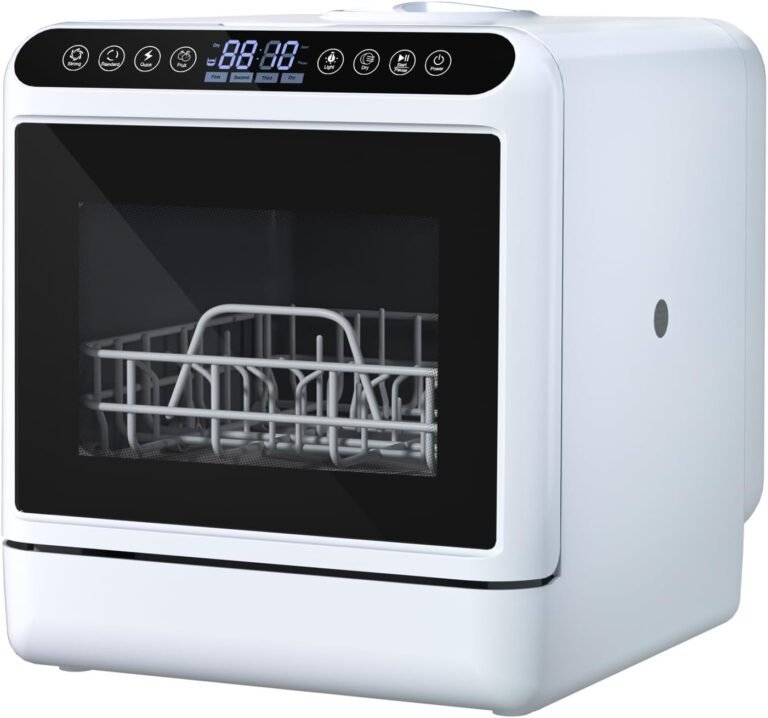
Portable Countertop Dishwasher: Powerful Cleaning, Low Noise
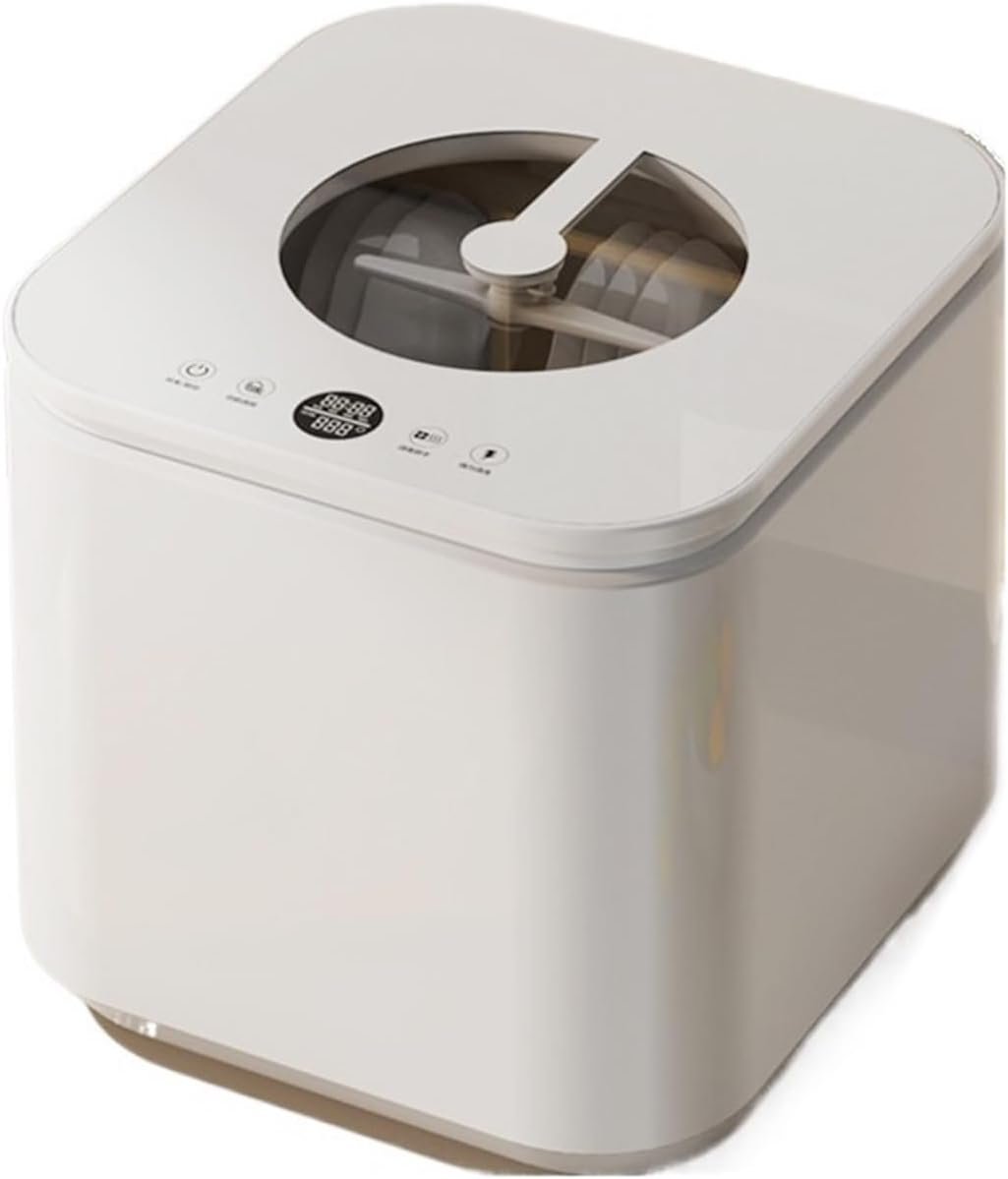
Introduction: Choosing the Right Countertop Dishwasher
Selecting a countertop dishwasher requires balancing cleaning performance, space constraints, and daily usage patterns. For small households, apartments, RVs, and dorms, a compact unit can substitute for hand washing or a full-size dishwasher; however, expectations about load size, cycle length, and noise should be aligned with the machine’s design. Countertop models place limits on dish dimensions and rack layout but can offer true mechanical spray cleaning with significantly lower water per cycle than handwashing when used efficiently. Noise sensitivity is a frequent deciding factor for open-plan kitchens and studio apartments; compact units typically have smaller motors and different acoustic profiles than built-in models. Energy and water consumption specs, available drying systems, filtration design, and simple faucet-connect installation determine whether a portable dishwasher fits a given household routine. The manufacturer-provided specifications—5L maximum water consumption per cycle, up to 55 minutes wash time, 0.5 kWh power consumption per cycle, top-opening countertop installation, and an integrated drying mode—define the operational envelope and highlight where careful matching to household needs is most important.
Quick Overview
| Feature | Details |
|---|---|
| Dishwasher type | Countertop / portable, top-opening unit |
| Capacity / place settings | Advertised for up to 5 people; compact countertop load (see rack details) |
| Wash cycles and cleaning technology | Spray-type washing method with up-and-down spray arm; touch controls and LED display |
| Drying method | Built-in drying function described as “smart dryer” / integrated drying cycle |
| Noise level rating | Not specified by manufacturer in provided specs |
| Energy efficiency certifications | None stated in manufacturer disclosures |
| Water and energy use | Maximum water consumption 5 L per cycle; power consumption listed at 0.5 kWh per cycle (manufacturer) |
| Dimensions & installation type | 410 x 440 x 400 mm; tabletop placement; faucet-connected (suitable adaptor may be required) |
| Weight & packaging | Net 7 kg; gross 8.5 kg; packaging size 495 x 465 x 465 mm |
| Warranty | Not specified in the provided product information |
These specifications translate into a compact cleaning appliance intended for tight spaces where a full-size dishwasher is impractical. The low listed water use per cycle and short maximum program duration suggest suitability for households seeking quick turnarounds on small loads; the faucet-connection approach minimizes installation complexity but constrains placement near a compatible sink and may require an adapter for certain faucets.

Cleaning performance and wash coverage
The unit uses a spray-type washing method with an up-and-down spray arm and multiple wash cycles, which indicates mechanical action akin to larger dishwashers but scaled for a compact footprint. Spray arm geometry and pump flow rate determine spray coverage in countertop appliances; with a single spray arm, achieving even coverage across stacked or overlapping items requires thoughtful rack arrangement and cycle selection. Soil removal depends on water volume, temperature, detergent concentration, and spray impact; the manufacturer-stated maximum water consumption of 5 L and up to 55-minute cycles suggest moderate soil-lifting ability for everyday food residues, while heavily soiled pots or long-dried-on starch may need pre-rinse or alternative cleaning. The presence of a touch-controlled LED interface implies selectable cycles that can tailor soak and spray phases to different soil levels, improving cleaning consistency across typical dinnerware.
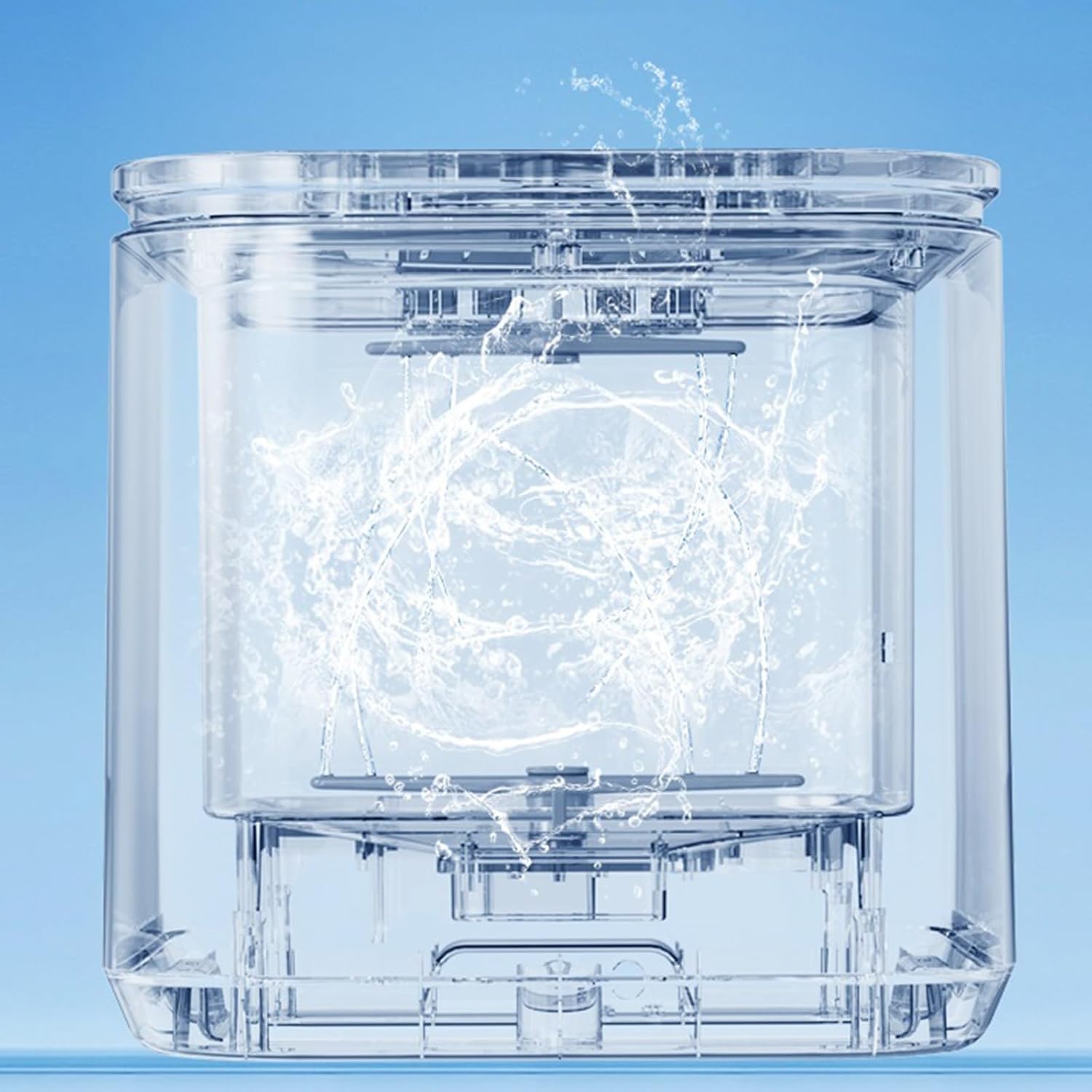
Spray arm design and circulation patterns
The listed up-and-down spray arm design in a compact countertop machine aims to create multidirectional jets within a small wash chamber. In countertop units, spray arm clearance and rotation pattern are constrained by the unit’s height and interior layout; effective spray distribution relies on unobstructed rotation and correct placement of dishes to avoid spray shadowing. Pump size and nozzle geometry determine jet velocity, which together with detergent chemistry produces mechanical cleaning action. Given a single spray arm and limited water volume, careful placement of plates and utensils—avoiding deep stacking—maximizes exposure to jets and improves soil removal. Manufacturer disclosures suggest typical spray-based coverage appropriate for plates, bowls, glasses, and small cookware when loaded according to guidance.
Filtration and soil management
Manufacturer materials do not specify a detailed multi-stage filtration system, but industry standards for countertop dishwashers typically include a removable coarse filter to trap food particles and prevent pump clogging. Effective soil management in compact machines relies on periodic filter cleaning and, in some designs, a recirculation loop that separates larger solids from wash water before reusing it during a cycle. With a small reservoir and only 5 L of water per cycle, particulate capture becomes more critical to avoid redeposition. Users should expect routine maintenance tasks such as emptying visible debris, rinsing the filter, and occasionally checking spray nozzles for blockages to maintain consistent cleaning performance over time.
Expected performance on common soils
Based on the machine’s water and cycle specifications, expectations should be set for typical meal residues: light to moderate food soils, soft residues from plates and glassware, and vegetable or fruit rinses are well within the intended capabilities. Tackier residues such as baked-on sauces, carbonized food, or large volumes of dried starch are less likely to be removed fully without pre-soaking or a manual scrape. The integrated drying cycle will assist with moisture removal, but trapped water in recessed areas or non-optimal loading can still lead to damp spots. Overall, the unit fits households prioritizing everyday tableware cleaning rather than heavy-duty cookware restoration.
Capacity, rack design, and place settings
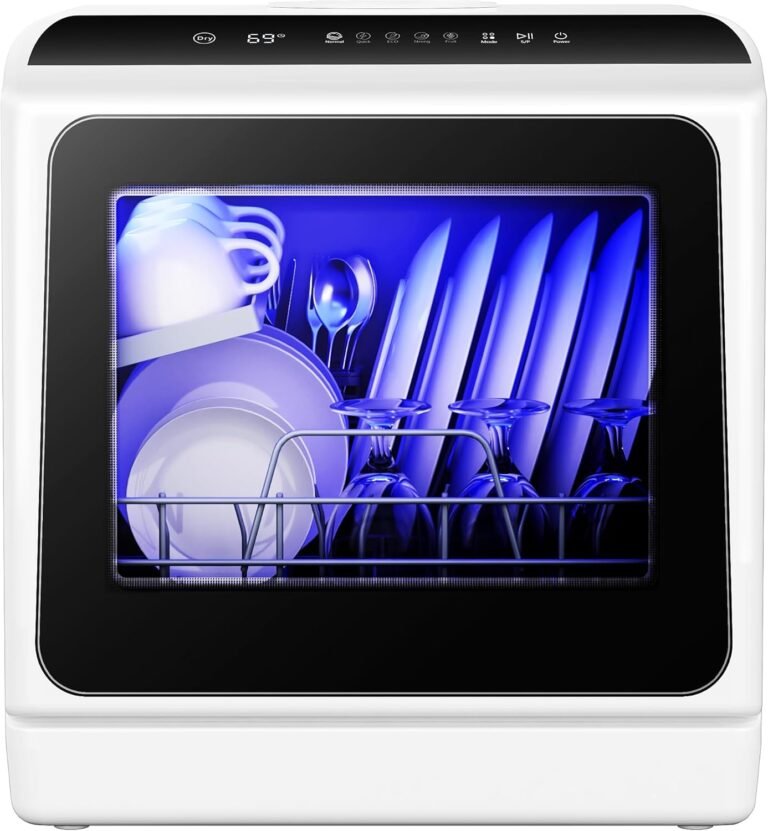
A countertop dishwasher advertised for five persons implies internal volume and rack arrangement that accommodate multiple small place settings rather than full-size cookware. The compact dimensions (410 x 440 x 400 mm) and top-loading design typically allow vertical stacking of plates and placement of glasses, bowls, and small utensils on a single or split rack. Rack geometry, tine spacing, and any additional folding features determine whether larger plates or deeper bowls fit without blocking the spray arm. Space efficiency often requires alternating items to avoid spray shadowing and to ensure water circulation reaches each piece. The advertised suitability for dorms, apartments, and RVs signals a focus on small loads with frequent runs, where capacity planning prioritizes quick turnaround over single-run volume.

Typical load patterns and place-setting counts
Place-setting counts in countertop dishwashers are usually lower than in standard built-in machines; an advertised five-person suitability typically translates to a functional capacity of roughly 6–8 standard place settings across multiple small runs, depending on the shape and size of items. Compact racks are optimized for plates, bowls, cups, and cutlery, with limited clearance for tall glasses or large serving dishes. For households that cycle daily small loads—breakfast and dinner—it can be efficient, but for hosting or bulk cooking, multiple cycles will be necessary. The manufacturer’s guidance to verify dimensions before purchase highlights the need to confirm whether specific items (tall stemware, oversized pans) will fit within the chamber height and rack arrangement.
Rack flexibility and utensil handling
The presence or absence of adjustable tines, fold-flat shelves, or dedicated cutlery baskets affects flexibility in a countertop model. While manufacturer descriptions emphasize compact portability and a transparent viewing window, detailed rack features are not extensively documented; typical portable designs include a removable or foldable cutlery basket and fixed tines that balance support with space-saving. Non-standard or oddly shaped utensils may need alternate placement to avoid blocking the spray path. Durability of rack coatings and the availability of replaceable components are considerations for long-term use, particularly in households with frequent cycles where wear on rack coatings and baskets is more likely.
What cookware fits and what should be avoided
Countertop dishwashers generally accommodate small to medium pots and pans but are often unable to handle oversized baking sheets, large stockpots, or sheet pans due to height restrictions and spray arm placement. Thin, lightweight cookware can warp if subjected to high-temperature cycles intended for sanitizing; manufacturer cycle descriptions and the top-opening configuration indicate caution when washing thin aluminum or delicate cookware. Flat items placed against the door or blocking the spray arm may reduce cleaning effectiveness. For best results, reserve the countertop dishwasher for dinnerware, glasses, small pans, and utensils rather than heavy-duty cookware.
Noise levels and suitability for open kitchens
Manufacturer materials do not provide a decibel rating, so expectations must be set using appliance engineering principles and compact unit design characteristics. Countertop models use smaller pumps and motors but also have less mass and insulation than built-in units, which often results in sound that is more perceptible in adjacent living areas. Noise perception depends on pump speed, vibration isolation, and the firmness of countertop placement; a lighter, portable model can transmit mechanical noise into cabinetry or tabletop surfaces. For open kitchens or studio apartments, placement on a stable, cushioned surface and ensuring the machine is level can reduce vibration noise. Users sensitive to sound should seek explicit dB ratings from manufacturers or compare models with published acoustic data before purchase.

Acoustic considerations of compact motors and pumps
Small-diameter pumps and compact drive motors used in countertop dishwashers produce different frequency profiles than larger built-in units; these profiles can include higher-frequency tonal components that cut through ambient background noise. Lack of heavy sound-deadening materials in portable housings increases the chance of radiated noise. Vibration transmission through the countertop or table can amplify perceived loudness, so a stable support and rubber feet or pads are useful mitigations. Given that the manufacturer did not list a noise rating, prospective buyers should assume typical countertop operations will be clearly audible in adjoining rooms and plan placement accordingly.
Placement, installation, and acoustic impact
Installation by faucet connection reduces the need for fixed plumbing but requires proximity to a sink and hose routing that may alter where the unit is used. Placement inside a cupboard or under a counter can slightly dampen airborne noise but may restrict ventilation and access for loading. Elevated placement on a rigid countertop without cushioning can transmit vibrations; conversely, placing the machine on a padded, level surface helps decouple vibration. For RV and mobile installations, secure anchoring is necessary to prevent movement that would increase noise and wear. The manufacturer’s portable design emphasizes flexibility, but acoustic trade-offs are inherent in small, lightweight housings.
Suitability for open-plan living and RVs
Compact dishwashers can be appropriate for open-plan kitchens when occupants accept moderate operational sound and schedule cycles during less-sensitive times. In RVs and dorm rooms, the combination of small loads and short cycles is advantageous, but proximity to sleeping areas magnifies the impact of noise. The unit’s transparent window and touch interface support easy monitoring, yet the lack of specified dB ratings means that anyone highly noise-sensitive should seek models with published acoustic specifications or consider alternate cleaning strategies.
Drying systems, energy and water efficiency, and maintenance
The product includes an integrated drying function described as a smart dryer, paired with wash cycles that can run up to 55 minutes and a manufacturer-listed power consumption of 0.5 kWh per cycle. The listed maximum water consumption is 5 L per cycle, which positions this unit among low-water-use countertop options. No ENERGY STAR or similar efficiency certification is indicated in the provided materials, so energy performance should be interpreted from the per-cycle power figure and typical cycle lengths. Drying effectiveness in compact machines depends on the combination of heated air, condensation management, and internal airflow; shorter cycles with low water use reduce heat mass but may result in residual moisture in tight crevices. Maintenance needs center on filter cleaning, occasional spray nozzle inspection, and ensuring faucet adaptors and hoses remain leak-free to preserve long-term reliability.

Water and energy consumption expectations
Manufacturer disclosures list 5 liters per cycle and 0.5 kWh consumption per run, which are useful starting points for evaluating operational resource use. Low water volumes reduce chemical dilution and require efficient spray coverage for cleaning; the trade-off is that less rinse water can carry away loosened soils less effectively than larger-volume systems. The modest power draw implies limited heater capacity compared with full-size units, so obtainable peak water temperatures and sustained heating for sanitizing cycles may be lower. Without third-party energy certifications, buyers should use published per-cycle figures to compare relative efficiency across similar countertop models.
Drying method and moisture control
The integrated drying function indicates active moisture management, but compact dryers typically rely on residual heat, short blower phases, or desiccant-like heat exchange rather than lengthy heated drying used by larger machines. Condensation drying works well for glassware and plates in small loads, but items with recessed cavities or heavy stems can retain moisture. Proper loading to maximize airflow—spacing items for cross-ventilation and avoiding blocked vents—improves drying outcomes. The transparent window allows visual confirmation of drying progress but does not substitute for manufacturers’ published drying performance metrics.
Maintenance, filters, and long-term reliability indicators
Durability and reliability in compact dishwashers hinge on build materials, pump quality, and filter accessibility. Manufacturer information notes a removable filter is standard in the category, and routine cleaning of that filter prevents recirculation of solids and pump wear. The machine’s relatively low net weight (7 kg) and portable design imply fewer heavy-duty components, which can be advantageous for mobility but may reduce robustness under heavy usage patterns. Long-term reliability is enhanced by simple serviceable parts, availability of replacement components, and conservative operating cycles; buyers planning frequent daily use should consider these factors and look for clear warranty or support information.

Pros & Cons
Pros
- Compact, portable footprint: Designed for tabletop placement with dimensions of 410 x 440 x 400 mm and a net weight of 7 kg, the unit suits small kitchens, RVs, and dorm rooms where a built-in dishwasher is impractical. The lightweight design simplifies placement and temporary installation without permanent plumbing modifications.
- Low water consumption per cycle: The manufacturer lists a maximum water consumption of 5 L per wash, which is substantially lower than many conventional cycles and appeals to users prioritizing water conservation in small loads.
- Integrated drying function: A built-in drying mode aims to reduce residual moisture and potential odors after washing, supporting quicker turnaround between loads and better storage readiness for dinnerware.
- Faucet-connect installation: Simple hookup to a sink faucet (adapter may be required) eliminates the need for dedicated plumbing, lowering the barrier to use in apartments and rental properties where permanent installation is not feasible.
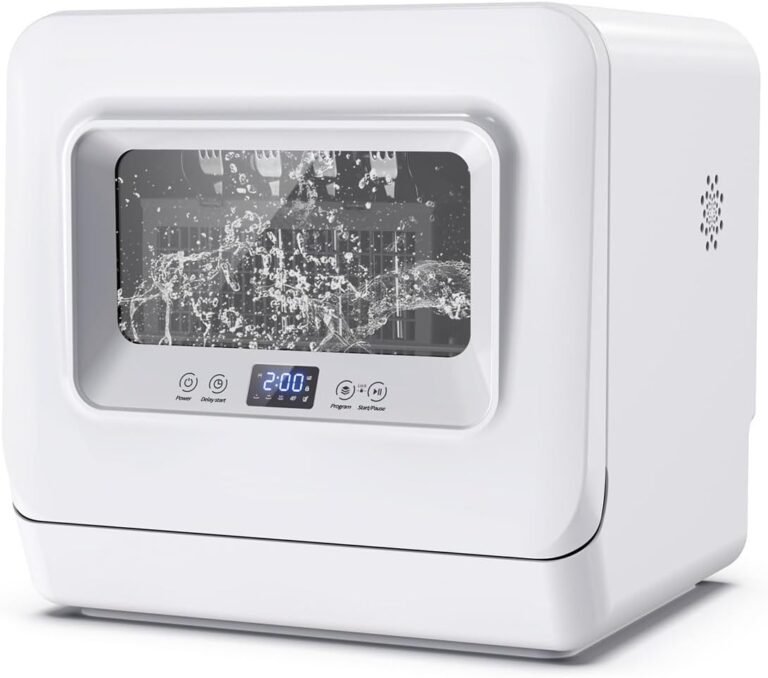
- Touch LED controls and viewing window: An angled LED touch display increases usability and a transparent window provides visual monitoring of cycles, helping users observe load progress without opening the door.
- Short maximum cycle length: With a listed maximum washing time of 55 minutes, the unit supports relatively fast cycles appropriate for frequent small loads and households that prefer running multiple short cycles.
Cons
- Lack of published noise rating: No decibel figure is provided in the manufacturer’s materials, leaving acoustic performance unspecified and making it difficult to assess suitability for noise-sensitive open-plan living spaces.
- Limited capacity for large cookware: Compact internal dimensions and top-opening design restrict the ability to clean oversized pots, pans, and baking sheets, requiring pre-rinsing or alternative cleaning for heavy cookware.
- No stated energy or safety certifications: The absence of ENERGY STAR or similar certifications in the provided specifications means energy efficiency comparisons must rely on per-cycle data rather than third-party validation.
- Undocumented filter and rack features: Detailed descriptions of filter type, rack adjustability, or coating durability are not provided, which can complicate long-term maintenance planning and expectations for handling diverse dishware.
Final Verdict: Who This Dishwasher Is Best For (and Who Should Skip It)
The portable countertop dishwasher is best suited to small households, single professionals, dorm residents, and RV owners who require a compact cleaning solution without permanent plumbing changes. Its low listed water use (5 L per cycle), short maximum cycle time (up to 55 minutes), and simple faucet-connect installation align with frequent small-load usage where conserving water and saving counter time are priorities. The integrated drying function and touch LED controls add convenience for daily tableware cleanup, and the lightweight design supports flexible placement near sinks. Buyers should confirm internal clearances to ensure typical plates, bowls, and glasses fit comfortably and should plan for multiple cycles when servicing several place settings.
Those who should skip this model include households that regularly need to clean large cookware, multi-course entertaining setups, or users who require verified low-noise operation in quiet, open-plan living spaces; the manufacturer does not provide a decibel rating, and the compact build implies audible operation. Additionally, buyers who prioritize certified energy-efficiency labeling or extensive rack adjustability and documented long-term service parts should consider built-in alternatives or portable models with detailed specifications and third-party certifications. Overall, the unit provides a practical countertop option for constrained spaces in 2026, provided usage patterns match its compact capacity and operational profile.
Frequently Asked Questions (FAQs)
How much water does a countertop dishwasher like this typically use per cycle?
The manufacturer lists a maximum water consumption of 5 liters per cycle for this countertop model. That low water volume is common for compact units and supports efficient cleaning for small loads, but effective soil removal depends on spray coverage, detergent, and proper loading to avoid redeposition of solids.
Will this portable dishwasher fit large plates and stockpots?
The unit’s dimensions (410 x 440 x 400 mm) and top-opening countertop design limit interior clearance. It is optimized for plates, bowls, glasses, and small pans; oversized baking sheets and large stockpots are likely to exceed height or depth constraints and may not be suitable for this machine.
Does the dishwasher include a drying cycle and how effective is it?
A built-in drying function is specified by the manufacturer. Drying effectiveness in compact machines depends on airflow and residual heat; items with recessed areas or deep stems may retain some moisture. Proper loading to maximize airflow and selecting the drying-enabled cycle improves outcomes.
Is a permanent plumbing hookup required for installation?
No permanent plumbing is required. This countertop dishwasher connects directly to a kitchen faucet using an adapter when necessary, which allows flexible placement but requires proximity to a compatible sink and proper hose routing to the drain.
Are there any energy or noise certifications reported for this model?
Manufacturer disclosures do not list ENERGY STAR or acoustic (decibel) ratings for this model. Energy use per cycle is provided (0.5 kWh per cycle), but noise expectations should be inferred from the compact design; buyers sensitive to sound should request published dB values or compare models with documented acoustic specifications.
How often should filters and spray nozzles be maintained?
Routine maintenance typically involves cleaning or rinsing the removable coarse filter after several cycles to prevent build-up, and checking spray nozzles periodically for blockages. With a small water reservoir and recirculation design, regular inspection helps maintain consistent cleaning performance and reduces strain on the pump.
Is this dishwasher suitable for RV use?
The manufacturer cites suitability for RVs and similar mobile environments. Its lightweight, compact form and faucet-connection design make it compatible with many mobile setups, provided there is a stable, level surface and secure anchoring to prevent movement during travel. Verify available sink connections and space before installation.