SPT SD-6501WA Review: Cleaning Performance & Quietness 2026
Choosing the right built-in dishwasher for a household
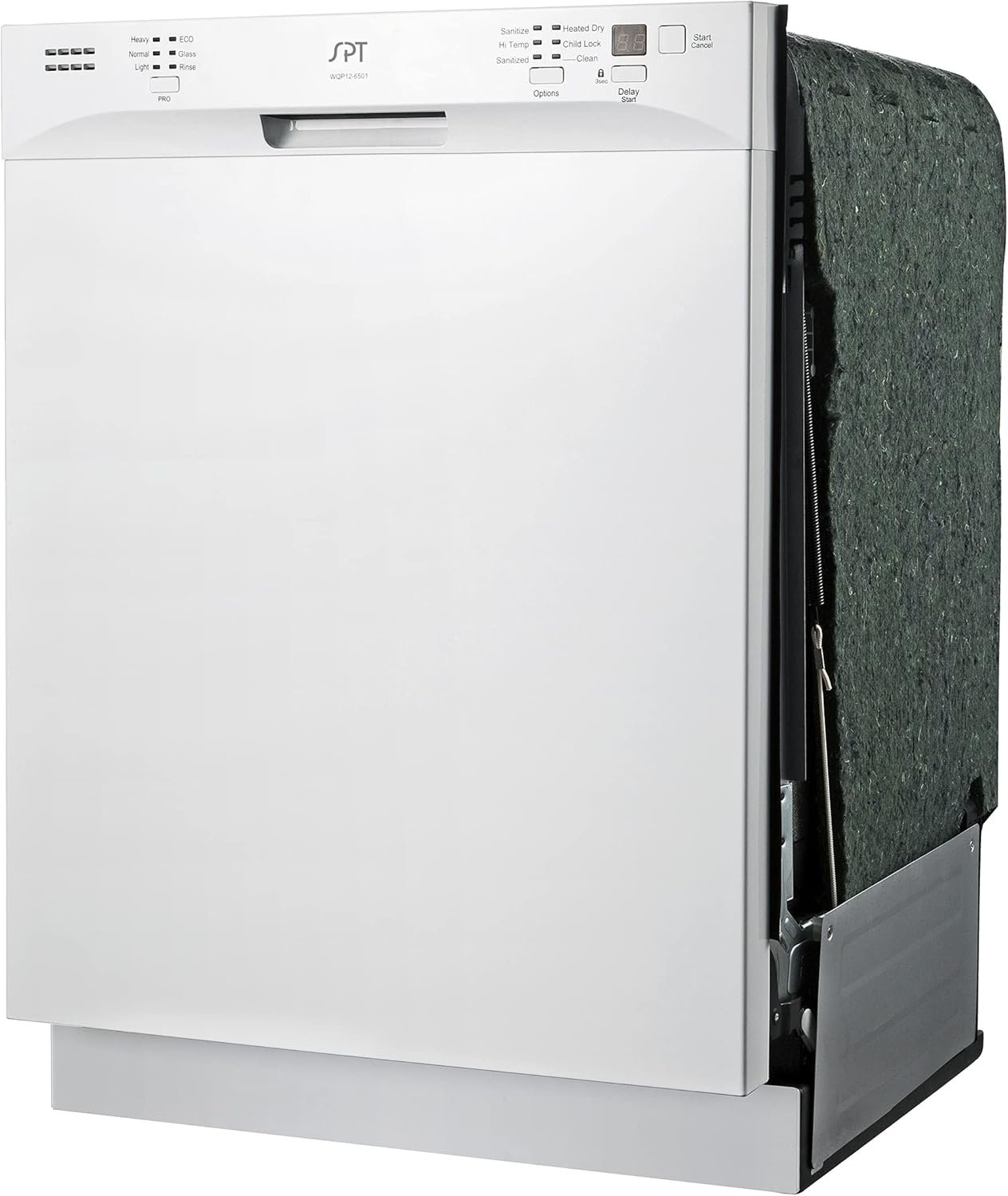
Selecting a built-in dishwasher affects daily routines, kitchen layout decisions, and long-term utility expectations. Households with two to four occupants that generate routine loads need a balance of capacity and cycle efficiency, while larger families or frequent entertainers prioritize higher place-setting counts and flexible rack arrangements. Kitchen layout and proximity to living spaces raise sensitivity to noise levels; open-plan kitchens benefit from lower decibel ratings and insulated motors. Cleaning needs depend on dishware types and soiling patterns: baked-on food, delicate glassware, and cookware demand distinct cycle options and spray coverage. Energy and water efficiency shape monthly consumption expectations and installation choices — ENERGY STAR units typically reduce annual energy use relative to baseline models. Durability expectations center on tub material, motor type, and serviceability. The SPT SD-6501WA positions stainless steel interior construction, a 14-place setting capacity, and a 55 dB rating against these buyer priorities, making it important to weigh cleaning systems, drying approach, and maintenance requirements before committing to installation.
Quick Overview
| Feature | Details |
|---|---|
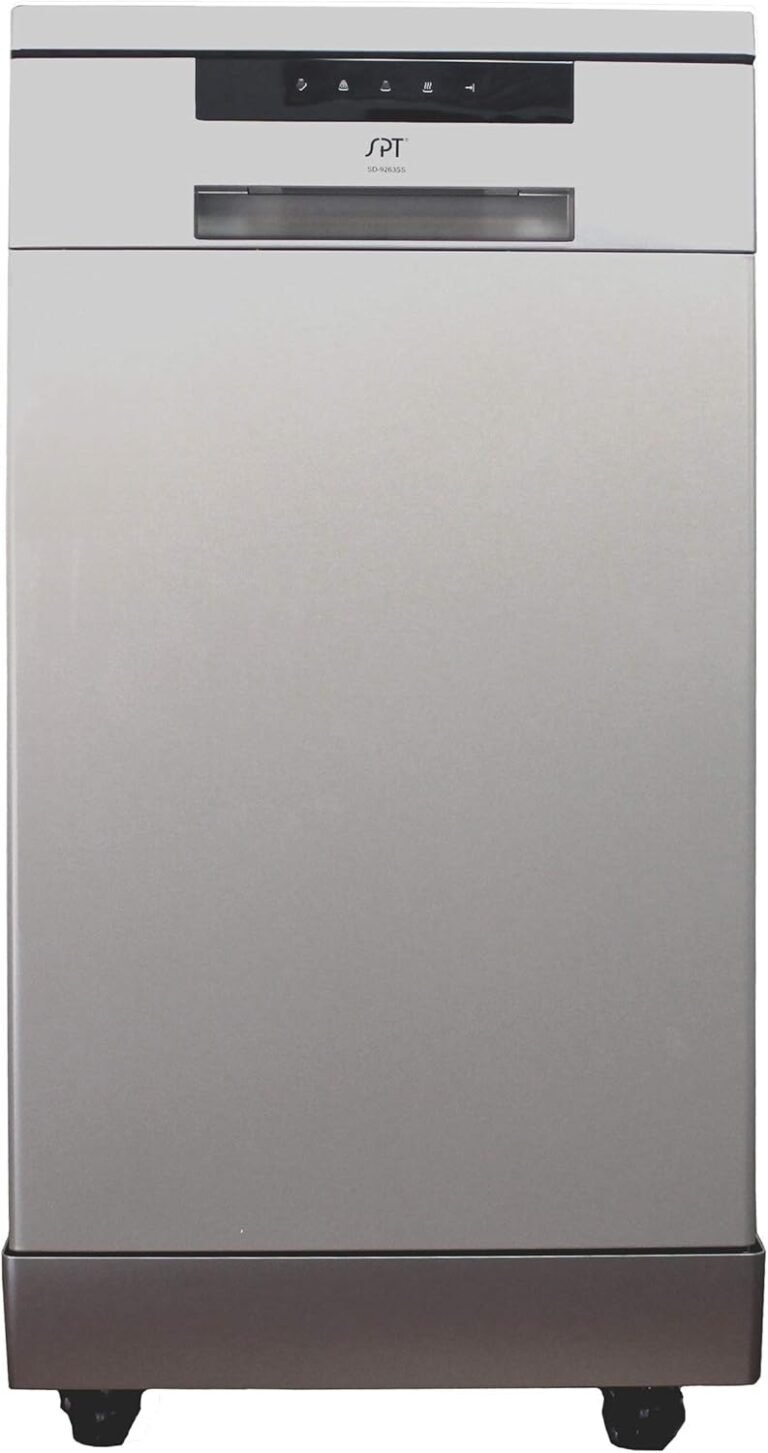
| Dishwasher type | Built-in, integrated full-panel control design |
| Capacity | Up to 14 standard place settings; tall tub stainless steel interior |
| Wash cycles | 6 programs: Heavy, Normal, Light, Eco, Glass, Rinse |
| Drying method | Active heated drying (heated dry) |
| Noise level | 55 decibels reported |
| Energy & water | ENERGY STAR certified; annual energy 249 kWh/year; 6 gallons capacity per cycle |
| Dimensions & installation | 24″W x 24″D x 34″H, designed for standard built-in installation |
| Special features | Time delay (1–24 hours), rinse aid indicator, error alarm/fault codes |
The table summarizes core specifications that translate into household suitability: the 14-place setting capacity and tall stainless steel tub favor medium-size families, the six-program selection addresses common soil levels and glassware needs, and the heated dry option supports active moisture management. The ENERGY STAR designation and 249 kWh/year figure set expectations for energy use, while a 55 dB rating indicates moderate operational noise for semi-open kitchens.

Cleaning performance and wash coverage
The cleaning performance factor centers on spray-arm configuration, wash pressure, cycle options, and filtration design to manage soils. Spray coverage depends on arm placement and rotation; tall tub geometry with stainless steel surfaces typically supports consistent water movement and thermal retention, which aids soil loosening. Six cycle settings — including Heavy and Glass — provide algorithmic variations in temperature and duration for baked-on soils or delicate items, while the Eco cycle trades time for reduced energy. Filtration and soil removal rely on mesh or microfiltration combined with sump design to trap particles; a visible rinse aid indicator helps reduce spotting by improving rinse sheeting. For consumers, the interplay of mechanical spray coverage, cycle selection, and rinse aid management determines practical cleaning outcomes across pots, plates, and mixed loads.

Spray system and coverage implications
Spray-arm layout and jet orientation largely determine mechanical cleaning on a 24″ built-in dishwasher. Lower and upper arms aim water at stacked plates and bowls while additional jets or a middle arm (if present) focus on taller items and cutlery. Rotational speed, nozzle diameter, and pump pressure influence droplet momentum: higher pressure improves soil removal but increases noise and energy draw. The tall stainless steel tub supports consistent water temperature during cycles, improving detergent activation and soil softening. Users should expect good general coverage for stacked plate loads and mixed dishware, but highly recessed cookware or overloaded racks can create shaded areas where spray does not reach effectively.
Filtration, soil retention, and rinse aid role
A dishwasher’s filtration system captures food particles to prevent redeposition and protect the drain pump. Mesh filters or multi-stage filters combine coarse screens with finer traps; maintenance frequency depends on food load and absence of a garbage disposal that may reduce large debris. The rinse aid indicator on the SD-6501WA supports spot- and film-reduction by lowering surface tension during the final rinse, which promotes water sheeting off glass and flatware. Effective use of rinse aid and routine filter cleaning are complementary: filters remove solids while rinse aid manages mineral and detergent residues, together improving overall cleanliness and reducing the need for repeat cycles.
Cycle selection for soil types and delicate items
Six wash programs provide discrete temperature and time profiles suitable for varied soils. Heavy and Normal cycles typically increase temperature and wash time to tackle baked-on residues and pots, while Light and Glass cycles reduce aggressiveness and temperature to protect fragile items. The Eco setting extends cycle duration while reducing water and energy to meet efficiency targets, making it suitable for lightly soiled loads. Rinse-only is useful for short-term soil prevention. For households that alternate between cookware and stemware, selecting the appropriate program and spacing delicate items on the upper rack reduces chipping and optimizes cleaning without overexposing glassware to high heat or mechanical force.
Capacity, rack design, and place settings
Capacity and internal organization determine how efficiently a dishwasher handles routine loads and irregular cookware. The SD-6501WA lists up to 14 standard place settings, which fits medium-size households that accumulate multi-course dinnerware but may approach limits for very large families or frequent entertainers. Rack geometry, including a top cutlery rack, upper and lower pull-out racks, and tine spacing, shapes how plates, bowls, and glassware nest and expose surfaces to spray. Adjustable tines, fold-down shelves, and dedicated stemware rests increase flexibility for tall items and odd-shaped cookware. Stainless steel tall tubs provide more vertical clearance and resist warping compared to plastic, aiding loading of larger dishes. For buyers, the combination of plate capacity, rack adjustability, and a dedicated cutlery area is central to load efficiency and minimizing wash cycles.

Upper rack layout and cutlery solutions
A shallow top cutlery rack prevents small utensils from falling through and maximizes lower-rack space. Top cutlery designs separate spoons and knives to reduce nesting and improve exposure to spray, yielding better cleaning and easier unloading. The upper rack also often accommodates small bowls and glasses; adjustable height settings (if present) help clear tall stemware or pitchers. In this model, the presence of a dedicated short cutlery area indicates an attempt to streamline utensil management, but buyers should confirm whether tines or rack width adapt to larger flatware. Proper arrangement of cutlery with spacing and alternating handles supports optimal detergent access and reduces shadowing.
Lower rack capacity and cookware accommodation
The lower rack typically holds plates, larger bowls, and cookware. Plate tines spacing and foldable sections can enable pans and casserole dishes to sit at angles for improved spray access. For heavy soiling, placing cookware along rack edges with openings facing the center improves spray penetration. The tall stainless steel tub increases vertical clearance for pots and tall mixing bowls, and a stable lower rack reduces rattling during operation. Load balancing is critical: overloading reduces spray exposure and increases soil retention, while underloading wastes capacity. The SD-6501WA’s 14-place setting rating suggests a standard European-style layout that accommodates a mix of common household items when loaded with spacing in mind.
Flexible loading and tall-item strategies
Flexible loading features—such as fold-down tines and adjustable rack heights—allow accommodation of awkward items like baking sheets, wine glasses, and pitcher bottles. A tall tub geometry supports standing items vertically, but large flat items may block spray to adjacent dishes if positioned incorrectly. Strategic placement—tucking tall items to the sides and angling large lids—improves water flow across the rack. Where foldable tines are not present, alternating plate directions or moving smaller items to the top rack can increase overall capacity while preserving spray coverage. Buyers who frequently wash oversized cookware should verify specific rack adjustability and whether accessories are available to expand flexibility.
Noise levels and suitability for open kitchens
Noise level ratings are a critical selection factor for kitchens that open into living or dining spaces. A 55 dB rating places the SPT SD-6501WA in a moderate noise class: audible conversational background noise will mask parts of the wash cycle, but quieter models at 44–48 dB are better suited to very quiet environments. Acoustic performance depends on motor type, insulation materials, pump design, and the presence of sound-dampening panels or anti-vibration racks. The operational sound profile varies by cycle—high-pressure heavy cycles produce more noise than eco or glass cycles that use lower pump speeds. Installation measures such as anti-vibration mounting and ensuring the unit is flush and well-sealed to cabinetry can reduce rattles, while placement away from primary seating areas minimizes perceived disruption.

Interpreting decibel ratings for household placement
Decibel numbers are logarithmic; a 10 dB increase roughly doubles perceived loudness. At 55 dB, the dishwasher will be noticeable in an open-plan kitchen during active cycles but not typically intrusive for normal conversations. For apartment dwellers or open living spaces where quiet is prioritized, models rated below 48–50 dB better preserve ambient calm. Buyers should also consider cycle-specific sound output: heavy-duty cycles may push noise higher than quiet or eco cycles. Acoustic insulation in cabinetry, solid mounting, and avoiding loose dishware that rattles during spin are practical ways to minimize perceived noise without relying solely on the manufacturer rating.
Motor type, insulation, and vibration control
Noise generation arises from pump motors, impeller flow turbulence, and structural vibration transmitting to cabinetry. Brushless (inverter) motors generally operate more smoothly and quietly than brushed motors, and units with thicker door and tub insulation reduce airborne noise. Anti-vibration rack rails and stable leveling feet reduce mechanical resonances. While manufacturer specifications list a dB rating, the real-world experience depends on installation quality: unlevel cabinets, loose panels, or contact with plumbing lines can amplify sound. For households sensitive to noise, verifying motor type and asking a dealer about installation best practices helps manage expectations.
Nighttime cycles and usage strategies to minimize disturbance
Scheduling cycles during daytime or using delay-start functions to run quieter programs overnight reduces interference with rest or sleep. Delay-start (1–24 hours) allows placing soiled dishes and running final drying when ambient noise tolerance is higher. Choosing lower-speed eco or glass cycles during quiet hours mitigates peak pump output and reduces overall sound. Additionally, avoiding heavy soil cycles at night and ensuring proper loading to prevent rattling will minimize disturbances. For continuous open-plan living, selecting a dishwasher with both low dB ratings and thoughtful installation is the most reliable way to balance cleaning needs with living area tranquility.
Efficiency, drying systems, maintenance, and durability
Efficiency and upkeep influence long-term operating satisfaction. ENERGY STAR certification and an annual energy consumption figure of 249 kWh/year indicate the unit meets baseline efficiency expectations for 2026. Water use per cycle and heated drying selection both affect utility use: heated dry accelerates moisture removal but increases energy draw compared with air- or condensation-based drying. Stainless steel tubs are more thermally stable and resist staining and odor retention compared with plastic interiors, supporting longevity. Maintenance considerations include routine filter cleaning, monitoring the rinse aid reservoir, and addressing fault codes displayed by the error alarm. Durability expectations center on build materials—stainless tub, glass/plastic racks, and pump assembly—along with manufacturer service network accessibility.

Energy and water efficiency expectations
ENERGY STAR certification indicates compliance with federal efficiency guidelines and suggests better-than-baseline energy performance. The listed annual energy consumption of 249 kWh/year provides a reference for comparing models, with actual energy usage depending on cycle selection and drying choices. Eco cycles reduce energy by extending time and lowering water temperatures, while heavy and heated-dry cycles increase consumption. Water usage per cycle is influenced by soil sensor presence and rinse strategies; models that adapt water volume to load soils conserve water relative to fixed-volume designs. Buyers should match expected cycle patterns to efficiency goals: frequent heavy cycles will raise energy and water use regardless of certification.
Drying methods and moisture control considerations
Active heated drying accelerates moisture evaporation by raising internal air temperature during the final phase, reducing residual dampness on plastics and glassware. Heated elements improve immediate post-cycle dryness but increase energy use compared to passive condensation drying, which relies on stainless steel surfaces absorbing heat and allowing water to condense. Rinse aid use complements drying by promoting sheeting and faster evaporation. For households prioritizing low energy use, condensation-style drying or air-dry options are preferable; for households that need immediate dry results, heated drying delivers faster turnover at an energy premium.
Filter maintenance, fault indicators, and serviceability
Routine filter cleaning prevents clogs, maintains pump efficiency, and reduces odors. Mesh or multi-stage filters require periodic removal and rinsing; the frequency depends on food load and presence of pre-rinsing. The SD-6501WA’s error alarm and fault codes assist in diagnosing common issues like drainage failures or heating element faults, enabling informed service calls. Stainless steel tubs resist corrosion and are simpler to sanitize but can still accumulate hard-water stains if not maintained. Access to replacement parts, clear error code documentation, and common serviceability features (removable panels, accessible pump areas) contribute to long-term repairability and uptime.

Pros & Cons
Pros
- Stainless steel tall tub enhances durability and thermal retention. The stainless interior resists staining and holds heat better than plastic tubs, which supports detergent activation and reduces long-term discoloration.
- 14-place setting capacity suits medium-sized households. The rating provides room for multi-course dinners and everyday use without requiring immediate multiple cycles.
- Six wash programs allow tailoring to soil level and glassware care. Availability of Heavy, Normal, Light, Eco, Glass, and Rinse cycles covers common cleaning scenarios and helps prevent overexposure of delicate items.
- Dedicated top cutlery rack improves utensil organization. A top cutlery solution reduces nesting and increases lower-rack capacity for larger items.
- ENERGY STAR certification signals above-baseline energy performance. Certification and a published annual kWh figure give buyers a benchmark for efficiency comparisons.
- Time delay offers installation-day flexibility. Delay-start (1–24 hours) enables scheduling washes during off-peak hours or when noise is less disruptive.
- Rinse aid indicator and error alarm support proactive maintenance. These features help maintain finish quality and provide diagnostic assistance for troubleshooting.
Cons
- 55 dB noise rating is moderate for open-plan homes. The unit will be audible in living areas during cycles and may not meet expectations for very quiet environments where sub-48 dB units are preferred.
- Heated drying increases energy consumption. While effective for moisture removal, heated drying raises energy use compared with condensation drying and may counter some efficiency gains.
- Limited advanced features compared to premium models. Absence of features such as smart connectivity, variable-speed inverter motors (if not present), or dedicated third rack accessories may limit convenience for tech-focused buyers.
- Potential for capacity constraints in large households. Although 14 place settings accommodate many families, very large households or frequent entertainers may require larger-capacity or double-drawer solutions.
Final Verdict: Who This Dishwasher Is Best For (and Who Should Skip It)
This SPT SD-6501WA built-in dishwasher is a practical option for medium-size households prioritizing a stainless steel tall tub, a conventional set of wash programs, and ENERGY STAR-rated efficiency. Its 14-place setting capacity and dedicated top cutlery area make it suitable for families and shared households that load mixed dish types daily and want reliable mechanical cleaning without premium smart features. The heated dry option suits households that prefer faster turnover of glassware and plastics, while the time-delay and rinse aid indicator help coordinate usage and maintenance. The 55 dB rating positions the unit for semi-open layouts where occasional operational noise is acceptable.
Households that should consider alternatives include very noise-sensitive buyers, those with large entertaining needs that exceed 14 place settings, and buyers seeking advanced connectivity or the quietest possible operation. For small apartments, compact models may be more space- and energy-efficient. Overall, the model provides a balanced combination of durability, cleaning versatility, and straightforward maintenance for buyers who value stainless steel construction and program variety over premium quieting or smart-home functionality in 2026.

Frequently Asked Questions (FAQs)
How effective is the SPT SD-6501WA at removing baked-on food?
Effectiveness on baked-on food depends on cycle choice and loading. Selecting the Heavy program uses higher temperatures and extended wash time, improving detergent activation and mechanical spray impact. Proper pre-scraping, correct placement of pots in the lower rack, and use of the rinse aid where recommended also support removal. For very stubborn residues, soaking or pre-treating items before loading may reduce the need for repeat cycles.
Is a 55 dB noise rating suitable for an open-plan kitchen?
A 55 dB rating is moderate: it will be noticeable in an open-plan kitchen but typically not disruptive to conversation. For households where minimal noise is essential, models rated below roughly 48–50 dB are preferable. Installation quality—leveling, anti-vibration mounting, and solid cabinet panels—also influences perceived noise, so proper installation can help reduce disturbance.
What maintenance does the stainless steel tub require?
Stainless steel tubs resist staining and odor build-up but still benefit from regular cleaning. Periodically wiping the interior with a mild detergent, running a cleaning cycle with an appropriate dishwasher cleaner, and ensuring filters are cleared of food debris prevent residue accumulation. Monitoring and refilling rinse aid improves drying and reduces mineral spotting on glassware.
Does the heated drying option increase energy usage significantly?
Heated drying accelerates evaporation by adding thermal energy during the final cycle phase, which increases energy consumption compared with passive or condensation drying methods. The impact depends on cycle frequency and home energy rates. For buyers focused on minimizing energy, using eco or air-dry options when available reduces consumption, while heated drying is useful when immediate dry results are required.
How flexible is the rack design for large pots and tall glasses?
The tall stainless steel tub provides additional vertical clearance, and the presence of fold-down tines or adjustable rack heights (if included) increases flexibility for large cookware and tall glasses. Placing tall items at the sides and angling large lids prevents spray obstruction. Buyers should verify specific rack adjustability options to ensure the layout meets frequent large-item washing needs.
What do the error alarm and fault codes indicate?
The error alarm and associated fault codes are diagnostic aids that indicate issues such as drainage problems, water inlet faults, or heating element anomalies. Consulting the manufacturer-provided code chart helps identify likely causes and whether user-level fixes (filter cleaning, checking hoses) are appropriate or professional service is recommended. Keeping the manual accessible speeds troubleshooting.
Is the SD-6501WA a good fit for a small household or apartment?
The 14-place setting capacity makes the unit larger than compact or slimline models often chosen for small apartments. While suitable if space allows and occasional larger loads are expected, smaller households may prefer a 18–24 inch compact model that conserves space and may use less water per cycle. Installation space and frequency of large loads should guide model selection.