Silonn SLCDW02 Review: Cleaning, Noise & Capacity Guide
Why dishwasher choice matters for small spaces
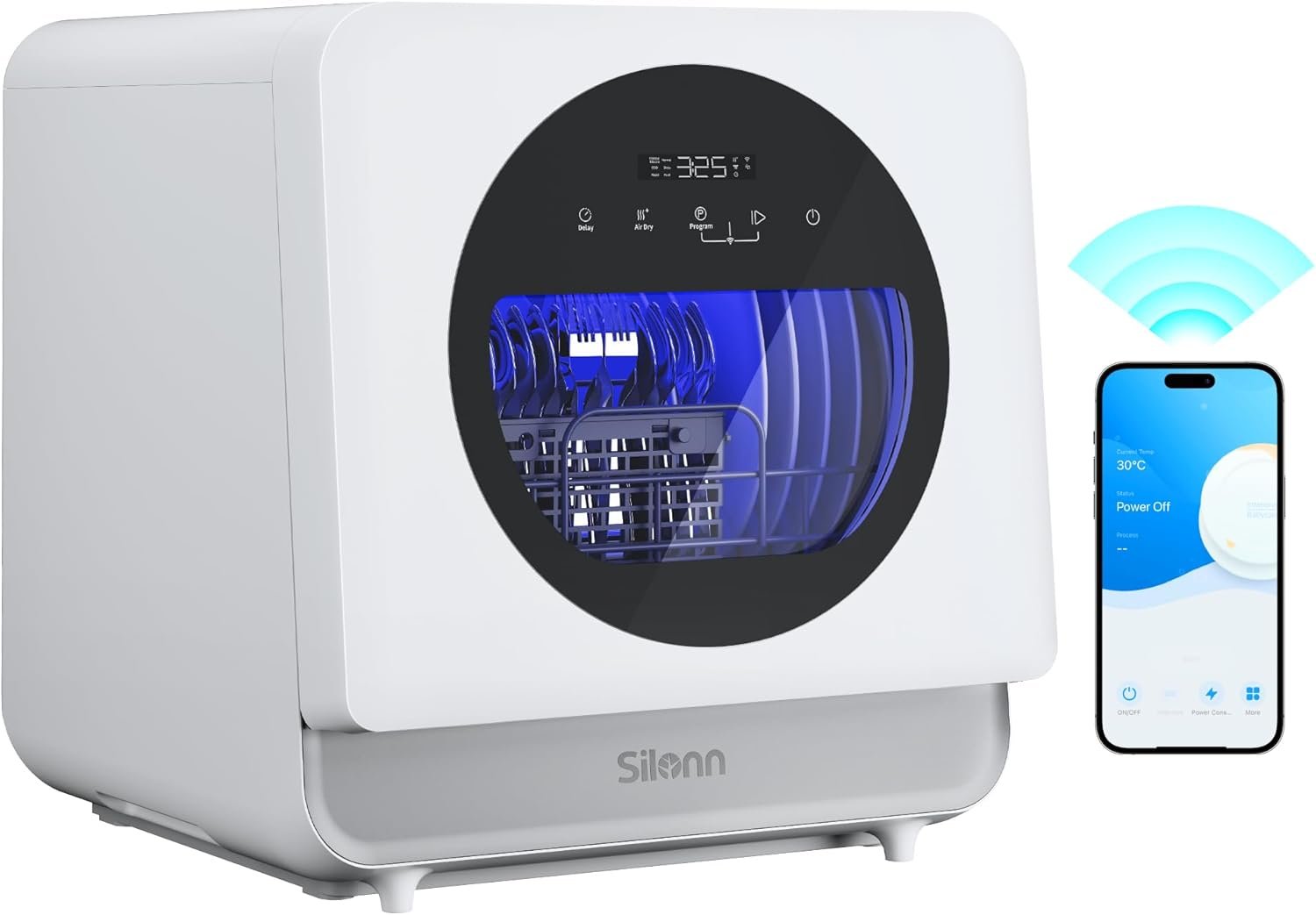
Selecting a dishwasher for a small household influences daily chores, kitchen layout, and overall utility use. For apartments, dorms, or RVs, the balance between compact footprint and functional capacity is central: a countertop unit must provide reliable cleaning, handle common place settings, and operate at acceptable sound levels for open living areas. Noise sensitivity governs placement decisions, while water and energy efficiency affect utility use over time. Cleaning performance and drying capability address hygiene and convenience, particularly for baby bottles or glassware. Maintenance, filter access, and durability determine long-term user effort and replacement cycles. The Silonn SLCDW02 presents a specific set of engineering choices—triple-jet spray arms, a 4-place setting layout, built-in water tank, and smart app control—that impact cleaning coverage, loading patterns, noise output, and ongoing maintenance. Understanding these attributes in relation to household size, frequency of use, and installation constraints helps potential buyers evaluate whether a compact, portable countertop dishwasher will meet expectations without professional installation or plumbing changes.
Quick Overview
| Feature | Details |
|---|---|
| Dishwasher type | Countertop / Portable |
| Capacity / place settings | Up to 4-place settings (4x 10″ dinner plates, 4x 8″ small plates, 4 cups, 4 bowls, cutlery) |
| Wash cycles and cleaning technology | 6+2 cycles (ECO, Intensive/Babycare, Normal, Rapid, Glass, Fruit Wash, plus options); patented triple spray arm 360° coverage |
| Drying method | High-temperature drying mode and extended storage up to 85 hours (manufacturer-stated) |
| Noise level rating | 56.3 decibels (specified) |
| Energy efficiency | Annual energy consumption 92 kWh/year (specified) |
| Water consumption | 5 liters per cycle (specified) |
| Dimensions & installation | 17.72″D x 16.93″W x 18.11″H; countertop freestanding installation |
| Water supply options | Built-in water tank and direct faucet connection (dual supply) |
| Materials & controls | Polypropylene (PP) exterior components; LED display; Smart app control |
| Included components | Cutlery basket, drain hose, inlet hose, power cord, user manual |
| Warranty | Manufacturer warranty not specified in provided materials |
This Quick Overview condenses the SLCDW02’s specifications into practical expectations: a countertop form factor designed for small households, a compact four-place layout that suits light daily loads, and a triple-spray system intended to improve coverage. Dual water supply and an internal tank increase placement flexibility, while the stated energy and water consumption figures frame efficiency comparisons with other compact models.

Cleaning performance and wash coverage
The cleaning capability of a countertop dishwasher is driven by spray geometry, water temperature, cycle duration, and filtration. The SLCDW02 specifies a patented triple spray arm that aims to deliver 360° coverage by adding a third rotating nozzle assembly compared with common two-arm compact designs. Higher nozzle count and varied spray angles can improve rinse reach into stacked dishes and recessed cutlery spaces, while spray pressure—linked to pump output and hydraulic design—determines soil removal on stubborn residues. A specified high-temperature wash up to 167°F supports grease softening and detergent activation, particularly on intensive or babycare cycles. However, the compact cavity constrains nozzle spacing and spray interception angles; so, soil load, pre-rinse practices, and loading patterns materially affect real-world cleaning outcomes and rinse-aid performance.

Spray arm design, coverage, and nozzle orientation
Triple spray arms increase the number of impingement vectors inside a compact tub, which helps dislodge food soils from plate faces and utensils when nozzles are positioned to target common blind spots. Nozzle diameter and orientation control jet breakup and droplet size—smaller droplets improve turbulence but reduce momentum, while larger jets provide more impact force. In a countertop PP tub, spray-arm clearance and rotation arcs also matter: closely stacked items can shadow lower jets, so staggered placement and angling of plates can reduce blind zones. Pump specification and hose routing influence sustained pressure during intensive cycles, and repeated high-pressure cycles can accelerate component wear if materials and bearings are not engineered for continuous duty.
High-temperature cycles, detergents, and soil removal considerations
A 167°F high-temperature cycle enhances detergent chemistry effectiveness and thermal sanitizing potential for oils and milk residue; heat accelerates surfactant action and helps denature residue on baby bottles and heavily soiled cookware. Detergent formulation and use of a rinse aid affect spot-free finishes and residue removal, especially with short rapid cycles. In compact machines, shorter wash durations trade convenience for lower cumulative mechanical energy (flow and spray) and contact time; thus, heavily soiled items are best treated with the Intensive or Babycare program. Cycle selection paired with correct loading and pre-scraping influences final cleanliness more than any single hardware attribute alone.
Capacity, rack design, and place settings
Capacity for countertop dishwashers is measured in place settings and internal arrangement rather than cubic feet. The SLCDW02 claims accommodation for four 10″ dinner plates, four small plates, cups, bowls, a flute glass, and cutlery, reflecting a layout optimized for small households. Rack geometry—tine spacing, folding options, and cup supports—determines how different dish types fit and whether spray arms can reach surfaces effectively. The inclusion of a cutlery basket provides organized utensil separation to reduce nesting and support spray access. Polypropylene components reduce breakage risk but can limit high-temperature dimensional stability compared with stainless interiors. Compact internal volume requires deliberate loading patterns to avoid overcrowding; plates angled toward spray sources, glasses placed between tines, and separation of bowls along different rows improve both coverage and drainage.

Place setting layout and glassware handling in a compact tub
A four-place setting target requires prioritization of everyday items. Taller stemware and large mixing bowls may not fit upright; flute glasses should be placed near the tub center where spray arcs converge and where cup supports prevent tipping. Plate arrangement is critical: heavier soils should be positioned to receive direct jets from lower spray arms, and bowls should face downward to prevent water pooling. The absence of adjustable upper racks in many countertop units trades flexibility for compactness; therefore, buyers should confirm internal clearances against commonly used plates and serving pieces. Glass cycles with reduced temperature or gentler spray patterns help minimize etching risk on fragile glassware.
Cutlery basket, accessory fit, and loading tips
A dedicated cutlery basket supports utensil separation, allowing spray to access both sides of forks and spoons and reducing nesting that traps debris. Flatware with long handles or utensils with wood or composite handles may require pre-placement to avoid contact with heating elements during drying. Small racks and accessory spaces help secure cups and small bowls; using the basket to tilt forks and spoons slightly apart improves circulation and drying. When the built-in tank option is used, ensure that cutlery and lightweight items are restrained to avoid displacement by transient flows, which can expose surfaces to inadequate spray coverage.
Noise levels and open-kitchen suitability
Noise output is a frequent deciding factor for countertop models placed near living or sleeping areas. The SLCDW02 specifies 56.3 decibels, positioning it in the moderate noise category for compact dishwashers; this level is audible but not excessively loud, typically comparable to background conversation. Noise perception depends on frequency distribution—higher-frequency whine can appear sharper than lower-frequency hum—and on vibration damping in the unit’s construction. Polypropylene panels and internal mounting reduce structure-borne noise transmission relative to thin sheet metal, but they may flex more under pump loads. For open-plan kitchens or small living spaces, placement on a solid countertop with anti-vibration pads and attention to hose routing reduces resonance and rattling. Cycle choice also matters: Rapid or Intensive cycles often run pumps and heaters at higher output, producing greater sound levels than ECO or Glass settings.

Decibel rating context and perceived sound in living spaces
A 56.3 dB rating offers a nominal comparison point: sound levels are logarithmic, so increases of even a few decibels represent perceptible changes. In practice, ambient noise, distance from the unit, and reflective surfaces in the room shape perceived volume. In open kitchens or studio apartments, the dishwasher’s operational noise may be noticeable during quiet hours; placing the machine further from sleeping areas or running quieter ECO cycles overnight can mitigate disturbance. Additionally, mounting the machine on rubber feet and ensuring hoses do not contact cabinet faces reduces transmitted noise and minimizes intermittent rattling.
Build materials, vibration control, and placement recommendations
Polypropylene tubs and exterior panels reduce weight and corrosion risk but behave differently under thermal cycling than stainless steel. Rubberized mounts, pump isolation brackets, and reinforced enclosures damp vibrations and extend component life by reducing cyclical stress on motor mounts. Countertop placement on stable, level surfaces prevents dynamic movement that amplifies noise. For RV or mobile use, secure mounting and hose clamps are important to prevent shifting; when operated in transit-proximate contexts, ensure the unit is completely stationary before starting cycles and use the built-in tank option where faucet connections are impractical.
Drying systems, moisture control, and storage
Drying performance in compact dishwashers hinges on heat recovery design, air circulation, material hydrophilicity, and program logic. The SLCDW02 lists a drying mode and an 85-hour storage claim intended to keep dishes fresh; high-temperature drying accelerates evaporation but also can trap moisture in recessed areas if air circulation is insufficient. Moisture control strategies include hydrophobic interior finishes, slight door cracking after a cycle to allow air exchange, and the use of rinse aids to reduce surface tension for quicker sheeting. For baby bottles and sealed containers, careful placement with openings downwards prevents condensate pooling. Extended storage features preserve items in a closed environment but require attention to interior cleanliness and periodic airing to prevent stale odors.

Drying method specifics and baby-safe drying considerations
High-temperature drying speeds moisture removal by increasing vapor pressure and evaporation rate; this benefits glassware and plastic items that tolerate elevated temperatures. For baby items, the Babycare cycle’s combination of elevated wash temperatures and a drying sequence reduces residual moisture on surfaces, provided items are placed to allow airflow. However, certain plastics can deform or retain heat differently from glass, so material compatibility and manufacturer-specified temperature limits should be observed. Drying effectiveness is affected by load density; tightly packed items retain more moisture, and designs without active venting or fan-assisted drying will rely more on passive conduction and residual heat.
Condensation, odor control, and recommended post-cycle handling
Condensation forms where warm, moist air contacts cooler interior surfaces; opening the door briefly after a cycle or using a short cool-down phase helps remove humidity. Odor control requires regular filter cleaning and ensuring that food debris does not accumulate in trap areas; the SLCDW02 includes a drain hose and filtration elements that should be cleared periodically. For extended storage modes, the interior should be dry and clean prior to sealing dishes inside to minimize microbial growth and stale odors. When using the built-in tank, draining and drying the tank between periods of non-use reduces odors and standing water risks.
Energy, water efficiency and maintenance
Energy and water efficiency are central to operating cost and environmental impact. The SLCDW02 lists 92 kWh/year and 5 liters per cycle, figures that indicate relatively low per-cycle water use compared with full-size dishwashers but not directly comparable without considering annual use frequency. Energy draw depends on heater wattage, cycle length, and standby power for smart connectivity. The built-in water tank and direct faucet options offer flexibility for locations without plumbing, though tank filling frequency and pump cycling affect overall energy use. Maintenance expectations include periodic filter cleaning, inspection of inlet and drain hoses for kinks or blockages, and attention to softening or hard-water deposits if local water hardness is high. Durable operation relies on pump seals, spray-arm bearings, and electronic control longevity; polypropylene parts resist corrosion but may experience creep under sustained heat.

Interpreting the annual energy figure and water consumption
The stated 92 kWh/year requires context: it is a standardized estimate based on a reference usage pattern and provides a comparison point against other models. Water consumption of 5 liters per cycle indicates efficient water use per load but reflects a small capacity; households running multiple cycles per day will have different cumulative water usage than those with larger single-cycle loads. Energy per cycle rises with higher temperature cycles and longer drying phases. Smart app features may allow scheduling to off-peak hours, which affects utility timing but not total consumption.
Filters, hose connections, and routine maintenance tasks
Accessible filtration simplifies removal of trapped food particles and reduces redeposition on dishes; the SLCDW02 includes filtration elements that should be emptied and rinsed after heavy loads. Drain and inlet hoses supplied allow direct faucet hookup; ensuring secure connections and strainers prevents leaks and foreign object ingress. Routine checks of door seals, hose clamps, and spray-arm rotation clearance help avoid premature wear. For users in hard-water areas, periodic descaling reduces mineral buildup on heating elements and spray nozzles, preserving both spray performance and heating efficiency.
Pros & Cons
Pros
- Compact footprint with dual water supply options enables placement where plumbing is absent or limited; the built-in tank and faucet connection increase situational flexibility for apartments, dorms, and RVs.
- Patented triple spray arm design aims to improve internal coverage and jet reach compared with typical two-arm compact units, potentially enhancing cleaning on stacked loads when items are optimally arranged.
- High-temperature wash up to 167°F and a dedicated Intensive/Babycare program address grease and infant-related cleaning needs by leveraging thermal action and extended wash logic.
- Smart app control and LED display add scheduling and remote monitoring capabilities, allowing cycle start/pause and customization without built-in home plumbing integration.
- Low per-cycle water consumption (5 liters) positions the unit as water-efficient for small loads, and the modest annual energy estimate (92 kWh/year) supports comparison against other countertop models.
- Included accessories—cutlery basket, inlet and drain hoses—support out-of-the-box setup for both tank and faucet modes, reducing accessory sourcing.
Cons
- Four-place capacity restricts usefulness for larger households or for washing bulky cookware, necessitating multiple cycles for family-sized loads and reducing efficiency for heavier usage.
- Polypropylene interior and exterior components trade off weight and corrosion resistance for thermal and structural stability; repeated high-temperature cycles may accelerate material creep compared with stainless steel tubs.
- Noise level at 56.3 dB is moderate for compact units and can be noticeable in quiet, open-plan living spaces; placement and anti-vibration measures are often required to minimize disturbance.
- Manufacturer warranty details are not specified in provided materials, which can complicate long-term reliability expectations and service planning.
- Built-in tank requires routine draining and cleaning to prevent odors and standing water issues, adding maintenance steps compared with direct-plumbed models.
Final Verdict: Who This Dishwasher Is Best For (and Who Should Skip It)
The Silonn SLCDW02 is tailored for individuals and small households prioritizing placement flexibility and a compact footprint. Ideal users include apartment dwellers, dorm residents, RV owners, and small kitchens where countertop space is available and full plumbing is not an option. Its triple-jet spray arrangement and high-temperature wash cycle make it a practical choice for routine dishes, light cookware, and infant feeding items when loaded and maintained according to recommended practices. The smart app and LED controls add convenience for scheduled cycles and remote monitoring in small living spaces.
This model is less suitable for larger families or users who regularly wash pots, pans, and large bakingware in a single load; the limited four-place capacity will necessitate frequent cycles. Those requiring ultra-quiet operation for shared studio living or home office environments should compare lower-decibel alternatives, and buyers seeking stainless steel interiors for higher temperature stability and long-term heavy-duty use may prefer larger, built-in units. Overall, the SLCDW02 represents a focused set of compromises appropriate to compact living scenarios in 2026, delivering flexible water options and targeted cleaning features within a portable package.
Frequently Asked Questions (FAQs)
How many place settings will the Silonn SLCDW02 hold?
The SLCDW02 is specified to accommodate up to four place settings, including four 10″ dinner plates, four smaller plates, cups, bowls, cutlery, and one flute glass. This configuration suits single occupants or small households that wash light daily loads. Larger items or oversized cookware may not fit upright, so loading should prioritize commonly used plates and cups for optimal spray coverage.
Can the dishwasher run without direct plumbing connections?
Yes. The unit offers dual water supply modes: a built-in water tank for standalone operation and a direct faucet connection for continuous supply. The built-in tank allows use where plumbing is unavailable, while the faucet hookup is practical when a sink spout is accessible. Regular tank draining and cleaning are recommended to prevent standing water and odors.
Is the SLCDW02 quiet enough for studio or open-plan apartments?
The dishwasher’s specified noise level is 56.3 decibels, which is moderate and comparable to conversation-level noise. In open-plan living or studio apartments, this sound may be noticeable during quiet hours. Strategic placement on a stable surface, use of anti-vibration pads, and selecting lower-power cycles can reduce perceived noise.
Does the dishwasher provide safe cleaning for baby bottles?
The SLCDW02 includes an Intensive/Babycare program and a high-temperature wash up to 167°F, which enhance soil removal and thermal cleaning efficacy for baby items. Proper placement with openings facing down and attention to material heat tolerance are important. For sensitive plastics, follow manufacturer guidelines regarding maximum safe temperatures.
How much water and energy does the unit use?
The dishwasher lists a water consumption of approximately 5 liters per cycle and an annual energy consumption estimate of 92 kWh per year (manufacturer-specified). These figures represent efficient per-cycle water use due to small capacity but should be considered alongside household frequency of use when comparing total annual consumption.
What routine maintenance does the SLCDW02 require?
Routine maintenance includes emptying and rinsing the filter after heavy loads, inspecting inlet and drain hoses for kinks or blockages, and draining and cleaning the built-in tank if used regularly. Periodic descaling may be needed in hard-water areas to prevent mineral buildup on heating elements and spray nozzles. Keeping seals and spray arms clear extends effective operation.
Are replacement parts and warranty details available?
Manufacturer warranty details were not specified in the provided materials. Replacement parts such as hoses, spray arms, and baskets are typically available through manufacturer channels or authorized distributors. Prior to purchase, it is advisable to verify warranty coverage and service support options from the seller or manufacturer to assess long-term serviceability.