Countertop Dishwasher Review — Cleaning, Noise, Capacity
Choosing the Right Countertop Dishwasher
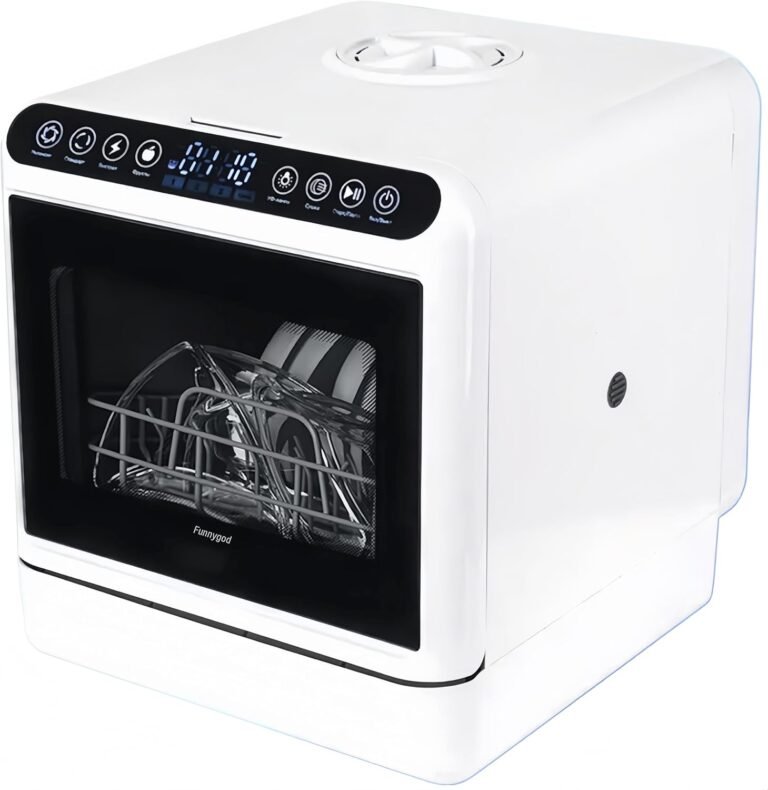
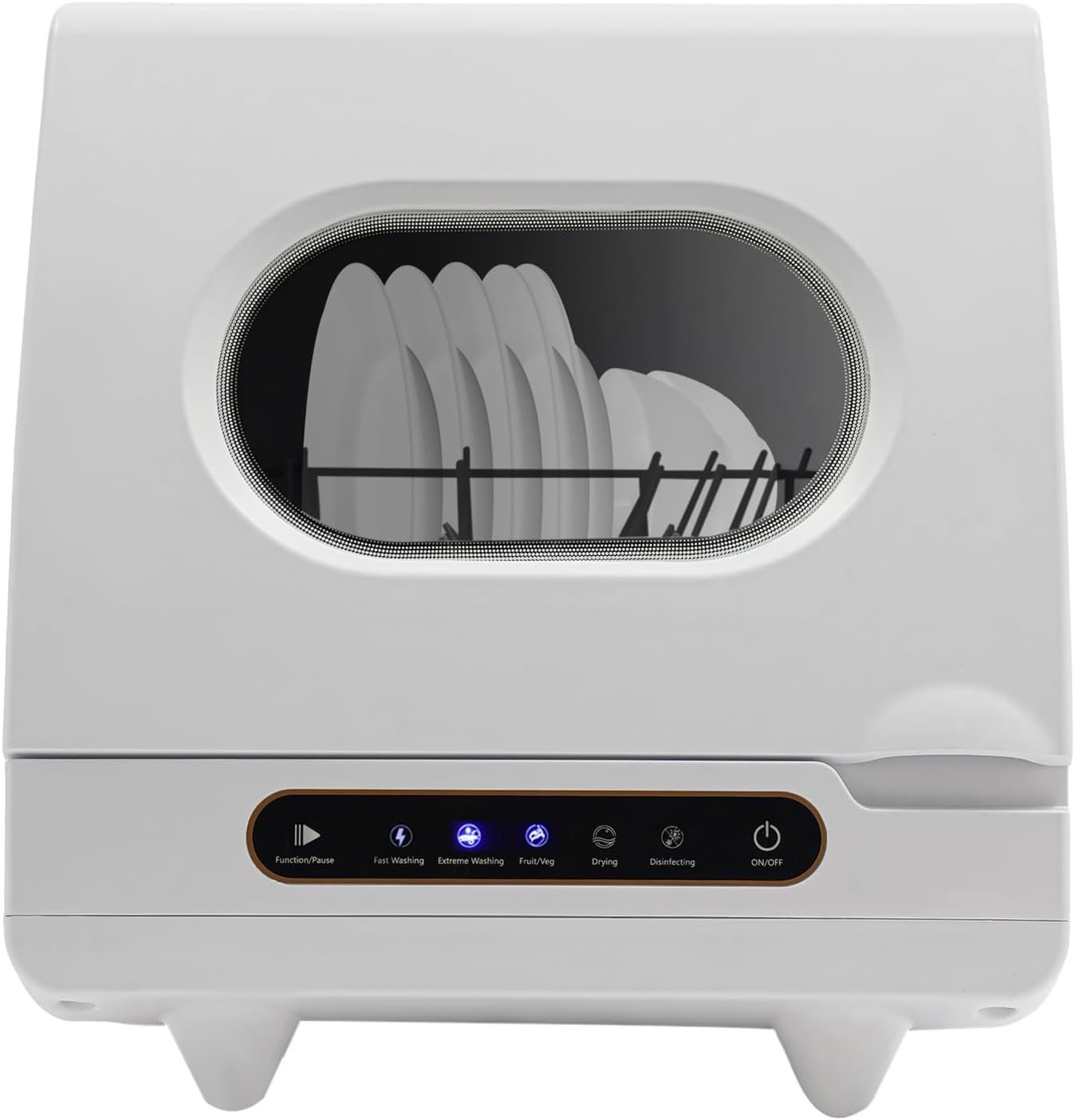
Selecting a countertop dishwasher requires balancing cleaning performance, space constraints, and household routines. Small households, apartments, RVs, and dormitory setups often prioritize compact footprint and simple connections to municipal water supplies, while kitchens with open plans emphasize low noise and discreet operation. Frequency of use matters: daily users need reliable cleaning and straightforward maintenance, whereas occasional users may value energy- and water-sparing cycles. Noise sensitivity, available counter or cabinet space, and expectations for drying and sanitization should guide selection. This countertop model emphasizes a 360° rotating spray and high-temperature cycles to address grease and food residues, while its compact dimensions suit tight counters; however, capacity limits and drying approach affect suitability for larger families and heavy cookware.
Quick Overview
| Feature | Details |
|---|---|
| Dishwasher type | Countertop, freestanding portable unit |
| Capacity | Up to 6 place settings; max tableware diameter 38 cm (15 in) |
| Wash cycles | 5 cycles: Quick (19 min), Strong (55 min), Fruits/Vegetable (15 min), Self-clean (6 h), plus unspecified fifth option |
| Cleaning technology | 360° rotating spray arms with high-temperature wash up to 72°C (161.6°F) |
| Drying method | Hot air circulation drying |
| Noise level | 55 dB declared operating noise |
| Energy & water | Power 800 W; max water consumption 5 L per cycle; no efficiency certification listed |
| Dimensions & installation | 15.74″ D x 15.74″ W x 17.71″ H; countertop plug-in (110 V, 60 Hz); includes inlet and drain hoses |
| Materials & build | ABS and PP exterior plastics, stainless steel internal frame, nylon basket |
| Weight & accessories | Net weight 6.3 kg (13.9 lb); includes inlet and drain hoses and manual |
This snapshot translates manufacturer specifications into practical expectations: the unit fits small kitchens and temporary setups, handles up to six standard place settings per load, uses focused high-temperature spray for grease and sanitization, and relies on hot-air drying. Limited capacity and single-cup rack geometry make it best for small households, not large families or pots-and-pans–heavy routines.

Cleaning performance and wash coverage
The countertop dishwasher combines a 360° rotating spray design with a high-temperature wash (up to 72°C/161.6°F) and multiple cycle lengths to address soils of varying intensity. Rotating spray arms increase angular coverage and can improve water reach around cup rims and plate stacks compared with single-direction nozzles, while elevated water temperature helps dissolve oils and activate detergent chemistry more effectively. Cycle variety—short quick cycles and longer strong cycles—permits trade-offs between time and soil removal. Filtration and a removable internal filter assist in trapping food particulates to keep recirculated water cleaner during a cycle. Limitations include physical spacing and spray shadowing in tightly packed loads, which can reduce direct spray exposure on larger or irregularly shaped items.
Spray system and wash coverage
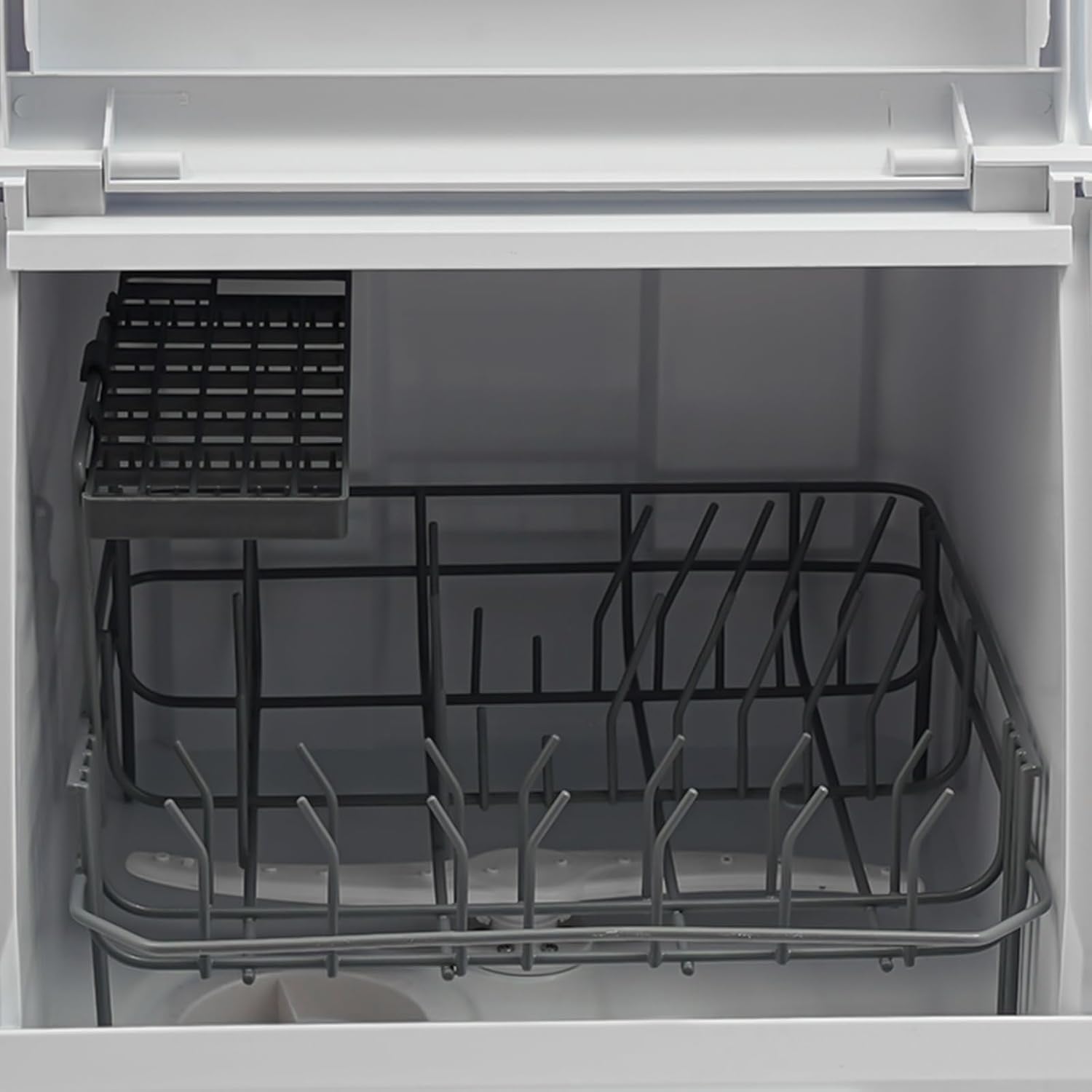
The 360° rotating spray intent is to deliver multi-angled jets that impinge on dish surfaces from different directions, reducing dead zones common in fixed-arm designs. Rotational momentum and nozzle placement determine impingement angles and coverage uniformity; compact circular chambers may increase reflection and turbulence to help dislodge soils. For best results, load items to avoid blocking nozzle trajectories and stagger cups and bowls so spray paths reach both interior and exterior surfaces. Dense stacking or oversized utensils can create shadowed areas that absorb spray energy and compromise cleaning effectiveness, particularly in short-cycle modes.
High-temperature cycles and detergent interaction
High-temperature operation up to 72°C enhances enzyme and chemical performance of dishwasher detergents by increasing reaction rates that break down fats and proteins. Elevated temperatures also reduce surface tension for better wetting. Manufacturer guidance specifies using dishwasher-specific detergents; general-purpose household detergents are not suitable. High-temp cycles can improve grease removal on heavily soiled plates but usually require proper loading, adequate detergent dosing, and unobstructed spray coverage to achieve consistent results across a full load.
Capacity, rack design, and loading
Capacity is an important practical constraint for compact countertop dishwashers. This model lists a six-place setting capacity and a maximum dish diameter of 38 cm (15 in), reflecting a small basket intended for plates, cups, utensils, and modest cookware. A nylon basket and basic rack geometry suit typical flatware and dishware but limit accommodation of large pans and deep pots. The internal layout and spacing influence how many cups and bowls sit within direct spray paths; users should arrange items with concave surfaces facing toward spray arms. Weight limits and rack material choices (nylon-coated baskets) are aligned with lightweight tableware rather than heavy cast-iron or oversized bakeware.

Place settings, max diameter, and practical load tips
The six-place setting rating offers a guideline for average plate-and-cutlery sets rather than jam-packed household loads. Place setting calculations usually assume a plate, bowl, cup, and cutlery per setting; thus, multi-course or serving-ware loads will reduce effective throughput. The specified maximum diameter of 38 cm should be observed to avoid blocking spray arms or impeding door/lid closure. For best performance, orient plates toward the center, place cups at an angle to allow drainage, and use the utensil holders so flatware does not nest and block spray paths.
Rack materials and handling restrictions
Nylon-coated baskets are common in compact models for corrosion resistance and gentle contact with tableware; however, repeated exposure to high heat and concentrated detergents can accelerate wear over time. Avoid loading extremely heavy items that could deform the basket or create imbalance during spin of the spray components. Stainless steel internal framing improves structural rigidity and heat tolerance compared with plastic-only interiors, but the mix of ABS and PP components in the outer shell means external surfaces are optimized for lightweight portability rather than permanent installation.
Noise levels and open-kitchen suitability
Noise rating is a central factor for open-plan living. The manufacturer declares an operating noise level of 55 dB, which sits in a moderate audible range for countertop appliances. At this level, speech can still be audible in adjacent spaces and quiet activities could be interrupted when the dishwasher runs. Sound perception depends on room acoustics, distance from the unit, and surface reflections. Vibration isolation via rubber feet and stable placement on a solid countertop reduce structure-borne noise that travels through cabinets or counters. For bedrooms nearby or very quiet open-plan spaces, lower-decibel models are preferred; 55 dB is more suitable for kitchens where background activity masks appliance sound.

Understanding the 55 dB rating in context
Decibel ratings are logarithmic; a 55 dB rating represents a noticeable sound level compared with whisper-quiet models rated below 45 dB. Room size and reverberation characteristics will influence perceived loudness: hard surfaces, tile, and limited soft furnishings increase reflections and perceived volume, while carpeting and soft materials dampen it. For apartment living where the unit is used during daytime or active hours, 55 dB is typically acceptable. For late-night runs or very noise-sensitive occupants, choosing lower-noise alternatives or running at off-peak times will mitigate disturbance.
Noise mitigation and placement recommendations
Placement on a flat, rigid surface with the four anti-slip feet specified reduces vibration transfer. Avoid placing the dishwasher directly on a flimsy countertop edge or atop resonant cabinets. Using short, secure inlet and drain hose routes prevents rattling and minimizes movement during pump operation. Where possible, position the unit away from lightweight partitions and bedroom walls to decrease direct sound transmission into living or sleeping areas.
Drying systems and moisture control
Drying approach affects post-cycle readiness and the likelihood of residual moisture. This model uses hot air circulation drying, which moves heated air across the load to evaporate residual water. Circulation-based drying reduces reliance on passive condensation but may leave pockets of moisture on deep-set crevices, tall narrow glasses, or utensil sockets. Hot-air drying performance depends on how well air flows through the loaded basket; obstructed vents, tightly packed items, or sealed containers reduce drying efficiency. Additionally, high-temperature drying can promote faster evaporation but may also increase condensation on cooler exterior surfaces once the cycle ends.

Hot air circulation mechanics and expected outcomes
Hot air drying relies on a fan or convection path to deliver heated air to wet surfaces, increasing evaporation rates compared with passive methods. In compact chambers, recirculated air must be exchanged with cooler ambient air to fully remove moisture; otherwise, humidity can reach saturation and slow drying. Expect reasonable drying on plates and open cups, but taller and nested items may retain droplets. Opening the lid or door briefly after the cycle can accelerate moisture release by allowing humid air to escape and cooler ambient air to enter.
Managing residual moisture and preventing odors
Residual moisture pockets can encourage musty odors if items remain inside for extended periods. The removable and washable internal filter assists in removing food solids that contribute to odors; periodic cleaning of the filter and interior surfaces is necessary. Using the self-clean mode for periodic internal rinsing and running a brief high-temperature cycle without dishes can help reduce buildup. Ensuring good airflow after the cycle by leaving the lid slightly ajar (if the design allows) will further help moisture disperse.
Energy, water efficiency, maintenance, and durability
Energy and water efficiency combine technical specs and operational patterns. This unit lists an 800 W power draw and a maximum water consumption of 5 L per cycle; no formal efficiency certification is stated, which indicates buyers should anticipate typical portable-unit efficiency rather than certified low-consumption performance. Maintenance considerations include routine cleaning of the removable internal filter, inspection of inlet and drain hoses for kinks or buildup, and attention to the stainless steel internal frame and plastic exterior. Component choices such as a pure copper motor and stainless internal framing imply certain durability characteristics, but longevity depends on usage patterns, water hardness, and maintenance frequency.

Water and energy expectations for compact countertop models
A 5 L maximum per cycle water use is low compared with standard full-size dishwashers, making the model suitable for small loads and frequent short cycles. Energy use correlates with cycle time and heating demand; the 800 W rating indicates significant heating capability during wash and drying phases. Users expecting industry-leading energy or water performance should consult certified models, as this product does not list ENERGY STAR or similar certifications. Efficient detergent and cycle selection can moderate total energy use over time.
Maintenance, filter management, and component longevity
The removable washable filter is central to maintaining wash quality and preventing food redeposition. Regular emptying and rinsing of that filter reduce strain on the pump and keep spray nozzles clearer. Hoses supplied should be checked periodically for mineral buildup and secure connections to avoid leaks. Stainless internal framing provides corrosion resistance and structural support, while ABS and PP external materials prioritize lightweight portability. Durability is influenced by water chemistry, detergent types, and adherence to manufacturer cleaning guidance; avoiding general-purpose detergents and using dishwasher-specific products will protect seals and internal surfaces.
Pros & Cons
Pros
- Compact, portable footprint suitable for small kitchens and temporary installations. The unit’s small dimensions and included inlet and drain hoses enable countertop placement without permanent plumbing changes, suiting apartments and RVs.
- High-temperature wash option up to 72°C (161.6°F) supports improved grease and protein removal. Elevated temperature enhances detergent action and can reduce microbial residues when combined with appropriate detergents.
- 360° rotating spray design increases angular coverage. Multi-directional jets help reach varied dish orientations and reduce blind spots compared with single-direction nozzles.
- Low water consumption per cycle (max 5 L). Compared to full-size dishwashers, the lower per-cycle water use makes it practical for small loads and frequent short washes.
- Hot-air circulation drying shortens downtime before unloading. Active drying is more effective than passive condensation in many compact designs, improving usability for everyday items.
- Removable washable internal filter simplifies routine maintenance. Easy access to the filter aids in removing food residues and maintaining pump performance over time.
Cons
- Limited six-place capacity restricts suitability for larger households. For families or heavy entertaining, the small basket necessitates multiple loads and more run time.
- 55 dB noise level may be noticeable in quiet open-plan spaces. While acceptable for many kitchens, the unit is not among the quietest countertop models and can be audible in adjacent living areas.
- No listed energy efficiency certification. Absence of formal ratings such as ENERGY STAR means comparative energy performance requires user calculation based on cycle selection and frequency.
- Basket and chamber size limit oversized cookware use. Large pans, deep pots, and some baking sheets may not fit or may block spray coverage, reducing cleaning effectiveness for heavy-duty cookware.
Final Verdict: Who This Dishwasher Is Best For (and Who Should Skip It)
This countertop dishwasher is best suited for singles, couples, and small households in apartments, dorms, RVs, or short-term housing where plumbing permanence is limited and counter space is available. Its 360° rotating spray system combined with high-temperature cycles and a removable filter provide a credible cleaning approach for everyday plates, cups, and flatware, while the hot-air drying helps reduce post-cycle moisture for routine tableware. Low per-cycle water consumption and a compact footprint make it a practical choice for users prioritizing space efficiency and straightforward maintenance routines.
Those who should consider alternatives include larger households, frequent entertainers, and cooks needing to clean heavy cookware or oversized items; the six-place capacity and rack geometry limit throughput and physical accommodation. Noise-sensitive buyers in open-plan or bedroom-adjacent spaces may prefer models with lower decibel ratings. Buyers seeking certified energy- and water-efficient appliances should compare models with recognized certifications. Overall, the unit offers a balanced portable solution for modest daily loads and constrained spaces when matched to appropriate household needs.

Frequently Asked Questions (FAQs)
How many place settings can this countertop dishwasher handle?
The manufacturer specifies a capacity of up to six place settings, which typically assumes a plate, bowl, cup, and flatware per setting. This rating suits standard daily loads for one to two people but will be limited for larger households or entertaining situations. Large or bulky items reduce effective capacity and can interfere with spray coverage.
What cleaning technology does the unit use to remove grease and food residue?
The unit uses a 360° rotating spray system combined with high-temperature wash capability (up to 72°C/161.6°F). Rotating jets increase angular coverage, while elevated water temperature enhances detergent effectiveness for fats and proteins. Proper loading and dishwasher-specific detergent use are necessary to realize expected cleaning performance.
Is the dishwasher quiet enough for open-plan kitchens?
The declared noise level is 55 dB, which is moderately audible in adjacent living spaces. In rooms with hard surfaces and limited sound absorption, the dishwasher may be noticeable; in busier kitchen environments, background activity will mask it. Noise-sensitive users or late-night operation scenarios may prefer models rated below 45 dB.
How effective is the hot-air drying system at preventing damp dishes?
Hot-air circulation drying uses heated airflow to evaporate residual moisture, which is more active than passive condensation drying. It performs well on plates and open cups but may leave droplets in narrow openings or deep crevices. Allowing some ventilation after the cycle and avoiding tightly nested items improves drying outcomes.
What maintenance is required to keep the dishwasher operating well?
Routine tasks include emptying and rinsing the removable internal filter, inspecting inlet and drain hoses for blockages or kinks, and running periodic self-clean cycles. Using dishwasher-specific detergents and avoiding general household cleaners helps protect seals and internal components. Regular maintenance reduces redeposition of food solids and extends component lifespan.
How much water and power does the countertop dishwasher use per cycle?
Manufacturer specifications list a maximum water consumption of 5 liters per cycle and an electrical rating of 800 watts. Actual energy usage depends on cycle length and heating demand; short cycles consume less energy but may be less effective on heavy soils. The product does not list specific energy efficiency certifications.
Can large pans and baking sheets fit inside this model?
The dishwasher specifies a maximum tableware diameter of 38 cm (15 in) and a six-place capacity, indicating limited interior space. Large pots, deep pans, and full-size baking sheets are likely to be difficult or impossible to accommodate without blocking spray arms. Users with routinely large cookware should consider full-size dishwashers.
Is hard water suitability addressed in the design or documentation?
The product description notes a self-cleaning mode that can soften water quality to reduce internal residue, but no specific water-softening hardware is listed. Hard water effects such as mineral buildup can affect spray nozzles and heating elements over time; users in hard-water areas should follow recommended maintenance and consider additional water-softening measures if necessary.