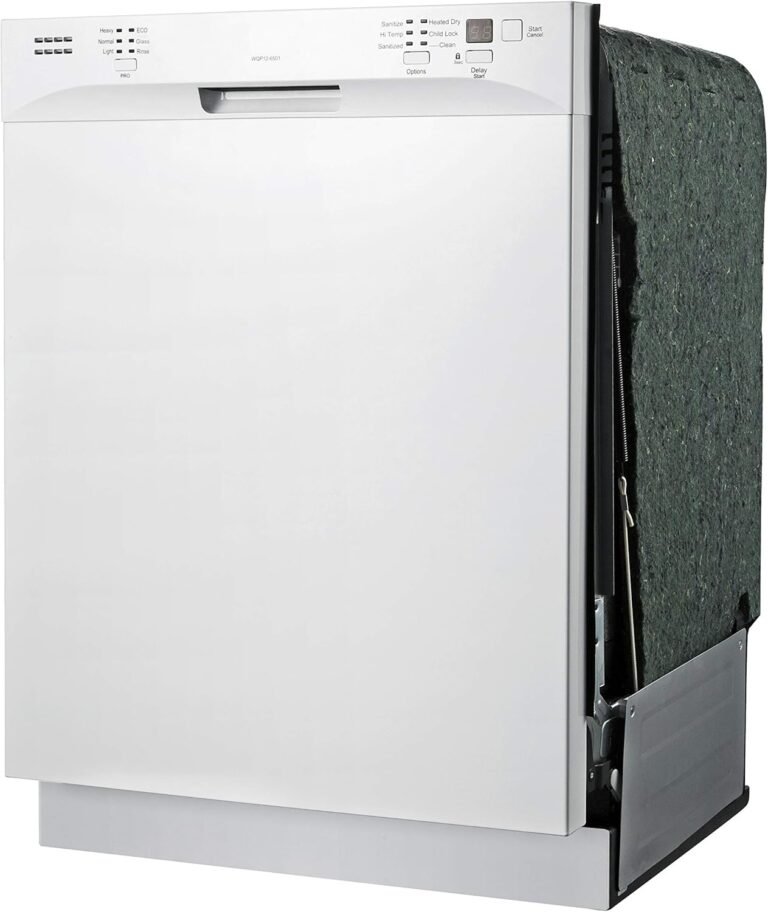
Sharp SDW6888JS: Quiet, Effective Cleaning for Kitchens
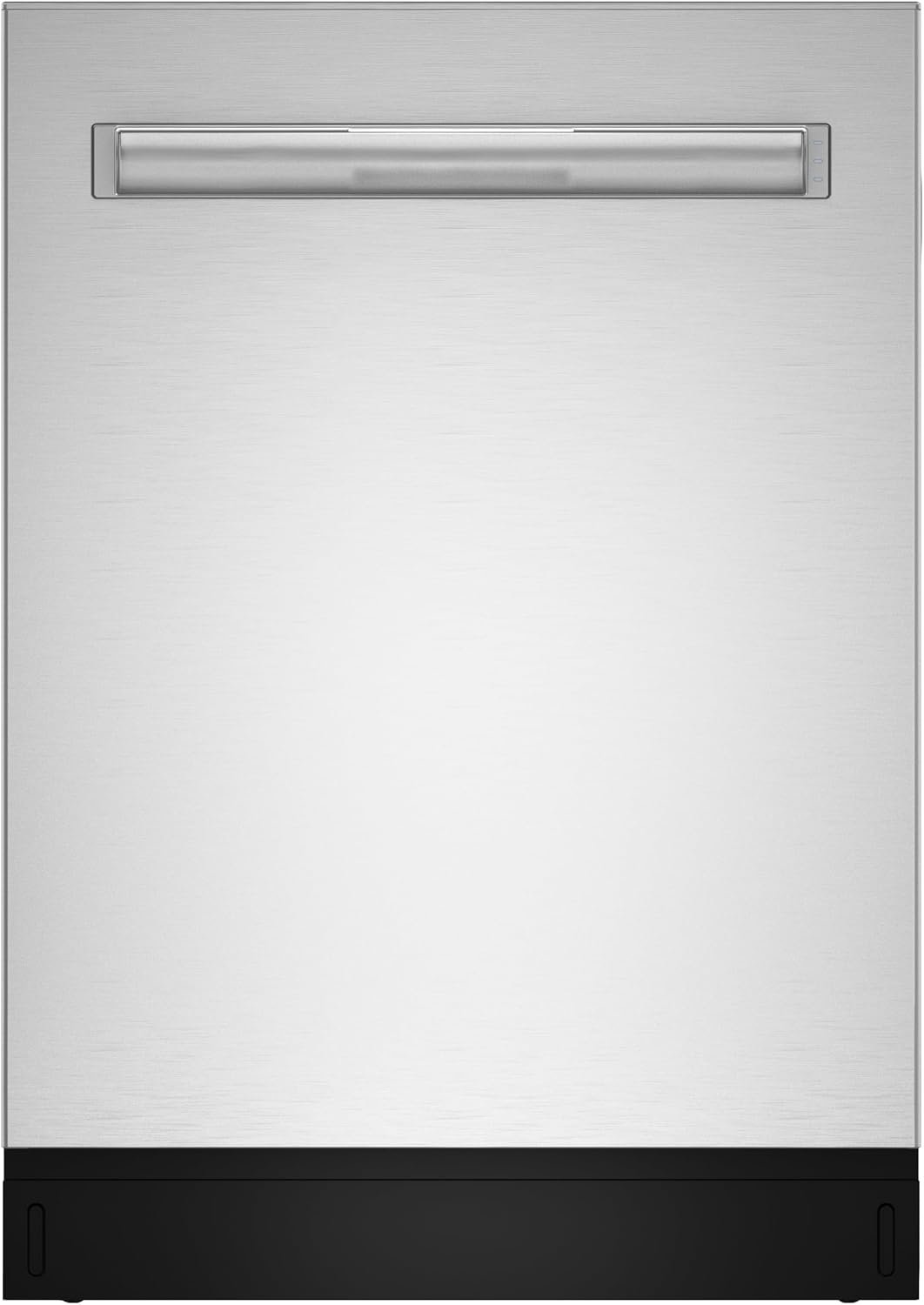
Why dishwasher choice matters
Selecting the right dishwasher affects daily routines, household cleanliness, and kitchen design integration. Household size, typical soiling levels, and frequency of use shape the priorities for a new appliance: a compact family that runs multiple cycles per day has different needs than a single-person household that runs a cycle every few days. Kitchen layout and acoustics determine how important a low-decibel rating will be, especially for open-plan spaces where a 42 dBA machine will influence conversation and ambient noise. Efficiency expectations cover both water and energy consumption, with Energy Star qualification and manufacturer-stated annual energy figures used to compare models. Rack configuration and capacity determine which cookware and serving pieces fit without extensive pre-rinsing, while drying systems and filtration affect post-cycle handling and maintenance. These factors together guide whether a model like the Sharp SDW6888JS aligns with a household’s priorities for performance, noise, convenience, and long-term operating profile.
Quick Overview
| Feature | Details |
|---|---|
| Dishwasher type | Built-In, 24-inch unit |
| Capacity | 12 place settings |
| Wash cycles & technology | 6 wash cycles, 7 options, Power Wash sprayer |
| Drying method | Heated dry option |
| Noise level | 42 dBA (Library Quiet technology) |
| Energy efficiency | ENERGY STAR qualified; Annual energy consumption 240 kWh |
| Water consumption | Manufacturer lists 3.5 gallons per hour |
| Dimensions & installation | 24.5″D x 23.88″W x 33.88″H; built-in installation |
| Controls & connectivity | Backlit touch controls; Works with Alexa |
| Interior & materials | Stainless steel tub; LED interior lighting |
The table summarizes key specifications that translate into typical household performance: a 12-place capacity suits small to medium households while the deep third rack expands flatware and utensil space. Library Quiet operation at 42 dBA makes the dishwasher suited to open kitchens where conversation and media are present. ENERGY STAR qualification paired with a manufacturer-stated annual energy figure gives a baseline for efficiency comparisons, and the stainless steel tub and Power Wash sprayer are aimed at addressing common soiling without resorting to aggressive pre-rinsing.
Cleaning performance and spray systems
The SDW6888JS centers cleaning around a dedicated Power Wash sprayer combined with multiple cycle selections, a stainless steel tub geometry, and an internal filtration path that manages soil redeposition. Power Wash is designed to concentrate higher-pressure water on heavily soiled pots and pans while general cycles distribute flow through spray arms to cover upper and lower racks; the presence of a deep third rack alters water trajectories and requires careful spray-arm placement to ensure coverage. Backed by six wash cycles and seven options, the unit offers flexibility to balance duration, water usage, and soil-handling needs. Filtration and trap systems in similar designs retain particulates and recirculate cleaner water, reducing the need for repeated cycles while minimizing detergent waste.

Spray coverage and arm configuration
Spray arm placement and rotational coverage define how effectively wash jets reach loaded items. Typical built-in designs place an upper arm beneath the top rack and a lower arm under the lower rack, with a dedicated nozzle or targeted sprayer for a third rack or a Power Wash mode. The SDW6888JS’s Power Wash sprayer aims to create a focused jet for stubborn residues; however, third-rack loads can obstruct flow if tall utensils or stacked cutlery sit directly above lower spray arms. Proper loading that keeps large items to the sides and positions flatware in the third rack increases exposure to both agitation and rinse jets.
Filtration, soil management, and detergent delivery
Commercial and residential dishwasher filtration separates food solids from wash water to prevent redeposition and maintain consistent spray performance. The SDW6888JS specifications reference typical plastic baskets and metal racks; a stainless steel tub supports higher wash temperatures and corrosion resistance. A fine-mesh filter or multi-stage trap will capture soils that need manual emptying over time, and using recommended detergent types and amounts helps maintain pump and spray-arm performance. Regularly clearing large food scraps from the sink before loading preserves filter life and reduces the frequency of manual filter maintenance.
Capacity, rack design, and place settings
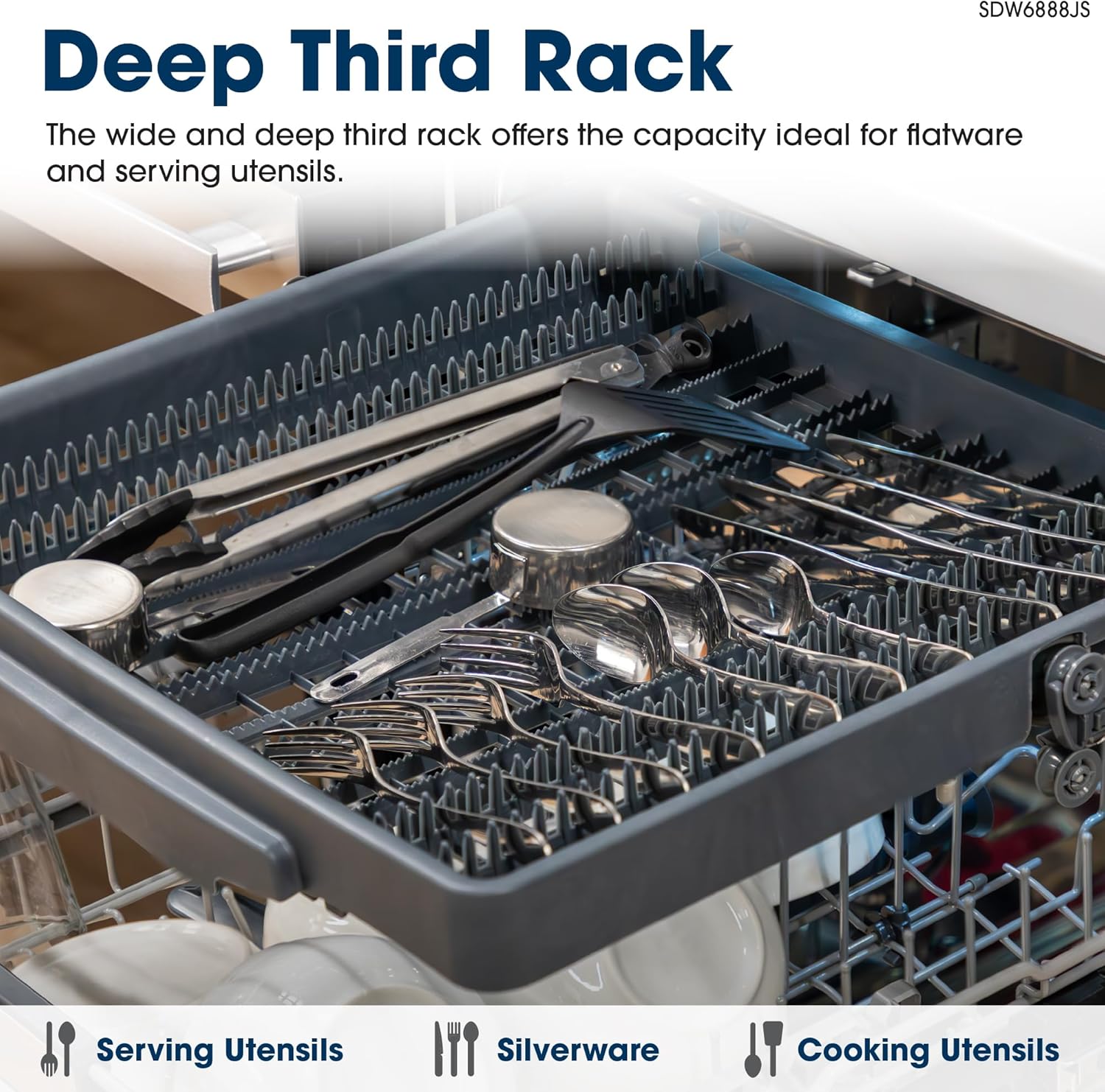
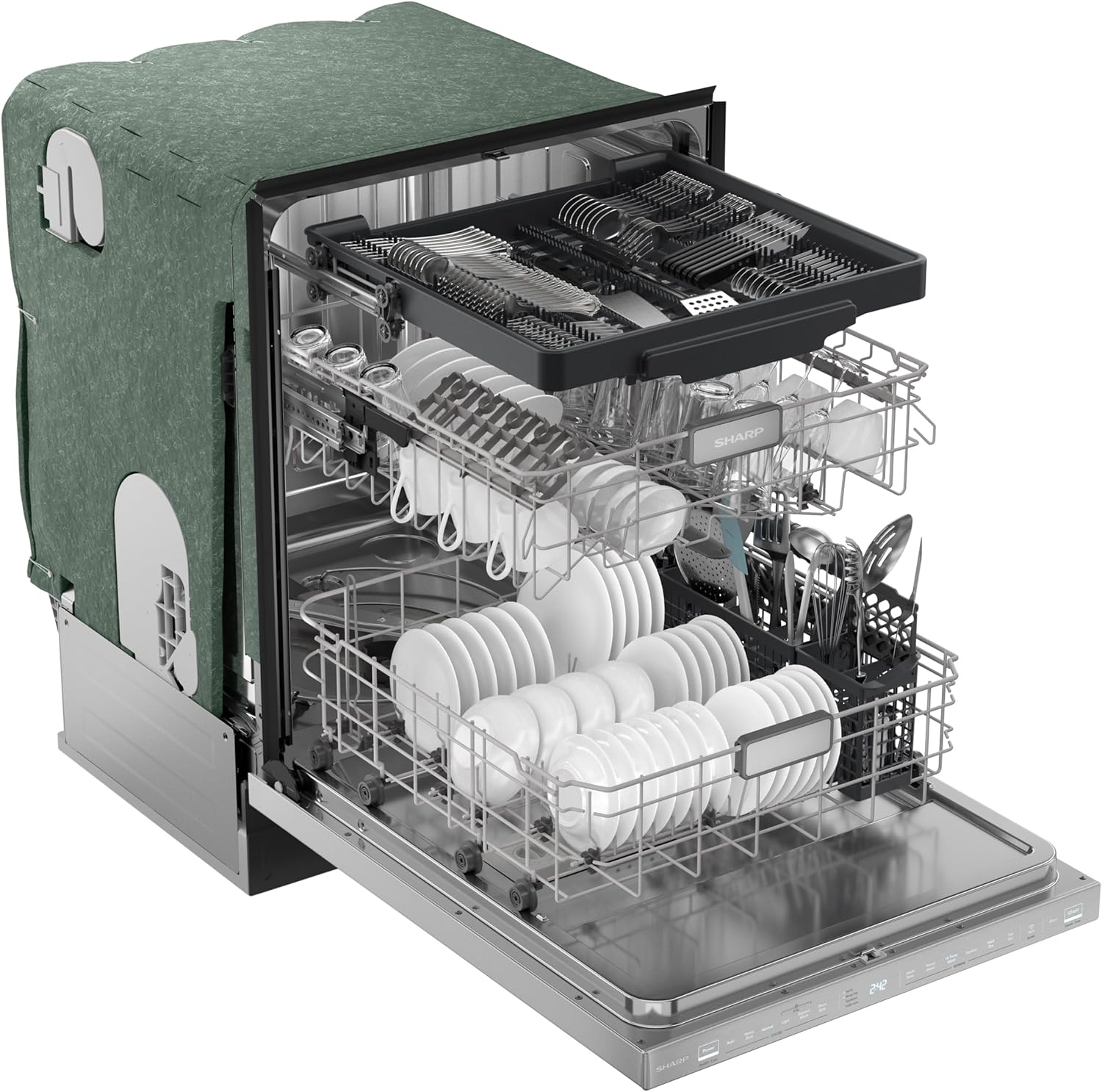
Capacity matters for cycle efficiency and loading flexibility. A 12-place setting rating is common for compact 24-inch built-in dishwashers and reflects standard dinnerware and cookware volume for small families or couples. The SDW6888JS differentiates itself with a deep third rack specifically designed for flatware and cooking utensils, which increases usable space and frees lower rack slots for larger items. Metal rack frames and plastic-coated baskets typically balance durability and gentle handling of dishware; adjustable tines and fold-down rows are standard features that influence how pans, stemware, and large plates are accommodated. Space planning and the presence of a third rack together determine whether multiple cycles are needed on heavy entertaining days.

How a deep third rack changes loading patterns
A deep third rack allows flatware, spatulas, ladles, and other long utensils to be laid flat without interfering with upper-rack stemware. This reduces vertical stacking in the lower rack and often enables more plates and bowls to fit per cycle. While the third rack increases capacity in practice, overloading it or placing tall utensils across spray paths can reduce cleaning efficacy on lower-rack items. The SDW6888JS’s third rack is adjustable, which provides flexibility to lower or raise it depending on dishwasher load, helping to optimize both capacity and spray access.
Rack materials and durability considerations
Metal rack frames with resin or vinyl-coated wires are common to resist chipping and rust; plastic baskets for cutlery are lightweight and easy to remove for cleaning. The SDW6888JS lists metal rack material and plastic baskets, a combination that balances longevity and serviceability. Users should expect typical wear points at tines, wheel assemblies, and basket clips; these components are often replaceable. Regular inspection for flaking coatings and damaged wheels helps maintain smooth rack movement and prevent enamel damage to dishware during loading and unloading.
Noise levels and open-kitchen suitability
Noise performance is a prominent consideration for open-plan homes and living spaces that adjoin kitchens. The SDW6888JS advertises Library Quiet technology with a 42 dBA rating, categorizing it among quieter residential dishwashers where conversation and media activities continue during cycles. Decibel ratings provide a comparative baseline but are influenced by installation, cabinetry resonance, and floor vibrations. Built-in insulation, motor mounting, and pump design also affect perceived noise. For open kitchens, low decibel models reduce disturbance, but placement relative to seating areas and the presence of sound-reflecting surfaces will determine whether a 42 dBA rating meets specific household expectations.
Understanding decibel ratings and perceived loudness
Decibel scales are logarithmic; a 3 dBA change is just noticeable, while a 10 dBA change is perceived roughly as twice or half as loud. A 42 dBA rating places the unit in a quiet category where background conversations remain audible without significant interference. Sound transmission through cabinetry can add or dampen noise, so installation with full-panel integration and proper sealing can reduce perceived sound. In-room acoustics—hard floors, high ceilings, and adjacent living rooms—will increase the practical impact of any dishwasher noise level and should be weighed when evaluating 42 dBA machines.
Installation and cabinetry effects on noise control
Fully integrated models with tight door seals and proper mounting reduce mechanical vibrations transmitted to cabinetry. The SDW6888JS’s fully integrated design and fingerprint-resistant stainless finish are consistent with installations that minimize noise leakage when panels are correctly attached. Anti-vibration mounts, insulated tub walls, and secure leveling all play roles in reducing rattle and hum. Accurate installation and use of recommended mounting brackets help maintain the manufacturer-stated noise performance within a real kitchen environment.
Drying systems and moisture control
Drying method affects cycle length, energy use, and the need for towel-drying afterward. The SDW6888JS lists a heated dry option, which applies active heat to reduce residual moisture and speed drying for plastics and ceramics. Heated drying is effective but increases energy use relative to passive or condensation drying modes. Interior stainless steel surfaces support condensation drying by attracting moisture to the tub walls rather than to dishes, which helps with passive drying performance when heat is not used. Drying outcomes also depend on detergent formulation, rinse aid usage, and load density, with rinsing agents promoting sheeting action on glass and reducing spotting.

Heated dry versus condensation drying performance
Heated dry systems accelerate water evaporation by raising interior air temperature and circulating warm air; they are beneficial for plastic and deep-set items that trap water. Condensation drying relies on the stainless steel tub cooling relative to dishware, causing water to bead and run to the bottom. The SDW6888JS’s inclusion of a heated dry option provides flexibility: select heated cycles when immediate use of dishes is required, or choose energy-saving condensation modes for overnight drying. Rinse aid and proper loading further enhance drying, particularly for stemware and items with concave surfaces.
Managing moisture and preventing odors
Proper filtration and periodic cleaning of the tub and door gaskets reduce trapped food particles and moisture pockets that can become odor sources. Stainless steel interior surfaces resist staining and absorb less odor than plastic-lined tubs, while interior LED lighting assists in visual inspection after cycles. Leaving the door slightly ajar after a cycle or using a vented cycle option reduces trapped humidity and speeds interior drying. Regularly removing and rinsing the filter basket and checking the dispenser path help maintain drainage performance and reduce residual moisture accumulation.
Energy, water efficiency, maintenance, and long-term reliability
Energy and water metrics guide long-term operating expectations. The SDW6888JS is ENERGY STAR qualified with a manufacturer-listed annual energy consumption of 240 kWh and a water consumption rate quoted as 3.5 gallons per hour. These figures provide benchmarks for household comparisons but will vary with cycle selection, soil level, and frequency of use. Maintenance considerations include periodic filter cleaning, spray-arm clearance checks, and inspection of door seals and rack components. Long-term reliability is influenced by build materials—stainless steel tub, metal racks, and the listed item weight indicating robust components—and by routine maintenance practices.

Maintenance routines and filter requirements
Regular maintenance for residential dishwashers typically includes emptying the coarse food trap, rinsing or replacing fine filters as recommended, and running a monthly maintenance cycle or descaling when hard water is present. The SDW6888JS’s plastic basket and filtration path require periodic clearing of large particles to prevent pump strain. Spray arm rotation should be unobstructed; checking for calcium deposits or blockages ensures consistent spray pressure. Documented replacement parts such as rack wheels and filter assemblies are common service items and should be accessible for long-term upkeep.
Durability expectations and components that influence lifespan
Stainless steel tubs and metal rack frames contribute to corrosion resistance and higher-temperature wash compatibility, factors that typically extend appliance life. Component wear most often occurs in seals, pump bearings, and electronic control interfaces; backlit touch controls require splash protection and careful cleaning to avoid wear. The SDW6888JS’s listed weight and materials point to a solid build, but long-term reliability also depends on usage patterns—heavy daily loads accelerate wear compared with intermittent use. Proper installation, adherence to maintenance guidelines, and avoiding abrasive detergents will support expected service life.
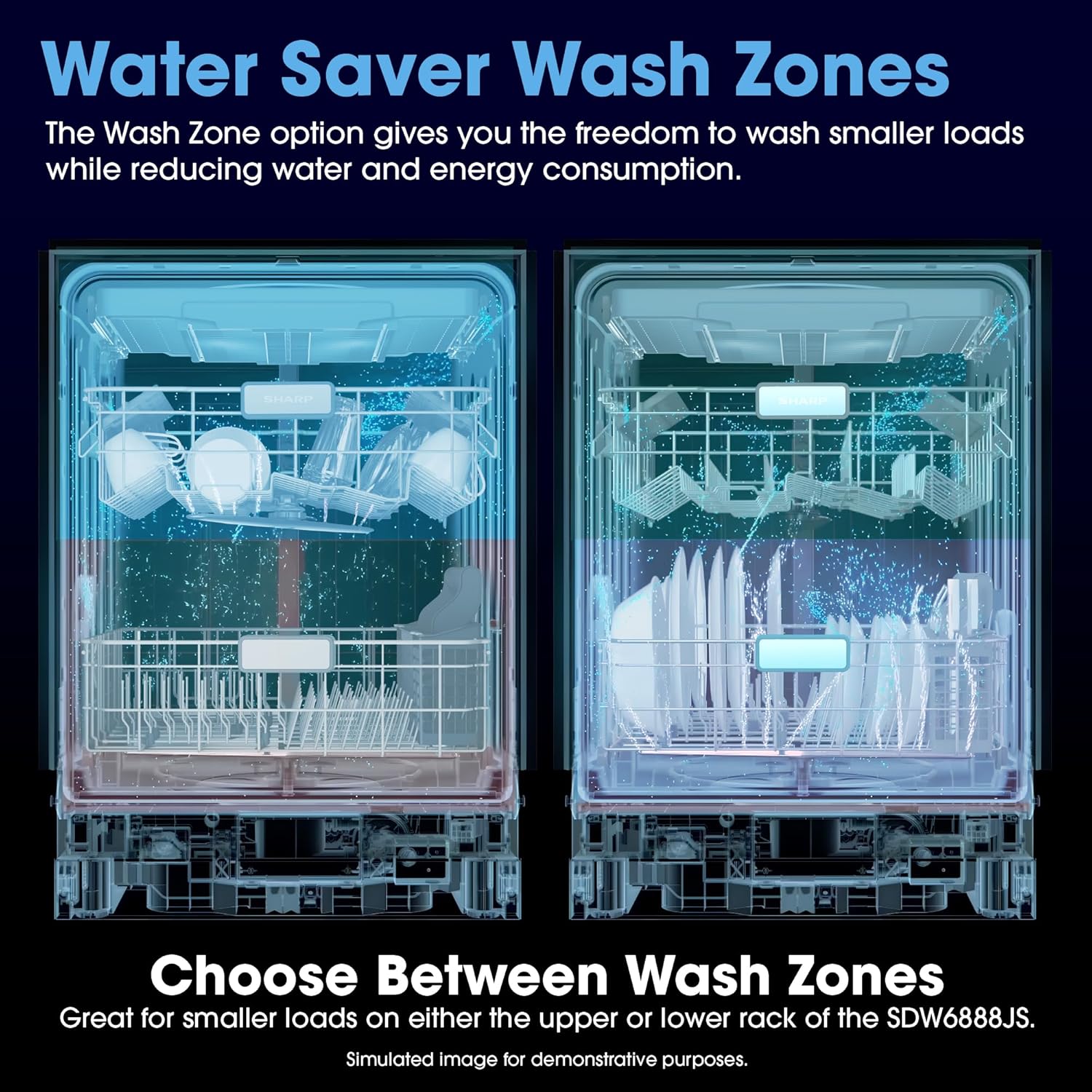
Pros & Cons
Pros
- Quiet operation at 42 dBA: The Library Quiet rating positions this model among quieter residential dishwashers, making it suitable for open-plan kitchens and living areas where low ambient noise is preferred. Reduced perceived sound helps maintain conversation and media enjoyment during cycles.
- Deep third rack increases usable capacity: The dedicated deep third rack is designed for flatware and utensils, freeing lower rack space for plates and cookware and improving cycle efficiency for mixed loads. Adjustable positioning enables flexibility for taller items.
- Power Wash sprayer for targeted cleaning: The focused Power Wash sprayer provides higher-pressure cleaning for heavily soiled pots and pans, supplementing general spray-arm coverage and offering a cycle option tailored to stubborn residues.
- Stainless steel tub and LED interior lighting: A stainless steel interior supports higher temperature washes and resists staining, while LED lighting improves visibility during loading and unloading. Both contribute to convenience and perceived build quality.
- Smart connectivity and intuitive controls: Backlit touch controls and Alexa compatibility enable remote start and voice integration in smart homes, simplifying operation for connected households that value modern interfaces.
- ENERGY STAR qualification: The ENERGY STAR designation offers a baseline for energy efficiency and supports comparison shopping for buyers prioritizing lower energy use across similar models.
Cons
- Smaller 12-place capacity than full-size models: While suitable for small to medium households, the 12-place setting rating is less than larger 24-inch or 24-inch deep cavity dishwashers designed for larger families or frequent entertaining, potentially requiring more cycles for high-use scenarios.
- Heated dry increases energy use: The included heated dry option improves immediate readiness of dishes but increases energy consumption compared with passive condensation drying, which may matter for users prioritizing minimal operational energy.
- Third-rack loading can obstruct spray paths: Improper placement in the deep third rack—especially tall utensils or overlapping items—can interfere with lower spray coverage, necessitating careful loading for optimal cleaning of lower-rack items.
- Annual energy figure may vary with usage: The manufacturer-listed 240 kWh per year provides a benchmark but actual consumption depends on cycle choices, frequency of use, and whether heated dry and power modes are routinely selected.
Final Verdict: Who This Dishwasher Is Best For (and Who Should Skip It)
The Sharp SDW6888JS is best suited to small-to-medium households, couples, or busy rooms in open-plan homes where a 42 dBA library-quiet rating is a priority and modern connectivity is desired. Its deep third rack and Power Wash sprayer appeal to buyers who need flexible utensil storage and targeted cleaning for occasional heavy soils while maximizing everyday capacity. ENERGY STAR qualification, a stainless steel tub, and backlit touch controls add to its appeal for kitchens seeking a balance of performance, convenience, and integrated aesthetics.
Households that frequently host large gatherings, require oversized cookware clearance, or prioritize the highest possible energy frugality might consider larger-capacity or lower-energy alternatives. Those who expect consistently water-saving cycles below the manufacturer-stated figures should compare water-per-cycle metrics across competitors. Overall, the SDW6888JS presents a focused set of features—quiet operation, a dedicated third rack, and Power Wash capability—that align with urban and suburban households seeking an integrated, modern dishwasher solution.

Frequently Asked Questions (FAQs)
How quiet is a 42 dBA dishwasher and is it suitable for an open kitchen?
A 42 dBA rating places a dishwasher in the quiet category where normal conversation remains audible without substantial interference. For open-plan kitchens, a unit rated at 42 dBA typically minimizes disruption, but perceived noise depends on cabinetry installation, room acoustics, and distance to seating areas. Proper mounting and insulation can help maintain the manufacturer-stated noise performance in most open layouts.
Does a deep third rack improve overall dishwasher capacity?
A deep third rack increases usable space for flatware, utensils, and small items, freeing lower rack slots for plates and larger cookware. While the official place setting count (12 in this model) remains the same, the third rack improves load organization and can reduce the number of cycles needed for mixed loads, provided items are arranged to avoid obstructing spray arms.
What are the benefits of a stainless steel tub versus a plastic tub?
Stainless steel tubs tolerate higher wash temperatures, resist staining, and support condensation drying methods more effectively than plastic tubs. These properties typically improve drying performance without heat and enhance long-term corrosion resistance. Stainless steel interiors also aid in quicker cooling for condensation-based drying and are easier to sanitize with high-temperature cycles.
How does heated dry compare to condensation drying for dishwashers?
Heated dry accelerates water evaporation by applying active heat, which reduces residual moisture on plastics and deep items but increases energy use. Condensation drying leverages a stainless steel tub to draw moisture away from dishes, using less energy but often requiring more time or additional rinse aid for optimal results. Choice depends on priorities for immediate readiness versus energy conservation.
What maintenance does the SDW6888JS require to maintain performance?
Routine maintenance includes clearing large food scraps before loading, emptying or rinsing the coarse filter and basket regularly, checking spray arms for blockages, and inspecting door gaskets and rack wheels for wear. Periodic cleaning cycles and attention to water-softening or descaling if hard water is present will help maintain pump efficiency and prolong component life.
Is the Sharp SDW6888JS energy efficient for regular use?
The model is ENERGY STAR qualified and lists an annual energy consumption of 240 kWh, providing a baseline for efficiency comparisons. Actual efficiency depends on cycle selection, frequency of use, and use of heated dry. Choosing eco cycles and minimizing heated dry usage will improve long-term energy performance relative to more energy-intensive settings.
Who should avoid the SDW6888JS when shopping for a dishwasher?
Households that routinely require larger capacities—such as those frequently hosting large gatherings or cooking for extended families—may find the 12-place setting insufficient. Buyers prioritizing the lowest possible running energy or those needing specialized oversized pot clearance should compare larger or more energy-frugal models. Users who prefer simpler mechanical controls over touch interfaces may also seek alternative designs.