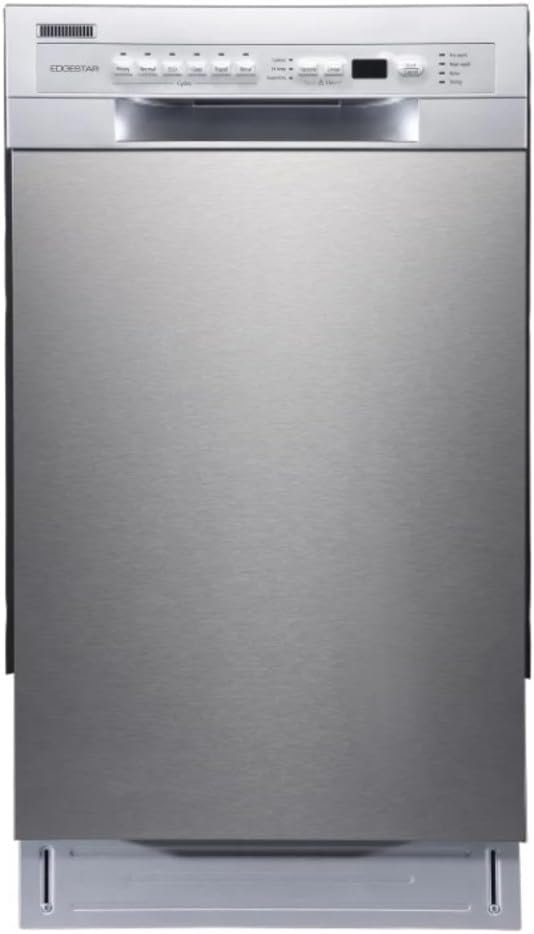
Sharp SDW6726MS Dishwasher — Quiet, Efficient Cleaning Power
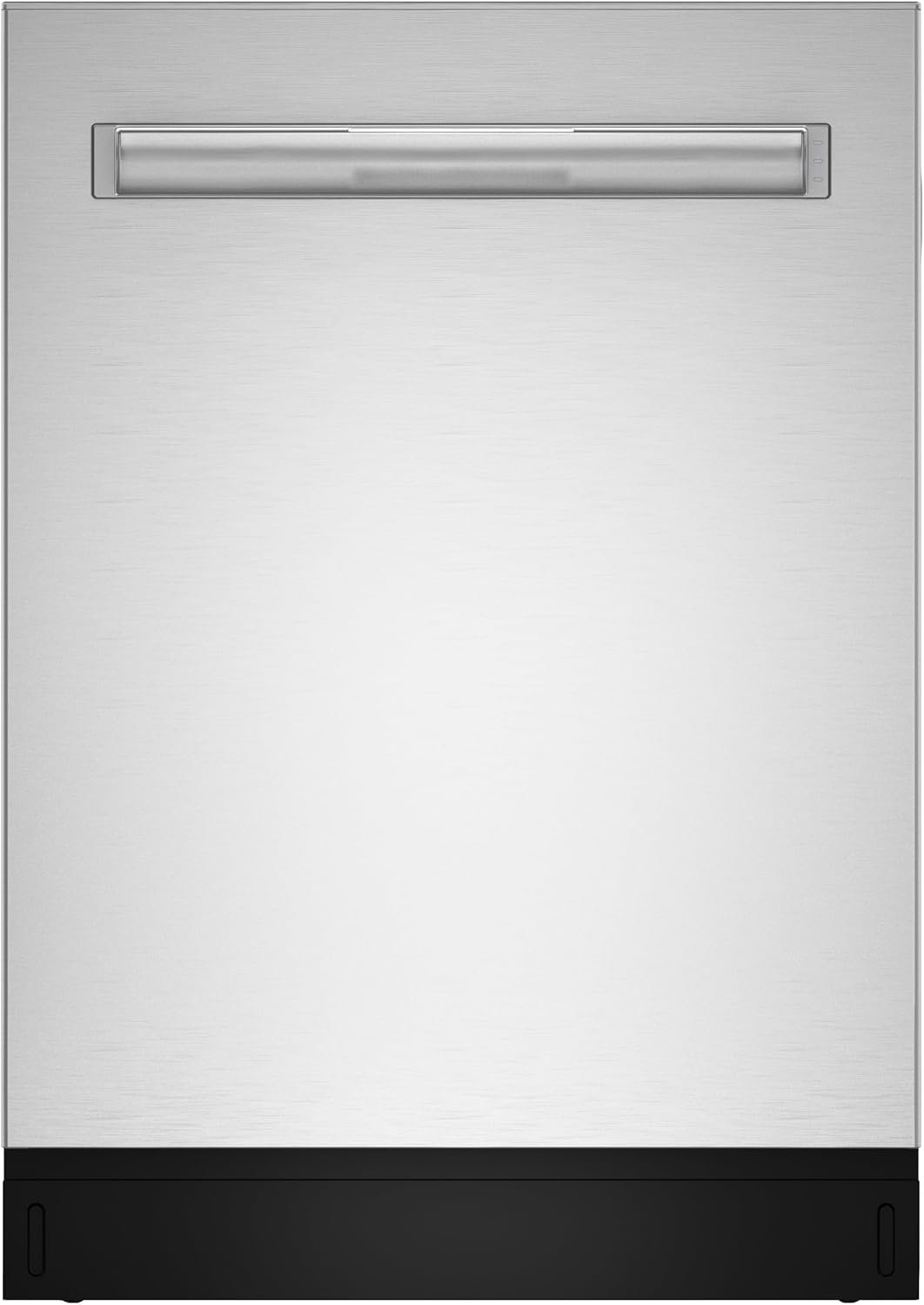
Why choosing the right dishwasher matters for clean dishes and quiet kitchens
Selecting a dishwasher is a practical decision that affects daily routines, kitchen layout planning, and long-term utility use. Household size and dishwashing frequency determine needed capacity and cycle variety, while open-concept kitchens raise sensitivity to noise and vibration. Cleaning performance hinges on spray coverage, targeted wash zones, filtration and drying strategies that handle mixed loads from glassware to heavily soiled cookware. Energy and water efficiency expectations influence model choice when balancing environmental goals and utility impacts. Durable materials such as stainless steel tubs and robust rack systems affect longevity and service intervals. For buyers prioritizing quiet operation, features like 47 dB Library Quiet technology and sound insulation matter as much as cycle performance. Conversely, buyers focused on heavy-duty cleaning should weigh aggressive spray systems, soil sensors, and heated dry capability. The following review synthesizes manufacturer specifications, component details, efficiency disclosures, and aggregated owner feedback to present an objective guide for evaluating the Sharp SDW6726MS in typical U.S. households.
Quick Overview
| Feature | Details |
|---|---|
| Dishwasher type | Built-in, 24-inch (standard built-in form factor) |
| Capacity | 12 place settings |
| Wash cycles & technology | 5 cycles (Economy, Heavy, Normal, Rapid, Rinse) with soil sensors and 3-sprayer Power Wash system |
| Drying method | Heated dry option (supplemental to condensation drying) |
| Noise level | 47 dB (Library Quiet® designation) |
| Energy & water | Annual energy consumption: 240 kWh (manufacturer); water consumption: 3.5 gallons per hour (manufacturer) |
| Dimensions & installation | 24.5″ D x 23.88″ W x 33.88″ H; built-in installation |
| Tub & finish | Stainless steel tub with fingerprint-resistant exterior |
| Controls & capacity features | Front touch controls; adjustable third rack; wash zones; 12-place setting capacity |
| Materials & weight | Metal racks, plastic baskets; item weight 93.3 pounds |
This table summarizes the SDW6726MS core specifications and operating characteristics from manufacturer disclosures. The mix of a stainless steel tub, targeted Power Wash sprayer, adjustable third rack and a 47 dB noise rating positions this model for small-to-medium households that need flexible loading and quiet operation without specialized commercial features.

Cleaning performance and wash coverage
Cleaning performance is driven by the SDW6726MS’s three-sprayer system and a dedicated Power Wash sprayer that aim to increase localized pressure and mechanical action on heavily soiled areas. Soil sensors are specified to detect turbidity and adjust cycle duration and water volume, which helps tailor cleaning intensity to load conditions. The combination of multiple spray sources, adjustable racks and a heated dry option supports both coarse debris removal and improved finishing for glassware and cookware. Realistic expectations should consider that optimal coverage depends on correct loading, spray arm clearance and filter cleanliness; misloading or clogged filters will reduce the reach of spray patterns and the effectiveness of soil-sensing algorithms.
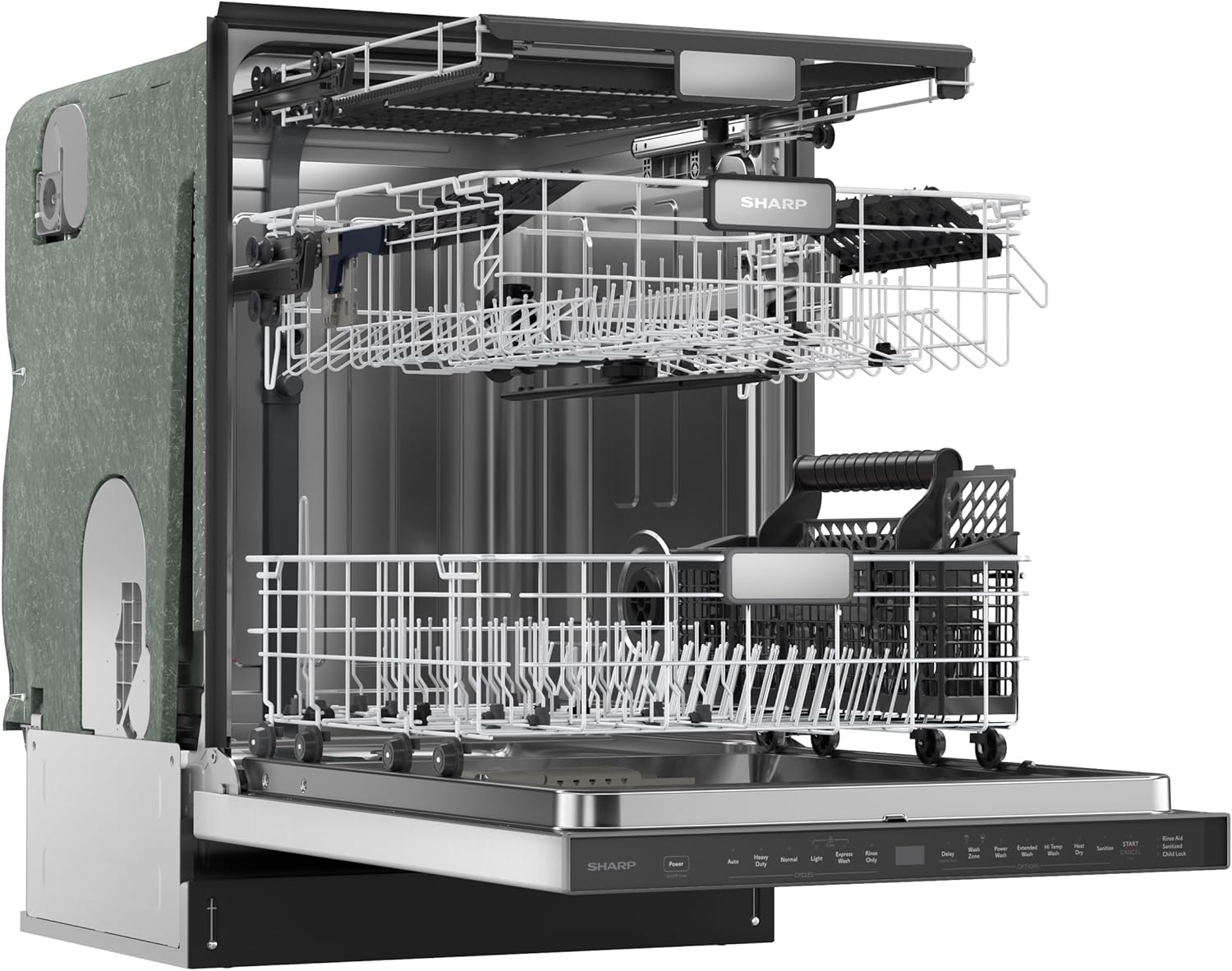
Spray system design and Power Wash impact
The SDW6726MS lists a three-sprayer arrangement with a Power Wash sprayer targeted at heavily soiled pots and pans. Multiple sprayers increase the number of distinct spray vectors and can reduce shadowing behind large items when racks are arranged to provide clearance. Higher localized pressure from a Power Wash sprayer improves mechanical removal of baked-on foods on contact areas, but full coverage still depends on correct orientation of cookware and use of an appropriate cycle. Spray geometry, nozzle size and pump flow rates—parameters disclosed as part of the sprayer design—determine how effectively detergent and water reach crevices. In short, the sprayer layout supports strong spot cleaning, though load arrangement and pre-rinsing habits will affect final results.
Soil sensors and cycle selection for varied soils
Built-in soil sensors enable the dishwasher to adapt cycle length and water usage to the detected load turbidity, which helps balance energy and cleanliness. The SDW6726MS offers five named cycles and multiple options; sensor-assisted cycles extend or shorten run time based on particulate and grease levels in the wash water. For lightly soiled loads, economy or rapid cycles reduce water and energy use, while heavy cycles combined with Power Wash and heated dry are intended for pots and pans with substantial residue. Sensor-based modulation reduces the need for manual cycle guessing, but users should match cycle selection to soil type—heavy soiling still benefits from pre-soaking or scraping to avoid redeposition.
Capacity, rack design, and place settings
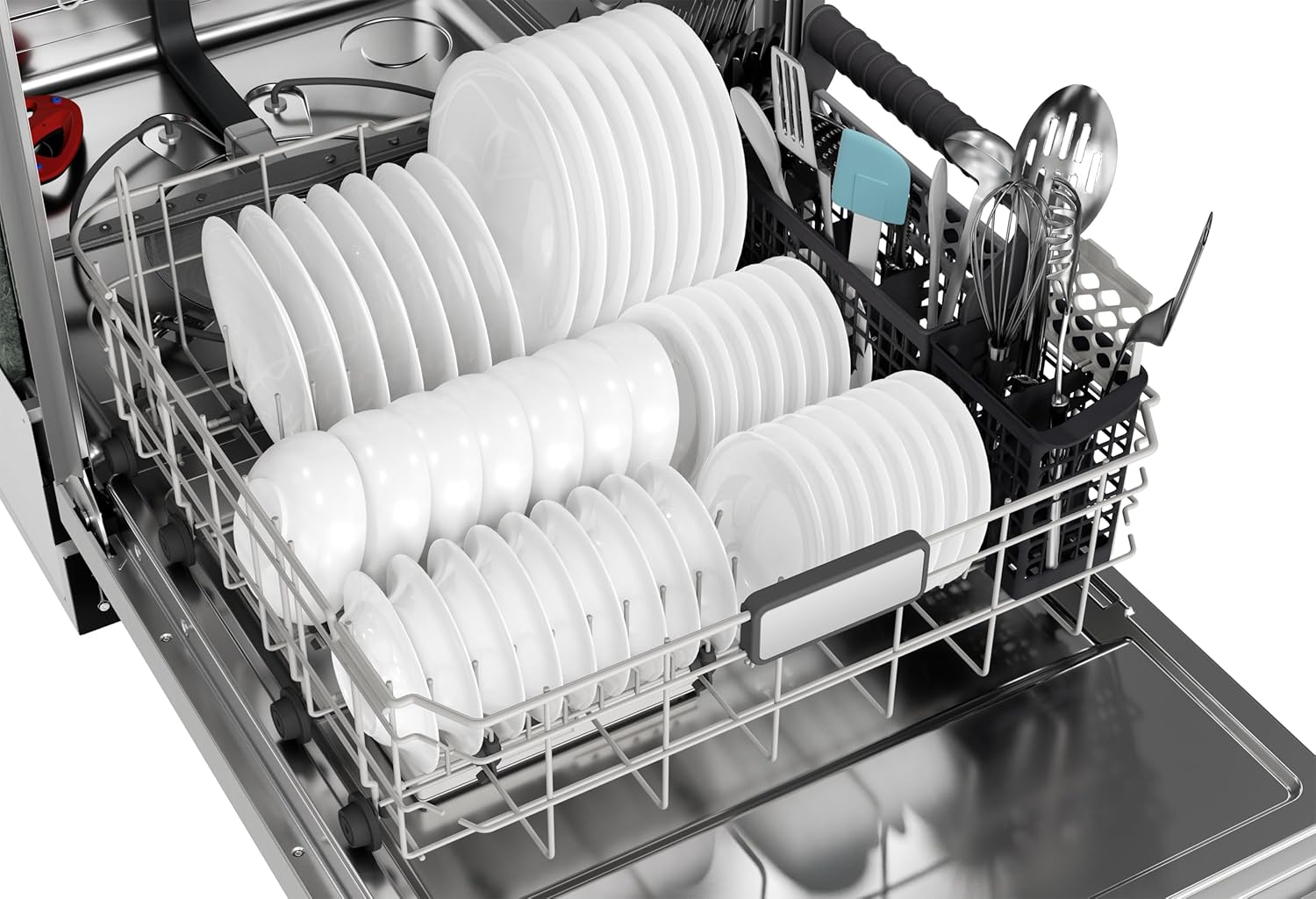
Capacity and internal layout influence how many items can be cleaned per cycle and how effectively the spray reaches each surface. The SDW6726MS lists a 12-place setting capacity and an adjustable third rack designed for flatware and serving utensils, which helps clear space on lower racks for plates and cookware. Metal rack frames paired with plastic baskets represent standard industry practice for strength and corrosion resistance while keeping weight manageable. Adjustable tines and fold-down elements increase flexibility for larger items, but loading patterns alter spray exposure. Buyers should evaluate typical load mixes—plate-heavy, cookware-heavy, or many small items—to determine whether 12-place settings and the third rack align with daily needs and whether wash zone options supply acceptable results for partial loads.

Third rack utility and flatware organization
The adjustable third rack in the SDW6726MS provides dedicated space for flatware, utensils and shallow items, freeing mid and lower racks for plates, bowls and larger pans. A third rack improves capacity without increasing cycle duration dramatically when filled correctly because it occupies space that would otherwise block spray paths. Proper utensil placement—spaced rather than nested—minimizes shadowing and improves detergent access. The adjustability allows the third rack to accommodate taller stemware or be raised to create clearance for large bowls below, which increases overall versatility. However, very long utensils or oversized serving pieces may still require placement in the lower basket.
Rack materials, layout flexibility, and loading patterns
Rack construction combines metal frames and coated metal tines with plastic baskets; the metal rack material contributes to long-term durability and weight tolerance while plastic components minimize rattling and contact damage. Adjustable tines and fold-down rows increase accommodation for large pans and irregularly shaped items, but they also create potential spray shields if loaded incorrectly. The SDW6726MS’s wash zones feature allows targeted cleaning of one rack at a time, which can reduce water use for smaller loads; this flexibility favors households that often run partial loads. Effective loading practices—angled placement of glasses, separation of flatware, and clear spray arm paths—are essential to realize the stated 12-place capacity without sacrificing coverage.
Noise levels and suitability for open kitchens
Noise performance is a major consideration, particularly for open-plan homes that integrate kitchen and living spaces. The SDW6726MS carries a Library Quiet designation with a stated 47 dB noise level—a rating that situates it in the quieter consumer dishwashers segment. Sound level specifications reflect measured decibels under specific test conditions, and actual perceived noise in a home will depend on cabinet mounting, adjacent materials and floorplan. Vibration damping built into the chassis, insulated tub materials and motor mounting reduce transmitted noise. Potential buyers should consider placement relative to bedrooms and living areas, cabinet installation quality and whether adjacent cabinetry or flooring might amplify or dampen sound.
Interpreting the 47 dB rating and practical expectations
A 47 dB rating places the dishwasher within a range commonly described as library-quiet for consumer appliances; in practice, this level typically produces a low hum that is audible but not intrusive. Manufacturer noise declarations are measured in controlled lab environments, so household acoustics, open sightlines and reflective surfaces like tile or hardwood will affect perceived loudness. For evening use in open-plan layouts, a 47 dB dishwasher is generally compatible with conversation and telework, but sensitive listeners may still notice motor or pump cycles. Sound insulation in cabinetry and proper leveling during installation further reduce resonance and rattle that can increase perceived volume.
Installation and placement strategies to minimize sound
Cabinet-front mounting, solid cabinet panels and tight door seals reduce vibration transfer from the appliance frame to surrounding cabinetry, dampening perceived noise. Placing the dishwasher on a stable, leveled subfloor minimizes mechanical vibrations that produce rattles. Adjacent materials affect acoustic behavior—soft materials like upholstery absorb sound, while tile or glass reflect it—so situating the dishwasher away from echo-prone zones lessens perceived noise. For open-concept kitchens, ensuring a snug fit and installing anti-vibration pads or professional leveling during built-in installation helps achieve the quietest real-world operation consistent with the declared 47 dB rating.
Drying systems and moisture control
Drying performance is governed by the combination of heated dry capability, tub material and airflow design. The SDW6726MS specifies a heated dry option, which accelerates moisture removal compared with passive condensation drying alone by sustaining elevated final-cycle temperatures and encouraging evaporation. A stainless steel tub aids condensation dynamics and resists staining, which supports drying and long-term cleanliness, while heated dry reduces the need for towel-drying. Plastics and nested items retain moisture more than ceramics or metal, which affects perceived dryness. Proper detergent choice, rinse aid use and strategic loading improve drying outcomes—particularly for plastics that typically require additional heat and airflow.

Heated dry versus condensation and the role of rinse aid
Heated dry applies supplemental heat during the final stage to raise internal temperatures and promote water evaporation; it shortens the time dishes remain wet compared with condensation-only approaches. Condensation drying relies on temperature differentials between the hot tub interior and cooler exterior surfaces to draw moisture away from dishes, which is energy-efficient but slower. The SDW6726MS’s heated dry option is beneficial for households seeking faster turnaround of glassware and dinnerware. Rinse aid reduces surface tension on water droplets, enabling quicker sheeting and evaporation; combining heated dry with recommended rinse aid use usually yields the most consistent dry results across mixed materials.
Factors that affect real-world drying performance
Drying success depends on load composition, part geometry, and how items are arranged. Deep bowls, nested items, and plastics with recessed areas trap water and impede evaporation even with heated dry. Using the third rack for lightweight utensils and spacing items to allow airflow increases drying uniformity. Cycle selection can influence final temperature exposure—heavy or high-heat cycles provide higher residual heat, improving drying, while economy cycles may reduce final temperatures and extend drying times. Expectations should be set that some plastics and non-flatware items may require manual drying despite heated dry capability.
Energy and water efficiency expectations, maintenance and durability
Efficiency and long-term durability are closely tied to component choices, operating features and maintenance practices. Manufacturer disclosures list an annual energy consumption of 240 kWh and water use of 3.5 gallons per hour; soil sensors and wash zone options aim to reduce unnecessary water and energy use by tailoring cycles to load size and soiling. A stainless steel tub and metal racks contribute to corrosion resistance and structural longevity, while plastic baskets and coated tines reduce chip and scratch risks. Regular maintenance—filter cleaning, spray arm inspection and attention to seals—preserves performance. Durability also depends on installation quality and usage patterns; frequent heavy loading and hard-water conditions accelerate wear and mineral buildup unless addressed.

Energy and water metrics in practical terms
An annual energy consumption figure of 240 kWh and a manufacturer water consumption figure provide a baseline for comparing models, but actual annual energy and water use will vary with cycle choices and load frequency. Soil sensors and wash zones reduce waste by avoiding full-cycle runs for partial or lightly soiled loads, while economy cycles cut back wash duration and energy input. Hard water conditions increase the need for descaling and may reduce spray effectiveness over time; using appropriate detergents and periodic maintenance helps sustain efficiency. Buyers should match expected daily cycle frequency to these metrics when evaluating long-term resource implications.
Filters, maintenance routines, and indicators of longevity
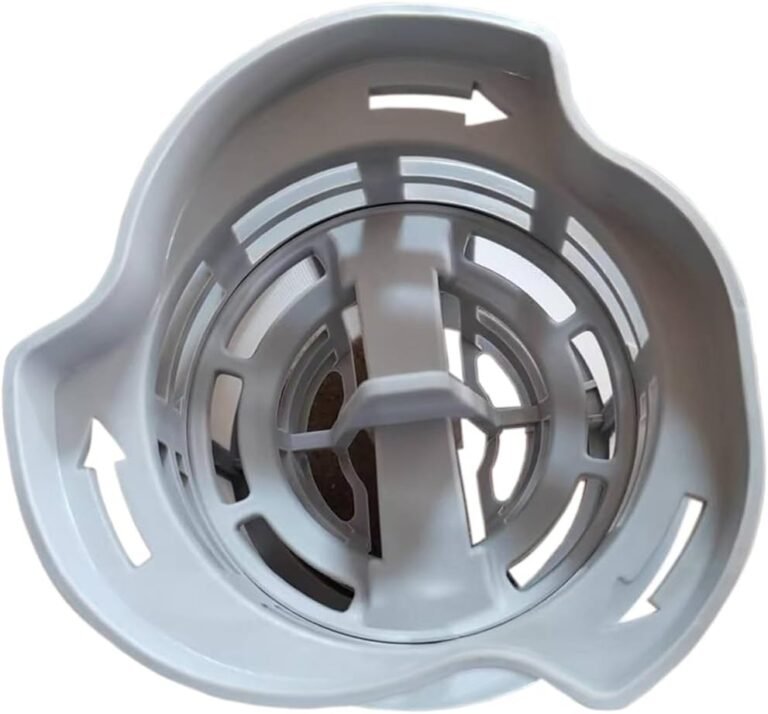
The SDW6726MS employs a filtration system and plastic baskets that require periodic cleaning to maintain wash quality and prevent redeposition of solids. Routine tasks include removing and rinsing the primary filter, clearing spray arm ports, and wiping door seals to prevent buildup. Metal racks with a quality coating resist flaking, but chips in the coating should be addressed to prevent corrosion. Manufacturer guidance on maintenance intervals and part replacement supports longevity; attentive upkeep prolongs pump and motor life, sustains spray performance and preserves the stainless steel tub finish.

Pros & Cons
Pros
- Quiet operation (47 dB Library Quiet): The low noise rating makes the dishwasher suitable for open-plan homes and evening use, reducing the chance of interference with conversation or television. The quietness stems from motor insulation and sound-dampening design elements.
- Targeted Power Wash sprayer and three-sprayer system: Multiple sprayers and a dedicated Power Wash nozzle increase localized cleaning force for stubborn residues on pots and pans, improving mechanical action without manual scrubbing in many cases.
- Adjustable third rack increases usable capacity: A dedicated space for flatware and utensils frees middle and lower racks for larger items and enhances loading flexibility for mixed loads.
- Stainless steel tub and fingerprint-resistant exterior: The metal tub resists staining and supports better drying dynamics, while the fingerprint-resistant finish helps maintain a clean exterior appearance with regular wiping.
- Soil sensor and wash zone features: Automatic adaptation to load turbidity and the ability to run partial racks help conserve water and energy when full-capacity cycles are unnecessary.
- Heated dry option: Provides faster and more consistent drying than condensation-only approaches, particularly beneficial for glassware and metal items.
Cons
- 12 place setting capacity may be small for larger households: The stated capacity suits small-to-medium households but may require more frequent cycles for families with higher dish volumes, potentially affecting convenience.
- No ENERGY STAR certification explicitly listed: Manufacturer disclosures note annual energy consumption but do not list an ENERGY STAR designation; buyers prioritizing certified efficiency should verify certification availability.
- Plastics and nested items may still retain moisture: Despite heated dry, plastics and recessed items often require additional drying or repositioning to achieve fully dry results.
- Dependence on proper loading and maintenance: Spray coverage and sensor effectiveness rely on correct loading patterns and clean spray arms/filters; neglecting routine maintenance can reduce cleaning consistency and increase wear.
Final Verdict: Who this dishwasher is best for (and who should skip it)
The Sharp SDW6726MS targets small-to-medium households and open-concept kitchens that prioritize quiet operation and flexible loading. Its 47 dB Library Quiet rating, adjustable third rack for flatware, and targeted Power Wash sprayer make it a practical choice for buyers who need effective spot cleaning, utensil organization, and unobtrusive performance during daily life. The stainless steel tub, soil sensors and wash zone options support balanced cleaning and resource use for moderately sized families or couples with varied load types.
This model may be less suitable for large households that routinely require high-capacity cycles or for buyers who require an ENERGY STAR-certified appliance without verification. Those who frequently wash large commercial-style cookware or nested plastics should expect to manage load patterns and perform routine maintenance to sustain performance. Overall, the SDW6726MS offers a combination of quiet operation, targeted cleaning features and internal flexibility that positions it competitively among built-in 24-inch dishwashers in 2026, especially for kitchens where noise control and loading versatility are priorities.

Frequently Asked Questions (FAQs)
How quiet is a 47 dB dishwasher in a typical home environment?
A 47 dB rating typically corresponds to a low ambient hum that is audible but not intrusive in most homes. Perceived loudness depends on room acoustics, floor materials and installation; reflective surfaces like tile reflect sound more than soft materials such as carpet or upholstery. Proper leveling and secure cabinet mounting reduce rattles and vibration transmission, helping the appliance approach lab-rated quiet performance in practice.
Does the Power Wash sprayer eliminate the need for pre-rinsing pots and pans?
The Power Wash sprayer provides increased localized pressure to remove baked-on soils more effectively than standard spray arms, but heavily encrusted or charred residue may still require scraping or pre-soaking for best results. Proper loading to expose soiled surfaces to the Power Wash nozzle and selecting a heavy or targeted cycle improve outcomes. Pre-rinsing is not universally necessary but can enhance final cleanliness for extreme soils.
Will the heated dry option fully dry plastic dishes and containers?
Heated dry accelerates moisture evaporation by raising final cycle temperature and works well for ceramic, glass and metal items. Plastic containers and nested items retain heat differently and often require additional drying or air exposure. Using the heated dry option together with rinse aid and spacing items to allow airflow produces the best results for mixed loads, though some plastics may still need manual drying.
How does the third rack affect overall loading capacity and spray coverage?
A third rack increases usable capacity by providing a dedicated area for flatware and small utensils, freeing middle and lower rack space for larger items. It preserves overall spray paths when loaded correctly, but incorrect placement or overloading can shadow spray arms and reduce coverage. Adjustable height features allow the third rack to clear taller items below, offering flexibility without significantly compromising wash performance.
What maintenance steps are required to keep the dishwasher performing well?
Routine maintenance includes removing and rinsing the primary filter to prevent redeposition of solids, clearing spray arm ports of mineral buildup, and wiping door seals to prevent debris accumulation. Periodic inspection of rack coatings and attention to hard-water deposits helps sustain spray and drying performance. Following manufacturer maintenance guidance and using appropriate detergents and rinse aid preserves efficiency and extends component life.
How should energy and water usage expectations be interpreted for this model?
Manufacturer figures such as annual energy consumption (240 kWh) and water use (3.5 gallons per hour) provide baselines for comparison but actual use varies with cycle selection, load frequency and soil level. Sensor-assisted cycles and wash zone options reduce unnecessary water and energy by adapting to load size and turbidity. Buyers should match expected daily use patterns to these metrics to estimate long-term resource impacts.
Is the stainless steel tub important for drying and durability?
Stainless steel tubs resist staining, reduce odor retention and support better drying dynamics compared with many plastic tubs because metal surfaces encourage condensation and evaporation. Stainless steel is also more resistant to heat-related wear and thermal cycling, contributing to long-term durability. Regular cleaning prevents mineral buildup and preserves the tub’s functional and aesthetic benefits.
Who should avoid choosing a 12 place setting dishwasher like this one?
Households with consistently large dish volumes—such as multi-family homes or large weekly entertaining hosts—may find a 12 place setting capacity limiting, requiring more frequent cycles. Buyers seeking explicit ENERGY STAR certification or commercial-grade capacity and specialty cycles for very large cookware should consider larger or differently specified models. Those needs point toward full-size or higher-capacity built-in units.