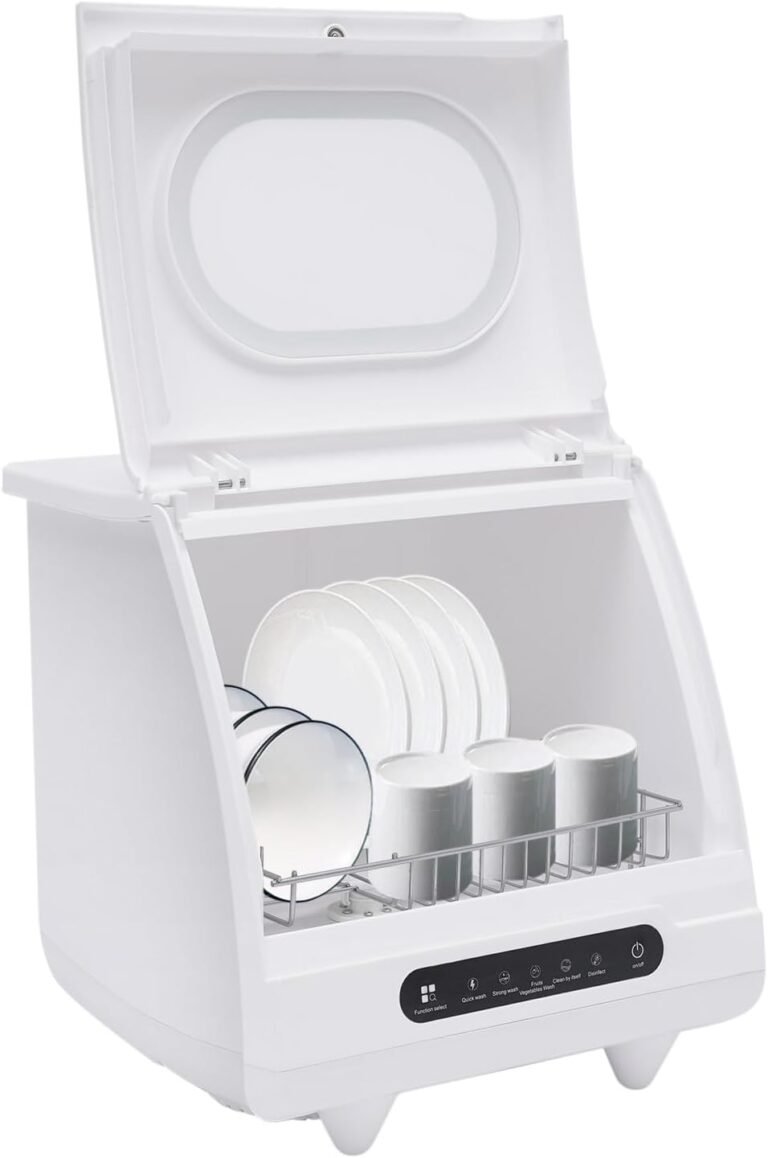
Midea Countertop Dishwasher: Cleaning Performance & Quiet
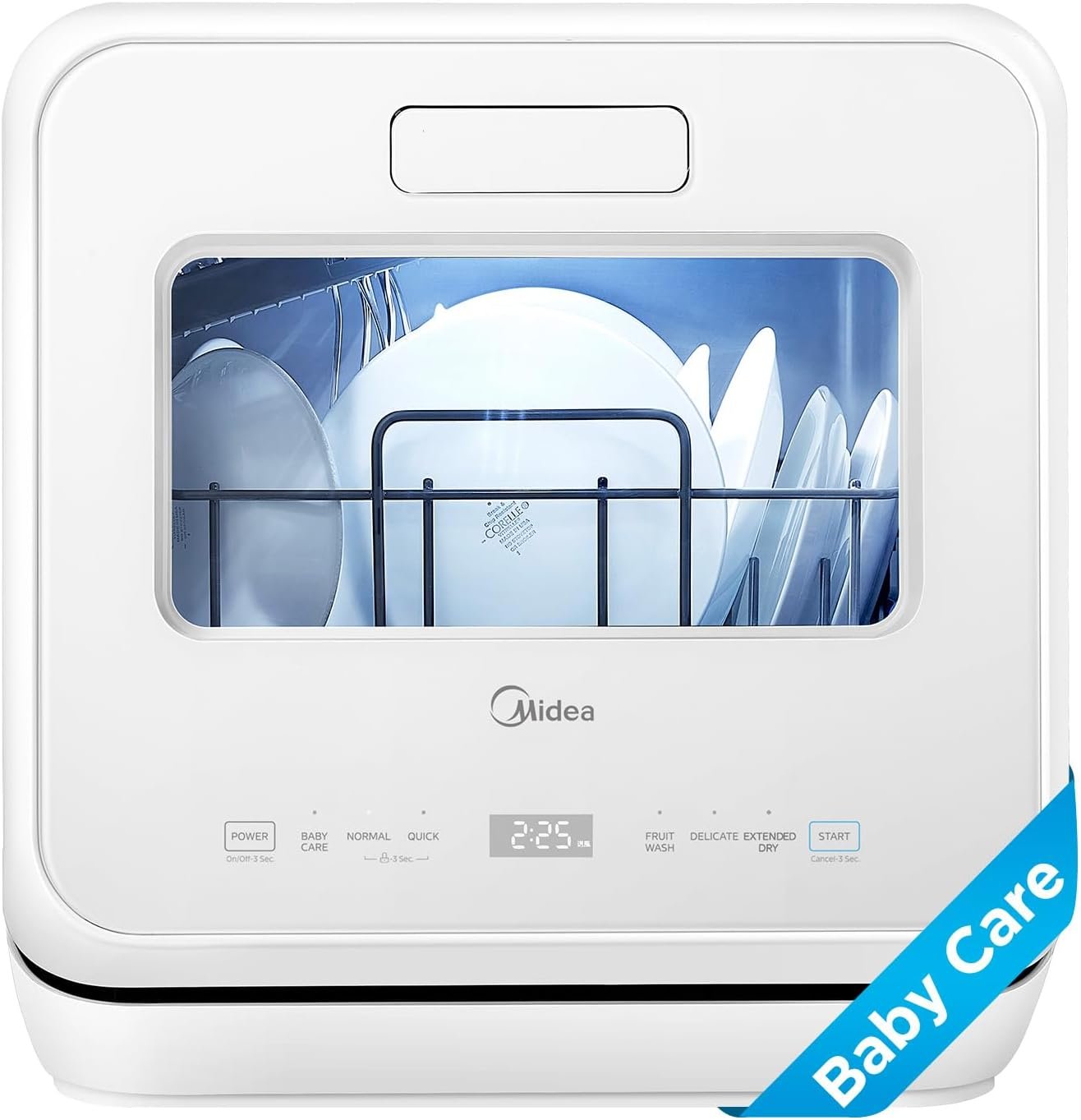
Why dishwasher selection matters for small kitchens
Selecting the right dishwasher for a small kitchen or apartment affects daily routines, water and energy consumption, and the ability to manage infant feeding equipment or delicate glassware. Compact countertop units prioritize footprint, portability, and minimal installation while trading off capacity and some cycle flexibility compared with full-size models. For households that value hygiene for baby bottles, a high-temperature wash and secure bottle holders matter more than large load size. Noise sensitivity and open-plan kitchens require attention to decibel ratings and motor design since louder machines can disrupt shared living spaces. Efficiency expectations are shaped by Energy Star certification, stated annual energy use, and claimed water consumption figures. Durability considerations include construction materials, rack and spray-arm design, and maintenance access to filters and drain components. Matching the Midea portable countertop model to kitchen layout, daily dish volume, and noise tolerance ensures realistic performance expectations and a better long-term fit.
Quick Overview
| Feature | Details |
|---|---|
| Dishwasher type | Countertop portable, tank-fill or faucet hookup |
| Capacity / place settings | Compact capacity; two place settings typical configuration |
| Wash cycles and cleaning technology | 5 main programs (Babycare, Delicate, Normal, Quick, Fruit wash) plus extended drying option; 360° dual spray arms, high-temp wash |
| Drying method | PTC high-temp drying + residual drying enhancement |
| Noise level rating | 62 decibels |
| Energy efficiency certifications | ENERGY STAR certified; annual energy listed as 130 kWh/year |
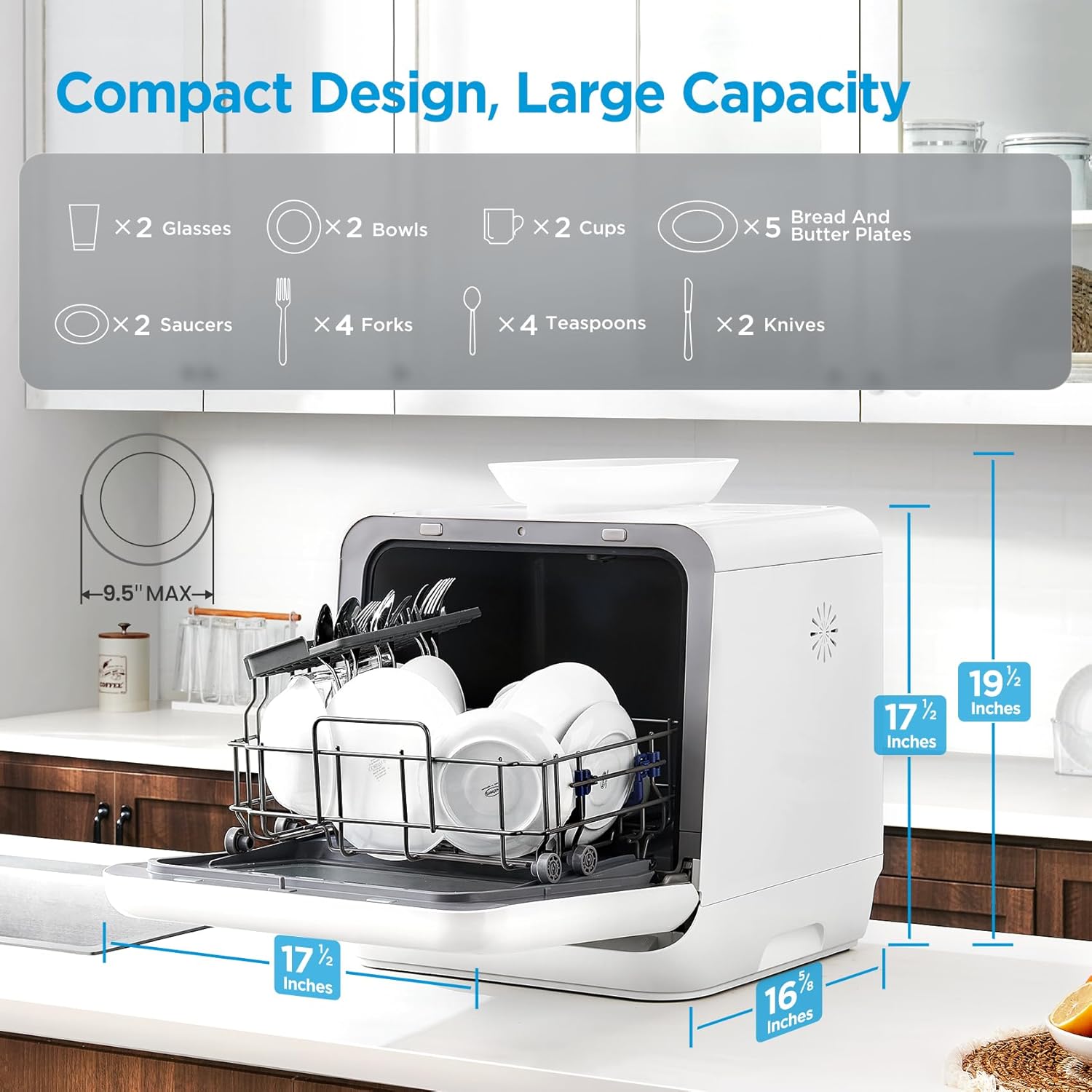
| Dimensions and installation | 17.5 x 16.63 x 17.5 in; countertop placement; built-in 1.32 gal tank; optional faucet connection with included adapter |
| Warranty | Not specified in product specifications |
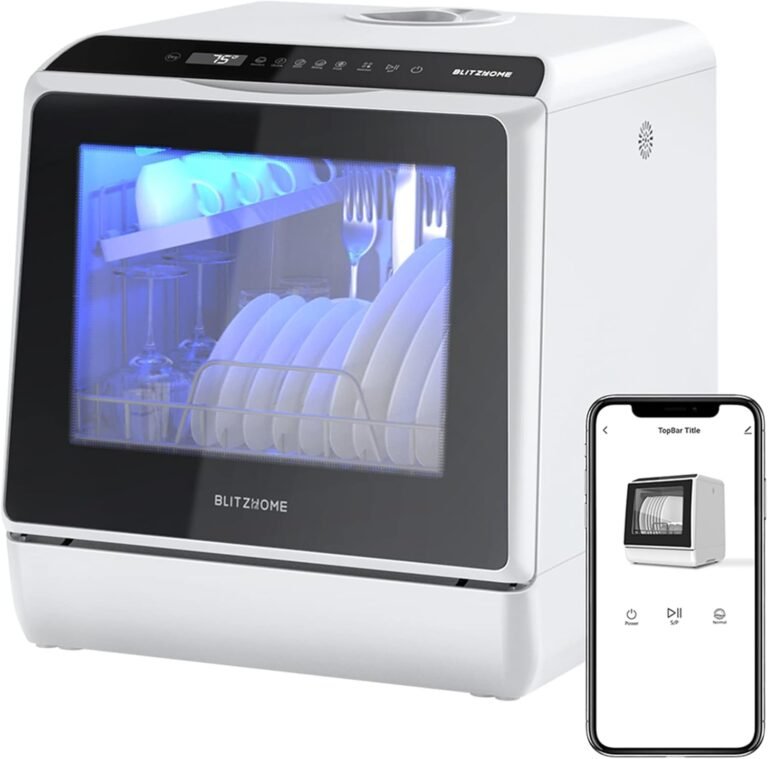
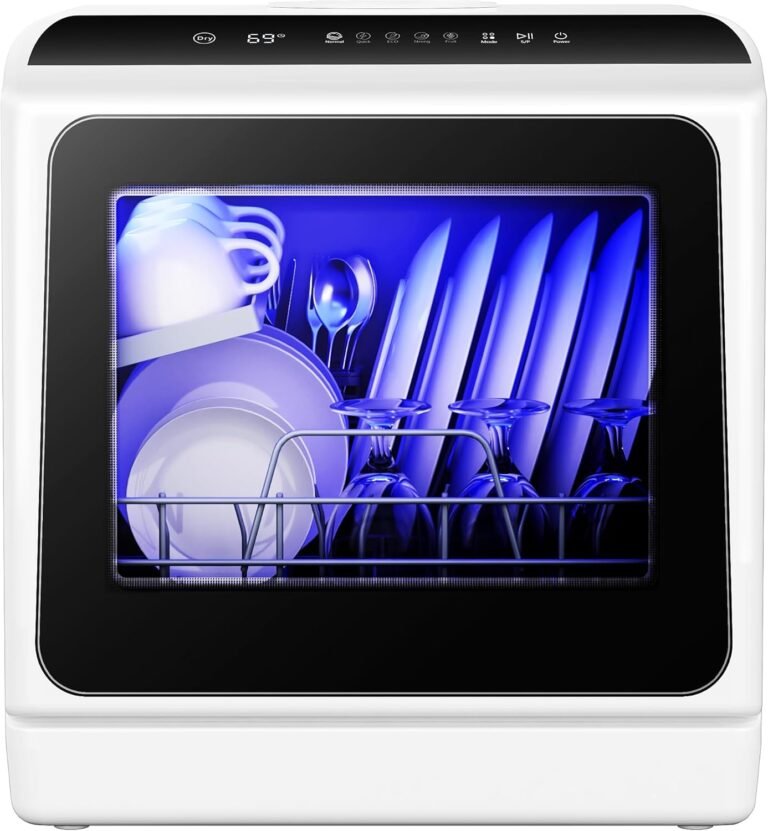
The Quick Overview highlights how size, program selection, and drying approach translate to everyday use: the Midea countertop unit fits benchtops and small kitchens, supports focused baby-care and delicate cycles, and targets low water use through a built-in tank. Compact capacity suits singles, couples, or RV setups where short cycles and targeted cleaning are priorities rather than full-family load washing.

Cleaning performance and wash coverage
Cleaning effectiveness depends on spray-arm design, water temperature, detergent contact time, and filtration. The Midea model emphasizes a 360° dual spray system and a high-temperature cycle labeled baby-care, which together target improved soil removal and sanitizing performance for small loads. High-temperature washing increases detergent activation and grease breakdown, while dual spray arms aim to maintain consistent coverage across stacked items. The compact interior and two-place setting orientation create short spray paths, reducing shadowing behind tall items but concentrating power where most required. Filtration and sump access are important for trapping food debris; plastic rack and basket materials reduce heat transfer but require attention to soiling. For heavily baked-on soils or large pots, a compact portable pump and limited cycle duration may be less effective than full-size units, making pre-rinsing or soaking a practical consideration.
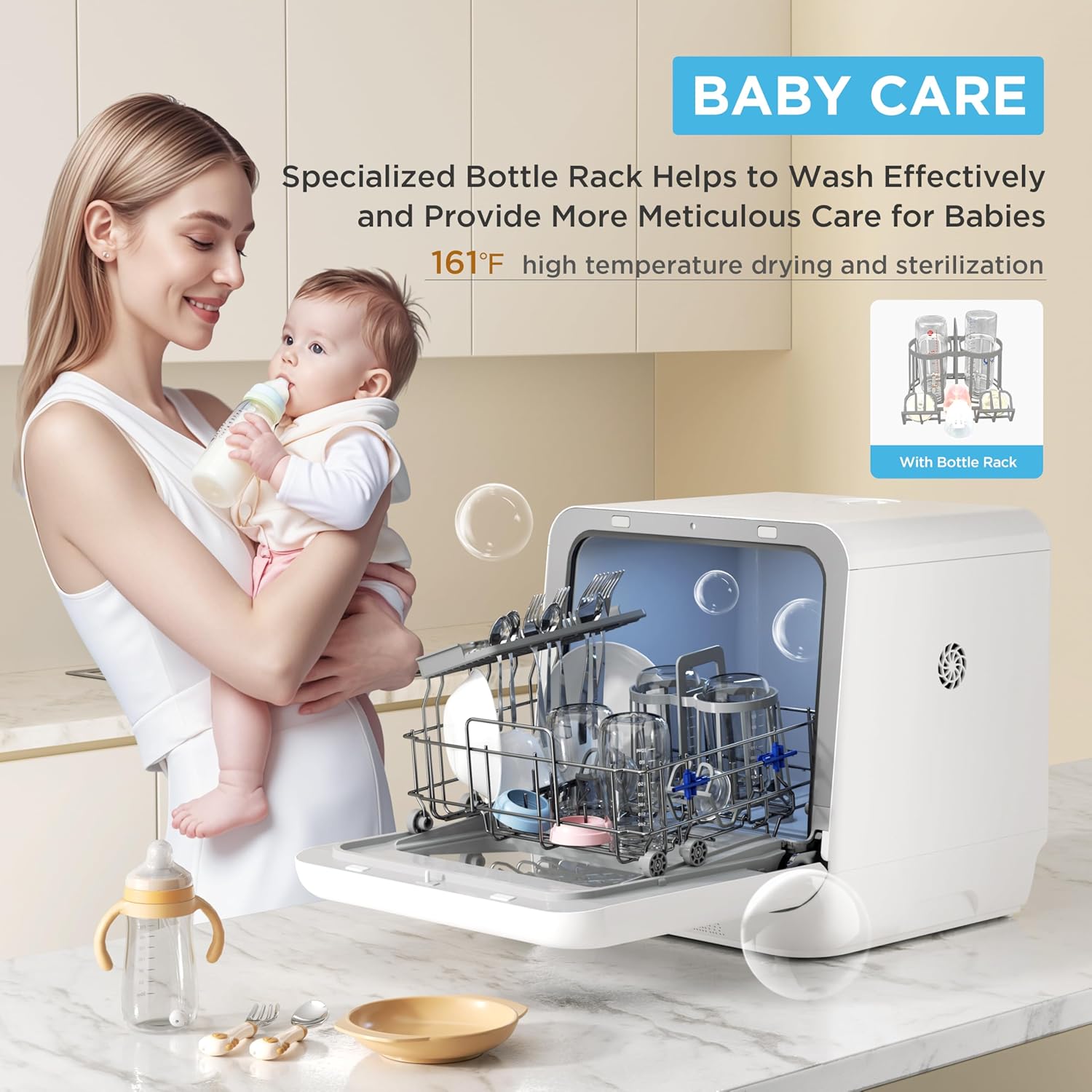
Spray coverage and 360° dual spray implications
The 360° dual spray approach is intended to distribute water streams from multiple directions, which improves hit rates on vertically arranged bottles and cups. In a compact tub, shorter distances between spray arms and dishes increase pressure at the surface, aiding soil dislodgement on typical dinnerware and baby bottles. However, spray geometry and obstructed zones can still create areas of reduced coverage, particularly when racks are densely loaded or items overlap. The compact rotating elements operate within smaller clearances than built-in machines, which helps for small loads but may struggle with large serving pans. Practical expectations should include good performance on plates, glasses, and baby items, with occasional need for pre-soaking on heavily soiled cookware.
High-temp baby-care cycle and heat-sensitive items
The high-temperature baby-care program boosts wash water temperature, aiding detergent performance and microbial reduction for bottles and utensils. Elevated temperatures enhance the removal of milk fats and oils while improving sanitizer efficacy when combined with a well-rinsing cycle. Exposure to higher heat can affect delicate plastics and decorated china; manufacturers commonly recommend checking item heat resistance. The presence of a dedicated bottle rack helps position items for optimal spray and thermal exposure while reducing movement during wash. Users prioritizing sterilization-like cycles should confirm manufacturer temperature ranges and follow item care labels to avoid warping or discoloration on heat-sensitive pieces.
Filtration, soil removal, and detergent interaction
Effective filtration captures particulates to prevent redeposition and maintain clear rinse water; compact units typically use removable plastic screens and small sump chambers. Regular access to the filter for cleaning helps sustain pump performance and prevents odors. Detergent chemistry interacts with high temperatures and spray intensity—powder, gel, or tablet forms may behave differently in a small-tank system. The product’s limited water volume concentrates detergent action but may require cycle selection that balances soil removal with thorough rinsing to avoid residue on glassware. For best coverage, load items to allow spray path clearance and avoid blocking spray arms or vents.
Capacity, rack design, and place settings
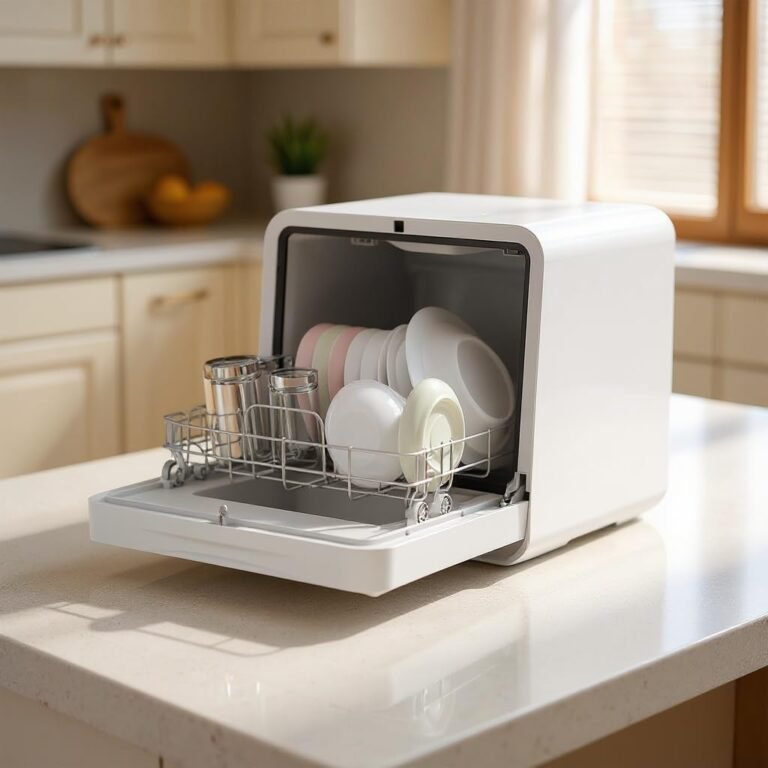
Capacity and internal design define how many items can be cleaned per cycle and how they are arranged. The Midea countertop dishwasher presents a compact load profile oriented toward two-place settings and specialized bottle cleaning, including an included bottle rack and pacifier holder. Plastic racks and basket materials reduce weight and corrosion risk but may lack the rigidity of coated metal racks in larger machines. Vertical space within the tub and the positioning of dual spray arms determine whether tall glasses, insulated bottles, or pitchers can be accommodated upright or must lie at an angle. For users with frequent baby items or small-load turnover, a dedicated small-capacity unit can be efficient, but households that produce higher daily dish volumes will find multiple cycles necessary. Rack flexibility and accessory placement influence real-world throughput and the need for manual pre-rinsing or alternating cycles.

Two-place setting practicalities and load balancing
A two-place setting focus means the interior is optimized for a few plates, cups, and bottles per cycle, allowing fast cycles and lower water use. Load balancing becomes important: spacing items to avoid spray shadowing and placing bottle holders near spray arms enhances cleaning. The smaller capacity reduces cycle time for small loads but increases frequency of runs for larger households. A well-organized loading pattern that utilizes the included bottle rack and pacifier holder minimizes movement and improves rinse coverage. For users with intermittent small loads—single occupants, couples, or RV travelers—this configuration provides convenience, but for families or frequent entertaining, capacity constraints will be apparent.
Rack materials and long-term wear considerations
Plastic rack and basket materials are common in portable units to reduce weight and water exposure to metal parts. These plastics resist corrosion but can scratch or stain over time from detergents and certain foods. Load points and clip features should be inspected for flexibility and secure holding of lightweight items like baby bottle nipples and small cups. Replacement racks may be less standardized than in built-in models, so careful handling and avoiding overloading extend service life. The absence of metal-coated racks reduces chip risk to enamel finishes but heightens the importance of using approved detergents and avoiding abrasive cleaning tools on rack surfaces.
Accessories: bottle rack and baby items placement
The included bottle rack and pacifier holder are designed to keep narrow-neck bottles upright and prevent small items from tumbling during wash. Upright staging improves spray contact inside bottles and allows high-temp drying to act on internal surfaces. The fixed accessory placement relative to spray arms impacts effectiveness; positioning close to the spray source increases jet penetration into bottle interiors. For irregular-shaped bottles or extra-long nipples, alternative placement or angled positioning may be necessary. The accessory set supports the advertised baby-care focus, but users should verify fit for specialty bottles and follow load guidelines to avoid obstructing spray coverage for adjacent items.
Noise levels and suitability for open kitchens
Noise rating guides placement decisions, especially in open-plan living arrangements. With a declared noise level of 62 decibels, the unit operates in the range typical of compact portable dishwashers; this level is noticeable but not excessively loud. In open kitchens or studio apartments, 60+ dB appliance operation can be perceived during conversation or TV playback, so timing cycles for low-activity periods may be preferred. Noise perception also depends on motor, pump, and vibration isolation design—lightweight plastic cabinetry transmits sound differently than built-in cabinetry. For shared living spaces where quiet operation is critical, comparing measured decibel values and reviewing customer feedback on perceived loudness helps manage expectations. Sound insulation on countertops and anti-vibration feet can mitigate transmitted noise to a degree but will not transform the machine into a silent appliance.

Interpreting a 62 dB noise rating for everyday use
A 62 dB rating equates to the sound level of background conversation at a moderate volume; in small rooms the perceived loudness increases due to reflections from hard surfaces. For overnight cycles in compact apartments, the noise may be intrusive if sleeping areas are adjacent to the kitchen. Placing the unit on a rubberized mat and ensuring it is level reduces rattles and structure-borne noise. The compact pump and smaller spray system may produce higher-pitched motor sounds than larger dishwashers, which some occupants find more noticeable. Overall, the rating suggests acceptable performance for daytime use in many apartments but imperfect suitability for noise-sensitive or open-plan living during active periods.
Motor, vibration isolation, and countertop mounting
Countertop installation means the machine sits directly on kitchen surfaces rather than being insulated within cabinetry. Countertop mounting requires attention to leveling to prevent excess vibration. The motor and pump assembly in portable units are sized for compact operation, and vibration isolation is typically achieved through rubber feet and internal mounting. Excessive vibration is often related to uneven loading or imbalanced racks; following loading guidelines and securing lightweight items reduces transmitted vibrations. For installations on thin countertops or cabinetry, placing a dampening pad beneath the unit can reduce transmitted noise and protect surfaces from movement-induced wear.
Choosing placement in open-plan layouts
Placement decisions affect both noise exposure and functional convenience. Locating the dishwasher on a solid, stable countertop away from direct adjacency to sleeping or lounging areas reduces perceived disturbance. If the kitchen is part of an open living area, running cycles during periods of lower occupancy or while background noise is present can mask operation. For RVs or tiny homes, securing the door and verifying that drain and fill connections remain tight during operation minimizes rattles. The unit’s portability offers flexibility in placement, but noise management remains a buyer consideration in shared-space environments.
Drying systems, moisture control, and residual dampness
Drying strategy affects whether items come out ready-to-use and the level of moisture remaining on plastics. The Midea unit combines a PTC high-temp drying element with a residual drying enhancement, which raises air temperature near internal surfaces and uses standing heat to evaporate moisture. High-temperature drying improves drying of glass and metal but is less effective on thin plastics that trap moisture in recessed areas. Residual drying reduces surface water through warm air circulation but may not fully eliminate pooled water in bottle bases or deep cavities. Glass doors allow visual monitoring of drying progress but do not change drying performance. Users should anticipate some hand-drying for insulative or oddly shaped plastics and consider opening the door briefly after cycle end to accelerate air exchange when safe.

PTC heating and implications for delicate items
PTC (positive temperature coefficient) heaters regulate temperature rise and provide steady warmth for drying without active fans in some designs. The controlled heat reduces the risk of overheating compared to unregulated resistive elements and can improve moisture evaporation near item surfaces. Delicate items labeled as heat-sensitive may still be affected by the elevated drying temperatures, so cycle selection and placement away from direct heater vents help protect finishes. PTC-assisted drying is energy-efficient for small chambers due to quick warm-up and stable operation, but physical airflow patterns and the absence of powerful fans limit convective drying for deep cavities and the undersides of items.
Residual drying and condensation management
Residual drying leverages retained heat in the tub and items to continue moisture evaporation after active heating ceases. This passive approach reduces noise and energy compared to forced-air drying but depends on room temperature and humidity—high ambient humidity slows residual drying effectiveness. Condensation on cooler surfaces like glass doors or stainless steel items can occur as warm moist air cools; a short open-door period after cycle end reduces condensation. For baby bottles, tipping or towel-drying narrow bases may still be required to remove trapped water. The system improves overall dryness for standard items but sets realistic expectations for plastics and nested components.
Practical tips to improve drying outcomes
To maximize drying performance, arrange items to expose interior surfaces to warm air, avoid overlapping plates, and place plastics higher in the tub where heat concentration is often greater. Using rinse aids compatible with compact units can improve water sheeting and reduce spotting, aiding drying. Running the extended drying option included with the product increases thermal exposure and the residual drying window but also increases cycle time and energy use. Periodic door opening after the cycle ends—if allowed by manufacturer guidance—accelerates air exchange and reduces trapped moisture, improving readiness for immediate use.
Energy and water efficiency, maintenance, and durability
Energy Star certification and stated annual energy figures help set expectations for operating footprint relative to similar appliances. The product lists annual energy consumption at 130 kWh/year and a built-in tank design with 1.32 gallons capacity and water consumption noted as 1.32 gallons per hour, reflecting a low-water strategy for small loads. Compact units concentrate detergent and heat into small volumes, boosting wash intensity per liter but limiting throughput. Maintenance tasks include cleaning removable filters, descaling in hard-water areas, and inspecting drain hoses and tank seals to prevent odors. Plastic construction reduces corrosion risk but requires attention to mechanical components like the pump, door seal, and hinge points for long-term reliability. For users prioritizing low water use and portability, the trade-offs include more frequent cycles and the need for active maintenance to sustain performance.
Understanding Energy Star and annual energy figures
ENERGY STAR certification indicates that the unit meets program efficiency criteria for its size and class, although actual annual energy depends on usage patterns and cycle selections. A stated 130 kWh/year is useful for comparing across compact portable models but should be interpreted with typical small-load usage in mind. Higher-temperature baby-care cycles and extended drying increase energy draw relative to eco or quick cycles. Buyers concerned with energy should consider cycle mix and frequency rather than relying on a single annual estimate, as compact machines may run more cycles, offsetting per-cycle efficiency gains.
Water tank design, faucet hookup, and water-saving claims
The built-in 1.32-gallon tank enables no-plumbing operation and precise water metering for small loads, while the included faucet adapter allows direct hookup when preferred. The small tank reduces water use per run compared with filling a sink for handwashing, and the stated potential to save up to 60% of water consumption reflects the compact-volume approach. Tank-based filling requires manual replenishment or careful management of cycle frequency for heavy use. The water-saving strategy works best for consistent small loads such as bottle cleaning, but households with larger daily dish volumes will run cycles more often, increasing aggregate water use.
Maintenance tasks and filter access
Regularly clearing the removable filter prevents re-deposition of food soils and helps maintain pump efficiency and rinse clarity. Plastic filter screens are accessible in many portable designs but require gentle handling to avoid cracks. Descaling may be necessary in hard-water regions to prevent scale buildup on heating elements and spray nozzles, which affects water flow and cleaning performance. Inspecting seals and hoses for wear, especially around the built-in tank and faucet adapter, helps avoid leaks. Pump and motor assemblies have finite lifespans; lightweight units prioritize portability, so users should factor in potential replacement intervals when comparing long-term durability with heavier built-in machines.

Pros & Cons
Pros
- Compact footprint and portability: Small counter dimensions and a built-in 1.32-gallon tank enable placement without plumbing, making it suitable for apartments, dorms, RVs, and temporary kitchens. Portability simplifies relocation and storage.
- Baby-care focused cycles and accessories: A dedicated high-temp baby-care program plus an included bottle rack and pacifier holder addresses hygiene needs for infant feeding gear, positioning items for optimized spray contact.
- Water-saving operation: Low water volume per cycle and tank-fill capability reduce water per run compared with handwashing and many full-size machines, appealing to water-conscious households and small-load scenarios.
- 360° dual spray design: Dual spray arms aim to expand coverage in a small tub, increasing the likelihood of direct spray on bottle interiors and upright glassware for improved cleaning consistency.
- ENERGY STAR certification: Listed annual energy consumption and certification indicate competitive energy performance among compact countertop models when used with typical small-load patterns.
- Upgraded drying combination: PTC high-temp plus residual drying enhances moisture removal compared with passive-only systems, improving readiness of metal and glass items after cycles.
- Minimal installation requirements: Optional faucet hookup with included adapter or tank-fill operation removes dependence on permanent plumbing, simplifying setup in rental or mobile environments.
Cons
- Limited capacity for larger households: The two-place-setting orientation and compact tub increase cycle frequency for families or users with high daily dish volumes, reducing convenience versus full-size machines.
- 62 dB noise level can be noticeable: The declared noise rating is audible in open-plan living spaces and may interrupt quiet activities; sound mitigation strategies may be needed for sensitive environments.
- Plastic rack and components: While lightweight and corrosion-resistant, plastic racks can stain, flex, or show wear sooner than coated metal racks, potentially affecting long-term rigidity and item security.
- Drying limits with plastics and nested items: Even with PTC and residual drying, thin plastics and bottle interiors may retain moisture, requiring occasional hand-drying or the use of extended drying cycles.
- Manual tank management for intensive use: The built-in tank requires filling for no-plumbing operation, which may be inconvenient for frequent or large-volume use compared with direct-plumbed models.
Final Verdict: Who This Dishwasher Is Best For (and Who Should Skip It)
The Midea portable countertop dishwasher is best suited to single occupants, couples, small households, RV travelers, and apartment dwellers who prioritize a compact footprint, targeted baby-care cycle features, and low per-run water use. Its included bottle rack, baby-care programming, and 360° dual spray system cater to parents and caregivers needing hygienic cleaning for feeding gear without permanent installation. Energy Star certification and a modest annual energy figure appeal to efficiency-minded buyers who run regular small loads and accept the trade-off of more frequent cycles.
This model is less appropriate for large families, frequent entertainers, or households that require full-size capacity and quieter operation in open-plan living. Users needing extensive drying performance for insulated plastics or those preferring heavy-duty baked-on soil removal should consider larger built-in dishwashers with stronger pumps, more flexible rack systems, and lower operational noise. For small-space applications where portability, baby-focused cycles, and water savings are the priority, the Midea countertop unit offers a practical balance of features within its size and design constraints.

Frequently Asked Questions (FAQs)
How effective is a countertop dishwasher at cleaning baby bottles?
Countertop dishwashers with a high-temperature baby-care cycle and dedicated bottle holders provide focused spray coverage and elevated wash temperatures that aid detergent action and removal of milk residues. The bottle rack keeps narrow items upright for internal spray penetration. While these features support hygienic cleaning, some narrow or insulated bottle parts may retain moisture and benefit from additional drying or brief hand-drying.
Can a portable dishwasher be used without connecting to a water line?
Many portable countertop models include a built-in tank that allows manual filling and operation without permanent plumbing, and also include a faucet adapter for direct hookup. This dual approach enables placement flexibility in rentals or RVs. Manual tank management requires attention to fill levels for each cycle and may be less convenient for high-frequency use.
Is a 62 dB noise rating considered quiet for an open-plan kitchen?
A 62 dB rating is typical for compact portable dishwashers but is noticeable in open-plan layouts, roughly comparable to normal conversation volume. Sound perception depends on room acoustics and proximity; using anti-vibration pads and ensuring the unit is level can reduce transmitted noise. For noise-sensitive environments, lower-rated models or built-in machines with greater sound insulation are better options.
What maintenance is required to keep a countertop dishwasher performing well?
Regular maintenance includes cleaning the removable filter to prevent redeposited soils, inspecting and descaling heating elements and spray nozzles in hard-water areas, and checking seals, hoses, and the tank for leaks or residue. Avoiding overloading and ensuring spray arms spin freely also sustain cleaning performance. Periodic visual inspection of plastic racks and clip points helps identify wear before functional issues emerge.
Will the PTC drying system fully dry plastic bottles and cups?
PTC-assisted high-temperature drying combined with residual drying improves moisture removal for glass and metal items, but thin plastics and deep or nested bottle cavities often retain some water. Extended drying cycles help but may not eliminate all internal moisture, so brief towel drying or open-door ventilation after the cycle is recommended for fully dry plastics and narrow-neck bottles.
How does water consumption compare to handwashing for small loads?
Compact countertop dishwashers use a small, metered water volume per cycle, often significantly less than filling and standing over a sink for multiple rinses when cleaning small loads like bottles or cups. The built-in tank and targeted wash cycles concentrate detergent action in minimal water, making them efficient for frequent, small batch cleaning. Actual savings depend on load frequency and user habits.
Are plastic racks durable compared to metal-coated racks?
Plastic racks are lightweight and corrosion-resistant, which benefits portable units. However, they may scratch, stain, or flex more readily than metal-coated racks and can show wear at clip points over time. Careful loading, using proper detergents, and avoiding abrasive contact extend the service life of plastic rack components.