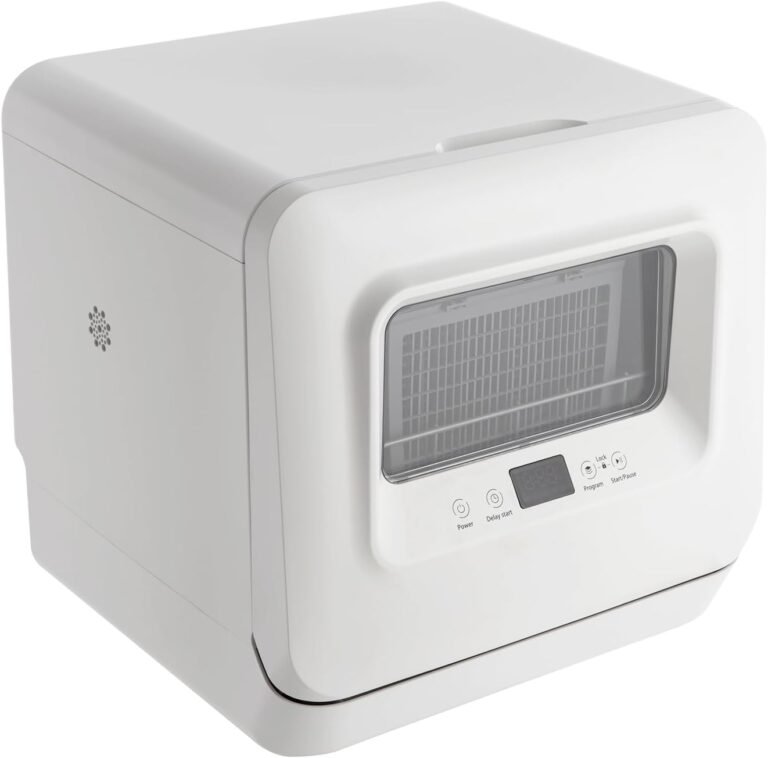
Countertop Dishwasher Review: Cleaning & Noise Guide 2026
Choosing the Right Countertop Dishwasher for Your Home
Selecting a countertop dishwasher is a practical decision that affects daily kitchen workflow, noise exposure, and long-term utility. Household size, frequency of meal preparation, and the typical soil levels on dishes determine whether a compact unit will meet needs or create repeated cycles. Kitchen layout and countertop availability influence whether a portable model fits without obstructing sink access or workflow. Noise sensitivity matters for open-plan living and shared housing; a unit with a 55 dB rating sits near conversational volumes and should be considered relative to room acoustics. Efficiency expectations relate to limited tank capacity and cycle designs: compact units can save space but require trade-offs in load size and drying effectiveness. Buyers should weigh cleaning power, water and energy consumption, maintenance requirements, and durability when choosing a countertop dishwasher for apartments, dorms, RVs, or small kitchens.
Quick Overview
| Feature | Details |
|---|---|
| Dishwasher type | Portable countertop dishwasher |
| Capacity / place settings | 5 liters tank capacity; compact single-load design |
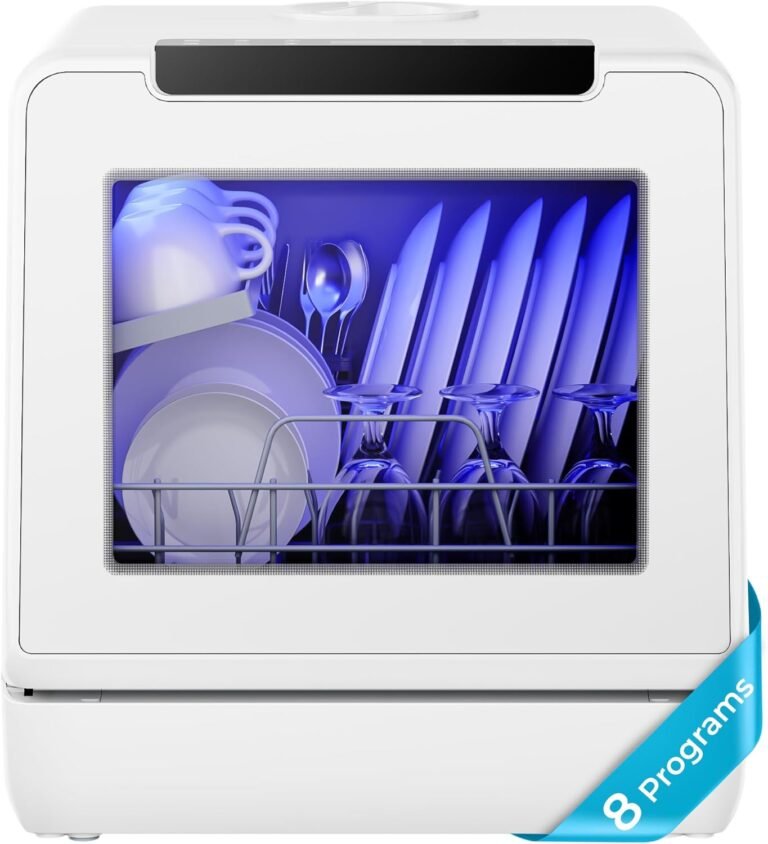
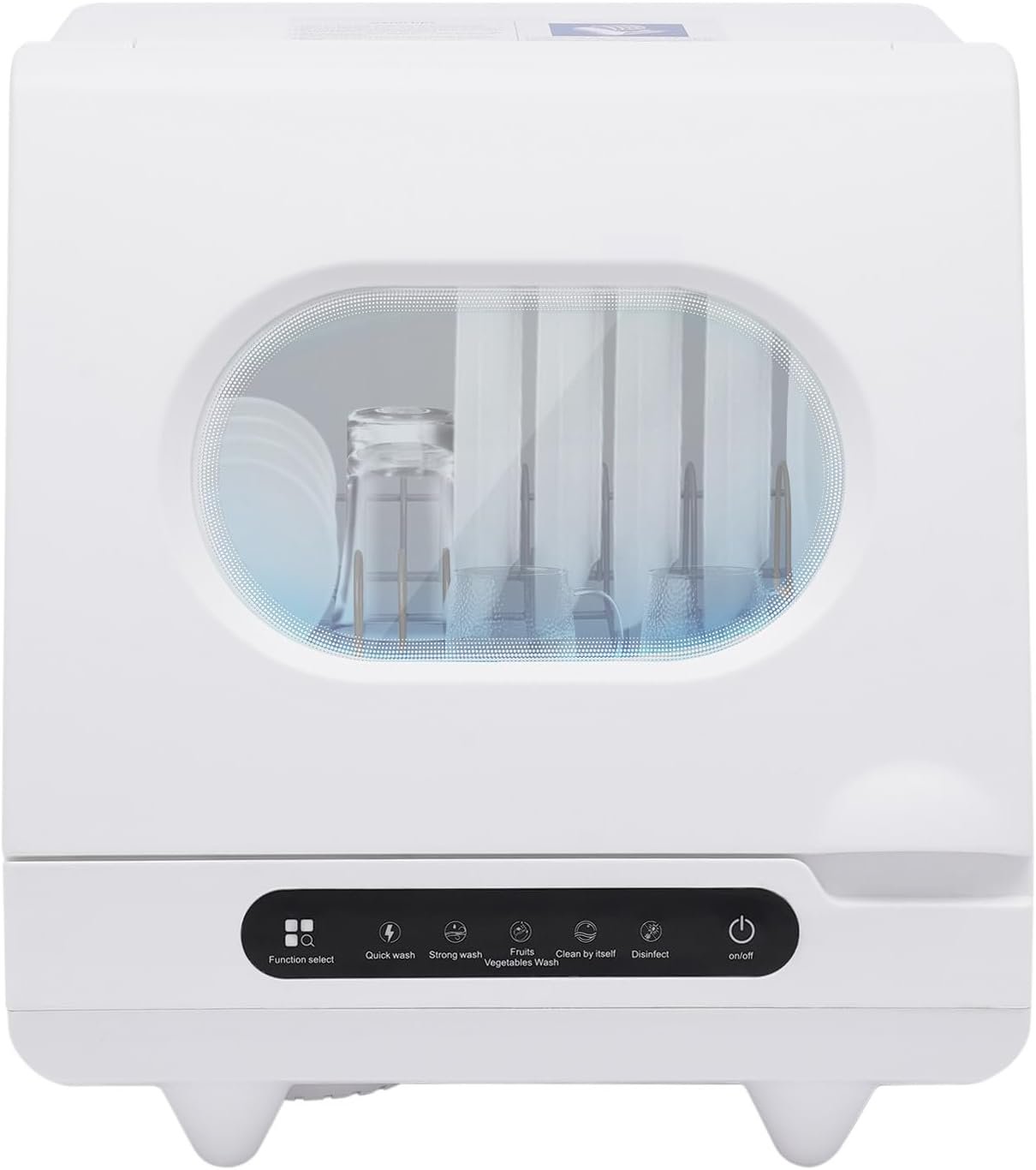
| Wash cycles / cleaning tech | 5 selectable cycles: Quick, Strong, Fruit & Vegetable, Self-Clean, Disinfect; 360° rotation flushing spray system |
| Drying method | Manufacturer-listed as dry and leak-proof design; passive drying expected |
| Noise level | 55 dB specified operating noise |
| Energy / water efficiency | Water consumption 5 liters per cycle; Annual Energy Consumption listed as 1 Watts (manufacturer disclosure) |
| Dimensions / installation | 15.74″ D x 15.74″ W x 17.7″ H; countertop installation; 110V supply |
| Materials / build | ABS and PP plastics with spray-painted finish; magnetic induction door seal |
| Controls | Touch control panel; 5 program settings |
| Warranty | Not specified by manufacturer in provided disclosures |
The overview condenses manufacturer specifications into practical expectations: compact form and a 5-liter tank suit single-load use or small households where counter space is limited. The 360° flushing and multiple cycles suggest versatile cleaning modes while the ABS/PP construction targets lightweight portability. Noise and drying behavior should be judged relative to open-plan layouts and desired end-of-cycle dryness.

Cleaning performance and wash coverage
This countertop model centers cleaning performance on a 360° rotation flushing arm and multiple cycle selections designed to address varied soil levels. The rotating spray approach promotes multi-angle coverage across a compact interior, which can improve reach to dishes in crowded single-load configurations. Cycle variety — including a strong wash and a disinfect function — allows selection according to residue type, while the fruit & vegetable wash suggests gentler flow rates for delicate items. Cleaning expectations should be set by spray pressure limits inherent to small pumps and the 5-liter water volume, which typically requires shorter or more intensive cycles to tackle heavy soils. Filtration and water-softening features interact with spray coverage to determine final cleanliness.

Spray arms, 360° rotation flushing, and coverage
The listed 360° rotation flushing indicates a rotating spray arm or multiple nozzles providing radial spray patterns designed to reach plate faces, bowls, and utensils. In compact tanks, proximity of spray arms to items enhances mechanical action but also requires careful loading to avoid spray shadowing behind taller items. Pump size and nozzle diameter influence flow rate and pressure; smaller portable pumps usually produce lower pressure than built-in dishwashers, which can reduce effectiveness on baked-on soils. The rotating system can compensate partially by directing water across multiple angles, but heavy residues or cookware with concentrated baked-on food may not see full removal without pre-rinsing.
Filtration, soft water circulation, and stain removal expectations
This model includes a circulating soft water self-cleaning system that claims to soften water and prevent internal dirt accumulation. Effective filtration in compact units is essential to prevent redepositing soils during a cycle; a removable mesh or fine filter combined with a self-cleaning rinse cycle supports sustained cleaning performance. Water softening reduces scale buildup and improves detergent action in hard-water areas, which helps with stain prevention on glassware and utensils. However, chemical detergent selection and cycle length remain important variables: concentrated stains and high-fat residues often require stronger cycles and higher temperatures that are challenging for small-format heaters and limited water volumes.
Capacity, rack design, and place settings
Capacity assessment focuses on the 5-liter reservoir and the appliance’s counter footprint when deciding whether it supports routine household loads. A 5-liter tank indicates single-load or half-load operation rather than standard multi-place settings; compatibility with typical place settings is limited by interior dimensions and rack geometry. Buyers should anticipate one to two place settings per cycle depending on dish size and arrangement, with priority given to plates, cups, and small bowls. Compact rack design emphasises vertical stacking and close spacing, which benefits utensils and small cookware but can restrict large items. Load planning, such as separating cutlery and avoiding overlap, impacts wash coverage and overall cycle efficiency in a small-capacity countertop dishwasher.

What 5 liters means for daily loads and place settings
A 5-liter water tank does not directly equate to a specific number of place settings in the way full-size measurements do, but it signals very limited single-load capacity. For meals generated by one to two people, the tank can handle a typical set of plates, glasses, and cutlery in one cycle; households with regular shared meals will find the capacity requires frequent cycling or supplementary handwashing. The compact interior is best for everyday dinnerware rather than large pots, oversized pans, or tall stemware. Strategic loading—placing items to expose surfaces to the rotating spray—improves effective place setting throughput per cycle.
Rack layout, utensil handling, and cookware compatibility
The rack layout in countertop units tends to prioritize vertical plate slots, cup shelves, and a small utensil basket to maximize limited volume. Compatibility with cookware is constrained by interior height and clearance under the spray arm; shallow pans and small baking dishes are more likely to fit than deep pots. Utensil baskets or compartments should separate flatware to minimize nesting and allow detergent and spray reach. When evaluating this model for mixed cookware sets, consider the inability to accommodate several large items alongside plates, which may necessitate staggered cycles or partial handwashing for heavy cookware.
Noise levels and suitability for open kitchens
A 55 dB noise rating positions this countertop dishwasher near normal conversational levels, which has implications for use in open-plan living, studio apartments, or small dwellings. In practice, perceived noise depends on room acoustics, proximity to seating or sleeping areas, and cycle phases—wash pumps and drainage can create intermittent spikes. For environments where quiet is essential, such as shared sleeping quarters or home offices adjacent to kitchens, a 55 dB source may still be intrusive during prolonged cycles. Buyers should weigh manufacturer noise figures against their tolerance for ambient sound and consider placement that distances the unit from primary living areas or uses scheduling to run cycles when occupants are less sensitive to noise.

How a 55 dB rating compares in real-world settings
A 55 dB figure aligns with background conversation and is generally quieter than older portable pumps or countertop units listed at higher decibel levels. However, decibel measures are logarithmic: a small numerical difference can represent a notable subjective change. Room surfaces, cabinetry, and countertops can amplify or dampen sound; an appliance on a resonant surface may seem louder. For open kitchens, the location relative to living spaces matters more than the single-number rating: adding a rubber mat, placing the unit on a sturdy surface, or situating it away from seating areas can mitigate perceived noise.
Cycle timing, intermittent noise, and nighttime considerations
Operational noise varies across cycle phases—initial fill and pump priming, high-pressure spray periods, and draining/pumping sequences each produce different sound signatures. Quiet overnight operation requires attention to both peak and average noise; although the average may be 55 dB, peak pump noises during draining can stand out at night. Users in noise-sensitive situations should review cycle durations and consider scheduling runs during daytime or early evening. The compact pump design of portable units typically results in shorter but sometimes more noticeable noise events compared with full-size, better-insulated built-in machines.
Drying systems and moisture control
Drying performance in compact countertop dishwashers depends on a combination of heater capacity, cycle design, internal airflow, and materials. The manufacturer description indicates a dry feature and leak-proof design but does not specify an active condensing dryer or fan-assisted system, suggesting reliance on residual heat, interior drainage, and passive venting. In small tanks, trapped moisture can linger on recessed areas and inside cutlery compartments, so expectation management is critical: glassware and plastics commonly retain droplets unless elevated heat or airflow is applied. The magnetic induction door seal and compact form reduce external moisture escape risk but also limit cross-ventilation; users who prioritize rapid, fully dry dishes should anticipate follow-up towel drying for certain items.

Passive vs. active drying in compact models
Passive drying leverages heat retained in wash water and the chamber to evaporate moisture after the cycle ends; it is energy efficient but slower and less complete than active systems. Active drying methods—such as built-in fans or heated condensers—accelerate evaporation and reduce pooling, but those features are less common in countertop units due to space and energy constraints. The listing of a disinfect cycle and dry claim indicates higher-temperature rinse phases that help reduce surface wetness, yet without explicit active drying mechanics, users should expect variable results on plastics and deep recesses, and plan for brief hand-drying of sensitive items.
Moisture control, door seals, and leak management
The magnetic induction door seal is designed to create a secure closure and reduce the chance of leaks during operation. Effective seals also help the drying phase by limiting rapid heat loss and preserving internal temperatures that aid evaporation. Leak-proof claims depend on installation integrity and how the unit interfaces with water sources; even with robust seals, overflow management and proper hose connection are essential. In compact units, proper leveling and avoiding overfilling remain key to preventing drips or pooled water at the door threshold after a cycle completes.
Energy and water efficiency expectations
Energy and water efficiency in countertop dishwashers reflects trade-offs between compactness and per-cycle performance. The manufacturer-supplied water consumption of 5 liters per cycle indicates low water use relative to full-size units, making the appliance attractive for minimal-load applications and settings where water availability is limited. Annual Energy Consumption listed as 1 Watts likely reflects standby or a specific measurement method; buyers should interpret this figure cautiously and consider the absence of third-party energy certifications in the provided specifications. Overall cycle energy usage depends on heater wattage, cycle length, and frequency of use: compact heaters and short cycles can reduce instantaneous energy draw but may require more frequent runs, affecting cumulative consumption over time.

Interpreting the 5-liter water figure and energy disclosures
A 5-liter per-cycle consumption is consistent with single-load countertop designs and suggests economical water use for small loads. However, frequency of cycles and whether the unit replaces handwashing affect total household water and energy balance. The manufacturer disclosure of annual energy consumption as 1 Watts is atypical for whole-year estimates and may indicate a standby power rating rather than annualized usage; without ENERGY STAR or equivalent certification details, energy efficiency comparisons should rely on cycle length, heater specifications, and usage patterns. Buyers concerned about utility impacts should prioritize minimal cycle frequency and full loads compatible with the tank capacity.
Auto-fill, circulating soft water, and system efficiency
The automated fill feature reduces manual intervention and can improve convenience in portable installations. The circulating soft water self-cleaning system is intended to soften incoming water and limit internal scaling, which supports long-term efficiency by preserving heater and spray nozzle performance. A well-maintained softening and filtration routine reduces detergent waste and improves cleaning effectiveness in hard water areas, indirectly improving energy efficiency by reducing the need for extended or repeated cycles. Nevertheless, the presence of these systems does not replace regular maintenance and appropriate detergent selection.
Maintenance, filters, and long-term durability
Durability considerations stem from material selection, component robustness, and maintenance accessibility. The unit’s ABS and PP construction offers lightweight, corrosion-resistant surfaces suitable for portable use, and the spray-painted finish suggests additional wear resistance. Long-term reliability depends on pump quality, seal durability, and electronic control longevity; smaller pumps in countertop models may experience higher duty cycles compared with built-in units if used frequently. Filter access and the effectiveness of the self-cleaning cycle are key to preventing internal soil buildup that degrades performance. Buyers should plan for routine filter cleaning, visual inspections of door seals, and proper winterization if installed in non-temperature-controlled spaces like RVs.

Materials, build quality, and expected wear patterns
ABS and polypropylene are common in portable appliance housings due to impact resistance and moisture tolerance, but prolonged exposure to high temperatures and detergents can accelerate surface wear. Spray-painted finishes provide aesthetic durability but can show chips in high-contact areas. Mechanical wear typically appears first in the pump assembly and door seal; these components benefit from regular inspection. The manufacturer’s focus on rust-resistance addresses metallic corrosion but does not eliminate mechanical fatigue in moving parts. Proper placement to avoid vibration and securing hoses to prevent strain on fittings extend component life.
Filter types, self-cleaning cycles, and serviceability
A removable debris filter and a circulating soft water self-cleaning program are advantages for maintenance, reducing manual cleaning frequency by flushing particulates and limiting scale accumulation. Filters should be accessible for periodic washing to prevent clogging and redepositing soils during cycles. Self-cleaning cycles maintain internal cleanliness but cannot substitute for scheduled inspection of spray nozzles and drain pathways. Serviceability for portable units varies; replaceable components like seals, pump modules, and control panels are commonly available, but repair complexity and part availability influence long-term ownership costs.

Pros & Cons
Pros
- Space-saving portability: The compact 15.74″ x 15.74″ x 17.7″ footprint makes the unit suitable for small countertops, RVs, and dorm rooms. This size supports installation where built-in machines are impractical and promotes flexibility in placement.
- Low per-cycle water use: The specified 5-liter water consumption per cycle is economical for single-load washing, beneficial in low-water contexts or when minimizing routine water use is a priority.
- Multiple cleaning programs: Five preset cycles, including strong wash, quick wash, fruit & vegetable, self-clean, and disinfect, provide operational versatility across light to moderately soiled items and gentle handling modes for produce.
- 360° rotation flushing: The rotating spray design enhances multi-angle coverage within the compact tub, improving reach to different dish surfaces compared with fixed-nozzle designs.
- Corrosion-resistant materials: ABS and PP construction with a spray-painted finish reduces the risk of rust and supports lightweight portability while offering reasonable surface durability.
- Touch controls and auto-fill: Touch controls simplify cycle selection and the automatic fill feature reduces manual intervention, which is helpful in portable installations.
- Magnetic induction door seal: A magnetic seal improves closure integrity and reduces the likelihood of leaks when the door is properly engaged, supporting safe countertop use.
Cons
- Limited capacity for shared households: The 5-liter tank and compact interior accommodate very small loads; larger families or those who cook frequently will find the capacity restrictive and may run cycles multiple times per day.
- Drying may be incomplete: Absence of an explicitly stated active drying system suggests reliance on residual heat and passive drying, which can leave plastics and recessed areas damp and require towel drying.
- Noise and pump peaks: The 55 dB rating is moderate but may still be noticeable in open-plan living or during nighttime operation, with intermittent pump and drain noises potentially more intrusive than averaged figures imply.
- Unclear energy certification: Manufacturer disclosure lists an atypical annual energy figure and lacks third-party energy-efficiency certifications, making direct comparisons with certified appliances difficult for efficiency-minded buyers.
- Service and part longevity concerns: Portable pump assemblies and seals are subject to more frequent duty cycles in continuous use; part replacement and service availability can influence long-term ownership experience.
Final Verdict: Who This Dishwasher Is Best For (and Who Should Skip It)
This portable countertop dishwasher suits single occupants, couples, dorm residents, and RV users who prioritize space savings and low per-cycle water consumption over multi-place settings. The combination of a 5-liter tank, compact rack geometry, and 360° rotating spray arm makes it practical for everyday tableware, glasses, and utensils where kitchen space is constrained and loads are small. Its touch controls, automatic fill, and soft water circulation provide convenience for environments where hookups are temporary or handwashing is the primary alternative. The 55 dB noise level is acceptable for many daytime situations but should be evaluated against living arrangements and noise sensitivity.
Households that prepare large meals, regularly use oversized cookware, or require consistently dry plastics after each cycle should consider larger built-in or full-size portable models with higher capacity and active drying systems. Buyers seeking verified energy-efficiency certification or heavy-duty cleaning for baked-on cookware may find this unit limiting. As a compact, feature-oriented countertop option, the model competes well in 2026 for small-space applications, but careful consideration of capacity, drying needs, and serviceability is advised before purchase.
Frequently Asked Questions (FAQs)
How many place settings will this 5-liter countertop dishwasher accommodate?
A 5-liter tank in a countertop dishwasher is designed for single-load, small-scale use rather than standard multi-place settings. Expect to fit a set of plates, a few cups, and utensils for one to two people depending on dish size and how efficiently items are arranged. Large pots, oversized pans, and tall stemware will likely require separate washing or staggered cycles due to limited interior clearance.
Is a 55 dB noise rating suitable for an open-plan kitchen?
A 55 dB rating corresponds roughly with normal conversation levels and can be noticeable in open-plan living areas. Perceived loudness depends on room acoustics and proximity; placements closer to seating or sleeping areas will feel louder. For noise-sensitive environments, consider locating the unit away from primary living spaces, using anti-vibration pads, or running cycles during less sensitive times of day.
Will the dishwasher fully dry plastic dishes and utensils?
Compact countertop models often rely on residual heat and passive drying rather than active fan-assisted systems. Plastics and items with deep recesses tend to retain more moisture and may require brief towel-drying after the cycle. The presence of higher-temperature rinse phases or a disinfect mode can reduce surface water but may not achieve fully dry plastics every time.
How effective is the 360° rotation flushing for cleaning baked-on residue?
A 360° rotating spray arm enhances multi-angle coverage, improving access to plate faces and utensils within a compact tub. However, cleaning heavy baked-on residues depends also on pump pressure, water temperature, and cycle duration. Portable pumps have lower pressure than full-size built-in systems, so heavily soiled cookware may still require pre-soaking or pre-rinsing for best results.
What maintenance does the self-cleaning circulation system require?
The circulating soft water self-cleaning feature helps reduce scale and internal dirt accumulation, but routine maintenance still includes periodic cleaning of removable debris filters, inspecting spray nozzles for clogs, and checking the door seal for wear. Regularly running the self-clean cycle per manufacturer recommendations and using appropriate detergents prevents buildup and maintains spray efficiency.
Can this dishwasher be used in an RV or camper?
The countertop, portable form factor, 110V voltage, and compact dimensions make the unit suitable for RVs or campers with compatible electrical supply and adequate space. Consideration should be given to secure placement, stable water connections, and vibration protection. Also account for load capacity and frequency, since limited tank size may require planning for multiple small cycles.
Does the dishwasher have any energy-efficiency certification?
Manufacturer disclosures list an Annual Energy Consumption figure but do not specify ENERGY STAR or other third-party energy-efficiency certifications in the provided specifications. The disclosed power figure should be interpreted carefully, and buyers concerned about verified efficiency should seek appliances with recognized certifications or request detailed energy usage data.
What types of dishes should be avoided in this compact model?
Avoid placing very large pots, deep casseroles, oversized baking trays, and tall stemware that exceed the interior height or obstruct spray coverage. Heavy-duty cookware with baked-on residues may require pre-soaking or handwashing. For best results, prioritize plates, bowls, cups, and standard utensils that fit within the compact rack layout.