Kenmore 24-inch Dishwasher Review — Quiet & Energy-Smart
Selecting a dishwasher affects kitchen workflow, household chores, and long-term utility use. Household size, kitchen layout, and washing frequency determine whether a 24-inch built-in model with 15 place settings is suitable; families of three to five or households that cook regularly often prioritize capacity and flexible racks, while couples or light users may value smaller footprints. Noise sensitivity and open-plan living influence the need for low-decibel operation and quiet cycles. Cleaning needs are shaped by dishware types, soil levels, and the desire to avoid pre-rinsing, which makes spray coverage, filtration, and sensor-driven cycles important. Efficiency expectations center on Energy Star certification, water consumption per cycle, and drying performance that balances energy use with moisture control. Durable materials and accessible maintenance features also factor into long-term ownership and reliability.
Quick Overview
| Feature | Details |
|---|---|
| Dishwasher type | Built-in 24-inch integrated dishwasher |
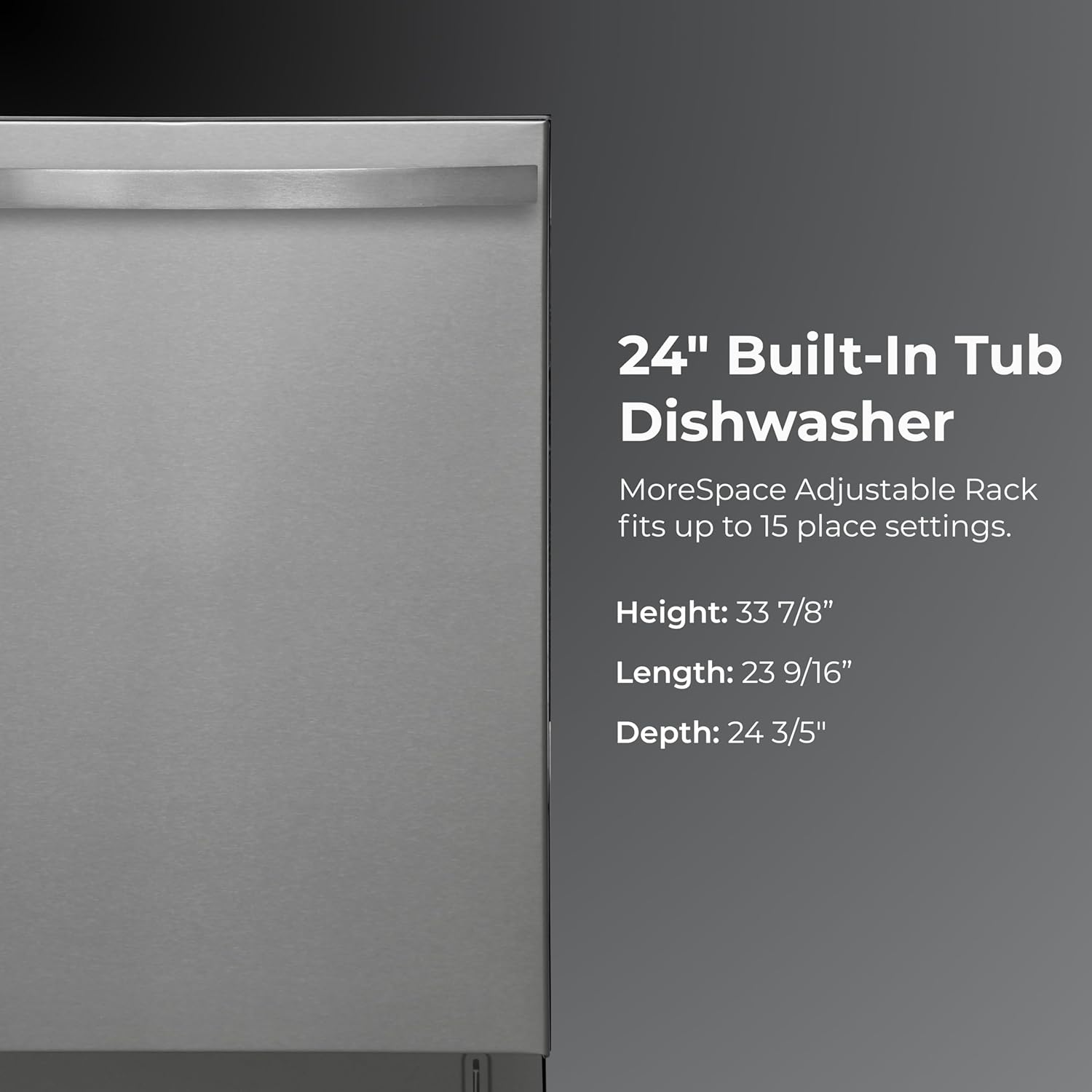
| Capacity | 15 place settings |
| Wash cycles & tech | UltraWash Plus with 3 pressurized spray arms; Accela Wash; SmartWash soil sensor; Sani Rinse option |
| Drying method | TurboDry: built-in fan plus heating element; Extra Dry option available |
| Noise level | 45 dBA rated; QuietWash option for lower-noise operation |
| Energy & water | ENERGY STAR certified; water consumption rated at 5 gallons per cycle |
| Dimensions & install | 24.61″D x 23.55″W x 33.88″H; built-in installation |
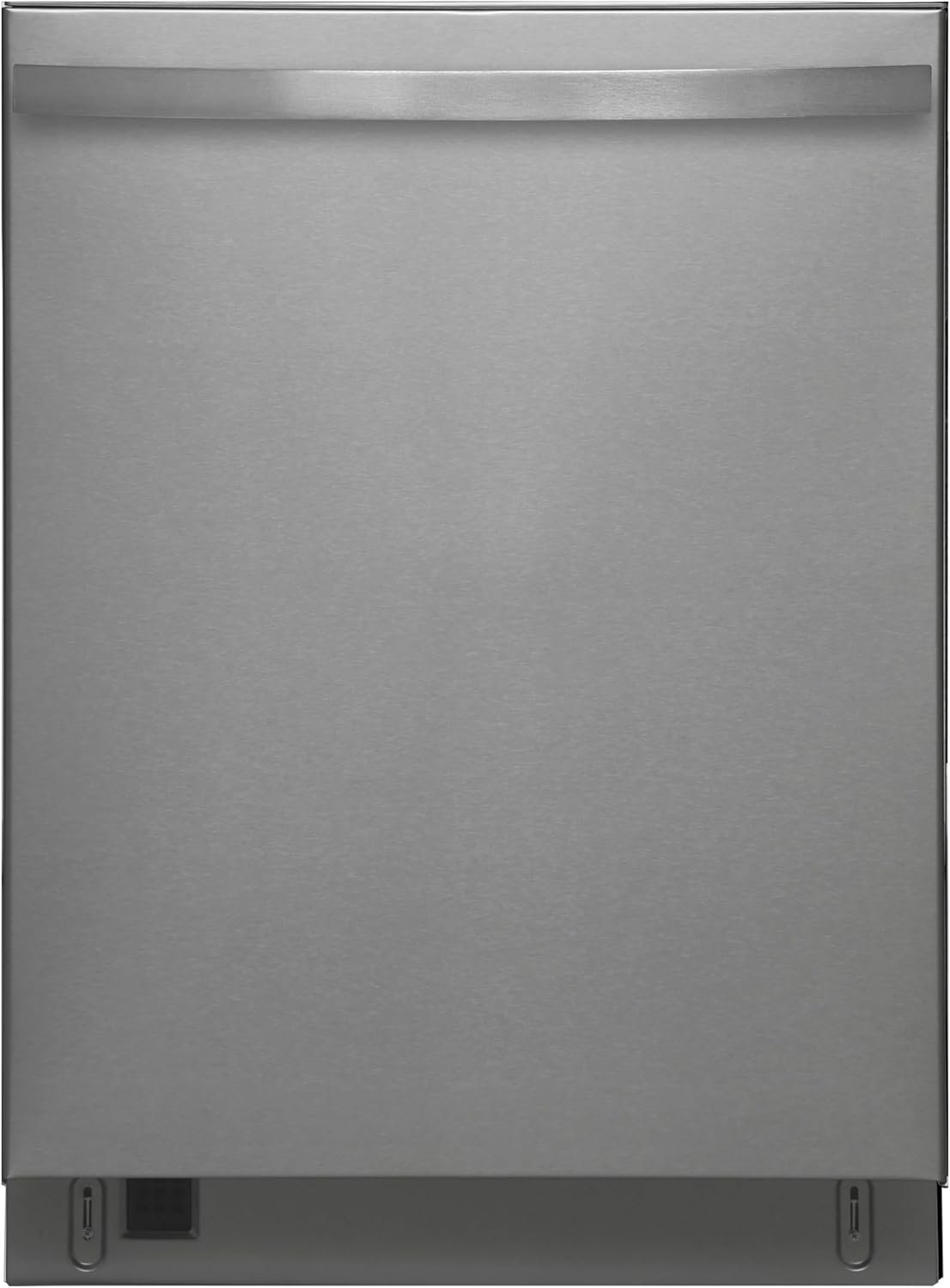
| Tub & materials | Stainless steel tub; fingerprint-resistant stainless steel exterior |
| Controls & indicators | Hidden touch controls; LED floor light; 7 cycle settings; Delay Start |
| Safety & protection | Built-in leak detection with automatic drain |
| Included components | Cutlery basket; EasyFlex removable third rack |
| Warranty | Manufacturer limited warranty (refer to Kenmore documentation) |
The Quick Overview table summarizes how the Kenmore 24-inch built-in model balances capacity, cleaning technology, and energy use. The 15-place setting capacity and flexible rack system suit typical family loads, while a stainless steel tub and TurboDry aim to improve drying outcomes. Sensor-driven SmartWash and multiple cycle options address varied soil levels, and ENERGY STAR certification plus a 5-gallon water rating indicate lower resource use than older models.

Cleaning performance and wash coverage
The Kenmore UltraWash Plus system combines three pressurized spray arms with filtered water delivery and a SmartWash soil-sensing system to tailor cycle parameters. Sensor feedback adjusts water temperature, pressure, and cycle duration based on detected soil levels, which improves coverage for mixed loads. Accela Wash provides a fast, higher-pressure option for time-sensitive loads, while Sani Rinse raises final rinse temperature for sanitizer-oriented cycles when desired. The presence of multiple spray arms and targeted nozzles increases the likelihood of direct spray contact with dish surfaces, but actual performance depends on loading patterns, spray arm clearance, and correct placement of heavily soiled items.

Spray system design and filtration
Three pressurized spray arms are positioned to reach upper, lower, and third-rack zones, with filtered inlet water intended to reduce recirculating debris. A mesh or microfilter system in the sump captures particulate matter and prevents clogging of jets; periodic cleaning of these filters is necessary to maintain spray arm performance. The pressure-based design favors mechanical force to dislodge dried-on soils, and fresh water delivery limits redeposition. Spray arm dwell time and rotational coverage are influenced by pump capacity and nozzle sizing, so heavily soiled pots may still require targeted pre-soak or a heavy-duty cycle to achieve optimal results.
SmartWash sensors and cycle selection
SmartWash sensor technology monitors turbidity and adjusts soak times, water temperature, and pump pressure to match load conditions, which can reduce unnecessary run time on light loads and increase intensity for dirty loads. Cycle options including Normal, Heavy, Accela Wash, and Sani Rinse provide flexibility to match soil level with water and heat usage. The combination of sensor-driven decisions with selectable options permits semi-automatic optimization, but users should be aware that sensor placement and heavily stained water can influence detected signals; very greasy or starchy residues may require higher-temp or longer cycles for consistent removal.
Capacity, rack design, and loading flexibility
Rack configuration is a major determinant of usability for families and those who entertain. The EasyFlex removable third rack expands utensil and long-item capacity by about 35 percent versus a standard two-rack layout, enabling long-handled tools and spatulas to lie flat without blocking upper spray arms. The MoreSpace Adjustable Rack provides height adjustment to accommodate taller glassware or large pots by changing the vertical spacing. A conventional cutlery basket remains available for forks and knives. While the 15-place setting rating is a useful industry standard, real-world capacity depends on how items are nested, rack divider spacing, and whether the third rack is installed or removed for oversized items.

Third rack usability and loading patterns
The EasyFlex third rack is designed for shallow items such as utensils, ladles, and small cooking tools, which helps free lower-rack space for plates and pans. Removability allows conversion to a two-rack system when taller items are needed below, but removing the tray reduces total small-item capacity. Flatware organization in the third rack can improve spray exposure compared to a deep cutlery basket, but stacked or overlapping utensils can shadow jets. Effective loading techniques include angling bowls, spacing plates, and orienting open cups and containers downward toward spray sources to maximize cleaning contact.
Accommodating large cookware and glassware
The MoreSpace Adjustable Rack and removable third rack enable accommodation of tall stemware, pitchers, and larger pots, with rack adjustment points providing several height increments. The stainless steel tub and rack coatings resist staining from food acids and detergents, preserving appearance. However, very large stockpots or baking sheets may still need to be washed on the bottom rack with third-rack removal, and careful placement is necessary to avoid interference with spray arm rotation. Wash cycles with higher water pressure can also help clean nested cookware surfaces but may require plate separation to allow flow.
Noise levels and suitability for open kitchens
A 45 dBA rating positions this Kenmore model in the quiet category for built-in dishwashers, making it suitable for many open-plan living spaces where background noise can be noticeable. The QuietWash option further reduces operating noise by moderating pump speeds and extending cycle times to retain cleaning effectiveness at lower acoustic output. Sound transmission depends on insulation, cabinetry, and floor plan; in open kitchens the 45 dBA baseline should be considered alongside household noise tolerance when scheduling runs. The LED floor light provides a visual cycle indicator that does not increase acoustic disturbance and may be preferable in low-noise environments.
Acoustic implications of 45 dBA operation
A 45 dBA specification typically means dishwasher operation is comparable to a quiet conversation or library background noise, subject to perception in adjacent living spaces. Sound levels are influenced by motor design, insulation, and mounting; built-in installations that use tight cabinetry and sound-dampening insulation will reduce perceived noise further. For households with home offices, infants, or frequent low-volume activities in adjacent rooms, scheduling runs during times when ambient noise is higher or using the QuietWash option can mitigate disturbance without sacrificing cleaning performance.
QuietWash mode and cycle timing trade-offs
QuietWash lowers pump speed and may lengthen cycle duration to maintain cleaning through longer soak and lower-pressure wash stages. This trade-off reduces instantaneous noise but extends time until dishes are ready, which is a consideration for users who need rapid turnarounds. The Accela Wash option is intended for faster results and uses higher pressure at the expense of louder operation. Selecting the appropriate mode depends on the balance between noise sensitivity and time requirements for each household load.
Drying systems and moisture control
TurboDry combines an integrated fan and heating element to move warm air out of the tub and accelerate moisture evaporation, targeting better drying performance for plastics and containers that traditionally retain water. The stainless steel tub contributes to heat retention, improving condensation-driven drying when paired with active airflow. An Extra Dry option increases heat and fan usage to reduce residual moisture but adds energy consumption relative to shorter drying cycles. Drying outcomes are influenced by load placement, container orientation, and whether rinse aid is used to reduce surface tension and spotting.

TurboDry mechanics and plastics performance
TurboDry’s active extraction uses an internal fan to draw moist air away from the tub interior while a heating element raises air temperature to increase evaporation rates. Plastics, which have lower thermal mass and hydrophobic surfaces, often retain water droplets; the combination of forced airflow and heat helps dislodge those droplets and reduce pooling. However, success depends on item positioning—lids and cups should be tilted to permit drainage—and on the selected cycle’s drying intensity. Energy-conscious users may find a balance by using TurboDry selectively or relying on condensation drying for less moisture-prone loads.
Tub material effects on condensation and drying
A stainless steel tub retains heat better than polymer tubs, which raises the temperature of interior surfaces during the final rinse and promotes condensation on cooler cabinet surfaces when the door is opened. Heat retention supports better passive drying and enhances TurboDry efficiency. Additionally, stainless steel resists staining and odor absorption, reducing long-term maintenance needs that could impact drying performance. Regular cleaning of seals and door edges helps maintain airflow paths and prevents trapped moisture that can impair drying over time.
Energy, water efficiency, maintenance, and long-term reliability
ENERGY STAR certification and a 5-gallon-per-cycle water rating indicate focused efficiency, with the SmartWash sensor potentially reducing unnecessary resource use on light loads. Maintenance requirements include routine filter cleaning to prevent spray head clogging, occasional inspection of door gaskets, and ensuring the leak detection system operates unobstructed. The built-in leak detection automatically drains in fault conditions, reducing risk of water damage but not eliminating the need for proper installation and monitoring. Durability expectations hinge on build materials such as the stainless steel tub, motor and pump quality, and rack coatings; these components typically determine lifespan and repair frequency for built-in residential dishwashers.

Filter access, cleaning, and routine upkeep
The dishwasher employs a sump filter to capture food particles; regular removal and cleaning of this filter preserve pump efficiency and spray arm performance. Mineral buildup from hard water can occlude spray nozzles and reduce flow; periodic descaling and use of recommended detergents mitigate this. Door seals and hinges should be inspected for wear to prevent leaks, and the inlet hoses and connections should be checked during installation and periodically thereafter. Following manufacturer cleaning intervals and using recommended maintenance procedures supports consistent performance and reduces the likelihood of service calls.
Leak detection, parts longevity, and reliability indicators
Built-in leak detection monitors water flow and can trigger automatic drainage if anomalies are found, which is a protective feature against flooding but does not substitute for proper installation or regular maintenance. Component longevity is influenced by motor design, pump quality, and rack coating durability; stainless steel tubs slow corrosion-related wear, while heavy use of high-temperature cycles may stress components faster. Consumer review patterns that show mixed functionality indicate variability in user experiences, which can arise from installation differences, water quality, and occasional manufacturing variance.

Pros & Cons
Pros
- Quiet operation (45 dBA) supports use in open-plan homes and near living areas. Moderate sound levels combined with a QuietWash option reduce disturbance during daytime and evening use. Lower acoustic output is beneficial for home offices and media spaces.
- ENERGY STAR certification and 5-gallon water consumption reflect resource-efficient design. Sensor-based SmartWash optimizes water and heat use for variable soils, which can reduce waste on light loads while ensuring intensity for dirtier items.
- Flexible loading with an EasyFlex removable third rack increases utensil and tool capacity by about 35 percent. The MoreSpace Adjustable Rack enables accommodation of tall stemware and larger cookware through simple height adjustments.
- TurboDry combines a fan and heating element to improve drying, especially for plastics and containers that typically retain water. The stainless steel tub enhances heat retention and supports condensation-driven drying.
- Three pressurized spray arms and filtered fresh-water delivery aim to improve wash coverage across upper, lower, and third-rack zones. Accela Wash offers a higher-pressure, faster option for time-sensitive loads.
- Hidden touch controls and an LED floor light create a streamlined aesthetic while keeping operation indicators discreet. Fingerprint-resistant stainless steel helps maintain a clean exterior appearance.
Cons
- Some customer feedback reports inconsistent functionality, indicating variability in real-world outcomes that may stem from installation or manufacturing variance. Buyers should confirm installation and user settings if encountering issues.
- While TurboDry improves drying, very large or heavily nested plastic items may still retain moisture. Optimal drying depends on correct loading orientation and selective use of high-dry options.
- The 15-place setting capacity and rack configurability may not fully accommodate very large households or those who routinely wash oversized cookware without removing the third rack. Users with frequent large-batch cooking may find capacity limiting.
- Repair and part longevity depend on local service availability and component quality; mixed review patterns suggest that post-purchase support and installation quality are important considerations when evaluating long-term reliability.
Final Verdict: Who This Dishwasher Is Best For (and Who Should Skip It)
This Kenmore 24-inch built-in dishwasher suits mid-sized households and families seeking a balance of capacity, quiet operation, and energy-efficient cycles. The 15-place setting rating combined with the EasyFlex third rack and MoreSpace Adjustable Rack provides versatile loading for everyday dinnerware, long utensils, and occasional tall glassware, making it a practical choice for households that cook frequently but do not routinely handle industrial-size cookware. Noise-conscious buyers in open-plan homes will appreciate the 45 dBA rating and QuietWash mode, while those prioritizing efficient water use benefit from the ENERGY STAR certification and 5-gallon-per-cycle rating.
This model may be less suitable for very large households that need higher per-cycle capacity or for users who require consistently rapid turnaround for oversized pots without removing the third rack. Buyers in regions with limited service networks or those who need guaranteed uniform reliability for high-frequency commercial use should consider models with commercial-grade components. In comparison with similar 2026 consumer residential models, this Kenmore offers a competitive mix of sensor-driven cleaning, active drying, and flexible loading, with the caveat that installation, water quality, and maintenance practices will significantly influence long-term performance and satisfaction.

Frequently Asked Questions (FAQs)
How effective is the Kenmore dishwasher at cleaning heavily soiled pots and pans?
Heavily soiled cookware benefits from the UltraWash Plus system, which uses three pressurized spray arms and sensor-adjusted water and heat. Selecting a heavy or high-temp cycle increases water pressure and temperature, improving soil removal. For very baked-on residues, a pre-soak or targeted heavy cycle is advisable to maximize mechanical action and prevent redeposition.
Will the TurboDry system reliably dry plastic containers and lids?
TurboDry combines a fan and heating element to improve evaporation, which often results in better drying for plastics than condensation-only systems. Success depends on item orientation, spacing, and cycle selection; tilting containers to allow drainage and using the Extra Dry option for dense plastic loads increases the likelihood of dry results.
Is the 45 dBA noise level suitable for open-concept kitchens?
A 45 dBA rating generally places the unit in a quiet category appropriate for many open-plan spaces. QuietWash mode further reduces noise by moderating pump speed, although cycle time may increase. Perceived noise also depends on cabinet insulation and room acoustics, so placement and installation quality affect how audible the dishwasher is in adjacent living areas.
How water- and energy-efficient is this Kenmore dishwasher?
The dishwasher is ENERGY STAR certified and rated at approximately 5 gallons of water per cycle, indicating competitive efficiency for a 24-inch built-in model. SmartWash sensors adjust cycle parameters to match soil levels, which can reduce unnecessary water and energy use on lighter loads while ensuring thorough cleaning when more intensity is needed.
What maintenance is required to keep spray arms and filters working well?
Routine maintenance includes removing and cleaning the sump filter to prevent clogs, checking spray arm nozzles for mineral buildup, and inspecting door gaskets for debris. Periodic descaling can reduce hard-water deposits that restrict nozzle flow. Following manufacturer maintenance guidance helps maintain spray coverage and pump efficiency over time.
Who should avoid choosing this model?
Households requiring very high per-cycle capacity—such as large families who entertain frequently or small commercial operations—may find the 15-place setting limit restrictive. Users who prioritize the absolute fastest cycle times for oversized cookware without altering rack configuration may prefer models with larger internal volume or commercial-grade wash systems.