Kenmore 24″ Dishwasher Review: Quiet, Powerful Cleaning
Why dishwasher selection matters
Choosing a built-in dishwasher is a functional and lifestyle decision that affects kitchen workflow, utility consumption, and household noise. Households with frequent meal preparation, families with children, or those who entertain often require reliable cleaning performance, a flexible loading system, and durable components that tolerate heavy use. Kitchen layout and openness influence the acceptable noise threshold; a unit rated at 49 decibels will behave differently in a closed utility room versus an open-plan living space. Energy and water efficiency expectations factor into long-term utility planning and environmental considerations, while drying capability and moisture control determine whether hand-drying will still be necessary. For buyers, assessing spray arm design, soil-sensing technologies, filtration systems, rack adjustability, and leak protection provides an evidence-based approach to matching a dishwasher’s specifications to real household routines and constraints.
Quick Overview
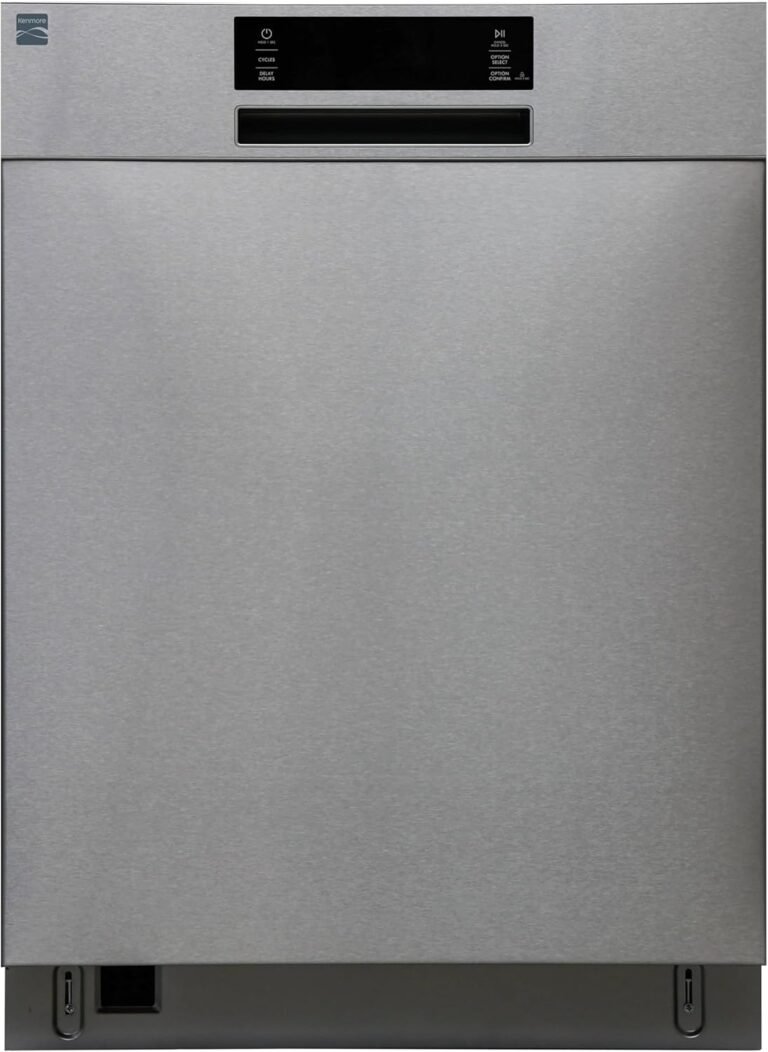
| Feature | Details |
|---|---|
| Dishwasher type | Built-in 24-inch under-counter unit |
| Capacity | 15 place settings |
| Wash cycles & technology | Multiple cycles including SmartWash soil-sensing, UltraWash Plus with three pressurized spray arms, Accela Wash option |
| Drying method | TurboDry (fan plus heating element) |
| Noise level | 49 decibels (Quiet Wash) |
| Energy & water efficiency | ENERGY STAR certified; Annual energy consumption listed at 234 kWh/year |
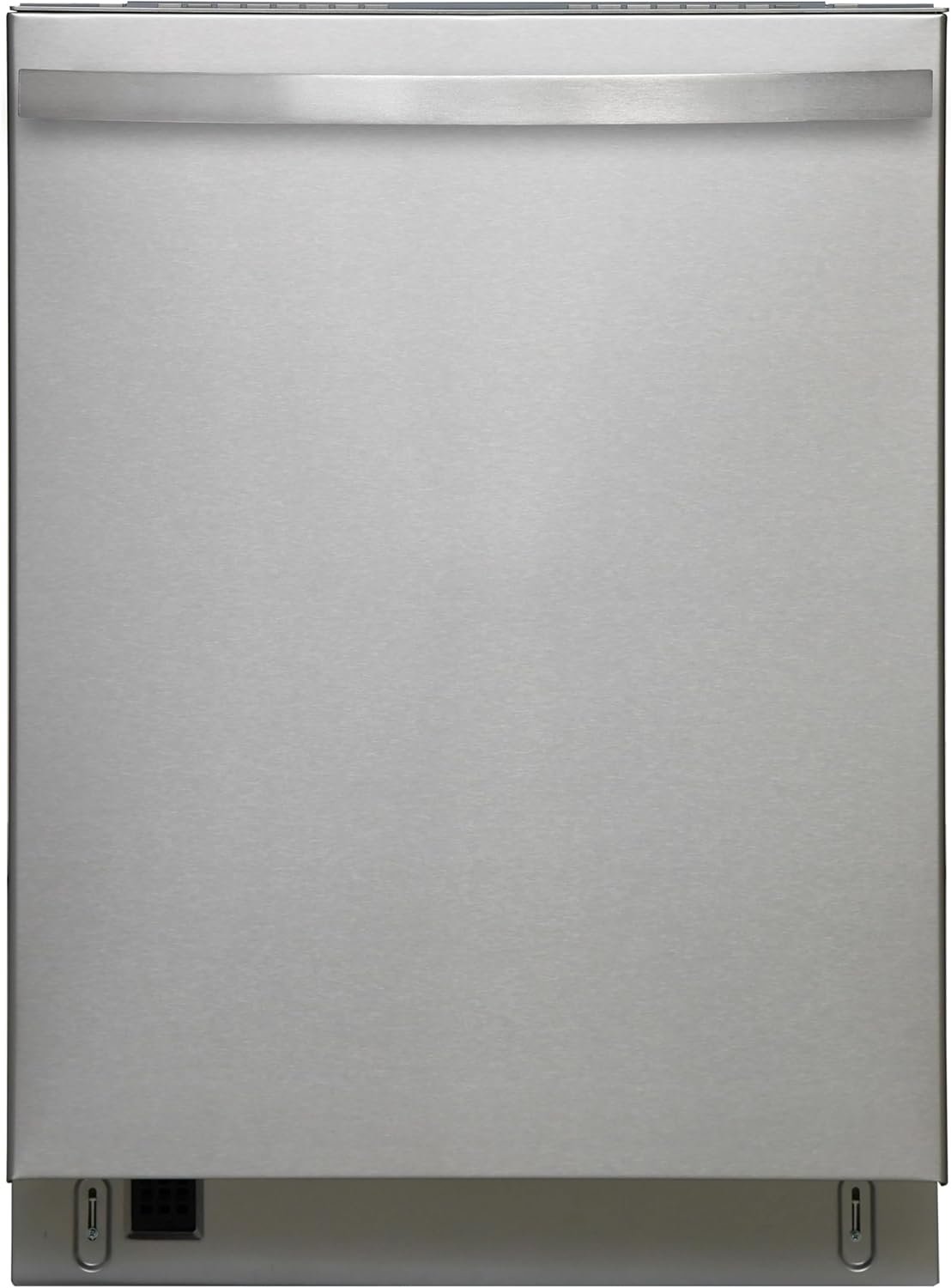
| Dimensions & installation | 24.61″D x 23.55″W x 33.88″H; built-in installation |
| Material & finish | Fingerprint resistant stainless steel interior/exterior |
| Controls & features | Touch controls, LED display, adjustable/removable upper rack, cutlery basket, leak detection |
This feature table summarizes core specification points that translate into real-world suitability: the 15-place setting capacity suits small to medium households, the SmartWash sensors and three spray arms target performance for mixed-soil loads, and TurboDry aims to reduce hand-drying. Noise, footprint, and installation type indicate fit for a standard 24″ under-counter opening and moderate noise sensitivity in semi-open kitchens.

Cleaning performance and wash coverage
The dishwasher’s cleaning proposition centers on the UltraWash Plus system with three pressurized spray arms and SmartWash soil sensing. The three-arm configuration aims to deliver multi-angle coverage across upper, middle, and lower zones, reducing shadowed pockets where food soil can accumulate. Sensor-driven SmartWash adjusts water temperature, pressure, and cycle duration based on detected soil load, which helps avoid under- or over-washing commonly seen in fixed-timed cycles. Accela Wash provides a higher-pressure, shortened option for lightly to moderately soiled loads when faster turnaround is desirable. Filtration, rinse aid reliance, and cycle selection interplay with spray geometry and pump output to determine whether heavy baked-on soils require pre-soak or heavier cycle selection to achieve satisfactory results.

Spray arm design and cycle interaction
Spray arm layout and rotation profile determine coverage and impingement angles on different load geometries. A three-arm layout typically positions arms to serve lower pots and pans, mid-level plates, and an upper rack for glassware and small items; pump pressure and arm nozzle size govern droplet momentum and the ability to dislodge dried soils. Cycle selection changes pump cadence and temperature, so heavy or Pots/Pans cycles will sustain higher flow and longer exposure, while Express or Accela Wash increase pressure and shorten time. Soil-sensing alters those parameters dynamically, but heavily encrusted residue may still require a concentrated heavy cycle for reliable removal.
Filtration, soil detection, and detergent interaction
A filtered recirculation system captures particulate matter to prevent re-deposition; cartridge or mesh filters must be accessible for routine cleaning to maintain flow and prevent odors. Soil-detection sensors inform the control board when turbidity drops, allowing the dishwasher to adjust rinse counts and temperatures. Detergent chemistry and rinse aid use affect sudsing, spot control, and drying outcomes—especially on glassware. A reliable filtration path combined with active soil sensing reduces the need for repeat cycles on mixed loads, but very heavy or baked-on soils can still require pre-treatment or a dedicated heavy cycle for optimal results.
Sanitization and high-temperature options
High-temperature and Sani Rinse options raise final rinse temperatures and dwell times to meet UL or manufacturer-recommended sanitizing thresholds, which can be important for baby bottles or heavily soiled serving ware. These cycles increase energy use and should be selected when sanitization is desired rather than used routinely. Elevated-temperature cycles also aid in reducing bacterial load and improving drying performance due to higher vapor temperature during the exhaust phase, but can place additional thermal stress on plastics and gasket materials over the long term.
Capacity, rack design, and place settings
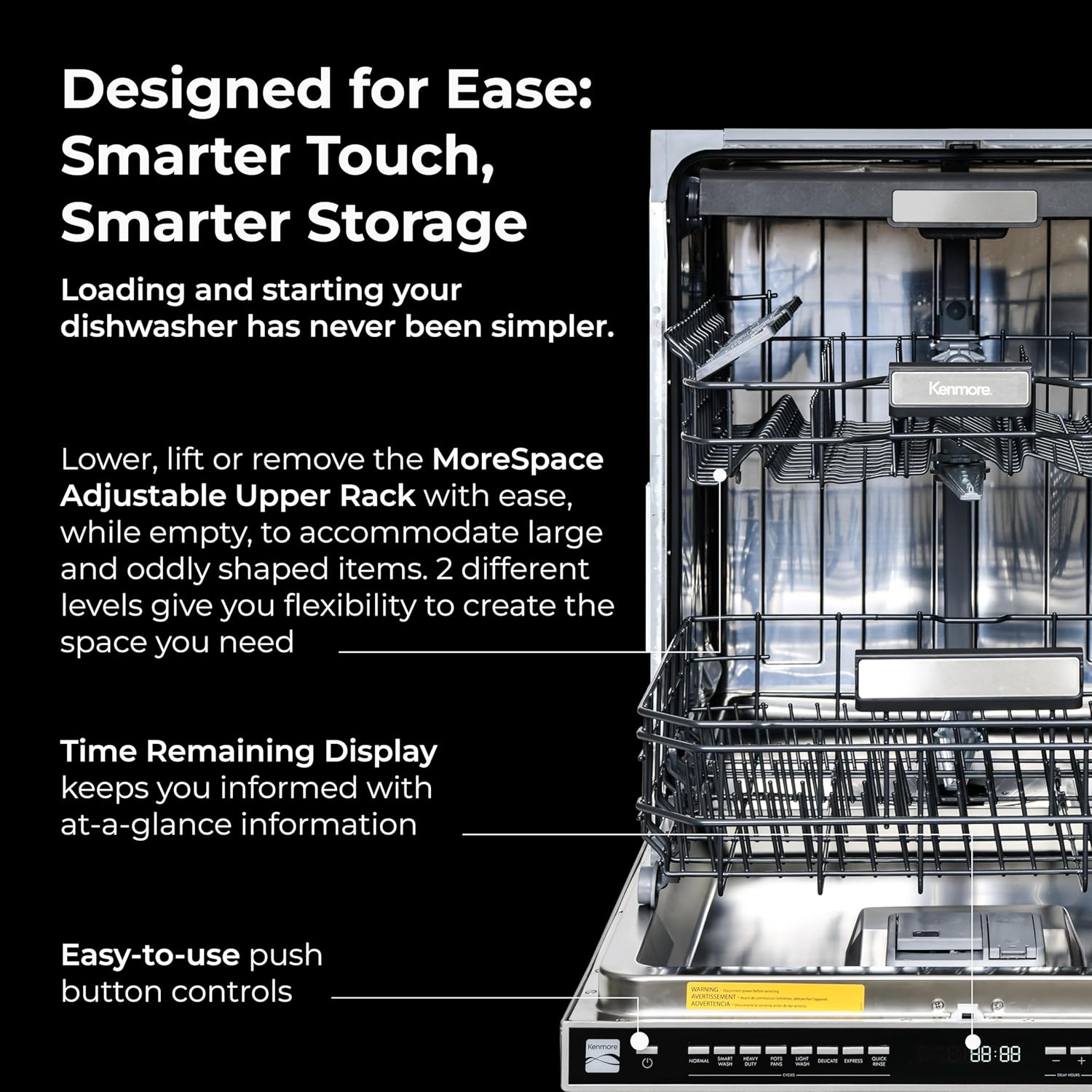
Capacity considerations affect how many meals’ worth of dishes a household can process per cycle; this model lists 15 place settings, a common mid-size configuration that accommodates plates, bowls, glassware, and a moderate assortment of cookware. The MoreSpace adjustable upper rack allows vertical re-positioning to create clearance for taller items in the lower rack or to stabilize delicate stemware on the upper rack. A removable cutlery basket offers flexible placement for utensils, and a Half Load option supports smaller loads without running a full cycle. Rack material, tine spacing, and the presence of fold-down tines influence how well irregular items like measuring cups, serving platters, and oddly shaped bakeware fit without blocking spray coverage.

Upper rack adjustability and stemware protection
An adjustable upper rack provides vertical travel to accommodate taller glasses or small pots beneath it; the design of the rack slides and detents affects ease of repositioning and long-term alignment. Stemware rests or gussets and soft-touch coatings reduce clinking and chipping risk, while a robust upper rack can carry heavier items without sagging. When loaded, attention to spacing is crucial so spray jets reach interior surfaces; overcrowding the upper rack can shadow lower elements and hurt soil removal. Glassware protection depends on rack geometry as well as wash pressure settings.
Lower rack and cookware compatibility
Lower rack tine layout, fold-down sections, and clearance determine usability for casserole dishes, frying pans, and larger pots. Wider tine spacing allows larger items to lie flat, improving access to spray jets, but may reduce column density for plates. The MoreSpace concept typically provides configurable sections where tines fold to accept larger cookware alongside standard plates. To avoid water pooling and insufficient soil removal, heavy cookware should not obstruct rotating spray arms or the detergent dispenser.
Loading flexibility and half-load performance
A Half Load option targets households with intermittent loads by limiting water and energy use on smaller loads and by focusing spray delivery to either upper or lower zones. Effective half-load execution relies on sensor and water distribution logic to reduce cycle duration and resource use while maintaining cleaning standards. For infrequent or single-person households, frequent half loads increase cycle count but can save overall water if sensors and spray routing adapt properly. For larger families, the full 15-place capacity and flexible racks permit consolidating wash loads to improve daily efficiency.
Noise levels and suitability for open kitchens
The 49 dB noise rating places this dishwasher within a moderate quiet range for modern built-in units and suggests it is engineered for low-to-moderate acoustic output during the majority of cycles. Decibel ratings measure sound pressure at a defined distance and do not fully capture perceived loudness in an open-plan kitchen where reflections and background noise change listener experience. Motor type, insulation, pump vibrational isolation, and door seal damping all influence real-world noise. In an open kitchen, continuous operation at 49 dB is likely audible but generally not intrusive during conversation; however, quieter alternatives rated below 44 dB may be preferred for very noise-sensitive households or for runtimes coinciding with sleeping areas.
Decibel rating context and comparative expectations
Decibel ratings are logarithmic; a small numerical difference can represent a notable perceived change. At 49 dB, the unit typically aligns with quiet dishwashers designed for family kitchens rather than ultra-quiet models intended for theater-like silence. Peak noise events during pump surges or drain cycles can exceed average values, and mounting and cabinetry resonance can amplify sound if not isolated. Acoustic performance is influenced by floor and cabinet construction—solid cabinetry and proper installation help dampen vibration-transmitted noise, improving perceived quietness beyond the raw rating.
Open-plan living and placement considerations
For open-plan arrangements, placement away from primary seating areas and the use of acoustic cabinetry faces or soft-close hinges can reduce perceived noise. Run-time scheduling—such as avoiding cycles during quiet evening hours—also mitigates disturbance. A 49 dB rating is acceptable for many semi-open layouts but not optimal where the kitchen is fully integrated with a living room TV area or bedrooms nearby; in those cases, selecting a lower-rated model or using cycle delay and night modes may be preferable.
Drying systems and moisture control
Drying performance hinges on the combination of mechanical and thermal strategies. The TurboDry approach couples an exhaust fan with a heating element to pull warm, moisture-laden air from the tub while applying supplemental heat to boost evaporation. This hybrid method targets faster drying and improved results on plastics compared with passive condensation-only systems. Rinse aid compatibility and cycle temperature also influence spotting and drying outcomes. Tub material—stainless steel versus plastic—affects retained heat and condensation behavior; stainless steel interiors generally assist in faster, more consistent drying by retaining higher residual heat during the exhaust phase.

TurboDry mechanics and plastics performance
TurboDry’s active air extraction reduces interior humidity by replacing moist air with drier ambient air drawn across warm surfaces, improving evaporation rates for both glass and plastics. Plastics have lower thermal mass and do not retain heat as long as ceramics or steel, so they often require active drying to avoid water pooling. The added heating element contributes to higher vapor temperature, aiding evaporation, but plastics placed on lower racks or nested items may still retain pockets of water; correct loading orientation—facing concave surfaces downward—and rinse aid use help mitigate retained moisture.
Spot and film control with rinse aid and cycle selection
Rinse aid reduces surface tension and promotes sheeting of water off dishes, which lowers spotting and streaking, particularly on glassware, and complements active drying systems. High-mineral-content water areas see more reliance on rinse aid to prevent deposits. Cycle selection that includes higher final rinse temperatures will improve drying and reduce film formation, though frequent use of these cycles will increase energy consumption. Balancing drying needs against efficiency objectives depends on household priorities and typical load composition.
Moisture control and post-cycle condensation management
Effective moisture control also depends on gasket design, door seals, and venting geometry—well-sealed doors prevent humid leaks into cabinetry while controlled venting during TurboDry removes moisture without causing steam condensation on adjacent cabinets. Materials used in door construction and front panels influence heat transfer; stainless steel doors may radiate less heat to cabinetry than hollow or thin-faced panels. For homeowners concerned about cabinet moisture exposure, ensuring proper clearance and vent paths during installation reduces dampness risk.

Pros & Cons
Pros
- Multi-angle cleaning with three pressurized spray arms: The UltraWash Plus system uses three spray arms to improve water coverage across racks, which can reduce shadowed areas and increase the likelihood of removing food soil when paired with appropriate cycles. This layout supports flexible loading without extensively blocking jets.
- SmartWash soil-sensing technology: Sensor-driven adjustments to temperature, pressure, and cycle length help tailor cleaning to mixed-soil loads and can reduce unnecessary water and energy use when soils are light to moderate. This adaptive control improves wash efficiency across varied load types.
- TurboDry active drying system: The combination of a fan and heating element accelerates moisture evacuation compared with passive systems, enhancing drying results on glassware and many plastics when paired with rinse aid. This approach lowers the need for towel drying in routine use.
- 15-place setting capacity with adjustable upper rack: The MoreSpace adjustable rack and removable cutlery basket permit flexible arrangements for cookware and stemware, accommodating a variety of dish sizes and supporting both full and partial loads.
- ENERGY STAR certification and documented annual energy consumption: Certification and a specified annual consumption value enable comparison against other models for energy planning and environmental considerations. The listed 234 kWh/year provides a baseline for efficiency expectations.
- Built-in leak detection and Quiet Wash operation: Leak sensing and auto-drain features reduce potential water damage risk and the manufacturer’s quiet mode targets lower acoustic output for household comfort during operation.
Cons
- Mixed reliability and functionality reports in customer feedback: Aggregated reviews indicate variability in unit quality and some units exhibiting operational or power issues; buyers should be aware of potential inconsistency in out-of-box reliability and confirm return or service options.
- Installation and power connection sensitivity: Reports of mixed ease of installation and issues with power cords or terminals suggest that professional or careful installer attention is advisable to ensure secure electrical and drain connections and to prevent post-installation leaks or power faults.
- Noise perception variability despite 49 dB rating: Customer feedback shows differences in perceived noise, which can stem from installation, cabinetry resonance, or peak noise events during certain cycle phases; extremely quiet open-plan kitchens may prefer lower-rated units.
- Water drain and wet unit concerns on arrival: Instances of units arriving wet or with drainage anomalies highlight the importance of inspecting packaging and testing drain functions during initial setup to detect shipping or assembly issues.
- Limited high-end silence and premium rack protections: While flexible, the rack system may lack some premium cushioning or specialized stemware holders found on higher-tier models, which could be a consideration for delicate glassware owners.
Final Verdict: Who This Dishwasher Is Best For (and Who Should Skip It)
This Kenmore 24″ built-in dishwasher suits small to medium households seeking a mid-range combination of adaptive cleaning, flexible loading, and active drying. The UltraWash Plus three-arm spray layout and SmartWash sensor provide a practical cleaning profile for mixed loads, while the MoreSpace adjustable upper rack and 15-place capacity support typical family meal cycles. ENERGY STAR certification and TurboDry appeal to buyers balancing efficiency and drying performance without selecting top-tier premium models. It is a reasonable choice for kitchens where a moderate acoustic output (49 dB) is acceptable and where built-in leak detection is a desired protective feature.
Households that should consider alternatives include those requiring ultra-quiet operation in open-plan living spaces, owners of large cookware-heavy kitchens that need a larger capacity model, and consumers prioritizing industry-leading long-term reliability with a strong history of consistent customer feedback. Prospective buyers concerned about installation complexity or electrical connection integrity may prefer models with integrated power leads or professional installation. Comparing this dishwasher to similarly specced 2026 models will help determine whether its balance of cleaning technology and drying features aligns with specific household priorities.

Frequently Asked Questions (FAQs)
How effective is the Kenmore 24″ dishwasher at removing baked-on food?
Effectiveness against baked-on food depends on cycle choice, water temperature, and mechanical action from the pump and spray arms. Using Heavy Duty or Pots/Pans cycles that sustain higher pressure and elevated temperatures improves removal of dried residues. SmartWash soil sensing will lengthen and intensify cycles when turbidity indicates heavier soils, but very stubborn baked-on deposits may still benefit from a pre-soak or manual scraping before loading.
Is a 49 dB dishwasher quiet enough for an open-plan kitchen?
A 49 dB rating places the dishwasher in a moderate quiet category. In many semi-open kitchens it will be audible but generally not intrusive during conversation. However, in fully open-plan living areas where television or quiet activities occur, households sensitive to background noise may prefer models rated in the low 40s dB range for a noticeably quieter experience.
Will TurboDry reliably dry plastic containers and glasses?
TurboDry combines an exhaust fan and a heating element to pull warm, moisture-laden air out of the tub and support evaporation. This hybrid approach improves drying outcomes compared to condensation-only systems and helps many plastics dry satisfactorily when oriented correctly. Still, low-thermal-mass plastics and nested items may retain moisture, so correct loading and rinse aid use enhance performance and reduce the need for towel drying.
How does SmartWash soil detection affect energy and water use?
SmartWash soil detection adjusts cycle duration, temperature, and spray intensity in response to measured turbidity, which can prevent unnecessary long or hot cycles on lightly soiled loads. By matching resources to actual soil levels, the system can reduce wasted water and energy compared with conservative fixed-duration cycles. Energy use will still increase for heavy or sanitizing cycles that demand higher temperatures.
What maintenance is required to keep the filtration system working properly?
Regular cleaning of the accessible mesh or cartridge filters prevents flow restriction and re-deposition of particles. The filter area should be inspected and rinsed periodically, especially after heavy or particulate-rich loads. Checking spray arm ports for blockages and ensuring the drain pump path is clear also maintains wash pressure and helps avoid odors. Manufacturer maintenance intervals and instructions should be followed for best results.
Does the dishwasher include leak detection and how reliable is it?
The model includes leak detection that senses excess water and initiates a drain to limit potential damage. Leak detection systems add a protective layer but rely on sensors, proper installation, and functioning drain paths to operate effectively. Ensuring secure connections for inlet, drain, and power during installation improves the system’s reliability in detecting and addressing actual leaks.
Is this dishwasher energy efficient compared to similar models?
The dishwasher is ENERGY STAR certified and lists an annual energy consumption value, which enables direct comparison with other certified models. ENERGY STAR status indicates it meets baseline efficiency criteria for the category, but efficiency varies among models; reviewing the listed annual kWh and considering typical household cycle frequency provides a clearer picture when comparing units.
Who should avoid purchasing this Kenmore dishwasher?
Buyers needing ultra-quiet operation for noise-sensitive open-plan spaces, those requiring larger-than-15-place-setting capacity, or consumers prioritizing consistently top-rated reliability based on long-term aggregated feedback may consider alternative models. Additionally, households without access to professional installation should verify installation complexity and electrical requirements before purchase to avoid potential setup issues.