Kenmore 24″ Dishwasher: Cleaning, Noise, Efficiency Guide
Why choosing the right dishwasher matters for home kitchens
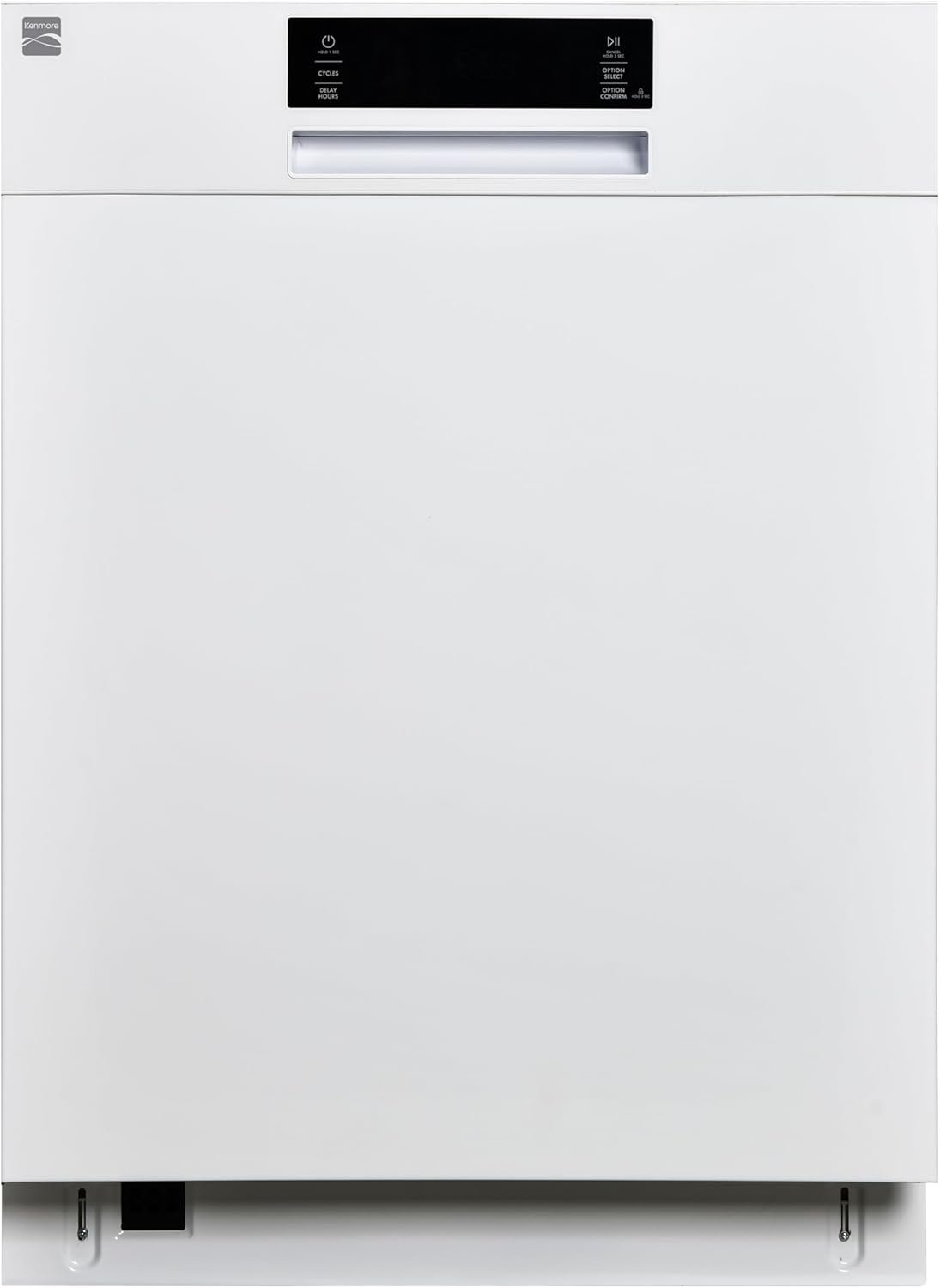
Selecting a dishwasher affects daily routines, kitchen layout choices, and long-term utility expectations. Household size and meal preparation frequency determine required capacity and cycle variety; a two-person home with occasional entertaining has different needs than a family of five that runs multiple loads per day. Open-plan kitchens increase sensitivity to operating noise and dictate a lower decibel target for comfortable living spaces. Cleaning performance, drying behavior, and the ability to handle varied soils are central to whether dishes are ready to store or require hand-finishing. Energy and water efficiency influence monthly usage patterns and environmental footprint, while simplicity of maintenance and robust components contribute to long-term reliability. For built-in units, installation height, cabinet fit, and electrical requirements also factor into replacement decisions. This review synthesizes manufacturer specifications, filter and spray system design details, efficiency ratings, and common customer feedback to present a neutral, evidence-based assessment of whether this Kenmore 24″ built-in dishwasher aligns with specific household priorities in 2026.
Quick Overview
| Feature | Details |
|---|---|
| Dishwasher type | Built-in, integrated 24″ unit |
| Capacity | 14 place settings |
| Cleaning technology | SmartWash sensor, 3-stage UltraWash filter, two spray arms |
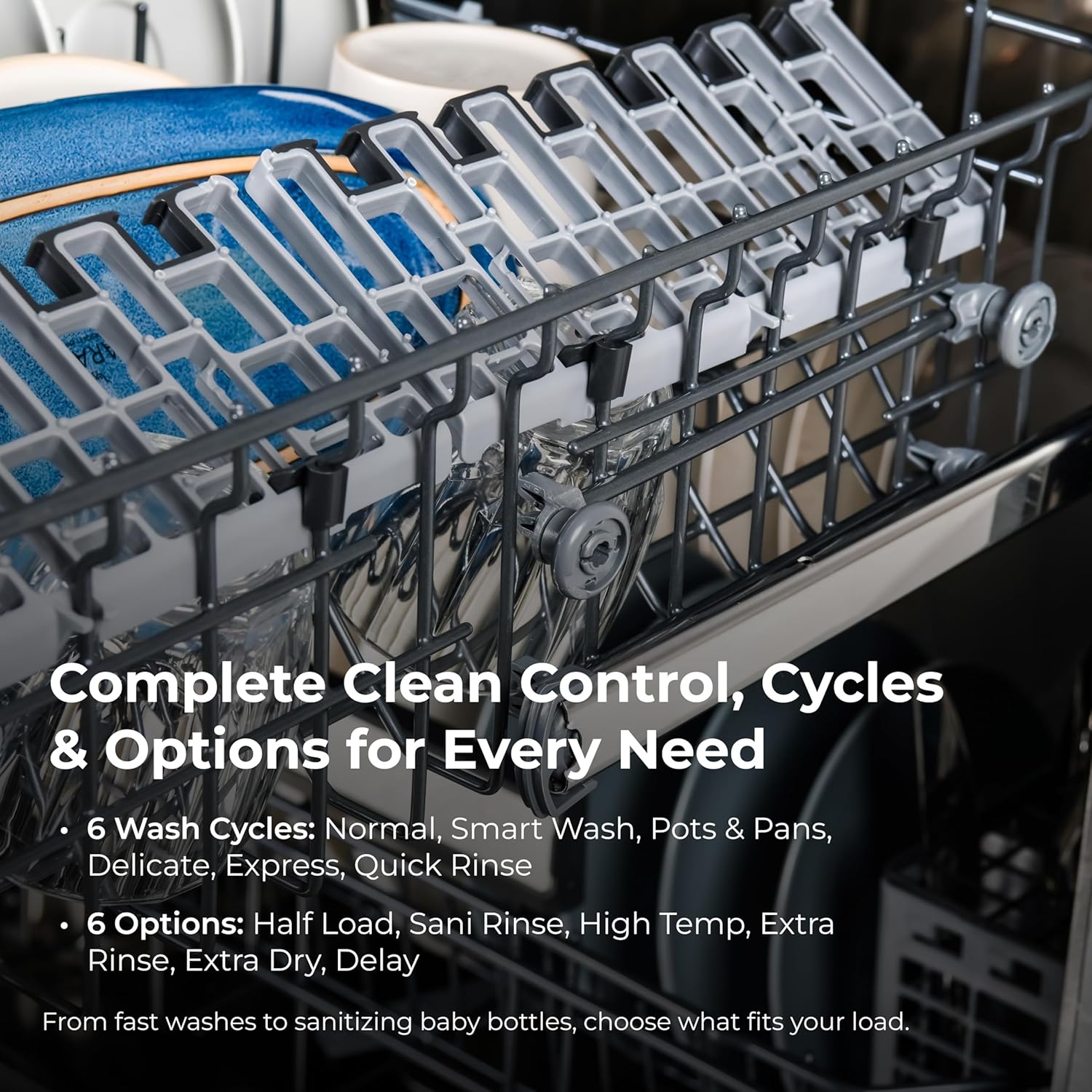
| Wash cycles | 6 cycles including Express (50 min), High Temp, Half Load |
| Drying method | SmartDry condensation-assisted drying; Extra Dry option |
| Noise level | 57 dBA |
| Energy / water rating | ENERGY STAR certified; annual consumption listed at 239 kWh/year |
| Tub material | Stainless steel interior |
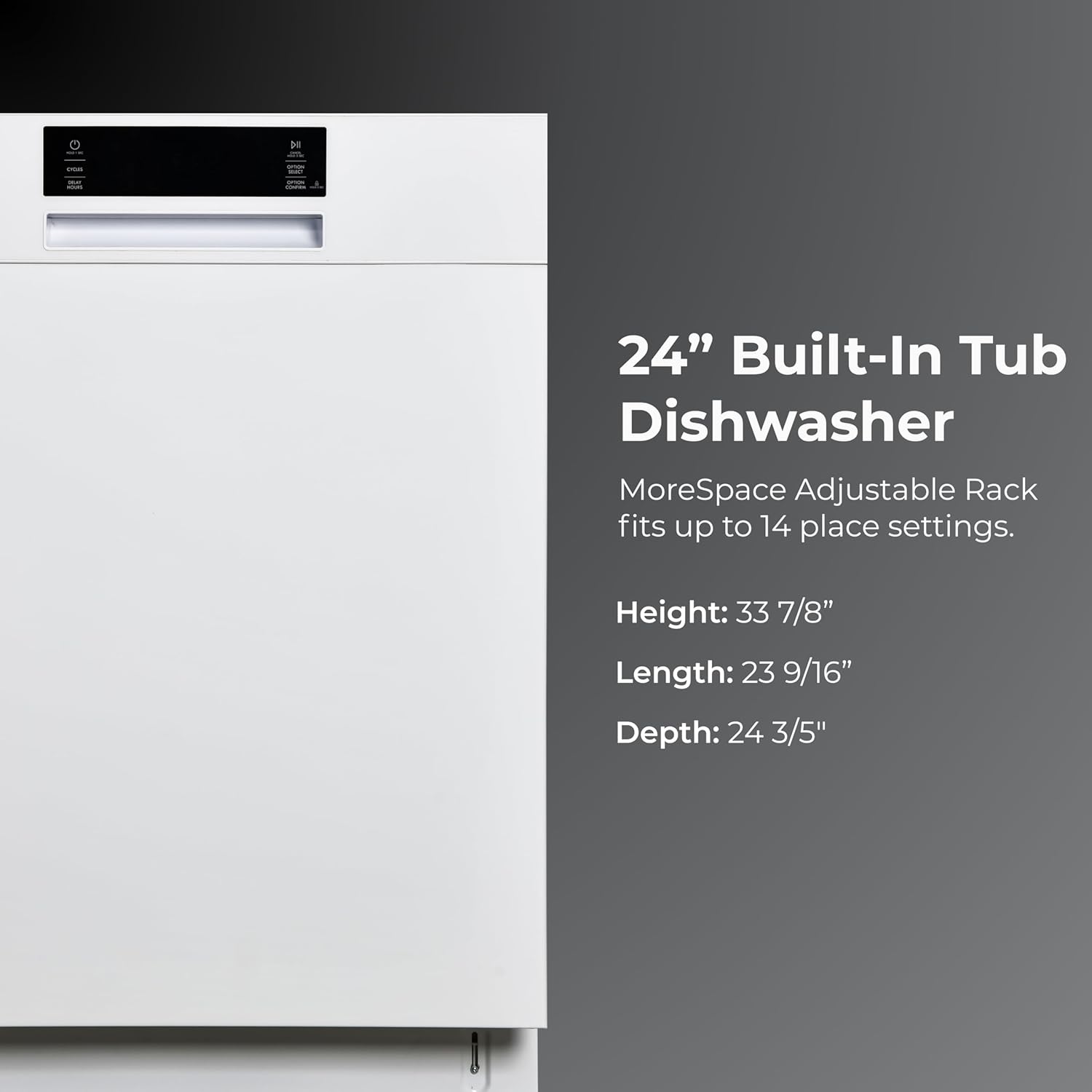
| Dimensions / installation | 24.61″D x 23.55″W x 33.88″H; built-in installation |
| Special features | Leak detection, Delay Start 1–24 hours, LED touch controls, adjustable upper rack |
The table condenses specifications that indicate where this dishwasher fits in everyday households. A stainless steel tub and a 14-place setting capacity suit medium-size families or couples who entertain, while SmartWash and a multi-stage filter aim at consistent cleaning. The 57 dBA rating places the unit in a mid-range noise category for open-plan kitchens. ENERGY STAR certification and an annual energy figure provide a baseline for efficiency expectations, and leak detection plus adjustable racking increase suitability in installations where space and water protection matter.
Cleaning performance and wash coverage
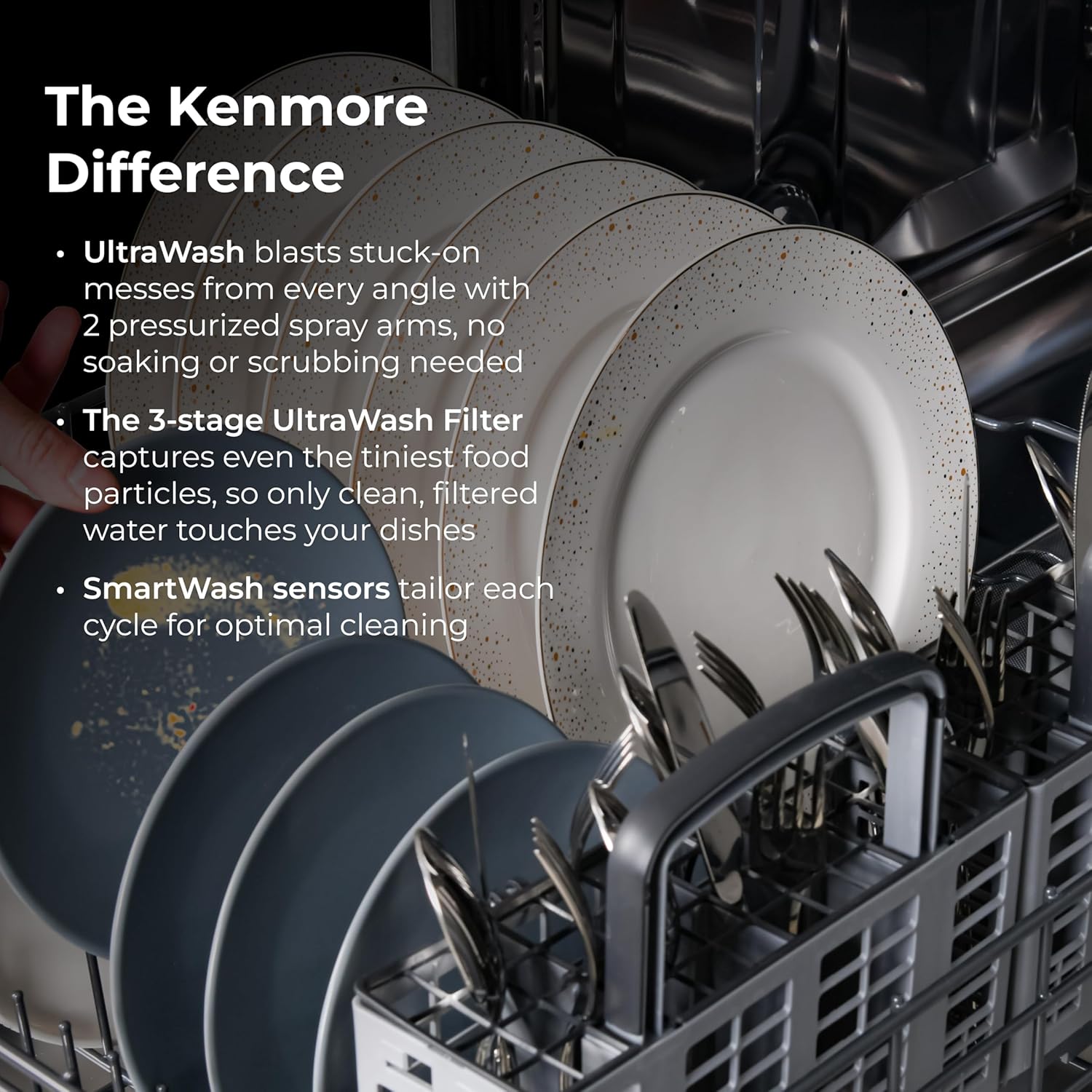
The Kenmore 24″ Built-In Dishwasher centers cleaning on sensor-driven controls and continuous filtration to manage food soils through a 3-stage UltraWash filter and two spray arms. SmartWash sensing monitors soil levels in wash water and dynamically adjusts water temperature, pressure, and cycle time to balance performance and resource use across the selected program. The stainless steel tub helps retain temperature and resists staining, which supports higher-temperature cycles like Sani Rinse and High Temp when needed. Continuous wash water filtration reduces the likelihood of redepositing particulates during a cycle and the Express 50-minute option offers a faster full-load cycle when time is a priority. These system elements combine to provide targeted spray coverage, but cleaning outcomes will depend on load orientation, soiled load types, and selected cycle parameters.
Spray system design and soil management
Two full-width spray arms provide primary and lower-level spray coverage designed to reach upper and lower racks; spray patterns are tuned to work with the SmartWash sensor adjustments. The design intent with dual arms is to create overlapping spray trajectories that strike dishes from multiple angles, improving coverage for plates and cookware. For heavier soils or compact racks the High Temp and Extra Rinse options increase water temperature and rinse volume to loosen and remove stuck-on residues. Continuous circulation through the UltraWash filter traps particulates so debris is evacuated rather than recirculated; correct loading to avoid blocking spray nozzles improves this system’s efficacy in removing stuck-on food.
Filtration, Sani Rinse, and sanitize capabilities
The 3-stage UltraWash filtration captures particles down to the size of fine sand and is removable for periodic cleaning, a design that limits redeposition of solids during a cycle. The Sani Rinse option is UL-certified and elevates final rinse temperatures to meet sanitation thresholds specified by certification testing; this is a thermal approach to reducing bacteria per manufacturer disclosure. The filter’s easy removal supports routine maintenance schedules, while the continuous filtration approach during cycles minimizes the risk of large particles reentering spray water. Use of higher-temperature cycles can assist the filter by reducing grease viscosity and improving detergent action during wash phases.
Capacity, rack design, and loading flexibility
A 14-place setting capacity positions this dishwasher for small to medium households or guests on occasion, balancing footprint with usable interior volume. The MoreSpace adjustable upper rack can be raised, lowered, or removed to accommodate taller items like stockpots, casserole dishes, or stemware; the removable cutlery basket provides flexible flatware placement for mixed loads. Half Load and adjustable rack features allow partial loads to be washed efficiently without occupying the entire tub. Spacing and tine layout influence how plates, bowls, and glasses face spray nozzles; careful loading to avoid crowding and to orient concave items toward the spray arms will help maintain consistent cleaning across the full 14-place capacity.
Rack configurations and practical loading tips
Adjustable racks and a removable cutlery basket enable varied loading patterns to suit different meal types, from dinnerware-heavy loads to pot-and-pan washes. Raising the upper rack allows for tall stems or stacking pots on the lower rack while lowering it clears room for large trays. The cutlery basket design influences how flatware is separated—placement affects water exposure and final drying. For best wash coverage, heavier soiled pots are generally better on the lower rack where pump flow and spray intensity are greatest, while delicate glassware benefits from the upper rack with more gentle spray exposure.
Half-load, express cycle, and everyday flexibility
The Half Load option targets water and energy use when fewer items need washing, allowing quicker cycles and reduced resource consumption for smaller loads. The Express Cycle completes a full-load program in about 50 minutes, providing a time-saving option that leverages sensor and wash intensity adjustments for shorter turnarounds. These features support variable household rhythms—frequent small loads or intermittent full loads—but performance with heavily soiled items on express or half-load settings will be constrained compared with longer, higher-temperature cycles. Choice of cycle should align with soil level, material sensitivity, and desired turnaround time.
Noise levels and suitability for open kitchens
This Kenmore model lists a sound rating of 57 dBA, which places it in a moderate range compared with quieter 40–44 dBA premium models and louder budget units. In practice, a 57 dBA rating is audible in open-plan environments during quiet evening hours but may blend into background kitchen activity during daytime. Noise perception depends on kitchen layout, cabinetry, floorplan reverberation, and how close living spaces are to the dishwasher location. For noise-sensitive households that host evening gatherings in connected living areas or require near-silent operation for shifting schedules, a lower decibel unit may be preferable. For kitchens with partial separation, 57 dBA is an acceptable compromise between performance and cost.

Interpreting the 57 dBA rating in homes
Decibel ratings are logarithmic so each increment represents a noticeable change in perceived loudness; 57 dBA will be louder than ultra-quiet models but quieter than many older or budget dishwashers. Placement within cabinetry, door seals, and installation quality can mildly affect the perceived volume. Acoustic impact is also influenced by cycle phase—the wash pump is typically louder during main wash while drain and drying phases may be quieter. Households with open living spaces should weigh tradeoffs between cleaning features and decibel level when prioritizing a model for daily use.
Nighttime use, cycle timing, and courtesy factors
Delay Start capability (1–24 hours) allows operation during off-peak electrical rates or when household activity is lower, though running at night in open-plan homes will still produce audible sound at the 57 dBA level. For noise-conscious users, selecting cycles that minimize pump intensity or scheduling runs when home activity masks appliance sound can reduce perceived disruption. Cabinets and door seals, along with proper installation, help dampen transmitted sound; consult installation guidance to ensure the unit is mounted snugly and anti-vibration pads or insulation are used where applicable.
Drying systems, moisture control, and energy expectations
Drying relies on SmartDry technology that uses hot water during the final stages to promote condensation on the stainless steel tub, which then drains away; an Extra Dry option increases heat and time to address hard-to-dry plastics. Stainless steel interiors retain heat better than polymer tubs, improving condensation drying effectiveness, but plastics and containers with recessed rims commonly trap water and may need the Extra Dry setting for cabinet-ready results. ENERGY STAR certification and the listed annual consumption (239 kWh/year) frame expectations for electrical efficiency, but drying performance and energy draw are linked—higher drying settings consume more energy and extend cycle duration. Users should expect a balance: efficient baseline drying for most dishware and an optional boost where moisture control is critical.

Condensation drying mechanics and plastics behavior
Condensation-based drying depends on a cool surface to draw moisture off dishes; stainless steel tubs that remain cooler relative to washed items facilitate water condensation and runoff. Heat-assisted options elevate final rinse water temperature to encourage this effect, but plastics typically retain heat and therefore release moisture more slowly, often requiring the Extra Dry option or hand-drying. Proper load geometry, such as angling cups and placing plastics on upper racks away from direct heat, will also influence final moisture. Manufacturers that use condensation strategies prioritize energy efficiency compared with active heated drying but accept that some items may not be fully dry without the extra setting.
Energy expectations and cycle trade-offs
The unit’s ENERGY STAR certification indicates baseline water and energy performance meeting program criteria for 2026 models, and the annual kWh figure provides a reference point for comparison among dishwashers. Higher-temperature and extended drying cycles increase energy use per load while offering improved soil and moisture removal. The SmartWash sensor adjusts cycle variables to optimize the wash for soil level, which can conserve resources by avoiding unnecessary high heat or long times for lightly soiled loads. Consumers balancing energy goals with readiness-to-store dishware should plan for occasional use of higher-energy drying to achieve fully dry plastics and deep-clean results.
Maintenance, filter care, and durability considerations
Routine upkeep centers on maintaining the UltraWash filter, checking spray arms for clogs, and ensuring door seals and drain lines remain clear to support leak detection systems. The removable 3-stage filter is designed for monthly cleaning to maintain flow and prevent particulate accumulation that could degrade wash performance. Leak detection automatically drains and alerts per manufacturer disclosure, helping reduce water exposure risk but still relying on proper installation and timely attention to alerted conditions. The stainless steel tub and LED touch controls indicate an emphasis on corrosion resistance and modern control interfaces, though long-term reliability outcomes commonly depend on component quality, installation, and usage patterns rather than a single specification.

Filter maintenance, spray arm care, and routine checks
Scheduled inspection of the removable UltraWash filter and occasional soaking or rinsing removes trapped solids and preserves circulation efficiency. Spray arms should be checked for food debris or mineral buildup that can reduce spray effectiveness; unobstructed nozzles maintain intended coverage. Door gaskets and seals warrant periodic inspection for wear that can affect leak detection operation. Following manufacturer-recommended maintenance intervals prolongs effective operation of sensor and filtration systems and supports consistent cleaning performance across the unit’s service life.
Typical reliability signals and warranty context
Reliability indicators include use of a stainless steel tub, an established brand with documented model specifications, and inclusion of leak detection hardware. Consumer rating averages and review volume (model rating approximately 3.7 across 145 reviews) suggest varied owner experiences—some users report expected performance while others reference issues consistent with mid-market appliance variability. Warranty terms were not specified in the provided details; prospective buyers should consult the manufacturer or seller warranty documentation for coverage length and service expectations to align long-term reliability assumptions with actual protections offered.

Pros & Cons
Pros
- Sensor-driven cleaning with SmartWash and a 3-stage UltraWash filter improves targeted soil removal and reduces redeposition by continuously filtering wash water. This combination supports effective wash coverage for typical household soils and adjusts cycles for resource use.
- Stainless steel tub construction retains heat during washes, resists staining, and supports condensation-based drying performance. Higher-temperature cycles like Sani Rinse leverage this material characteristic for better sanitization outcomes.
- A 14-place setting capacity with an adjustable MoreSpace upper rack and removable cutlery basket provides flexible loading for medium-size families and occasional entertaining. Half Load and Delay Start add scheduling flexibility.
- ENERGY STAR certification and a published annual energy consumption figure provide benchmarks for efficiency comparisons. SmartWash sensing helps avoid unnecessarily long cycles on lightly soiled loads.
- Built-in leak detection and automatic drain responses add a layer of water-protection functionality that can reduce the risk of extended leaks when combined with correct installation.
- Express 50-minute cycle offers a rapid full-load option when quicker turnarounds are needed without changing to a compact countertop model.
Cons
- A 57 dBA sound rating is louder than premium ultra-quiet models and may be noticeable in open-plan living areas during quiet hours; noise-sensitive buyers may prefer lower-decibel alternatives.
- Condensation-based SmartDry can leave plastics and deep-rimmed containers damp without use of the Extra Dry option, which raises energy use and cycle time for better moisture removal.
- Customer ratings around 3.7 (based on 145 reviews) indicate mixed owner experiences; recurring feedback often highlights variability in drying results and occasional reliability or control-panel concerns common to mid-range appliances.
- Annual energy figure provided (239 kWh/year) offers a comparison point but does not reflect per-cycle energy for different drying settings; heavy reliance on Extra Dry increases per-load consumption.
Final Verdict: Who This Dishwasher Is Best For (and Who Should Skip It)
The Kenmore 24″ Built-In Dishwasher is best suited to medium-size households seeking a balance of cleaning technologies, adjustable loading, and energy-aware operation. Its SmartWash sensors, 3-stage UltraWash filter, and stainless steel tub provide features that address everyday soil range and support higher-temperature Sani Rinse cycles for added sanitation needs. The 14-place capacity and adjustable upper rack offer practical flexibility for families and entertainers who require moderate capacity without increasing footprint. ENERGY STAR certification and a detailed annual energy number give buyers a baseline for efficiency comparisons among 2026 models.
Households that should consider alternatives include those with strict noise requirements—open-plan living areas used for quiet evening activities may prefer models rated substantially below 50 dBA—and users who require consistently perfect plastic drying without using higher-energy settings. Buyers seeking top-tier long-term reliability or advanced ultra-quiet operation should compare models with higher owner rating trends and lower decibel specifications. For kitchens needing a built-in unit with sensible cleaning features, adjustable capacity, and water-protection measures, this Kenmore model represents a mid-market option offering a mix of performance and practical features.

Frequently Asked Questions (FAQs)
How effective is the Kenmore 24″ dishwasher at cleaning heavily soiled pots and pans?
The model uses SmartWash sensors to detect soil levels and adjust water temperature, pressure, and cycle time, combined with two spray arms and a continuous 3-stage UltraWash filter. For heavily soiled cookware, selecting High Temp and Extra Rinse increases water temperature and rinse volume, improving soil removal. Proper loading—placing heavily soiled items on the lower rack where spray intensity is greatest—and avoiding blocked spray nozzles also supports better cleaning outcomes.
Will this dishwasher dry plastics well enough to put away without towel drying?
Drying is condensation-based (SmartDry) using hot final-rinse water and a stainless steel tub to promote moisture runoff. Plastics frequently retain heat and do not shed water as readily as ceramics, so plastics may remain damp after standard cycles. Using the Extra Dry option increases heat and time for better results, but that setting increases energy use. Angling plastics and placing them on the upper rack can also improve drying performance.
Is the Kenmore 24″ dishwasher quiet enough for open-plan living spaces?
The listed sound rating is 57 dBA, which is moderately audible in open-plan layouts compared with ultra-quiet models in the low-40s dBA. It will blend into typical daytime kitchen activity, but in quiet evenings or when adjacent living spaces are near the dishwasher, the sound may be noticeable. Households with strict noise sensitivity should consider models with lower decibel ratings.
How often should the UltraWash filter be cleaned and what maintenance is required?
The 3-stage UltraWash filter is removable and designed for routine cleaning; manufacturer guidance and common practice recommend inspecting and cleaning it monthly under normal usage to prevent buildup. Spray arms should be checked for obstructions periodically, door seals inspected for wear, and drain lines verified clear to preserve leak detection function. Regular maintenance preserves circulation efficiency and cleaning performance.
Does this dishwasher save energy compared to older models?
The unit is ENERGY STAR certified and lists an annual energy consumption of 239 kWh/year, which provides a benchmark for comparing 2026 models and indicates improved efficiency relative to many older, non-certified dishwashers. Sensor-driven SmartWash cycles help avoid unnecessarily long or hot cycles for light soils, further conserving energy, though use of Extra Dry or High Temp settings increases per-cycle consumption.
What kitchen layouts and household sizes are best suited for this 24″ built-in model?
With 14 place settings and adjustable rack configurations, the dishwasher fits medium-size households—couples who entertain and families with two to four members—looking for a built-in solution. The 24″ footprint suits standard cabinet openings, but open-plan homes should consider the 57 dBA noise level. Those needing ultra-quiet operation or larger capacity for frequent heavy entertaining may prefer alternative models.
How does leak detection work on this Kenmore dishwasher?
Leak detection monitors water flow and, if an anomaly is detected, the system automatically drains the tub and alerts the user per manufacturer disclosures. This feature is intended to reduce prolonged water exposure from internal leaks. Proper installation and prompt response to alerts are required to mitigate water damage effectively; leak detection is a protective measure but not a substitute for routine inspection and maintenance.