Reliable Granite Dishwasher Mounting Brackets for Stability
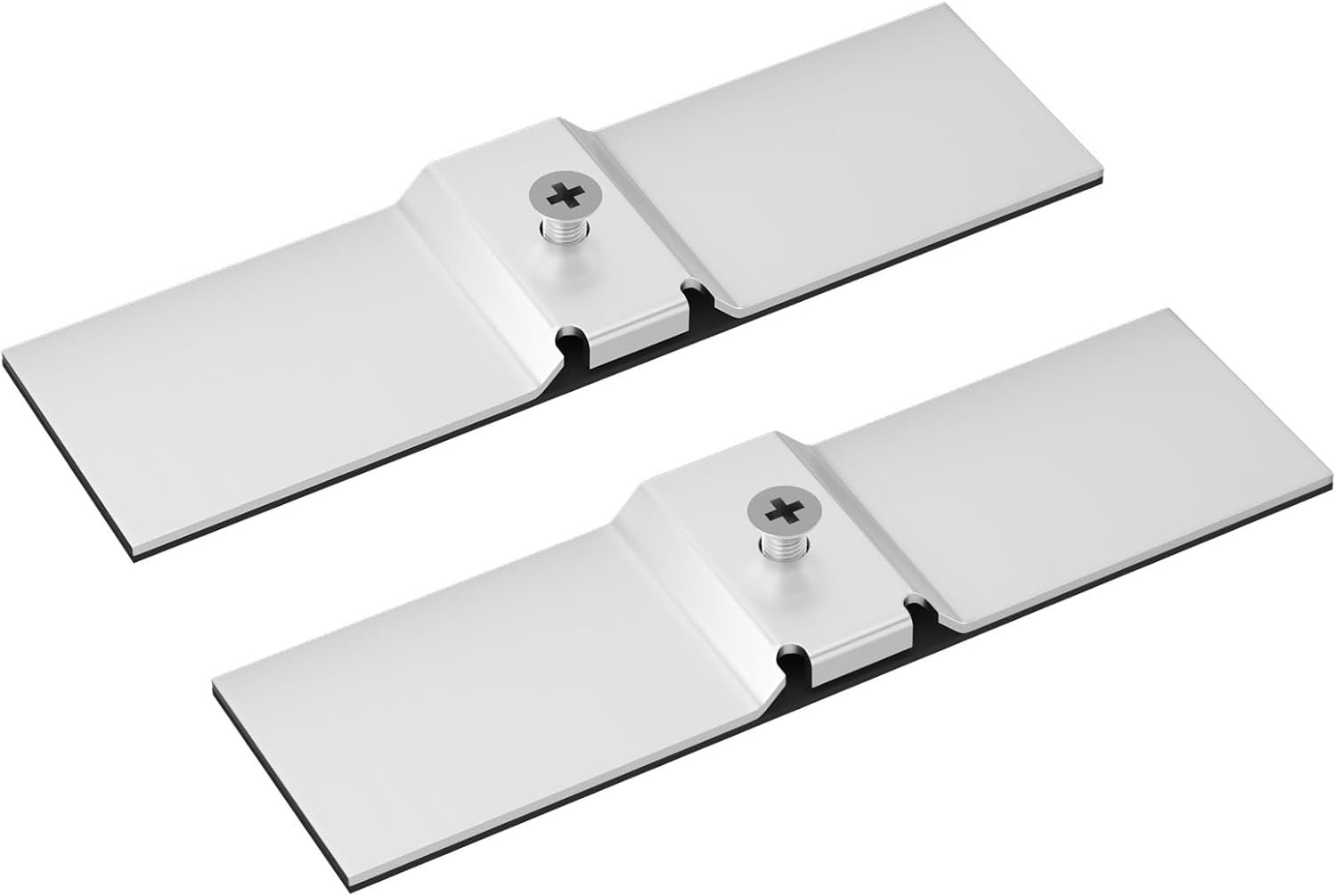
Why mounting choice matters for dishwasher performance
Selecting the appropriate mounting solution for a built-in dishwasher affects more than cabinet aesthetics. For households with solid surface countertops—granite, quartz, Corian, or marble—the chosen bracket and attachment method influence appliance alignment, vibration transfer, drainage slope, and the integrity of the countertop material. Household size, kitchen layout, and usage frequency determine how critical long-term stability is: larger families and frequent cycles increase cumulative stress at the appliance-to-counter interface. Noise sensitivity in open-plan kitchens elevates the importance of vibration damping and secure attachment. Efficiency expectations and cleaning needs are also interlinked: a level, stable dishwasher maintains optimal spray arm trajectories and consistent drainage, which helps preserve rinse coverage and minimize rewash cycles. Conversely, an insecure or improperly attached unit can amplify vibration, promote misalignment of racks and spray arms, and compromise moisture control over time. Choosing a mounting solution that matches the countertop type and installation constraints is therefore a key decision for reliable dishwasher performance.
Quick Overview
| Feature | Details |
|---|---|
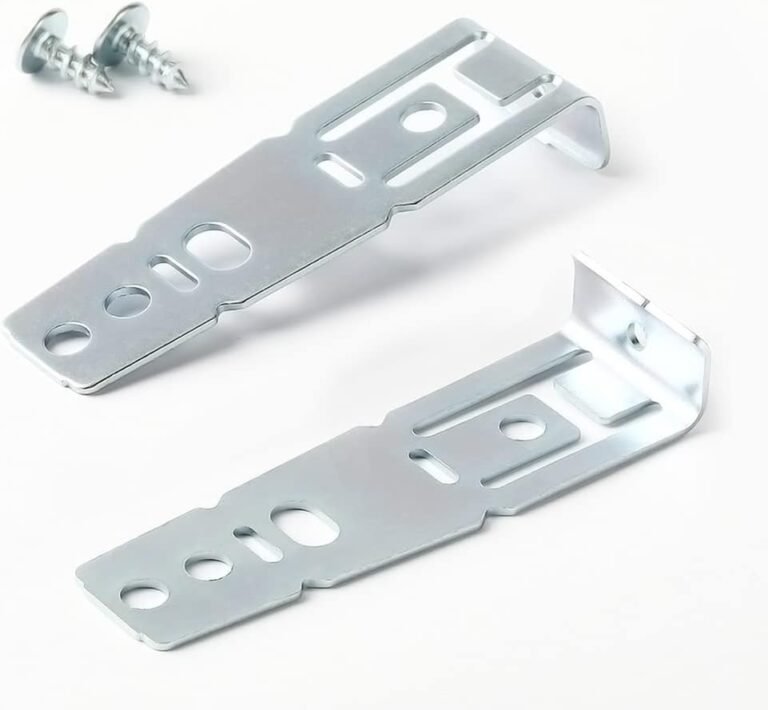
| Accessory type | Adhesive-backed aluminum mounting brackets for built-in dishwashers on solid countertops |
| Compatibility | Designed for solid surface countertops: granite, quartz, acrylic, Corian, marble; manufacturer notes compatibility with most Frigidaire built-in dishwashers |
| Mounting method | Adhesive-backed granite gripper with integrated nut and provided machine screw; no drilling required |
| Material & finish | Aluminum construction; silvery finish |
| Dimensions & weight | 3 x 0.56 x 1.7 inches; 0.02 kilograms per piece |
| Installation time | Adhesive sets within ~5 minutes and forms permanent bond within ~1 hour (manufacturer disclosure) |
| Surface limitations | Not intended for laminate countertops; requires clean, oil-free surface for adhesion |
| Certification & ratings | No energy or noise certifications applicable to accessory product |
These specifications identify the product as a specialty mounting accessory rather than an appliance component that alters wash cycles or drying systems. The adhesive-backed aluminum grippers aim to secure a built-in dishwasher to a solid countertop without drilling, making them suitable where preserving the countertop surface is a priority and where compatibility with the listed dishwasher brands and solid surfaces is confirmed.

Impact on cleaning performance and wash coverage
A stable and level dishwasher improves spray arm trajectories and spray coverage by keeping the wash chamber geometry consistent with manufacturer design assumptions. The mounting accessory’s primary role in cleaning performance is indirect: by securing the appliance to a solid countertop, it reduces shifting under load, preventing misalignment that can restrict spray arm rotation or create uneven water distribution. Consistent leveling also supports predictable drainage and prevents pooling that can affect soil removal during cycles. Because the product is an aluminum bracket with an adhesive interface and integrated nut for a machine screw, its efficacy depends on proper surface prep and secure bonding. The brackets do not directly change spray pressures, filtration, or built-in wash algorithms, but they support the physical conditions required for the dishwasher to deliver the cleaning performance the manufacturer specifies.

How stability affects spray arm geometry and coverage
Spray arm performance depends on unobstructed rotation and stable mounting of the tub and racks. When a dishwasher is securely fastened to a rigid countertop, the tub maintains its intended orientation relative to spray arms, minimizing wobble that can alter nozzle angles and flow patterns. Level misalignment of even a few degrees can change how water reaches upper and lower racks, creating coverage gaps that may require repeat cycles. The aluminum gripper system described by the manufacturer provides attachment points that help maintain the chassis position. Successful stabilization relies on proper adhesive adhesion and torqueing of the fastener into the built-in nut, which prevents micro-movements during high-pressure wash phases and heavy loading.
Filtration, drainage and implications for consistent cleaning
Consistent drainage is part of effective cleaning because standing water and improper sump operation can degrade wash cycles. Anchoring the dishwasher so it remains level maintains the designed drain slope and minimizes backflow or pooling near filters. While the mounting bracket does not interact with the filtration assembly, its role in maintaining the appliance’s orientation can reduce the risk of debris settling in low points or compromising automatic drain pumps. Adhesive attachment must form a robust bond to prevent gradual loosening; if the bracket fails, the resulting tilt can alter drainage behavior and therefore reduce cleaning consistency. Routine inspection after installation helps ensure the bond and fasteners remain intact to support intended filtration and drainage performance.
Capacity, rack design, and place setting usability
Mounting brackets affect the user experience around rack movement, door clearance, and the practical capacity available for place settings. A stable, properly positioned dishwasher maintains designed clearances between the tub and cabinet face, ensuring that racks slide smoothly and that loading configurations recommended by the appliance manufacturer remain feasible. An adhesive-mounted aluminum gripper that secures the top of the unit helps prevent vertical or lateral movement that can lead to rack misalignment or binding. These brackets do not alter rack layout, tine spacing, or number of place settings, but they preserve the mechanical environment in which those design features function. Proper installation avoids interference with door swing, bottom rails, or toe-kick panels, which is particularly important in kitchens with nonstandard cabinetry or tight clearances.

Alignment and rack operation under load
Rack operation requires predictable rail geometry and unobstructed wheel or glide paths. When a dishwasher shifts relative to cabinetry, rails can bind or wheels can disengage, limiting smooth extension and retrieval of loaded racks. A secure top mount with integrated nuts and machine screws locks the appliance position so that rack tolerances remain consistent across heavy loads and repeated cycles. The adhesive bond must be applied to a clean, dry surface to reach the manufacturer-claimed set and cure times; otherwise, bond strength and long-term integrity can degrade. If the bracket holds the unit firmly, users will experience fewer rack binding issues and better access to pre-set place settings without repeated adjustments.
Loading flexibility and clearance implications
Preserving door and tub alignment via secure mounting sustains the original clearance envelope designed for plate, pot, and glass heights. Improper attachment or loosening over time can change door angle or cause slight shifts that reduce headroom in the top rack or clearance for larger items in the lower rack. Because this accessory attaches without drilling, it avoids permanent countertop penetrations while offering a mounting point that helps maintain manufacturer-specified clearances. However, installers must confirm that the bracket position and screw engagement do not obstruct trim or face panels. The right alignment ensures full access to recommended place settings and preserves the intended loading flexibility of the built-in dishwasher.
Noise levels, vibration transmission, and open-kitchen suitability
Noise perception depends on both airborne sound and structure-borne vibration transmitted to adjacent surfaces. A secure mechanical connection to a heavy, rigid countertop can reduce audible vibration by stabilizing the appliance chassis and preventing rattles or resonance caused by micro-movement. The aluminum gripper acts as a rigid attachment; the adhesive layer provides initial damping, but aluminum itself is a low-damping material compared with elastomeric mounts. That means the net effect on audible noise will vary with countertop mass and cabinet construction: heavier stone counters tend to absorb and spread vibration, while lighter shelves may transmit noise more readily. The accessory does not change the dishwasher’s motor or sound insulation, but by preventing movement it can reduce intermittent squeaks and rattles that often exacerbate perceived noise in open-plan kitchens.

Vibration paths and material damping characteristics
Vibration travels through the appliance frame into mounting points and surrounding cabinetry. The aluminum bracket creates a direct load path to the countertop; where the countertop is dense and heavy, vibration energy is dispersed and attenuated. Conversely, if the underlying cabinet structure is lighter or the adhesive bond is stiff, some frequencies may be coupled more efficiently, producing new audible tones. Adhesive-backed systems provide an intermediate layer that can damp very small movements but are not a substitute for purpose-made elastomeric isolators. For noise-sensitive installations, combining adhesive attachment with additional mitigation—such as foam gasket interfaces or manufacturer-recommended isolation hardware where permitted—can produce better results than a rigid metal-to-stone link alone.
Installation scenarios that influence perceived noise
Perceived noise is highly dependent on installation context. On a heavy granite or quartz countertop with substantial mass, the aluminum brackets tend to anchor the dishwasher to a stable platform, reducing rattles. In contrast, installations where the counter overhangs thin cabinetry or lacks full-support substructure may transmit vibration to surfaces that amplify noise. The accessory’s no-drill installation avoids creating channeled mounting holes that might act as resonance points, but correct surface preparation and curing time are critical. Adhesive performance can influence long-term stability; an adhesive that creeps or fails under cyclic loads may result in renewed vibration and increased noise over time. Therefore, adherence to surface prep guidance is essential for predictable acoustic outcomes.
Drying systems, moisture control, and drainage integrity
Drying efficiency in modern dishwashers depends on controlled drainage, effective venting, and a level tub that supports consistent water removal. Mounting brackets that preserve the designed slope of the appliance relative to the drain line help avoid residual pooling that can prolong drying or create surface moisture. The adhesive-backed aluminum gripper supports top mounting and helps maintain the unit’s pitch, protecting the drainage path from changes due to settlement or lateral movement. The bracket does not interact with the appliance’s internal drying technology—heated elements, condensation drying, or fan-assisted systems—but by securing the appliance it preserves the factory conditions that enable those systems to operate as intended. Moisture control around the cabinet and countertop interface can be improved when the mounting prevents gaps or movement that might allow splashes into hidden cavities.

How leveling and drainage slope affect drying results
Drying systems rely on effective gravity-assisted flow to remove bulk water before heat or condensation drying cycles begin. Even slight deviations from nominal level can leave low spots where water accumulates, reducing the effectiveness of thermal or air-based drying stages and potentially increasing cycle times or the need for additional drying energy. A stable top mount that prevents sagging or rocking keeps the drain hose and sump positions consistent with design specifications. The adhesive mounting bracket should be set in a position that preserves manufacturer-recommended clearances and the intended drain hose routing. Consistent leveling reduces the likelihood of moisture retention that can compromise final dryness and perceived cleaning results.
Adhesive-backed mounting and moisture intrusion considerations
Adhesive-backed mounts avoid penetrating the countertop, which preserves surface integrity and reduces potential moisture ingress through drilled holes. However, the bond line becomes the primary interface that must resist moisture exposure from spills or condensation. The manufacturer’s guidance about clean and oil-free surface preparation and cure times is important because poor bonding can allow micro-gaps where moisture collects under the bracket or at the countertop edge. Where cabinets and countertops form enclosed spaces, attention to sealing and ventilation can limit trapped moisture that could affect adjacent cabinetry. Permanent adhesive bonds are beneficial for surface preservation but require confidence in the substrate condition and long-term adhesive compatibility with the countertop finish.
Energy and water efficiency expectations tied to mounting stability
Mounting hardware does not directly alter a dishwasher’s energy or water consumption, but installation quality has indirect effects on efficiency outcomes. A secure, level dishwasher minimizes the risk of leaks, misaligned seals, or altered drain performance that could necessitate additional rinse cycles or corrective maintenance—each of which affects water and energy use in practice. The aluminum gripper with an integrated nut and machine screw helps maintain gasket compression and door alignment, reducing the chance of marginal seals that let in room air or allow minor wash water escape. While the accessory lacks efficiency certifications, its contribution to a stable installation supports the conditions under which manufacturer-rated water and energy efficiencies are most likely to be realized.

Preventing leaks and preserving seal integrity
Door seal compression and hinge alignment depend on the dishwasher remaining fixed relative to cabinetry and countertops. If a unit moves under load or over time, seals may bypass, allowing minor leaks that not only risk water damage but can affect cycle performance and efficiency if sensors respond to unexpected moisture. The bracket’s integrated fastener point allows for a firm mechanical anchor that keeps the appliance position stable and seal loading consistent. Proper surface prep and adhesive cure are required so that the mechanical anchor remains effective under cyclic operational loads, thereby supporting long-term energy and water efficiency by preventing conditions that could lead to repeat cycles or repairs.
Compatibility with high-efficiency dishwasher models
The accessory is compatible with many built-in dishwashers, including several Frigidaire models per the manufacturer note, but installers should confirm fit with specific high-efficiency models that may have unique trim kits, filler panels, or venting locations. High-efficiency dishwashers can be more sensitive to installation tolerances because they rely on optimized water distribution and controlled venting to meet efficiency targets. Ensuring that the mounting bracket does not obscure vents, impede door operation, or alter specified clearances helps maintain the performance of energy-efficient models. When correctly installed, the bracket supports the installation stability these models require to deliver their rated efficiencies.
Durability, materials, maintenance, and who should avoid this mounting kit
Material selection and adhesive strategy determine long-term reliability for a no-drill mounting accessory. The product’s aluminum construction offers corrosion resistance and stiffness, and the integrated nut system provides mechanical engagement for the supplied machine screw. Manufacturer disclosures indicate an adhesive that sets in about five minutes and forms a permanent bond within one hour; such rapid cure times are convenient but also require exact surface preparation—clean, dust-free, and oil-free—to achieve intended strength. Maintenance considerations include periodic inspection of bond integrity and checking screw torque versus manufacturer guidance. The accessory is not designed for laminate countertops and is best avoided by renters or where reversible installations are required because the adhesive bond is described as permanent. Heavy vibration environments or installations that exceed the bracket’s specified load should consider mechanical through-fastening alternatives where countertop penetration is acceptable.
Expected material performance and routine checks
Aluminum resists oxidation and retains structural stiffness across typical kitchen conditions, but the bond between adhesive and countertop is the limiting factor for longevity. Routine checks should include visual inspection of the bracket edge for adhesive creep, verification that the fastener remains seated in the integrated nut, and confirmation that there is no loosening after repeated heavy loads or transport of large loads on the racks. Because the product uses a permanent adhesive, removal may require countertop refinishing. Users should ensure that the countertop surface is compatible with permanent adhesives and that the manufacturer’s surface-prep steps are followed to minimize early bond failure.
Who should avoid this bracket system
The accessory is not suitable for laminate countertops, per manufacturer guidance, and should be avoided in rental properties or situations that require fully reversible installations due to its permanent adhesive. Installations that will experience continuous heavy vibration—such as near loud compressors or on unstable cabinetry—may outpace adhesive endurance and should use mechanical fasteners specified by the dishwasher manufacturer. Additionally, countertops with irregular or porous finishes that cannot achieve the clean, oil-free surface necessary for bonding are poor candidates. For those needing a removable or non-permanent solution, a drilled mechanical mount or manufacturer-approved bracket with reversible fasteners is a better choice.
Pros & Cons
Pros
- Preserves countertop integrity: The adhesive-backed design avoids drilling into solid surfaces like granite, quartz, and Corian, which preserves countertop aesthetics and structural integrity when compared with through-fastening methods.
- Rapid installation: Manufacturer disclosures state an adhesive set in approximately five minutes and permanent bond within one hour, offering quick attachment where downtime must be minimized.
- Aluminum construction: The bracket’s aluminum build provides stiffness and corrosion resistance, supplying a stable mechanical interface and long-term dimensional stability in typical kitchen environments.
- Integrated nut for machine screw: Built-in nut receivers simplify alignment with the supplied fasteners and facilitate a direct mechanical connection between bracket and dishwasher chassis.
- Compatibility with solid surfaces: Designed specifically for granite, quartz, acrylic, and similar solid surfaces, the product targets surfaces where preserving the finish is a priority.
- Reduces movement-related noise and misalignment: By securing the unit to a solid countertop, the bracket can limit micro-movements that cause rattles, supporting better spray arm function and rack operation.
Cons
- Permanent adhesive bond: The adhesive is described as permanent, which makes the installation effectively irreversible and unsuitable for renters or those requiring removable hardware.
- Not for laminate surfaces: Manufacturer guidance explicitly excludes laminate countertops, limiting applicability across some kitchen types and necessitating alternative methods for those surfaces.
- Limited damping properties: Aluminum provides limited inherent vibration damping; in some installations additional isolation materials may be required to address specific noise concerns.
- Surface-prep sensitivity: The adhesive’s effectiveness depends on a clean, oil-free surface and correct cure timing; improper preparation can lead to early bond failure or reduced holding strength.
- No product-level noise or efficiency certifications: As an accessory, it does not carry sound ratings or energy certifications, so its acoustic and efficiency benefits are indirect and installation-dependent.
Final Verdict: Who This Dishwasher Mounting Solution Is Best For (and Who Should Skip It)
This aluminum adhesive-backed mounting bracket is suited to homeowners and installers seeking a no-drill attachment for built-in dishwashers on solid surface countertops where preserving the counter finish is a priority. It aligns with households that value stability to support consistent spray arm coverage, predictable drainage, and reduced intermittent rattles—attributes important in family kitchens and open-plan homes. The product is a practical option when the countertop substrate is nonporous, cleanable, and compatible with permanent adhesive bonding, and when a semi-permanent installation is acceptable.
This accessory should be avoided by renters, owners of laminate countertops, and installations requiring reversible or frequently repositioned mounts. It is also not the best choice where extreme vibration or nonstandard cabinet support exists; such scenarios may call for manufacturer-recommended mechanical fasteners or professional mounting solutions that penetrate cabinetry. Compared with other 2026 accessory options, this bracket offers a conservative balance of surface preservation and mechanical anchoring—effective when applied to appropriate solid substrates with correct surface preparation and curing.
Frequently Asked Questions (FAQs)
Can these adhesive-mounted brackets reduce dishwasher movement and improve cleaning consistency?
Yes. By providing a secure attachment point to solid countertops, the brackets help maintain chassis alignment and reduce micro-movements that can alter spray arm trajectories and drainage slopes. Keeping the dishwasher level supports consistent water distribution and effective drainage, which contributes to reliable cleaning performance, though the brackets do not change the appliance’s internal wash systems.
Are these brackets compatible with laminate countertops or only stone and solid surfaces?
The manufacturer specifies that the brackets are for solid surfaces such as granite, quartz, Corian, acrylic, and marble. Laminate countertops are explicitly excluded, because the adhesive bond and long-term adhesion behavior are not compatible with laminate finishes or their substrate properties.
Will attaching these brackets reduce audible noise in an open-plan kitchen?
A secure top mount can reduce rattles and structure-borne noises caused by chassis movement, especially when attached to a heavy, rigid countertop. However, aluminum has limited intrinsic damping, so results depend on countertop mass, cabinet construction, and adhesive bond quality. For noise-sensitive installations, supplemental isolation measures may be beneficial.
Is drilling required to install these granite dishwasher grabbers?
No. The product is designed to adhere to solid surfaces using a manufacturer-provided adhesive and integrated nut system, enabling a no-drill installation. Proper surface cleaning and adherence to the manufacturer’s stated cure time are necessary to achieve the intended permanent bond.
How durable is the adhesive bond over time and what maintenance is needed?
Durability depends on correct surface preparation, substrate compatibility, and cyclic loads from dishwasher use. The adhesive is described as setting quickly and forming a permanent bond within an hour, but periodic visual inspection of the bond line and fastener seating is advised. If the countertop surface is unsuitable or the adhesive fails, removal may require refinishing of the countertop.
Who should avoid using this adhesive-backed mounting solution?
Renters or anyone needing a reversible installation, owners of laminate countertops, and installations subject to continuous heavy vibration should avoid this permanent adhesive-backed solution. In such cases, mechanical through-fastening or manufacturer-recommended reversible hardware is a more appropriate choice.
Does this bracket affect dishwasher warranties or manufacturer installation requirements?
Bracket installation choices can interact with appliance warranty terms if they conflict with manufacturer installation requirements. Installers should consult the dishwasher manufacturer’s installation instructions and warranty conditions to ensure that adhesive-mounted brackets are acceptable for the specific model before proceeding.
Will using these brackets impact dishwasher energy or water efficiency?
The brackets themselves do not change appliance energy or water ratings, but a stable installation supports the conditions under which manufacturer-rated efficiency is achieved. By helping maintain alignment and seal integrity, the brackets can indirectly prevent leaks or misalignment that might otherwise lead to additional cycles or reduced efficiency.