HAVA Countertop Dishwasher Review — Cleanliness & Noise
Introduction: Why Dishwasher Choice Matters
Selecting a dishwasher involves balancing cleaning performance, kitchen layout, noise tolerance, and ongoing maintenance. For households with limited plumbing access or compact kitchens, a countertop or portable unit changes the decision calculus: capacity and loading flexibility matter more than full-size cycle variety, while water and energy consumption take on greater importance for frequent short cycles. Noise sensitivity is critical in open-plan living or small apartments where the appliance operates near living spaces. Cleaning needs vary by household — from lightly soiled plates to heavily soiled pots and baby feeding items — so cycle temperatures, spray coverage, and filtration determine effectiveness. Efficiency expectations influence both daily convenience and utility usage. Understanding how spray arm design, detergent dispensing, and drying methods interact with materials and construction helps set realistic expectations about performance, upkeep, and where this type of appliance fits in a residence or RV.
Quick Overview
| Feature | Details |
|---|---|
| Dishwasher type | Countertop / Portable (no permanent installation required) |
| Capacity / Place settings | Up to 4 full place settings; interior fits dishes up to 11″ at an angle; stated support for more than 30 pieces |
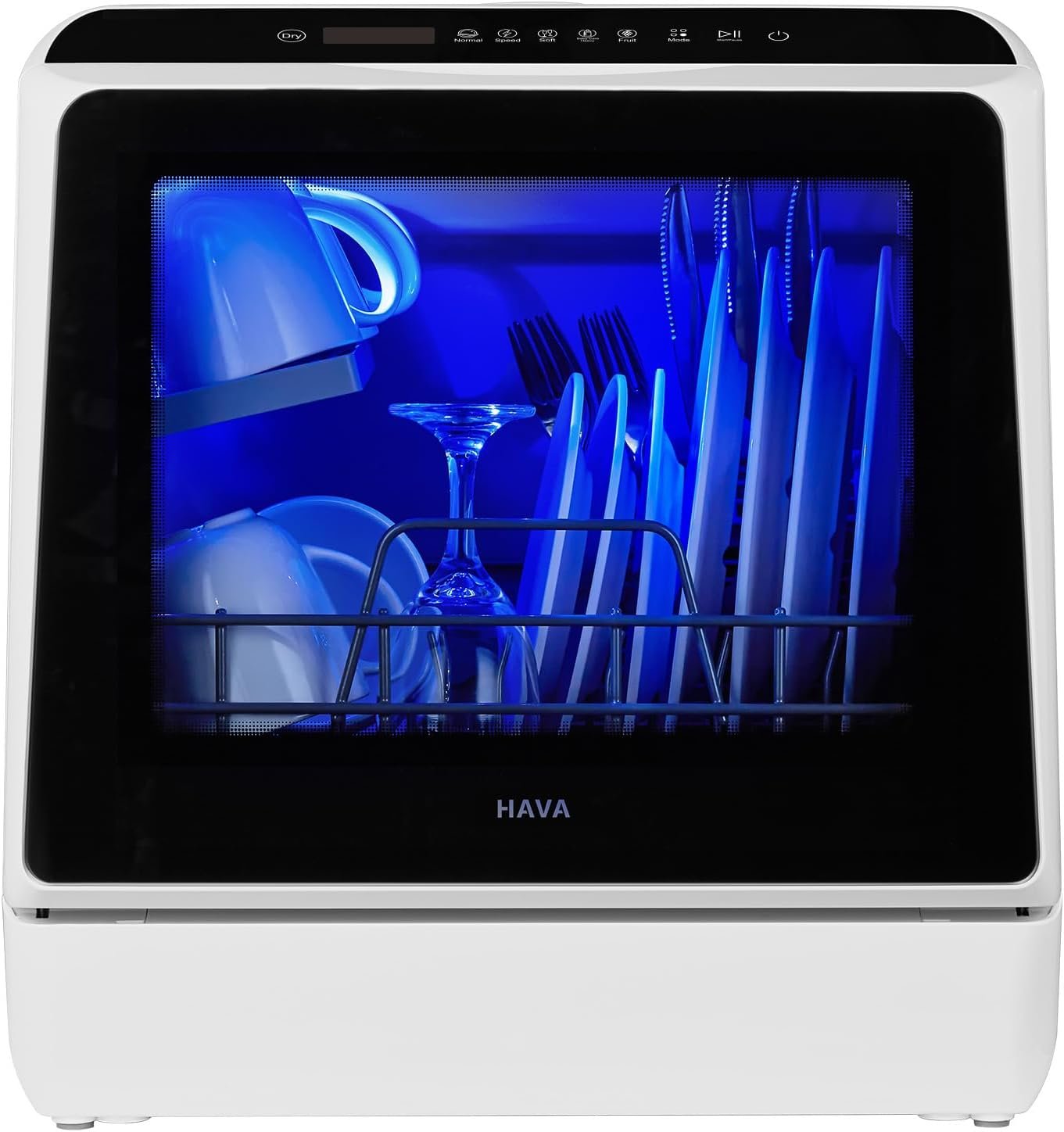
| Wash cycles and cleaning tech | 6 programs: Normal, Speed, Soft, Heavy/Baby Care, Fruit, Dry; 14 spray ports on upper and lower paths for 360° coverage |
| Drying method | 60 minutes hot air drying plus 72 hours automatic ventilation |
| Noise level rating | 60 dB (manufacturer specification) |
| Energy & water | 950 W operating power; 5 liters water per cycle; annual energy consumption listed at 150 kWh/year |
| Dimensions & installation | 16.8 x 16.9 x 18.1 inches; freestanding countertop with optional faucet inlet and 5 L built-in tank |
| Materials & controls | Polypropylene (PP) glossy finish; LED touch controls |
| Warranty | Not specified by manufacturer in provided disclosures |
This concise feature table translates to a compact, plug-and-play machine that targets small households, apartments, dorms, and RVs. The built-in 5 L tank and optional faucet hookup enable flexible placement without permanent plumbing, while the 4-place-setting capacity and angled dish accommodation suit two- to three-person kitchens or mobile living situations where full-size dishwashers are impractical.

Cleaning performance and wash coverage
Cleaning performance hinges on spray geometry, cycle temperature, detergent delivery, and filtration. The HAVA countertop model uses two-level spray arms with 14 water ports intended to produce overlapping jets for 360° coverage; this layout aims to reduce shadowed areas behind taller items and improve rinse action on both top and bottom racks. The Heavy/Baby Care cycle elevates wash temperature to a manufacturer-stated 167 °F, enhancing grease dissolution and sanitizing potential when paired with dishwasher-formulated detergents. Cycle duration, spray pressure (derived from the unit pump and 950 W motor), and detergent dosing determine soil removal; small-volume tanks and compact spray assemblies limit flow volume compared with full-size machines but concentrate energy and heat for short, intense cycles appropriate for lightly to moderately soiled loads.

Spray arm design and cycle interaction
The listed 14 water ports indicate a multi-orifice design distributed between upper and lower spray paths, which is typical for countertop units that attempt full-coverage patterns within a small cavity. Effective jet angles and oscillation depend on pump flow and port orientation; higher pump flow combined with smaller orifices creates focused jets for food particle removal, while wider-angle ports increase surface coverage. Cycle selection modifies pump duty, temperature, and duration: Speed and Rapid cycles prioritize shorter run times and higher pressure bursts, while Normal and Heavy focus on extended exposure and heated wash chemistry. Detergent placement in the dispenser and recommended dosing (about 0.2–0.3 oz) influence suds control and surfactant availability during high-temperature cycles.
Filtration and soil removal logistics
A compact filtration system is standard in portable dishwashers to capture larger food particles and protect the pump; polypropylene interiors and a removable filter basket are consistent with corrosion-resistant, lightweight design. Effective filtration balances retaining solids for manual disposal against the risk of clogging; regular emptying of the trap and periodic rinsing of mesh screens maintains spray efficiency. With 5 L per-cycle water usage, turbidity increases faster than in full-size units, making filtration and drain management important for successive loads. Manufacturer notes about residual water post-cycle indicate intentional sump design and drainage pathways; users should expect routine clearing of collected solids to preserve wash performance and prevent odors.
Delicate items, baby care, and specialized cycles
The Heavy/Baby Care mode’s 167 °F wash temperature is positioned to address residues on baby bottles and heavily oiled cookware through higher thermal sanitization and improved detergent activation. Soft or Fruit cycles use gentler temperatures and reduced mechanical action to protect delicate glassware and produce while still applying spray coverage and rinse agents. Cutlery and small plastic items benefit from angled loading and secured baskets, but high-temperature cycles can accelerate wear on plastics not rated for elevated dishwasher temperatures. Manufacturer guidance on using dishwasher-specific detergents and measured dosing helps balance cleaning efficacy with material preservation.
Capacity, rack design, and place settings
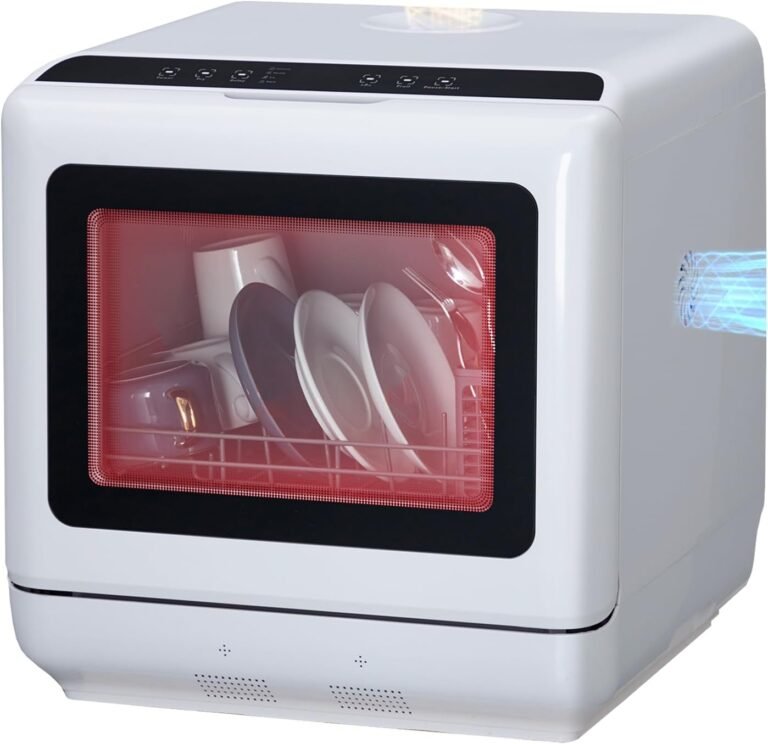
Capacity and internal layout determine how many items can be cleaned per cycle and how versatile the unit is for varied kitchenware. The HAVA countertop dishwasher lists accommodation for up to 4 full place settings, angled loading for plates up to 11″, a dedicated cutlery basket, and a specialized dish tray to increase usable volume. Compact units rely on careful tray geometry to allow tall items without obstructing spray paths; angled loading maximizes space and directs soiling away from adjacent surfaces. The polypropylene interior and removable baskets support lightweight handling and quick reconfiguration for mixed loads of plates, bowls, cups, and utensils. Consumers should consider common load types — such as pots, large pans, or oversized serving platters — which may exceed the internal envelope and require handwashing or staggered cycles.

Interior layout and dish fitment considerations
Angled plate racks are a space-saving measure that lets 11″ dishes seat without increasing cavity depth, while tier spacing influences stemware clearance and tall item accommodation. The proprietary dish tray and cutlery holder layout reflect a compromise between fixed positions and modularity; fixed tray contours can enhance stability but reduce flexibility for nonstandard shapes. Given the shallow footprint, taller pots and baking sheets are less likely to fit; the unit is optimized for everyday dishware, glasses, and small cookware commonly used in small households and RVs. Load balancing is also important: uneven distribution can affect spray reach and lead to localized soil retention.
Cutlery basket and small-item handling
A dedicated cutlery basket aids separation of utensils to prevent nesting, which improves exposure to detergent and spray action. The basket design should allow drainage and easy emptying to prevent trapped food. Smaller items such as lids, baby bottle components, and berries (when using the fruit basket) benefit from mesh or compartmentalized trays that keep them within spray reach without falling into the sump. Users should follow manufacturer guidance about securing lightweight items to avoid displacement by jet forces during high-pressure cycles.
Suitability for household sizes and mobile living
With capacity geared toward four place settings and a 5 L water tank option, this dishwasher aligns with two- to three-person households, couples, or small families seeking a plug-and-play cleaning solution. The compact footprint and optional faucet hookup make it practical for apartments, dorms, and RVs where permanent installation is unfeasible. Larger families or households that generate frequent large cookware loads will find the limited interior volume constraining and may prefer portable or built-in full-size alternatives that support more place settings and heavier cookware.
Noise levels and suitability for open kitchens
Noise rating is a critical comfort factor in open-plan spaces where kitchen appliances operate near living and sleeping areas. The manufacturer lists a 60 dB operating noise level for this model, which aligns with conversational room levels and is louder than the quietest built-in dishwashers typically rated in the mid-40s to low-50s dB. Sound output is influenced by motor design, pump mounting, cavity insulation, and structural vibration transmitted through the countertop. In small apartments or RVs, perceived loudness can increase due to reflective surfaces and close proximity. Noise sensitivity should guide placement: counter locations adjacent to bedrooms or media areas may benefit from scheduling runs during away hours or using Speed/Quick cycles that shorten run time even if peak noise remains similar.

Interpreting the 60 dB rating in context
A 60 dB rating indicates moderate sound levels where conversations remain possible but the appliance is clearly audible. For open kitchens, this level may be acceptable if the appliance is not in constant use during quiet hours. Comparing decibel ratings requires recognizing the logarithmic scale: a 10 dB increase is perceived as roughly twice as loud. Compact pump and motor assemblies in countertop units often trade off higher acoustic output for smaller size and portability. Insulation and mounting can mitigate structure-borne noise but are limited by the unit’s lightweight polypropylene construction.
Placement strategies for noise mitigation
Placing the dishwasher on a solid, level surface with vibration-damping feet and avoiding direct contact with walls or cabinetry reduces resonance. Positioning near an exterior wall or away from primary living zones lessens perceived intrusiveness. For RV installations, securing the unit to minimize rattling and running during transit is important. Scheduling cycles during times of lower noise sensitivity or using the 60-minute ventilation-only drying to avoid repeated cycles may also help manage subjective disturbance in open-plan environments.
Vibration, materials, and perceived sound contributors
Polypropylene interiors and a glossy exterior offer weight and corrosion resistance but provide less mass for sound dampening compared with stainless-steel tubs found in larger models. Pump and motor enclosure design influence airborne noise, while loose or improperly loaded items can create additional noise during high-pressure cycles. Attention to secure placement, balanced loading, and following inlet/outlet hose routing recommendations helps reduce rattles and improves perceived acoustic performance in small living spaces.
Drying systems, moisture control, efficiency, maintenance, and durability
Drying strategy, water and energy use, and routine maintenance define the total ownership experience. The HAVA unit provides a 60-minute hot air drying cycle and a 72-hour automatic ventilation feature intended to reduce residual moisture and odors. The 5 L per-cycle water consumption and 950 W operating power position the unit as a low-water, moderate-power solution compared with full-size machines; an annual energy consumption estimate of 150 kWh offers a reference point for comparative efficiency. Maintenance centers on filter cleaning, periodic inspection of spray ports and hoses, and proper detergent dosing to avoid residue. Polypropylene construction and a removable filter basket support corrosion resistance, but long-term durability depends on component quality, pump lifespan, and adherence to recommended care practices.

Energy and water efficiency expectations
With 5 L per wash cycle, the unit targets water savings compared to handwashing volumes and some larger machines; however, thermal efficiency matters when running frequent heated cycles. The listed 950 W operating power indicates significant instantaneous energy draw during heaters and pumps, but shorter cycles reduce total energy per wash. The annual energy estimate of 150 kWh provides a normalized comparison to other compact units; efficiency gains come from matching cycle selection to soil load and minimizing unnecessary high-temperature runs. Use of manufacturer-recommended detergents and correct dosing influences both cleaning performance and energy efficiency by reducing the need for repeat cycles.
Maintenance and filter requirements
Compact dishwashers depend on accessible filtration to prevent pump clogging and maintain spray performance. Regular removal and rinsing of the filter basket, inspection of spray ports for scale or debris, and periodic flushing of the built-in tank and hoses mitigate odor and blockage risks. The manufacturer note that residual water may remain after testing indicates designed drainage geometry; routine emptying and occasional vinegar or dishwasher-safe descaling cycles (following manufacturer advice) help manage mineral buildup. Hose connections should be checked for secure fittings to avoid leaks during faucet hookups in varying water pressures.
Durability, component longevity, and material considerations
Polypropylene interiors and a lightweight external shell prioritize portability and corrosion resistance but offer less structural mass than stainless steel. Pump, motor, heater, and electronic control longevity typically hinge on build quality, duty cycles, and maintenance; compact pumps in countertop models experience more frequent starts and stops, which can influence wear. Manufacturer quality control statements suggest factory testing, but explicit warranty details are not provided in disclosures. Expected long-term reliability depends on usage patterns, adherence to load and detergent guidance, and timely maintenance of filters and hoses.
Who should avoid this model based on limitations
Households that require washing large pots, full-size baking pans, or frequent simultaneous multi-course loads may find capacity restrictive. Users demanding ultra-quiet operation for bedrooms adjacent to kitchens should consider units with lower decibel ratings or built-in models. Heavy-duty commercial-like use patterns and large families that rely on high-throughput dishwashing are better served by full-size or dedicated commercial-grade units that provide larger internal volumes, higher flow systems, and heavier components designed for extended continuous use.

Pros & Cons
Pros
- Plug-and-play portability and no permanent installation requirement. The built-in 5 L water tank and included inlet hose enable flexible countertop placement in apartments, dorms, or RVs where plumbing access is limited. This design supports users who need a compact solution without modifying existing fixtures.
- Compact footprint with thoughtful interior layout. Dimensions under 17 x 17 x 18 inches and angled plate accommodation up to 11″ make the unit suitable for small kitchens while still fitting standard dishware and a cutlery basket for organized loading.
- Multiple cycles including a high-temperature Baby Care option. Six program choices and a Heavy/Baby Care mode rated at 167 °F provide options for greasy cookware, baby items, and delicate loads, improving the unit’s versatility across household needs.
- Low per-cycle water usage. A stated 5 L per wash cycle targets water conservation compared with manual washing and some larger machines, making it attractive for water-conscious users or those with metered supply.
- Hot air drying plus extended ventilation. The 60-minute heated dry and 72-hour automatic ventilation help reduce residual moisture and odors, improving usability for users who cannot unload immediately after cycles.
- Removable filter and simple maintenance pathways. A filter basket and accessible spray arms support routine cleaning to maintain wash performance and reduce the likelihood of pump clogs.
Cons
- Moderate noise level for open living spaces. The manufacturer-specified 60 dB rating is audible and may be intrusive in very quiet apartments or when used near bedrooms, making timing and placement considerations important.
- Limited capacity for larger households or cookware. The interior volume and configuration prioritize plates, glasses, and small pots; oversized items and large loads will not fit and will require alternate washing methods.
- Higher instantaneous power draw during heated cycles. Operating at 950 W means significant energy use while running heaters and pumps, which can be notable for users on constrained electrical systems or in mobile living situations with limited power budgets.
- Lack of explicit warranty information in disclosed materials. Manufacturer quality-control notes are provided, but specific warranty terms are not stated in the available disclosures, which may be a consideration for long-term ownership expectations.
- Dependence on regular maintenance due to small water volume. With concentrated 5 L cycles, filters and spray ports can accumulate residues faster than in larger machines, requiring consistent cleaning to sustain performance.
Final Verdict: Who This Dishwasher Is Best For (and Who Should Skip It)
The HAVA countertop dishwasher presents a pragmatic option for individuals, couples, and small households seeking a portable, installation-free cleaning solution in constrained kitchen footprints. Its 5 L per-cycle water usage, six program options including a high-temperature baby care cycle, and compact interior that fits up to four place settings align it with apartment dwellers, RV users, dorm residents, and second-home owners where plumbing modification is undesirable. The inclusion of hot air drying and extended ventilation addresses common moisture and odor concerns in smaller cavities, while polypropylene construction and removable filters facilitate lightweight handling and routine upkeep.
However, this unit is not ideal for larger families, cooks who routinely use large pots and baking sheets, or people requiring near-silent operation in open-plan living areas. The 60 dB noise rating and limited internal volume mean that households with high throughput demands or strict acoustic requirements should consider full-size or lower-decibel alternatives. Compared with similar compact countertop dishwashers in 2026, this model balances portability and cleaning versatility but requires realistic expectations about capacity, maintenance frequency, and acoustic impact for long-term satisfaction.

Frequently Asked Questions (FAQs)
How many place settings can the HAVA countertop dishwasher handle?
The unit is specified to accommodate up to four full place settings and accept dishes up to 11 inches wide when loaded at an angle. Its interior is optimized for plates, bowls, cups, and utensils typical of two- to three-person households, while large cookware and oversized platters are likely to exceed the cavity dimensions.
Is the HAVA countertop dishwasher suitable for use in an RV or boat?
Yes; the built-in 5 L water tank and included inlet and outlet hoses enable operation without permanent plumbing, which suits mobile living like RVs and boats. Attention should be given to secure placement, hose routing, and power availability, as the unit draws 950 watts during operation and should be secured to prevent movement during transit.
What drying options does the dishwasher offer and how effective are they?
The dishwasher provides a 60-minute hot air drying cycle combined with a 72-hour automatic ventilation function. Hot air drying accelerates moisture evaporation, while extended ventilation helps reduce residual humidity and odors. Effectiveness depends on load composition, plastic items’ heat tolerance, and correct cycle selection, with well-spaced loading improving airflow and drying outcomes.
How noisy is the HAVA countertop dishwasher in daily use?
The manufacturer lists an operating noise level of 60 dB, which is audible and comparable to normal conversation. In small or open-plan spaces this may be noticeable; placement on a stable, vibration-damping surface and avoiding placement adjacent to sleeping areas can reduce perceived disturbance.
What maintenance tasks are required to keep the dishwasher performing well?
Routine maintenance includes emptying and rinsing the removable filter basket, checking and cleaning spray ports for mineral buildup, inspecting inlet and drain hoses, and following detergent dosing recommendations. Because the unit uses a 5 L water volume per cycle, sediment and turbidity can accumulate more quickly than in larger machines, so frequent filter checks help preserve spray efficiency and prevent odors.
Does the Heavy/Baby Care cycle sanitize baby bottles and feeding items?
The Heavy/Baby Care cycle operates at a manufacturer-stated temperature of 167 °F, which enhances grease removal and thermal sanitization potential when used with dishwasher-formulated detergents. Material compatibility for plastics should be confirmed with the item’s manufacturer, as repeated high-temperature exposure can accelerate wear on non-heat-resistant components.
How energy and water efficient is this countertop dishwasher?
The model lists 5 liters of water consumption per cycle and a 950 W operating power, with an annual energy consumption estimate of 150 kWh. The low per-cycle water use supports water conservation goals, while total energy use depends on cycle selection frequency and reliance on heated drying or high-temperature washes.