HAVA 2025 Countertop Dishwasher: Clean, Quiet, Efficient
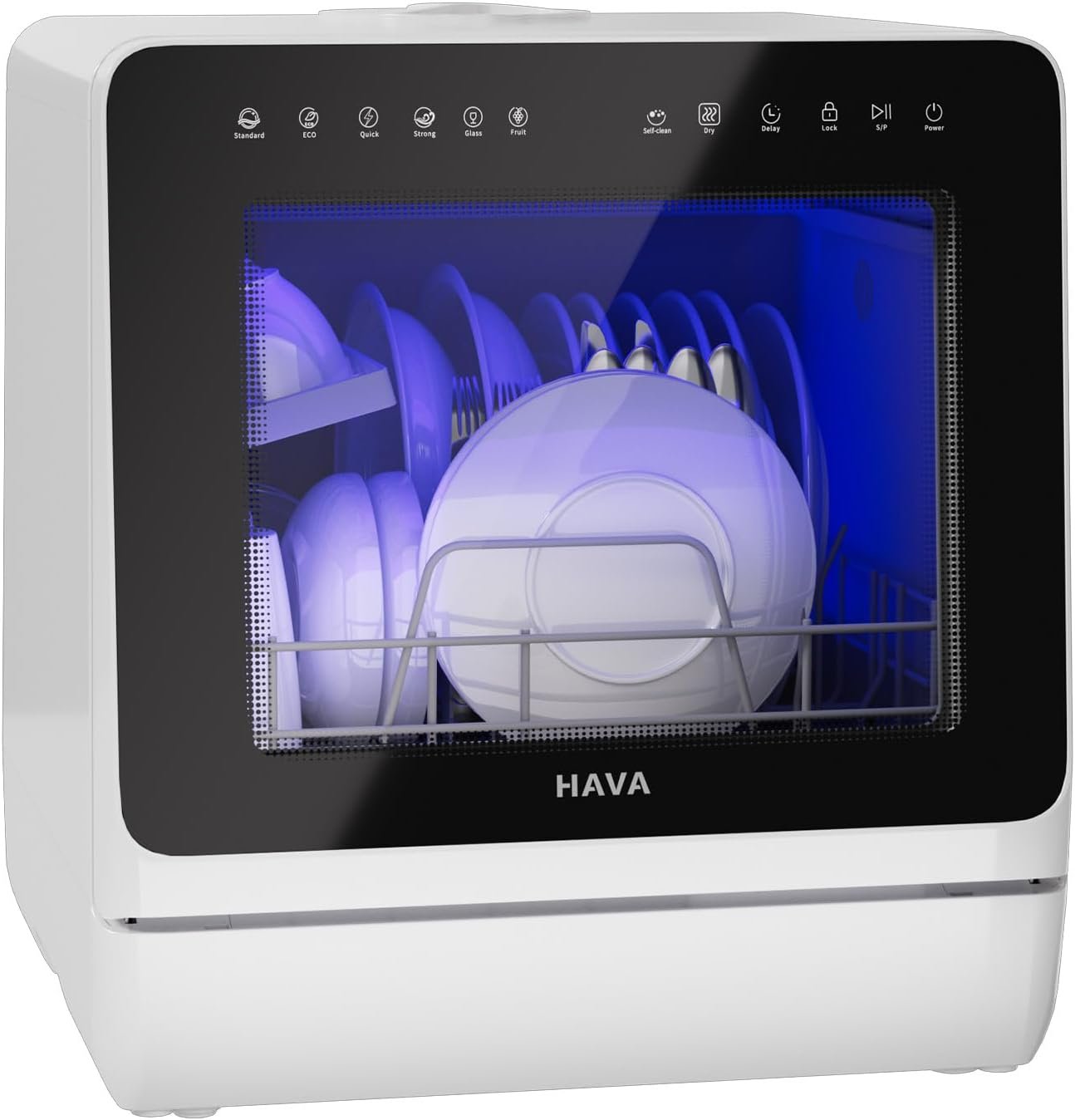
Why dishwasher selection matters for small households and compact kitchens
Choosing the right dishwasher for a small household or compact kitchen affects daily convenience, water and energy use, and noise exposure in living spaces. Apartment dwellers, college students, RV users, and small families prioritize appliances that balance cleaning performance with space constraints and simple installation. Countertop models must deliver adequate spray coverage and soil removal while fitting within limited interior volume and countertop depth. Noise sensitivity is a key consideration for open-plan kitchens and studio layouts where a 60 dB rating can influence placement and daytime use. Efficiency expectations include modest annual energy use, an ECO mode, and built-in measures such as water softening to protect internal components and reduce redepositing on glassware. Decisions should weigh capacity limits, drying effectiveness, filtration and maintenance needs, and materials such as polypropylene interiors that affect durability and long-term appearance.
Quick Overview
| Feature | Details |
|---|---|
| Dishwasher type | Countertop / freestanding portable dishwasher |
| Capacity / water tank | Built-in 5 L water tank; interior usable cavity 13 x 13.77 x 10.83 in |
| Wash cycles | 8 wash programs (Economy, Heated Dry, Intensive, Normal, Rapid plus modes) |
| Cleaning technology | Integrated water softener; 360-degree spray coverage claim; touch LED controls |
| Drying method | Heated dry / drying system included |
| Noise level | 60 decibels (manufacturer rating) |
| Energy efficiency | ECO mode; annual energy consumption listed as 150 kWh/year |
| Dimensions & installation | 16.86 x 16.75 x 18.05 in; countertop placement; inlet/outlet hoses 61 in |
| Materials & weight | Polypropylene (PP) interior and inner parts; item weight ~28.6 lb |
| Warranty | Manufacturer-stated one-year warranty |
This compact feature set translates to a unit intended for users who need a no-plumbing countertop option with a small internal cavity and integrated water handling. The 5 L reservoir plus inlet hose provides flexibility where direct faucet hookup is impractical; the 360-degree cleaning claim and dedicated water softener target hard-water regions. The combination of ECO mode and a modest annual energy figure suggests suitability for frequent small loads rather than large cookware cleaning.

Cleaning performance and wash coverage
The HAVA model emphasizes multi-angle spray coverage and an integrated water softener to address soil removal and mineral spotting in areas with hard water. Spray coverage and pump pressure, combined with program selection, determine how well dried-on food and greasy residues are softened and flushed away. The presence of an Intensive program indicates higher-temperature or longer-duration cycles intended for heavier soils, while Economy and Rapid prioritize shorter cycles or reduced water use. The water softener reduces calcium and magnesium ions in the rinse water which helps rinse clarity on glass and flatware and limits limescale buildup inside the machine. Overall cleaning performance depends on load organization, cycle selection, detergent type, and local water hardness; the combination of targeted cycles and softening aims to balance cleaning effectiveness with compact capacity.

Spray system, nozzle placement, and 360-degree coverage
Spray distribution in compact countertop dishwashers is commonly achieved through a centrally mounted rotating arm or a fixed manifold with multiple nozzles. In this model, manufacturer claims of 360-degree cleaning suggest nozzle placement and arm rotation designed to reach multiple rack zones within the small interior. Effective coverage depends on nozzle orientation, spray angle, and pump flow rate; tightly packed loads can shadow items from direct spray and reduce cleaning performance. For best results, plates and bowls should be oriented toward the spray source, and heavily soiled items may need pre-rinse or placement nearer the primary spray path. The integrated water softener supports consistent nozzle performance over time by reducing mineral deposits that can restrict jets.
Wash programs, temperatures, and soil-targeting strategies
Eight selectable programs allow adaptation to different soil loads and cycle-time priorities. Economy and ECO modes typically reduce water and energy input through lower temperature or shorter fill periods, suitable for light soils. Intensive or Heated Dry programs likely raise temperature and extend wash phases to improve grease emulsification and protein removal. Rapid cycles shorten wash times for light, recent soils but usually deliver lower thermal and mechanical action, which can affect heavily baked-on residues. Selection of program, combined with proper detergent dosing and load spacing, supports expected cleaning outcomes, with the softener option helping to maintain rinse clarity and reduce spotting on glassware.
Capacity, rack design, and place-setting considerations
Compact countertop interiors impose practical limits on the range and size of items that can be washed. The interior dimensions (13 x 13.77 x 10.83 in) and an adjustable tableware basket indicate a focus on everyday plates, cups, and cutlery rather than large pots or oversized pans. The redesigned rack structure and adjustable basket aim to increase usable capacity within the constrained cavity, allowing alternating plate and cup placement and flexible cutlery organization. Loading strategy influences both capacity and cleaning reach: staggered plate placement, bowls facing downward, and separation of tall items reduce spray shadowing. Users should expect capacity suitable for small households and frequent small loads rather than a single-cycle replacement for a full-family dinner service.

Interior layout, adjustable tableware basket, and usability
The adjustable tableware basket and redesigned rack structure increase flexibility by accommodating different shapes and sizes of everyday dinnerware within the small cavity. Adjustable tines or removable inserts typically enable placement of cups and stemware in tighter spaces and provide room for wider plates when necessary. Because the interior walls and basket are polypropylene, thin or delicate stemmed glassware requires careful positioning to avoid contact with hard surfaces during wash and dry cycles. The basket’s cutlery compartment aims to separate utensils for improved rinse access; however, tight overall interior space means longer items like large spatulas may not fit vertically and could need alternate cleaning approaches.
Practical place-setting guidance for small households
Place-setting expectations should be framed by interior volume rather than standard full-size metrics. For routine use, the machine is best suited to several place settings of everyday plates, bowls, cups, and cutlery per cycle when items are loaded to allow unobstructed spray. Large serving platters, stockpots, and some pans will likely exceed the vertical or lateral clearances. Frequent use with smaller loads supports time-to-clean and energy efficiency when ECO or rapid cycles are used for light soils, while occasional use of intensive cycles addresses heavier cooking residues.
Noise levels and suitability for open-plan kitchens
A manufacturer-rated 60 dB places this countertop dishwasher in a moderate sound band where operational noise is noticeable but not unusually loud. For comparison, conversational speech typically measures around 60 dB; in open-plan layouts, the unit may be audible during operation and could compete with ambient background noise. Noise perception is influenced by cycle phase—wash pumps and spray action are louder than idle or drying phases—and by placement on solid, level countertops that can transmit vibration. Users sensitive to sound should consider placement on vibration-damping pads, scheduling operation during lower-activity periods, or situating the unit in a semi-enclosed area to reduce perceived intrusiveness.

Understanding the 60 dB rating in residential contexts
The 60 dB rating provided by the manufacturer represents a standard measurement of operational noise under specific test conditions. In actual residential settings, perceived loudness varies with room acoustics, counter material, and proximity of seating or sleeping areas. Pump cycles, water inlet filling, and drain sequences produce transient noise peaks; drying phases involving heated air and fans can also contribute. While 60 dB is within an acceptable range for many small households, it should be considered when kitchens open to living spaces are used for remote work, sleep, or television viewing.
Vibration, placement, and mitigation strategies
Countertop placement and weight distribution influence vibration transmission to cabinetry and countertops. A freestanding unit weighing approximately 28.6 lb should be positioned on a level, stable surface with its inlet and outlet hoses routed to avoid tension or rocking. Vibration-damping pads under the base can reduce structure-borne noise. Additionally, leaving a small clearance around the appliance and avoiding placement near fragile objects minimizes nuisance rattling. Because noise peaks occur during active pump operation, placement farther from primary living spaces will reduce the subjective impact of intermittent sounds.
Drying systems and moisture control inside a compact cavity
This countertop model lists a heated dry or drying system as part of its feature set. Heated drying accelerates moisture evaporation by applying warm air or raising final rinse temperature and using residual heat, whereas passive drying relies on internal venting and steam escape. In a small polypropylene interior, moisture can condense on cooler surfaces after cycle completion, so effective drying programs and proper unloading practices are important to reduce residual dampness. Manufacturer notes indicating normal residual water in the unit reinforce that some water pooling may occur in low points despite drying cycles. User strategies such as slightly propping the door after the cycle or selecting a heated dry program reduce residual moisture and lower potential for musty odors.

How heated drying works in countertop machines
Heated drying in compact dishwashers typically combines an elevated rinse temperature with electric heating elements or fan-assisted warm air circulation to promote evaporation. In a small cavity, heated dry shortens the time that water remains on dishes and internal surfaces, decreasing spotting and the likelihood of standing water. However, heated drying increases energy use relative to passive drying modes and may not fully eliminate moisture in crevices or flatware compartments. The effectiveness of heated drying is influenced by load density, item material, and how long the cycle allows for heat exposure before the door is opened.
Managing residual moisture and preventing odors
Residual water can collect in low points of the tub, pump housing, or drain channel especially in compact designs with intricate basket geometry. The manufacturer’s quality-control note indicates a small amount of residual water is normal for this model. Regularly clearing standing water from the tub, leaving the door ajar for ventilation after cycles, and using heated dry or extra rinse options when available will reduce trapped moisture. Periodic cleaning of seals, the drain path, and the filter system prevents organic buildup that could contribute to odors over time.
Energy, water efficiency, maintenance, and durability expectations
Energy and water efficiency for compact countertop dishwashers hinge on cycle selection, component sizing, and internal materials. Manufacturer disclosure lists an annual energy consumption of 150 kWh/year and an ECO mode for reduced water and power use. The built-in 5 L tank and ECO program suggest the machine is optimized for smaller fill volumes and frequent light loads rather than large, water-intensive cycles. Maintenance considerations include filter cleaning frequency, checking the drain and inlet hoses for kinks, and attention to the integrated water softener’s consumable components. The polypropylene interior offers corrosion resistance and lower weight but is generally less heat- and scratch-resistant than stainless steel, which affects long-term appearance and perceived durability.

Energy and water use expectations for countertop models
A reported 150 kWh/year positions the unit as modest in annual energy terms compared with full-size dishwashers, assuming typical small-household usage patterns. ECO mode reduces per-cycle water and energy by adjusting temperatures and fill volumes, helpful for frequent small loads; however, heated dry cycles increase energy draw when selected. Water efficiency depends on cycle design and whether inlet water is used in addition to the 5 L tank. For households prioritizing low utility use, combining ECO cycles with full loads that still fit the interior is the most efficient strategy.
Maintenance routines, filtration, and long-term reliability
Routine maintenance centers on the removable filter, drainage channel, and the water softener system. A clean filter maintains soil removal and prevents redeposition; the integrated softener requires periodic regeneration or maintenance following manufacturer instructions and local water hardness. Polypropylene inner surfaces are less prone to corrosion but can retain stains and develop scratches from abrasive detergents or utensils, potentially affecting long-term aesthetics. Regular inspection of hoses, seals, and the exterior finish, along with adherence to manufacturer-recommended cleaning procedures, supports longevity and consistent performance.

Pros & Cons
Pros
- Compact, installation-free design: Includes a built-in 5 L water tank and 61-inch inlet/outlet hoses that enable countertop placement without permanent plumbing, making it suitable for apartments, dorms, and RVs. The freestanding form factor supports mobility and temporary setups.
- Integrated water softener: The onboard softener addresses hard-water regions by reducing mineral content in the wash water, which helps prevent limescale buildup and improves rinse clarity on glassware and flatware.
- Multiple wash programs with ECO mode: Eight selectable cycles including Economy, Intensive, and Rapid provide flexibility for varied soil levels while an ECO mode prioritizes lower water and energy use for light loads.
- Redesigned adjustable rack and tableware basket: The updated rack structure and adjustable basket aim to maximize usable interior space within the small cavity, improving loading options for plates, cups, and cutlery.
- Modest annual energy figure: Manufacturer-stated annual consumption of 150 kWh/year and an ECO setting suggest reasonable energy expectations for small-household routines compared to full-size units.
- User-friendly controls and safety features: Touch LED controls, child lock, and an 18-hour delayed start function support straightforward operation and household safety preferences.
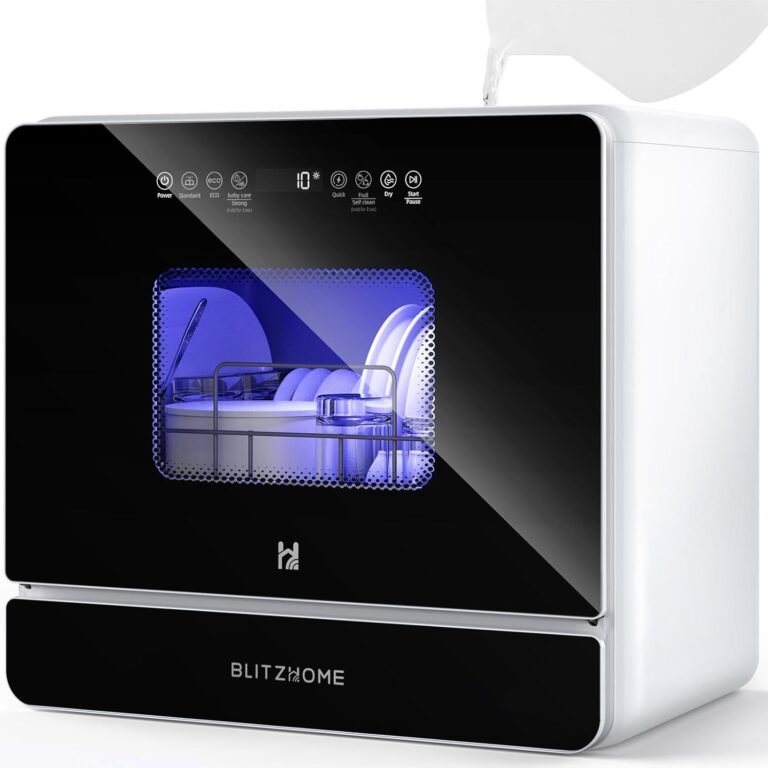
- Portable weight and finish: At about 28.6 lb and a glossy black polypropylene exterior, the unit balances portability with an easy-to-clean surface for small kitchens.
Cons
- Limited internal volume: The interior dimensions restrict the range of items that can be cleaned; large pots, wide platters, and tall stemware may not fit, making the unit unsuitable as a full-replacement for a family-sized dishwasher.
- Polypropylene interior rather than stainless steel: PP interiors offer lower weight and corrosion resistance but are typically less scratch- and heat-resistant than stainless steel, which can affect long-term appearance and stain resistance.
- Noise level may be noticeable in open-plan spaces: A 60 dB operational rating means the unit will be audible in adjacent living areas and may not meet expectations of noise-sensitive users or situations requiring quiet during use.
- Electrical specification and power requirements: Manufacturer lists 220 V voltage; users in regions with different household supply should verify compatibility or consult an electrician prior to use to ensure safe operation.
Final Verdict: Who This Dishwasher Is Best For (and Who Should Skip It)
This HAVA 2025 countertop dishwasher is best suited to small households, apartment dwellers, dorm residents, and RV users who need a portable, installation-free cleaning solution. The built-in 5 L water tank, 61-inch hose lengths, and adjustable tableware basket make it a practical choice where faucet hookups or undercounter installations are unavailable. The integrated water softener and ECO mode enhance cleaning consistency in hard-water areas and reduce per-cycle water and energy use when light-load cycles are selected. The machine’s compact interior, polypropylene construction, and 60 dB noise rating align with frequent small-load use rather than large or infrequent heavy-duty cleaning tasks.
Households that should avoid this model include larger families who require full-size capacity or those needing to regularly wash oversized cookware and bakeware. Users with strong noise sensitivity or who maintain open-concept living spaces may prefer a quieter unit or an installation location that isolates operational sounds. Additionally, buyers should confirm electrical compatibility given the 220 V specification. Compared to similar countertop dishwashers available in 2026, this model presents a balanced set of features for the compact-appliance segment: it prioritizes portability, water-softening, and selectable programs while reflecting the practical limitations of a small-capacity, polypropylene interior.

Frequently Asked Questions (FAQs)
How does the integrated water softener improve cleaning performance?
An integrated water softener reduces calcium and magnesium ions in incoming water, which diminishes limescale formation on internal components and mineral spotting on glassware. Softer rinse water improves detergent effectiveness and rinse clarity, particularly in hard-water regions. Regular maintenance of the softener system according to manufacturer guidance preserves consistent performance and helps prevent nozzle clogging over time.
Can this countertop dishwasher handle large pots and pans?
The machine’s interior dimensions (approximately 13 x 13.77 x 10.83 inches usable cavity) and compact rack layout limit clearance for large cookware. It is optimized for plates, bowls, cups, and cutlery typical of small-household loads. Large stockpots, oversized baking sheets, and tall items may not fit or receive effective spray coverage, so those items are better washed by hand or in a full-size unit.
Is a 60 dB noise rating quiet enough for an open kitchen?
A 60 dB rating corresponds to moderate operational sound similar to casual conversation. In open kitchens or studio apartments the dishwasher will be noticeable during active pump cycles. Users concerned about noise should consider placement on vibration-damping pads, locating the unit away from seating and sleeping areas, or scheduling cycles during times when background noise masks operational sounds.
What maintenance is required to keep this unit running reliably?
Routine maintenance includes cleaning the removable filter, inspecting and clearing the drain channel, and following softener upkeep procedures as specified by the manufacturer. Checking inlet and outlet hoses for kinks and ensuring seals remain clean reduces leaks and maintains performance. Occasional descaling may be necessary in very hard water environments despite the integrated softener.
How energy efficient is this countertop dishwasher?
Manufacturer disclosures state an annual energy consumption of approximately 150 kWh/year and list an ECO mode to reduce water and energy per cycle. While annual figures depend on actual usage patterns, ECO mode and frequent small loads help minimize energy use compared with full-size dishwashers, though heated dry cycles increase consumption when selected.
Will polypropylene interior affect long-term durability?
Polypropylene interiors offer corrosion resistance and lower weight but are generally less scratch- and heat-resistant than stainless steel tubs. Over time PP surfaces may show staining or surface scratches from abrasive detergents or utensils. Regular cleaning with manufacturer-recommended products and careful loading helps maintain appearance and function.
Does the unit require plumbing installation or electrical adaptation?
This model includes a 5 L built-in water tank and 61-inch inlet and outlet hoses, enabling countertop placement without permanent plumbing in many scenarios. Manufacturer lists a 220 V voltage specification; buyers should verify electrical compatibility with local household supply and consult an electrician if conversion or adapters are required prior to operation.
How should loads be organized to maximize cleaning results?
For best cleaning, stagger plates to reduce spray shadowing, place bowls and cups facing downward toward the spray source, and separate cutlery items in the basket to allow water flow between utensils. Avoid overloading the compact cavity, and select appropriate wash programs—Intensive for heavy soils and ECO or Rapid for light, frequent loads—to balance cleaning effectiveness with energy and water use.