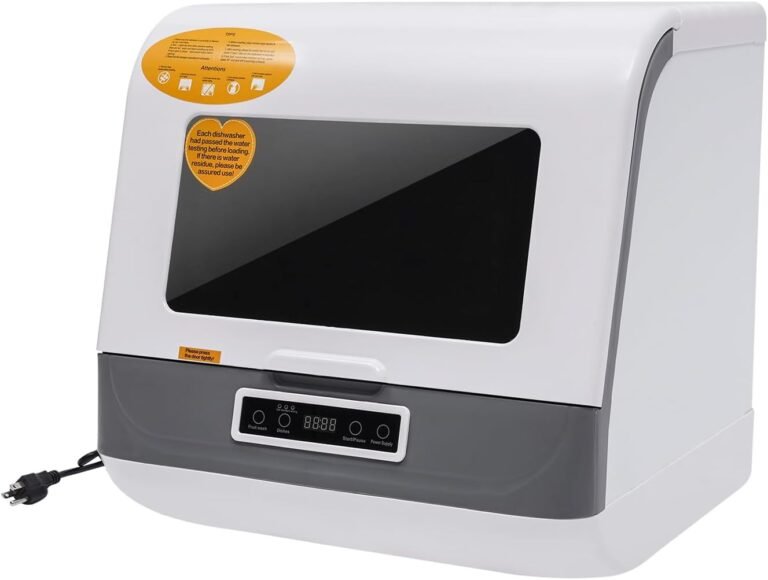
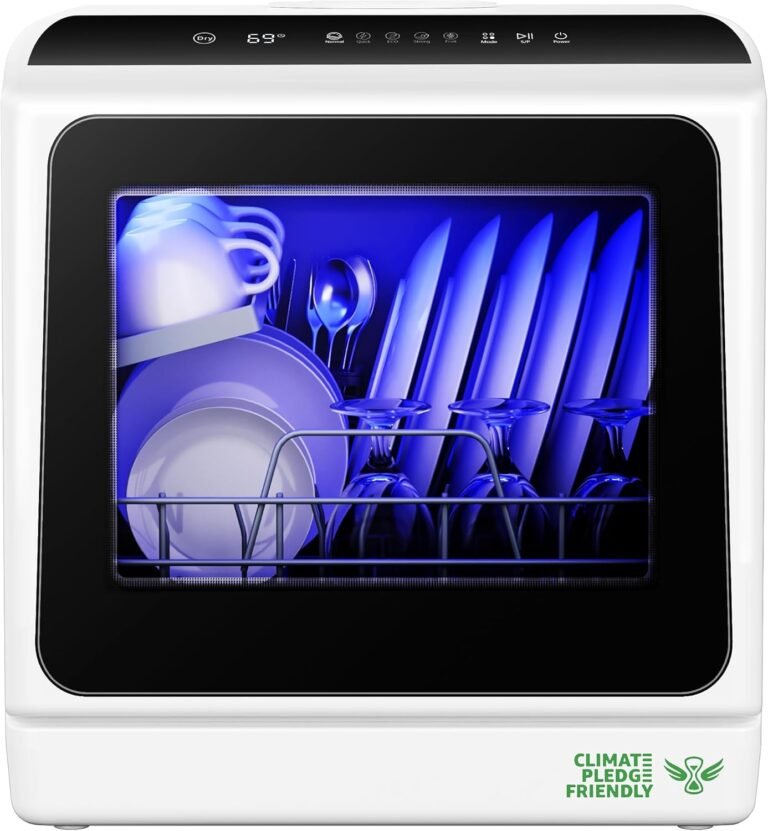
EUHOMY Countertop Dishwasher: Clean Performance, Quiet.
Choosing the right countertop dishwasher for compact living
Selecting a countertop dishwasher matters when kitchen space, household size, and daily routines limit access to a full-size model. For apartments, RVs, dorms, and small households, priorities include dependable cleaning performance, compact capacity that fits common dishware, and noise levels compatible with open-plan living. Plumbing constraints and desire for plug-and-play convenience influence whether a built-in tank or faucet hookup is preferable. Energy and water efficiency become important for frequent use, while drying effectiveness and moisture control affect post-cycle handling and odor prevention. Buyers should weigh rack layout and plate clearance against typical plate diameters, inspect listed noise ratings for placement near living areas, and confirm certification and materials for long-term durability. Manufacturer specifications and aggregated customer feedback provide a practical basis for evaluating trade-offs without hands-on testing claims.
Quick Overview
| Feature | Details |
|---|---|
| Dishwasher type | Countertop / Portable (5 L built-in tank, optional faucet hookup) |
| Capacity / place settings | Manufacturer states holds 30+ items; fits plates up to 10.25″ |
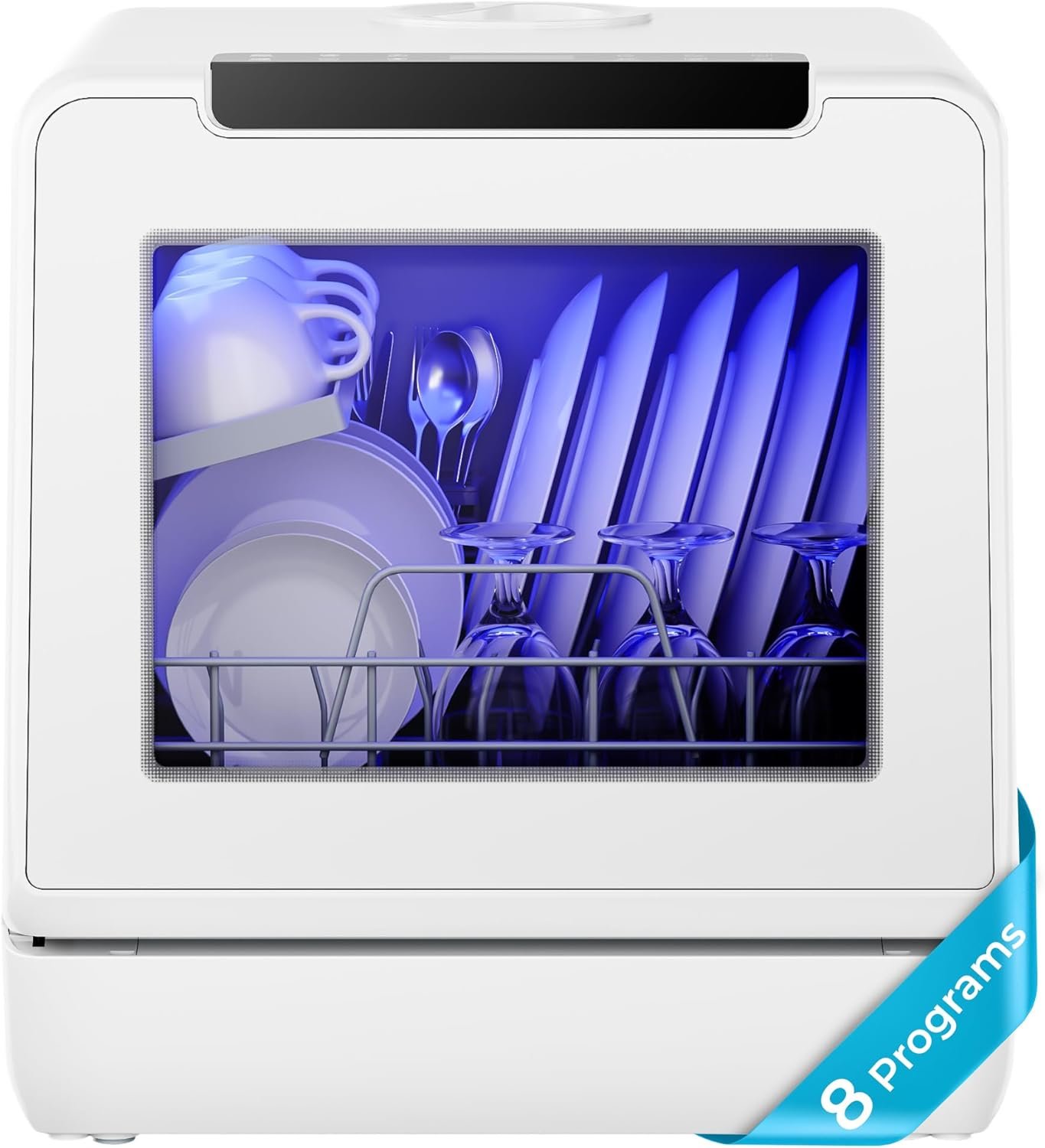
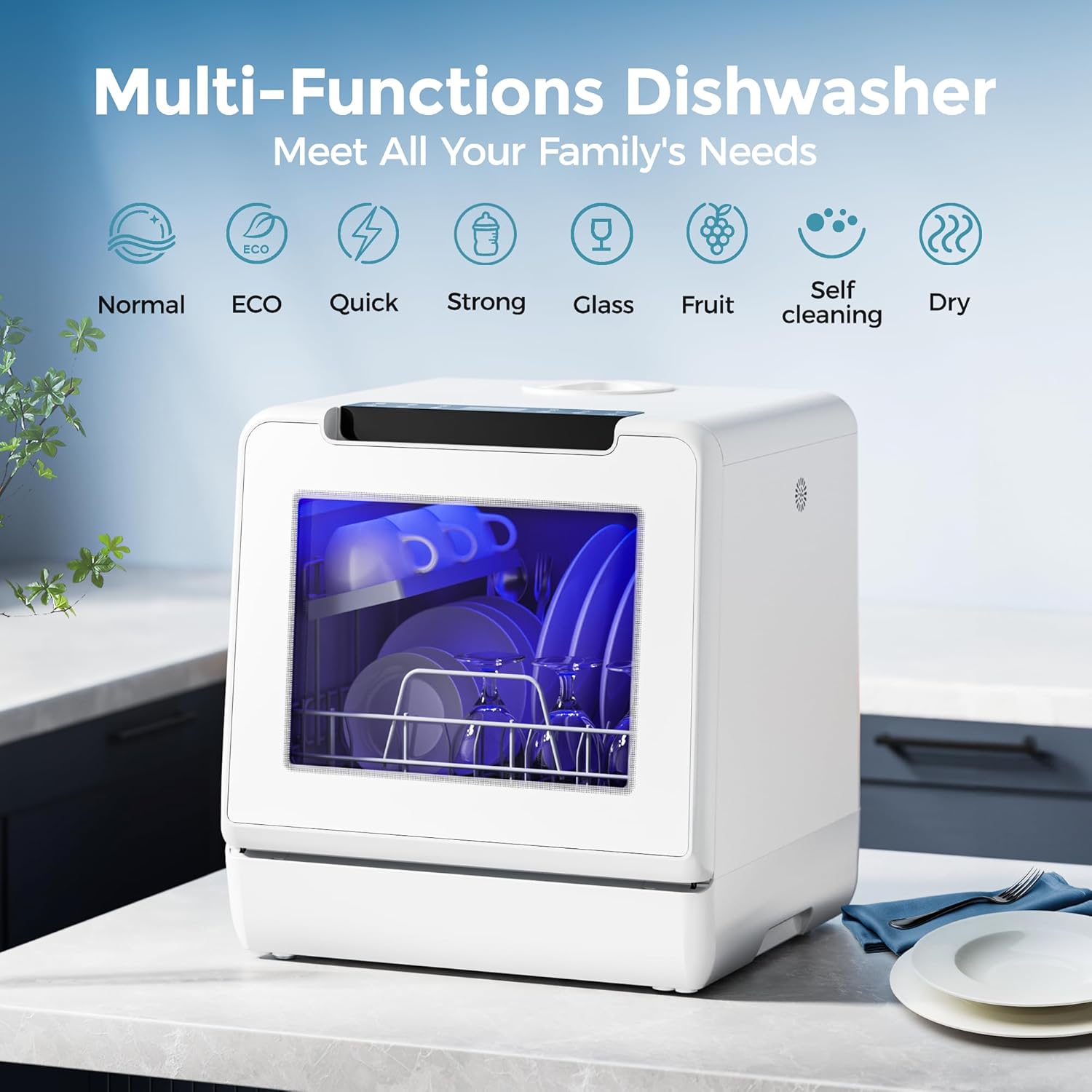
| Wash cycles | 8 programs: Normal, ECO, Quick (29 min), Baby Care/Strong (167°F), Glass, Fruit, Self-clean, Dry |
| Cleaning technology | Dual spray arms, filtration, recommended dishwasher detergent |
| Drying method | Forced ventilation dry (60-minute dry cycles; extended ventilation option) |
| Noise level | Rated 40 dB (manufacturer specification) |
| Energy & water efficiency | ETL certified; water use ~1.32 gallons (5 L) per cycle; DOE/energy-related disclosures present |
| Dimensions & installation | 16.14″D x 15.75″W x 18.11″H; portable countertop, inlet/outlet hoses included |
| Warranty | 1-year manufacturer warranty |
This specification set translates to a compact, plug-and-play option for kitchens without permanent plumbing, offering a mix of short and high-temperature cycles for varied loads. The small footprint suits counters that can accommodate a taller appliance, but plate clearance and door-open space should be checked against under-cabinet limits before purchase.

Cleaning performance and wash coverage
The EUHOMY DW002-5’s cleaning performance is shaped by its dual spray-arm design, targeted program temperatures, and filtration approach. Dual spray arms increase spray coverage in a confined cavity and help reach both upper and lower rack areas, while the Baby Care/Strong program runs at higher temperatures (manufacturer-stated 167°F) for added sanitization. Filtration and a self-clean mode are intended to reduce residue re-deposition and odors between cycles. The combination of program choice, detergent type, and rack loading pattern determines soil removal more than any single component; manufacturer guidance emphasizes using dishwasher detergent and avoiding BPA plastics. Based on listed features and customer feedback themes, the model is positioned to handle typical household soils, small pots, and everyday plates when loads are arranged to allow unobstructed spray paths.

Spray system coverage and filtration
The unit uses two spray arms to create 360-degree spray coverage within a compact tub; this design increases the chance of water reaching recessed areas of plates, bowls, and cutlery compared with a single-arm layout. A manufacturer-provided filtration system plus a self-clean program aim to capture food particles and limit re-depositing debris during subsequent cycles. For best wash results, recommended practices include scraping large solids, loading items to avoid nesting, and selecting the appropriate program for soil level. Detergent selection matters in a small-tank system because concentrated residues can affect foaming and rinse performance; the manufacturer explicitly advises dishwasher-safe detergents.
Program selection, temperature, and soil removal
Eight program options allow tailoring cycles to soil level and item type: an ECO mode for energy- and water-conscious cycles, a Quick 29-minute wash for light loads, and a Baby Care/Strong program with higher temperature exposure for items needing deeper sanitation. Higher-temperature cycles assist in breaking down fats and sanitizing, while eco and quick settings conserve water and shorten cycle time at the expense of intensive soil removal. The product’s dual water supply (5L tank or faucet connection) affects temperature consistency and available rinse water, so the selected water source and initial water temperature will influence final cleanliness on heavily soiled items.
Capacity, rack design, and place settings
Capacity decisions for compact dishwashers revolve around how many everyday items fit without compromising spray access. The DW002-5 is marketed to hold 30+ items and specifies placement for plates, cups, bowls, and cutlery, with a max plate diameter of 10.25″ noted. Rack materials include nylon-coated metal for structure and a polypropylene cutlery basket and storage rack for small items. While customers report that capacity exceeds expectations for small households, recurring feedback highlights tight fit for standard dinner plates and clearance issues under typical kitchen cabinets. The relatively narrow footprint prioritizes footprint economy over tall loading space; buyers should measure their usual plates and pots, and compare to the internal usable height and the external dimensions when planning installation on a countertop or inside camper galley areas.

Internal layout and real-world loading patterns
The internal layout uses a single-rack arrangement with accessory baskets for cutlery and fruit or small utensils, which suits mixed loads of plates, bowls, and cups. The nylon-coated metal rack aims to resist corrosion where detergent and hot water contact rack surfaces. Practical loading patterns emphasize placing plates in the slotted sections, angling bowls toward spray arms, and keeping taller items to the sides to avoid blocking the impeller flow. Given the compact tub, nesting of bowls and overlapping plates reduces effective spray exposure, so spacing remains crucial. Users who commonly wash large cookware should plan separate handwashing or load across multiple cycles to avoid obstructed spray.
Plate fit, pot access, and common constraints
Manufacturer guidance lists plate compatibility up to 10.25″, but multiple customer reports indicate standard full-size dinner plates may sit tightly or not fit vertically under upper clearance constraints. Pots and pans can be washed, but their bulk limits how many other items can be included in the same cycle. The drain and inlet hose lengths (approximately 4.92 feet each) facilitate installation near a faucet, but total usable interior volume remains that of a mini countertop model. Buyers with a routine of large platters, oversized pots, or deep casserole dishes should compare dimensions carefully and consider whether smaller dinnerware or staggered washing will be needed.
Noise levels and suitability for open kitchens
Noise ratings help determine whether a countertop dishwasher is appropriate for installation near living and sleeping areas. The EUHOMY DW002-5 is rated at 40 dB by manufacturer specification, which places it in the quieter range for compact appliances and generally compatible with open kitchens, small studios, and RV sleeping areas. Achieving a perceived low acoustic footprint depends on stable placement on a solid countertop, minimal external vibration, and the surrounding room acoustics. Customers note quiet operation in aggregate feedback, aligning with the 40 dB specification; however, noise perception is subjective and varies with distance and ambient noise. Consideration should also be given to the sound produced during pump operation versus drying fan cycles, which may have different acoustic signatures.

Interpreting the 40 dB rating for real spaces
A 40 dB rating suggests the appliance produces a sound level similar to a quiet office or a soft conversation at several feet; in practice, placement close to seating or bedside areas will make operating noise more noticeable. Countertop installation on a stable surface reduces rattles and contact-transmitted noise. In open-plan layouts, low-frequency pump sounds can carry more readily than higher-frequency noises, so placement away from immediate seating areas and soft furnishings that absorb sound will reduce perceived loudness. Buyers prioritizing minimal disturbance should allow for additional margin and check that under-cabinet or shelving placement will not amplify noise.
Sound reduction design elements and limitations
The product lists a sound reduction system as a special feature; typical elements include insulated panels, rubber-mounted pumps, and acoustic damping around the motor assembly. In compact units, thermal and space constraints limit the thickness of sound-dampening materials compared with full-size models, so while reductions are possible, some operational noise is inherent. Drying fans or forced ventilation options can introduce higher-frequency noise during the dry phase. For users in noise-sensitive environments, scheduling quieter cycles during daytime or using the delay mode to run the unit when occupants are away can reduce disturbance.
Drying systems and moisture control
Drying determines whether dishes are ready for immediate storage and affects long-term odor control in a small machine. The DW002-5 provides a forced ventilation dry option with a standard 60-minute dry period on most modes and an extended ventilation feature that supplies additional airflow for up to the manufacturer-stated extended duration to help prevent moisture retention. Forced ventilation accelerates evaporation by moving air across wet surfaces, but it may not equal the heat-boosted condensation drying found in full-size units. Customer notes indicate that some cycles leave items needing brief towel drying, especially plastics that retain water. The unit’s design also includes a self-clean mode and recommendations to avoid BPA plastics to reduce retained moisture and odors.

Forced ventilation drying: strengths and trade-offs
Forced ventilation drying provides active air movement to remove surface moisture more quickly than passive air-dry, which benefits glassware and ceramics. Plastics and recessed areas may still retain droplets because of lower thermal mass and different surface properties; those items often require towel drying or an additional drying cycle. The claimed dry cycle duration and extended ventilation can mitigate odor risks by limiting stagnation, but extended fan operation increases power draw relative to pure air-dry periods. Selecting the dry option after a high-temperature wash tends to improve results because residual heat aids evaporation.
Moisture control and odor prevention strategies
Moisture control in countertop dishwashers benefits from routine maintenance: running the self-clean mode, leaving the door slightly ajar after cycles when practical, and using the built-in ventilation options reduce trapped humidity. The manufacturer explicitly notes that initial water droplets inside the cavity can occur and advises no cause for alarm; this aligns with small-tub condensation behavior after hot cycles. Using recommended detergents and avoiding dishwasher-incompatible plastics reduce residue that can trap moisture and promote odors. Regular emptying of the filter and visual inspection of seals will help maintain airflow and prevent moisture-related smells.
Energy, water efficiency, maintenance, and durability
Energy and water performance are central to operating cost considerations and environmental preferences. The EUHOMY model lists ETL certification and a manufacturer-stated per-cycle water use close to 1.32 gallons (5 L), which is considerably lower than handwashing in many scenarios and fits the portable, low-volume usage profile. Energy disclosures and DOE references suggest compliance with basic efficiency standards appropriate for countertop appliances. Maintenance requirements include routine filter cleaning, running the self-clean cycle, and following detergent and material guidance to avoid degrading plastic components. Construction materials—ABS and polypropylene for exterior and racks, with stainless-steel elements—are typical for compact machines and offer reasonable durability when used per specifications and maintained responsibly.

Water and energy expectations for routine use
With a reported water consumption around 1.32 gallons per cycle and ETL/DOE-related certification, the unit targets frequent short-cycle use for small households. Lower water volumes reduce the amount of rinse heat required, but they also place greater importance on spray efficiency and detergent chemistry for soil removal. The dual water supply option—built-in 5L tank or faucet connection—enables use in locations without plumbing, though faucet hookups provide a continuous fresh water feed that can stabilize rinse temperature. Energy demands during drying and heating phases will vary with chosen cycles; eco modes reduce both water and energy but may lengthen cycles or reduce temperature.
Filter maintenance, component longevity, and common wear factors
Filter maintenance is a routine requirement to preserve wash quality; food particle capture prevents clogging and re-deposition. Manufacturer materials (ABS, PP, stainless steel) resist common corrosion and chemical attack from detergents when used appropriately, but prolonged exposure to harsh chemicals or repeated high-temperature sterilization cycles may accelerate wear on non-metal components. Hose connections, seals, and the pump are typical wear points in portable units; customers reporting durable use patterns generally reference adherence to recommended cleaning and loading habits. The inclusion of a 1-year warranty addresses early defects but does not replace long-term care practices.
Pros & Cons
Pros
- Compact, portable design with dual water supply: The built-in 5 L tank plus an option for a G3/4 faucet hookup allows installation where permanent plumbing is unavailable, supporting apartments, RVs, and dorms without modification. This duality increases placement flexibility for small spaces.
- Multiple wash programs including high-temperature option: Eight programs—including a Quick 29-minute cycle and Baby Care/Strong mode at approximately 167°F—give control over cycle duration and sanitization level, making it suitable for a range of soils and item types.
- Low water consumption per cycle: Manufacturer-stated water usage around 1.32 gallons (5 L) matches portable unit expectations and reduces water footprint compared with typical handwashing patterns for small loads.
- Quiet operation profile: A 40 dB rating and reported quiet performance in customer feedback position the model as suitable for open kitchens and nearby living spaces where noise sensitivity matters.
- Thoughtful accessories and rack inclusions: Supplied cutlery basket, fruit basket, and a dedicated storage rack improve load organization and help maximize the stated 30+ item capacity with smaller tableware.
- ETL certification and compact safety features: ETL listing and features such as a child lock, automatic water-flow shutoff on door open, and self-clean mode support basic safety and maintenance expectations for countertop appliances.
- Lightweight and easy to move: At approximately 30 pounds, the unit is transportable within home environments, facilitating seasonal or location changes where countertop space is variable.
Cons
- Tight plate clearance for standard dinnerware: Multiple customer reports indicate the machine can barely accommodate standard-sized dinner plates, and the stated maximum plate diameter may still produce a tight fit in practice, limiting use with larger tableware.
- Limited interior volume for large cookware: Pots, pans, and deep casserole dishes reduce overall capacity when included, often requiring separate washes for mixed loads and diminishing the benefit of a single-cycle approach for full meals.
- Drying limitations with plastics: Forced ventilation improves drying but plastics and recessed areas frequently retain droplets and may need manual towel drying or additional ventilation to achieve full dryness.
- Dependency on correct faucet adapters and hose compatibility: The included inlet hose fits G3/4 faucets; buyers with different faucet sizes must obtain an adapter separately, adding a small setup requirement for some households.
Final Verdict: Who This Dishwasher Is Best For (and Who Should Skip It)
The EUHOMY DW002-5 is aimed at buyers prioritizing compact, portable cleaning capability where permanent plumbing is absent or impractical. It suits singles, couples, small families, and RV or boat owners who need a plug-and-play dishwasher with a variety of program choices, modest water consumption, and quiet operation compatible with open living spaces. The combination of a 5 L tank, faucet hookup option, and accessory baskets makes it a pragmatic choice for those with smaller plates, routine light-to-moderate soils, and a need for occasional sanitization cycles such as baby items.
This model is less appropriate for households that regularly use full-size dinner plates, oversized cookware, or require floor-to-ceiling under-cabinet clearance for a taller appliance. Users with frequent heavy-soil cooking or those expecting condensation-free drying of plastics may prefer a larger built-in machine with more aggressive drying systems. In comparison to other countertop options in 2026, the EUHOMY unit offers a balanced mix of portability, program variety, and water efficiency, but buyers should confirm plate dimensions and clearance before purchase and plan for routine filter and self-clean maintenance to sustain performance.

Frequently Asked Questions (FAQs)
How much water does the EUHOMY countertop dishwasher use per cycle?
Manufacturer specifications list water consumption at approximately 1.32 gallons (5 liters) per standard cycle when using the built-in tank. This low per-cycle volume is typical for mini countertop units and suits small household loads; actual use will vary with program selection and whether the faucet hookup is used for continuous water supply.
Can the DW002-5 be used without a faucet hookup in apartments or RVs?
Yes. The unit includes a 5 L built-in water tank intended to allow operation without a permanent faucet hookup. For frequent use, the faucet connection option provides a continuous fresh water feed that can stabilize rinse temperature and reduce the need to refill the internal tank manually.
Will full-size dinner plates fit in this compact dishwasher?
The manufacturer specifies plate compatibility up to 10.25 inches, and customer feedback reports mixed results with standard dinner plates. Buyers should measure their most commonly used plates and compare them to the product’s internal clearance; some full-size plates may fit tightly or require angled placement that could impact spray coverage.
How effective is the drying system, particularly for plastic items?
The DW002-5 uses forced ventilation drying with standard 60-minute dry periods and an extended ventilation option. Forced air speeds evaporation but plastics often retain droplets due to lower thermal mass; plastics and recessed areas may still need towel drying or an additional ventilation period to be fully dry.
Is the unit quiet enough for open-plan living spaces?
Manufacturer noise rating is 40 dB, which is considered relatively quiet for compact dishwashers and often acceptable in open-plan layouts. Actual perceived noise depends on placement, countertop stability, and room acoustics; locating the unit away from primary seating or bedding areas reduces disturbance.
What maintenance is required to keep cleaning performance consistent?
Routine maintenance includes emptying and cleaning the filter to prevent particle buildup, running the self-clean program as recommended, using dishwasher-safe detergents, and inspecting seals and hoses for wear. These steps help maintain spray efficiency and minimize odors in the confined tub space.
Does the dishwasher require a faucet adapter for all sinks?
The supplied inlet hose is compatible with G3/4-inch faucet connections as stated by the manufacturer. If a household faucet uses a different thread size or adapter type, a separate faucet adapter will be necessary to connect the inlet hose securely.