Empava 24-inch Built-In Dishwasher: Quiet & Efficient Plus
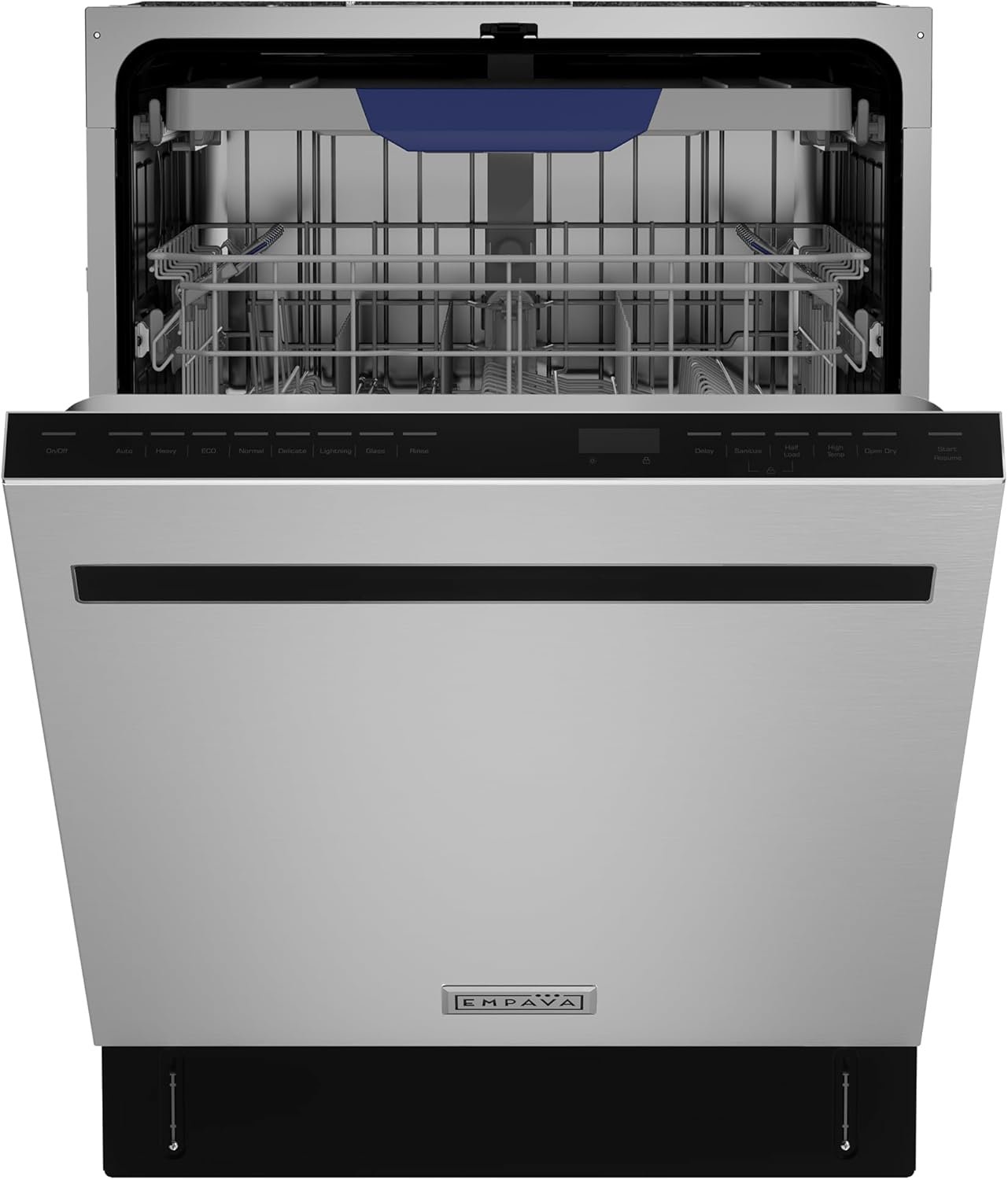
Selecting a dishwasher shapes daily kitchen flow and long-term household resource use. Household size, meal frequency, and kitchen layout determine capacity needs and loading patterns, while open-plan kitchens raise noise sensitivity and demand quieter operation. Cleaning performance and wash coverage address soil levels and load variety, and drying strategy affects spot-free results for glassware and plastics. Efficiency expectations include both water consumption per load and annual energy use; ENERGY STAR certification provides a baseline for comparison. Material choices such as a stainless steel tub influence corrosion resistance and heat retention during drying. For prospective buyers, matching cycles, rack flexibility, and maintenance requirements to family habits reduces frustration and supports long-term reliability. The Empava 24-inch built-in model centers on compact capacity, a multi-arm spray system, and an Auto Door Dry feature, making evaluation of spray coverage, rack layout, noise rating, water use, and upkeep essential when deciding fit for a specific household.
Quick Overview
| Feature | Details |
|---|---|
| Dishwasher type | Built-in 24-inch undercounter unit |
| Capacity | 15 place settings |
| Wash cycles & tech | 8 cycles, 6 modifiers; Smart Spray System with 28 jets and 3 spray arms |
| Drying method | Auto Door Dry (automatic steam release) |
| Noise level | 49 dB reported rating |
| Energy & water | ENERGY STAR certified (meets 2026 ENERGY STAR 7.0); 3.2 gallons per load; 220 kWh/year |
| Tub & materials | Brushed stainless steel tub and interior |
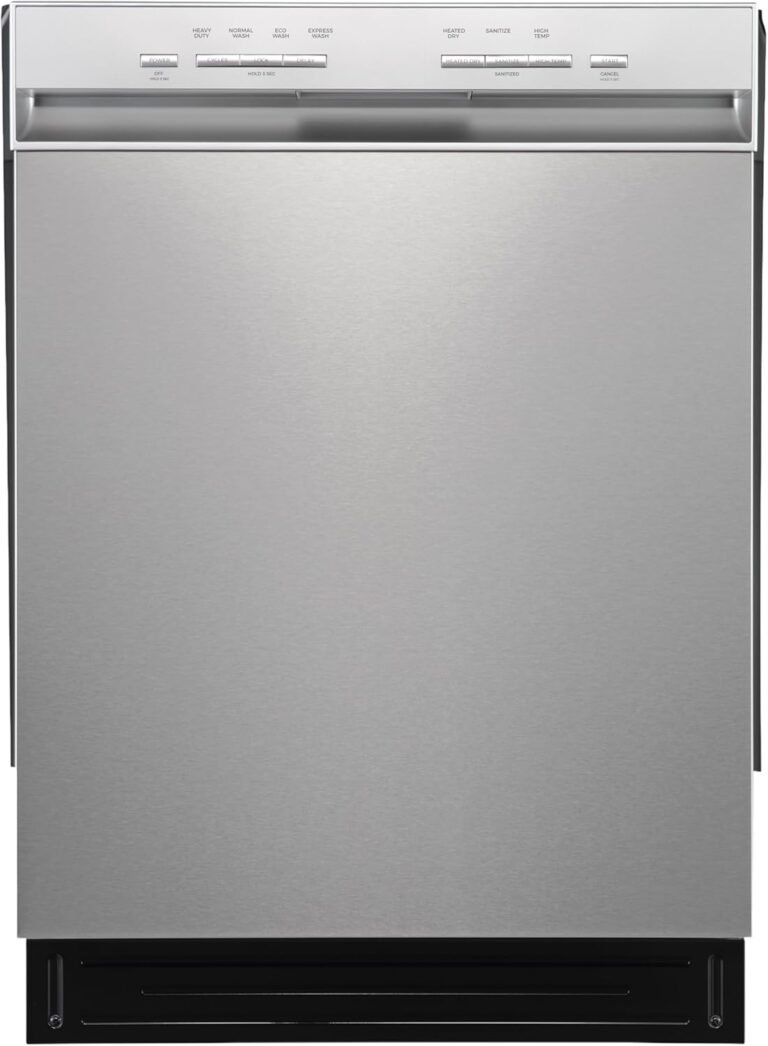
| Controls & aesthetics | Hidden touch controls, LED display, pocket handle |
| Dimensions & installation | 22.6″ D x 23.8″ W x 33.8″ H; built-in cut-out sizing provided |
| Included components | Cutlery basket, drain hose, mounting brackets, user manual |
The specifications position this unit for households seeking a compact built-in dishwasher that balances capacity and efficiency. A 15-place setting rating with three racks supports moderate loading for small to medium families, while the spray architecture and stainless steel tub indicate intent for thorough cleaning and durability. ENERGY STAR certification and 3.2 gallons per cycle appeal to buyers prioritizing water and energy conservation without sacrificing cycle options.

Cleaning performance and wash coverage
The cleaning performance of a dishwasher is determined by spray arm geometry, jet count, cycle programming, and soil separation. The Empava model lists a Smart Spray System with 28 jets and three spray arms, which suggests multi-level coverage designed to direct water toward upper, middle, and lower load zones. Cycle variety including Sensor Wash and Heavy cycles enables automatic adjustment of wash time and water temperature in response to soil sensors in many modern designs. Filtration and recirculation patterns influence how effectively food particles are trapped and prevented from re-depositing. For buyers, the combination of targeted spray distribution and a stainless steel tub that retains heat during the final rinse supports improved detergent activation and soil removal, especially on heavily soiled dinnerware when paired with appropriate cycle selection.

Spray architecture and multi-level coverage
The Smart Spray System’s 28 jets across three spray arms is intended to create overlapping spray patterns that reach dish faces and utensils on multiple racks. Three spray levels reduce blind spots that single-arm designs can leave near tall items or tightly packed racks. In engineering terms, higher jet counts and dedicated upper-arm distribution raise the probability of impinging jets breaking up food soils and dispersing rinse water for effective detergent action. That said, spray performance depends on unobstructed pathways; large pots or tall stemware will alter flow dynamics. For dwellings that frequently wash mixed loads, the three-arm arrangement typically yields better coverage than basic two-arm configurations.
Filtration, soil removal, and recirculation
Effective soil management relies on a strainer or filter system that traps solids while allowing recirculated water to be re-used for mechanical action. The specifications indicate a stainless steel tub and included cutlery basket but do not detail filter type; common designs combine coarse and fine filters in the sump area to protect pumps. A well-designed recirculation pump coupled with stage filtration reduces re-deposition risk, and routine filter access simplifies maintenance. Buyers should expect a multi-stage filter or easy-to-remove screen given the unit’s claimed performance and should follow manufacturer guidance to maintain wash effectiveness over time.
Cycle options and modifiers that affect cleaning
Eight cycles plus six modifiers like Sanitize and Delay Start provide flexibility to match soil levels and load types. Sensor Wash, when present, typically measures turbidity to adjust wash duration and water usage, improving cleaning while conserving resources. Heavy cycles increase pump speed, temperature, and soak time for baked-on soils, while Delicate or Economy cycles use lower temperatures and gentler spray actions for fragile items and lighter soils. The Sanitize modifier elevates final rinse temperatures to manufacturer-specified set points to reduce microbial load per appliance standards; however, this impacts energy consumption and is best used selectively for heavily soiled cookware and cutting boards.
Capacity, rack design, and place settings
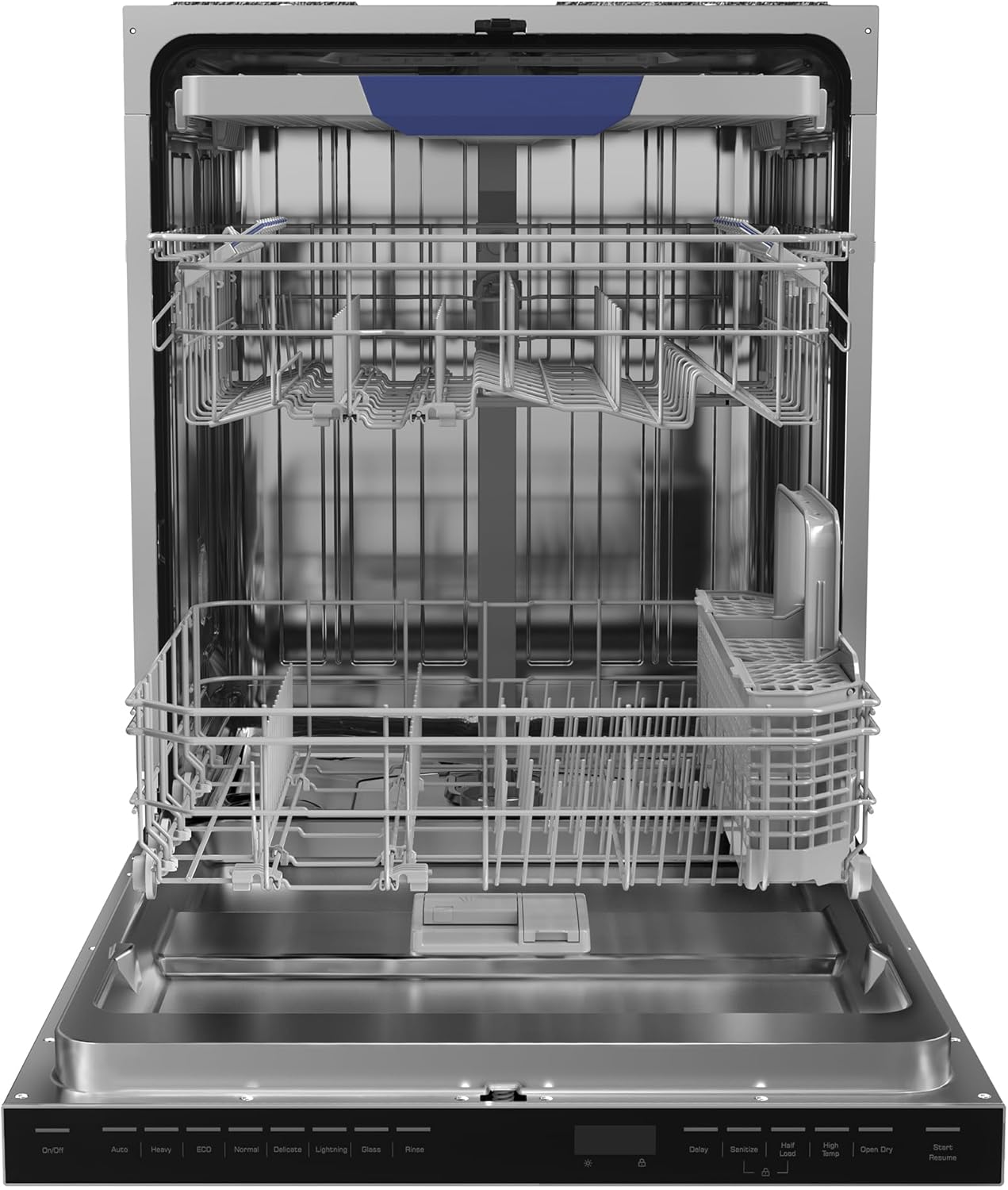
Capacity influences how often the dishwasher must be run and whether larger cookware fits. The Empava lists a 15-place setting capacity across three racks, including a dedicated third rack for utensils. This configuration typically allocates the lower rack for plates and pots, the middle rack for bowls and glasses, and a slim top rack for cutlery and flat silverware. Flexible tines and adjustable basket options increase usable volume for nonstandard items. For buyers with limited space or variable load types—such as families that alternate between dinnerware-heavy and pot-heavy loads—rack flexibility and a third rack reduce the need to handwash or to run partial loads frequently.

Third rack utility and utensil management
A third rack dedicated to utensils frees middle and lower rack real estate and often improves spray access to cutlery. Shallow top racks are designed to host forks, spoons, small spatulas, and sometimes small prep tools, allowing them to sit flat and avoid blocking spray to other items. This arrangement typically speeds loading and unloading and reduces the number of items in the main cutlery basket, which can otherwise shield lower-rack dish faces. Buyers who prefer a third-rack layout generally find it useful for everyday silverware and small kitchen tools, though very tall utensils or large lids may still require the lower rack.
Flexible tines and load distribution
Flexible tines enable reconfiguration for tall glasses, casserole dishes, or odd-shaped cookware, allowing a more efficient distribution of space. The product description mentions flexible tines; this suggests the lower and maybe middle rack can be adjusted without tools to accept pots or stemware. Properly spaced tines help to orient dish faces toward spray arms for better cleaning and reduce contact points that cause chipping. Users with varied cookware collections benefit from adjustable tines in terms of both fit and cleaning outcomes, as correct orientation is essential for effective spray impact.
Stainless steel tub and interior layout benefits
A stainless steel tub contributes to durability, corrosion resistance, and higher internal temperatures during final rinses, which can improve drying and reduce spotting. The brushed finish listed for the Empava unit is common for resisting staining and wear. From an engineering perspective, metal tubs also dampen noise and withstand detergents that can degrade plastic liners over time. For buyers focused on longevity and consistent thermal performance across cycles, a stainless steel interior is a meaningful specification compared with polymer alternatives.
Noise levels and suitability for open kitchens
Noise rating is a critical factor for open-plan homes and small apartments where the kitchen is near living spaces. The Empava dishwasher is rated at 49 decibels, which falls into the moderate quiet category for residential dishwashers. Decibel ratings are logarithmic; each increase of 10 dB roughly doubles perceived loudness, so a 49 dB unit will be noticeably louder than ultra-quiet models in the low 40s. Motor type, insulation, and pump speed control affect noise characteristics; brushless motors and improved sound insulation reduce mechanical and airborne noise. For households sensitive to continuous background noise, machine placement, cabinetry enclosure, and operating cycles all factor into perceived disruption despite nominal dB ratings.
What 49 dB means in daily use
A 49 dB dishwasher typically produces audible but unobtrusive sound during most cycles; ambient conversation and television may still be heard in adjoining rooms. In open-plan living spaces, background noise blends, but activities requiring quiet concentration might be affected during peak pump and spray periods. Noise levels vary across cycle stages—wash and pump peaks are louder than idle or drying phases—so users who plan to run the dishwasher during evening hours should consider the unit’s rating relative to room acoustics. Sound-dampening cabinetry and isolation mounts can further reduce perceived noise.
Motor and insulation design considerations
Quiet operation is achieved through a combination of lower pump RPMs, variable-speed motors, and internal insulation materials. While the Empava specifications do not detail motor type, the 49 dB rating suggests a focus on balanced acoustic performance and cleaning power. Brushless DC motors typically offer smoother operation and reduced wear, while additional foam or mass-loaded insulation within the door and tub assembly mitigates airborne noise. Buyers concerned about longevity and serviceability should verify motor type and warranty coverage from manufacturer documentation.
Placement, installation, and vibration control
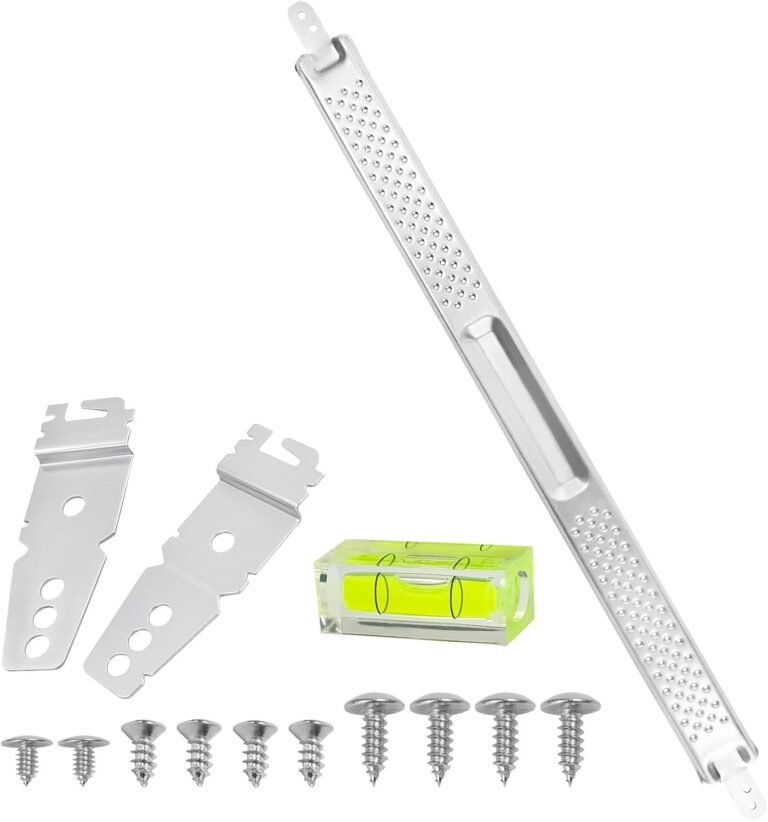
Installation affects both noise transmission and vibration. Built-in units set into cabinetry will transmit mechanical vibration into surrounding structures; anti-vibration brackets, proper leveling, and secure mounting hardware reduce rattles and tonal resonance. The included mounting brackets and screws indicate standard installation support, and the 59-inch outlet hose provides flexibility for typical under-sink connections. Prospective buyers with lightweight or open shelving adjacent to the dishwasher should prioritize secure installation and consider sound-isolating mounts to minimize transferred noise.
Drying performance, energy use, maintenance, and durability
Drying strategy, energy consumption, and maintenance requirements combine to shape long-term ownership experience. The Empava unit uses an Auto Door Dry feature that releases steam at cycle end to reduce moisture and spotting; this passive venting approach relies on heat retention and air exchange rather than energy-intensive heated drying. Energy and water efficiency figures—3.2 gallons per cycle and ENERGY STAR 7.0 compliance with 220 kWh/year—indicate attention to conservation. Maintenance aspects include access to filters, spray arm cleaning, and periodic checks of seals to prevent leaks. Construction using stainless steel and included serviceable components supports anticipated wear patterns, but expected longevity depends on usage frequency and maintenance adherence.

Auto Door Dry mechanics and moisture control
Auto Door Dry functions by slightly opening the door at the end of the rinse cycle to allow humid air to escape and cooler ambient air to enter, promoting evaporative drying without an additional heating element. This reduces energy draw compared with electric heated drying but depends on interior heat retention and load composition; plastics retain moisture and will typically remain damp. For glassware, the combination of a hot final rinse and vented drying helps reduce spotting. Users seeking fully dry plastics will often need to pair the Auto Door Dry feature with a rinse aid or run a supplemental low-heat or fan-assisted dry if available.
Energy and water usage expectations
ENERGY STAR 7.0 certification and a listed 3.2 gallons per load indicate a design optimized for lower water consumption while maintaining cleaning through targeted spray action and sensors. Annual energy use of 220 kWh provides a standardized comparison metric among similarly sized appliances. Reduced water per cycle can extend cycle times or increase recirculation to maintain cleaning efficacy; modern sensors and cycle algorithms compensate by adapting wash intensity. Buyers prioritizing sustainability should weigh the balance between shorter cycles with higher energy or extended low-water cycles that rely more on mechanical spray coverage.
Filters, upkeep, and service considerations
The presence of accessible filtration and removable spray arms simplifies routine maintenance necessary to sustain performance. Trapped food particles should be cleared regularly to keep pumps and spray nozzles from clogging; the included user manual and service parts such as a drain hose and mounting hardware suggest standard user-level maintenance. For longevity, seals, pump bearings, and electrical components are common wear points; periodic inspection and timely replacement of worn parts extend service life. Buyers should consider local service support and part availability when evaluating long-term reliability expectations.
Construction materials and expected longevity
A brushed stainless steel tub and metal interior fittings resist corrosion and tolerate sustained high-temperature rinses, contributing to endurance compared with polymer interiors. The listed 75-pound item weight and inclusion of standard fastening hardware align with conventional built-in dishwasher construction. Durability also depends on cycle frequency, water quality, and maintenance routines; hard water can accelerate wear on spray arms and heating elements unless mitigated by water-softening strategies or routine descaling. Prospective owners should assess water chemistry and follow recommended maintenance schedules to maximize service life.

Pros & Cons
Pros
- Compact built-in footprint with 15 place settings makes efficient use of undercounter space for small to mid-size kitchens. This configuration supports families that need daily capacity without a full 24″ wide commercial footprint.
- Multi-arm spray system with 28 jets provides multi-level coverage intended to reach items on all racks, reducing blind spots common in two-arm designs. Better spray geometry typically improves mechanical soil removal across mixed loads.
- Stainless steel tub improves heat retention, corrosion resistance, and long-term durability versus polymer interiors. Metal tubs also aid in lowering interior noise transmission during operation.
- ENERGY STAR 7.0 qualification and 3.2 gallons per cycle reflect strong water and energy conservation credentials for buyers prioritizing efficiency. Annual energy metrics simplify comparisons among similar models.
- Auto Door Dry reduces reliance on electric heating for drying by venting steam, lowering energy usage and helping to cut down spotting on glassware when combined with a hot final rinse.
- Hidden touch controls and LED display provide a clean built-in look while preserving full-feature access for users who prefer minimalist cabinetry aesthetics.
- Third rack for utensils increases usable capacity and helps separate cutlery to improve spray exposure and unloading efficiency.
- A reported 49 dB rating balances quiet operation with robust cleaning performance, suitable for many open-plan arrangements that tolerate moderate background noise.
Cons
- A 49 dB rating, while moderate for the category, is louder than premium ultra-quiet models in the low 40s, which may be noticeable in very quiet open-plan spaces. Households requiring near-silent operation during evening hours may find this level intrusive.
- Auto Door Dry depends on interior heat retention and ambient airflow; plastics and lightweight items can remain damp and may require hand-drying or additional cycle options for fully dry results.
- Filtration details are not fully specified in public materials; prospective buyers should confirm filter type and ease of access for maintenance to avoid performance degradation over time.
- The 24-inch built-in format fits many kitchens but excludes users needing larger commercial-style capacity or those with nonstandard cabinet cut-outs; installation clearances must be verified before purchase.
- Repair parts and local service availability are typical considerations for imported or less widely distributed brands; buyers should review warranty terms and regional service options prior to acquisition.
Final Verdict: Who This Dishwasher Is Best For (and Who Should Skip It)
The Empava 24-inch built-in dishwasher suits households seeking a space-efficient, ENERGY STAR–rated appliance that balances cleaning power with water conservation. Its 15-place setting capacity and three-rack arrangement make it a practical choice for small families, couples who entertain occasionally, and homeowners with moderate daily dish loads. The Smart Spray System with three spray arms and 28 jets, combined with stainless steel construction, targets effective soil removal and long-term durability while the Auto Door Dry feature reduces energy-intensive heated drying.
Buyers who should reconsider include those requiring ultra-quiet operation in very noise-sensitive open-plan living areas, consumers who regularly need completely dry plastics without secondary drying steps, and households that demand larger commercial-scale capacity. Installation constraints should be reviewed to ensure the provided dimensions and cut-out measurements align with cabinetry. Overall, for 2026 comparisons within the compact built-in segment, this model offers an efficient balance of cleaning coverage, efficiency credentials, and practical rack flexibility for many small-to-medium households.

Frequently Asked Questions (FAQs)
How well does a 49 dB dishwasher perform in an open-plan living space?
A 49 dB rating is considered moderate for residential dishwashers. It will be audible but usually unobtrusive during most cycles, blending with typical household background noise. Perceived loudness depends on room acoustics, cabinetry, and placement; sound isolation measures like proper mounting and insulation can reduce perceived noise in open-plan spaces.
Does Auto Door Dry provide fully dry dishes, including plastics?
Auto Door Dry vents steam by slightly opening the door at cycle end to encourage evaporative drying, which is energy-efficient for glassware and ceramics. Plastics often retain moisture due to lower thermal mass and may remain damp; users seeking fully dry plastics may need additional drying steps, such as hand drying or a supplemental cycle with heating if available.
What does ENERGY STAR 7.0 certification indicate for this dishwasher?
ENERGY STAR 7.0 establishes performance thresholds for water and energy use; certification indicates the dishwasher meets or exceeds those standards for efficiency. For buyers, this means the appliance is designed to balance cleaning efficacy with reduced water per cycle and lower annual energy consumption relative to non-certified models.
How important is a stainless steel tub for longevity and drying?
A stainless steel tub resists corrosion and retains heat better than polymer tubs, which helps with drying performance and reduces long-term wear from detergents and high-temperature rinses. Metal tubs also tend to dampen noise and support higher final rinse temperatures that improve drying results for glassware and ceramics.
Are 28 jets and three spray arms noticeably better than simpler spray systems?
More jets and additional spray arms typically improve coverage by directing water to multiple rack levels and reducing blind spots. This enhances mechanical action on dish surfaces and can improve detergent dispersion. Actual performance depends on spray arm placement, load arrangement, and unobstructed flow paths.
What maintenance is required to keep this dishwasher performing well?
Routine maintenance generally includes emptying and rinsing coarse filters, clearing spray arm nozzles of debris, inspecting door seals for buildup, and checking the drain hose for kinks or blockages. Adhering to manufacturer cleaning intervals and descaling if water hardness is high helps maintain pump efficiency and spray performance over time.
Is a third rack worth having in a compact 24-inch dishwasher?
A third rack increases usable capacity for utensils and small items while freeing space on middle and lower racks for larger dishes. It streamlines loading and can improve spray exposure for cutlery. Users with frequent mixed loads or many small utensils generally find third racks beneficial for organization and cleaning efficiency.
How should hard water be addressed to protect dishwasher components?
Hard water can lead to mineral buildup on spray nozzles, heating elements, and glassware. Using a dishwasher-compatible water softener, detergent with built-in water conditioners, or periodic descaling procedures can mitigate deposits. Regular inspection and cleaning of spray arms and filters will also help preserve performance and extend component life.