Empava 24 Inch Dishwasher — Quiet Efficient Cleaning Now
Why Dishwasher Choice Matters
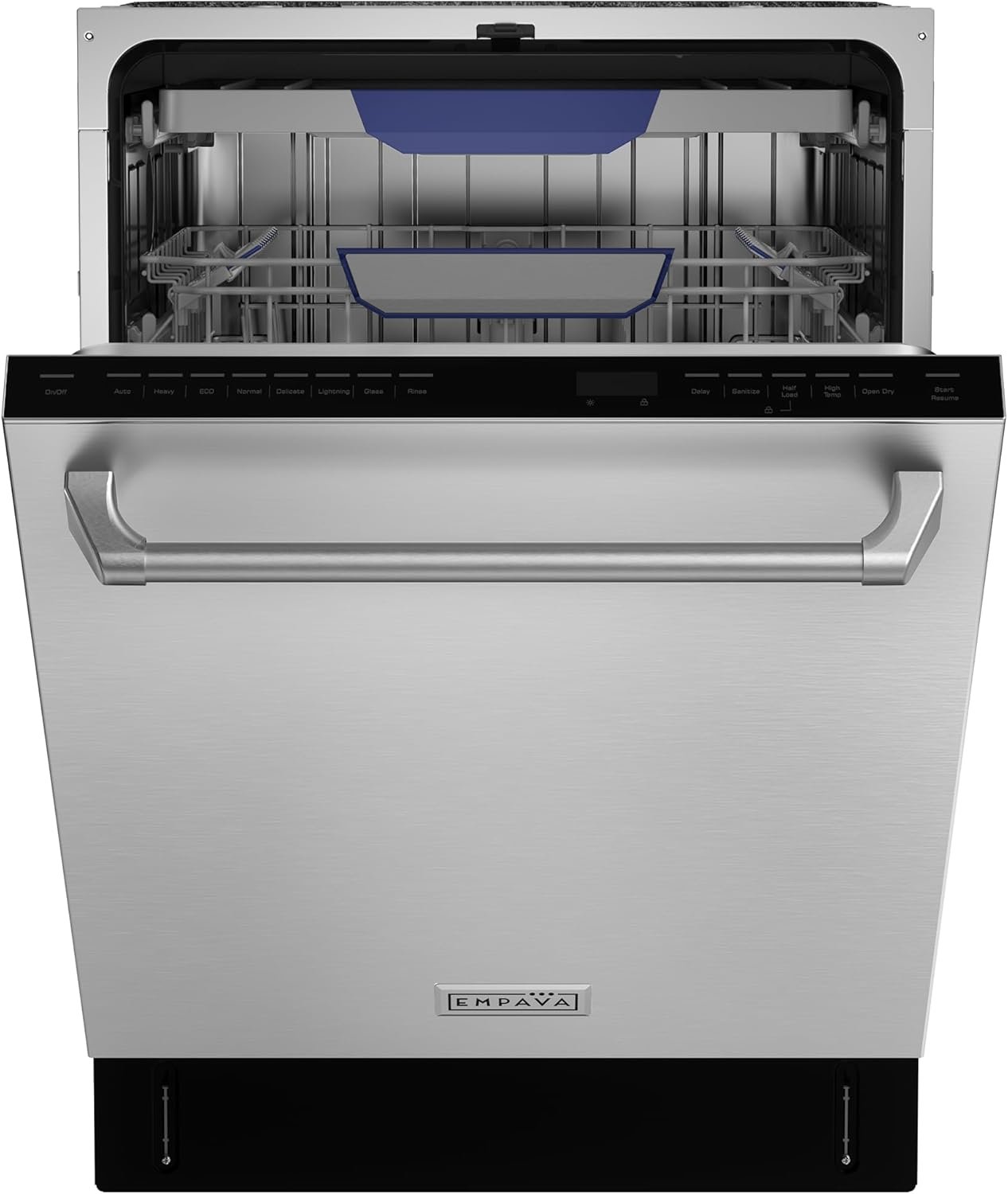
Selecting a built-in dishwasher affects daily routines, kitchen layout planning, and long-term utility consumption. Household size, meal frequency, and typical soil levels determine the capacity and cycle selection that will be used most often; a 15-place setting dishwasher is aimed at families and households that generate moderate to heavy dish loads. Noise sensitivity and open-plan kitchens make sound ratings important: the listed 45 dB rating places this model in the ultra-quiet category, suitable for living areas adjacent to the kitchen. Efficiency expectations intersect with water and energy use — ENERGY STAR alignment and per-load water consumption influence utility impact. Cleaning performance, drying behavior, and maintenance needs drive decision trade-offs between convenience and hands-on care. Material choices such as a stainless steel tub affect drying performance, corrosion resistance, and longevity. When evaluating options, buyers should balance run-time flexibility, the frequency of heavy loads, and noise tolerance to match a dishwasher’s documented features to household priorities.
Quick Overview
| Feature | Details |
|---|---|
| Dishwasher type | Built-in 24-inch undercounter unit |
| Capacity | 15 place settings |
| Wash cycles & cleaning tech | 8 cycles including Auto, Heavy, Eco, Glass; Deep Clean Technology with 30+ spray jets and triple wash arms |
| Drying method | Dual-Dry System: built-in fan plus auto-open door for moisture release |
| Noise level | 45 dB (ultra quiet) |
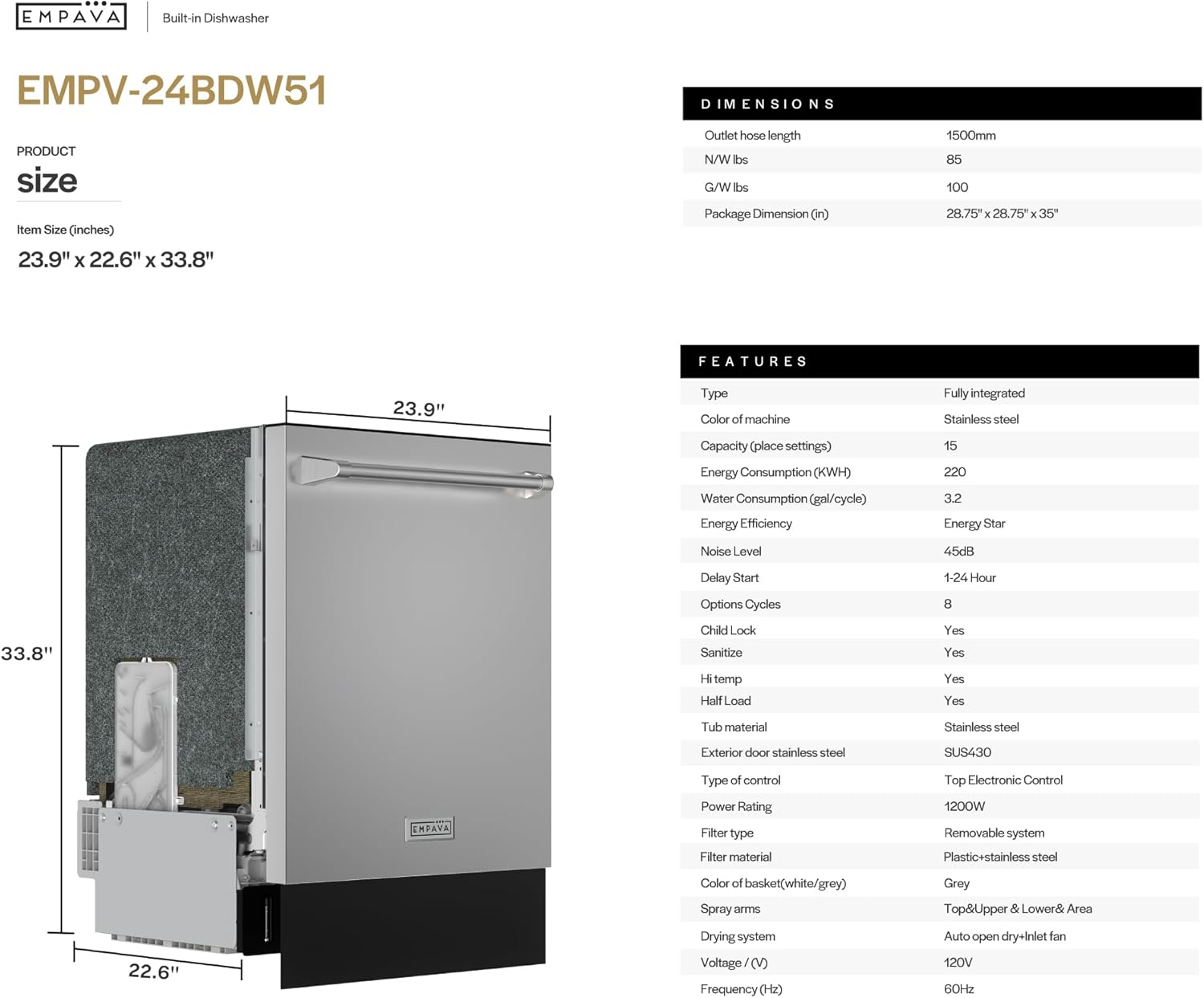
| Energy & water efficiency | ENERGY STAR 7.0 certification; 3.2 gallons per load; annual energy consumption 220 kWh/year |
| Dimensions & installation | 33 7/8″–35″ H x 23 7/8″ W x 22 5/8″ D; built-in cut-out specifications provided |
| Tub & materials | Stainless steel tub; brushed stainless exterior |
The table summarizes how the Empava 24-inch built-in unit maps to common household requirements: a 15-place capacity and three-rack layout suit families and frequent entertainers, while the stainless steel tub and dual-dry approach support durable operation and improved moisture control. The combination of multiple spray arms and a sensor-style Auto cycle targets effective soil removal across mixed loads, and the 45 dB rating supports placement near living spaces with minimal disturbance.

Cleaning Performance and Wash Coverage
The Empava 24-inch dishwasher presents a cleaning architecture centered on a triple-arm wash delivery and over 30 spray jets described as Deep Clean Technology. This configuration distributes pressurized water and detergent across multiple vectors to reach flatware, plates, and the underside of pots; triple wash arms increase strike angles while multiple jets enhance localized agitation. A stainless steel tub helps maintain higher water temperatures for thermal action and reduces heat loss during cycles. Sensor-enabled Auto cycles typically adjust water volume and duration to soil levels, and combined filtration captures particulates to preserve spray channel performance. These design choices work in concert to target a range of soils from dried-on food to glassware residues while minimizing the need for pre-rinsing.

Spray System, Wash Arms, and Jet Placement
Multiple spray arms and 30+ jets imply a zoned wash strategy where high-impact jets concentrate on heavy soil zones and smaller jets provide rinsing coverage for delicate items. Triple wash arms increase the probability of spray reaching vertically stacked dish surfaces and the underside of cookware; rotating arms create variable flow patterns that reduce shadowed areas. Jet placement near the base and mid-level racks targets pots and plates, while upper-arm jets address glasses and stemware. A well-designed pump and wash cycle timing coordinate pressure peaks with detergent release to improve mechanical soil removal. These mechanisms rely on correct rack loading and unobstructed spray paths to achieve intended coverage.
Filtration, Soil Sensors, and Cycle Selection
A mechanical and/or microfilter system traps large food particles to protect pump and jet passages; regular filter access is standard for maintaining spray performance. Soil sensors integrated in Auto or Sensor Wash modes detect turbidity and adjust run time and water usage to the load, balancing energy and cleaning outcomes. Cycle selection—Heavy for pots, Glass for delicate items, Eco for lower-temperature washes—allows tailoring of mechanical action and temperature. Effective use of cycle options and routine filter maintenance supports consistent cleaning results across varied load types.
Capacity, Rack Design, and Place Settings
A 15-place setting capacity positions this unit for medium to larger households and accommodates diverse cookware and serviceware configurations. The three-rack layout typically includes a third tray or cutlery rack that frees lower racks for larger items; adjustable tines and height settings expand flexibility for tall glasses and stockpots. Bracketed or fold-down tine patterns improve vertical space management and allow nesting of mixing bowls or casserole dishes. The presence of a dedicated cutlery basket or upper rack slot impacts how utensils are distributed and the overall usable capacity. Proper exploitation of an adjustable, multi-rack system increases loading efficiency and reduces the number of cycles required per week for average family usage.

Third Rack, Adjustable Tines, and Stemware Care
A third rack or top tray is useful for flatware, small utensils, and long items that otherwise occupy mid or lower rack volume; this increases net per-cycle capacity and simplifies sorting. Adjustable tines and multi-height rack positions enable accommodation of stemware and larger pots simultaneously, but careful loading is essential to prevent occluded spray paths. For delicate glassware, dedicated Glass cycles with reduced pressure and lower temperature settings reduce mechanical stress. Anti-tip and stemware supports reduce vibration and contact during wash, and utilizing adjustable upper rack heights helps avoid collision with spray arms while maximizing usable space.
Pots, Pans, and Large-Item Loading Strategies
Lower-rack flexibility and fold-down tines are critical for bulky cookware. Placing heavy-soiled items facing the spray arms’ direction and angling them to allow drainage enhances cleaning and reduces redeposit risk. The triple-arm system benefits from unobstructed rotation; large items should not block mid- or upper-arm motion. For best outcomes, heavy cycles concentrate heat and mechanical action on lower-rack loads while keeping glassware in the upper rack on gentler cycles, preserving finish and reducing breakage risk.
Noise Level, Installation, and Suitability for Open Kitchens
A 45 dB noise rating situates the dishwasher in the ultra-quiet category by industry standards; this level typically equates to background-level sound in a home environment and is often acceptable for open-plan living. Noise rating alone does not capture tonal quality or low-frequency vibrations that may be disruptive; installation quality, cabinetry insulation, and mounting hardware influence perceived acoustics. A hidden top control design reduces panel resonance and contributes to sound dampening. For households with sleeping areas adjacent to kitchens or with sensitive occupants, combining the 45 dB rating with proper installation and anti-vibration measures will reduce audible disturbance and improve liveability.

Acoustic Behavior, Cabinet Integration, and Mounting
Integration into cabinetry and the use of void-filling insulation around the cut-out alter perceived noise. Solid mounting brackets, anti-vibration pads, and secure leveling reduce rattles and transmitted vibration through adjacent countertop and cabinet surfaces. The listed outlet hose length and mounting hardware inclusion affect installation choices; a tight, level installation minimizes mechanical noise from pump and motor operation. In retrofit situations, existing cabinetry cavities may require additional soundproofing to reach the quietness potential implied by the 45 dB rating.
Open-Plan Use and Nighttime Operation Considerations
In open living arrangements, a 45 dB dishwasher will often run without drawing attention during evening hours, although low-frequency hums may still be perceptible near the unit. Delayed start options allow operation during away times or overnight to align with occupant preferences. For noise-sensitive homes, selecting cycles with lower pump speeds or Eco modes can reduce instantaneous sound levels at the expense of longer cycle times. Consideration of adjacent room use, night-time routines, and background noise profiles should guide placement and cycle scheduling to maximize compatibility with household habits.
Drying Systems and Moisture Control
The Empava model lists a Dual-Dry System combining a built-in fan with an auto-open door feature to reduce residual moisture. A fan-assisted drying mechanism increases airflow over dish surfaces and into the tub cavity, speeding evaporation, while an auto-open door facilitates passive venting and lowers interior humidity at cycle end. Stainless steel tubs retain heat longer than plastic and support condensation-based drying when combined with a heated final rinse; the metal interior also reduces staining and odor retention. Effective drying depends on load composition, rinse aid use, and cycle selection; open-door venting improves results but requires clearance in cabinetry planning.
Fan-Assisted Drying, Auto-Open Door, and Rinse Aid Role
Fan-assisted drying accelerates moisture removal by forcing air circulation where natural convection would be slower, particularly in dense loads. The auto-open door reduces humidity by introducing ambient air immediately after the wash, aiding in faster evaporation and lowering chances of pooled water. Rinse aid reduces surface tension and promotes sheeting of water from dishes, facilitating both mechanical and passive drying strategies. Combined, these elements produce improved dryness for plastics and mixed-material loads compared to condensation-only systems, but plastics may still retain some residual moisture due to low heat absorption.
Moisture Traps, Tub Design, and Post-Cycle Care
Tub geometry and drain profiles influence whether water collects in corners or on flat surfaces; stainless steel tends to avoid staining and allows for more uniform draining. Attention to loading—avoiding inverted cups or horizontal bowls—prevents trapped water that impedes drying. After cycles that include auto-open venting, brief letting dishes settle before unloading helps prevent drips onto lower items. Regular inspection of door seals and vent pathways ensures unobstructed airflow and consistent drying performance over time.
Energy and Water Efficiency Expectations
ENERGY STAR 7.0 certification and a manufacturer-stated 3.2 gallons per load position the dishwasher as a water- and energy-conservative choice compared to older models. Annual energy consumption listed at 220 kWh/year provides a baseline for comparison with other ENERGY STAR-qualified appliances. Sensor-driven Auto cycles and Eco modes adjust water and energy inputs by detecting soil and limiting temperature or duration where appropriate. A 1200-watt rated heating element indicates the appliance can deliver strong thermal performance during heated rinse or sanitize options, though actual runtime wattage varies by cycle. Efficiency benefits are realized when cycle selection aligns with load soil level and when full loads are run with appropriate loading to maximize per-cycle efficiency.

Per-Load Water Use, Cycle Selection, and Efficiency Trade-Offs
A 3.2-gallon per-load specification denotes measured water consumption under defined cycle conditions; heavier cycles, high-temperature sanitize options, or partial loads can increase use. Eco and sensor-based cycles reduce water and energy but may extend cycle times to achieve comparable cleanliness through longer soak and wash periods. The choice between shorter, high-energy cycles and longer, low-energy Eco modes depends on immediate cleaning needs and household priorities regarding resource use versus time. Proper loading and pre-scraping instead of rinsing can better leverage the low per-load water design.
Heating, Energy Consumption, and Annual Estimates
The 1200-watt heating rating paired with annual energy consumption figures establishes a realistic operational envelope based on manufacturer measurements. Heated drying or sanitize cycles will draw higher instantaneous power for heating elements, while low-temperature Eco or Glass cycles reduce energy draw. Annual consumption numbers are useful for comparative assessment across models and should be evaluated in the context of typical household cycle frequency, selected options, and local utility profiles for a fuller energy picture.
Maintenance, Filter Requirements, and Durability Considerations
The stainless steel tub and brushed finish indicate corrosion resistance and thermal stability, supporting long-term durability when combined with routine care. Filtration systems that trap food particles require periodic cleaning to prevent clogging and maintain pump efficiency; accessible filters that can be removed and rinsed are standard in this category. User-accessible drain and inlet components, included hoses and clamps, and mounting hardware simplify serviceability at installation and for routine maintenance. The listed item weight and build materials suggest a robust chassis but longevity also depends on water quality, detergent choice, and adherence to recommended maintenance intervals.

Filter Maintenance, Pump Access, and Routine Care
Filters should be inspected and cleaned on a periodic schedule tailored to household usage and soil severity; neglect can reduce spray pressure and increase cycle times. Pump access for debris removal and verification of spray-arm clearance helps maintain consistent performance, and included replacement parts or compatible component references facilitate repairs. Routine checks of door gaskets, inlet and outlet hoses for mineral buildup or wear, and running high-temperature or rinse cycles periodically reduces residue accumulation and preserves seal integrity.
Corrosion Resistance, Component Lifespan, and Warranty Factors
A stainless steel tub resists staining and supports thermal retention, both beneficial for wash quality and longevity. Exterior finishes and internal plastic components can be vulnerable to detergent or mechanical wear over long service lives; following manufacturer care guidelines extends component lifespan. Warranty disclosures (when available) and manufacturer support network influence repairability and parts availability, affecting long-term ownership costs and reliability expectations.

Pros & Cons
Pros
- Quiet operation suitable for open-plan homes: A 45 dB rating places the unit among ultra-quiet models, helpful where kitchen and living areas connect, and permits flexible cycle scheduling without major disturbance. Reduced acoustic emissions are supported by hidden top controls and a solid-braced chassis design.
- Generous 15-place capacity with three racks: The custom rack design with adjustable tines and a third tray increases per-cycle capacity and allows simultaneous loading of pots, plates, and stemware, reducing the number of cycles required per week for typical family usage.
- Comprehensive wash coverage and Deep Clean Technology: Triple wash arms and 30+ spray jets provide multidirectional water delivery to address varied soil types and dish placements, improving reach to the underside of cookware and layered loads.
- Dual-Dry System improves moisture control: Fan-assisted drying combined with an auto-opening door enhances airflow and evaporation, particularly when paired with stainless steel tub heat retention and rinse aid use.
- ENERGY STAR 7.0 certified and low per-load water use: A stated 3.2 gallons per load and 220 kWh/year annual energy figure support efficiency-conscious households seeking reduced resource consumption compared with older units.
- Flexible cycle selection including Auto and Eco modes: Eight cycles and smart options like Delay Start and Sanitize allow tailoring to soil level, glassware care, and energy preferences while sensor-based adjustments optimize resource use.
Cons
- Drying performance variable for plastics: Despite fan assistance and auto-open venting, low-heat absorption of plastic may result in residual moisture on some items, requiring manual drying or extended cycles for fully dry results.
- Installation space and clearance requirements: Built-in cut-out dimensions and auto-open door operation require precise cabinet clearance and planning; retrofit situations may need additional cabinetry adjustments or soundproofing.
- Filter and maintenance requirements: Regular filter cleaning and periodic inspection of spray arms are necessary to maintain the advertised wash coverage; households with heavy soiling will need more frequent maintenance.
- Limited manufacturer warranty details provided: Absence of explicit warranty terms in available disclosures necessitates purchasers to verify coverage and service options prior to purchase to understand long-term support.
Final Verdict: Who This Dishwasher Is Best For (and Who Should Skip It)
This Empava 24-inch built-in dishwasher aligns with households seeking a capacity-oriented, efficient, and quiet undercounter appliance. Families and frequent entertainers will benefit from the 15-place settings, three-rack flexibility, and the Deep Clean triple-arm spray arrangement that targets diverse soils. The ENERGY STAR 7.0 certification, 3.2 gallons per-load figure, and annual energy metric make it suitable for buyers prioritizing water and energy conservation without sacrificing cleaning versatility. Its 45 dB rating and concealed top controls position it well for open-plan kitchens and living-adjacent installations when combined with proper mounting and cabinet insulation.
Buyers who rely heavily on plasticware as primary dishware or who lack cabinet clearance for an auto-opening door should consider alternatives or plan for supplemental drying strategies and installation modifications. Those requiring explicit, robust warranty disclosures or who prefer minimal maintenance appliances should verify service terms before purchase. Overall, the Empava model offers a competitive mix of cleaning coverage, capacity, and efficiency suitable for many modern households in 2026 when matched to correct installation and routine care practices.
Frequently Asked Questions (FAQs)
How effective is a 45 dB dishwasher for open-plan living spaces?
A 45 dB rating is considered ultra-quiet compared to typical household ambient noise and is often acceptable for open-plan environments. Perceived noise depends on installation quality, cabinet resonance, and the frequency content of the appliance sound; solid mounting and additional insulation can further reduce perceptible disturbance during operation.
Can the Empava 24-inch dishwasher handle large pots and pans along with stemware?
The three-rack design with adjustable tines and multiple height positions allows simultaneous accommodation of tall stemware and bulky cookware. Folding tines and an adjustable upper rack enable space reconfiguration; careful loading—angling pots toward spray arms and keeping stemware in upper positions—optimizes cleaning coverage and reduces collision risk.
What drying performance can be expected from a Dual-Dry System with auto-open door?
Fan-assisted drying combined with an auto-opening door improves airflow and evaporation, which typically enhances drying compared with condensation-only systems. Results vary by load composition—plastic items often retain some moisture—so using rinse aid and appropriate cycle selection improves outcomes. Clearance around the door and proper venting are necessary for optimal performance.
How does the dishwasher’s ENERGY STAR 7.0 rating affect water and energy use?
ENERGY STAR 7.0 certification indicates the unit meets modern efficiency benchmarks for energy and water use. The stated 3.2 gallons per load and an annual energy consumption figure provide a baseline for comparison; actual use depends on chosen cycles and load frequency. Sensor-based Auto and Eco modes further reduce consumption by adjusting water and run times to soil levels.
What routine maintenance keeps spray performance and reliability high?
Periodic cleaning of the removable filter and inspection of spray arms for clogs preserve water flow and pressure. Checking door gaskets, inlet and outlet hoses for mineral buildup or wear, and running periodic high-temperature cycles to reduce residue accumulation help maintain long-term performance. Regular maintenance frequency depends on meal habits and soil severity.
Are there installation considerations for the auto-open door and ventilation?
The auto-open door requires cabinet clearances to allow partial door opening for venting; installers should follow the specified cut-out dimensions and ensure adjacent cabinetry does not obstruct airflow. Proper leveling, secure mounting brackets, and consideration of hose routing also impact vibration and perceived noise during operation.
How does the stainless steel tub contribute to durability and cleaning?
A stainless steel tub provides corrosion resistance, better heat retention for wash and rinse cycles, and reduced staining over time compared with plastic tubs. These properties support more consistent drying performance and a longer service life when combined with proper detergent selection and routine maintenance.
Who should consider a different dishwasher instead of this model?
Households that primarily use plastic dishware and require perfectly dry plastics without manual intervention, those with restrictive cabinet clearances that prevent auto-open door operation, or buyers needing explicit extended warranty terms may prefer alternative models. Verifying installation constraints and warranty coverage helps determine fit.