COMFEE’ Countertop Dishwasher Review — Cleaning & Noise
Choosing the Right Countertop Dishwasher
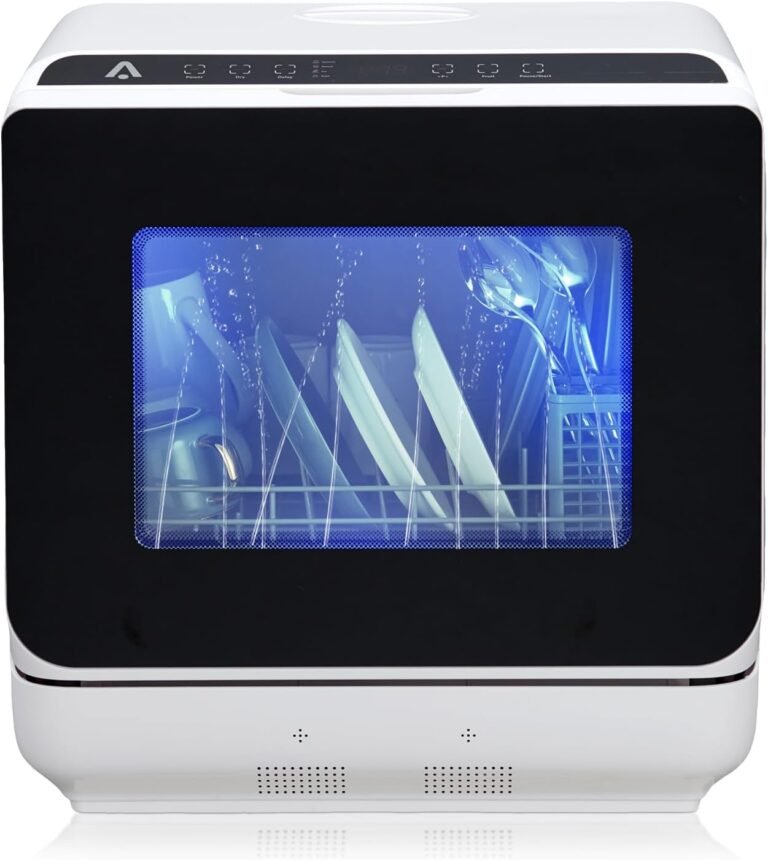
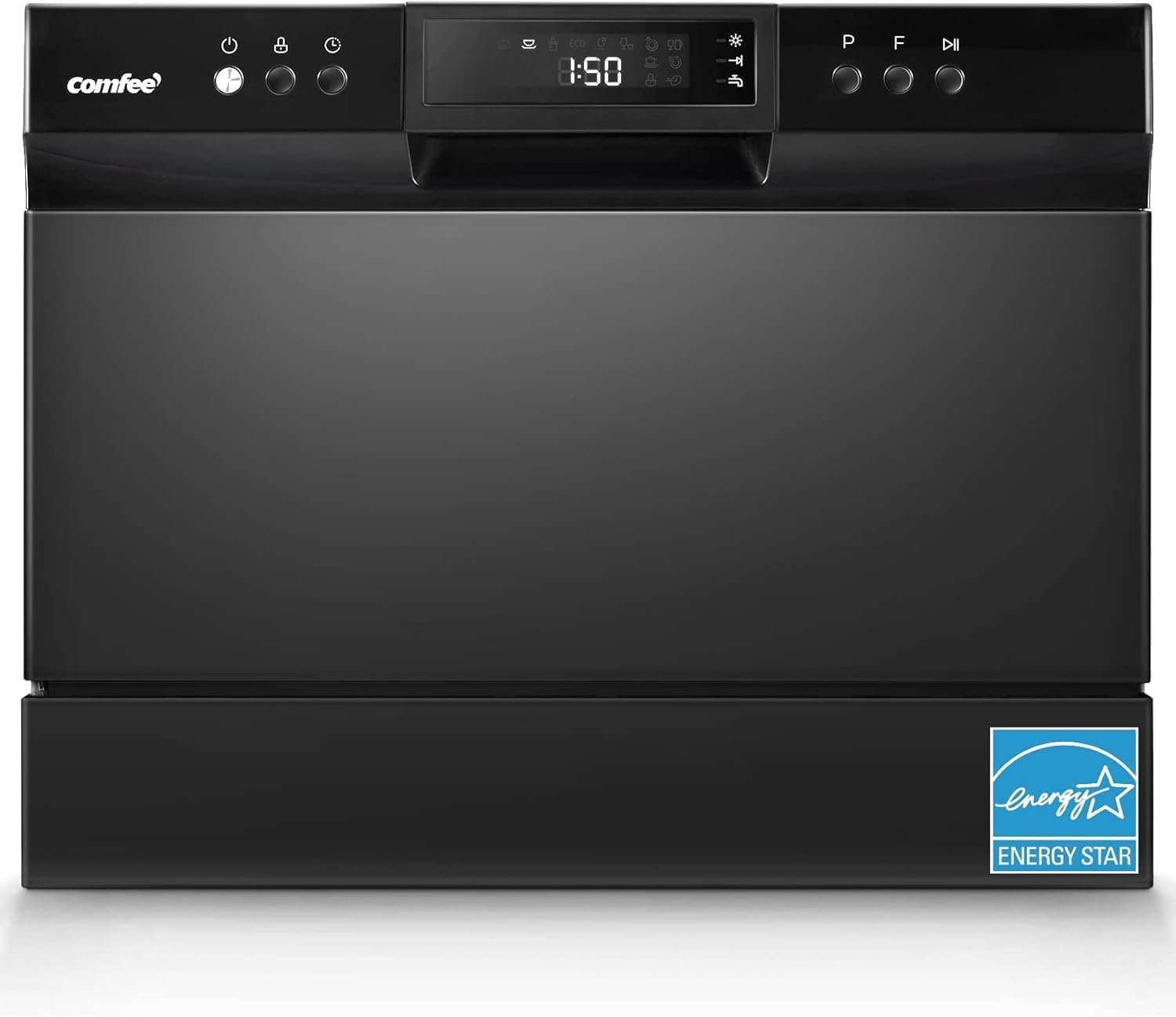
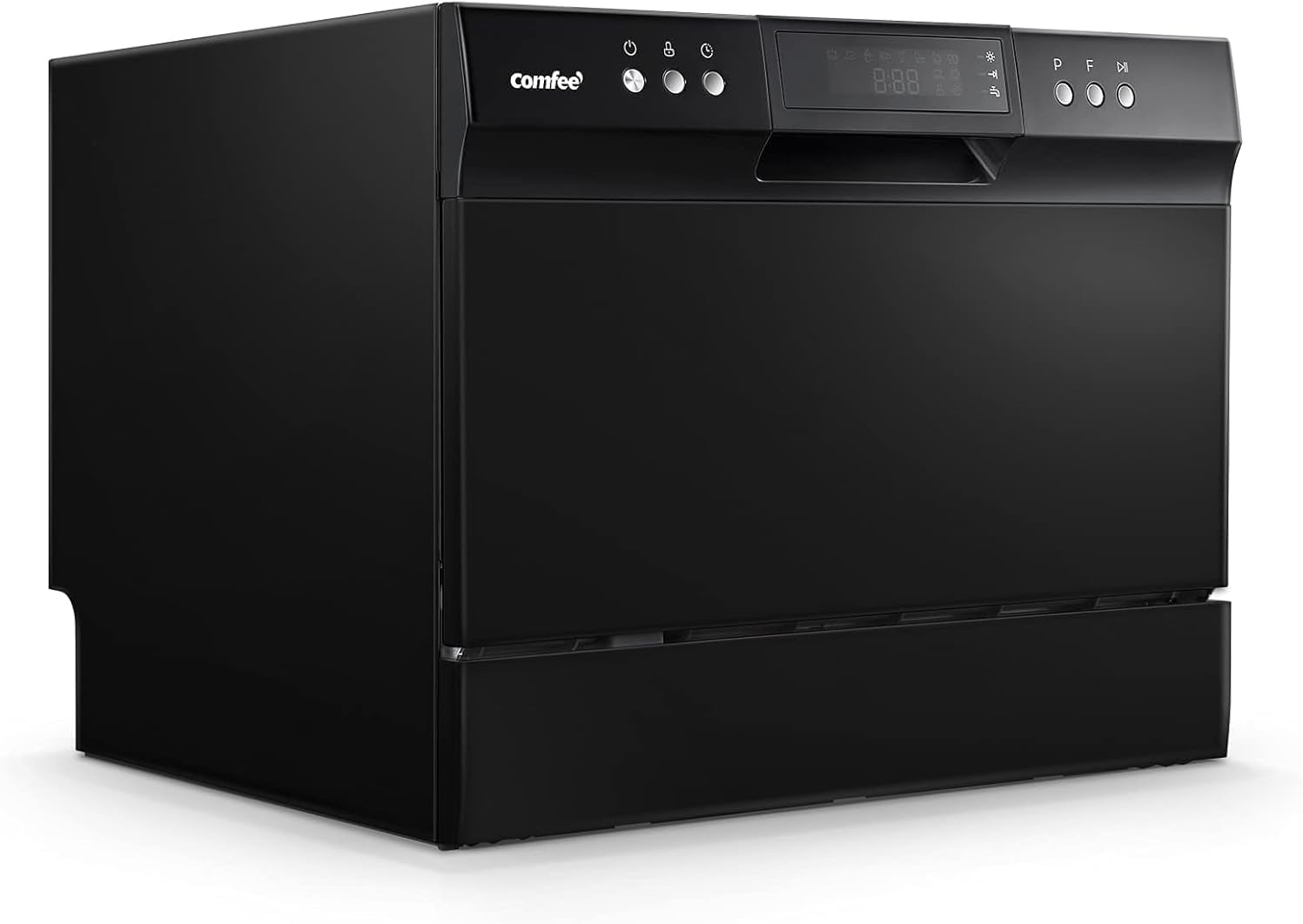
Selecting a countertop dishwasher requires balancing cleaning performance, kitchen layout, household size, and noise sensitivity. For small households, rentals, RVs, or dorms, compact units must deliver reliable soil removal across diverse cookware while fitting limited counter space and plumbing options. Noise levels and venting behavior are especially relevant for open-plan kitchens where living space and cooking areas overlap. Energy and water efficiency expectations influence long-term environmental impact and utility usage, and buyers often prioritize models with recognized certifications. Durability and serviceability factors—such as stainless steel interiors, accessible filters, and standard 120V electrical compatibility—affect ownership experience. This review focuses on published specifications and manufacturer disclosures for the COMFEE’ CDC22P1BBB countertop dishwasher to help match its features to household needs and constraints without implying hands-on evaluation.
Quick Overview
| Feature | Details |
|---|---|
| Dishwasher type | Countertop / portable freestanding unit |
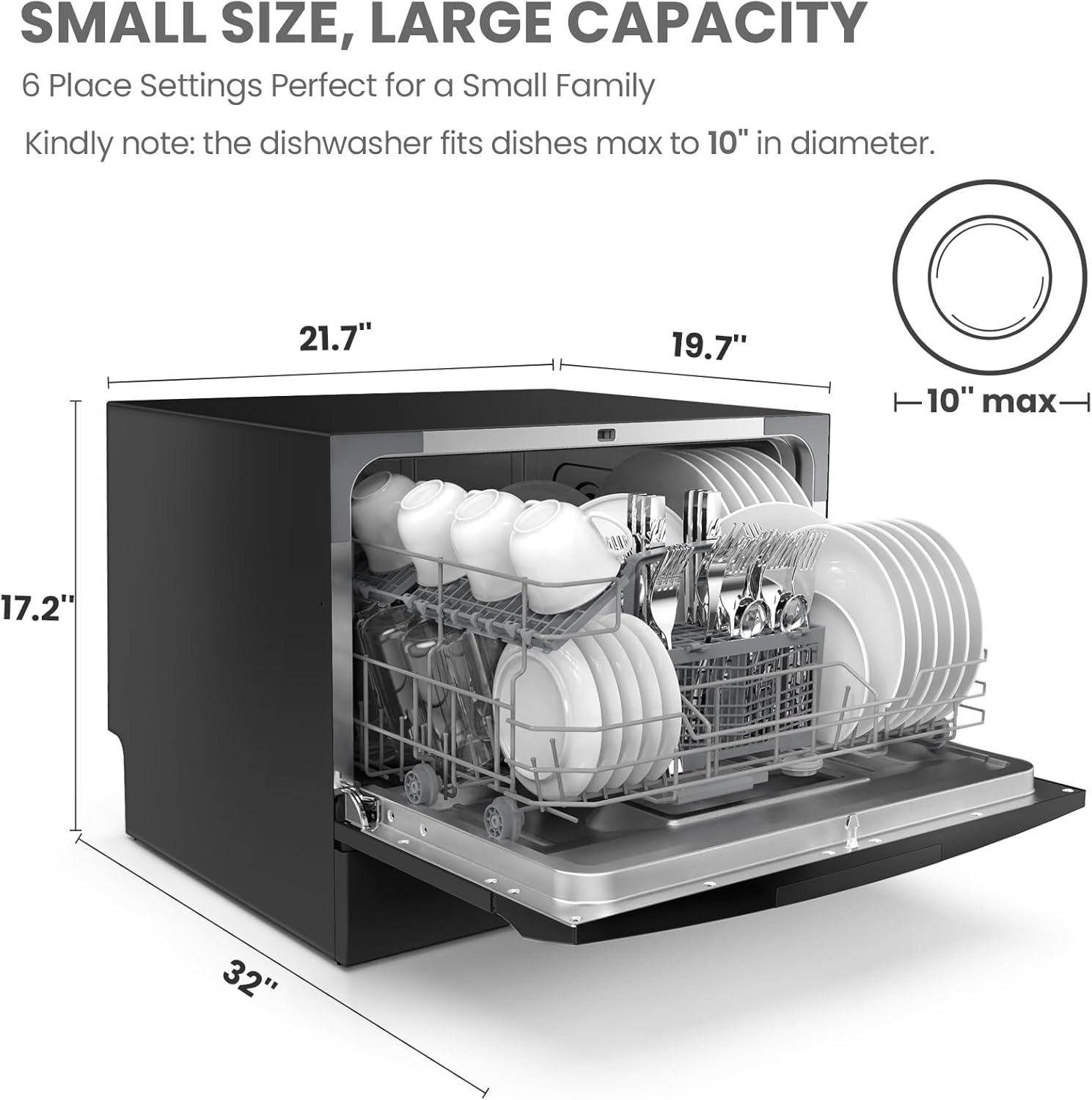
| Capacity | 6 place settings; fits plates up to 10-inch diameter; claims up to ~70 pieces |
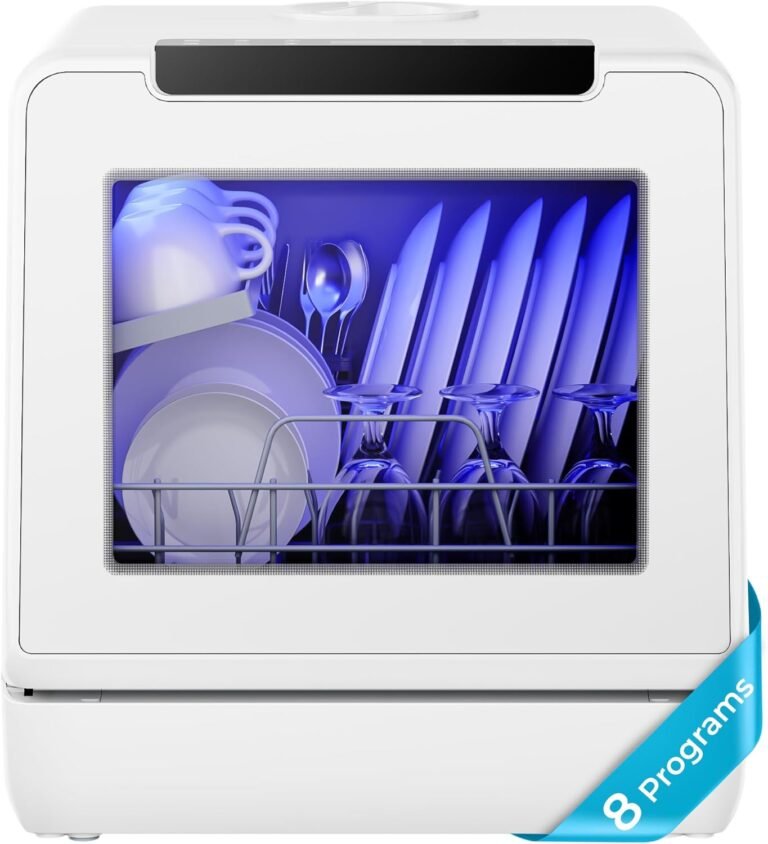
| Wash cycles & technology | 8 cycles (Heavy, Normal, Baby-Care, ECO, Glass, Speed, Rinse, Mini-Party) with 12 nozzles and 360° spiral spray |
| Drying method | Extra-dry function indicated; manufacturer lists additional drying option |
| Noise level | 49 decibels (manufacturer specification) |
| Energy & water efficiency | Energy Star certified; annual energy 174 kWh; water consumption listed ~2.85 gallons (per hour cycle spec) |
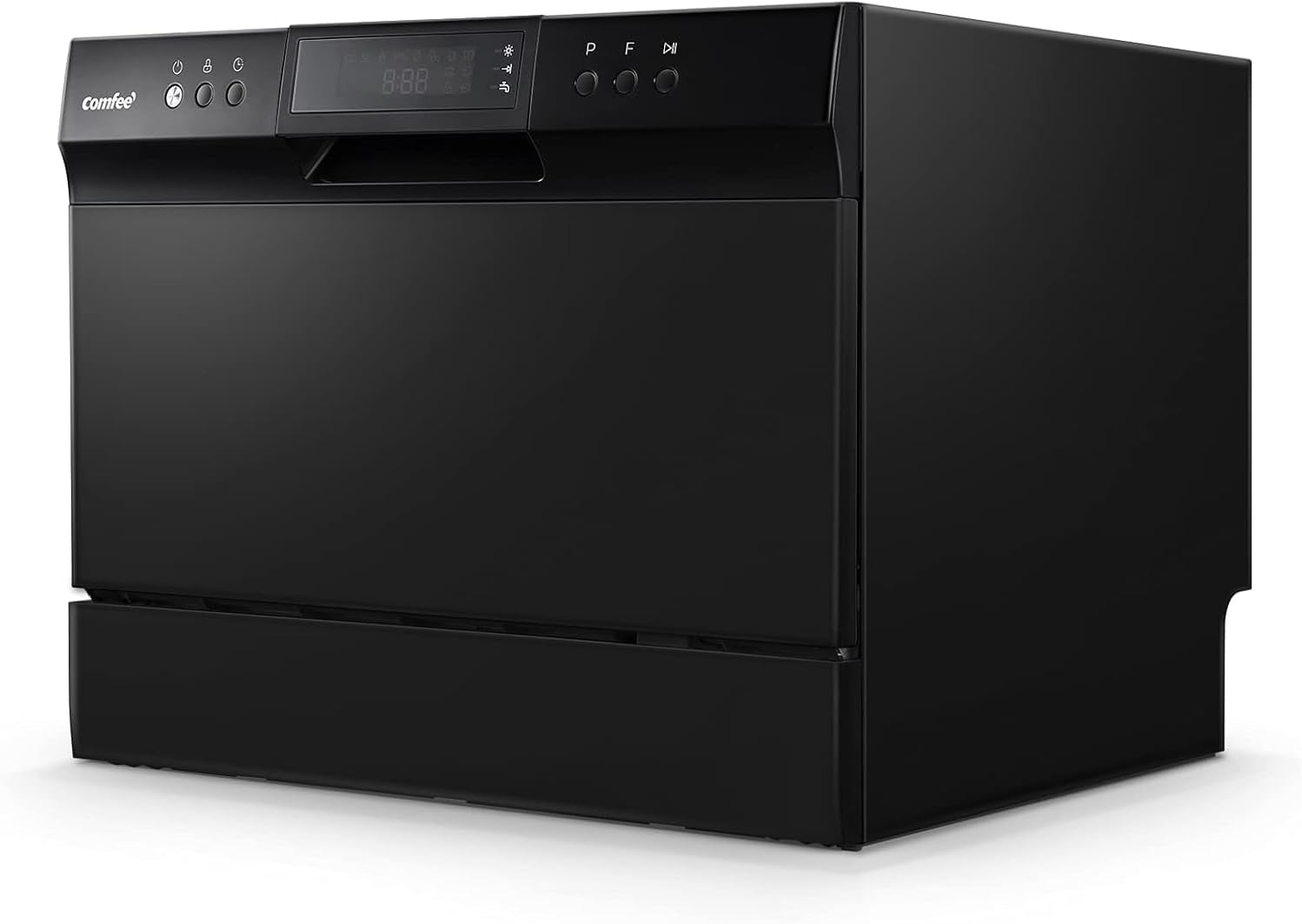
| Dimensions & installation | 19.7″D x 21.7″W x 17.2″H; countertop placement or fitted in cupboard; faucet adapter available |
| Materials & controls | Stainless steel inner tub, plastic exterior; LED touch controls |
These features translate to a compact option intended for 1–3 person households or spaces with limited installation options. The combination of a stainless-steel interior, multiple wash programs, and faucet-connect capability makes it suitable where a small, energy-certified machine is preferred, while the 6-place setting capacity and 10-inch plate allowance define typical load limits in daily use.
Cleaning performance and wash coverage
Cleaning expectations for countertop dishwashers hinge on spray geometry, nozzle count, water temperature, and pressure. The manufacturer specifies a 360° spiral spray pattern with 12 washing nozzles; that configuration, combined with a maximum water temperature up to 154°F, supports effective detergent activation and grease solvency on common food soils. High-pressure spray nozzles with multi-angle coverage reduce reliance on manual pre-rinsing for typical dinnerware, but limitations arise with oversized pots or heavily carbonized residues, where longer heavy cycles and higher temperatures are required. Filtration and recirculation design determine soil separation and redeposition risk, while cycle sequencing—pre-wash, main wash, rinse—affects final clarity. Users should set appropriate cycle selections for soil level and ensure correct detergent types for compact machines.
Spray system, nozzle layout, and filtration
The CDC22P1BBB lists 12 washing nozzles and a spiral spray approach; nozzle number and placement influence coverage and shadowing behind stacked items. A stainless-steel inner tub supports higher wash temperatures and resists staining, while recirculation pumps feed nozzles to maintain consistent pressure across zones. Effective soil removal depends on inlet pressure, pump capacity, and how the rack positions items relative to spray arms. A removable or accessible filter—typical in this product class—traps large particulates to prevent redeposition. Regular filter clearing and proper loading to avoid blocking nozzles will uphold cleaning consistency, especially for the Heavy and Baby-Care cycles that rely on hotter water and stronger spray patterns.
Temperature, cycle choices, and performance expectations
Manufacturer specifications note water temperatures reaching up to 154°F in heavy modes, which aids detergent performance and sanitization potential for baby items and oily residues. The CDC22P1BBB offers multiple cycles—Heavy, Normal, ECO, Glass, Baby-Care, Speed, Rinse, Mini-Party—allowing selection based on soil load and material sensitivity. Shorter speed cycles prioritize time and lower water use but offer reduced soak and mechanical action, while Heavy cycles extend wash and thermal action to address stuck-on food. Glass and ECO cycles typically reduce temperature and aggressiveness to protect delicate items or conserve energy. Performance consistency across cycles depends on correct detergent dosing and routine maintenance of inlet strainers and filters.
Capacity, rack design, and place settings
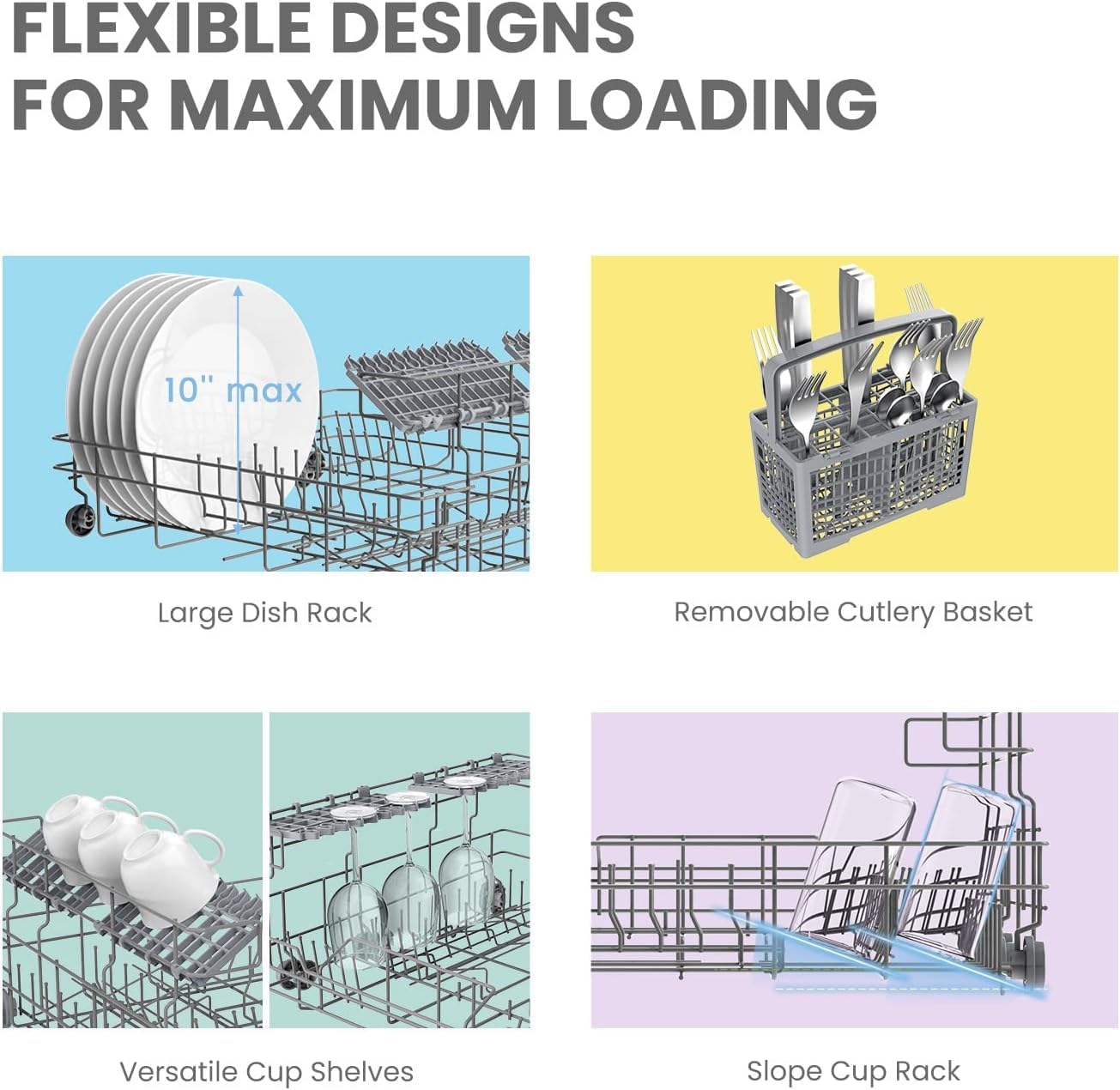
Capacity decisions balance actual dish volumes with physical rack geometry and plate spacing. The COMFEE’ compact dishwasher is rated for 6 place settings and claims accommodation for plates up to 10 inches in diameter; the manufacturer also indicates capacity up to roughly 70 pieces of tableware in a typical loading configuration. Countertop form factors impose limits on larger items (stock pots, oversized baking sheets) and on vertical stacking to avoid spray blockage. Interior layout, tine spacing, and foldable or removable sections influence flexibility for mixed loads; stainless-steel interiors typically tolerate higher temperatures and detergents better than polymer-lined tubs. Consumers should plan loads around standard dinnerware sets and expect multiple cycles for larger weekly accumulations due to constrained per-cycle capacity.
Rack layout, loading strategies, and space optimization
Rack design dictates which items fit without obstructing spray arms. Compact units often include a single main rack with molded tines and a small cutlery basket; folding tines or removable inserts improve adaptability for cups and shallow bowls. To maximize capacity, plates should interleave with consistent spacing to expose surfaces to the 360° spiral spray; larger items should be placed near the back or sides where spray intensity is highest. Avoiding overlap on the lower spray plane and keeping tall glasses near the center prevents tipping and minimizes shadow zones. Where available, a small upper shelf or elevated pegs can create room for utensils and reduce the need for pre-rinsing.
Suitability for different household sizes and use frequency
A 6-place setting rating aligns with 1–3 person households or infrequent users in larger homes. For daily clean-up in small families, the compact footprint provides convenience without requiring full kitchen retrofit. Frequent entertaining or multi-course cooking will quickly exceed per-cycle capacity, necessitating more cycles or a larger model. In RV, dorm, or apartment contexts where counter space and water supply are constrained, this model’s plumbing flexibility and portable installation make it a practical fit. Expectations should be set for more deliberate loading practices and potential need for occasional hand-washing of oversized cookware.
Noise levels and suitability for open kitchens
Noise performance matters when a dishwasher sits on a countertop near living or sleeping areas. The CDC22P1BBB is specified at 49 decibels, which sits within a moderate range for compact machines; perceived loudness depends on room acoustics, countertop vibration, and ambient noise. Lower-decibel appliances are preferable for open-plan layouts or small apartments where the dishwasher runtime overlaps with conversation, television, or sleep. Portable units placed directly on cabinetry or thin counters may transmit more vibration than built-in models; anti-vibration mats and secure placement reduce rattle. Buyers sensitive to noise should compare decibel ratings to in-room expectations and consider cycle timing to avoid overnight operation when noise is a concern.
Measured rating versus perceived loudness and context factors
A 49 dB rating provides a manufacturer-specified baseline, but perceived loudness varies by distance, surface coupling, and background sound. In a small studio, a mid-40s dB source is more noticeable than in a busy kitchen with ambient appliances. The compressor/motor location and pump acoustics contribute to tonal characteristics—higher-pitched sounds can be more intrusive despite similar decibel levels. Placement on a solid countertop, secure feet, and isolation from cabinetry reduce transmitted noise. Consumers should consider placement options and the possibility of running cycles during times when minor noise is acceptable rather than during sleep hours.
Placement strategies for minimal disturbance in open-plan spaces
Positioning the unit away from primary seating or sleeping zones minimizes perceived intrusion; a short run of counter or a corner can create acceptable separation. Where countertop real estate is limited, fitting the unit inside a lower cabinet or under a protected shelf may attenuate sound but requires adequate ventilation and water connection clearance. Using anti-slip, vibration-damping pads beneath the unit and ensuring hoses are not taut reduces mechanical noise transfer. Attention to routine maintenance—tightening loose parts and ensuring racks are secure—prevents rattles that amplify perceived loudness beyond the rated decibel level.
Drying systems and moisture control
Drying effectiveness in compact dishwashers derives from heat retention, fan-assisted drying, and cycle design. The COMFEE’ model lists an “extra-drying” function; such features typically extend post-wash heating or apply a condensation-based finish to reduce residual moisture. Stainless-steel tubs retain heat well, promoting evaporation during the final rinse and drying phase, while energy-conscious ECO cycles may limit drying intensity to reduce power use. Moisture control also depends on venting paths and door seals: countertop units that vent toward counter or cabinetry require space to avoid moisture buildup. For glassware and plastics, drying outcomes differ—plastics retain more moisture and may require towel dry or extra-dry selection for satisfactory results.

Extra-dry function, condensation drying, and materials considerations
Extra-dry modes generally increase final rinse temperature or lengthen the drying period to improve evaporation and heat retention. Condensation drying leverages cooler outer cabinet surfaces to draw moisture away from dishes; stainless-steel interiors aid heat retention to support this process. Glass cycles reduce thermal stress but also lower drying efficacy unless extra-dry is used. Plastics remain the most challenging due to lower thermal mass and lower surface temperature; users should place plastic items on upper areas where heat concentrates or use supplemental towel drying for critical items. Correct detergent and rinse aid selection can significantly improve beading and faster water sheeting for better drying.
Moisture management for surrounding cabinetry and indoor air
Countertop dishwashers discharge some moisture through the drain hose and venting; enclosed cabinet installations must ensure airflow to avoid damp conditions. If the unit is fitted under a counter or inside a cupboard, leave clearance around vents and avoid sealing the cabinet completely. Regularly inspect and dry the drain hose connections and the surrounding cabinetry finish to prevent moisture staining. In tight spaces, running the door ajar briefly after a cycle can reduce trapped humidity, while properly routed drain lines prevent backflow or pooling that might lead to odors or moisture damage.
Energy and water efficiency, maintenance, and durability expectations
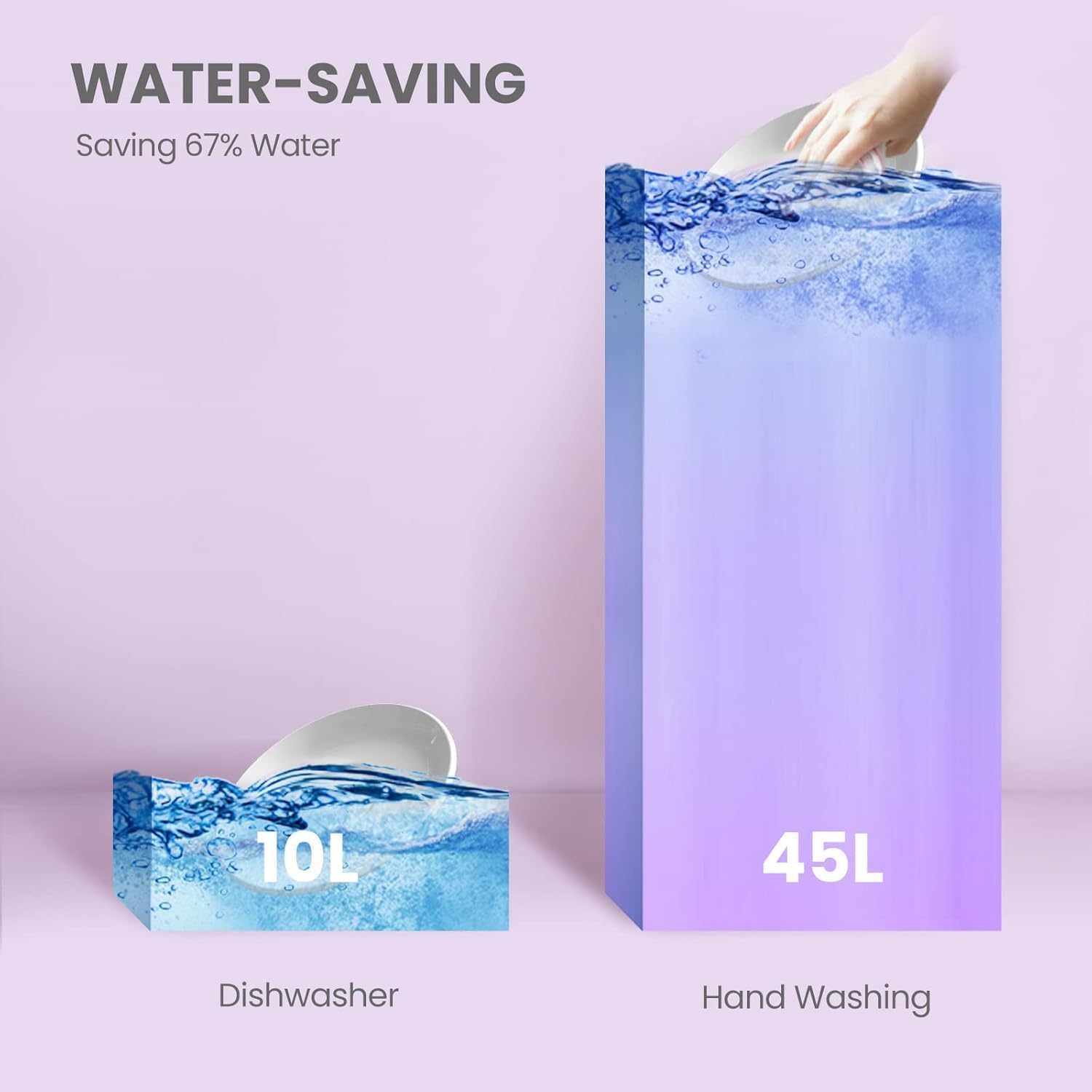
Energy Star certification and a published annual energy consumption figure (174 kWh/year) position this model as an energy-conscious choice in its class; the manufacturer also lists water use around 2.85 gallons per hour-cycle specification, consistent with compact, low-water designs. Efficiency performance depends on cycle selection—ECO modes constrain energy and water use while heavier cycles will consume more. Maintenance needs include periodic filter cleaning, inspection of inlet strainers, and descaling where water hardness is high. Durability indicators arise from stainless-steel inner construction and standard 120V electrical compatibility; long-term reliability commonly correlates with build material quality, pump and motor design, and availability of replaceable parts from the manufacturer.
Energy Star credentials, annual consumption, and water use implications
The Energy Star label and a 174 kWh/year figure provide a comparative baseline for small-appliance energy use; actual consumption varies by cycle mix and frequency. ECO cycles and shorter speed cycles reduce energy and water per load, while heavy and extra-dry options increase consumption. The stated 2.85 gallons per hour designation suggests efficient water use for a single compact cycle versus older full-size machines. Buyers should align expectations with household habits—frequent small loads will accumulate water and energy use differently than consolidated loads—and select cycle strategies that balance cleanliness with efficiency.
Maintenance routines, filter care, and durability indicators
Routine maintenance centers on the removable filter, inlet hose strainer, and keeping spray nozzles free from scale and particulate buildup. Stainless-steel interiors contribute to corrosion resistance and thermal tolerance, but plastics in the outer cabinet and pump housings can be susceptible to wear over long service life. Regular inspection of hoses, connections, and door seals prevents common failure modes; accessible parts and manufacturer-supplied components support easier servicing. Reported long-term reliability trends in compact dishwashers generally hinge on pump motor longevity and electronic control robustness; consumers should retain manufacturer documentation and register products for warranty support where available.
Pros & Cons
Pros
- Compact, energy-certified design: Energy Star listing and a 174 kWh/year figure indicate above-average energy efficiency for a countertop form factor, helping match small-home sustainability goals. Regular ECO and speed cycles provide choices that reduce per-cycle resource use.
- Multiple wash programs and high-temperature capability: Eight cycles including Heavy and Baby-Care, plus a maximum wash temperature up to 154°F, offer flexibility for greasy cookware and items that benefit from hotter rinses.
- Stainless-steel interior and spiral spray coverage: A stainless-steel tub paired with 12 nozzles and a 360° spiral spray pattern supports durable thermal performance and thorough spray distribution for common dinnerware loads.
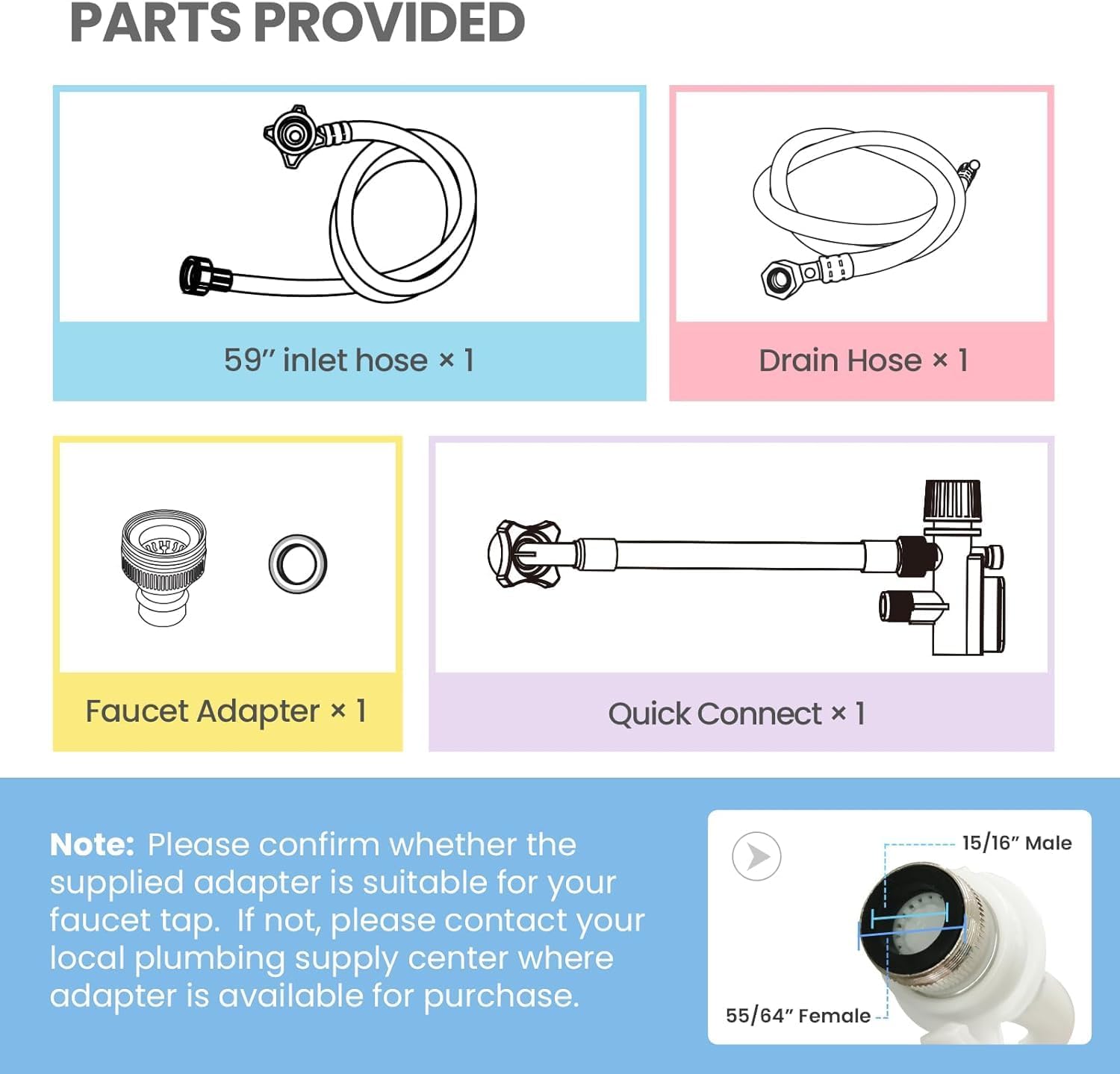
- Portable installation and faucet-connect option: The included inlet and drain hoses and the ability to connect to a faucet with an adapter provide installation flexibility for renters and RV users without permanent plumbing changes.
- Compact footprint and usable capacity: Six place settings and allowance for plates up to 10 inches make it practical for small households, while claims of up to ~70 pieces suggest efficient internal arrangement when properly loaded.
- LED touch controls and extra-dry mode: Modern controls simplify cycle selection, and the extra-dry function addresses moisture-sensitive loading scenarios such as glassware or baby items.
Cons
- Limited per-cycle capacity for larger households: The 6-place setting rating constrains single-cycle throughput, making the model less suitable for families that generate larger daily dish volumes.
- Drying variability with plastics and large items: Condensation-based drying and compact internal volume mean plastics and large cookware may retain moisture and require towel drying or repeated cycles with extra-dry engaged.
- Noise transmission risk on thin counters: While rated at 49 dB, countertop placement can transmit vibration to cabinetry; additional anti-vibration measures may be necessary in quiet, open-plan environments.
- Potential service and part availability concerns: As with many compact, brand-specific appliances, long-term reliability relies on motor and pump assembly durability and access to replacement parts through the manufacturer.
Final Verdict: Who This Dishwasher Is Best For (and Who Should Skip It)
The COMFEE’ CDC22P1BBB countertop dishwasher is tailored to small households, renters, RV owners, and dorm residents who require a compact, energy-efficient machine with flexible installation options. Its Energy Star certification, stainless-steel interior, 8-cycle program range, and faucet-connect capability make it a sensible choice where a full-size built-in dishwasher is impractical. Users prioritizing low water use and multiple wash options will appreciate the ECO and speed cycles, while the heavy and Baby-Care programs address tougher soils with higher temperatures.
This model is less appropriate for larger families or frequent entertainers who need high per-cycle capacity and more expansive rack geometries for pots and sheet pans. Buyers who demand whisper-quiet operation in highly sound-sensitive environments should evaluate decibel implications of countertop placement and consider built-in alternatives. Overall, for 1–3 person households seeking a portable, spec-driven solution with decent wash versatility in 2026, this COMFEE’ countertop dishwasher represents a compact, energy-conscious option with predictable limitations tied to size and drying behavior.
Frequently Asked Questions (FAQs)
How many place settings does the COMFEE’ countertop dishwasher hold and what size plates fit?
The COMFEE’ CDC22P1BBB is specified for six place settings and notes it accommodates plates up to 10 inches in diameter. Countertop geometry limits larger cookware; typical practice is to load standard dinner plates, bowls, cups, and cutlery while reserving oversized pots or baking sheets for hand washing or separate cycles.
Is the COMFEE’ countertop dishwasher energy and water efficient?
Manufacturer disclosures show Energy Star certification and an annual energy use around 174 kWh, indicating above-average energy efficiency for compact models. Water consumption is listed near 2.85 gallons per cycle specification. Actual savings depend on chosen cycles and loading habits, with ECO and speed modes delivering lower per-cycle resource use.
Will the dishwasher be quiet enough for an open-plan kitchen?
The product is rated at 49 decibels, a moderate noise level for compact dishwashers. Perceived loudness varies with room acoustics and placement; countertop positioning can transmit vibrations to surrounding cabinetry. For quiet environments, consider anti-vibration pads, careful placement away from seating areas, or comparing to lower-decibel built-in units.
How effective is drying and what affects moisture after a cycle?
An extra-dry function is listed to enhance drying, and a stainless-steel tub helps retain heat for condensation drying. Still, plastics and shallow containers commonly retain moisture more than ceramics or glass. Using extra-dry or running a warmer final rinse improves evaporation; leaving the door ajar briefly post-cycle helps release trapped humidity.
What maintenance is required to keep performance consistent?
Routine maintenance includes clearing and rinsing the removable filter, checking inlet hose strainers, and inspecting spray nozzles for scale or blockages. Periodic descaling in hard-water areas and ensuring secure hose connections prevents leaks and maintains pump efficiency. Regular care preserves cleaning quality and reduces redeposition of particulates.
Who should avoid choosing this countertop dishwasher?
Large households, frequent entertainers, or users needing to wash oversized pots and baking sheets regularly should avoid this 6-place setting unit. Those requiring near-silent operation in bedrooms or studios should compare decibel ratings and consider built-in models with lower transmission potential. The compact size inherently limits single-cycle throughput and drying of certain plastics.