COMFEE’ Countertop Dishwasher: Clean, Quiet, Compact 2026
Why dishwasher selection matters for small kitchens
Selecting a dishwasher for a compact kitchen or mobile home affects daily routines, utility usage, and noise comfort. Household size, dishwashing frequency, and counter or cabinet space determine whether a countertop unit meets needs or creates compromises. For one- to three-person households, a portable countertop machine that handles routine plates, glasses, and light cookware can reduce manual labor while limiting water use compared with handwashing. Noise sensitivity is a practical concern in open-plan apartments and RVs where a 60‑plus decibel motor can be noticeable; appliance choices should balance sound level with cycle time and cleaning power. Efficiency expectations include predictable water and energy consumption, accessible maintenance, and durable components that withstand frequent cycles. Matching washing modes, rack flexibility, and drying options to typical meal patterns helps ensure the selected model aligns with performance and space constraints in 2026 small‑home environments.
Quick Overview
| Feature | Details |
|---|---|
| Dishwasher type | Countertop / freestanding portable unit with optional faucet hookup |
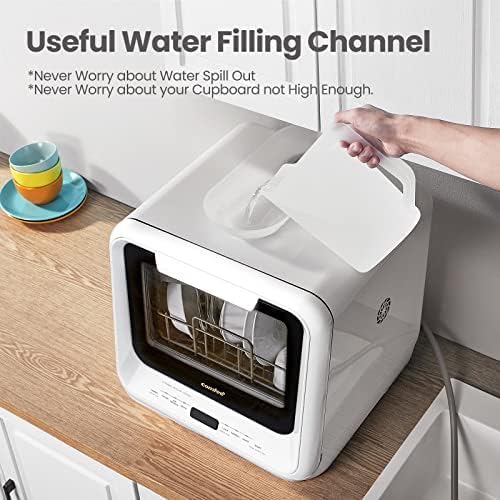
| Internal water tank | 5 liter built-in tank (also supports faucet adapter) |
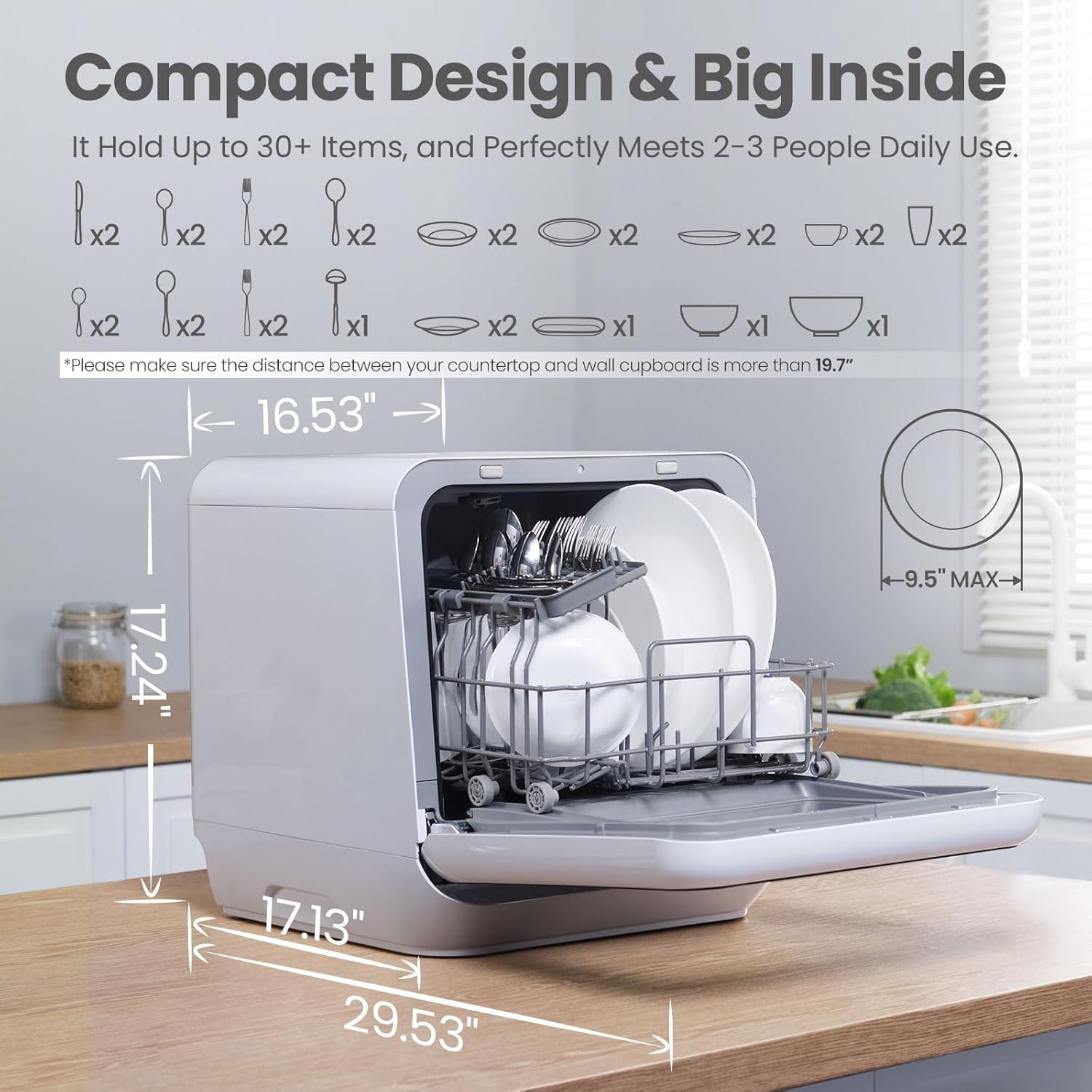
| Capacity / place settings | Holds up to 30+ items; fits plates up to 9.5 inches |
| Wash cycles | 6 programs: Normal, Rapid, Hygiene, Fruit, Glass, Air Refresh (listed as Delicate/Quick variants) |
| Cleaning technology | 360° dual spray arms with circulating wash action; hi‑temp wash option |
| Drying method | Air Refresh circulation / extra dry option (vented air circulation) |
| Noise level | 62 dB reported noise rating |
| Energy & water | Annual energy 130 kWh/year; water use ~1.32 gallons per hour; BEE star rating listed |
| Dimensions & installation | 17.13″ D x 16.53″ W x 17.24″ H; countertop placement, no hard plumbing required |
| Materials & interior | Plastic inner tub components; stainless steel finish type reported |
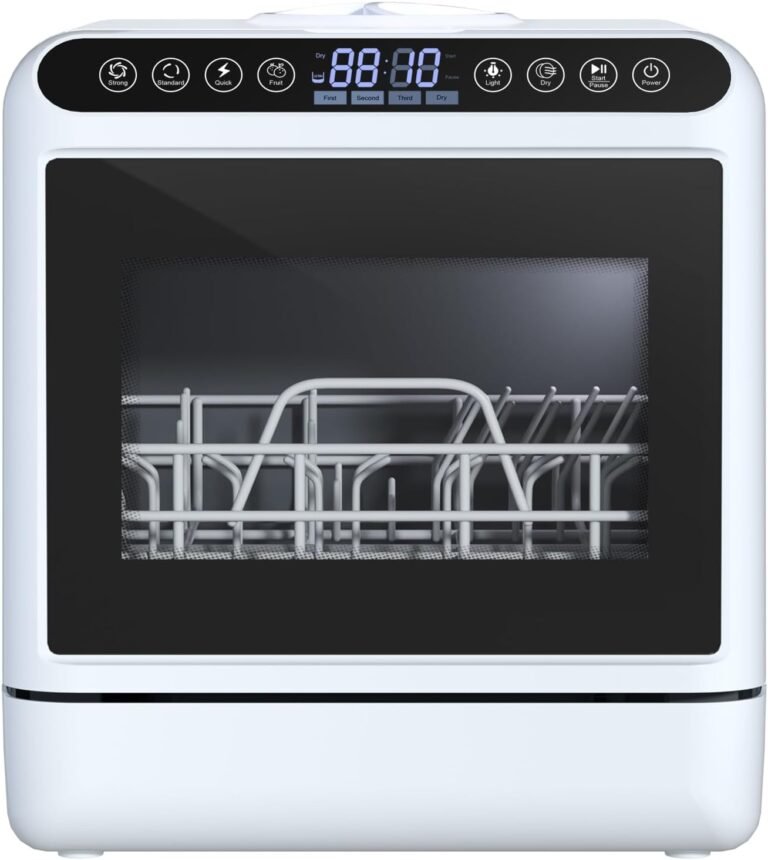
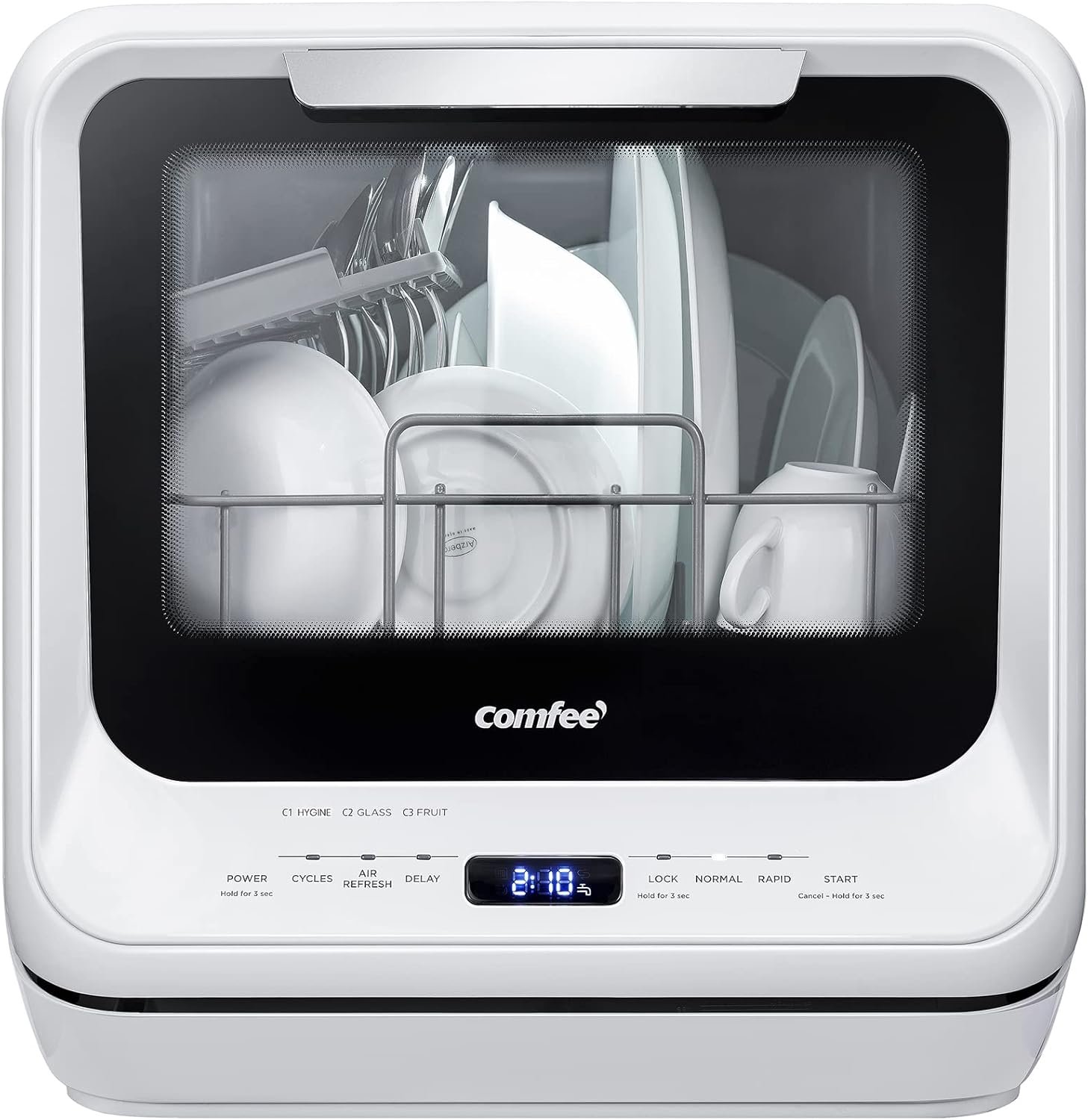
| Controls & display | Full touch panel with LED display |
| Included accessories | Quick‑connect inlet hose (adapter), drain hose, tableware basket, water pitcher |
The table translates key manufacturer specifications into practical expectations: this COMFEE’ model targets tight kitchens, temporary housing, and mobile setups by offering a compact footprint, a built‑in water tank for hookup-free operation, and multiple wash programs suited to everyday loads. Plastic rack materials and a small internal capacity favor light to medium dish loads rather than full household turnovers.

Cleaning performance and wash coverage
The cleaning performance of a compact countertop dishwasher hinges on spray geometry, pressure, cycle selection, and filtration; the COMFEE’ CDC17P0AWB pairs 360° dual spray arms with multiple program options to maximize coverage inside a limited cavity. The rotating spray arms promote multi‑directional reach to plate faces and glass surfaces while the Hygiene and Normal cycles extend run times and increase water temperature when selected to tackle dried soils. Filtration and recirculation prevent redepositing soils when the filter and wash sump are functioning as designed. Cycle selection flexibility allows tailoring of water temperature and agitation intensity to soiled loads, and the compact spray environment yields concentrated hydraulic energy compared with larger models, improving localized cleaning but limiting bulky cookware accommodation.
Spray system, hydraulics, and coverage
Dual 360° spray arms create overlapping spray patterns that increase the chance of strike coverage on vertical plate faces and the bases of cups. In a compact tub, shorter distances between spray arms and dishes reduce spray dissipation, producing stronger localized cleaning action for typical dinnerware. However, spray reach for tall or wide items can be constrained by rack geometry and spray placement; careful loading helps maintain direct exposure. Spray pressure is influenced by pump design and water supply temperature: higher inlet temperatures and active pump performance on longer cycles improve detergent activation and grease removal within the machine’s hydraulic limitations.
Filtration and soil removal strategy
A countertop dishwasher relies on a coarse particulate or mesh filter to trap food soils, preventing recirculation onto clean dishes. Effective soil removal requires routine filter access for visual checks and occasional rinsing; the unit’s plastic inner components and sump are designed for simple user maintenance. Persistent residue on filters or blocked spray nozzles will reduce cleaning effectiveness over time, so following manufacturer guidance for filter cleaning frequency and ensuring pre‑scraping of large food solids helps maintain performance. The model’s recirculation loop and filter placement aim to balance soil containment and water reuse within the 5 L tank or connected faucet supply.
High‑temperature hygiene and cycle selection
The dishwasher lists a high‑temperature Hygiene mode intended to elevate wash temperatures for more effective grease emulsification and microbial reduction. Manufacturer materials reference a hi‑temp wash capability; some listings include temperatures up to the mid‑160s °F while other product messaging cites higher figures. Higher temperatures improve detergent chemistry and reduce bacterial load when used appropriately, but the compact design and plastic interior components define safe operating ranges established by the manufacturer. Choosing the Hygiene cycle or extended Normal cycles with elevated temperature and longer dwell time improves cleaning of heavily soiled items while increasing energy use and cycle duration compared with rapid programs.
Capacity, rack design, and place settings
Capacity assessment for small‑format dishwashers should weigh number and type of items, rack adjustability, and usable clearances; COMFEE’ specifies loading for 30+ items and acceptance of plates up to 9.5 inches in diameter, making it suitable for many compact households but limited for full family meal turnover. Plastic rack materials and a single‑chamber layout prioritize light dishware and glassware while restricting large pots, oversized bakeware, or stackable cookware. The included tableware basket centralizes cutlery storage yet may require separate loading patterns to avoid blocking spray paths. Adjustable or removable rack features permit customization for taller glassware or small pots but will not replicate the flexible multi‑tier arrangements of full‑size built‑in models.

Plate, bowl, and glass capacity in practice
A stated capacity of 30+ items generally reflects an aggregation of plates, cups, and utensils rather than standard place settings defined by full‑size dishwasher metrics. Plates up to 9.5 inches fit within the rack spacing, but tall stemware or deep bowls may need diagonal positioning or the removal of some rack segments. Compact tub geometry concentrates items near spray arms, which improves targeted cleaning for conventional plates and cups but limits simultaneous cleaning of bulky cookware. Meal patterns with frequent small loads, such as in apartments or RVs, align with this design, while households that routinely require multiple large pots or baking trays will find capacity constraining.
Rack adjustability and loading strategies
Adjustable rack elements and removable tines enhance flexibility in a limited space by permitting vertical room for taller items and closer spacing for plates. The plastic rack construction balances lightweight handling with moderate durability but can be more prone to wear than vinyl‑coated steel racks typical of larger models. Loading strategy affects cleaning outcomes: face items toward spray arms, avoid nesting bowls, and position glassware securely to prevent tipping. Efficient use of the single cavity relies on staggered placement to maintain spray access rather than dense stacking that hinders hydraulic reach.
Utensil and glassware accommodation
A dedicated tableware basket consolidates cutlery and small utensils, but separating flatware and small items across the basket reduces nesting and shadowing during the wash. Fragile stemware benefits from careful placement near the center and secured between tines, but long stems or unusual shapes may not fit without sacrificing adjacent plate slots. Glass cycle or delicate program options lower water temperature and reduce mechanical action for fragile items, though shortened cycles may need follow‑up drying or hand‑drying to prevent water spots when hard water conditions prevail.
Noise levels and suitability for open kitchens
Noise performance is a pivotal decision factor for open‑plan living and mobile dwellings; the CDC17P0AWB carries a reported 62 dB noise rating, which places it above ultra‑quiet built‑in models but within expected ranges for compact countertop units with small centrifugal pumps. In open kitchens and studio layouts, continuous motor noise and pump cycling can be more perceptible due to proximity and reflective surfaces. Noise character—pitch and frequency—matters as much as decibel level: higher frequency whine from small motors can seem louder than an equivalent low‑frequency hum. Vibration transmission to counters and cabinet faces is influenced by weight distribution, anti‑vibration feet, and counter stability; installing with a clearance and on a stable surface mitigates amplified noise and rattling.

Interpreting the 62 dB rating in living spaces
A 62 dB rating corresponds to a moderate indoor noise level that may be noticeable during quiet activities. Contextual factors matter: small kitchens with tiled surfaces and limited absorption will reflect sound, while placing the dishwasher on a rubber mat or cushioned surface can reduce transmitted vibration. For households with sensitive listeners or late‑night cycles, selecting shorter or quieter modes when available reduces overall exposure. In RVs and boats, where cabin acoustics are tight, the perceived loudness can be higher relative to space size and occupant proximity.
Vibration, mounting, and counter interaction
Countertop installation leaves the unit directly coupled to the supporting surface; vibration dampening relies on anti‑slip feet and even weight distribution. Rigid countertops or thin cabinetry can resonate, increasing audible noise. Using a stable, level foundation and avoiding contact with light upper cabinets reduces rattle transmission. The small form factor limits the mass that would otherwise damp motor vibrations in larger built‑ins, so placement and cushioning are practical measures to control perceived vibration noise in open kitchens.
Suitability for RVs, boats, and shared living
The compact footprint, 5 L tank option, and faucet adapter make the model attractive for RVs, small apartments, and boats where full plumbing is impractical, but the 62 dB rating and need for counter clearance must be weighed against sleeping areas and noise tolerance. The supply flexibility eases installation in mobile setups, yet water capacity and cycle duration may influence repeat frequency during extended trips. Shared living spaces should consider cycle scheduling and noise awareness to minimize disruption.
Drying systems, energy & water efficiency, and maintenance
Drying and moisture control affect post‑cycle handling and the risk of lingering odors; the COMFEE’ unit uses an Air Refresh circulation option to expel moisture via air movement rather than built‑in condensation or heated‑air systems found in larger machines. Energy and water efficiency are defined by the listed annual consumption (130 kWh/year) and water usage (about 1.32 gallons per hour), which indicate relatively modest resource demand for a countertop form factor. Maintenance needs focus on filter cleaning, occasional spray arm inspection, and ensuring the drain hose remains unobstructed when using faucet hookup. Durability is influenced by plastic interior components, rack materials, and pump quality; following manufacturer maintenance intervals preserves circulation performance and reduces wear on seals and motors.
Drying method, moisture control, and odor management
Air Refresh relies on circulating ambient or heated air through the cavity to reduce surface moisture; effectiveness depends on ambient humidity, cycle duration, and whether heated‑air assistance is engaged. This method is energy efficient compared with continuous electric heating elements but can leave some moisture spots on plastics and glasses in hard water areas. Regularly leaving the door slightly ajar after cycles and running the Air Refresh mode when load types produce more moisture helps control odors and reduces microbial buildup in a compact sump area.
Water and energy use expectations
Reported figures of 130 kWh/year and roughly 1.32 gallons per hour position the unit as lower‑consumption relative to full‑size dishwashers, reflecting fewer liters per cycle and shorter fill volumes tied to the 5 L tank option. Energy and water per cleaned item can be favorable for frequent small loads versus handwashing, but comparisons depend on load fullness and cycle selection. Choosing shorter rapid cycles conserves water and energy for lightly soiled items, while Hygiene and extended modes increase consumption for heavier soils.
Maintenance, filters, and long‑term reliability
Maintenance centers on routine filter checks, spray arm clearance, and inspecting seals for mineral buildup, particularly when using the faucet connection with hard water. Plastic inner materials and plastic rack construction reduce corrosion risk but may show wear sooner than stainless steel interiors under heavy use. Pump and motor life correlate with cycle frequency and load balance; adhering to manufacturer cleaning recommendations and avoiding excessive food solids in the cavity prolongs pump and valve integrity over time.

Pros & Cons
Pros
- Compact, installation‑free operation: The built‑in 5 L water tank and included faucet adapter enable use without permanent plumbing, making the unit suitable for renters, RVs, or temporary kitchens. This flexibility supports quick setup and relocation without modifications.
- Focused cleaning with 360° spray arms: Dual rotating spray arms and multiple program options provide concentrated wash coverage in a small cavity, improving soil removal on standard plates and cups compared with passive spray designs.
- Multiple cycle choices including Hygiene mode: Program variety—including rapid, glass/delicate, and high‑temperature hygiene—lets users match energy and water use to soil levels, offering practical customization for different load types.
- Low absolute energy and water numbers for its class: Reported annual energy consumption and modest per‑hour water use reflect the compact form factor’s efficiency, which can be advantageous for small households aiming to reduce utility consumption.
- Lightweight, portable footprint: The small dimensions and sub‑40‑pound weight support portability and placement on counters or tabletops where built‑in installation is not possible.
- Included accessories simplify setup: The quick‑connect inlet hose, drain hose, cutlery basket, and water pitcher permit near‑immediate operation without sourcing additional components.
Cons
- Limited capacity for large cookware: The single compact cavity and plastic rack design restrict washing of large pots, baking sheets, and bulky items, making the unit unsuitable for households that need frequent heavy cookware cleaning.
- Perceived noise level in quiet environments: A reported 62 dB rating is noticeable in studio apartments and open‑plan rooms; noise may be disruptive for noise‑sensitive occupants or overnight cycles near sleeping areas.
- Plastic interior and rack durability concerns: Plastic inner materials and racks are lighter and corrosion‑resistant but can exhibit greater wear over long‑term heavy use compared with stainless interiors and metal racks.
- Drying performance depends on Air Refresh and ambient conditions: The circulation‑based drying system is energy efficient but may leave residual moisture on certain glassware in high‑hardness water areas or when rapid cycles are used.
- Manufacturer temperature listings vary in some materials: High‑temperature hygiene capabilities are reported in product literature with different numeric values across listings; buyers seeking specific sanitization temperatures should consult manufacturer documentation for clarification.
Final Verdict: Who This Dishwasher Is Best For (and Who Should Skip It)
The COMFEE’ CDC17P0AWB countertop dishwasher suits individuals and small households prioritizing portability, simple setup, and modest utility use. It aligns well with renters, dorm residents, RV and boat occupants, and small apartments where counter space is available and occasional full‑size dishwashing requirements do not exist. Its 360° spray arms and varied wash programs offer practical cleaning for everyday plates, cups, and light cookware while the built‑in 5 L tank removes reliance on permanent hookups. Energy and water figures indicate efficient operation for frequent small loads, and included accessories streamline deployment.
Conversely, households that routinely wash large pots, multiple daily family meals, or require ultra‑quiet operation should consider larger built‑in or slimline models with greater capacity, insulated noise reduction, and more robust metal interiors. Buyers who expect aggressive heated‑air drying performance or extensive heavy‑duty cycles might find the Air Refresh approach and plastic components limiting. For those prioritizing portability, simple maintenance, and targeted cleaning in 2026 small‑space living scenarios, this model represents a coherent compromise between convenience and performance.

Frequently Asked Questions (FAQs)
How many place settings does a COMFEE’ countertop dishwasher hold?
The unit is specified to accommodate 30+ items and plates up to 9.5 inches in diameter, which aligns with light to moderate household loads rather than standardized full place‑settings used by full‑size dishwashers. Practical capacity depends on dish types and loading strategy; tall glasses and bulky cookware may reduce the number of items that can be washed in a single cycle.
Is the built‑in 5 L water tank enough for multiple cycles without a faucet hookup?
The 5 liter internal tank supplies the unit for single or a small number of cycles depending on program selection and load size. Rapid or light cycles use less water than Hygiene or extended cycles. For repeated continuous use, the included faucet adapter allows connection to a water source to avoid frequent manual refills.
How loud is a 62 dB dishwasher in a small apartment?
A 62 dB rating indicates a moderate indoor noise level that can be noticeable in close quarters. In small apartments and open living areas, sound may carry and be perceptible during quiet activities. Placement on a stable surface, using anti‑vibration pads, and scheduling cycles during active daytime hours help reduce perceived disturbance.
Does the Air Refresh drying mode fully dry plastic and glassware?
Air Refresh circulates air to reduce surface moisture and odors, which is energy efficient compared with heated‑element drying. It can be effective for many glass and ceramic items, but certain plastics and heavywares may retain droplets depending on water hardness and cycle selected. Occasional towel drying or leaving the door ajar after the cycle can improve results.
What maintenance is required to keep the dishwasher performing well?
Routine maintenance focuses on cleaning the coarse filter, checking spray arms for blockages, and inspecting seals and the drain hose for buildup. Regularly removing food solids before loading and following manufacturer cleaning intervals preserves pump performance and prevents redeposition of soils. Periodic descaling is advisable in hard water regions to protect circulation components.
Is the dishwasher suitable for washing pots and baking trays?
The compact cavity and rack geometry prioritize plates, cups, and small cookware. Large pots, oversized baking sheets, or bulky cookware may not fit or will obstruct spray paths, reducing cleaning performance. For frequent heavy cookware cleaning, a larger built‑in or slimline dishwasher with flexible rack configurations is better suited.
Are there energy and water efficiency benefits to using this countertop dishwasher?
Reported figures list annual energy consumption and modest per‑hour water use that are favorable relative to many full‑size models, especially for frequent small loads. Efficiency gains depend on filling the rack effectively and selecting appropriate cycles; light loads on rapid cycles conserve energy and water, while high‑temperature or extended cycles increase consumption.