Compact Countertop Dishwasher: Cleaning, Noise & Efficiency
Choosing the Right Countertop Dishwasher
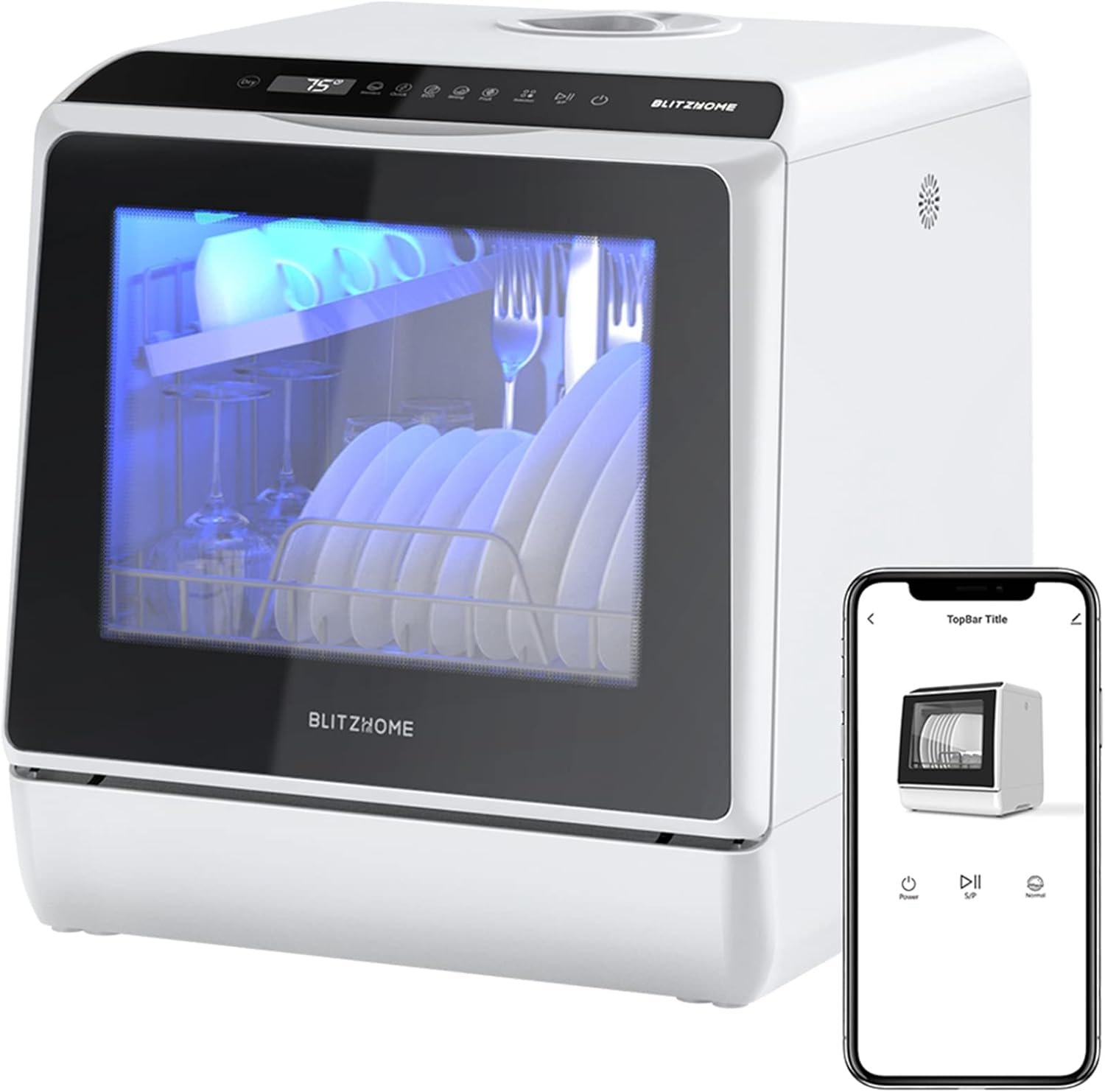
Selecting a countertop dishwasher requires balancing cleaning performance, kitchen layout, household size, and noise tolerance. For households with limited under-counter space, an electric countertop model that can run from a built-in water tank or direct tap connection simplifies installation and avoids plumbing changes. Usage frequency and typical soil level determine whether short-cycle and high-temperature options are needed; frequent light loads prioritize rapid cycles and water efficiency while occasional heavy soils demand stronger wash programs and higher temperature settings. Noise sensitivity is crucial in open-plan living where conversations and TV viewing share space with the kitchen. Energy and water efficiency expectations affect operating patterns and cycle selection; compact machines often trade larger wash chambers for lower water consumption but can concentrate soil and require specific loading practices. Material selection for racks and interior surfaces influences drying outcomes and long-term wear, particularly when plastic elements meet repeated high-temperature cycles.
Quick Overview
| Feature | Details |
|---|---|
| Dishwasher type | Countertop portable / dual water inlet (tank or tap) |
| Capacity / place settings | 4–6 place settings; 5 L built-in tank; up to 20 dishes |
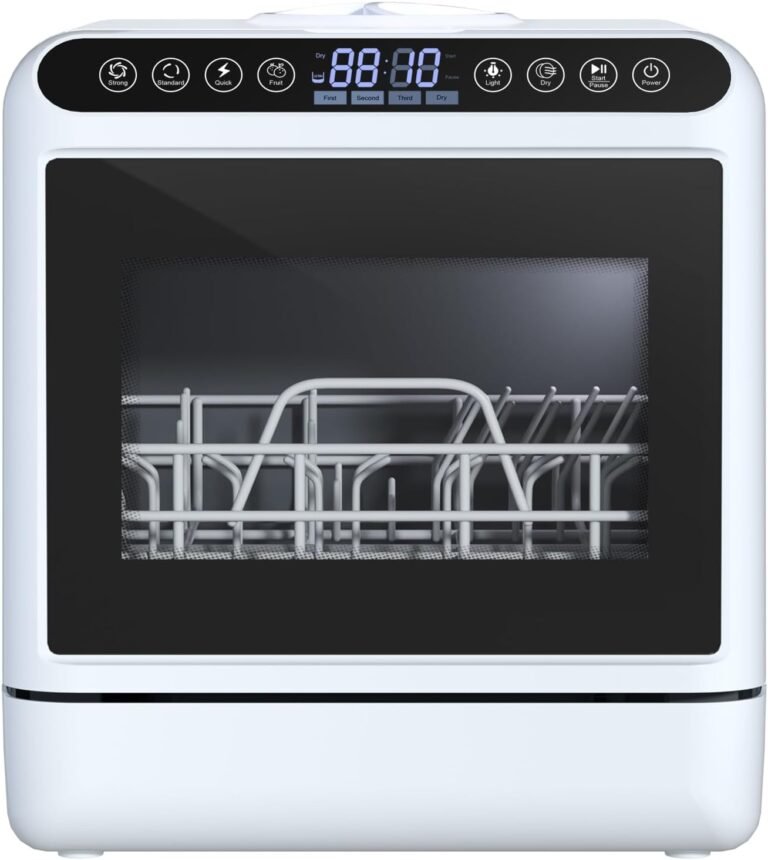
| Wash cycles & cleaning tech | Six modes: Standard, Quick (29 min), Strong, ECO, Fruit, Drying; 360° dual spray arms |
| Drying method | High-temperature drying (167°F) plus air-refresh function |
| Noise level rating | 58 decibels |
| Energy & water | 900–950 W power draw; 5 liters per cycle; no energy certification specified |
| Dimensions & installation | 17 x 16.9 x 18.1 inches; countertop installation; inlet/outlet hoses 1.5 m |
| Materials & racks | Plastic and stainless steel interior components; stainless steel baskets |
| Warranty | Manufacturer-provided warranty not specified in public specs |
This compact unit targets small households, studios, and mobile living where plumbing options are limited. The combination of a manual fill tank or direct tap connection supports flexible placement, while a 5 L per-cycle water profile and a 29-minute quick program suit light daily loads. The 58 dB noise rating and compact footprint make it practical for secondary kitchens and RVs, but loading discipline and detergent selection will be important to achieve consistent cleanliness across concentrated cycles.

Cleaning performance and wash coverage
The listed 360° dual spray arm design and high-temperature wash mode indicate an emphasis on multi-angle impingement and thermal soil removal rather than relying on a single high-flow pump. Dual, counter-rotating spray arms typically create overlapping jets that reduce shadowed zones behind tall items, improving reach to plate surfaces and inner crevices. High-temperature cycles assist with grease emulsification and sanitizer action when combined with appropriate detergents; the product’s Fruit and ECO modes suggest cycle parameter variation for delicate soils and lower resource use. Spray pressure, arm geometry, and pump duty cycle determine mechanical action; in compact units the pump must balance flow with noise and energy constraints, so cycle duration and water volume compensate for reduced chamber size.

Spray arm geometry and 360° coverage
The dual spiral spray arms described are designed to generate three-dimensional coverage by directing jets in overlapping arcs. This configuration can minimize blind spots around glasses and bowls when racks are not overloaded. Effective coverage depends on arm clearance from racks and the angular distribution of nozzles: tightly spaced nozzles produce finer droplets that aid in detergent dissolution, while larger orifices deliver higher-impact streams useful for baked-on soils. Given the compact footprint, the combined rotational motion and nozzle placement must be optimized to maintain spray velocity without excessive recirculation. Users should expect better performance when loading follows manufacturer spacing recommendations to avoid spray obstruction.
Filtration, detergent compatibility, and soil removal
The machine accepts pod, liquid, or powder detergents, which requires an internal detergent dispenser suitable for rapid dissolution across different chemistries. Compact cycles with limited water volume rely on detergent concentration and water temperature to break down soils; high-temperature settings augment surfactant effectiveness and can reduce manual pre-rinsing needs. Filtration design—typically a removable coarse filter and fine mesh screen—traps food particles to prevent re-deposition; frequent filter clearing maintains pump efficiency and prevents clogs in the small-diameter drainage plumbing. For persistent residues, stronger or longer cycles that combine high temperature and more spray duration will be most effective.
Capacity, rack design, and place settings
Capacity statements of 4–6 place settings and accommodation for up to 20 individual items reflect the trade-offs inherent in countertop machines: internal volume is limited, so efficient rack geometry and basket configuration become critical. Stainless steel baskets and racks resist corrosion and support heavier items while plastic interior panels reduce weight and thermal mass for faster heating. The inclusion of a bowl basket and cutlery basket signals attention to separating utensils from dish faces to reduce nesting and improve spray exposure. Because place setting counts assume standard plates and cutlery, atypical items such as large pans, casserole dishes, or oversized cutting boards will reduce effective capacity and may require separate cleaning methods.

Rack layout and loading strategies
Rack spacing, tine angle, and the presence of dedicated stemware supports determine how much usable capacity is available and how well items are positioned for spray access. Vertical plate tines spaced to hold plates at a slight angle encourage runoff toward the pump and reduce pooling. Cutlery baskets that separate forks and spoons into individual compartments reduce nesting and improve both cleaning and drying. The absence of adjustable rack heights is common in countertop models, so flexibility relies on removable baskets and careful stacking. To maximize results, load heavier soil items facing the spray path and avoid overlapping items that block jets.
Accommodating non-standard items and accessories
The dishwasher’s compact chamber favors plates, glasses, and small bowls, while large pots and pans often exceed interior dimensions or block spray paths. Accessory baskets and small racks can assist with utensils, lids, and children’s dishes, but oversized bakeware may necessitate handwashing or a separate wash strategy. Fruit mode suggests a lower-pressure, gentler cycle for produce and delicate items, but porous or absorbent materials should still be avoided because of moisture retention. Users in RVs or small apartments should plan loading around common mealware sizes to maintain consistent cleaning performance without frequent re-runs.
Noise levels and suitability for open kitchens
A manufacturer-stated noise level of 58 dB places the unit in a moderate range for compact dishwashers; this is louder than many full-size quiet models that aim for the low 40s to mid-40s decibel range but falls within tolerable levels for kitchens separated from living spaces. Noise perception depends on frequency content as well as decibel level—high-frequency pump whine and water impact noises carry differently than low-frequency hums. In open-plan layouts, 58 dB can be noticeable during phone calls or television listening unless cycles are scheduled during low-activity periods. Insulation, countertop attachment, and surface-mounted vibration isolation influence perceived noise, and soft closing lids or anti-vibration pads can reduce transmitted sound to cabinetry surfaces.
Decibel context and practical expectations
Decibel ratings are measured under standardized conditions that may not match every installation; room acoustics, background ambient noise, and placement (on a padded countertop versus hard surface) change perceived loudness. A 58 dB rating corresponds roughly to a normal conversation level in close proximity, meaning the unit will be audible but not disruptive for household tasks. Short cycles like the 29-minute quick program concentrate the active noise period, whereas longer ECO cycles distribute energy over time and may be perceived as quieter. For those with high noise sensitivity, planning washes during times when the kitchen is less used will improve comfort.
Installation placement and vibration mitigation
Placement on a rigid countertop without isolation can transmit vibrational energy into adjacent cabinetry and surfaces, increasing perceived noise. Using rubber feet or an isolation pad reduces structure-borne noise. The dual water inlet flexibility allows situating the unit in varied locations, but inlet and outlet hose routing should avoid tension that can amplify vibration. Ensuring the unit sits level reduces rattle and helps maintain seal integrity around the door. For studio apartments and open living arrangements, locating the unit on a sound-damping mat and choosing cycles with lower pump duty may improve coexistence with living spaces.
Drying systems and moisture control
High-temperature drying at a manufacturer-specified 167°F paired with an air-refresh function indicates a hybrid drying approach that uses thermal evaporation supplemented by airflow to move residual moisture out of the chamber. Thermal drying accelerates water evaporation from dish surfaces but requires sufficient time and energy; combining it with air circulation reduces streaking on glassware and helps clear moisture from utensil cavities. The presence of both plastic and stainless steel interior elements influences heat retention and condensation patterns: stainless steel interiors retain heat differently than plastic, affecting how rapidly the chamber cools after a drying cycle. Users should expect some retained moisture on deep recessed areas or plastic components where thermal mass and surface energy reduce evaporation efficiency.

High-temperature drying mechanics and material interactions
High-temperature drying raises air and surface temperatures to vaporize water, with hotter surfaces shedding water more quickly. Stainless steel baskets and inner panels heat and radiate thermal energy back to dishes, supporting evaporation, whereas plastic surfaces heat more slowly and can retain droplets longer. The specified 167°F drying target provides enough thermal potential to accelerate drying on exposed surfaces but will be less effective in recessed cup holders, deep bowls, or areas shielded from directed airflow. For optimal results, unloading shortly after the drying cycle ends and allowing items to stand slightly ajar helps residual moisture evacuate.
Air-refresh circulation and residual moisture management
Air-refresh features circulate ambient air through the chamber, assisting in removing saturated air and replacing it with drier room air, which supports evaporation without continuous heating. In compact enclosures, effective airflow paths are critical; obstruction by tall items or tightly packed racks will impede moisture removal. Using the cutlery basket to separate utensils and orienting hollow items with openings downward reduces trapped water. Routine use of the drying cycle combined with occasional manual towel-drying of recessed areas yields the most consistent dry results in small-capacity machines.
Energy and water efficiency, maintenance, and durability
A per-cycle water consumption of 5 liters and a rated power draw of 900–950 W position the unit as highly water-efficient compared to handwashing and many full-size models, but the electrical draw during heating and drying phases can be significant during intensive cycles. ECO mode is designed to lower water and energy use through longer duration and lower temperature profiles, trading time for resource savings. Maintenance expectations for compact dishwashers typically include regular filter cleaning, periodic drain hose checks for blockages, and inspection of spray arm nozzles for mineral buildup in hard-water areas. Durable components such as stainless steel baskets improve corrosion resistance, while plastic panels reduce weight but can show wear under high-temperature cycles.

Water, energy trade-offs and cycle selection
Low water consumption per cycle is an advantage in apartments and mobile living; however, achieving equivalent cleaning with less water depends on detergent chemistry, spray impact, and temperature. Higher-temperature or stronger cycles use more energy but improve soil removal and reduce the need for re-washes. ECO and fruit modes allow tuning performance to soil level and item sensitivity, enabling lower resource use for rinsed or lightly soiled loads. Users should select cycles matching soil load to minimize unnecessary energy expenditure while preserving cleaning outcomes.
Maintenance, filter care, and expected longevity
Maintenance centers on removable coarse filters and fine screens that trap food debris; these need clearing after multiple cycles to maintain pump flow and prevent malodors. Spray arm nozzles can accumulate limescale in hard-water regions and may require descaling agents or manual brushing. Hose connections should be checked periodically for wear and secure fittings, especially when switching between tank fill and direct tap modes. Longevity depends on usage patterns and build quality: stainless steel baskets resist rust better than coated wire, seals and door gaskets will determine leak resistance over time, and accessible replacement parts improve repairability.

Pros & Cons
Pros
- Compact, flexible installation options: Dual water inlet (5 L tank or direct tap) enables countertop placement without plumbing modification, fitting apartments, RVs, and dorms where under-sink installs are impractical.
- Targeted cleaning modes including Quick and Strong: Six cycle options allow matching cleaning intensity to soil level, with a 29-minute rapid program for light loads and a high-temperature strong wash for tougher residue.
- 360° dual spray arm coverage: Overlapping jets enhance spray reach in a small chamber, reducing shadowed areas when loading follows spacing guidance and increasing wash uniformity.
- Low per-cycle water use: Consuming approximately 5 liters per cycle makes the unit water-efficient compared with typical handwashing quantities for comparable small loads.
- Stainless steel baskets and racks: Corrosion-resistant components support heavier items and improve durability versus fully coated wire racks.
- High-temp drying plus air-refresh: Combined thermal and airflow drying reduces moisture retention on exposed surfaces and helps limit spotting on glassware.
Cons
- Limited interior volume: The 4–6 place-setting capacity and compact chamber restrict large pots, oversized bakeware, and multiple large items, requiring separate cleaning strategies for some cookware.
- Moderate noise level at 58 dB: While acceptable for many kitchens, the noise is more noticeable in open-plan living areas and may be disruptive during quiet activities.
- Dependence on loading discipline: Small spray paths and compact arm reach require careful placement of items to avoid occluding jets; improper loading can noticeably reduce cleaning performance.
- Energy draw during heated cycles: The 900–950 W power profile, particularly during high-temp wash and drying, increases instantaneous energy use relative to low-power modes, which may influence cycle choice for energy-conscious users.
- Limited manufacturer warranty details in public specs: Absence of explicit warranty length in public documentation makes understanding long-term support and coverage less straightforward.
Final Verdict: Who This Dishwasher Is Best For (and Who Should Skip It)
This portable countertop dishwasher suits singles, couples, and small households that prioritize water efficiency, flexible placement, and compact appliance footprints. The dual water inlet capability and modest per-cycle water use make it practical for apartments, RVs, studios, and situations where plumbing modifications are undesirable. Users who plan to regularly wash plates, glasses, utensils, and small bowls will find the 360° spray pattern and multiple cycles—including a 29-minute quick wash—aligned with frequent light loads and space constraints. Stainless steel baskets and dedicated cutlery storage improve utility for everyday mealware.
Conversely, those who regularly cook with large pots, oversized sheet pans, or host frequent large gatherings should avoid this model due to limited interior volume and rack flexibility. Households with strong noise sensitivity or open-concept living where ambient sound is critical may prefer lower-decibel full-size alternatives. Additionally, buyers in regions with very hard water should anticipate more frequent maintenance for spray nozzles and filters. Overall, the unit offers a balanced set of features for users seeking a portable, water-efficient solution with flexible installation options in compact living environments.

Frequently Asked Questions (FAQs)
How many dishes can a compact 5 L countertop dishwasher hold?
A 5 L countertop dishwasher typically accommodates 4–6 place settings depending on plate size and rack layout. Manufacturers often specify a maximum number of items—up to about 20 individual pieces—but effective capacity depends on avoiding overlap and placing items to ensure spray access. Large pots, baking sheets, or oversized dinnerware will reduce usable capacity and may need to be washed separately.
Is the 58 dB noise rating acceptable for open-plan kitchens?
A 58 dB rating is moderate for compact dishwashers and will be audible in open-plan living areas. While not extremely loud, it can interfere with conversations and TV audio at close range. Placement on sound-damping mats and scheduling washes during lower-activity times will help. For very noise-sensitive households, models rating in the low-to-mid 40s dB are preferable.
Does the 360° dual spray arm configuration improve cleaning coverage?
Dual spray arms with overlapping nozzle patterns can reduce shadowed zones by directing jets from multiple angles, improving coverage on plate faces and bowls when items are loaded correctly. Effectiveness relies on adequate clearance between racks and spray arms; obstructed or tightly stacked items will still limit reach regardless of arm geometry.
Can this countertop dishwasher be used without a dedicated water hookup?
Yes. The unit supports a built-in 5 L tank that can be manually filled, providing a no-plumbing option for countertop placement. It also permits direct tap connection when a water source is available. Choosing between tank and direct inlet depends on installation flexibility and convenience needs.
How does the high-temperature drying at 167°F affect drying performance?
High-temperature drying raises chamber and dish surface temperatures to accelerate evaporation, reducing visible moisture and streaking on exposed surfaces. Stainless steel components help radiate heat for better drying, while plastic parts cool more quickly and may retain water. Combining thermal drying with airflow (air-refresh) improves results in a compact chamber but recessed areas may still require manual attention.
What maintenance is required to keep a compact dishwasher running efficiently?
Regular maintenance includes emptying and rinsing the coarse filter and mesh screen to preserve pump flow, checking spray arm nozzles for mineral buildup, and inspecting inlet/outlet hoses for kinks or wear. In hard-water areas, periodic descaling and nozzle cleaning helps maintain spray performance. Ensuring proper loading and occasional inspection of door seals will also support long-term reliability.
Is the energy use of a portable countertop dishwasher high during heated cycles?
Heated wash and drying phases draw significant power—manufacturer specs indicate around 900–950 W—but overall energy per cycle depends on cycle choice and duration. ECO modes reduce energy and water use by extending cycle time and lowering temperature, while strong or high-temp drying cycles increase instantaneous energy draw. Matching cycle selection to soil level optimizes energy consumption.