Quiet Cleaning Performance: BLACK+DECKER BDW200 Guide
Why the right dishwasher choice matters
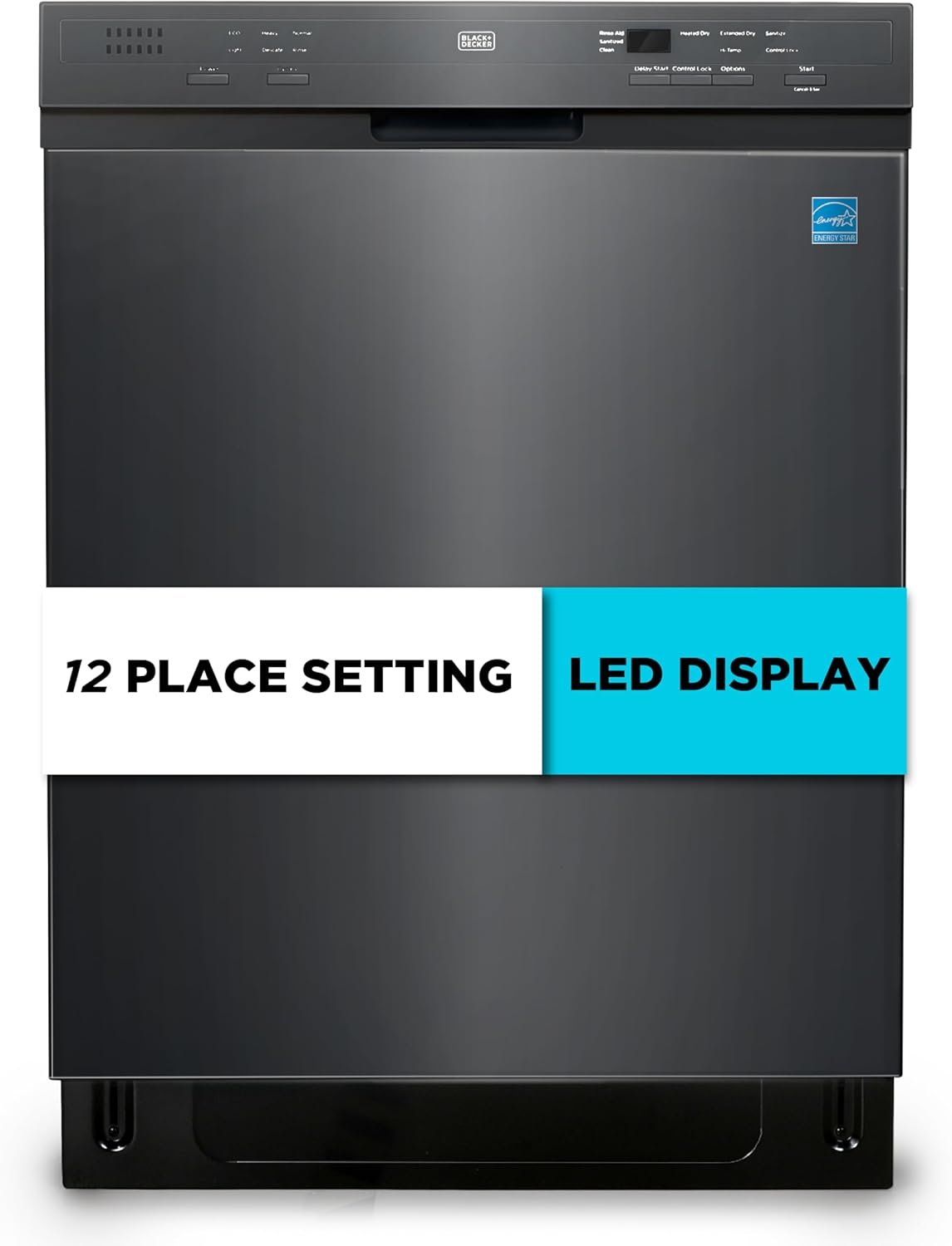
Selecting a dishwasher is a balance of cleaning performance, kitchen layout compatibility, and household routines. For many homes, the appliance must deliver reliable wash coverage for mixed loads while fitting a 24-inch built-in footprint and complementing open-plan living with acceptable noise levels. Energy and water efficiency are increasingly important for long-term operating expectations, and features such as soil sensors, stainless-steel tubs, and sanitize options influence both daily outcomes and maintenance frequency. Noise sensitivity, rack flexibility, and capacity requirements differ between single-person households, families, and those who entertain. The BLACK+DECKER 24″ BDW200 series presents a combination of a 12-place setting tall tub, six wash programs including Smart Sensor and sanitize mode, a stainless-steel interior, and a 52 dB noise rating, which places it in the moderate-quiet segment. Understanding how those specifications translate into real-world suitability helps households match the BDW200 to usage patterns and space constraints without relying on hands-on testing claims.
Quick Overview
| Feature | Details |
|---|---|
| Dishwasher type | Built-In 24-inch single-unit |
| Capacity | 12 place settings, tall tub design |
| Wash cycles & tech | 6 programs: Heavy, Normal, Light/Delicate, Eco, Glass, Rinse; Smart Sensor system |
| Drying method | Heated dry (manufacturer-specified) |
| Noise level | 52 dB operation (manufacturer-specified) |
| Energy & certifications | ENERGY STAR certified; annual energy consumption listed at 240 kWh/year |
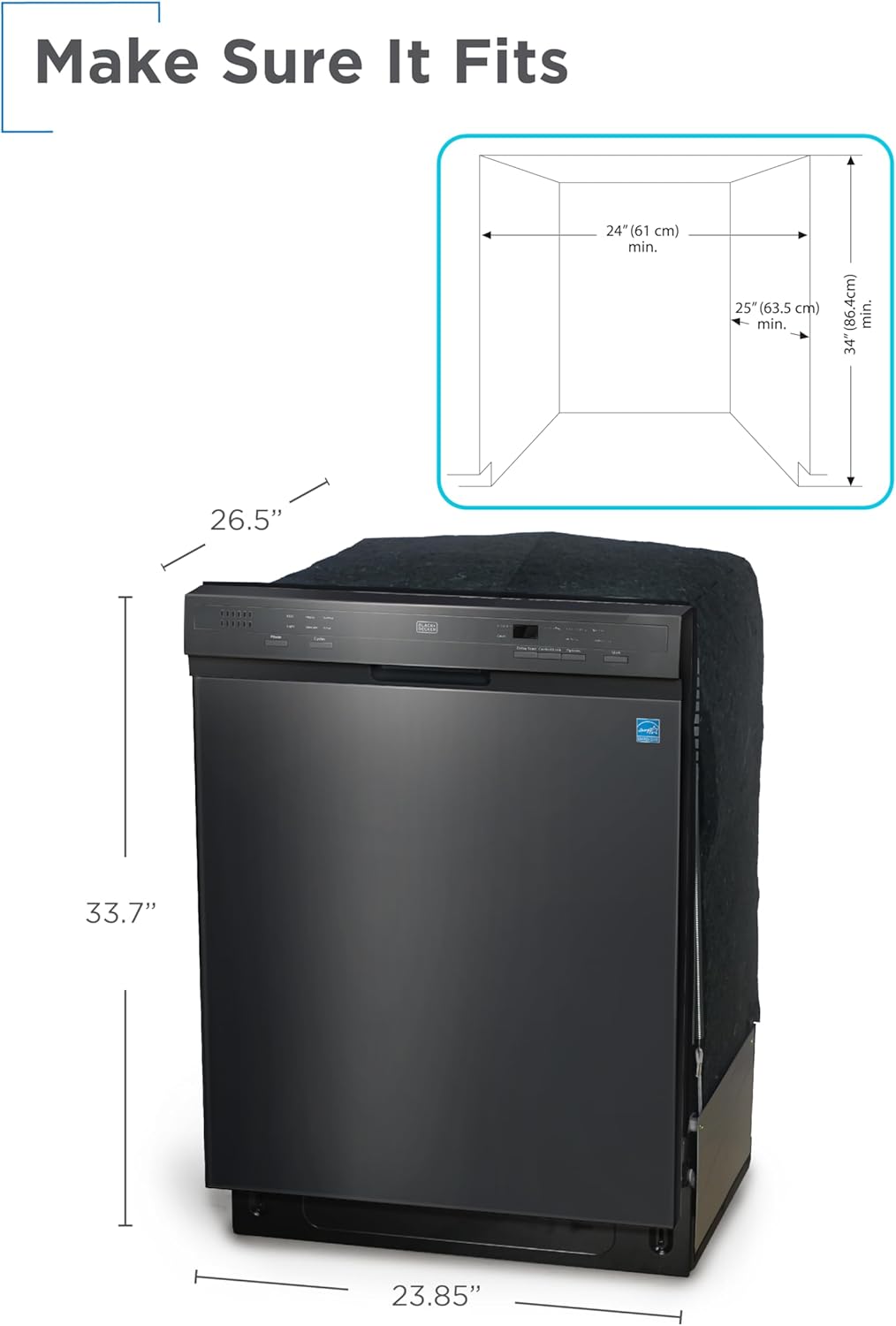
| Dimensions & installation | 26.5″ D x 23.85″ W x 33.7″ H; built-in installation |
| Material & finish | Stainless-steel tub; black exterior option; stainless look model available |
| Controls & special features | Touch controls, Delay Start, LED interior light, Sanitize mode |
| Weight & safety | 80.2 lb item weight; UL certification noted |
The BDW200’s specification set blends a common built-in footprint with a tall tub and adjustable upper rack, making it suited for households needing flexible loading without a full-size 24″ large-capacity machine. ENERGY STAR certification and a soil-sensing Smart Wash program indicate typical operating efficiency, while a 52 dB rating places the model in a quieter mid-range for kitchens where background noise matters.

Cleaning performance and wash coverage
Cleaning performance centers on cycle selection, spray coverage geometry, filtration, and temperature control, and the BDW200 lists several features that address those factors. The 6 wash programs combined with a Smart Sensor system allow the control electronics to modify cycle duration and water usage according to detected soil levels, which in engineering terms can optimize rinse water clarity and reduce rewash. A stainless-steel tub helps with temperature retention during high-heat cycles and offers a more hygienic interior surface than some plastic tubs. Cylinder filtration and efficient spray-arm design are indicated in the disclosures; effective filtration prevents large food particles from recirculating while targeted spray patterns improve coverage on vertically-oriented dishes and pans. The sanitize mode and heated dry option support higher-temperature cycles that improve soil removal on heavily soiled items, though overall results depend on load pattern, water hardness, and detergent choice.
Spray system and cycle selection
Spray-arm placement and cycle programming together determine spray coverage. The BDW200’s combination of a lower and upper spray arm layout is typical for 24″ built-in units and is intended to deliver overlapping spray patterns that reach plates, bowls, and stemware. Cycle options such as Heavy, Normal, and Delicate provide selectable durations and temperatures; Heavy cycles generally extend wash time and raise temperature and pump duty to tackle baked-on soils, while Eco and Glass cycles reduce water or temperature to protect fragile items and save energy. The Smart Sensor option adjusts these profiles automatically by monitoring turbidity or soil load, which can reduce the likelihood of incomplete washes when loads are only moderately soiled.
Filtration and soil management
Filtration design impacts how well a dishwasher separates food debris from recirculated wash water. The BDW200 lists cylinder filtration, which typically combines a coarse trap and fine mesh filter to capture large particles while allowing long-duration circulation. A well-designed filtration path reduces blockage risk in spray nozzles and preserves pump efficiency. Routine access to the filter area for periodic clearing of trapped debris is important; manufacturers commonly recommend checking and rinsing filters to maintain spray pressure and avoid odor buildup. Soil sensors that adjust water clarity within cycles further mitigate excessive soiling by extending rinsing until turbidity thresholds are met.
Handling heavily soiled pots and pans
Heavily soiled cookware benefits from a combination of mechanical action, elevated temperature, and cycle duration. The BDW200’s Heavy cycle and Sanitize mode align with these needs by increasing pump runtime and water temperature to dislodge baked-on residues. Placement strategy also affects outcomes: orienting pots and pans so that spray arms can reach interior surfaces and avoiding nesting improves mechanical cleaning. For persistent, carbonized soils, pre-soaking or an initial rinse cycle can reduce the cleaning burden, and using appropriate high-alkaline detergents compatible with high-temperature cycles supports enzyme and surfactant activity for grease breakdown.
Capacity, rack design, and place settings
Capacity and rack geometry determine whether a dishwasher meets household loading patterns; the BDW200 lists a 12-place setting capacity with a tall tub design and adjustable top rack, which supports a balance between plate quantity and larger serveware. Fold-down tines in both racks add flexibility for irregular items like roasting pans, casserole dishes, and pitchers. The adjustable upper rack offering up to 2″ of vertical movement accommodates taller stemware or stacked plating arrangements. Rack spacing, tine strength, and cutlery placement zones influence the effective usable capacity beyond the nominal 12-place setting metric; a tall tub can allow deeper bowls and small pots without requiring a wider footprint, making the unit suitable for many kitchens that need occasional larger-item washing rather than consistent commercial-style loads.

Upper rack adjustability and load flexibility
An adjustable upper rack that moves up to 2″ increases usable vertical space for tall glasses or small platters. This adjustability allows separation between items to maintain spray access while avoiding contact points that cause chipping. The BDW200’s upper rack design, combined with fold-down tines, enables loading configurations that prioritize stemware protection or wider spacing for fragile items. For households that alternate between glassware-heavy loads and mixed loads with tall mugs, the adjustable rack reduces compromises by permitting quick reconfiguration without tools.
Lower rack and large items
The lower rack and fold-down tines provide the primary accommodation for plates, pots, and larger serveware. When tines fold down, the lower rack becomes a more continuous plane capable of accepting baking sheets, roasting pans, and large casserole dishes. Proper placement—angled away from the spray arm center and not obstructing arm rotation—optimizes exposure to jets. The BDW200’s tall tub further increases clearance, reducing the need to reposition larger items into marginal orientations that hinder cleaning and drainage.
Place setting capacity in real-world terms
A 12-place setting rating usually refers to a standard layout of dinner plates, side plates, bowls, glasses, and cutlery. In practical household terms, this capacity suits couples, small families, or households that run daily cycles instead of accumulating large loads. The metric does not directly account for bulky cookware or serving ware; however, the tall tub and fold-down tines increase practical flexibility. For users who frequently host larger gatherings or require simultaneous cleaning of multiple large pots, a larger-capacity 24″ or 28″ model may be preferable, but the BDW200 is positioned to handle most routine mixed loads efficiently.
Noise levels and suitability for open kitchens
Noise rating is a key consideration for open-plan living arrangements; the BDW200 is specified at 52 dB, which sits in the moderate-quiet band for residential dishwashers. Noise measurement in decibels is logarithmic, so differences of 3 dB are perceptible as a small but noticeable change in loudness; a 52 dB machine generally produces a sound level comparable to a quiet conversation at a distance. Cabinet construction, floor type, and under-counter mounting influence perceived noise: solid cabinetry and proper anti-vibration mounting can reduce transmitted structure-borne sound. While 52 dB is suitable for households that tolerate some appliance background noise, particularly during active daytime use or kitchen activity, extremely noise-sensitive environments or those requiring near-silent overnight cycles may prefer models rated in the high 40s dB range.

52 dB in real-world terms
At 52 dB, typical perception is subdued hums and intermittent mechanical sounds during wash and drain phases rather than sharp or intrusive noises. The decibel rating provided by manufacturers is measured under controlled conditions and can vary slightly with cycle type—Heavy cycles with extended pump operation may register higher instantaneous SPLs. Room acoustics change perceived loudness: tiled kitchens amplify higher frequencies, while soft materials absorb sound. For families assessing suitability, 52 dB is often a reasonable compromise between performance and quiet operation for open-plan kitchens that are not extremely noise-sensitive.
Installation, cabinetry, and vibration isolation
Mounting quality and cabinetry affect both vibration and airborne sound. Proper leveling, manufacturer-recommended anti-vibration brackets, and tight cabinetry fit limit rattles and transmitted energy. The BDW200’s built-in form factor is intended for under-counter installation with standard mounting points; following recommended installation clearances for ventilation and plumbing limits stress on the chassis, reducing long-term loosening of fasteners that can generate noise. Floor type and adjacent cabinetry panels also play roles: softer materials and insulation reduce echo, while thin cabinet walls can act as sounding boards for mechanical noises.
Efficiency, maintenance, and long-term reliability
Energy and water efficiency shape total operating expectations and maintenance frequency. The BDW200 carries ENERGY STAR certification and an annual energy consumption value of 240 kWh/year as disclosed, indicating performance aligned with regulatory efficiency thresholds. Soil sensors and Smart Wash programs aim to adapt water usage to actual soil loads, reducing unnecessary water heating and circulation. Stainless-steel tub construction provides material durability and better thermal retention for high-temperature cycles, and UL certification addresses basic electrical safety. Maintenance needs focus on periodic filter cleaning, spray-arm inspection, and drain checks; cylinder filtration requires routine access to remove trapped debris to sustain spray pressure and avoid odors. Long-term reliability depends on component quality—pump, motor, and control board durability—along with correct installation and adherence to recommended maintenance.

Drying systems and moisture control
Heated dry systems use an internal heating element to raise air temperature after the final rinse, accelerating evaporation. A stainless-steel tub retains heat more effectively than plastic, enhancing drying performance by keeping the interior warmer during the transition from wash to dry. However, heated drying consumes additional energy compared to passive or condensation drying methods. Moisture control benefits from proper loading that prevents water traps and allows airflow; leaving space between items and using rinse aid where recommended improves sheet-draining and reduces water spots on glass and flatware.
Energy and water efficiency expectations
ENERGY STAR certification signals that the dishwasher meets or exceeds established benchmarks for energy and water efficiency. The BDW200’s stated annual energy consumption of 240 kWh/year and soil-sensing Smart Wash contribute to lower consumption when cycles are appropriately selected. Eco and Quick cycles reduce water and energy use for lightly soiled loads, while Heavy and Sanitize cycles increase usage for performance. Households prioritizing lower utility use should pair cycle selection and load planning—running fuller loads and choosing Eco settings when possible—to optimize efficiency gains.
Maintenance, filter requirements, and materials
Routine maintenance centers on the filtration assembly, spray-arm orifices, door seals, and detergent dispenser. Cylinder filtration, as specified, typically combines multiple filter stages and requires periodic removal and rinsing to prevent clogging and odor. Spray arms should be checked for mineral buildup, particularly in hard-water areas, which can constrict jets and reduce cleaning performance. Stainless-steel tub material resists staining and can tolerate higher temperatures, supporting sanitize cycles; however, long-term reliability also depends on motor and pump serviceability, proper installation, and adherence to manufacturer service recommendations.

Pros & Cons
Pros
- Flexible loading with a tall tub and adjustable upper rack: The 12-place setting capacity combined with a rack that adjusts up to 2″ and fold-down tines in both racks allows accommodation of taller glasses, pitchers, and occasional large cookware without increasing cabinet footprint. This flexibility reduces the need for supplementary handwashing of large items.
- Wide cycle selection with Smart Sensor control: Six wash programs, including Heavy, Eco, Glass, and a Smart Sensor mode, allow the control system to tailor cycle length and water use to soil levels, which can improve first-pass cleaning and reduce unnecessary water heating on light loads.
- ENERGY STAR certified with soil sensing: The ENERGY STAR designation and built-in soil sensor behavior indicate attention to energy and water efficiency, making the model a reasonable choice for households focused on operating efficiency and regulatory compliance.
- Stainless-steel tub and sanitize mode: The stainless-steel interior supports higher-temperature cycles and better heat retention during sanitize and heated-dry phases, which can enhance drying outcomes and material longevity relative to plastic tubs.
- Moderate noise rating suitable for many open kitchens: A specified 52 dB places this model in a moderate-quiet category, suitable for kitchens that can tolerate light appliance background noise during operation.
- Touch controls and LED interior lighting: Modern control inputs and interior illumination improve usability when loading, especially in dimly lit or enclosed cabinetry setups.
Cons
- Moderate rather than ultra-quiet operation: At 52 dB, the BDW200 is not among the quietest models available; noise-sensitive households or those requiring near-silent overnight cycles may prefer units rated below 50 dB.
- 12-place setting capacity may be limiting for frequent large gatherings: While the tall tub and flexible racks increase utility, households that commonly wash large cookware sets or host large groups may find a higher-capacity 24″ wide or full-depth model more convenient.
- Heated dry increases energy usage: The heated dry option improves moisture reduction but raises energy consumption compared with passive or condensation drying methods; users focused strictly on minimizing energy may prefer air-dry or eco-dry approaches.
- Maintenance dependence on filter and spray-arm access: Cylinder filtration requires routine clearing of trapped food debris to sustain performance; consumers in hard-water areas should plan for more frequent inspection and cleaning to avoid mineral buildup.
Final Verdict: Who This Dishwasher Is Best For (and Who Should Skip It)
The BLACK+DECKER BDW200 is best suited to small-to-mid-size households seeking a balanced combination of flexible loading and energy-conscious operation within a standard 24-inch built-in footprint. Its 12-place setting capacity, tall tub, adjustable rack, and fold-down tines provide practical versatility for families or couples that alternate between glassware-heavy loads and mixed cookware. ENERGY STAR certification, soil-sensor Smart Wash, and a stainless-steel tub make it a reasonable choice for buyers prioritizing efficient cleaning performance and robust interior materials without upgrading to larger or ultra-quiet premium units.
Households that should consider alternatives include those requiring ultra-quiet operation for very noise-sensitive open-plan living (seek models under 50 dB), those who frequently need simultaneous cleaning of many large pots and pans (consider higher-capacity or wider units), and buyers who prioritize passive energy-only drying methods to minimize electricity use. For typical 2026 US household use patterns—daily mixed loads, periodic heavy soiling, and moderate noise tolerance—the BDW200 offers a coherent feature set aligned to common needs while imposing predictable maintenance requirements tied to filtration and water hardness conditions.

Frequently Asked Questions (FAQs)
How quiet is a 52 dB dishwasher in daily use?
A 52 dB rating places a dishwasher in a moderate-quiet range where the appliance produces a subdued hum and intermittent pump or drain sounds. Perceived loudness depends on room acoustics and activity; tiled rooms amplify higher frequencies while soft furnishings absorb sound. For many kitchens, 52 dB is acceptable for daytime or evening operation, but extremely noise-sensitive households may prefer models rated below 50 dB for near-silent cycles.
What does ENERGY STAR certification mean for dishwasher efficiency?
ENERGY STAR certification indicates the dishwasher meets or exceeds efficiency benchmarks for energy and water use established by the certification program. Certified models typically use soil sensors and efficient spray systems to reduce unnecessary water and heating. Annual energy consumption figures, such as the BDW200’s 240 kWh/year disclosure, provide a comparative baseline for expected operating energy under standardized test conditions.
Does a stainless-steel tub improve cleaning and drying?
A stainless-steel tub improves thermal retention during high-temperature cycles, which can assist sanitizer and heated-dry performance by keeping the interior warmer. It is also more resistant to staining and odor absorption than many plastic tubs. While the material supports drying efficiency, actual dry results depend on cycle selection, load arrangement, and whether heated drying or passive condensation drying is used.
How often should the filter and spray arms be cleaned?
Filter and spray-arm maintenance frequency depends on load types and water quality; households with regular food debris or hard water typically inspect and rinse filters every few weeks. Spray arms should be checked periodically for mineral or food buildup that can constrict jets and reduce spray pressure. Routine clearing of trapped debris, occasional vinegar-based descaling for mineral deposits, and ensuring proper drainage preserve cleaning performance.
Is a 12-place setting dishwasher enough for a family of four?
A 12-place setting dishwasher suits many families of four if daily loads are run routinely and larger cookware is not washed only in the dishwasher. The tall tub and flexible racks increase usable volume for mixed loads, but households that frequently host larger gatherings or wash multiple large pots simultaneously may benefit from higher-capacity models or larger-width units to reduce cycle frequency.
What maintenance actions protect long-term reliability?
Routine actions that support long-term reliability include keeping the filter assembly clean, clearing food traps, inspecting and cleaning spray-arm orifices, checking door gasket condition, and avoiding overloading that impedes spray action. Proper installation and stable mounting reduce chassis stress and vibration-related wear. Following manufacturer-recommended detergents and service intervals also preserves pump and control-system longevity.
How effective is the Smart Sensor wash compared with fixed cycles?
Smart Sensor wash systems monitor wash-water turbidity or soil levels and adapt cycle time and rinse phases accordingly. This approach can improve cleaning outcomes for mixed loads by extending wash or rinse stages only when needed, potentially reducing water and energy use on lighter loads compared with fixed, full-duration cycles. Effectiveness depends on accurate sensor calibration and appropriate load placement to expose turbidity sensors to representative rinse water.