
Choosing the Right Dishwasher for Your Kitchen
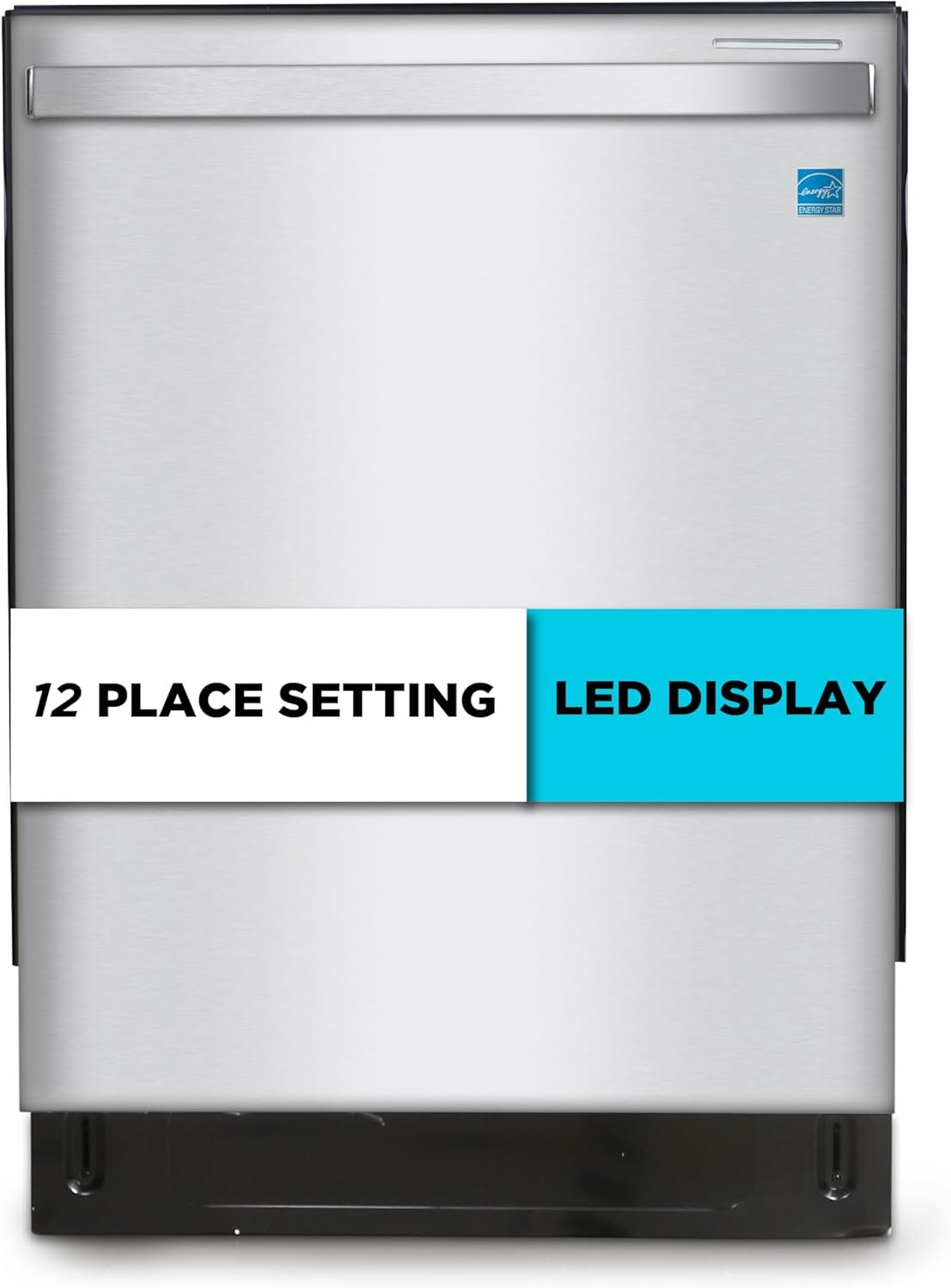
Selecting a dishwasher involves balancing cleaning performance, kitchen layout, and household habits. For many households, capacity and cycle variety determine whether a single load clears a dinner service or if multiple runs are needed; a 12-place setting capacity targets small to medium families or households that run near-full loads several times per week. Noise sensitivity matters in open-plan homes and apartments where living space adjoins the kitchen; a 45 dB rating positions this model toward quieter operation but still requires consideration of placement and cabinetry. Efficiency expectations influence cycle choice, water use, and energy draw—features such as soil sensors and Energy Star certification can reduce resource use for typical loads. Rack flexibility, drying options, and filtration affect both cleanliness and ongoing upkeep. Evaluating these factors against kitchen dimensions, typical dishware profiles, and frequency of heavy soil loads helps determine whether a model like this aligns with household priorities without relying on experiential claims.
Quick Overview
| Feature | Details |
|---|---|
| Dishwasher type | Built-in 24-inch, Designer Series |
| Capacity | 12-place setting capacity, tall tub design |
| Wash cycles | 6 programs: Pots & Pans, Normal, Crystal (Delicate), Quick, Rinse, Energy Saver / Smart Wash |
| Drying method | Heated dry option; moisture-management noted in specs |
| Noise level | 45 decibels (manufacturer rating) |
| Energy efficiency | ENERGY STAR certified; listed annual energy consumption 240 kWh/year |
| Dimensions & installation | 26.5″ D x 23.85″ W x 33.7″ H; built-in installation |
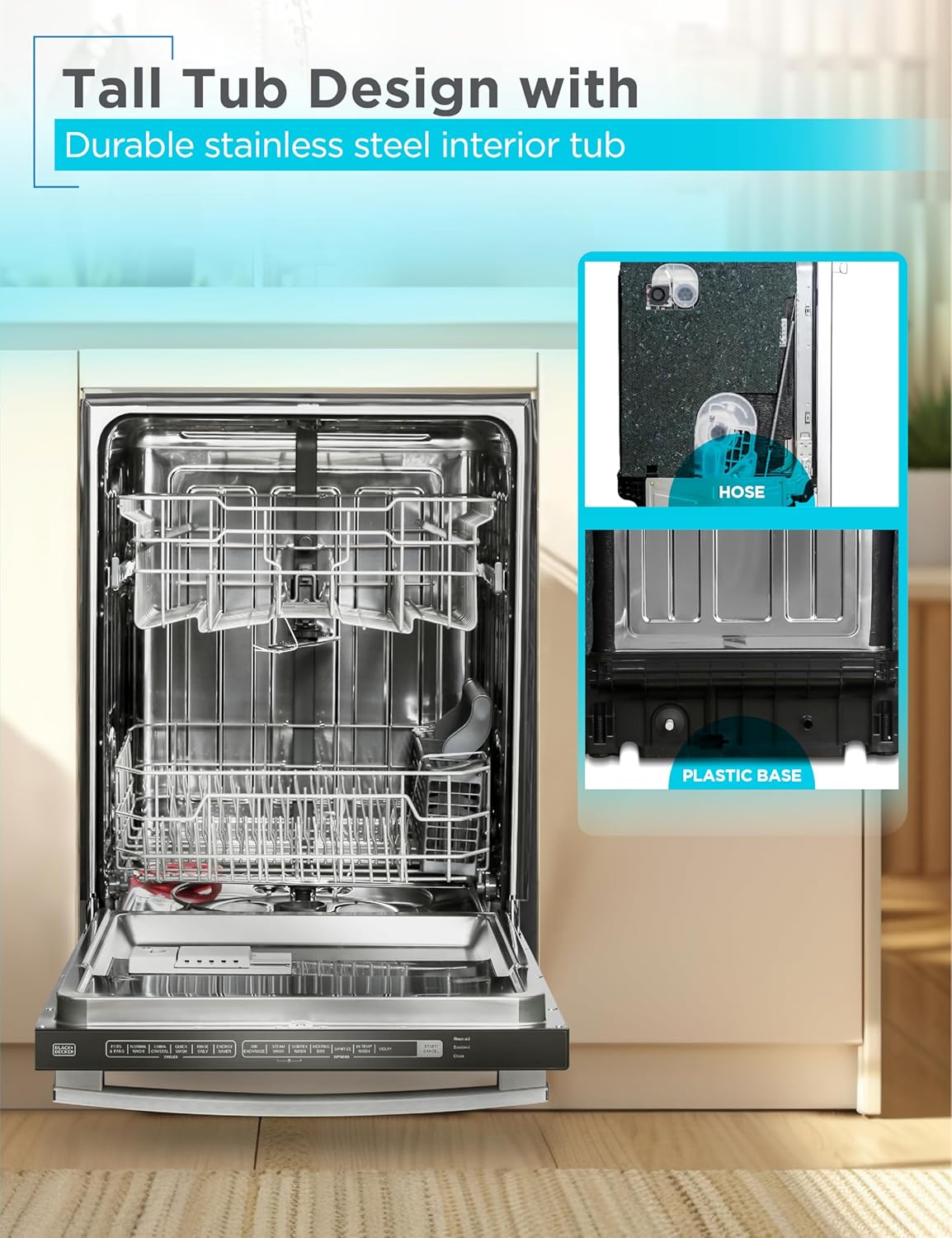
| Tub & materials | Stainless steel tub and interior finish |
| Controls & features | Electronic touch controls, delay start, LED interior light, sanitize mode |
| Warranty | Not specified in publicly listed specifications |
This configuration translates to a compact built-in option suited to kitchens that need a balance of capacity and footprint efficiency. The tall tub and adjustable top rack increase loading flexibility for taller glasses and serveware, while the stainless steel tub supports higher-temperature cycles and can aid drying. The set of six cycle choices plus sensor-driven Smart Wash aims to provide adaptable cleaning without advanced professional features, positioning the unit for households prioritizing straightforward operation and energy-aware cycles.

Cleaning Performance and Wash Coverage
The cleaning-performance overview centers on spray-arm design, cycle selection, and filtration working together to remove soils across dishware types. A stainless steel tub allows for higher-temperature cycles that improve grease loosening and can enhance rinse performance compared with plastic tubs. The listed Smart Wash system and soil-sensing capability adjust cycle length, temperature, and water use to match soil loads, which typically improves spray coverage efficiency and reduces over- or under-washing. Multiple cycle options including a Pots & Pans and Crystal/Delicate program help tailor water temperature and spray intensity to heavy bakeware or fragile stemware. Spray arm placement, jet pattern, and pump pressure determine actual coverage; the manufacturer’s specification of layered filtration and efficient pump delivery indicate an intent to balance mechanical force with targeted rinse action to reach interior surfaces and stacked items effectively.

Spray Arms, Pump Design, and Cycle Impact on Coverage
Effective wash coverage depends on spray arm geometry, pump flow rate, and cycle programming. Dual or multi-level spray arms typically provide coverage across racks, while targeted jets and rotating arm designs help reach undersides and between stacked plates. Cycle selection dictates pump speed and temperature—heavy cycles run hotter and often use longer wash and soak phases to dissolve baked-on residues, while quick cycles shorten pump duty and use lower temperatures for lightly soiled loads. The BDW300MHS specification of a Smart Wash system suggests automatic adjustment of pump activity and cycle duration based on detected soil levels, which helps balance energy and water use with thorough cleaning when needed. Combination of rotating spray arms and targeted jets in a tall tub layout increases the probability of consistent coverage across larger items.
Filtration, Soil Sensors, and Drying Influence on Spotting
Multi-layer filtration traps food particles to prevent redepositing during a cycle; regular maintenance of the filter basket preserves wash quality and reduces cloudy residues on glassware. Soil sensors monitor turbidity and can lengthen rinse phases or increase spray intensity when high soil levels are detected, improving clarity on delicate glass. Drying outcomes combine heated dry elements and tub material: stainless steel tubs retain heat and can support more effective condensation drying than plastic, but heated dry remains important for removing residual moisture from crevices and plastics. Heated drying increases energy use compared with air-dry options, but helps reduce spotting on glasses and silverware when paired with correct rinse aid and proper loading to allow air circulation.
Capacity, Rack Design, and Place Settings
Capacity assessment rests on the 12-place setting metric and tall tub form factor, which together indicate suitability for households that typically run near-full loads rather than very large families. Adjustable top-rack height with up to 2″ of movement increases clearance for taller glasses and medium-size casserole lids, providing flexibility when alternating between glassware-intensive and pot-heavy loads. Fold-down tines in the lower rack expand space for large items like roasters and baking sheets, while a dedicated silverware basket or tray design influences utensil cleaning consistency and loading speed. The designer series layout emphasizes a balance between place setting count and geometric accommodation: tall tub depth helps with deep serving bowls, but the 12-place rating still places the model below 15-place alternatives commonly chosen by larger households seeking fewer cycles per week.

Adjustable Rack Features and Loading Flexibility
Adjustable racks provide practical benefits for varied households: a height-adjustable upper rack creates room for stemware and large mugs, while lower-rack folding tines create a flat surface for roasting pans or tall pots. The two-inch adjustment range specified here is sufficient for most tall glassware and some casserole dishes, but not as expansive as more premium models offering three-tier or fully convertible racks. Rack materials, such as nylon-coated steel, resist wear and support repeated loading, while the tall tub geometry increases usable vertical space without increasing overall cabinet footprint. Proper loading patterns—angled glassware facing the spray and unobstructed rotating spray arms—affect cleaning outcomes more than marginal increases in capacity alone.
Utensil Placement, Fold-Down Tines, and Tall Tub Trade-offs
Utensil basket versus cutlery tray choices carry trade-offs: a basket can allow larger items to segregate cutlery, improving water access, while a flat tray offers more organized placement and may reduce nesting of spoons that impedes cleaning. Fold-down tines expand lower-rack versatility for large cookware, but when in use they can reduce the available slots for plates. The tall tub improves accommodation for tall items but may change spray dynamics—items positioned too close to spray heads can block jets and create shadowing. The balance of these design choices in this model favors modular loading for small-to-medium households that require occasional oversized item washing without dedicating to a larger 24-place-capacity unit.
Noise Levels and Suitability for Open Kitchens
A 45 dB noise rating places the unit within a quieter consumer range, aligning with user expectations for kitchen appliances that operate while conversation continues in adjacent living spaces. Decibel ratings are measured under standardized lab conditions; real-world noise depends on cabinet mounting, floor vibration dampening, and proximity to living areas. An open-plan kitchen will transmit more operational sound into living spaces than enclosed installations, making insulation, cabinetry tightness, and installation anti-vibration measures important considerations. Users sensitive to sound should evaluate installation context and consider cabinetry fronts or insulating mounts that further reduce perceived noise. The 45 dB rating suggests suitability for many open kitchens, though noise perception varies with frequency profile and peak noises during pump priming or drain events rather than steady-state operation alone.

Interpreting the 45 dB Rating and Daily Use
Decibel ratings are logarithmic, so a difference of a few dB is perceptible but not linear; 45 dB is typically described as equivalent to a quiet conversation at home. Peak sounds during pump starts or drain cycles can be higher than the nominal rating, and frequency content determines perceived loudness—a higher-pitched motor whine may seem louder than a low-frequency hum at the same dB. For daytime dishwashing or away-from-home cycles, a 45 dB rating is generally unobtrusive, but late-night runs in small apartments adjacent to sleeping areas may still be noticeable. Placement choices and cycle selection (choosing quieter eco or normal cycles over heavy cycles when feasible) can mitigate disturbance.
Installation, Insulation, and Placement Considerations
Built-in installation affects sound transmission through cabinetry into living spaces. Proper anti-vibration mounting, tight door gaskets, and sound-dampening insulation within surrounding cabinets can reduce resonance. Flooring type and adjacent room surfaces (hardwood vs. carpet) influence how noise radiates and is perceived. Additionally, plumbing connections that minimize water hammer and drain clogs reduce intermittent loud events. The manufacturer-provided 45 dB rating assumes standard installation conditions; investing in professional alignment and ensuring solid cabinetry fit will help approach rated noise performance in real-world settings.
Energy and Water Efficiency Expectations
Energy Star certification and a listed annual consumption of 240 kWh/year indicate design decisions to reduce energy use compared with non-certified models. Soil sensors and Smart Wash algorithms contribute to reduced water and energy consumption by tailoring cycle time and rinse volume to actual load conditions instead of defaulting to longer cycles. The efficiency benefit is also influenced by cycle selection—energy-saver and sensor-driven cycles typically run longer at lower temperatures, balancing water use and heat loss. Heated dry increases energy draw relative to air-dry or condensation methods; pairing heated dry with an energy-saving mindset (using heated dry selectively) can align outcomes with efficiency goals. Water consumption per cycle is not specified in the basic datasheet, so expectations should be moderated: Energy Star certification generally indicates competitive consumption but does not replace the need to consider local water rates or usage patterns.

ENERGY STAR, Annual Energy Consumption, and Soil Sensor Impact
ENERGY STAR certification reflects compliance with federal efficiency guidelines, often translating to better performance across typical use profiles. The 240 kWh/year figure provides a standardized basis for comparing models and suggests the appliance is engineered to limit idle and cycle energy waste. Soil sensors modify cycle length and water flow, reducing unnecessary longer cycles for lightly soiled loads and concentrating resources for heavily soiled loads. This adaptive behavior helps avoid overserving energy and water, though exact savings depend on load composition and frequency. For households prioritizing sustainability, combining sensor cycles with full loads and selective heated dry use optimizes efficiency.
Maintenance, Filter Access, and Long-Term Reliability
Regular maintenance preserves both efficiency and cleaning performance: multi-layer filtration requires periodic emptying and rinsing to prevent clogging and redepositing of food particles, while spray arms need unobstructed rotation and occasional jet clearing. Stainless steel construction for the tub and exterior indicates a resistance to staining and corrosion compared with plastic, which supports higher-temperature cycles and longevity. Motor and pump life span are influenced by water hardness, detergent selection, and frequency of heavy-load cycles; proper use of recommended detergents and periodic inspection of seals and inlet hoses reduces premature wear. Manufacturer support and replacement part availability also shape long-term reliability, so prospective buyers in 2026 should consider serviceability and local service networks when assessing durability expectations.
Pros & Cons
Pros
- Quiet operation relative to many consumer models: The 45 dB rating positions the dishwasher for open-plan living where noise matters, and thoughtful installation reduces perceived sound further.
- ENERGY STAR certified with soil-sensing Smart Wash: Sensor-driven cycles adapt water and energy use to soiling levels, improving resource efficiency for varied household loads.
- Stainless steel tub and heated dry option: The stainless tub supports higher-temperature cycles for improved grease dissolution and assists in more effective condensation drying when combined with heated dry.
- Adjustable upper rack and fold-down lower tines: Two-inch rack adjustment and folding tines increase flexibility to handle tall glassware and large cookware without needing a larger unit.
- Six wash programs including Pots & Pans and Delicate modes: Multiple cycle choices cater to heavily soiled bakeware as well as fragile stemware with appropriate temperature and spray intensity adjustments.
- Compact built-in footprint with tall tub design: The 24-inch built-in form fits tighter kitchen spaces while providing more vertical clearance than shallow tubs.
Cons
- Moderate annual energy figure compared to premium efficiency models: The listed 240 kWh/year is competitive but not class-leading; top-tier models in 2026 can show lower consumption through advanced insulation and hybrid drying.
- Heated drying increases energy use: While effective at moisture removal, heated dry raises energy consumption versus condensation or fan-assisted low-energy drying methods.
- Warranty details not publicly specified: Absence of clearly stated warranty terms in basic specifications may complicate buyer comparisons regarding long-term support and coverage.
- 12-place capacity may be insufficient for larger families: Homes that require fewer weekly cycles or have consistently large dinnerware sets may prefer 15+ place-setting models for efficiency of use.
Final Verdict: Who This Dishwasher Is Best For (and Who Should Skip It)
This BLACK+DECKER 24-inch built-in dishwasher is best suited for small to medium households and individuals prioritizing a balance of cleaning flexibility, compact installation, and quieter operation. The 12-place setting capacity combined with a tall tub and adjustable rack options supports mixed loads of glassware, daily plates, and occasional large cookware, making it a practical fit for families that typically run near-full loads rather than very large gatherings. ENERGY STAR certification and Smart Wash soil-sensing capabilities align with efficiency-minded users who value reduced water and energy waste when cycles are matched to soil levels.
Households that should consider alternatives include larger families that routinely need higher place-setting counts or users seeking the most advanced energy and drying technologies available in premium 2026 models. Additionally, those who require explicit, detailed warranty coverage or highly specialized features such as third-rack utensil trays or ultra-quiet sub-40 dB operation may find other models better suited. For buyers seeking a straightforward, moderately quiet, and flexible built-in solution with a stainless steel tub and basic advanced features, this model represents a balanced option within its segment.
Frequently Asked Questions (FAQs)
How well does a 45 dB dishwasher perform in an open-plan kitchen?
A 45 dB rating typically equates to a quiet conversation and is generally suitable for many open-plan homes. Actual perceived loudness depends on cabinet mounting, room surfaces, and proximity to living areas. Proper installation with anti-vibration mounting and insulated cabinetry reduces transmitted noise; for very noise-sensitive environments, models rated below 42 dB may be preferable.
Does the stainless steel tub improve drying and durability?
Stainless steel tubs tolerate higher cycle temperatures and are more resistant to staining and warping than plastic tubs, which supports durability and longevity. Thermally, stainless retains heat better than plastic, aiding condensation drying effectiveness; however, heated dry still contributes to improved moisture removal, particularly on plastics and crevices.
What role do soil sensors and Smart Wash play in water and energy use?
Soil sensors detect turbidity in wash water and adjust cycle length, rinse frequency, and pump intensity to match load contamination. Smart Wash systems use this information to avoid unnecessarily long cycles for light loads, conserving water and energy. Savings depend on load types and frequency, but adaptive cycles typically improve efficiency over fixed-duration programs.
How often should filters and spray arms be maintained?
Filters should be checked and rinsed regularly—typically every few weeks depending on usage and food residue levels—to prevent clogging and redepositing of particles. Spray arms should be inspected periodically to ensure jets are clear and rotation is unobstructed; mineral deposits or food debris can be removed with a soft brush or by soaking. Regular maintenance preserves cleaning performance and reduces strain on pumps.
Is a 12-place setting dishwasher adequate for a family of four?
A 12-place setting capacity can be adequate for many families of four if loads are run once or twice daily and dishware is consolidated efficiently. Households that entertain frequently or have multiple shared meals daily may find larger-capacity models reduce cycle frequency. Rack flexibility and load composition are key determinants of whether the capacity meets household needs.
How does heated dry compare with air-dry in energy use and performance?
Heated dry accelerates moisture removal by raising internal temperature and using a heating element, improving drying on plastics and recessed surfaces but increasing energy consumption. Air-dry or condensation drying uses residual heat and lower energy draw, which is more efficient but can leave more moisture on certain items. Combining heated dry selectively with rinse aid can help balance performance and energy use.
What factors influence long-term reliability for built-in dishwashers?
Long-term reliability depends on build materials (stainless steel tubs resist corrosion), proper installation, water quality, detergent selection, and routine maintenance of seals, filters, and spray arms. Motor and pump longevity are affected by frequency of heavy loads and hard-water mineral buildup. Availability of replacement parts and manufacturer support also shape serviceability and lifespan.
Are adjustable racks and fold-down tines worth prioritizing?
Adjustable racks and fold-down tines increase loading flexibility, making it easier to accommodate a mix of tall glasses, large cookware, and awkwardly shaped items. For households with varied dishware sizes, these features reduce the need for separate handwashing and improve overall cycle efficiency. They are particularly valuable in compact 24-inch models where vertical space must be used efficiently.