
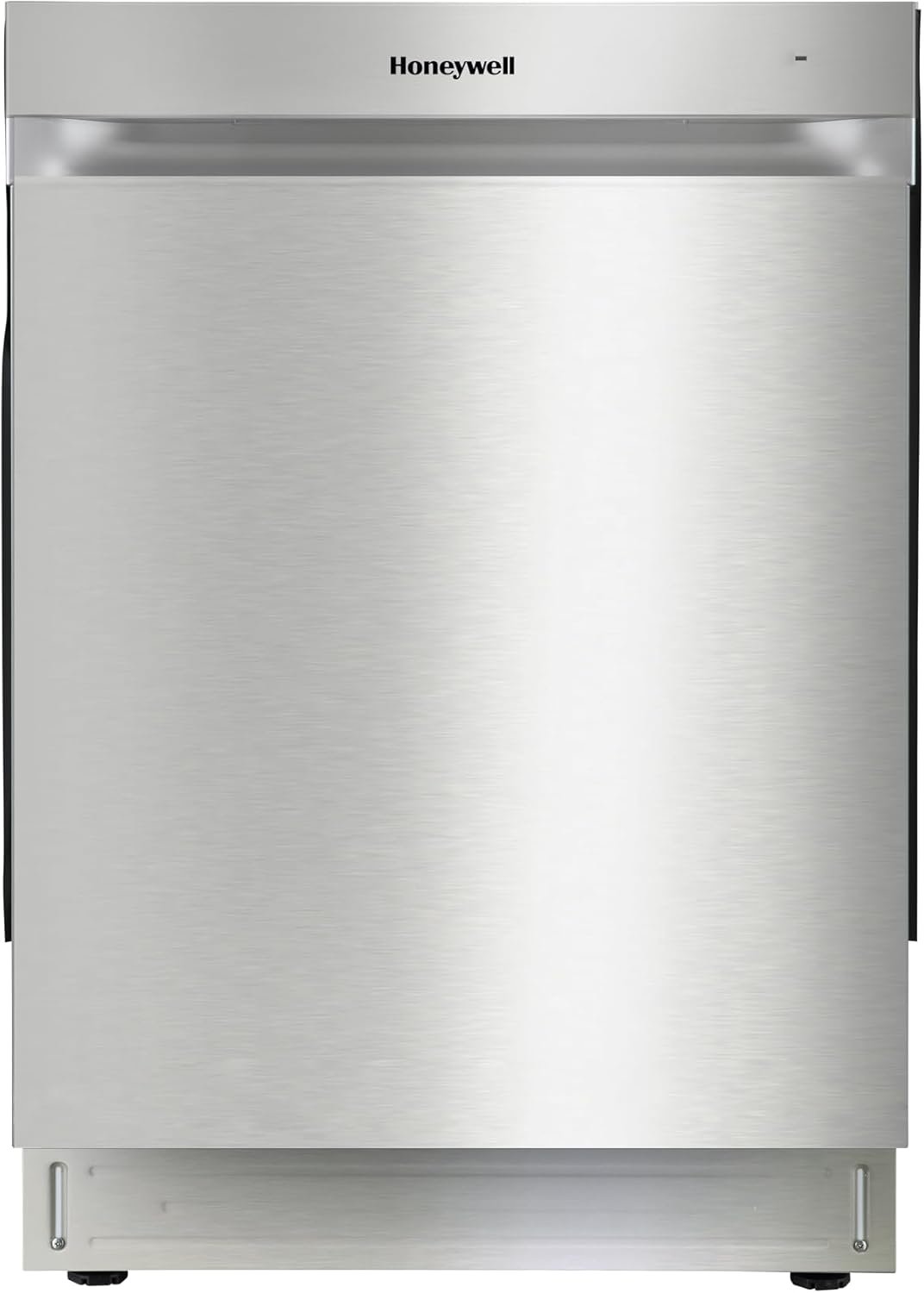
Why dishwasher selection matters
Selecting a dishwasher affects daily kitchen workflow, utility usage, and household convenience more than many single appliances. Household size, dishware mix, and frequency of use determine whether a compact 12-place setting unit meets needs or whether a larger model is required. Kitchen layout and installation type—built-in versus portable—affect plumbing, cabinetry, and sound-control decisions; open-plan kitchens raise sensitivity to noise ratings and vibration management. Cleaning expectations hinge on spray coverage, filtration, and cycle variety, while efficiency expectations tie to Energy Star certification and annual energy consumption. Durability considerations include tub materials, motor and pump quality, and serviceability. Buyers should weigh drying method and moisture control against loading patterns and preferred detergent systems. This review focuses on product specifications and typical appliance engineering expectations to help align functional priorities—cleaning performance, capacity, noise, drying, efficiency, maintenance, and durability—with household requirements.
Quick Overview
| Feature | Details |
|---|---|
| Dishwasher type | Built-in, integrated style |
| Capacity | 12 place settings |
| Wash cycles | 7 wash cycles; 3 selectable modes |
| Drying method | Not specified in manufacturer materials (rinse-aid compatible likely) |
| Noise level | 42 decibels (manufacturer rating) |
| Energy efficiency | Energy Star certified; 240 kWh/year reported annual energy use |
| Dimensions & installation | 24″ D x 24.5″ W x 33.74″ H; ADA-compliant built-in fit |
| Tub material | Stainless steel base with plastic side panels and components |
| Controls | Hidden top-mounted push-button controls on door edge |
| Special features | Top cutlery rack, removable cutlery basket, 24-hour delay timer |
| Certifications | UL and Energy Star listed |
| Warranty | Not specified in manufacturer materials |
These specifications position the Honeywell 24-inch built-in dishwasher as a compact, standard-depth unit intended for small households or secondary kitchens. The 12-place capacity and two-rack layout target everyday dishware and glassware use, while the 42 dB rating suggests moderate quiet operation. Energy Star listing and a reported annual energy figure provide a baseline for efficiency expectations, but drying method and warranty details are not specified publicly and should be confirmed prior to purchase.
Cleaning performance and wash coverage
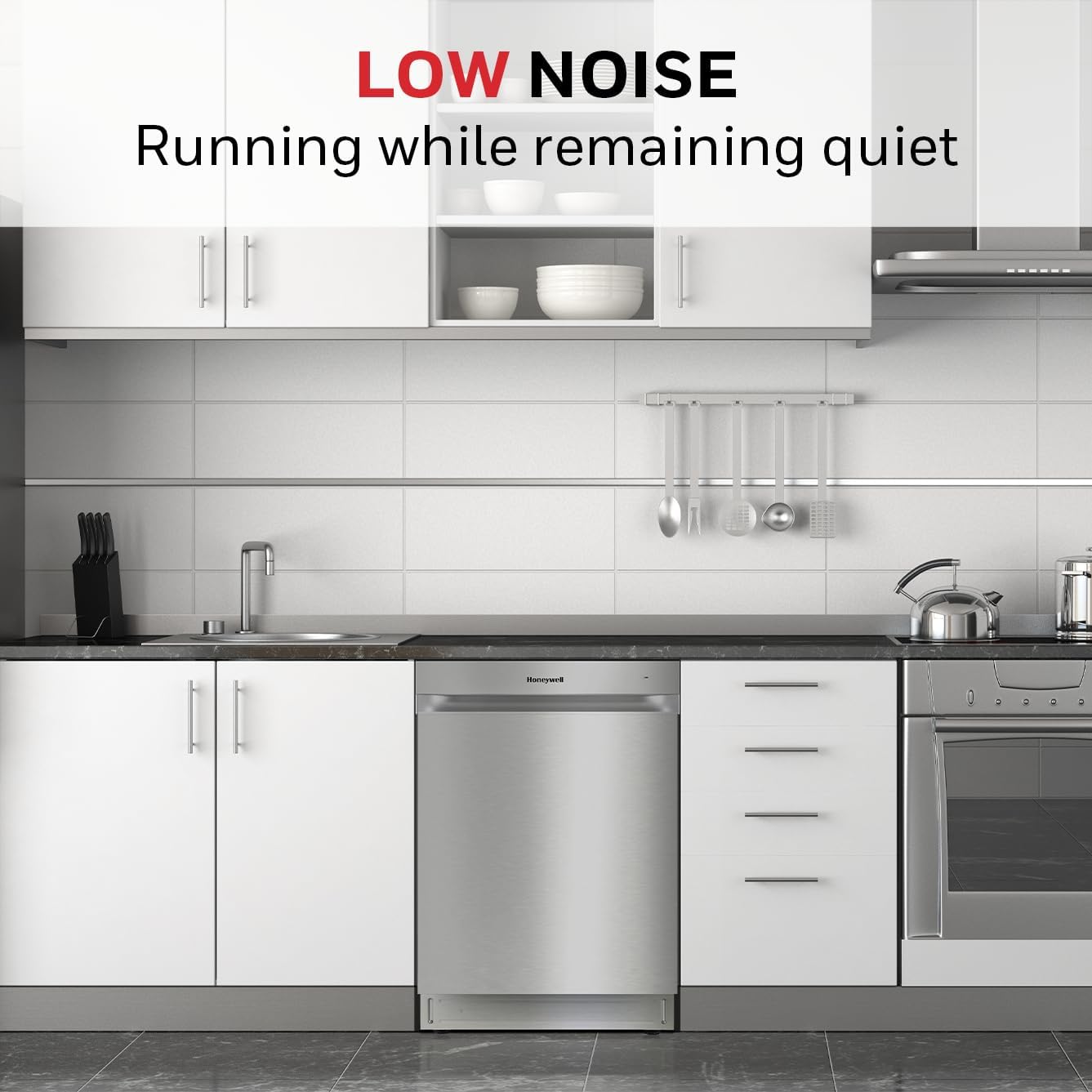
The listed seven wash cycles and three selectable modes indicate flexibility for light to heavier soil levels, enabling tailored soak and wash durations. Cleaning performance depends on spray arm design, pump pressure, and filtration; a stainless steel base with plastic sides suggests a conventional mid-range pump and spray geometry typical of 24-inch integrated units. Filtration and soil removal rely on removable filters and circulation patterns to prevent redepositing soils. Coverage for larger items such as pots and pans is influenced by spray arm positioning and rack clearance. Detergent compatibility and rinse-aid use will affect spotting and drying outcomes. Given the specification set, cleaning outcomes should align with typical appliance engineering expectations for mid-segment built-in dishwashers when appropriate loading and detergents are used.

Spray system, pump type, and coverage patterns
Spray performance is a function of pump flow rate, spray arm geometry, and nozzle placement; manufacturers commonly balance flow and nozzle size to achieve coverage across two racks. The Honeywell model likely uses a single or dual spray-arm arrangement that targets upper and lower rack zones. A stainless steel base improves heat retention during cycles, which can aid in soil-softening, while plastic side panels reduce weight. Pump power range for similar units typically supports adequate water pressure for suspension and removal of food soils when items are loaded without blocking spray paths. Even distribution is usually best achieved by alternating orientations of dishes and allowing space between items to avoid shadowing behind large plates or pots.
Filtration, soil management, and detergent interactions
Effective filtration prevents larger particles from recirculating and promotes consistent cleaning intensity. The model includes a removable cutlery basket and likely a removable filter assembly in the sump area; routine filter maintenance preserves wash performance. Cycle selection interacts with detergent chemistry—longer or higher-temperature cycles support enzymatic or phosphate-free detergents that require more time to break down residues. For soiled cookware, pre-rinsing or a heavy soil cycle minimizes redeposit risks. Rinse aid usage improves drying outcomes and reduces spotting on glassware; the presence of a rinse aid dispenser is common even when drying method details are not specified.
Capacity, rack design, and place settings
Capacity and rack configuration affect how many items can be cleaned per cycle and how versatile the unit is for mixed loads. The 12-place setting specification indicates a compact footprint suited to small households, apartments, or secondary kitchens. The combination of a top cutlery rack and a removable cutlery basket provides two approaches to cutlery organization: the top rack keeps utensils separated and accessible while the basket allows bulk loading on the lower rack. Rack geometry, tine spacing, and the ability to fold or adjust tines influence whether larger items like serving bowls or shallow pots fit comfortably. The stainless steel base provides a durable wash floor while plastic rack components moderate cost and weight. Buyers should consider typical load mixes—pots and pans frequency versus predominantly plates and glassware—when assessing whether a 12-place layout meets routine needs.

Top cutlery rack versus cutlery basket trade-offs
A top cutlery rack improves utensil separation, reduces nesting, and frees lower-rack space for plates and cookware; it also shortens cycle spray shadows that can occur with a lower-basket load. The provided removable cutlery basket offers flexibility for occasional larger utensil loads or for users who prefer concentrated utensil loading. Top racks tend to be shallower, restricting tall knives or long utensils, while baskets may allow deeper insertion. The presence of both options supports varied user preferences but requires attention to placement to avoid blocking upper spray patterns. Accessibility and unloading speed will differ depending on rack choice, with the top rack offering faster single-motion unloading for flatware.
Rack adjustability, space-saving features, and large-item accommodation
Space-saver features and adjustable tines increase versatility for mixed dishware. While specific adjustable-rack details are not listed, standard compact built-in models typically allow folding or removable tines on the upper or lower racks to create clearance for taller glasses or pots. ADA-compliant height suggests a shallow internal height compared with full-depth models; this can limit very tall casserole dishes unless racks are adjustable. The stainless base combined with plastic-side construction balances durability and weight but may limit very heavy-load tolerance compared with fully stainless interiors. Buyers with frequent large pots or commercial-style cookware should verify internal clearances and rack flexibility prior to purchase.
Noise levels and suitability for open kitchens
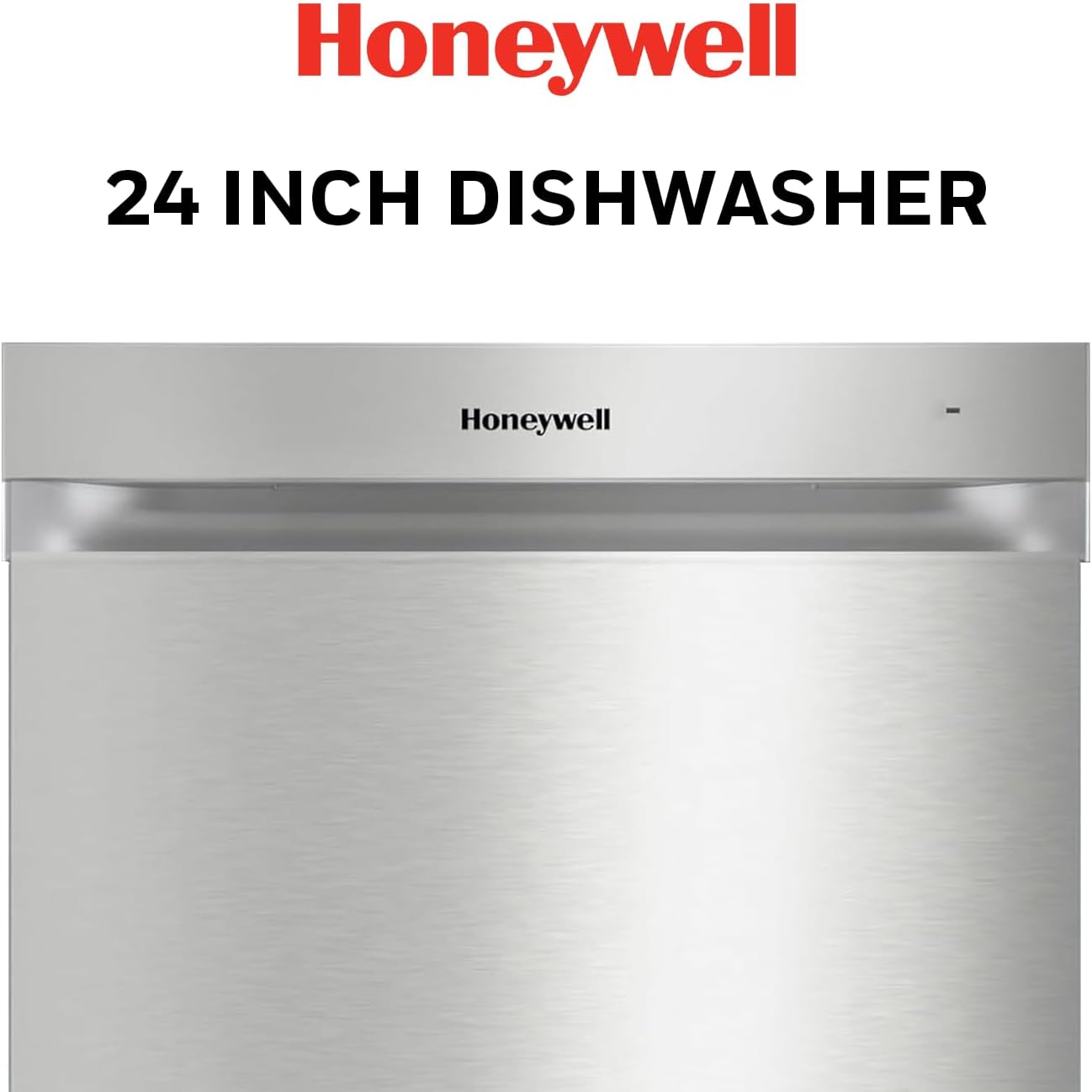
A manufacturer-rated noise level of 42 decibels places this dishwasher in the moderate-to-quiet range for residential dishwashers; however, perceived loudness depends on kitchen acoustics, cabinetry installation, and distance to living spaces. In an open-plan kitchen, low-frequency vibration transmission and resonance through cabinetry can increase perceived sound even when decibel ratings are modest. Hidden top-mounted controls and integrated door design can slightly dampen operational noise compared with fully exposed control panels. Sound insulation layers, mounting anti-vibration brackets, and tight paneling reduce structure-borne noise. For noise-sensitive households or very open layouts, understanding measured dB ratings in combination with installation context is essential to judge suitability for evening operation or shared living spaces.
Interpreting decibel ratings and perceived noise
Decibel ratings are logarithmic; a small numeric difference can reflect noticeable changes in perceived loudness. A 42 dB rating typically aligns with a quiet library-level ambient, but real-world perception varies with background noise and acoustic reflections. Low-frequency components—motor hum or pump resonance—carry farther through cabinetry and can be more intrusive than higher-frequency spray sounds. Manufacturers report A-weighted decibel levels that approximate human hearing sensitivity, but placement of the reading microphone, the surrounding cabinetry, and floor materials alter practical experience. Buyers should consider measured dB values alongside installation location and sound-dampening opportunities.
Installation and cabinetry considerations to reduce sound transfer
Sound control is affected by how a built-in dishwasher is mounted within cabinet openings and how the adjacent cabinetry panels are secured. Using anti-vibration mounting hardware, fibrous insulation pads between chassis and cabinetry, and tight door fit reduce mechanical coupling. Cabinet doors and inner liners that create an air gap help isolate operational noise. When integrating into open-plan kitchens, selecting a dedicated quiet cycle (if available) or running during lower-activity periods can mitigate perceptible noise. Because the unit uses a partial stainless interior and plastic sides, adding insulation strips or ensuring a snug installation may yield meaningful reductions in transmitted vibration and audible noise.
Drying systems and moisture control
Drying performance is influenced by the presence and type of drying system—passive condensation, heated dry elements, or assisted fan/venting systems. The manufacturer materials do not explicitly list the drying method, so typical expectations for compact built-in models apply: condensation drying augmented by rinse aid often handles standard loads effectively, while heavy-soil or plastic-heavy loads may retain moisture without active heating or fans. A stainless steel base supports faster heat retention for condensation drying compared with full-plastic tubs. Moisture control also depends on cycle temperatures, door sealing, and the presence of a rinse aid dispenser; these elements reduce spotting and pooling. Users focusing on near-dry plastics or instantaneous put-away performance should verify drying method details with the manufacturer.
Rinse aid compatibility and strategies to reduce spotting
Rinse aid lowers surface tension, promoting sheet-like water drainage and reducing water droplets that leave spots and streaks. When drying method specifics are not provided, consistent rinse aid use is an effective strategy for improved glass and flatware finish. Cycle selection that includes a high-temperature final rinse supports faster evaporation and reduces residual moisture. Placement of items—angling bowls and cups to avoid pooling and ensuring open spacing between items—complements rinse aid in achieving drier results. For plastic items, using top-rack placement and a dedicated gentle cycle can reduce deformation and trapped moisture.
Venting, condensation, and internal moisture management
Condensation drying relies on heat retention within the tub and a cooler stainless steel exterior surface to draw moisture from items. A stainless steel base improves thermal mass and helps promote condensation-based drying efficiency. If the unit lacks an active vent or heating element, residual moisture may collect in nooks and on plastics. Internal design that facilitates drainage from corners and a removable filter sump reduce trapped water. Delay-start functionality can be used to run cycles timed for periods when the kitchen is warmer or allow door opening post-cycle to accelerate air exchange and final drying if necessary.
Energy and water efficiency expectations
Energy Star certification and a reported annual energy consumption figure of 240 kWh per year provide baseline efficiency expectations. Energy performance is influenced by cycle length, wash temperature, and pump efficiency; modern compact dishwashers balance lower hot-water draw with longer cycles. Water consumption per cycle is not specified in the provided materials, so comparisons should rely on Energy Star norms where certified models usually use significantly less water per cycle than older units. Efficiency trade-offs exist: eco cycles conserve energy and water but may require more presoak or longer runtimes for heavy soils. Buyers prioritizing lower utility and water footprints should examine cycle-specific water use and prefer eco-oriented wash options.
Maintenance, filter requirements, and efficiency retention
Filter maintenance preserves both cleaning efficiency and energy performance. A removable filter assembly requires periodic rinsing to prevent clogging, which maintains circulation pump efficiency and reduces the need for extended washes. The presence of a removable cutlery basket simplifies sump access for cleaning. Scaling from hard water reduces thermal transfer and spray effectiveness; regular use of water softening agents or descaling cycles maintains spray arm performance and heating efficiency. Because annual energy figures assume typical household patterns, sustained high-soil loads or bypassing eco options will increase real-world consumption above rated figures.
Durability and long-term reliability indicators
Durability indicators in the specification set include a stainless steel base, UL listing, and the brand/manufacturer disclosure. Stainless surfaces resist staining and hold up better against higher temperatures than all-plastic interiors, improving long-term appearance and corrosion resistance in critical areas. Plastic side panels and rack components are cost-effective but may wear faster under heavy commercial-style loading. Motor and pump longevity is typically linked to build quality and service accessibility; the presence of removable panels and a standard 115-volt motor architecture facilitates repairs. Warranty details are not specified publicly and are an important factor in assessing long-term ownership risk.
Pros & Cons
Pros
- Compact built-in footprint suited to smaller kitchens and ADA-compliant installations. The 24.5″ width and 33.74″ height align with standard cabinet openings, making it a practical choice for apartments or secondary kitchens.
- Flexible cutlery options with both a top cutlery rack and a removable cutlery basket. These two-organizer approaches support different loading preferences and help free lower-rack space for larger items.
- Seven wash cycles and three selectable modes provide a range of cleaning intensities. Cycle variety allows tailoring to light glassware loads, heavier soiled cookware, and quick wash needs, improving versatility.
- Energy Star certification and a reported annual energy consumption figure provide a baseline for efficiency. The Energy Star listing indicates compliance with federal efficiency benchmarks.
- Moderate noise rating of 42 dB combined with an integrated control panel. Hidden top-mounted controls reduce exterior panel openings and can slightly dampen sound transmission while maintaining a clean exterior.
- Stainless steel base contributes to improved thermal retention and corrosion resistance where heat and water exposure are concentrated. This material choice supports condensation drying efficiency and long-term durability in the sump area.
Cons
- Drying method is not specified in manufacturer materials. Absence of a stated heated-dry or fan-assisted system means buyers seeking instant, dry plastics or tray-ready items should confirm drying capabilities before purchase.
- Plastic side panels and some rack components may limit heavy-load durability compared with full stainless interiors. Repeated heavy cookware loads can accelerate wear on plastic tines and slides.
- Warranty details are not publicly stated. Lack of specified warranty information increases uncertainty around long-term service expectations and should be clarified with the seller or manufacturer.
- Water consumption per cycle is not provided. For buyers prioritizing water footprint, the lack of specific per-cycle data requires reliance on Energy Star averages rather than exact usage figures.
- The compact 12-place capacity may be limiting for larger households or those who frequently entertain. Households with higher daily dish volumes may find more full-size units better suited to their routines.
Final Verdict: Who This Dishwasher Is Best For (and Who Should Skip It)
The Honeywell 24-inch built-in dishwasher aligns with small households, apartments, or secondary kitchens that require a space-efficient appliance with moderate noise levels and flexible cutlery organization. Its 12-place capacity, seven-cycle range, and Energy Star credential position it as a pragmatic option for users who value standard cleaning flexibility and baseline energy efficiency. The stainless steel base improves thermal retention and corrosion resistance in critical wash-zone areas, and the hidden controls support a clean integrated look while marginally aiding sound control.
Buyers who should avoid this model include large households that require higher capacity or faster turnaround between loads, users who demand guaranteed heated or fan-assisted drying for immediate put-away of plastics, and those requiring explicit warranty coverage or per-cycle water consumption disclosures prior to purchase. For kitchens with very open layouts and acute noise sensitivity, confirming installation acoustics and potential additional insulation is recommended. Overall, this unit offers a balanced mid-range specification set suitable for buyers prioritizing compact fit, standard cleaning performance, and Energy Star efficiency expectations in small to moderate usage contexts.
Frequently Asked Questions (FAQs)
How effective are the clean cycles for removing dried-on food?
Effectiveness depends on cycle selection, spray coverage, and filtration. The seven available cycles offer options for longer durations and higher temperatures that improve soil softening. Adequate spray-arm flow and a clean removable filter are necessary to prevent redeposition. For heavily baked-on residues, selecting a heavy-soil cycle and pre-soaking or scraping large solids before loading yields better results.
Will the 12-place setting capacity fit typical family needs?
A 12-place setting capacity suits small households, couples, or apartments with modest daily dish volumes. It supports standard plates, glassware, and cutlery but can be limiting for larger families or frequent entertainers. Rack adjustability and the combination of a top cutlery rack plus a removable basket increase flexibility but do not replace the throughput of larger 14–16 place-setting models.
Is a 42 dB noise rating quiet enough for open-plan kitchens?
A 42 dB rating is moderate-to-quiet in manufacturer terms and may be suitable for many open-plan layouts. Perceived noise depends on cabinetry, floor materials, and distance to living spaces; low-frequency vibrations can be transmitted through cabinetry. Installation steps such as anti-vibration mounting and added insulation help reduce sound transfer in sensitive environments.
What drying performance can be expected without a listed drying method?
When a drying method is not specified, condensation drying augmented by rinse aid is a typical expectation. A stainless steel base improves thermal retention to aid condensation drying, but plastics and heavy loads may remain damp. Consistent rinse-aid use, correct loading to avoid pooling, and selecting hotter final rinse cycles help reduce residual moisture.
How does Energy Star certification affect energy and water use?
Energy Star certification indicates that the appliance meets federal efficiency benchmarks and generally uses less energy and water than non-certified predecessors. The reported annual energy figure offers a baseline, but actual per-cycle water usage is not specified here. Real-world consumption varies with cycle choice, load soil level, and frequency of use, so eco cycles and efficient loading practices maximize savings.
What maintenance is required to keep cleaning performance consistent?
Routine maintenance includes emptying and rinsing the removable filter to prevent clogging, inspecting and cleaning spray arms and nozzles, and descaling in hard-water areas. Checking and cleaning door gaskets and ensuring the cutlery basket and racks are free of trapped food extends component life. Regular maintenance preserves pump efficiency and consistent spray coverage.
Are there durability concerns with plastic side panels and rack components?
Plastic side panels and rack components are common in compact models to reduce weight and manufacturing cost. While generally durable for typical residential use, repeated heavy cookware loads or frequent removal and repositioning can accelerate wear compared with full stainless interiors. The stainless steel base helps in critical areas, but buyers with heavy daily loads should evaluate rack sturdiness and replacement-part availability.
Who should consider skipping this dishwasher model?
Households that require larger capacity, guaranteed heated or fan-assisted drying, explicit warranty terms, or verified per-cycle water consumption data may want to consider alternative models. Buyers with very noise-sensitive open-plan spaces should assess installation acoustics and consider models with lower rated dB levels or additional factory sound insulation.