
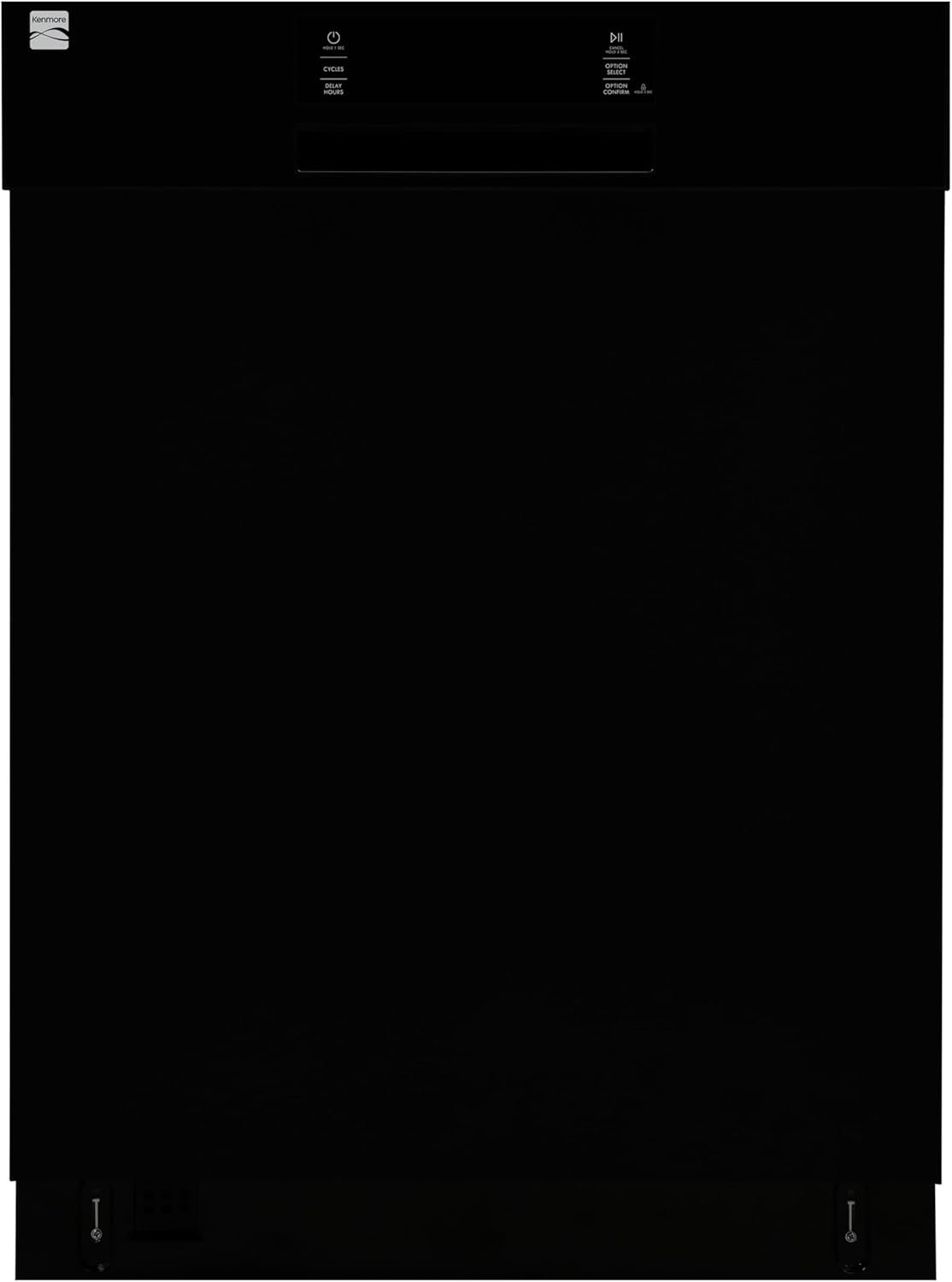
Why dishwasher choice matters for kitchens and households
Selecting a dishwasher influences daily kitchen workflow, utility usage, and the household’s tolerance for noise and maintenance. For families that run multiple cycles per week, capacity and flexible rack layouts determine how often loading occurs and whether large items fit without pre-washing. Open-plan kitchens and living spaces raise sensitivity to operational sound levels, so a 51 dBA rating must be evaluated alongside insulation, installation, and perceived noise. Energy and water efficiency expectations shape long-term utility patterns; a unit with ENERGY STAR certification and manufacturer-stated annual energy consumption gives baseline guidance for comparison. Cleaning performance depends on spray geometry, filtration strategy, cycle selection and sensor systems that adjust water temperature and duration based on soil levels. Drying method and tub material affect post-cycle dryness, especially for plastics. Leak detection and accessible filters influence serviceability and durability. These factors together determine whether a 24-inch built-in dishwasher meets a household’s balance of cleaning effectiveness, noise tolerance, maintenance effort, and space constraints.
Quick Overview
| Feature | Details |
|---|---|
| Dishwasher type | 24″ Built-in, integrated installation |
| Capacity | 14 place settings |
| Wash cycles & cleaning tech | SmartWash sensor, UltraWash spray system, Express 50-minute cycle, Sani Rinse option |
| Filtration | 3-stage UltraWash filter captures particles down to fine-sand size; removable for cleaning |
| Drying method | SmartDry / SmartDry Plus condensation-assisted drying with Extra Dry option |
| Noise level | 51 dBA (manufacturer rating) |
| Energy & consumption | ENERGY STAR certified; 239 kWh/year (manufacturer-stated) |
| Dimensions & power | 24.61″D x 23.55″W x 33.88″H; 115V electrical |
| Interior material | Stainless steel tub |
| Special protections & controls | Leak Detect System, Touch controls, Delay Start |
The specification set positions this Kenmore model as a mid-capacity built-in appliance suited to typical family kitchens that prioritize sensor-driven wash cycles, a stainless steel tub, and a balance of noise control and efficiency. The adjustable upper rack and 14-place setting capacity target households that require flexibility for mixed loads of dinnerware and some larger cookware while preserving a relatively compact 24″ footprint for standard cabinetry openings.

Cleaning performance, spray coverage and sanitizing capability
The Kenmore model combines the UltraWash spray system with dual spray arms and continuous filtration to create overlapping spray coverage designed to reach dish surfaces from multiple angles; this architecture is intended to reduce shadowed zones and improve soil removal on common ware. SmartWash sensor technology is advertised to detect soil levels and automatically modify temperature, water volume, and cycle duration—which should optimize detergent action and rinsing for varying load soils. The included UL-certified Sani Rinse option raises final rinse temperatures to meet sanitization criteria described by the manufacturer, which benefits baby items and utensils requiring higher rinse temperature exposure. The Express cycle prioritizes speed and remains available for light to mixed loads where shorter time and targeted spray intensity can still deliver acceptable cleaning when heavy soiling is absent.

Spray arm layout and wash coverage
Dual spray arms in the UltraWash design aim to provide layered coverage by directing jets horizontally and upward through racks; the geometry and rotation speed of these arms influence impact force and reach. Given the two-arm configuration and a mid-size tub, heavier soils on pots and pans typically need strategic placement and pre-rinsing for optimal results, while plates and glasses positioned within normal angles receive concentrated streams. Constant recirculation through the 3-stage filter minimizes redeposition of particles onto cleaned items by separating solids from recirculated water. In practice, spray coverage is dependent on loading patterns, rack height adjustments and avoiding blocking spray paths with oversized items.
Filtration, soil management, and Sani Rinse
The removable 3-stage UltraWash filter traps particles down to fine-sand size and is designed to be drained away from the wash system as the cycle completes; routine removal for cleaning is recommended in manufacturer material to keep filtration effective. Continuous filtration alongside circulating pumps reduces the chance of particulate redeposition compared to single-pass or coarse filter systems. The UL-certified Sani Rinse option elevates rinse temperatures to achieve pathogen reduction metrics cited by UL protocols, which is especially relevant for households seeking higher hygiene levels. Proper detergent selection and load spacing remain important complements to the filtration and rinse technologies to realize advertised sanitization results.
Cycle selection, SmartWash sensor behavior and express cycle expectations
SmartWash uses soil sensors to adjust wash duration, water temperature and pressure; sensors monitor turbidity to infer soil and then lengthen or shorten cycles accordingly. High-temperature options and a High Temp cycle enhance detergent activation and greasy soil removal but can extend energy consumption and cycle time. The Express 50-minute cycle targets shorter turnarounds and is best suited to lightly soiled mixed loads; heavy soils will typically require standard or Heavy cycles for comparable cleanliness. Users should expect sensor-driven cycles to vary run time and to depend on accurate loading and detergent dosing for the sensors to interpret soil levels correctly.
Capacity, rack layout and loading flexibility
A 14 place setting capacity classifies this dishwasher as mid-sized, providing standard accommodation for a typical family’s daily needs while fitting a 24″ built-in cabinet opening. The MoreSpace adjustable upper rack that raises, lowers, or removes entirely adds vertical flexibility for tall stemware, pitchers, and small pots; this rack ergonomics are intended to reduce the need for handwashing oversized items. The inclusion of a cutlery basket rather than a dedicated silverware tray increases flexibility in utensil placement but can affect space allocation for deeper items. Half-load functionality and multiple adjustable rack positions enable partial runs without full-cycle water use, though effectiveness depends on correct sensor response and spray access to the loaded items.
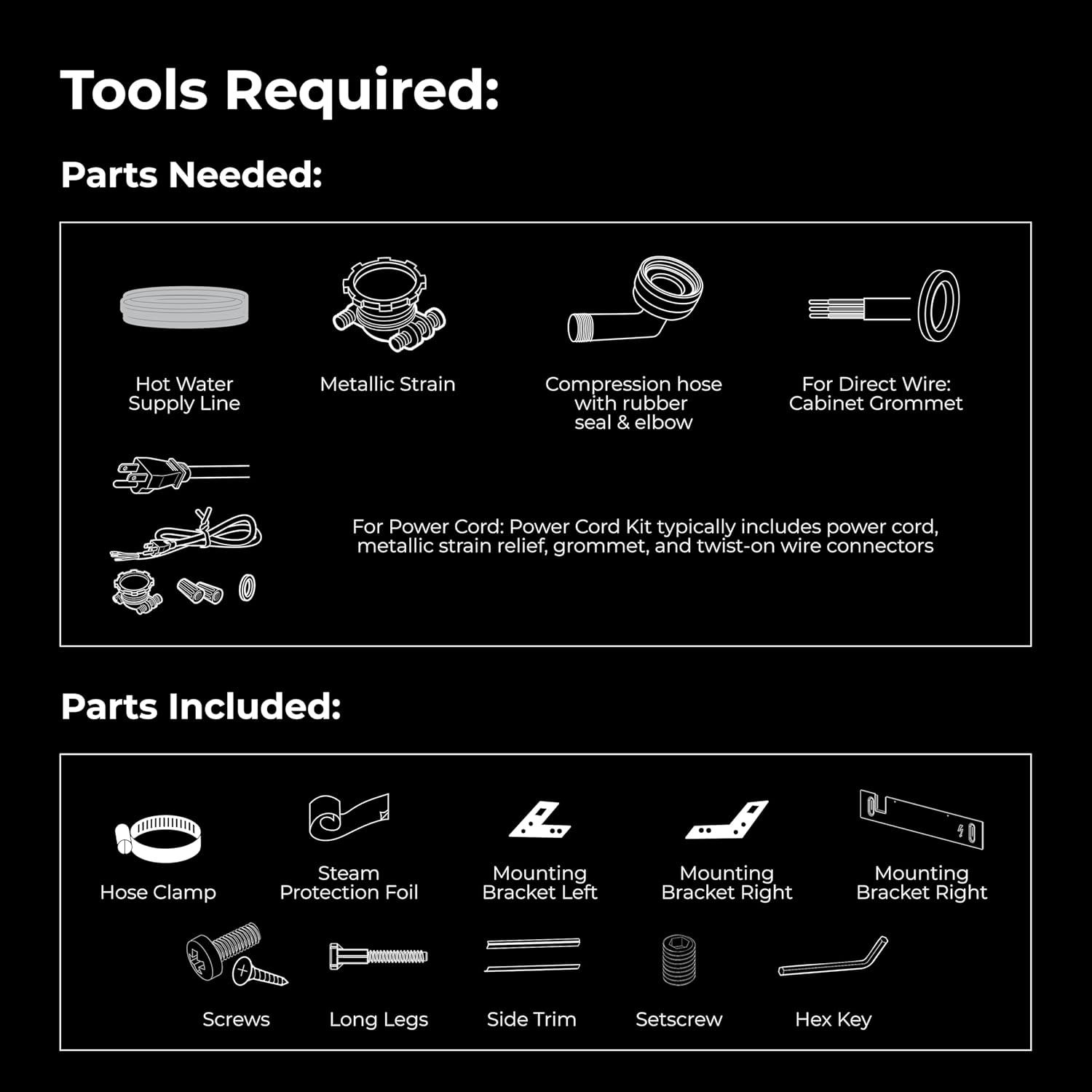
Rack adjustability, MoreSpace upper rack and tall item accommodation
The MoreSpace adjustable upper rack offers three-position adjustments, enabling taller items on either rack as needed and allowing complete removal for maximum vertical clearance. When raised or removed, the upper rack frees space for casserole dishes and sheet pans, but removing the rack reduces mid-cycle storage for stemware and smaller plates, altering optimal spray exposure patterns. The ability to reposition loading zones helps distribute items to minimize spray blocking and maximizes cleaning coverage. Rack geometry and tines are designed to balance item support and open spray pathways; however, delicate glassware may still require cautious placement or lower-temperature cycles to reduce breakage risk.
Cutlery basket, utensil layout, and cleaning access
A freestanding cutlery basket provides compartmentalized storage for silverware and utensils, allowing users to separate flatware and larger cooking tools. This basket format is flexible but can concentrate small items in one area, potentially reducing spray penetration; alternating utensil orientation and avoiding nesting will improve cleaning outcomes. Dedicated utensil slots are absent in this design, which means dense clusters of cutlery should be avoided for better detergent and water access. The basket is removable, offering convenience for transferring items and cleaning the tub floor, but placement within spray paths should be considered to prevent shadowing of lower-rack items.
Load planning and practical capacity for mixed cookware
Given the stainless steel tub and 14-place setting capacity, mixed loads of plates, bowls, cups, and some pots will fit within a standard family cycle, though very large pots or baking sheets may require rack adjustment or separate runs. The half-load option is useful for households that frequently run smaller loads; however, soil-sensing and water distribution patterns assume certain load distributions to perform optimally. For households that regularly clean oversized cookware, a full-depth 24-inch dishwasher with stronger spray impact or a higher horsepower pump may be preferable, but the adjustable racks on this model mitigate many common clearance issues.
Noise level, installation impacts, and open-plan suitability
A manufacturer-rated 51 dBA places this dishwasher in the moderate-quiet range where operational sound is noticeable but generally unobtrusive in adjacent rooms. Perceived loudness depends on installation factors such as cabinet encasement, anti-vibration mounting, and the presence of splash-assist insulation. In open-plan living areas, mid-50s dBA sources can become more audible during quieter evening periods; adding sound-absorbing cabinetry fronts and ensuring level installation reduces vibration transfer. The 51 dBA rating should be considered alongside personal noise sensitivity and the typical daily schedule: daytime dishwash cycles tend to be less intrusive than evening runs when occupants are more likely to perceive background appliance noise.

Decibel rating meaning and perceived sound in kitchens
Decibel measurements are logarithmic; small numerical differences represent perceptible changes in loudness. A 51 dBA rating generally equates to a low humming background sound similar to a quiet conversation at a distance. Perception of noise varies across individuals and room acoustics: hard-surface floors and open sightlines increase sound transmission, while carpeting and closed cabinetry dampen it. For noise-sensitive households, scheduling cycles during active daytime hours or using delay start when no occupants are nearby can reduce perceived intrusion.
Installation, anti-vibration measures and cabinetry influence
Proper installation is key to minimizing transmitted noise: firm leveling prevents rattles, tight fitment in the cabinet bay reduces panel vibration, and anti-vibration feet or pads help isolate operation from cabinetry. Manufacturer guidance on securing the dishwasher to the countertop or mounting flange also reduces movement that can amplify noise. Solid cabinet doors and insulation linings further attenuate sound, improving real-world quietness beyond the 51 dBA lab rating.
Open-plan living and nighttime considerations
In open-plan configurations, the dishwasher’s operating cycles coincide with living areas, so even moderate noise can be noticeable during quiet activities such as watching television or sleeping. The 51 dBA rating is generally acceptable for daytime and active household settings, but households seeking near-silent operation for overnight or continuous living-space use may prefer models rated in the mid-40s dBA or lower. The availability of Delay Start enables scheduling washes for periods when noise is less disruptive.
Energy, water efficiency, maintenance needs, and long-term durability
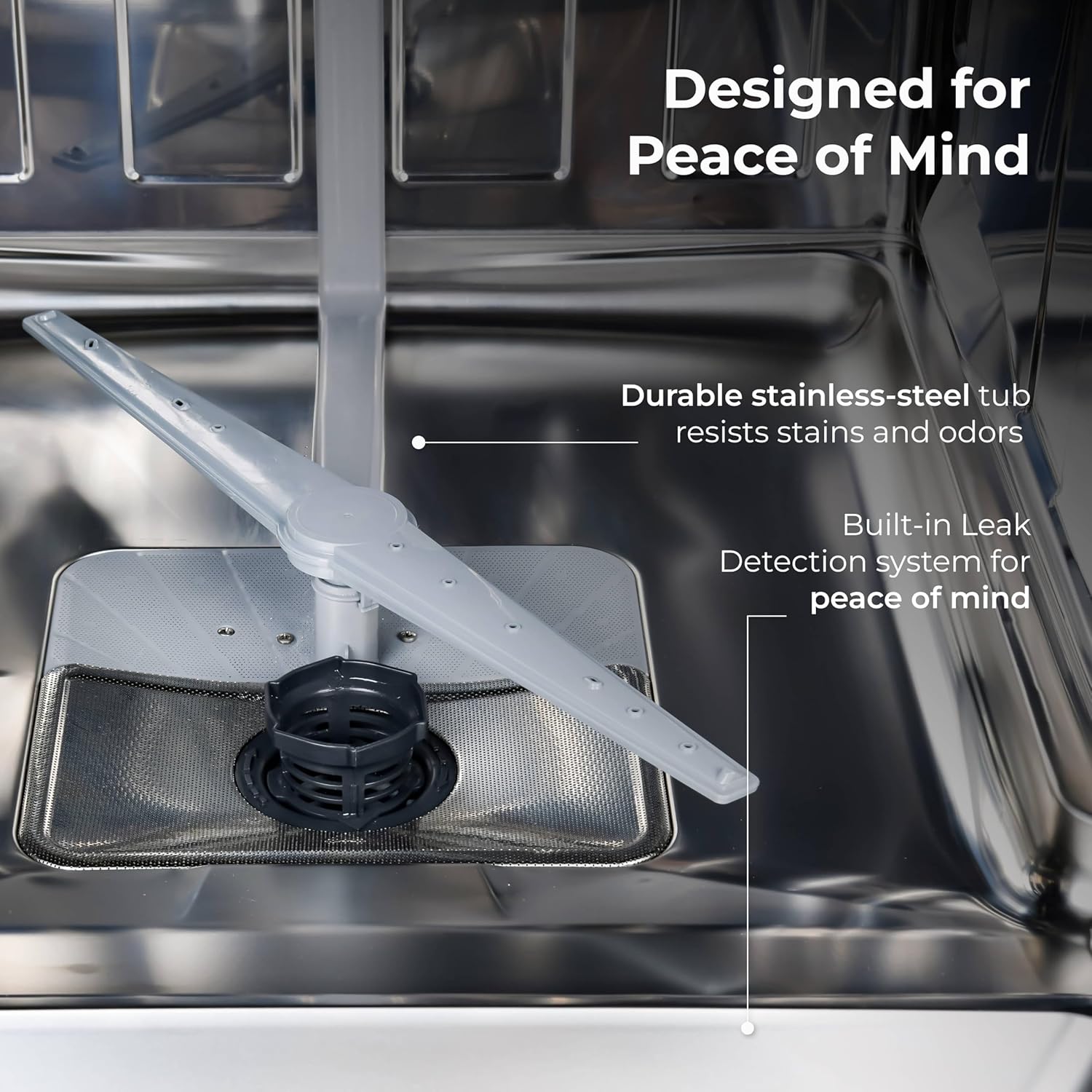
ENERGY STAR certification and the manufacturer-stated annual energy consumption of 239 kWh/year provide comparative baselines for efficiency expectations, and these values suggest moderate electrical use relative to larger or older models. The SmartWash sensor-driven cycles aim to tailor water and temperature to actual soil levels, potentially reducing unnecessary water or energy use across variable loads. The Leak Detect System monitors flow and can evacuate the tub to prevent prolonged leaks, which reduces risk of water-related damage but also introduces a sensor array that requires correct operation. A stainless steel tub improves stain resistance and heat retention, supporting drying performance while offering corrosion resistance that contributes to longer component life under normal use.

ENERGY STAR rating, annual energy figures and water considerations
ENERGY STAR certification indicates compliance with federal efficiency guidelines for dishwashers; an annual energy consumption figure of 239 kWh/year is the manufacturer-declared metric for comparative shopping. Water use per cycle is affected by cycle selection and sensor behavior: shorter express runs typically use less water, while heavy or sanitizing cycles increase water and energy consumption. For buyers prioritizing utility conservation, choosing sensor-based cycles and running fuller loads optimizes energy and water per item cleaned.
Leak detection, maintenance routines and filter care
The Leak Detect System is intended to monitor water ingress and flow anomalies and to automatically drain the tub if a fault is detected, reducing potential downtime from water damage. Maintenance-friendly features include the removable 3-stage UltraWash filter, which manufacturer materials recommend for monthly inspection and cleaning to maintain filtration performance. Regular descaling, detergent dosing per load, and periodic inspections of spray arms and inlet hoses will preserve pump efficiency and extend operational life.
Materials, component robustness and long-term reliability expectations
Stainless steel tub construction offers superior thermal retention and resistance to rust compared with polymer tubs, which supports drying efficacy and reduces staining. Motor, pump and valve components are subject to wear and will determine long-term reliability; manufacturer warranty terms and parts availability influence maintenance cost and serviceability. Customer feedback themes reporting both reliable operation and occasional random shutdowns suggest variability in build or installation conditions; prospective buyers should confirm installation and electrical compatibility to reduce potential issues.
Who should avoid this model based on use case and constraints
This 24″ Kenmore dishwasher may not suit households that require ultra-quiet operation below 50 dBA, or those that routinely wash very large cookware where a wider tub or more aggressive pump is necessary. Very small households that run single-place settings daily may find a compact or countertop model more appropriate for space and water-saving priorities. Buyers seeking premium rack features like a dedicated third rack for cutlery, or the absolute lowest noise figures and fastest heavy-soil cycles, might consider higher-tier models that emphasize those specific capacities.
Pros & Cons
Pros
- Sensor-driven SmartWash and multiple cycles: The SmartWash soil detection and multiple cycle options (including Express 50-minute and High Temp) allow automatic adjustment of water temperature, pressure, and duration to match soil levels, improving cleaning flexibility across load types. This reduces guesswork when selecting an appropriate cycle for mixed ware.
- Effective filtration with removable filter: The 3-stage UltraWash filter captures particles down to fine-sand size and is removable for periodic cleaning, which minimizes redepositing and simplifies routine maintenance to preserve wash water quality.
- Stainless steel tub and SmartDry condensation drying: A stainless steel interior offers heat retention and stain resistance, while SmartDry uses hot water to promote condensation-assisted drying; the Extra Dry option provides higher temperatures for improved plastic drying.
- Leakage protection and safety monitoring: The Leak Detect System monitors water flow and can drain the tub if anomalies occur, reducing the potential for continuous leaks to cause damage to cabinetry or floors.
- Compact 24″ footprint with 14-place capacity: The 24″ built-in form factor fits standard cabinetry while offering a 14-place setting capacity suitable for typical family use and flexible rack arrangements.
- ENERGY STAR certified with published annual energy usage: ENERGY STAR certification and a manufacturer-stated annual energy consumption value allow for straightforward efficiency comparisons when assessing long-term utility expectations.
Cons
- Moderate noise level for sensitive spaces: At 51 dBA, operational sound is noticeable in open-plan or very quiet homes; buyers seeking ultra-quiet performance should consider models rated below the low-50s dBA range.
- Mixed reports on build and reliability: Aggregated customer feedback includes both positive build comments and reports of random shutdowns or perceived flimsy components, indicating some variability in long-term reliability and possible sensitivity to installation or early faults.
- Cutlery basket rather than third rack: The absence of a dedicated third rack or integrated silverware tray reduces organized loading options and can impede optimal spray coverage for densely clustered utensils.
- Heavy-soil capacity limitations: While the UltraWash system and High Temp cycles improve cleaning, very heavy or baked-on soils on large cookware may require pre-soaking, pre-rinsing, or additional cycles for comparable results to higher-power, larger-tub models.
Final Verdict: Who This Dishwasher Is Best For (and Who Should Skip It)
This Kenmore 24-inch built-in dishwasher targets households seeking a mid-sized, sensor-driven dishwasher that balances cleaning flexibility, a stainless steel tub, and energy-aware operation. It suits average family kitchens, couples, and households that require a 14-place setting capacity within a standard cabinetry footprint. The SmartWash sensors, UltraWash spray system, and Sani Rinse option provide a toolkit for achieving hygienic rinses and adapting cycles to common soils, while the adjustable upper rack offers useful configuration options for mixed loads. ENERGY STAR certification and published annual energy consumption make it a reasonable choice for buyers mindful of utility performance.
Households needing ultra-quiet operation (below 50 dBA), a dedicated third rack for cutlery, or very high-capacity, heavy-duty cookware cleaning on a frequent basis may want to consider alternative models with lower noise ratings, larger tubs, or more robust pump assemblies. The mixed customer reports on build quality and occasional functional issues suggest careful attention to professional installation and warranty support is advisable. Overall, for consumers prioritizing sensor automation, flexible rack layouts, and condensation-assisted drying within a 24″ built-in form, this Kenmore dishwasher represents a balanced option among mid-range machines available in 2026.

Frequently Asked Questions (FAQs)
How effective is the UltraWash spray system for removing stuck-on food?
The UltraWash system uses two spray arms and continuous recirculation through a 3-stage filter to target soils from multiple angles. For typical to moderate soils, the combination of spray coverage, High Temp options and SmartWash sensor adjustments improves removal efficiency. Very heavy, baked-on soils on large pots may still require soaking or a heavy cycle and strategic placement to ensure jets reach impacted areas.
What does the ENERGY STAR certification and 239 kWh/year rating mean for efficiency?
ENERGY STAR certification indicates the dishwasher meets federal energy-efficiency guidelines; the manufacturer-stated 239 kWh/year is a comparative annual energy metric for shopping. Actual energy and water use per cycle vary by selected program, load size, and frequency, but these figures provide a baseline for comparing relative consumption between models.
Is the 51 dBA noise rating quiet enough for open-plan living areas?
A 51 dBA rating is in the moderate-quiet range and will usually be acceptable in active kitchens or adjacent dining areas. In open-plan living rooms or during quiet evening hours, perceived noise increases with room acoustics and hard flooring. Households with high sensitivity to background sound may prefer dishwashers rated in the low-40s dBA for minimal intrusion.
How often should the 3-stage UltraWash filter be cleaned?
Manufacturer guidance recommends periodic inspection and cleaning of removable filters to maintain circulation and prevent redeposition of particles; a common cadence is monthly cleaning for average use. Frequency should increase with heavy meal preparation and large particle loads to preserve filtration performance and pump efficiency.
Does the Leak Detect System require special maintenance?
The Leak Detect System is designed to monitor water flow and trigger an automatic drain if anomalies are detected. Routine maintenance focuses on keeping inlet hoses, valves, and the base area free of debris and ensuring proper installation. There are no regular user calibrations required, but any recurring alerts should be addressed by qualified service to verify sensors and plumbing connections.
Will this dishwasher dry plastic cups and containers reliably?
SmartDry condensation drying combined with a stainless steel tub improves heat retention and encourages moisture to condense and drain away; however, plastics are typically harder to dry due to lower heat capacity and hydrophobic surfaces. The Extra Dry option increases heat and drying time and improves plastic drying, but some plastics may still retain water and benefit from towel-drying post-cycle.
Can tall items and stemware fit with the adjustable rack configuration?
The MoreSpace adjustable upper rack can be raised, lowered, or removed to accommodate taller items and stemware. Raising or removing the upper rack yields significantly more vertical clearance for pitchers and taller cookware, while lowering it improves support for delicate glassware. Appropriate placement and avoiding contact between items help prevent breakage and maintain spray access.
Who should consider an alternative model instead of this 24″ Kenmore dishwasher?
Buyers who prioritize ultra-quiet operation (below 50 dBA), need a dedicated third rack for cutlery, or routinely clean oversized commercial-style cookware may prefer a different model with a larger tub, lower noise rating, or more robust pump. Additionally, very small households aiming to minimize water use may opt for compact or countertop units.