
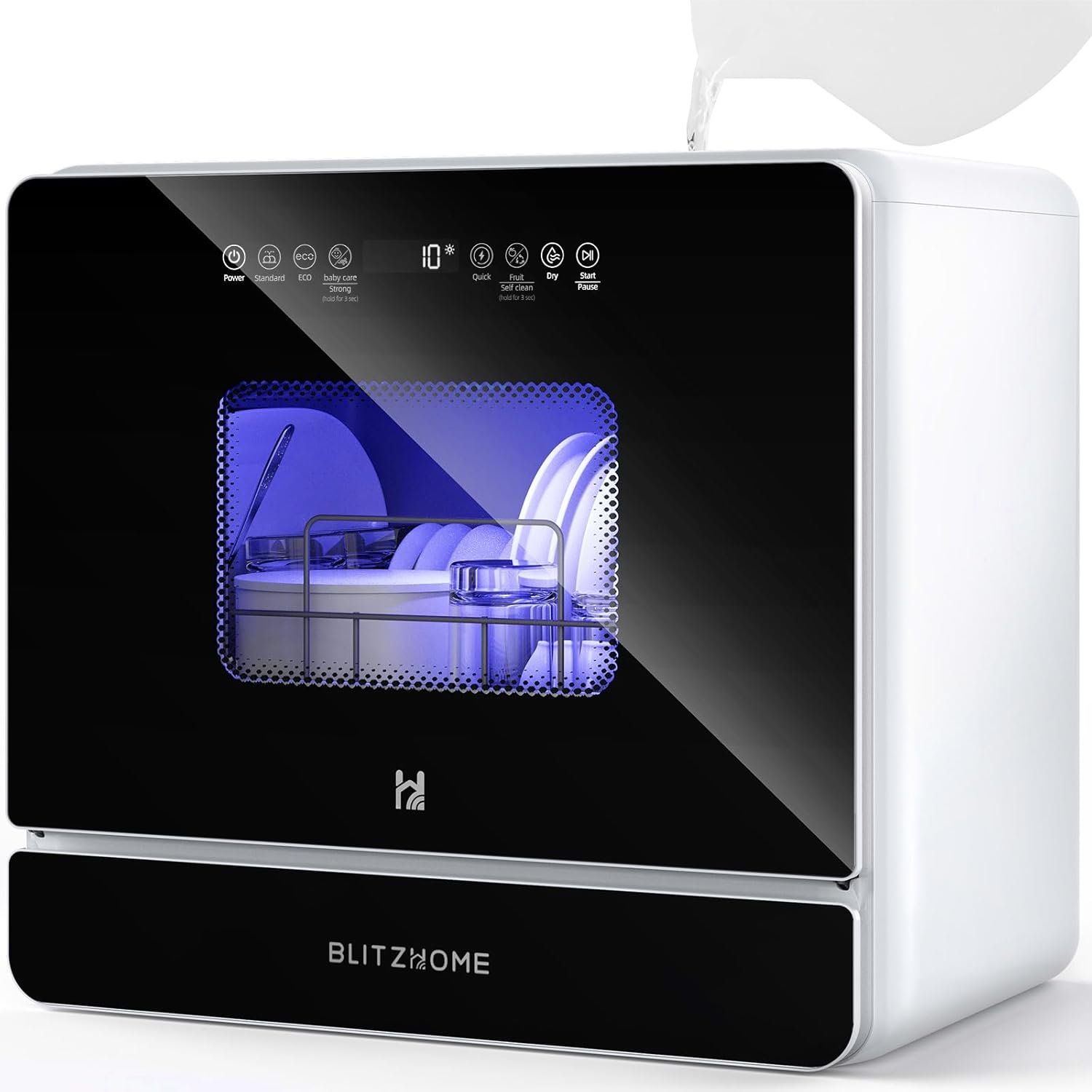
Why Dishwasher Selection Matters
Choosing the right dishwasher matters for household routines, kitchen layout, and daily cleaning demands. For small homes, apartments, and RVs, compact units must balance capacity and footprint while delivering effective cleaning for varied soils. Noise sensitivity is critical in open-plan living spaces and studio apartments, where a machine that emits mid-50-decibel noise can influence placement decisions. Efficiency expectations also shape purchase decisions: water and energy consumption affect utility usage and suitability for limited-supply situations. Additionally, users must weigh drying performance and moisture control against installation constraints, since countertop models often rely on electrical drying rather than integrated venting. Finally, maintenance and filter accessibility determine ongoing reliability and performance preservation. Buyers should align selection with household size, typical dish soil levels, and tolerance for noise and drying time to ensure the chosen model meets daily needs without creating new inconveniences.
Quick Overview
| Feature | Details |
|---|---|
| Dishwasher type | Countertop / Portable mini dishwasher |
| Capacity | 5.2 L internal tank; accepts plates up to 11.81 inches with top rack removed; marketed for small households |
| Wash cycles | 9 programs: Standard, ECO, Baby Care, Strong, Quick, Fruit, Self-Clean, Dry, Delayed Start |
| Cleaning tech | 360° cleaning with three spray arms; 167°F high-temperature wash |
| Drying method | PTC hot air drying (60 minutes); 72-hour air refresh storage function |
| Noise level | 56 decibels (manufacturer specification) |
| Energy / Power | Voltage 120 V; listed annual energy consumption/power figure 950 Watts in specs |
| Water supply | Dual modes: 5.2 L built-in tank or direct faucet connection |
| Dimensions & install | 21.57″ D x 14.17″ W x 19.53″ H; countertop installation |
| Materials & controls | Stainless steel interior; touch controls |
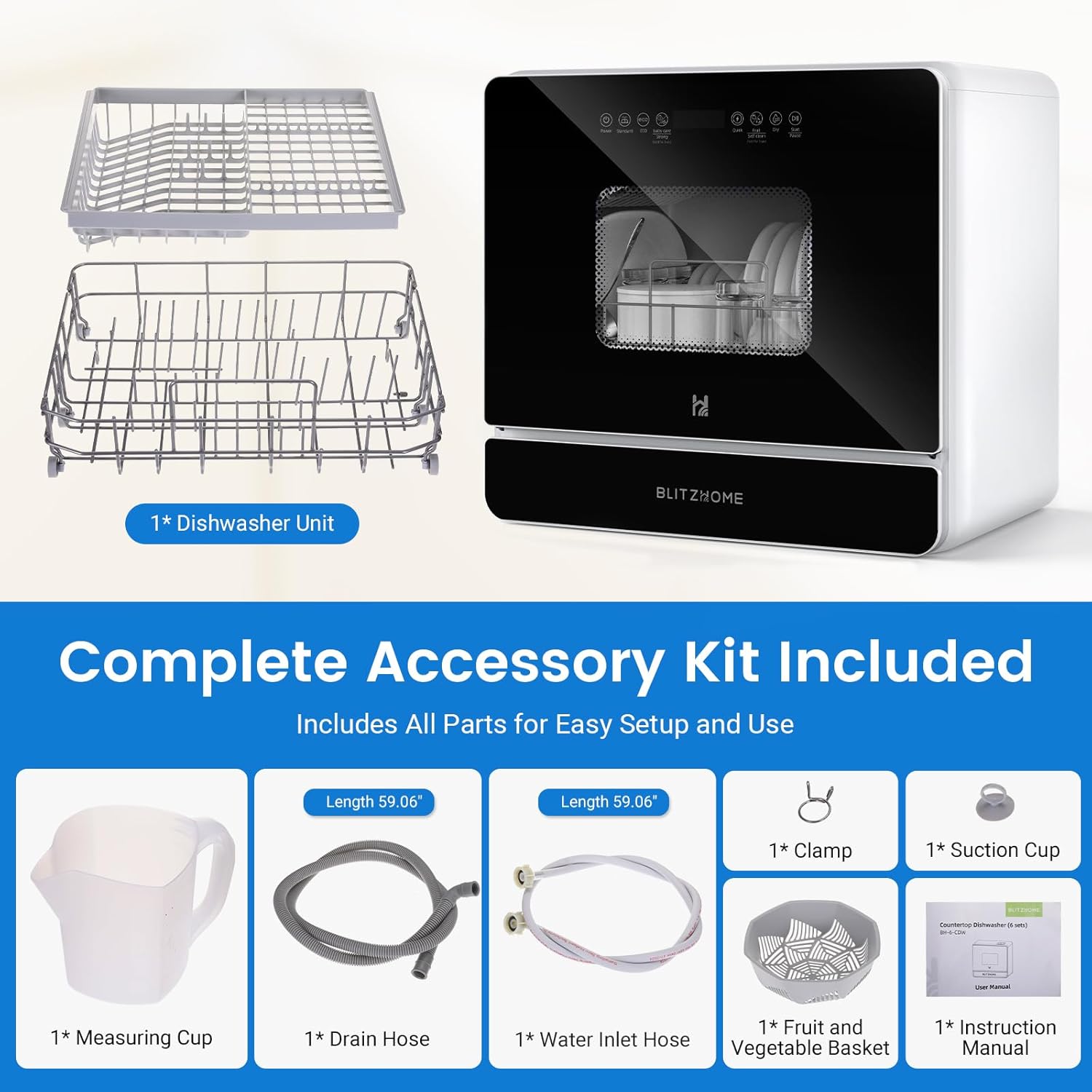
| Included accessories | Drain and inlet hoses (~59.06″), clamp, suction cup, measuring cup, fruit basket |
| Warranty | Manufacturer warranty not specified in public specifications |
The specifications indicate a compact, countertop-oriented machine designed for tight kitchens and portable use. Dual water modes and a removable top rack increase flexibility for varied household needs, while the high-temperature spray and multiple programs target different soil levels. Noise and drying approaches reflect countertop trade-offs: moderate noise level and electrical hot-air drying rather than vented or condensation-based integrated systems.

Cleaning performance and wash coverage
Cleaning effectiveness centers on spray coverage, temperature, and program selection, and this model presents a combination of features geared toward varied soils. The three spray arms and 360° cleaning claim suggest multi-angle water delivery intended to reach plate surfaces and glassware; when paired with a high-temperature 167°F spray, the system aims to improve detergent activation and grease breakdown. Program variety — from Quick and ECO to Strong and Baby Care — provides soil-targeted cycles that adjust run duration, spray intensity, and temperature hold. Users should account for the limitations of a compact pump and water reservoir versus full-size units: heavily soiled bakeware and large pots may need pretreatment or selective placement. Filtration strategy and soil-extraction depend on internal components and drainage design, which influence repeat-rinse needs and residue removal.
Spray system design and high-temperature wash impact
The three-arm spray configuration supports multi-directional coverage, which can reduce shadowing behind taller items and improve hit rates on both sides of plates. High-temperature washing at 167°F complements mechanical action by lowering surface tension and enabling detergent enzymes to act effectively on proteins and oils; this is particularly useful for greasy cookware and oily residues. However, compact pumps in countertop units typically generate lower flow rates than built-in machines, making spray arm placement and rotation patterns critical. Users should consider strategic loading—facing soiled surfaces toward spray arms and avoiding overcrowding—to maximize coverage. For thermostable dishware, the higher wash temperature enhances sanitation potential but recommends adherence to manufacturer guidance for delicate items.
Cycle variety, soil targeting, and program trade-offs
Nine program options provide a range of cycle durations and intensities: Quick and Fruit cycles for light soils and rapid turnarounds, Standard and ECO for everyday loads, and Strong or Baby Care for heavier or hygiene-focused needs. Delayed start and Self-Clean expand usability by allowing off-peak operation or internal cleaning routines. Shorter cycles conserve time and water but rely more on detergent chemistry and mechanical action, while longer cycles extend soak and rinse phases beneficial for baked-on soils. The presence of a Dry-specific program and a 60-minute PTC hot-air stage indicates the manufacturer balances energy use against moisture control, but users should expect longer total runtimes when drying is active. Selection of appropriate detergents and proper loading will influence final cleanliness more than cycle label alone.
Filtration, soil removal, and residue control
Filtration and debris-handling determine whether soils are recirculated or flushed to drain; compact dishwashers often use accessible mesh or cartridge-style filters that require manual cleaning. Effective soil removal relies on a combination of pre-rinse practices, filter maintenance, and the unit’s drain architecture. The dual supply modes—internal tank or faucet—affect how fresh water is introduced and how exhausted wash water is expelled, which can influence rinse quality on successive cycles. For users with frequent heavy-soil loads, routine inspection of filters, spray arm nozzles, and inlet screens will preserve wash coverage and reduce spotting. The Self-Clean program can assist in clearing internal passages but does not replace periodic manual maintenance of accessible filtration components.
Capacity, rack design, and place-setting flexibility
Capacity decisions hinge on usable internal volume, rack configuration, and plate size accommodation; this model lists a 5.2 L tank and the ability to accept plates up to 11.81 inches with the top rack removed, indicating design flexibility for taller items. A two-level rack layout increases simultaneous loading for plates, cups, and smaller cookware, while removable or adjustable rack elements create room for larger pans. Countertop models emphasize compact footprint over full table-setting capacity, so expectations should align with smaller daily loads rather than multi-course dinner service. Accessory inclusions such as a fruit/vegetable basket expand use cases but occupy interior space. Real-world loading efficiency depends on rack spacing, tine design, and available cutlery arrangements.

Plate size, top-rack removal, and tall item accommodation
Accepting plates up to 11.81 inches with the top rack removed indicates a deliberate trade-off between two-tier capacity and tall-item accommodation. Removing the upper level opens vertical clearance for large dinner plates, casserole dishes, or medium pots, enabling occasional larger loads without requiring a full-size dishwasher. The process of removing and reinstalling racks affects convenience; secure but easily removable rails or clips are preferable for frequent reconfiguration. Buyers should confirm how rack removal interacts with spray arm placement and whether spray coverage remains effective with altered internal geometry to avoid shadowed zones or incomplete rinsing on taller items.
Cutlery, accessory storage, and interior organization
The presence of a two-level rack and included accessory basket suggests organized cutlery and small-item storage, though compact interiors limit specialized compartments common in larger models. A dedicated cutlery basket can prevent nesting and promote exposure to spray, while small baskets for utensils or fragile items reduce movement and chipping during cycles. When loading, distributing items to avoid overcrowding and ensuring facing soiled surfaces toward spray arms will improve outcomes. Users who frequently wash mixed loads—glassware, plates, small pans—should plan sequences that prioritize sensitive items and place heavier soils on lower racks closer to primary spray sources.
Suitability for apartments, RVs, and small households
The countertop form factor, dual water modes, and included inlet/drain hardware make the unit adaptable to environments with limited plumbing or temporary installations, such as apartments, dorms, and RVs. Compact dimensions and moderate weight facilitate relocation and storage when not in use. Water tank mode supports short-term operation where tap access is restricted, while faucet mode enables continuous fill for larger cycles. Households of two to four people with modest daily dish volumes will find the balance of size and functionality appropriate, whereas larger families or those with frequent large cookware needs may require multiple cycles or a larger built-in unit to maintain convenience.
Noise levels and placement suitability for open kitchens
Noise output affects placement and user comfort in open-plan living environments; this model’s manufacturer-specified 56-decibel rating places it within a moderate noise range for countertop dishwashers. At this level, operational sound is comparable to a quiet conversation and may be noticeable in adjacent living spaces, particularly during intensive pump or drain phases. Insulation, motor mount design, and suspension of internal components influence perceived noise and vibration transmission to countertops. For studio apartments or combined kitchen-living rooms, placement on a stable, vibration-dampening surface and consideration of cycle timing during quiet hours can mitigate disruption. Users sensitive to ambient noise should compare spec sheet decibel ratings with independent environment expectations.

Decibel rating implications and perceived loudness
A 56 dB rating provides a quantitative benchmark: perceived loudness doubles roughly every 10 dB, so this unit should be noticeably louder than very quiet built-in models in the low 40s but quieter than older high-noise portable units. Perception varies with frequency content; high-frequency motor whine or low-frequency vibration can be more obtrusive than the raw decibel number indicates. Placement near sleeping areas, home offices, or media zones increases the likelihood that operation will be distracting. Noise-sensitive households should anticipate intermittent audible cycles and may plan to run the dishwasher during times of lower occupancy or when ambient household noise masks operation.
Motor, pump design, and vibration control considerations
Compact dishwashers use smaller motors and pumps that can exhibit higher RPMs to achieve necessary spray pressure, which can translate into distinctive sound signatures. Manufacturer materials list stainless steel interior construction, which helps dampen resonant noise compared with thin plastics, but cabinet rigidity and sill mounting affect vibration transfer. Anti-vibration pads or rubber feet included with the unit, along with secure placement on a solid countertop, reduce movement and rattle. regular inspection of mounting hardware and ensuring hoses are secured and not contacting cabinet surfaces will further minimize transmitted noise during drain and circulation phases.
Suitability for open-plan kitchens and shared living spaces
In open-plan settings, the 56 dB rating should be considered alongside household tolerance levels: for casual daytime use and families accustomed to general kitchen activity, the unit’s sound profile may be acceptable. For those working or sleeping in adjacent spaces, the unit may be intrusive during certain phases. Portable and countertop models are best placed on dedicated surfaces away from direct seating areas and paired with cycle scheduling to reduce conflict with quiet periods. The inclusion of a 24-hour delay start provides scheduling flexibility to align operation with preferred times.
Drying systems, energy & water efficiency, and maintenance requirements
Drying method, water consumption, and access to filtration define ongoing operational expectations. The unit uses a PTC hot-air drying system that runs for 60 minutes post-wash and includes a 72-hour air refresh function for storage. Hot-air drying accelerates moisture evaporation but increases energy draw compared with passive condensation drying; users will see longer cycle durations when drying is selected. Water savings are emphasized via a 5.2 L per cycle figure and dual supply modes; tank mode can limit water availability per cycle while faucet mode allows continuous replenishment. Maintenance requirements focus on routine filter cleaning, spray arm nozzle checks, and occasional use of the Self-Clean program to manage residues and odors. Reliability expectations for portable units depend on build quality of pumps, seals, and electrical components.

PTC hot-air drying and moisture control trade-offs
PTC (positive temperature coefficient) hot-air elements provide steady, controlled heating for drying and can reduce tacky residues on plastics and glassware compared with air-only systems. The 60-minute hot-air timeframe suggests a design intended to reach surface temperatures conducive to evaporation while minimizing overheating. However, hot-air drying consumes additional electrical energy and extends runtime; it also concentrates moisture in the internal cavity during earlier phases before being expelled. The 72-hour air refresh feature circulates air when the unit is idle to reduce trapped odors, useful in countertop contexts where dishes may be stored inside between uses. Users should note that some delicate items or heat-sensitive plastics may warp under sustained hot-air exposure and select cycles accordingly.
Water consumption figures and efficiency expectations
The manufacturer lists a 5.2 L water usage per cycle when operating in tank mode, presenting a significant reduction relative to typical handwashing volumes and aligning with countertop-design goals for low water demand. Dual supply modes allow faucet connection for households with steady water access, which can improve rinse quality on successive phases by avoiding tank refill limitations. Energy expectations are influenced by the 950 Watts power figure provided in specifications; while not a direct annual consumption metric, it indicates the unit’s electrical draw when heaters or pumps are active. Prospective buyers should compare these specifications with local electricity and water considerations and consider cycle selection—ECO or Quick—when conserving resources.
Filter access, self-clean, and routine maintenance tasks
Accessible filters and self-clean cycles are important for retaining performance in compact dishwashers. Mesh or cartridge filters typical in countertop units trap food particles and require periodic removal and rinsing to prevent redepositing soils. The included Self-Clean program can help flush internal lines and remove buildup but cannot substitute for manual cleaning of seals, door gaskets, and filter assemblies. Inspecting inlet hoses, clamps, and the integrity of watertight seals reduces leak risk and maintains pump efficiency. Long-term reliability depends on adherence to maintenance schedules and use of recommended detergents to avoid foaming or component stress.

Pros & Cons
Pros
- Compact footprint with flexible water supply modes: The countertop form and dual tank/faucet operation make the unit suitable for spaces without permanent plumbing and facilitate portability; included inlet and drain hoses support temporary installations.
- High-temperature wash and multi-spray coverage: A 167°F wash and three spray arms promote detergent activation and multi-angle cleaning for common soils, improving performance on greasy or protein-based residues.
- Nine program options for varied soils: Specialized cycles such as Baby Care, Strong, and Self-Clean enable targeted cleaning profiles, offering flexibility across delicate glassware and heavier cookware demands.
- PTC hot-air drying and air-refresh storage: The 60-minute hot-air dry and 72-hour refresh reduce moisture and trapped odors, providing practical drying and short-term storage for countertop use.
- Portable-friendly dimensions and removable top rack: Ability to accept plates up to 11.81 inches with the top rack removed allows occasional larger items to fit without a full-size appliance.
- Stainless steel interior and touch controls: Durable interior materials aid longevity and resist staining, while touch controls simplify program selection and cleaning of the control surface.
- Water-efficient operation in tank mode: A 5.2 L per-cycle water use in tank mode positions the unit as a low-water option compared to handwashing in many scenarios.
- Included accessories for setup and loading: Supplied hoses, clamp, suction cup, measuring cup, and fruit basket increase out-of-the-box usability for temporary or semi-permanent installations.
Cons
- Moderate noise level for open-plan spaces: The manufacturer-specified 56 dB may be noticeable in adjacent living areas, making the unit less ideal for noise-sensitive environments or near home offices.
- Limited heavy-duty capacity: The compact pump and internal volume constrain effective cleaning of large pots and deeply baked-on soils without pretreatment or multiple cycles.
- Energy draw during drying cycles: PTC hot-air drying increases electricity use and extends cycle duration compared with passive or condensation drying systems.
- Warranty and certification details not specified: Publicly available specifications do not clearly state warranty coverage or independent energy-efficiency certifications, which may be relevant for long-term ownership expectations.
Final Verdict: Who This Dishwasher Is Best For (and Who Should Skip It)
The BLITZHOME BCD6W countertop mini dishwasher targets small households, apartment dwellers, RV owners, and anyone needing a portable washing solution without permanent plumbing. Its three-arm 360° spray system, 167°F high-temperature wash, and nine-program lineup offer tailored cleaning for everyday dishes, glassware, and light cookware, while a 5.2 L tank mode and faucet option increase situational flexibility. The PTC hot-air drying and 72-hour air refresh provide practical moisture control for countertop storage, making the unit a pragmatic option where space and plumbing limits dictate compact appliance choices.
This model is less suitable for large families, households that frequently cook with large pots and heavily baked-on items, or users who require the lowest possible operational noise for adjacent living and working areas. Energy-conscious buyers should weigh the trade-off between active hot-air drying and total power draw. For 2026 comparisons among compact, countertop dishwashers, the BLITZHOME BCD6W balances portability, targeted cleaning features, and accessory inclusions, but prospective owners should confirm warranty terms and consider maintenance routines to preserve long-term reliability.

Frequently Asked Questions (FAQs)
How effective is the BLITZHOME countertop dishwasher at removing grease and baked-on food?
Effectiveness depends on spray coverage, temperature, and cycle choice. The BCD6W lists 360° cleaning via three spray arms and a 167°F high-temperature wash, which together improve detergent performance on grease and protein soils. For heavy baked-on residues, pre-soaking or selecting the Strong cycle and ensuring correct loading and detergent use will increase removal likelihood, while periodic filter maintenance helps avoid redepositing soils.
Can the dishwasher run without a permanent water connection?
Yes. The unit supports dual water supply modes: a 5.2 L built-in tank for standalone operation and a faucet inlet mode for direct tap connection. Tank mode enables use in locations without permanent plumbing, while faucet mode provides continuous water for longer or heavier cycles. Users should follow manufacturer instructions for hose attachment and ensure secure connections to prevent leaks.
Is the 56-decibel noise rating suitable for open-plan living spaces?
A 56 dB rating is moderate and comparable to ambient conversation levels. In many open-plan kitchens, this will be noticeable but manageable; however, in quiet spaces, home offices, or sleeping areas adjacent to the kitchen, the unit may be disruptive during operation. Placement on a stable countertop, use of vibration-dampening pads, and scheduling cycles during active household times can reduce perceived disturbance.
How does the PTC hot-air drying perform compared with passive drying methods?
PTC hot-air drying accelerates evaporation and reduces residual moisture on plastics and glassware compared with passive condensation drying, making items available for immediate storage. The trade-off is increased energy consumption and longer total cycle time. Some plastic items susceptible to heat may warp under sustained hot-air exposure, so cycle selection should consider item compatibility.
What maintenance tasks are required to keep this countertop dishwasher performing well?
Routine maintenance includes emptying and rinsing the mesh or cartridge filter, inspecting and clearing spray arm nozzles, checking inlet and drain hoses for blockages, and running the Self-Clean program periodically to remove internal buildup. Door seals and gaskets should be wiped dry to prevent mold accumulation, and included accessories should be stored to avoid damage. Regular checks of clamps and hose fittings reduce leak risk.
Will this dishwasher fit larger plates and small pots?
The listed specifications indicate plates up to 11.81 inches can be accommodated when the top rack is removed, allowing larger items to fit on an as-needed basis. The two-level rack offers everyday capacity for smaller items; for frequent washing of large pots or oversized bakeware, the compact internal volume may necessitate multiple cycles or handwashing of the largest items.
Are there energy-efficiency certifications for this model?
Publicly available specifications provide a power figure (listed as 950 Watts) and note voltage at 120 V, but do not specify independent energy-efficiency certifications. Buyers seeking certified low-energy appliances should review the latest manufacturer disclosures or product listings for updated efficiency labels or third-party certification details before purchase.
Who should avoid choosing a countertop mini dishwasher like this BLITZHOME model?
Households that regularly require full table-setting capacity, frequent large cookware cleaning, or ultra-quiet operation adjacent to sleeping or working areas may find a countertop mini dishwasher insufficient. Those needing certified energy-efficiency labeling or long-term heavy-duty reliability comparable to built-in units should consider full-size alternatives to better match their usage patterns.