
Why dishwasher selection matters for small kitchens and frequent use
Choosing the right dishwasher affects daily kitchen workflow, water and energy use, and noise exposure in open-plan homes. For small households, apartment dwellers, or kitchens without built-in plumbing, a compact, portable unit that balances cleaning power with low noise and efficient cycles can deliver meaningful convenience. Selection should weigh cleaning performance across typical soil levels, rack flexibility for mixed loads, and the capacity to handle everyday dinnerware without wasted energy. Noise sensitivity is especially relevant when the dishwasher will run during evenings or in studio-style layouts. Energy and water efficiency expectations govern long-term utility consumption, while build materials and serviceability influence durability and ease of maintenance. Considering these factors helps match a compact, portable dishwasher to specific household size, dishwashing frequency, and kitchen layout, reducing the chance of misfit purchases and supporting predictable performance in daily use.
Quick Overview
| Feature | Details |
|---|---|
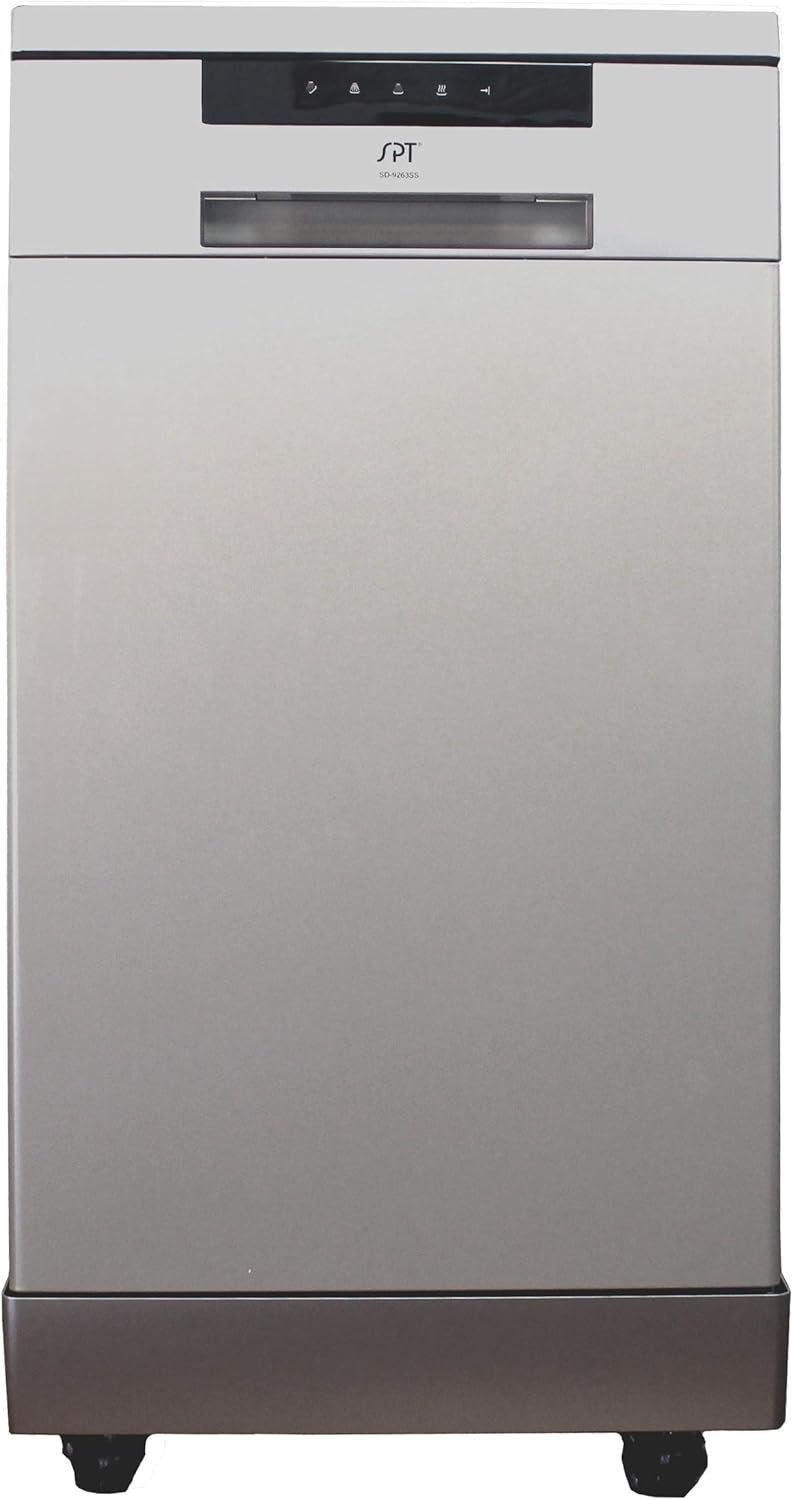
| Dishwasher type | Freestanding portable dishwasher (connects to faucet with adapter) |
| Capacity | 8 place settings |
| Wash programs | 6 programs: Heavy, Normal, Eco, Glass, 90 Min, Rapid |
| Drying method | Manufacturer lists standard drying (no specialized active drying system specified) |
| Noise level | 52 decibels |
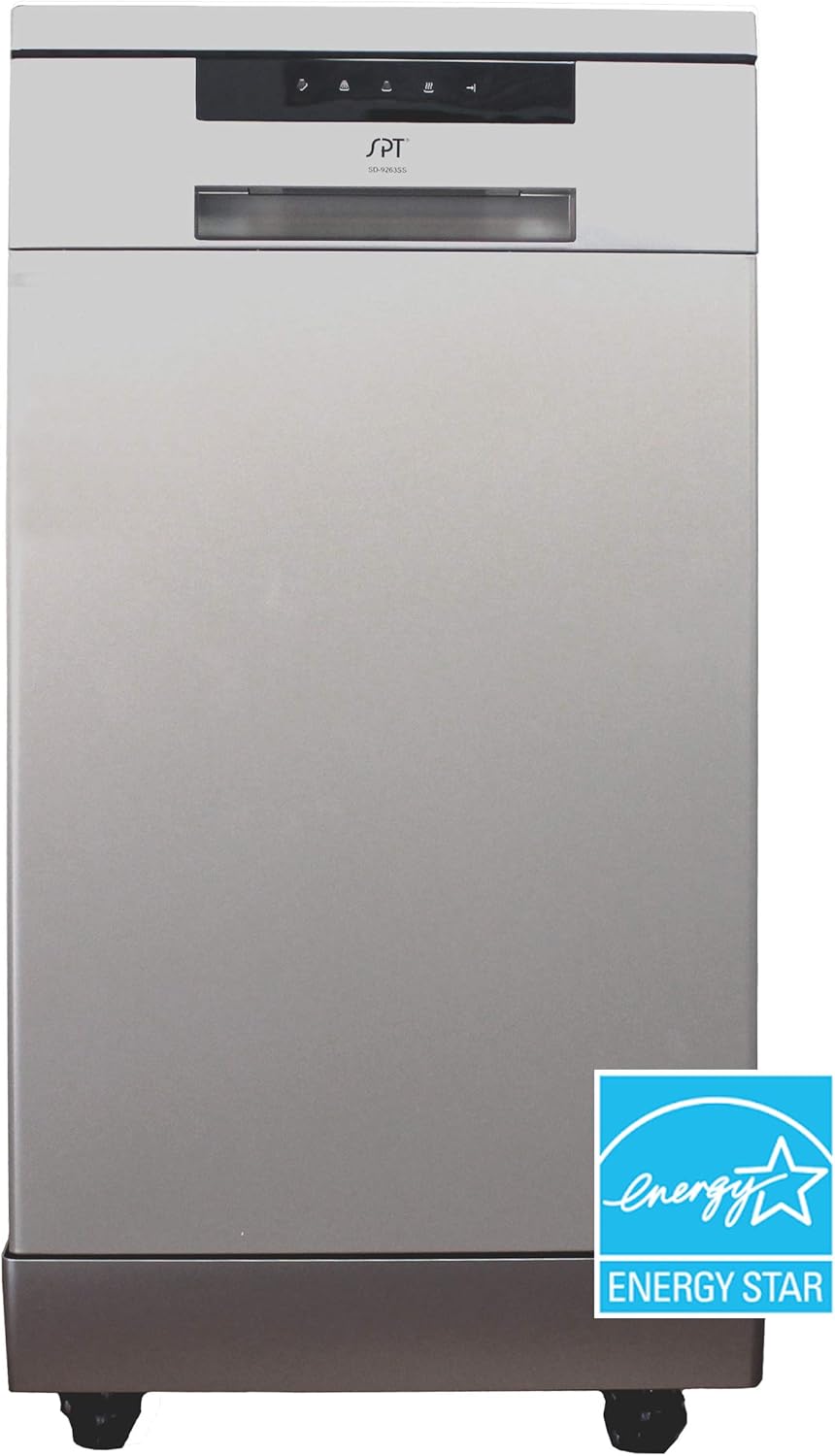
| Energy efficiency | ENERGY STAR certified; 237 kWh/year annual energy consumption |
| Dimensions & installation | 18″ depth x 24″ width x 36″ height; freestanding portable with quick-connect adapter included |
| Interior & material | Stainless steel tub; glass and stainless materials listed |
| Special features | Adjustable upper rack, time delay (1–24 hours), rinse aid indicator, error codes |
These specifications indicate a compact, transportable dishwasher suitable for small households and renters who need a non-permanent appliance. The 8-place setting capacity and adjustable upper rack enable mixed loads while the ENERGY STAR certification and Eco cycle signal attention to energy use. The stainless steel interior supports higher-temperature washes and corrosion resistance compared with polymer tubs, and faucet quick-connect capability allows use where hard plumbing is unavailable.

Cleaning performance and wash coverage
The dishwasher’s cleaning capability depends on programmed cycles, spray coverage geometry, and filtration. With six wash programs including Heavy and Normal, cycle selection adapts to typical soil loads, while a 90-minute option offers a compromise between thoroughness and time. A stainless steel tub tolerates higher rinse temperatures and reflects heat to support performance. Spray arm placement and water pressure delivered by an internal pump determine spray coverage across the two-level rack system; shorter 18-inch depth constrains spray arm spacing, so careful loading is important to avoid shadowing. Rinse aid indication supports improved sheeting and reduced spotting on glass and flatware. Error codes and adjustable rack positions aid operational flexibility but do not change core hydraulic coverage limits inherent to a compact portable design.

Spray systems, cycle selection, and expected soil removal
Spray performance in portable compact dishwashers relies on a single circulation pump and strategically located spray arms to create overlapping jets. The Heavy cycle typically increases pump run-time and temperature to tackle baked-on soils, while Eco and Rapid cycles trade time or intensity for energy savings. In compact units, spray arm length and rotation pattern determine reach: shorter arms are sufficient for eight-place loads but can be obstructed by tall items. Filtration and recirculation rate also affect cleaning; finer filters and steady flow reduce redeposition. For best results, load pots and heavily soiled items on the lower rack where spray momentum and heating are usually highest.
Filtration, detergent dosing, and rinse aid role
A portable dishwasher with a stainless steel tub benefits from higher rinse temperatures, which improves detergent activation and soil suspension. Effective filtration traps food particles to prevent redepositing; periodic manual removal of the filter basket is required to retain performance. Detergent type matters—tablets versus powder—because compact circulation systems may respond differently to dissolution rates. The included rinse aid indicator supports consistent use of rinse aid, which improves drying appearance and reduces spotting on glassware by lowering surface tension and promoting water sheeting during the final rinse.
Capacity, rack design, and place settings
Capacity considerations focus on how the 8-place setting rating maps to real-world dish assortments. An adjustable upper rack is a key feature for compact machines because it enables taller items or small pots to occupy lower-level space while preserving room for plates and bowls. The 18-inch depth limits the maximum plate diameter and rearrangement options compared with full-depth models, so taller stemware or oversized cookware may require pre-rinsing or handwashing. Load balancing is important to avoid blocking spray arms in a constrained cavity and to maintain circulation. The unit’s freestanding, portable form factor favors households that need mobility over high throughput; weekly or daily use with conscientious loading will yield the best throughput for a family of one to three.

Interior layout, adjustable rack, and loading strategies
The adjustable upper rack permits vertical repositioning to create space for taller dinner plates or stemware on the lower rack, enabling flexible mixing of load types within the limited cavity. When loading, place heavily soiled cookware on the lower rack where spray force and heat concentration are typically greater. Stemware and delicate glass should occupy the upper rack, angled to avoid pooling and to optimize rinse rinse-aid efficacy. In compact machines, cutlery baskets are usually fixed and benefit from alternating orientations of utensils to avoid nesting. Strategic placement minimizes shadowing and ensures more uniform spray exposure across all items.
Typical load mixes and limitations for pots, pans, and glassware
Eight-place settings assume standard plates, bowls, cups, and flatware; large pots, roasting pans, and oversized platters may not fit or may impede spray patterns. For heavier soiling, pre-soaking or selective handwashing of large cookware is often necessary. Glass programs and lower-heat cycles protect delicate items, but tight spacing increases the risk of glass-to-glass contact. Users should consider load planning: distribute tall or bulky items to the lower rack only when upper-rack clearance permits. Accessories such as collapsible racks or small racks for lids can improve flexibility but are not always provided with portable models.
Noise levels and suitability for open kitchens
Noise level is a practical buying factor for open-plan spaces, and a rating of 52 decibels positions the unit in the moderate noise category for full-size or compact dishwashers. Engineering-wise, noise at this level is audible in adjoining living spaces but generally below conversational levels at typical distances. Portables can transmit vibration through the floor if not leveled, which may increase perceived noise. For evening cycles in small studios or combined living-dining areas, sound insulation, placement against cabinetry, and anti-vibration footing mitigate intrusion. In kitchens where quiet is essential, verifying measured decibel ratings alongside household tolerance will determine whether a 52 dB portable is acceptable or if a quieter built-in alternative is preferable.

Understanding decibel ratings and perceived loudness
Decibel ratings are logarithmic; a 52 dB rating reflects a moderate acoustic footprint compared with quieter models rated in the mid-40s. Perceived loudness depends on background noise and distance; in an open kitchen layout, a 52 dB dishwasher running while occupants converse at close range will be noticeable but not overpowering. Vibration damping (rubber feet, stable placement) reduces structure-borne noise. Manufacturers measure sound in standardized lab environments, so domestic placement on uneven flooring or near reflective surfaces can increase perceived volume. For noise-sensitive households, compare measured decibel values and consider scheduling cycles during low-activity periods or using the time-delay feature to run during daytime.
Placement, portability, and vibration impacts on noise
A freestanding portable appliance brings flexibility but also introduces more potential vibration paths compared with recessed built-in units. Positioning the unit on level, rigid flooring and confirming tight leveling legs reduces rattles and mechanical noise. The included quick-connect adapter and cable length affect placement options; ensure the supply hose is free from kinks and undue tension that can transfer vibration. In multi-story dwellings, floor construction and subfloor stiffness influence transmitted sound. Where vibration or noise is a concern, running an empty or lightly loaded cycle to observe audible characteristics before regular use helps set realistic expectations for long-term placement in living-adjacent kitchens.
Energy and water efficiency expectations
ENERGY STAR certification and a listed annual energy consumption of 237 kWh/year indicate the unit meets efficiency benchmarks for small dishwashers. In practice, energy use depends on cycle selection—Eco programs lower energy by reducing heat and run time—while higher-heat Heavy cycles increase consumption. Water consumption for compact, portable systems trends lower than full-size units due to reduced cavity volume and smaller spray systems, but efficiency gains depend on load fullness and pre-rinse habits. Time-delay and program options support off-peak operation and operational flexibility. Buyers should evaluate the combination of energy rating, available Eco cycles, and load management to balance cleaning needs with efficiency objectives in routine use.
ENERGY STAR implications and annual energy metrics
ENERGY STAR certification signifies the model meets established energy-efficiency criteria for dishwashers, with the 237 kWh/year figure providing a comparative baseline for expected annual electricity use. This metric allows comparison to similarly sized appliances rather than predicting exact billing impacts. Selection of lower-energy cycles and full loads maximizes the benefit of ENERGY STAR conformity. Additionally, a stainless steel tub supports higher-temperature tolerance that can shorten cycle durations for sanitized washes, potentially optimizing energy use when paired with efficient program logic.
Water use patterns and the Eco cycle trade-offs
Eco cycles typically reduce both water and energy by extending soak and low-temperature phases to achieve cleaning through longer detergent exposure rather than higher thermal input. For lightly soiled loads, the Eco program can maintain acceptable cleaning while conserving resources; heavily soiled pots may require the Heavy cycle for adequate soil removal. Portable dishwashers tend to use less water per load relative to full-size models, but overall household water savings depend on load frequency and avoiding pre-rinsing, which negates conservation gains. Users should load to capacity and select cycles aligned with soil levels to realize anticipated efficiency benefits.
Drying systems, moisture control, maintenance, and durability
Drying and moisture control in compact portable dishwashers often rely on passive drying aided by rinse aid and residual heat rather than advanced active drying technologies like heat pumps or condenser systems. Stainless steel interiors promote heat retention which assists evaporation, while rinse aid helps sheeting to minimize spotting. Maintenance centers on routine filter cleaning, inspecting spray arms for clogs, and ensuring the quick-connect adapter and hoses are free from scale and kinks. Durability considerations include the stainless steel tub’s corrosion resistance and overall build weight and materials; heavier units with metal components generally offer greater long-term resilience, but portability features mean mobility-related wear should be anticipated.

Drying methods, rinse aid, and moisture management
Without a specialized active drying system, drying depends on final rinse temperature, rinse aid effectiveness, and residual heat. Rinse aid reduces surface tension so water sheets off dishes, accelerating natural evaporation. Stainless steel tubs maintain higher internal temperatures during the final rinse compared with plastic tubs, improving drying performance. For faster drying, selecting a program with a hotter final rinse, using rinse aid, and opening the door slightly after cycle end (if manufacturer guidance permits) reduce trapped moisture. Expect some residual dampness on deep bowls or plastics, which retain water more than ceramics or stainless steel.
Filter maintenance, spray arm care, and long-term reliability
Effective filtration retains particles and protects the pump and spray arms; portable units require periodic manual filter access for cleaning to prevent redeposition and maintain circulation efficiency. Regular inspection and removal of food debris from the filter basket and spray arm nozzles reduces wear on the pump and preserves spray patterns. The stainless steel interior and robust weight suggest corrosion resistance and structural durability, but moving the unit frequently or improper storage of hoses may stress fittings over time. Routine maintenance—cleaning seals, checking hoses and connections, and following manufacturer error code guidance—supports longevity and helps avoid common issues with portability-related wear.

Pros & Cons
Pros
- Compact and portable form factor with quick-connect adapter: Offers installation flexibility for renters or kitchens without permanent plumbing; the included adapter simplifies temporary hookups without altering cabinetry.
- ENERGY STAR certified with Eco cycle: Delivers a baseline of energy efficiency for a small unit, with program options that allow households to reduce consumption through lower-temperature cycles.
- Stainless steel tub and interior materials: Improves heat retention during wash and rinse phases and resists staining and corrosion better than polymer tubs, supporting long-term durability.
- Six wash programs including Heavy and Glass: Provides cycle diversity to address a range of soil levels from delicate stemware to more soiled cookware.
- 8-place setting capacity with adjustable upper rack: Balances compact footprint with flexible loading options for mixed dishware assortments.
- Rinse aid indicator and error-code display: Practical features that support consistent drying results and simplify fault identification when service is required.
Cons
- Limited capacity for large cookware and oversized items: The 18-inch depth and 8-place rating restrict the ability to wash oversized pots, platters, and baking sheets without handwashing or creative angling.
- Moderate noise level at 52 dB: Audible in open-plan living spaces and may be noticeable during quiet evening hours compared with quieter built-in models in the mid-40 dB range.
- Drying relies on passive methods: Without an active drying system, plastics and deep bowls may remain damp after cycles, requiring towel drying or additional ventilation.
- Portability implies potential wear on fittings: Frequent moving or improper storage of hoses and connectors can increase maintenance needs and risk of leaks over time.
Final Verdict: Who This Dishwasher Is Best For (and Who Should Skip It)
This portable ENERGY STAR dishwasher is well suited to small households, apartment dwellers, and anyone needing a non-permanent appliance solution that balances cleaning versatility with space-saving design. The stainless steel tub, six-cycle set, and adjustable upper rack align with common domestic needs: efficient cleaning of everyday plates, moderate cookware, and glassware without dedicated plumbing. Its portability and quick-connect adapter make it a compelling option where built-in installation is infeasible, and the ENERGY STAR rating supports energy-conscious buyers who run appropriately full loads and use the Eco cycle when possible.
However, households that regularly require washing large cookware, have strict noise sensitivity, or demand rapid full-cavity drying should consider alternatives. Larger built-in models typically offer quieter operation, greater capacity, and more advanced drying systems. For 2026 buyers comparing compact options, this SPT portable model fits when mobility and moderate throughput are priorities, but it is less appropriate as a full-replacement solution for heavy cookware usage or for very noise-sensitive living spaces.

Frequently Asked Questions (FAQs)
How effective is the cleaning performance on a compact portable dishwasher?
Cleaning performance depends on cycle selection, spray coverage, and filtration. Compact portables with Heavy and Normal cycles use higher temperatures and longer pump run-times to remove soils. A stainless steel tub helps maintain rinse temperatures for better detergent activation. For best results, load heavily soiled items on the lower rack, avoid obstructing spray arms, and use rinse aid as indicated to improve sheeting and reduce spotting.
Will an 8 place-setting, 18-inch dishwasher fit everyday household loads?
An 8 place-setting rating accommodates standard plates, bowls, cups, and flatware for small households. Adjustable upper racks increase flexibility for mixed loads. However, large pots, oversized platters, and some baking sheets may not fit, so occasional handwashing or staggered cycles could be necessary. Load planning and proper placement maximize usable capacity.
Is a 52 dB noise rating quiet enough for open kitchens?
A 52 dB rating is moderately audible in open-plan living spaces but usually below loud conversational levels. Perceived loudness varies with room acoustics, distance, and placement. For noise-sensitive environments, consider vibration damping, stable leveling, and scheduling cycles during less active times or selecting models with lower decibel ratings.
Does this portable dishwasher provide effective drying for plastics and glass?
Drying performance relies primarily on residual heat and rinse aid effectiveness rather than advanced active drying systems. Stainless steel tubs retain more heat than plastic tubs, assisting evaporation, and rinse aid promotes water sheeting for fewer spots. Plastics and deep bowls may retain moisture and could require towel drying or an additional ventilation step after cycle completion.
How energy-efficient are portable ENERGY STAR dishwashers?
ENERGY STAR certification indicates compliance with established efficiency standards; an annual energy figure (for example, 237 kWh/year) offers a baseline for comparison. Efficiency in actual use depends on cycle choice, load fullness, and avoiding unnecessary pre-rinsing. Eco cycles and full-load operation help realize the intended energy benefits.
What maintenance is needed to keep a portable dishwasher reliable?
Regular maintenance includes cleaning the filter basket to prevent clogging, inspecting and clearing spray arm nozzles, checking hoses and quick-connect fittings for scale or kinks, and wiping door seals. Addressing error codes promptly and securing the unit on level flooring reduces vibration-related wear and supports long-term reliability.