
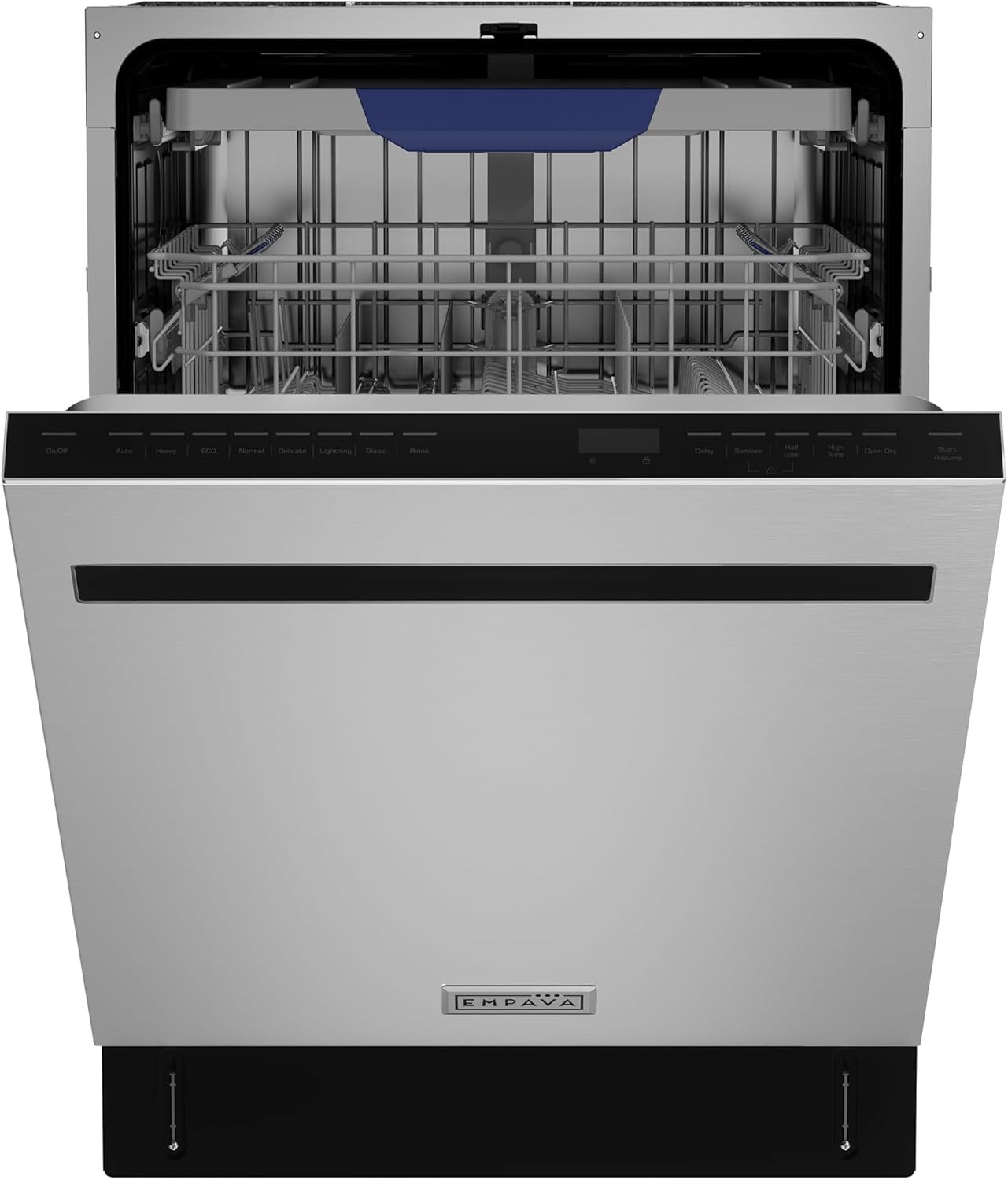
Why dishwasher selection matters for kitchens and households
Selecting a dishwasher affects daily kitchen workflow, utility consumption, and noise exposure. Household size, typical load composition, and frequency of runs determine required capacity and cycle variety. Kitchen layout—open-plan living or separated utility room—shapes tolerance for operational noise and dictates whether a 49 dB rating is acceptable. Cleaning needs hinge on spray coverage, filtration, and program flexibility to tackle light rinses, baked-on soils, or delicate glassware. Efficiency expectations influence water and energy consumption, measured here by a 3.2-gallon per cycle water use and ENERGY STAR 7.0 certification, which align with conservation goals. Long-term ownership considerations include stainless steel tub durability, filter access for routine maintenance, and parts accessibility. Evaluating these factors together helps match product attributes to a household’s routine, balancing performance, convenience, and lifecycle costs without overstating outcomes beyond manufacturer specifications.
Quick Overview
| Feature | Details |
|---|---|
| Dishwasher type | Built-In, Top Control |
| Capacity | 15 place settings (3 racks, third rack for utensils) |
| Wash cycles & options | 8 cycles, 6 custom options; Sensor Wash, Delicate, Economy, Heavy, Normal, Quick Wash, Half Load, Auto Program |
| Cleaning technology | 3 spray arms, 28 jets; full-coverage spray design |
| Drying method | Auto Door Dry (door opens at cycle end for steam release) |
| Noise level | 49 dB (ultra-quiet rating) |
| Energy & water efficiency | ENERGY STAR 7.0 certified; uses 3.2 gallons per cycle; 220 kWh/year estimated energy use |
| Tub & material | Stainless steel tub; brushed stainless steel finish |
| Dimensions & cut-out | 33 7/8″–35″ H x 23 7/8″ W x 22 5/8″ D; cut-out: 33 7/8″–35″ H x 23 7/8″–24″ W x 24″ D |
| Control type & display | Hidden top touch controls; LED display |
| Electrical & plumbing | 120V; outlet hose 59″ included |
| Included components | Cutlery basket, drain hose, mounting brackets, screws, door correction cover, steam proof film, user manual |
| Warranty | Manufacturer warranty: refer to Empava documentation |
The table summarizes attributes that translate into everyday use: a built-in, 24-inch footprint suits standard cabinet openings and provides 15-place capacity for small to mid-size households. Multiple cycles and full-coverage spray elements target a range of soil levels, while the stainless steel tub and hidden controls offer a modern aesthetic. ENERGY STAR certification and low per-cycle water use align with water-conscious households. The auto door dry feature aids moisture management but requires installation clearance for the door-opening action.

Cleaning performance and wash coverage
The Empava 24-inch dishwasher’s cleaning profile centers on a three-arm spray system and 28 targeted jets intended to provide full-coverage water distribution across three rack levels. Sensor-assisted wash options and eight cycle selections allow the controller to extend or shorten cycles to address soil load and optimize spray intensity. Spray arm placement and jet count are designed to reach commonly shielded areas such as inside glasses and deep bowls, while the stainless steel tub supports higher rinse temperatures and improved heat retention for detergents. Filtration and sump design influence redeposition control and require routine maintenance to preserve flow and prevent odor. Realistic cleaning expectations should be grounded in cycle selection, load arrangement, and the use of recommended detergents.

Spray system layout and jet coverage
The three-arm spray architecture and 28 jets form the mechanical core of wash coverage, with upper, middle, and lower delivery points aimed at reducing blind spots during cycles. This arrangement promotes cross-pattern spraying where upper jets rinse away soil that dislodges from higher-positioned items while lower jets target cookware and heavily soiled plates. Jet pressure and arm rotation depend on the dishwasher’s pump specification and internal plumbing, meaning that soil removal performance will vary with load density, spray obstruction, and inlet water pressure. Proper loading that avoids blocking jets and allows water circulation is essential to approach manufacturer-stated cleaning potential.
Filtration and soil management
Filtration systems in modern dishwashers trap food particles to prevent redepositing and protect the circulating pump. A stainless steel tub paired with a removable filter assembly typically supports both self-cleaning and manual-clean filter strategies. Regular removal and rinsing of screen filters prevent reduced water flow and maintain spray-arm effectiveness; leaving coarse debris in place increases strain on the pump and can degrade clean-rinse results. The presence of a coarse trap and finer mesh screen helps manage a range of particle sizes, but very fine residues may require an increased rinse cycle or use of a dedicated pre-rinse option.
Cycle selection and sensor-assisted washing
Sensor Wash and Auto Program options adjust cycle duration and water use to soil levels detected by turbidity or temperature sensors, aiming to balance cleaning and efficiency. Heavy and Normal cycles deliver longer soak and higher-temperature phases for baked-on soils, while Quick Wash and Delicate cycles reduce time and lower temperatures for fragile items. Choosing the correct program influences mechanical action, detergent activation, and rinse performance; mismatches between soil level and cycle can lead to underperformance or unnecessary energy use. Understanding cycle intent and combining it with organized loading maximizes the effectiveness of the wash hardware.
Capacity, rack design, and place settings
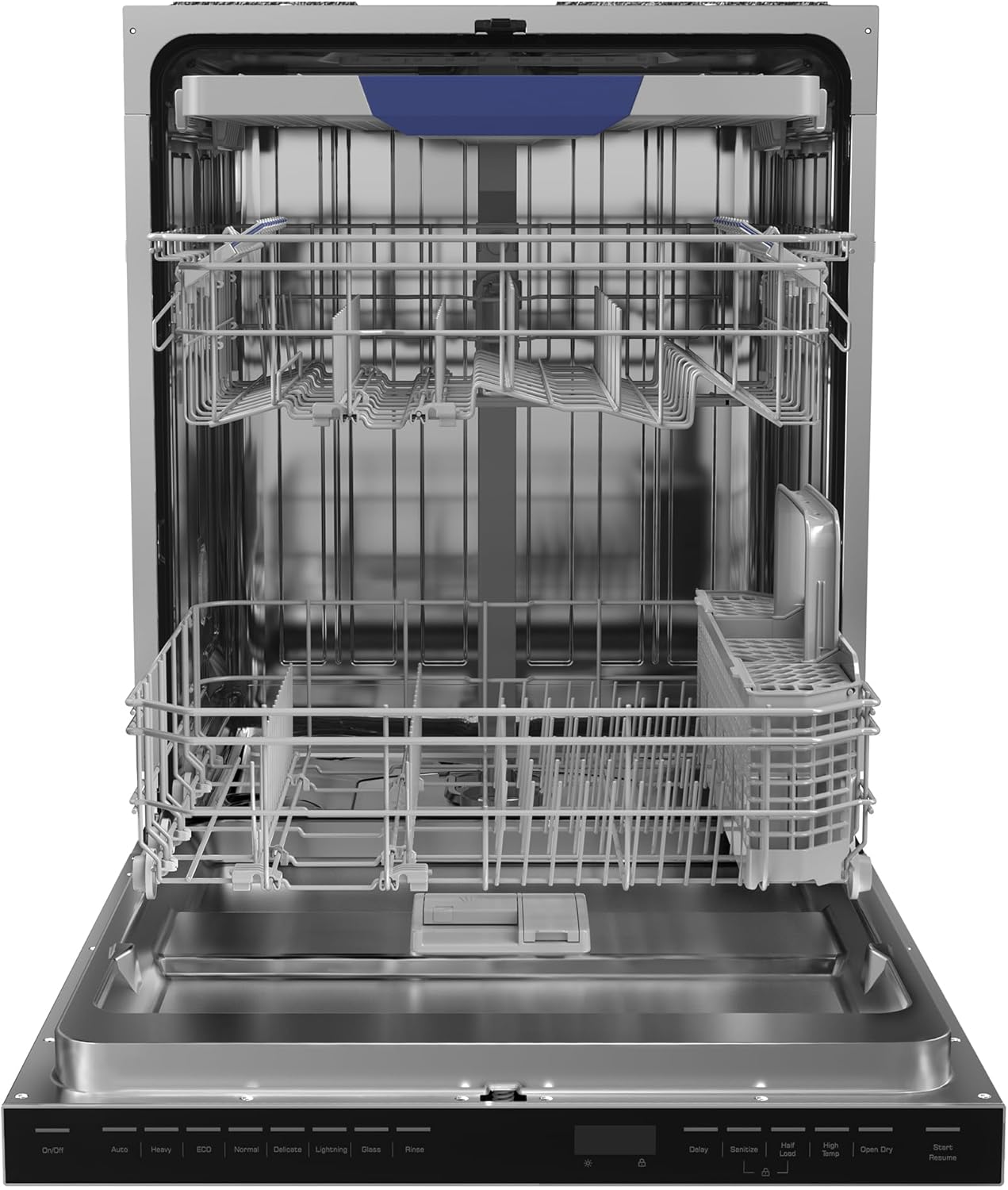
Capacity considerations hinge on both stated place settings and flexible rack geometry. The Empava model lists 15 place settings across a three-rack layout with a dedicated third rack for utensils, which increases usable surface area for flatware and small items while freeing space on the main racks for plates and bowls. Adjustable tines and fold-down shelves permit reconfiguration for taller items like pots or stemware. Effective capacity is also shaped by rack depth and spacing—compact 24-inch designs trade some lateral room compared with full 24″-plus interiors, making intelligent organization and rotated placement important. Households that frequently run mixed loads will benefit from a modal third rack and adjustable basket options, while larger families may find a single 15-place unit requires more frequent cycles.

Third rack and utensil organization
A shallow third rack for utensils and small items improves loading efficiency by creating a dedicated flatware area that prevents nesting and allows better spray exposure to each piece. This design reduces the need for a bulky cutlery basket on the lower rack, freeing space for plates or cookware. Placement options for utensils—angled slots or flat trays—affect how water interacts with items: flat trays tend to expose more surface area, while angled slots can improve drainage. For households prioritizing fast turnarounds, the third rack supports loading for light, mixed loads and can shorten cycle times when a half-load option is used.
Adjustable tines and fold-down elements
Adjustable tine rows and fold-down racks increase flexibility by accommodating wide cookware and tall glassware without obstructing spray arms. Fold-down features typically provide stable support for pots and pans while allowing quick transitions back to dish-oriented configurations. These mechanisms should be robust and easy to operate to avoid sagging or misalignment over time. When evaluating a 24-inch built-in, attention to rack adjustment range and the ease with which tines lock into different positions helps determine how well the interior adapts to varied loading patterns.
Practical capacity for different household sizes
A 15-place setting rating generally suits couples, small families, or households that run daily cycles rather than single large weekly loads. For two- to four-person homes, the combination of three racks and a specialized utensil area enables consolidated washing with reduced need for multiple runs. Larger households that require one-run-per-meal capacity or frequent heavy pots and pans may find a 15-place layout restrictive and should compare full-depth 24-inch alternatives or models with higher place-setting counts. Frequency of entertaining and types of cookware used are primary determinants of whether the listed capacity aligns with household needs.
Noise levels and suitability for open kitchens
Noise performance is a key selection criterion for open-plan layouts and adjacent living spaces. A 49 dB rating positions this dishwasher in the ultra-quiet segment by manufacturer metrics, reducing the likelihood of intrusive operational sound during daytime use. Actual perceived loudness depends on frequency profile, motor type, insulation, and kitchen acoustics; lower frequencies carry differently in open spaces than higher frequencies. Vibration isolation and a well-sealed cabinet also reduce transmitted noise to countertops and cabinet cavities. For households sensitive to background noise during evening hours, a sub-50 dB rating is favorable, though placement, flooring, and cabinetry will affect real-world perception.

Interpreting a 49 dB noise rating
Decibel ratings reflect sound pressure levels measured under standardized conditions, but perceived loudness is nonlinear: an increase of 10 dB roughly doubles perceived loudness. At 49 dB, the dishwasher should be noticeably quieter than older, louder models yet audible in a very quiet room. Sound profile is as important as the number—motor whine, pump harmonics, and spray noise can be more noticeable if concentrated in certain frequencies. When comparing units, look for both the dB rating and any manufacturer notes about inverter motors or sound-absorbing insulation that help explain why a unit achieves its rating.
Impact on open-plan living spaces
Open kitchens integrate cooking and living areas, making appliance noise more relevant to daily comfort. A low-noise dishwasher reduces interference with conversation and media playback but cannot eliminate all operational sound. Placement choices—installing the unit on a cabinet run that is acoustically separated from seating areas, using solid-core doors, and ensuring tight panel mounting—can further mitigate perceived noise. Households that frequently host late-evening activities may still prefer models with sub-45 dB ratings, but a 49 dB machine generally represents a balance between cost, features, and auditory impact for many open-plan households.
Vibration, mounting, and acoustic isolation
Vibration damping and secure mounting are critical to preventing structure-borne noise that amplifies in cabinetry. Proper installation with mounting brackets and anti-vibration pads reduces rattling and resonance with adjacent surfaces. The inclusion of mounting hardware and door correction accessories in the product package supports correct fitment, but installer attention to leveling and fastening is necessary for optimal acoustic performance. Floors and cabinet types also influence vibration transmission—tile and stone floors can reflect sound differently than cushioned subfloors.
Drying systems and moisture control
Drying strategy affects post-cycle dish readiness and interior moisture levels. Auto Door Dry, which opens the door slightly at cycle end, leverages passive airflow and steam venting to accelerate moisture evaporation without an added heating element, conserving energy relative to heated dry cycles. Stainless steel tubs retain heat longer and promote condensation-based drying when combined with door venting. However, auto-open systems require installation clearance and may release residual steam into the surrounding cabinetry if not properly sealed. Drying effectiveness is influenced by load type and cycle selection: plastics and deeply recessed items typically retain more moisture and may need air-dry or separate drying time to reach fully dry.

Auto Door Dry advantages and limitations
Auto Door Dry reduces reliance on energy-intensive heating by permitting humid air to escape through passive ventilation, improving energy profile while improving moisture removal for many dishes. The method is less aggressive than boosted heating and works well with glassware and ceramic but may be less effective for plastics and tightly nested items. Door-opening requires unobstructed space in front of the unit and may slightly extend the time before dishes are cool to handle. For households prioritizing energy efficiency over instantaneous dryness, auto-door features offer tangible benefits.
Condensation drying with stainless steel tub
A stainless steel tub favors condensation drying because metal surfaces facilitate heat retention and promote steam condensation on cooler tub walls rather than on dish surfaces. That thermal behavior supports moisture migration away from dishware, particularly when combined with a venting strategy. Condensation drying typically produces fewer water spots on glassware than some heating-element methods, provided rinse-aid use is appropriate. However, condensation outcomes depend on cycle temperature and final rinse heat; lower-temperature cycles may yield less effective condensation drying for certain materials.
Managing plastics and retained moisture
Plastics and large hollow items are prone to retained moisture due to lower heat capacity and internal air pockets. These items often require placement on upper racks and angled positioning to promote drainage, or a manual drying period after cycle completion. Using the third rack to space smaller plastic pieces can enhance air exposure. Selection of cycle options and the use of rinse aid influence surface tension and sheeting behavior, thereby reducing water pooling on plastics when properly combined with the machine’s drying strategy.
Energy, water efficiency, maintenance, and reliability
Energy and water metrics reflect ongoing operating impact and anticipated maintenance cadence affects long-term reliability. This Empava unit carries ENERGY STAR 7.0 certification, indicating compliance with recent efficiency criteria, along with a per-cycle water use of 3.2 gallons and estimated annual energy of 220 kWh. These figures suggest competitive efficiency for a 24-inch built-in model. Routine filter cleaning, inspection of spray arms for clogs, and attention to inlet strainers maintain pump efficiency and spray pressure. Durability considerations include stainless steel tub longevity and the robustness of rack mechanisms. Availability of replacement parts and clarity in manufacturer documentation also factor into projected serviceability and overall lifecycle reliability.

Interpreting ENERGY STAR 7.0 and water usage
ENERGY STAR 7.0 reflects a set of minimum performance and efficiency requirements for dishwashers current as of 2026, emphasizing reduced energy use and effective cleaning at lower temperatures. A 3.2-gallon per-cycle water use places the model in a low-consumption category relative to older units and supports water-sensitive households and utility-concerned buyers. Energy metrics depend on user cycle choice—short or eco modes will reduce energy but may extend cycle times. Matching cycle selection to soil load is important to maintain cleaning outcomes while reaping efficiency benefits.
Basic maintenance and filter care expectations
Regular maintenance focuses on filter cleaning, spray arm inspection, and checking seals for residue or deposits. Removable coarse filters should be emptied of large debris after heavy loads, while fine screens require periodic rinsing to maintain flow. Failure to maintain these elements can reduce spray force, lead to longer cycles from sensor detection of turbidity, and accelerate wear on the pump. The included user manual and accessible filter assembly support routine care but adherence to a maintenance schedule is necessary to preserve original performance levels.
Materials, components, and long-term reliability indicators
Key durability indicators include the stainless steel tub, sturdily mounted rack assemblies, and the presence of quality components such as a reliable circulation pump and corrosion-resistant spray arms. Weight and build details—this unit lists an item weight of 75 pounds—suggest a compact yet solid chassis for a 24-inch dishwasher. Long-term reliability also depends on installation quality and water hardness management; hard water can accelerate mineral buildup and affect moving parts. Households should consider water treatment options and availability of replacement parts when assessing expected longevity.
Pros & Cons
Pros
- Quiet operation profile: A 49 dB rating positions the model within the ultra-quiet category, reducing disruption in open-plan homes and allowing daytime or evening use with less audible intrusion. This is aided by a sealed tub design and included mounting components that support secure installation.
- Flexible loading and third rack: The three-rack layout with a dedicated utensil third rack frees lower rack space for plates and cookware and permits organized loading, which improves spray exposure and overall cleaning results for mixed loads.
- Full-coverage spray system: Three spray arms and 28 jets aim to deliver comprehensive spray coverage across upper, middle, and lower levels, increasing the probability of effective soil removal when combined with appropriate cycle selection.
- Energy and water efficiency: ENERGY STAR 7.0 certification, a 3.2-gallon per-cycle water use, and an estimated annual energy figure indicate the unit is designed to meet modern efficiency expectations for small to mid-size households.
- Stainless steel tub: The build material supports higher-temperature rinses, improved heat retention for drying strategies, and enhanced resistance to staining and odors compared with plastic interiors.
- Hidden top controls and brushed finish: Top-mounted touch controls preserve a clean front appearance and accommodate integrated cabinetry aesthetics, while the brushed stainless finish resists fingerprints and complements modern kitchens.
Cons
- Limited place-setting capacity for larger households: A 15-place setting rating is adequate for small families but may require multiple runs in larger households or during entertaining, leading to increased cumulative energy and water use.
- Drying relies on auto door method: Auto Door Dry is energy-efficient but can be less immediately effective for plastics and nested items compared with heated-dry systems; it also requires front clearance for the door to open at cycle end.
- Installation and accessibility considerations: As a built-in top-control model, correct installation, leveling, and secure mounting are necessary for noise performance and to allow the auto-door function; improper installation can degrade acoustic and functional outcomes.
- Limited manufacturer warranty detail provided in package: Warranty specifics are not listed in the included product details and should be confirmed with Empava or through retailer documentation prior to purchase to assess service expectations.
Final Verdict: Who This Dishwasher Is Best For (and Who Should Skip It)
This Empava 24-inch built-in dishwasher suits small to mid-size households, couples, and families that prioritize quieter operation, modern aesthetics, and water-efficient cleaning. The combination of a three-rack layout with a dedicated third rack, a stainless steel tub, and multiple cycle options supports varied load types from delicate glassware to everyday plates. ENERGY STAR 7.0 certification and low per-cycle water use appeal to buyers focused on utility savings and environmental footprint. The 49 dB rating makes the unit appropriate for many open-plan kitchens where background noise reduction is desirable, and hidden top controls preserve a streamlined cabinet-facing appearance.
Households that should reconsider include large families or frequent entertainers who need a higher place-setting capacity to avoid multiple runs, and buyers who require aggressive heated-dry performance for plastics and deeply nested items. Also, properties lacking installation clearance for a door that opens at cycle end should evaluate alternatives with internal heated dry systems. Overall, the Empava unit presents a balanced option for those seeking efficient cleaning, flexible loading, and quiet operation in a compact built-in form factor when paired with appropriate installation and maintenance practices.

Frequently Asked Questions (FAQs)
How effective is a three-arm spray system at removing food soils?
A three-arm spray system increases coverage by delivering water from upper, middle, and lower positions, reducing blind spots. Effectiveness depends on pump pressure, jet orientation, and unobstructed flow; proper loading that avoids blocking spray arms and selecting an appropriate cycle (e.g., Heavy for baked-on residues) improves soil removal. Routine filter maintenance helps preserve spray force and prevents redeposition of debris.
What does a 49 dB noise rating mean for daily use in open-plan homes?
A 49 dB rating places the dishwasher in a quiet segment, making it less intrusive in open-plan spaces than older louder units. Perceived loudness depends on frequency profile, room acoustics, and adjacent surfaces. While generally acceptable for daytime or background use, very noise-sensitive households or late-evening activities may prefer sub-45 dB models for minimal audible presence.
Is Auto Door Dry as effective as heated drying for plastics?
Auto Door Dry uses passive venting by opening the door at the cycle end to release steam and encourage evaporation; it is energy-efficient and effective for glassware and ceramics. Plastics, which retain heat differently and can trap water, often do not dry fully with auto-door methods and may require additional air-drying time or placement adjustments to drain properly.
How much water and energy does this model use compared to older dishwashers?
This model reports 3.2 gallons per cycle and an estimated 220 kWh annual energy use, reflecting modern efficiency standards and ENERGY STAR 7.0 compliance. Compared with older dishwashers, which often use significantly more water and energy, these figures indicate reduced resource consumption when appropriate cycles are selected; actual savings depend on load frequency and cycle choice.
What maintenance is required to maintain cleaning performance?
Regular maintenance includes emptying coarse food traps, rinsing mesh filters, and inspecting spray arms for clogs or mineral buildup. Ensuring inlet strainers are clean and using appropriate rinse aid helps reduce spotting and improves drying. Periodic checks of door seals and rack condition also support long-term performance and prevent leaks or vibration issues.
Does the stainless steel tub improve drying and durability?
A stainless steel tub enhances heat retention, which supports condensation drying strategies and tends to resist staining and odors better than molded plastic interiors. In terms of durability, stainless steel is more resistant to corrosion and high temperatures, contributing positively to lifecycle reliability when combined with proper maintenance and water quality management.
Who should consider an alternative to this 24-inch Empava dishwasher?
Buyers with large households, frequent entertaining needs, or those requiring immediate dry plastics after each cycle may prefer larger-capacity models or units with powerful heated-dry systems. Additionally, kitchens lacking clearance for an auto-opening door or where lower-than-49 dB noise levels are essential should compare other models better matched to those specific constraints.