
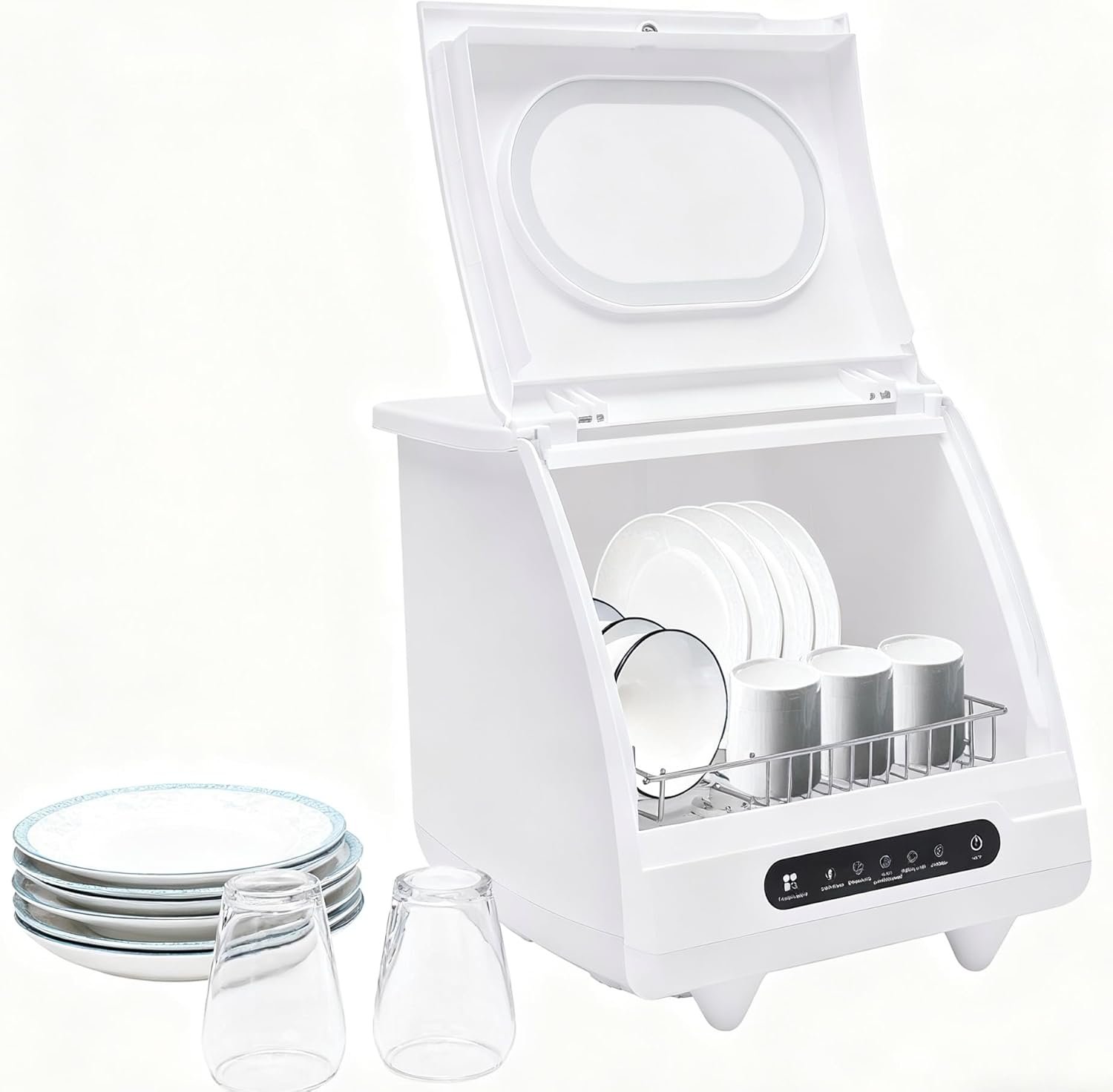
Introduction: Choosing the Right Countertop Dishwasher
Selecting a countertop dishwasher requires alignment of cleaning performance, kitchen layout, and everyday usage patterns. For small households, apartments, campers, or RVs, compact dimensions and plug-and-play installation are decisive. Noise sensitivity matters for open-plan kitchens and adjacent living spaces, while water and energy use determine practical sustainability for regular cycles. Equally important are cycle temperature, spray coverage, and filtration design to address grease and food residue effectively. Buyers should weigh capacity against how often dishes accumulate, and consider durability characteristics such as materials and motor construction. This review concentrates on the key decision factors—cleaning capability, rack design and place settings, noise profile, drying and moisture control, water and energy efficiency, and maintenance—so the appliance’s specifications and design attributes can be matched against household priorities.
Quick Overview
| Feature | Details |
|---|---|
| Dishwasher type | Portable countertop dishwasher (plug-and-play) |
| Capacity / place settings | Rated to wash up to 6 place settings; internal capacity 5 liters |
| Wash cycles and cleaning technology | 5 modes including quick wash, strong wash, fruit & vegetable wash, self-cleaning, and one additional manufacturer mode; 360-degree rotating spray arm |
| Drying method | Not specified by manufacturer; no dedicated heated drying stated |
| Noise level rating | 55 dB (manufacturer-rated) |
| Energy efficiency certifications | Not specified in manufacturer disclosures |
| Dimensions & installation | 15.6″D x 15.4″W x 16.9″H; countertop, no built-in plumbing required |
| Materials & construction | ABS and PP exterior plastics; stainless steel frame; copper motor components cited |
| Warranty & included components | Includes water inlet hose, drain hose, English manual, and other installation accessories; warranty details not specified |
The specifications indicate a compact, self-contained unit suited to kitchens with limited space and users who prefer minimal installation. The 6-place setting claim and small internal volume position this model for single-person households, couples, or occasional use in RVs and short-term stays. The inclusion of inlet/drain hoses and touch controls supports portable deployment, while unspecified energy certifications and drying method are notable factors for buyers prioritizing long-term efficiency and moisture control.

Cleaning performance and wash coverage
The dishwasher’s cleaning performance centers on three measurable design elements: the 360-degree rotating spray system, elevated rinse temperature, and cycle variety. A rotating spray arm that reaches multiple angles increases jet coverage across stacked items and can compensate for the tight interior typical of countertop units. The manufacturer-stated high-temperature cleaning at 161.6°F supports improved grease solubility and sanitizing action during hot cycles when paired with appropriate detergents. The 5-mode control scheme gives flexibility to balance time, temperature, and spray intensity for different soils, though actual soil-removal effectiveness depends on spray pressure, nozzle design, and loading patterns.

Spray system mechanics and temperature impact on soil removal
A 360-degree rotating spray arm provides multi-angle jet trajectories that reduce shadowed zones behind plates and cups, increasing the chance of direct water impingement on food soils. Higher wash temperatures, like the stated 161.6°F, promote grease emulsification and better detergent activity; however, success relies on consistent pump pressure and nozzle flow rates from the 800W motor. In compact machines, limited internal volume concentrates spray energy, which can boost cleaning in close-packed loads but also requires careful loading to avoid blocking jets. For effective use, utensils and deep cups should be oriented to allow free spray access and prevent pooling of water.
Filtration, detergent use, and cycle selection
Detachable filters control the retention of food particles and protect the pump from debris; regular cleaning prevents recirculation of solids that can redeposit during cycles. The self-cleaning mode and filter access facilitate maintenance and reduce odor risk from trapped residues. Detergent selection matters: automatic dishwasher detergent formulated for high-temperature cycles tends to perform better in concentrated, hot-water environments. Cycle selection—choosing strong or quick wash—should match soil level; heavy oils merit the strong mode with higher temperature and extended spray, while quick cycles save time on light loads.
Capacity, rack design, and place settings
Capacity is a primary constraint for countertop models. With a 5-liter internal volume and a stated ability to wash six place settings, the layout prioritizes compact stacking and vertically oriented items. Rack design influences usable capacity more than headline numbers: spacing between tines, presence of a cutlery basket or integrated utensil holder, and cup retention features determine whether full place settings and mixed item types (plates, glasses, cutlery) can coexist. For frequent use by multiple occupants, the 6-setting claim suggests several cycles per day will be required. Buyers should assess whether the loading configuration aligns with common dish types in the household, and whether fragile items or large cookware can be accommodated.

Practical load configurations and space management
A countertop dishwasher with tight internal dimensions benefits from a strategic loading approach. Plates typically are loaded vertically along the main rack to maximize spacing; cups and bowls fit along the perimeter where spray arms reach them. The absence of adjustable racks or fold-down tines limits flexibility for large items; oversized pans and casserole dishes may not fit. Households that primarily use standard plates, glasses, and flatware will find the six-place setting capacity closer to practical reality than those with larger or irregular items. Staging dishes to avoid overlapping and to expose surfaces to the spray arm improves cleaning outcomes.
Utensil handling and small item retention
A dedicated utensil basket or tray helps prevent cutlery from nesting, which can shield surfaces from spray and reduce clean results. The description references washing knives, forks, spoons, chopsticks, and cups together; however, successful cleaning of mixed small items depends on internal separators, basket depth, and orientation. Shallow baskets may allow water to pool or prevent full spray contact for deeply seated utensils. For households that frequently wash many small items, attention to basket placement and using enclosed utensil compartments when available will be important for consistent results.
Noise levels and suitability for open kitchens
Noise is a critical consideration in small living spaces. The manufacturer-rated sound level of 55 dB places this countertop dishwasher in the moderate noise band: perceptible but generally quieter than older under-sink disposals or loud countertop appliances. For open-plan apartments or kitchen-adjacent living rooms, continuous noise at that level may be noticeable during wash cycles, particularly on quiet evenings. Noise perception also depends on mounting surface, countertop rigidity, and ambient room reverberation. For dorms, RVs, or kitchens separated by a closed door, 55 dB is often acceptable; for very noise-sensitive environments, a lower dB rating would be preferable.

Evaluating the 55 dB rating for living spaces
A 55 dB rating is comparable to background conversation levels and is typical for compact pump-driven machines. The motor design—an 800W pure copper motor in this model—affects both power and acoustic signature: copper windings improve efficiency and can reduce motor heating, but pump and impeller cavitation, pump mounting, and enclosure insulation determine perceived sound. Placement on a stable, vibration-damping surface reduces rattles and amplification through cabinets and countertops. Consumers with open-plan layouts should consider running cycles during times when moderate ambient noise is acceptable or evaluating acoustic isolation pads to reduce transmitted vibration.
Installation context and vibration considerations
As a countertop, plug-and-play unit, installation does not require permanent plumbing modifications; inlet and drain hoses connect to a kitchen faucet or sink. This portability introduces variability in acoustic transmission: hoses and the sink surface can carry vibration if not properly secured. The magnetic induction front cover and ABS/PP housing provide lightweight enclosure, which may transmit some mechanical noise; a stainless steel frame supports internal components and can mitigate flexing that amplifies sound. Ensuring the unit sits flat and is not in direct contact with hollow cabinetry helps minimize resonance and improve the perceived noise profile.
Drying systems and moisture control
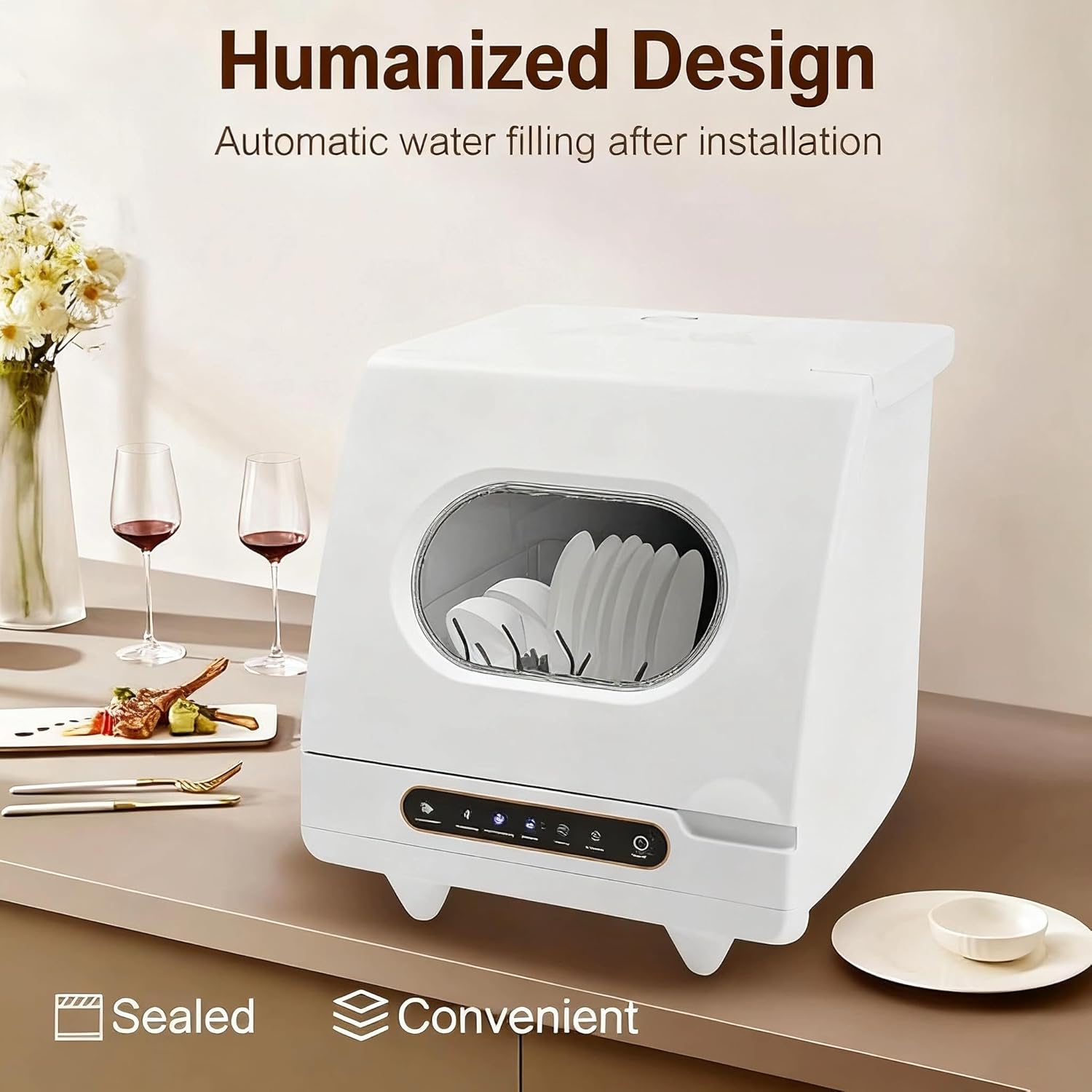
The manufacturer does not specify a dedicated heated drying technology, suggesting reliance on passive drying and residual heat removal after the final rinse. Passive drying in compact machines typically uses residual hot water and fanless drainage to reduce moisture, but this approach leaves more surface water on plastics and cups compared with active heated-dry or condensation-assisted systems. For environments where moisture control is necessary—such as small kitchens with limited ventilation or damp RV interiors—post-cycle air circulation or manual towel drying for certain items may be required. Users should expect longer drying times for plastics and deep cups under passive drying regimes.
Practical drying expectations for plastics and glass
Plastic items commonly retain more surface moisture after passive drying since they do not hold residual heat like glass or metal. The absence of a specified heated dryer or fan means that lighter materials may come out wetter and could require towel drying or an additional short ventilation period. Glassware and metal utensils benefit from greater residual heat and may reach acceptable dryness after an airing-out period. Loading strategy—placing items to promote drainage and avoiding pooling—improves drying performance within the constraints of non-heated systems.
Moisture management and mold prevention in compact units
Motionless water in the sump or filter area can accelerate odor development if not cleared; the detachable filter and automatic drainage feature reduce standing water risk by allowing full drainage of the wash sump. The self-cleaning mode that softens water and aids residue removal can help mitigate mineral buildup which otherwise traps moisture. For consistent moisture control, periodic filter removal and drying of the cavity between uses is a recommended maintenance behavior to minimize mold and stale odor potential in tight, frequently closed interiors.
Energy and water efficiency expectations
This countertop dishwasher specifies a maximum water consumption of approximately 1.32 gallons per cycle, which is lower than many full-size units and typical hand-wash quantities. The 800W motor rating indicates electrical demand during active pump and heating phases; however, manufacturer disclosures do not list standardized energy efficiency certifications such as ENERGY STAR. Buyers should interpret energy use relative to cycle length, wash temperature, and heater duty: high-temperature cycles increase energy draw for water heating, while shorter quick modes reduce total runtime. For frequent daily use, understanding the balance between fewer cycles at higher capacity versus more cycles with smaller loads is important to realize efficiency gains.

Water consumption context and household impact
A reported 1.32 gallons per cycle positions the unit as water-efficient compared with many manual hand-wash routines and some older dishwasher models. Water efficiency gains depend on loading efficiency: running full loads rather than frequent partial loads maximizes per-cycle water value. The integrated automatic water replenishment and drainage system supports measured intake per cycle, but users should confirm actual faucet connection flow and any pre-rinse behavior that could add water usage. In short-term living situations and small households, the lower per-cycle volume presents a tangible water-saving potential if used as intended.
Energy draw, cycle temperature, and operational trade-offs
The 800W motor is the primary power consumer for pumping; additional energy is consumed by the heating element to reach and maintain the stated 161.6°F wash temperature. High-temperature cycles deliver better grease removal but increase electrical consumption for heating water. Quick wash modes offer a compromise by reducing time and temperature to conserve energy, though soil removal for heavy grease will be less effective. Absence of an energy certification requires buyers to consider individual usage patterns and the likelihood of frequent hot cycles when estimating comparative energy performance.
Maintenance, filter requirements, and durability
Maintenance design features include a detachable filter, self-cleaning mode that softens water, and a stainless steel frame for structural durability. Detachable filters simplify removal of trapped food and reduce pump wear if cleaned regularly. The stainless steel frame resists deformation and supports internal components against vibration, while ABS and PP external parts provide impact resistance and lightweight portability. The manufacturer notes an 800W pure copper motor, which is generally more heat-tolerant and durable than cheaper winding materials, but motor life will depend on duty cycle, water quality, and maintenance practices. Users should anticipate routine filter cleaning and periodic inspection of hose connections for wear.

Filter maintenance cadence and common servicing points
Filter maintenance frequency correlates with load type and soil levels: households that prepare oily or fibrous foods should inspect and clean the filter after multiple cycles, while light-use situations allow longer intervals. The detachable design facilitates cleaning but requires careful reseating to maintain a seal and avoid pump ingress of debris. Drain hose and inlet connections should be checked for secure attachment and micro-leaks; the automatic drainage and replenishment mechanisms depend on unobstructed flow. Regular inspection of the door seal and magnetic induction cover will prevent water ingress to countertops and prolong gasket life.
Material choices and expected longevity signals
ABS and PP housing materials are common for portable appliances, offering impact resistance, UV stability, and lower weight for countertop portability. A stainless steel frame offers valuable rigidity and corrosion resistance for internal load-bearing parts, contributing to longevity compared with all-plastic frames. The mention of a pure copper motor suggests attention to electrical reliability, though longevity also depends on quality of the pump assembly, bearing seals, and resistor/heater element design. Consumer expectations for durability should be tempered by the portable-class appliance lifecycle and by adherence to manufacturer maintenance recommendations.

Pros & Cons
Pros
- Compact, portable footprint: The unit’s small external dimensions and countertop installation suit apartments, RVs, and kitchens with limited space. Included water inlet and drain hoses allow plug-and-play setup without permanent plumbing changes.
- Targeted cleaning options: Five selectable wash modes, including quick wash, strong wash, and a fruit & vegetable wash, provide cycle flexibility to address varying soil levels and delicate items.
- High-temperature wash capability: A manufacturer-stated 161.6°F maximum cycle temperature supports better grease breakdown and improved detergent action for heavy soils.
- 360-degree rotating spray: Multi-directional spray coverage helps reach multiple surfaces and reduces shadowing typical in compact interiors, improving overall wash coverage.
- Water-efficient per cycle: Approximate per-cycle water use of 1.32 gallons positions the machine as water-conservative when compared to manual washing in many domestic scenarios.
- Stainless steel frame and copper motor mention: Use of stainless steel for internal structure and copper in motor windings suggests attention to component longevity and thermal performance.
- Detachable filter and self-cleaning mode: Accessibility of the filter and a self-cleaning function supports easier maintenance and reduces risk of odor or buildup.
Cons
- Limited capacity for larger households: The 5-liter internal volume and six-place setting claim are constrained for families or households that generate multiple daily loads, potentially necessitating frequent cycles.
- Drying method not specified: Absence of a dedicated heated-dry or fan-assisted drying system may lead to wetter plastics and longer drying times, requiring manual drying for certain items.
- Noise level perceptible in open-plan spaces: A 55 dB rating is moderate and may be noticeable in adjoining living areas during operation, which could be a drawback in very quiet open kitchens.
- Energy efficiency certification not listed: Lack of disclosed ENERGY STAR or comparable certification requires buyers to evaluate energy use based on cycle selections and hot-water demand rather than standardized ratings.
Final Verdict: Who This Dishwasher Is Best For (and Who Should Skip It)
This countertop dishwasher is best suited to single occupants, couples, RV users, and apartment dwellers who require a compact, portable cleaning appliance with targeted cycle choices and water-efficient operation. Its 360-degree spray, high-temperature wash capability, and detachable filter make it a practical option for households that prioritize grease removal and ease of maintenance while accepting limited capacity. The included inlet and drain hoses and touch controls support plug-and-play convenience for short-term living situations, rental units, and mobile applications.
This unit is less appropriate for larger families, households that regularly wash oversized cookware, or buyers who require rapid, fully heated drying without manual intervention. Noise-sensitive users in open-plan living areas and those seeking certified energy-efficiency ratings may prefer models with lower dB ratings and documented certifications. Overall, this countertop dishwasher provides a balance of compact convenience and capable wash features for small-space living in 2026, provided expectations around capacity, drying, and efficiency are aligned with household needs.
Frequently Asked Questions (FAQs)
How many place settings will a countertop dishwasher typically handle?
Countertop units often advertise capacity in place settings; a small model may handle about six standard place settings. Actual usable capacity depends on internal rack spacing, presence of utensil baskets, and item shapes. For mixed loads with pots or larger items, the effective place-settings count can be lower, so assessing the rack layout against commonly used dishware is important.
Does a high wash temperature improve cleaning performance?
Higher wash temperatures enhance grease dissolution and enzymatic detergent action, improving removal of oily soils. A stated wash temperature of around 161.6°F supports stronger cleaning when combined with sufficient spray pressure and appropriate detergent. However, energy consumption increases for heating water, and delicate items may require lower-temperature cycles.
Is a 55 dB rating quiet enough for an open-plan apartment?
A 55 dB sound rating is moderate—comparable to quiet conversation—and may be noticeable in adjacent living areas. In an open-plan apartment, perceived noise depends on room acoustics and placement; vibration isolation and stable countertop support can reduce audible transmission. Noise-sensitive consumers may prefer lower dB ratings for minimal disruption.
How effective is passive drying compared to heated drying?
Passive drying relies on residual heat and drainage rather than a dedicated heating element or fan. It typically leaves plastics wetter and extends drying time compared with active heated or condensation-assisted drying. For best passive-dry results, orient items to promote drainage and allow a cool-down/ventilation period after the cycle completes.
Are detachable filters important for maintenance?
Detachable filters facilitate removal of trapped food particles and protect the pump from debris. Regular cleaning of the filter prevents recirculation of solids and reduces odor and buildup. For compact machines, easy filter access is a significant advantage for routine maintenance and preserving long-term cleaning performance.
Does this countertop dishwasher require permanent plumbing?
No. Portable countertop dishwashers typically use included inlet and drain hoses that attach to a kitchen faucet or sink, enabling plug-and-play operation without permanent plumbing modifications. Proper hose attachment and secure placement are important to avoid leaks or vibration transmission during operation.
How much water does a small countertop dishwasher use per cycle?
A compact countertop model may use approximately 1.32 gallons per cycle, according to manufacturer information. This is generally lower than many full-size dishwashers and typical hand-wash routines, though actual water usage can vary with cycle selection, pre-rinsing behavior, and load fullness.
What factors affect the longevity of a portable dishwasher?
Longevity depends on component materials, motor construction, and maintenance practices. Stainless steel framing, quality motor windings (such as copper), and regular cleaning of filters and seals support extended life. Operating within recommended cycles, avoiding abrasive soils, and inspecting hoses and gaskets reduce wear and failure risk over time.