Portable Countertop Dishwasher: Cleanliness, Quiet, Fit 2026
Why dishwasher selection matters for small kitchens and apartments
Choosing the right dishwasher for a small kitchen shapes daily convenience, noise exposure, and perceived cleanliness. For households with limited space—studio apartments, dorm rooms, and compact kitchens—a countertop unit must balance capacity against footprint and noise. Cleaning needs vary by frequency of meals, types of cookware, and sensitivity to appliance noise; buyers should weigh spray coverage, temperature capability, and drying approach against available countertop space and sink access. Efficiency expectations also differ: short, low-water cycles can be attractive where municipal water supply is a constraint, while reliable filtration and easy maintenance determine long-term hygiene and appliance lifespan. A clear understanding of cycle options, materials, and drainage/inlet connections informs a selection that aligns with kitchen layout, daily dishwashing habits, and expectations for quiet operation.
Quick Overview
| Feature | Details |
|---|---|
| Dishwasher type | Portable countertop dishwasher (flip-up lid, magnetic induction) |
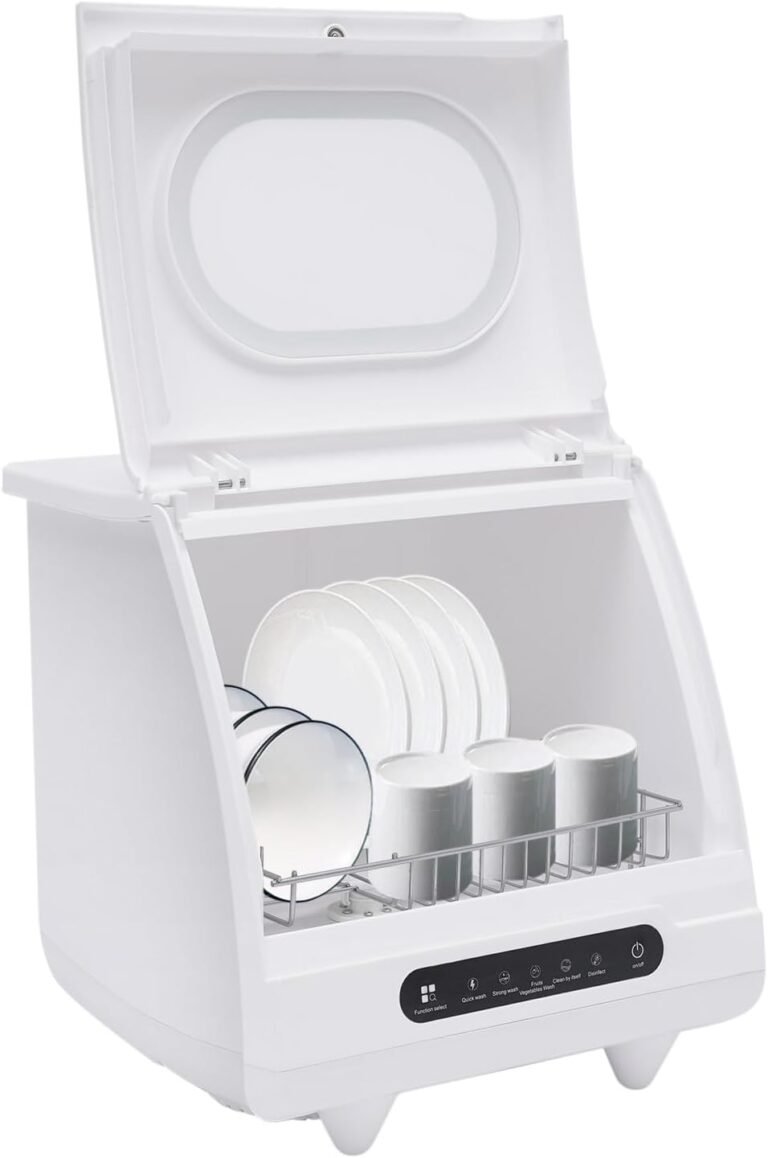
| Capacity / place settings | Manufacturer-stated 6 place settings; max dish diameter 38 cm |
| Wash cycles & cleaning technology | 5 programs: Quick (19min), Strong (55min), Fruits/Vegetable (15min), Self-Clean (6h), Disinfect (20min); rotary spray arm with high-temperature water |
| Drying method | Hot air circulation drying (manufacturer-stated) |
| Noise level rating | 55 dB (manufacturer-stated) |
| Energy / water | Power 800W; water consumption max 5 L per cycle; no formal certification listed |
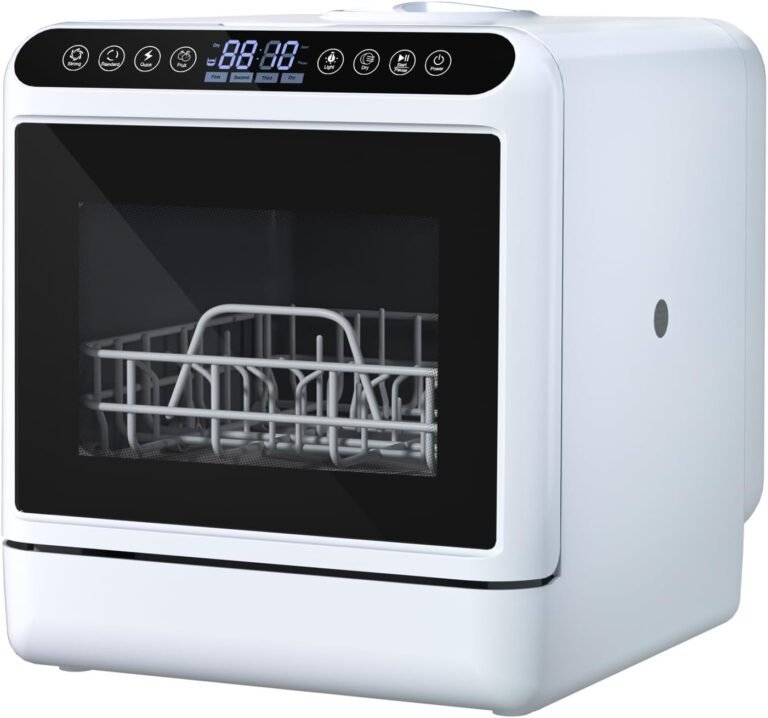
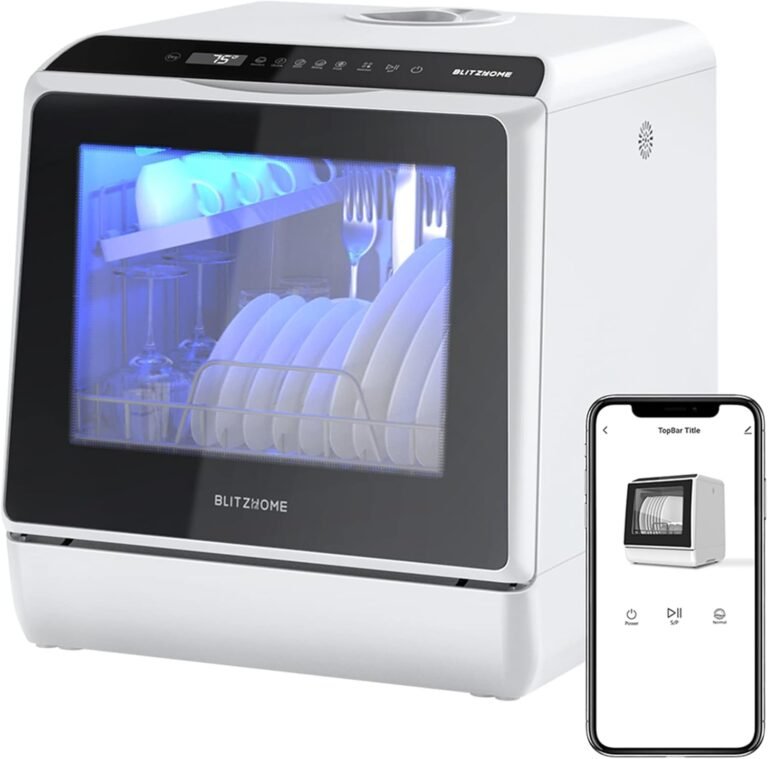
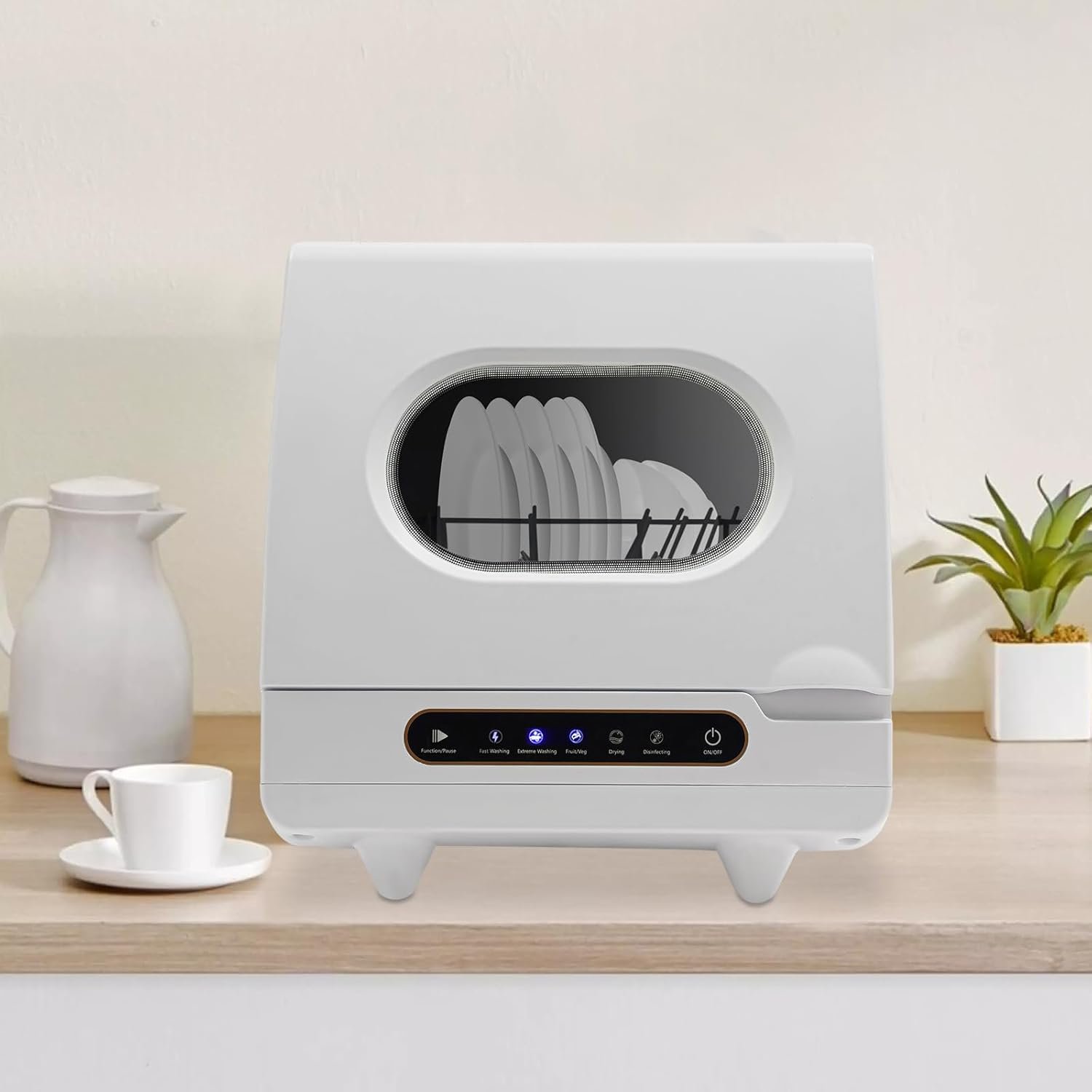
| Dimensions & installation | 15.6″D x 15.4″W x 16.9″H; countertop installation; includes inlet and drain hoses |
| Materials & construction | ABS and PP plastics with stainless steel inner frame; pure copper motor stated |
These specifications indicate suitability for single-person households or small families that need an appliance with a small footprint. The six-place capacity and compact dimensions make it appropriate where counter space is limited, while included inlet and drain hoses enable connection to a standard faucet or sink adapter. Noise and water use specifications guide expectations for use in open-plan living, dorms, and apartments.

Cleaning performance and wash coverage
The product combines high-temperature water, a darts rotary spray, and five selectable programs to address a range of soils and item types; the presence of a disinfect and a quick wash cycle suggests flexibility between faster rinses and more intensive cleaning. Spray patterns from a rotary arm typically yield circumferential coverage, with soil removal dependent on spray pressure, water temperature, and detergent selection. The removable internal filter facilitates capture of food solids, and the stainless steel internal frame helps maintain hygienic surfaces under repeated high temperatures. Because the unit uses municipal supply pressure and a maximum 5L water draw per cycle, heavily soiled cookware may require pre-rinsing or use of the Strong (55-minute) cycle for satisfactory results.

Spray system, cycle temperatures, and soil removal
Rotary spray arms rely on nozzle orientation and pump pressure to create impact and shear forces on dishes; high-temperature rinse stages improve detergent activation and fat emulsification. With a pure copper motor driving the pump and a designated strong cycle, the unit can generate sufficient pressure for typical tableware and light pots, but effectiveness against baked-on residues depends on contact temperature and cycle duration. The listed disinfect and self-clean cycles indicate higher-temperature or extended soak phases intended to loosen residues and sanitize surfaces that are compatible with the manufacturer’s specified working temperature.
Filtration, debris handling, and maintenance impact on cleaning
The removable and washable internal filter captures food particles to prevent redeposition and protect the pump; routine cleaning of this filter preserves spray performance and reduces odor risks. A self-clean mode that softens water or flushes internal passages can limit mineral buildup in regions with hard water, preserving spray nozzle function. Given the compact footprint, the filter chamber and inlet paths are smaller than full-size models, so more frequent attention to trapped debris may be necessary when washing meals with significant food remnants.
Performance across tableware types and soil levels
The dishwasher lists specific fruit/vegetable and disinfect cycles, which target delicate items and microbial reduction respectively; these specialized cycles imply adjustable temperature or shorter contact times for fragile items and higher-temperature phases for sanitizing. Glassware and thin plastics generally benefit from shorter, lower-temperature programs, while plates and cutlery with dried-on grease require the strong cycle and possibly pre-soak. Oversized pots or tall pitchers that exceed the 38 cm diameter or internal height constraints will need manual washing or separate handling.
Capacity, rack design, and place settings
Compact units must trade capacity against external footprint; the stated 6-place setting capacity suits single occupants or couples but limits simultaneous washing for larger households. Internal layout and rack design influence how effectively this capacity translates into practical use: spacing between tines, dedicated utensil trays, and cup placements determine whether mixed loads—plates, bowls, glasses, and silverware—fit without blocking spray patterns. Maximum dish diameter of 38 cm governs placement of larger plates or serving platters; the stainless steel interior frame contributes to resistance against heat-related deformation and supports racking. Buyers should consider typical meal size, dish geometry, and frequency of use to evaluate whether a six-set capacity meets household needs or if more frequent cycles will be necessary.

Real-world implications of a six-place capacity
A six-place capacity accommodates everyday sets for one to two people, reducing the need to run partial loads only when necessary. However, dinner parties or families with multiple plates and cookware per meal will encounter increased cycle frequency, which can affect energy and water use over time. Users should plan load sequencing—separating heavily soiled pots from delicate glassware—to maximize cleaning coverage and avoid overcrowding that obstructs spray arms. The compact interior also means stackable or nested items are less forgiving.
Rack layout, utensil placement, and glass care
Rack geometry affects contact with spray and exposure to drying air; narrow utensil compartments and properly oriented cutlery reduce overlapping and shadowing. A lack of adjustable tines can limit flexibility for tall glasses or stemware, so glasses that fit within internal clearance and avoid obstructing the spray path provide the best outcomes. Plastic items should be rated for the appliance’s top temperatures to prevent warping, and cutlery should be placed handle-down if recommended by the manufacturer to optimize spray exposure.
Special cycles (fruits/vegetables) and loading guidance
A dedicated fruits/vegetables cycle uses lower temperatures and shorter durations to remove debris without exposing produce to harsh heat. Loading guidance for this cycle typically favors open placement with minimal stacking to allow spray access to surfaces. This mode can be convenient for rinsing and sanitizing rigid containers and non-porous produce, but delicate items and porous surfaces are better rinsed by hand to avoid water retention or damage.
Noise levels and suitability for open kitchens
A 55 dB noise rating places the unit in the moderate range for domestic dishwashers; it is quieter than many small countertop mixers or range hoods but louder than whisper-quiet built-in models. Noise perception depends on placement—countertop units transmit vibrational energy to the supporting surface—so anti-slip feet and stable placement reduce mechanical resonance. Open-plan living areas are more sensitive to continuous background noise; cycle timing, the presence of longer strong or disinfect cycles, and peak noise during pump operation are relevant when scheduling runs. Buyers who prioritize near-silent operation for sleeping areas adjacent to the kitchen should compare decibel ratings and consider operational timing.

What a 55 dB rating means in an apartment context
Fifty-five decibels is comparable to conversational speech at home and may be noticeable in small living spaces, particularly during peak pump or drain phases. Sound insulation from countertops and cabinetry can mitigate perceived loudness. For late-night use in thin-walled apartments or dorms, selecting shorter, lower-intensity cycles or running the dishwasher during awake hours reduces potential disturbance. The manufacturer’s pure copper motor suggests robust pump performance but does not inherently reduce airborne noise compared with designs that include sound-damping enclosures.
Vibration, mounting, and anti-slip features
Anti-slip feet help isolate the dishwasher from direct countertop vibration transfer, limiting noise amplification through the work surface. Proper leveling and firm seating on countertop material are important to minimize rattles and contact noise. Flexible drain and inlet hoses should be routed to avoid contact with cabinet surfaces; clamped or kink-free hose runs reduce vibration-driven noise and prevent intermittent tapping against surfaces during pump operation.
Cycle timing and living-area impact
Quick cycles (19 minutes) provide a lower-noise, short-duration option for lightly soiled loads, reducing the time occupants are exposed to operational noise. Strong and disinfect cycles have longer runtimes and may include higher-energy pump stages or elevated temperatures, increasing sustained noise and potential vibration. Planning cycle selection based on occupancy and household tolerance for background noise helps align appliance use with living-area comfort.
Drying systems, efficiency, maintenance, and durability
Hot air circulation drying requires an integrated heating element and blower to move warm air across dishes; this method reduces retained moisture versus passive air-dry but increases power draw during the drying phase. A stated leak-proof design combined with stainless steel internal framing and ABS/PP exterior materials creates a balance between corrosion resistance internally and impact resistance externally. Manufacturer-specified water consumption of up to 5 L per cycle positions the unit as low-water compared with full-size models, but the lack of formal energy certification means energy performance should be assessed by reported power draw (800W) and cycle durations. Maintenance tasks—regular filter cleaning, hose inspection, and occasional internal descaling—support long-term reliability by preventing clogs and preserving pump and heater function.

Hot air circulation drying and moisture control
Circulation drying accelerates evaporation and reduces water spots on flat surfaces, but areas shielded from airflow—deep crevices or undersides—may retain moisture and benefit from manual towel drying. The leak-proof descriptor relates to internal sealing and routing of inlet/drain lines, but proper hose installation and periodic inspection are necessary to prevent external leaks. Stainless steel framing improves heat tolerance and resists warping; however, repeated thermal cycling and detergent exposure require attention to seals and plastic components over time.
Water and energy expectations based on specs
Five liters per cycle is low relative to full-size dishwasher consumption and aligns with countertop unit goals for minimal water use. Power draw at 800W indicates moderate electrical demand during heating and pump operation, with actual energy per cycle depending on run-time and frequency. In the absence of ENERGY STAR or equivalent certification, purchasers should expect energy use to be proportional to cycle selection—strong and disinfect cycles consuming more than quick or fruit/vegetable modes.
Maintenance routines, filter care, and durability signals
A removable, washable filter is central to routine maintenance, with recommended cleaning intervals determined by food load and hardness of water. Self-clean modes intended to flush or soften water help manage mineral buildup, but periodic manual descaling in hard-water areas remains prudent. The combination of an internal stainless steel frame and ABS/PP exterior suggests a design that resists corrosion and impact damage; however, long-term reliability depends on installation, water quality, and adherence to prescribed maintenance schedules.

Pros & Cons
Pros
- Compact footprint with six-place capacity supports small households and conserves counter space. The small external dimensions and included inlet/drain hoses simplify countertop integration without cabinetry changes.
- Multiple wash programs address varied cleaning needs, including a quick 19-minute cycle for light loads and a 55-minute strong cycle for heavier soils. Specialized fruit/vegetable and disinfect cycles provide flexibility for delicate items and hygienic rinses.
- Low water usage (max 5 L per cycle) makes the unit appropriate where water conservation is a priority, and the self-clean mode helps manage internal residue and mineral accumulation.
- Hot air circulation drying improves moisture removal compared with passive drying, reducing water spots on flatware and plates for faster post-cycle usability.
- Stainless steel internal frame increases resistance to heat and wear, offering a more durable interior surface than all-plastic constructions.
- Removable, washable filter facilitates routine maintenance and helps prevent redeposition of food particles, preserving spray performance and reducing odor risks.
- Pure copper motor suggests durable pump drive and potentially better thermal and wear characteristics compared with lower-grade motor materials.
- Anti-slip feet and compact design minimize countertop movement and make placement on various surfaces straightforward while reducing mechanical noise transmission.
Cons
- Six-place capacity limits suitability for families or frequent large loads, potentially requiring multiple cycles per meal for larger households. Overcrowding to maximize capacity can reduce cleaning performance due to blocked spray paths.
- Noise level at 55 dB may be noticeable in small or open-plan living areas, and the absence of documented sound-dampening features could affect use in noise-sensitive settings like bedrooms adjacent to kitchens.
- Lack of formal energy efficiency certification means energy performance per cycle is dependent on cycle choice and usage patterns; consumers seeking verified low-energy models may prefer certified alternatives.
- Internal clearance and maximum dish diameter (38 cm) restrict placement of oversized platters and tall glassware, requiring manual washing of some items.
- Compact components and hoses require careful installation and periodic inspection to avoid connection leaks and to maintain pump and heater performance over time.
Final Verdict: Who This Dishwasher Is Best For (and Who Should Skip It)
This portable countertop dishwasher fits single occupants, couples, dorm residents, and small apartments where counter space and water use are priorities. Its combination of five program options, including quick and disinfect cycles, and a hot air circulation dryer addresses diverse cleaning needs while keeping footprint and water consumption low. The stainless steel frame and removable filter contribute to pragmatic maintenance and durability for typical household loads. For buyers who need a compact, hose-plumbed solution that handles everyday plates, cutlery, and cups with moderate noise tolerance, this unit presents a balanced option.
Households that repeatedly wash large pots, multiple place settings per meal, or require near-silent operation should consider larger built-in or certified low-noise alternatives. Similarly, consumers prioritizing verified energy efficiency ratings or extensive capacity should seek full-size models with recognized certifications. Installation at sink height, attention to hose routing, and adherence to maintenance routines will maximize the unit’s performance and longevity compared with other countertop options in 2026.
Frequently Asked Questions (FAQs)
How effective is a countertop dishwasher at removing dried-on food?
Countertop dishwashers use a combination of spray pressure, detergent action, and cycle temperature to remove soils. Models with a dedicated strong cycle and higher-temperature rinse phases perform better on baked-on residues, but heavily scorched or carbonized food may still require pre-soaking or manual scraping. Regular filter cleaning and using appropriate detergents improve long-term cleaning performance.
Can a compact dishwasher handle large plates and pots?
Capacity constraints are defined by internal clearance and maximum dish diameter; a 38 cm maximum dish diameter accommodates most standard plates but limits oversized platters and tall pots. For large cookware, hand washing or split-load strategies are typically necessary. Checking internal rack geometry and tine spacing helps determine suitability for specific items.
Is 55 dB quiet enough for an open-plan living room?
A 55 dB rating is moderate and roughly comparable to normal conversation at home. In open-plan layouts it can be noticeable, particularly during pump or drain phases. Anti-slip feet and firm countertop placement reduce vibration-related noise, but those seeking near-silent operation should consider lower-decibel models or run the dishwasher when occupants are less noise-sensitive.
How effective is hot air circulation drying on plastic and glassware?
Hot air circulation increases evaporation and reduces water spotting on glass and flatware. Plastics are sensitive to higher temperatures and may warp if exposed to sustained heat; using lower-temperature programs or removing plastic items to air-dry can prevent damage. Glassware benefits from proper placement to allow airflow and avoid trapped moisture.
What are the water and energy expectations for a small countertop dishwasher?
Manufacturer-stated water use of up to 5 liters per cycle is low compared with full-size models, which favors water-conservative households. Electrical draw at 800W indicates moderate power demand during heating and drying phases; total energy per cycle depends on program length and frequency. Lack of formal energy certification means comparison should use cycle durations and stated wattage.
How often should the filter and hoses be inspected or cleaned?
Filter cleaning frequency depends on load soil level and usage, but routine inspection and cleaning after several cycles or weekly is common for compact units handling daily use. Hoses should be checked periodically for kinks, secure fittings, and signs of wear; replacing worn hoses and ensuring proper connections reduces leak and pump strain risks.
Can the dishwasher sanitize baby bottles or produce safely?
A disinfect cycle and high-temperature rinse stages are intended to reduce microbial presence on non-porous items, which can be suitable for rigid baby bottles and non-porous containers that tolerate heat. For produce, a specific fruits/vegetable cycle uses gentler temperatures. Porous items, soft plastics, and heat-sensitive baby components should follow manufacturer guidance to avoid thermal degradation.
Who should avoid buying a countertop dishwasher?
Large households, frequent entertainers, or kitchens requiring multiple daily cycles may find a six-place countertop unit restrictive due to limited capacity. Users needing very low operational noise, verified energy certifications, or frequent washing of oversized cookware should consider full-size built-in models or certified low-noise/energy-efficient alternatives instead.