
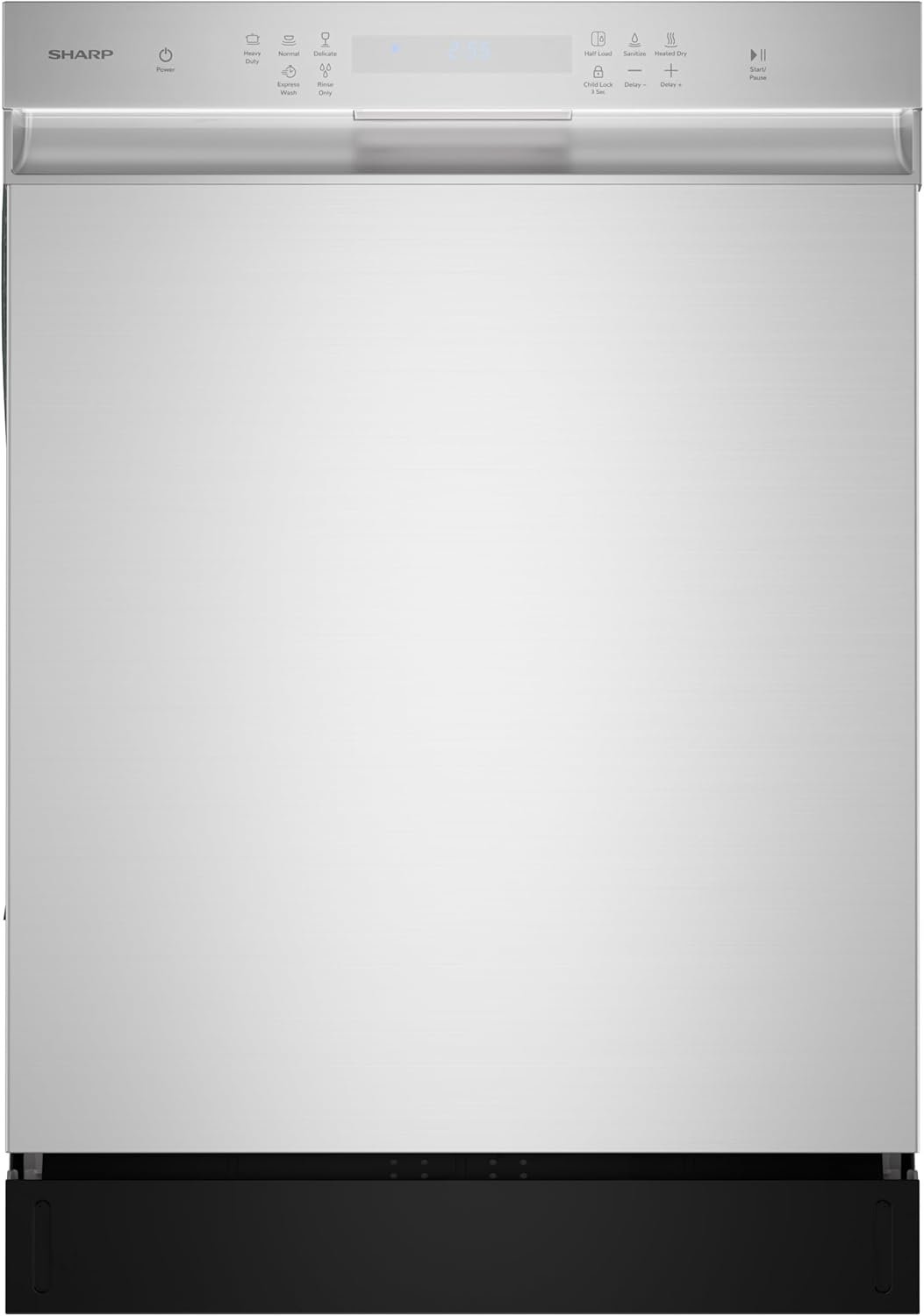
How to choose a dishwasher that fits noise, cleaning, and space needs
Selecting a dishwasher requires aligning cleaning expectations, household size, kitchen layout, and noise sensitivity. For compact households and apartment kitchens, a 24-inch built-in model with a 12-place setting capacity can balance daily load demands without occupying full-size cabinetry. Noise is a primary factor in open-plan homes; a 49 dB rating situates a unit in the lower-mid sound range, relevant when meals and living spaces share a footprint. Cleaning needs depend on spray coverage, filtration and cycle options; efficiency expectations relate to both water use and annual energy figures. Durable materials and rack configurations affect long-term usability and loading flexibility, while controls and safety features influence ease of use. Evaluating these elements against installation constraints and frequency of use helps determine whether a compact, quiet, and feature-focused model meets household requirements.
Quick Overview
| Feature | Details |
|---|---|
| Dishwasher type | Built-In, 24-inch form factor |
| Capacity | 12 place settings |
| Wash cycles and cleaning technology | 5 cycles, 3 washing sprayers, hybrid tub with stainless steel walls and plastic floor |
| Drying method | Heated dry option |
| Noise level | 49 dB (library quiet marketing designation) |
| Energy & water | Annual energy consumption 240 kWh; water consumption stated 3 gallons per hour |
| Dimensions & installation | 22.75″D x 23.63″W x 33.63″H; built-in installation |
| Controls & safety | Front-mounted touch controls; child lock feature |
| Special capacity features | Third rack for utensils; adjustable upper rack (2″ vertical adjustment) |
| Warranty | Manufacturer warranty not specified in provided specifications |
This compact built-in dishwasher package pairs a moderate 12-place-setting capacity with a three-rack layout and heated dry, which suits small to medium households seeking consolidated loading for utensils and lightweight cookware. The hybrid tub construction aims to combine stainless steel durability with a molded plastic floor for cost and weight savings. Front touch controls and a 49 dB noise rating frame the model as intended for quieter kitchen environments where footprint and utensil organization are priorities.

Cleaning performance and wash coverage
The SDW6506JS specifies three washing sprayers and a hybrid tub, indicating a design that relies on multiple spray locations to achieve coverage across stacked racks. Multiple spray arms or targeted sprayers help dislodge soils by varying angle and pressure; effectiveness depends on pump flow rate, nozzle design, and rack spacing. Stainless steel walls support higher water temperatures and reflect heat, aiding detergent activation and soil suspension, while plastic tub floors reduce manufacturing costs and can alter heat retention during cycles. Cycle selection, soil sensors if present, and detergent chemistry influence final cleanliness, as do spray arm cleanliness and filter condition. Given the specifications, the model targets balanced coverage for typical household soils rather than commercial-level heavy soils.

Spray system and coverage
Multiple sprayers increase the number of impact points hitting dishes, which improves mechanical action that lifts soils when combined with appropriate water pressure and detergent. Spray arm geometry and nozzle orientation are critical; downward and angled nozzles address flatware and lower-rack items while mid-level or third-rack jets enhance utensil cleaning. Restricted spray paths from overpacked racks or large cookware can reduce coverage; proper loading and rack spacing are therefore important for achieving the intended performance. The hybrid tub’s stainless steel walls support elevated wash temperatures, complementing mechanical action and surfactant effectiveness to improve soil removal across diverse cycle options.
Filtration and soil removal
A dishwasher’s filtration system traps food particles to prevent redeposition and to protect pump and spray components. Common designs include removable coarse filters and circulating filters that require periodic cleaning. Efficient filtration combined with robust drain cycles removes suspended soils and reduces clouding on glassware. Without explicit details on filter type in the specifications, maintenance expectations should assume a serviceable filter that needs monthly inspection with typical household use. Accumulated food particles, mineral buildup, or clogged spray nozzles are common contributors to reduced cleaning performance and should be addressed through routine filter and spray arm maintenance.
Capacity, rack design, and place settings
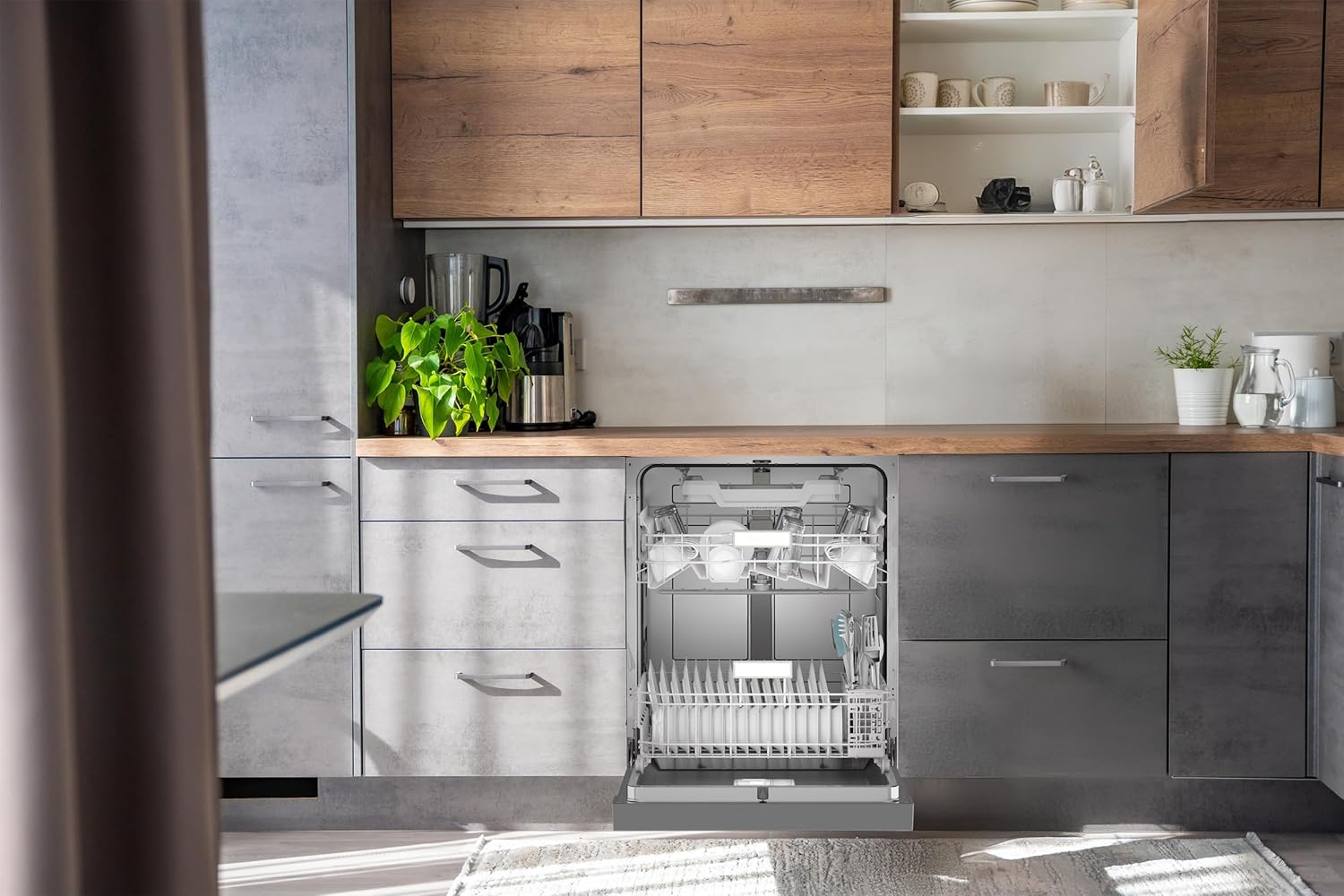
The 12 place setting capacity positions the SDW6506JS for smaller families, couples, or single occupants who prefer frequent, smaller cycles. A three-rack design that includes a dedicated third rack for silverware and utensils increases usable loading area by freeing space in lower baskets and improving separation of flatware for better wash exposure. An adjustable upper rack with 2 inches of vertical travel helps accommodate taller stemware or casserole dishes in the lower rack while maintaining third-rack benefits. Metal rack frames and plastic-coated tines balance rigidity with protection for dish finishes; however, the stated plastic basket material and rack construction may influence sliding smoothness and long-term tine coating durability under heavy use.

Third rack and utensil organization
A dedicated third rack provides a shallow, often removable shelf for silverware, small utensils, and long-handled tools, enabling more efficient use of the lower baskets for plates and bowls. Proper separation of utensils reduces nesting and improves exposure to spray jets, enhancing cleaning and reducing spotting. The third-rack layout also speeds loading for common small items and can allow for a half-load option to be more effective when upper surfaces are lightly soiled. Limitations include restricted height for tall items and potential reduced capacity for larger bakeware compared with two-rack designs that use deep cutlery baskets.
Adjustable upper rack and loading flexibility
Two inches of vertical adjustment in the upper rack is typical for compact dishwashers, providing incremental clearance for taller glasses or small pans below. Adjustable rack positions help tailor the interior to mixed loads and maximize efficiency by enabling stacked arrangements that maintain spray path access. Rack adjustability should be combined with stable slide mechanisms and durable rack stops to prevent sagging under load. Users with frequent tall items should verify the maximum lower-rack clearance when the upper rack is positioned at its highest setting to ensure critical items fit without impeding spray arm rotation or blocking detergent dispensing.
Noise levels and suitability for open kitchens
A declared noise level of 49 dB places this dishwasher in a range described by many manufacturers as library-quiet or whisper-quiet for household appliances, though perception depends on distance, kitchen acoustics, and background noise. Noise ratings are measured under standardized lab conditions and reflect sound power; in open-plan kitchens, reflective surfaces and direct sightlines can increase perceived loudness. Motor mounting, insulation, and pump design influence tonal characteristics as much as decibel magnitude—lower pitched hums can be less intrusive than high-frequency clicks. For households sensitive to conversation interruption or with bedrooms adjacent to kitchens, a 49 dB model offers reasonable quiet operation but may still be noticeable at close range when compared to ultra-quiet sub-44 dB units.

49 dB rating in context
Decibel ratings are logarithmic; a 3–6 dB difference is often perceptible to the human ear. At 49 dB, the SDW6506JS will be quieter than older baseline units that commonly range above 55 dB, but louder than flagship models advertised under 44 dB. Laboratory metrics assume optimal installation and no external vibration transmission through cabinetry. Factors such as floor type, cabinet resonance, and adjacent appliances affect in-room sound levels. When evaluating suitability, compare measured decibel numbers alongside real-world placement: glasses clinking in the sink or a running range hood produce sound levels that contextualize dishwasher noise in everyday kitchen activity.
Open-plan kitchen considerations and placement
Open-plan kitchens reduce acoustic separation, meaning dishwasher noise can travel into living areas and impact conversations, TV audio, or sleep when adjacent to bedrooms. Placement close to seating or with cabinetry that transmits vibration may increase perceived noise. Installing vibration-damping mounts, ensuring the unit is level, and using sound-absorbing cabinetry panels can mitigate transmission. For apartments or homes where quiet is essential, a 49 dB rating is a reasonable compromise; however, those requiring near-silent operation for late-night runs should consider models with lower published dB levels or additional soundproofing options.
Drying systems and moisture control
The SDW6506JS includes a heated dry option and uses a hybrid tub with stainless steel walls paired with a plastic floor. Heated dry systems accelerate moisture evaporation by raising internal air temperature near the end of the cycle, which can improve immediate handling of dishes but typically uses more energy than passive drying methods. Stainless steel tub walls retain heat better than all-plastic interiors, aiding in drier results and lower condensation on internal surfaces; the plastic floor may offset some heat retention benefits. Spotting and residual moisture remain influenced by water hardness, rinse aid use, and loading patterns. The combination of heated dry and hybrid construction suggests reasonable moisture control for everyday loads when paired with appropriate rinse aids and program selection.

Heated dry and hybrid tub impact on moisture
Heated dry elements raise the internal temperature to evaporate water, supporting quicker handling of plastics and glasses; however, plastics may not retain heat and can remain damp even with heating. Stainless steel walls reflect and hold thermal energy during the drying phase, improving convective drying efficiency compared with full-plastic tubs. The hybrid floor material can affect how heat circulates and where condensation forms at the base of the tub. For best moisture outcomes, pairing heated dry with a rinse aid and proper loading—angled glasses, unobstructed drain paths, and inverted bowls—improves airflow and reduces pooling.
Practical measures to reduce moisture and spotting
To minimize spotting and residual moisture, use a compatible rinse aid, load items to avoid nesting, and select finish-oriented or higher-temperature cycles when suitable. Ensuring the filter and spray arms are clean maintains effective rinse and prevents redeposition that contributes to spotting. Leave the door ajar after cycle completion when circumstances allow to permit rapid air exchange and evaporative drying. For hard-water areas, a water softener or detergents formulated for high-mineral content water can reduce mineral deposition on glassware and chrome finishes, complementing the dishwasher’s drying systems.
Energy, water efficiency, maintenance, and durability
Specifications indicate an annual energy consumption of 240 kWh and water consumption listed as 3 gallons per hour, which require interpretation against cycle length and household usage patterns to gauge overall efficiency. Energy and water performance depend on cycle duration, wash temperatures, and heater usage for heated dry. Maintenance expectations focus on user-serviceable filters, spray-arm cleaning, and routine interior wipe-downs to prevent residue buildup. Durability considerations hinge on rack construction, tine coating, motor and pump build quality, and materials—stainless steel sidewalls improve corrosion resistance while plastic floors and components may show different wear profiles over time. Regular maintenance and appropriate detergent selection extend functional life and preserve cleaning performance.

Energy and water consumption expectations
Published annual energy consumption and per-hour water values offer a snapshot but translate to real-world consumption through user habits and selected cycles. Shorter eco or light cycles reduce water and energy per load but may extend cycle lengths or lower wash temperatures. Heated dry cycles add to energy use compared with passive drying. Water consumption labeled as 3 gallons per hour should be treated as a component metric rather than a per-cycle guarantee; actual per-cycle water use depends on cycle selection and load size. Comparing these specifications with ENERGY STAR benchmarks and similar 24-inch models provides context for efficiency expectations.
Maintenance, filters, and long-term reliability
Maintenance tasks typically include inspecting and cleaning coarse filters, clearing spray-arm nozzles, and checking door seals for debris that could cause leaks or odor. Removable filter assemblies simplify these tasks; manufacturers often recommend monthly inspection under normal use. Rack coatings, metal frame integrity, and hinge robustness determine resistance to chipping and sagging—plastic-coated tines can wear over years if exposed to heavy cookware. Motor and pump assemblies designed for continuous household operation tend to last when not subjected to hard debris or chemical damage, but periodic professional servicing may be necessary when flow rates decline or unusual noises develop.
Pros & Cons
Pros
- Whisper-quiet operation (49 dB) suitable for many open or semi-open kitchens. The relatively low decibel rating reduces disruption during meals and living space activities while remaining more affordable than ultra-quiet flagship units.
- Three-rack layout with dedicated third rack increases usable capacity for utensils and small items. This improves organization and allows the lower baskets to focus on plates and larger cookware without nesting.
- Adjustable upper rack provides 2 inches of vertical travel for flexible loading. The adjustment helps accommodate taller glasses or small bakeware without sacrificing third-rack capacity.
- Hybrid tub construction balances stainless steel wall durability with a molded plastic floor for weight and manufacturing cost efficiencies. Stainless walls support higher wash temperatures and improved heat retention for drying.
- Front-mounted touch controls and child lock offer modern operation and safety. The control layout simplifies cycle selection and prevents accidental changes.
- Heated dry option supports faster handling of dishware after cycles. When paired with rinse aid, heated drying can reduce residual moisture for immediate use.
Cons
- Hybrid tub with a plastic floor may not match the thermal retention or perceived premium feel of an all-stainless interior. The plastic floor can affect heat distribution during drying and long-term wear characteristics.
- Annual energy consumption and heated dry option can increase overall energy use compared to passive-dry eco models. Households prioritizing minimal energy use may prefer units optimized for passive drying or lower published kWh figures.
- A 12 place setting capacity limits suitability for larger families or frequent entertaining. Homes that routinely handle larger dish loads may require a 14–16 place-setting 24-inch or full 24-inch models with deeper capacity.
- Manufacturer warranty details are not specified in provided specifications, which can complicate comparison of post-purchase support expectations. Verification of warranty scope is recommended prior to purchase.
Final Verdict: Who This Dishwasher Is Best For (and Who Should Skip It)
The Sharp SDW6506JS targets smaller households and compact kitchens where a balance of quiet operation, utensil organization, and flexible loading matters. Its three-rack layout and dedicated third-rack space make it a practical choice for couples, small families, or households that wash dishes frequently in smaller batches rather than large entertaining loads. The 49 dB sound level and front touch controls align with modern kitchen ergonomics and open-plan living, provided proximity to sleeping areas is considered. Hybrid tub construction offers many advantages of stainless steel while managing weight and cost, suiting users who prioritize value and moderate performance.
Households that should consider alternatives include those with consistently large weekly dish loads, which will benefit from higher place-setting capacities and deeper tub designs, and buyers prioritizing the absolute lowest sound levels, who may prefer models under 44 dB. Similarly, buyers focused on maximum energy savings and passive drying may select units with lower annual kWh figures and condensation drying designs. Compared to similar 24-inch built-in models available in 2026, the SDW6506JS presents a balanced option for space-conscious buyers seeking a quiet, organized, and feature-focused dishwasher, while prospective purchasers should verify warranty coverage and consider water hardness and maintenance routines when assessing long-term value.

Frequently Asked Questions (FAQs)
How does a 49 dB dishwasher compare to other noise ratings for home kitchens?
A 49 dB rating is quieter than conventional older models (often above 55 dB) but louder than high-end ultra-quiet units under about 44 dB. Decibel ratings are logarithmic, so small numerical differences can be perceptible. In open-plan kitchens, perceived loudness depends on distance, room acoustics, and cabinet resonance, so a 49 dB dishwasher is generally suitable for many households but may still be noticeable at close range.
Will the third rack improve overall cleaning compared to a two-rack dishwasher?
A dedicated third rack increases usable loading area for flatware and small utensils, reducing nesting and improving spray exposure. This can enhance cleaning for items that would otherwise occupy lower baskets and block spray. It does restrict vertical clearance for very tall items, so trade-offs include better utensil organization versus some limitations on large cookware placement.
What maintenance is required to keep the SDW6506JS performing well?
Regular maintenance includes inspecting and cleaning the filter assembly, clearing spray-arm nozzles, and wiping door seals to prevent buildup. Monthly checks of the coarse filter and periodic removal of debris from spray arms maintain flow and prevent redeposition. Using recommended detergents and rinse aids supports cleaning and reduces mineral deposits that can affect long-term performance.
Does the hybrid tub affect drying performance compared to all-stainless tubs?
Hybrid tubs with stainless steel walls and a plastic floor balance heat retention and manufacturing trade-offs. Stainless steel walls help reflect and retain heat, aiding drying, while a plastic floor can alter where condensation forms and slightly affect overall thermal behavior. Drying performance also depends on cycle selection, rinse aid use, and load orientation.
Is the SDW6506JS suitable for a household that entertains frequently?
With a 12 place-setting capacity, this model serves small to medium households that wash dishes more frequently. For frequent entertaining or larger households, a dishwasher with a higher place-setting capacity or deeper tub provides more flexibility to handle larger loads in fewer cycles.
How does water consumption listed as 3 gallons per hour translate to per-cycle use?
A quoted water consumption metric like 3 gallons per hour is a component figure; actual per-cycle water use depends on cycle duration and specific program selected. Shorter eco cycles and light wash options typically use less water per cycle, while heavy or sanitizing cycles use more. Comparing per-cycle gallons requires manufacturer cycle-specific data or standardized testing figures.
What can be done to minimize spotting on glasses after a heated dry cycle?
To reduce spotting, use a compatible rinse aid to lower surface tension and encourage sheeting during the final rinse. Ensure proper loading so water drains freely, keep the filter and spray arms clean, and select higher rinse temperatures or finish cycles as appropriate. Water hardness mitigation also reduces mineral deposits that cause spotting.