Quiet Efficient Countertop Dishwasher for Small Homes and RVs

Choosing the Right Countertop Dishwasher
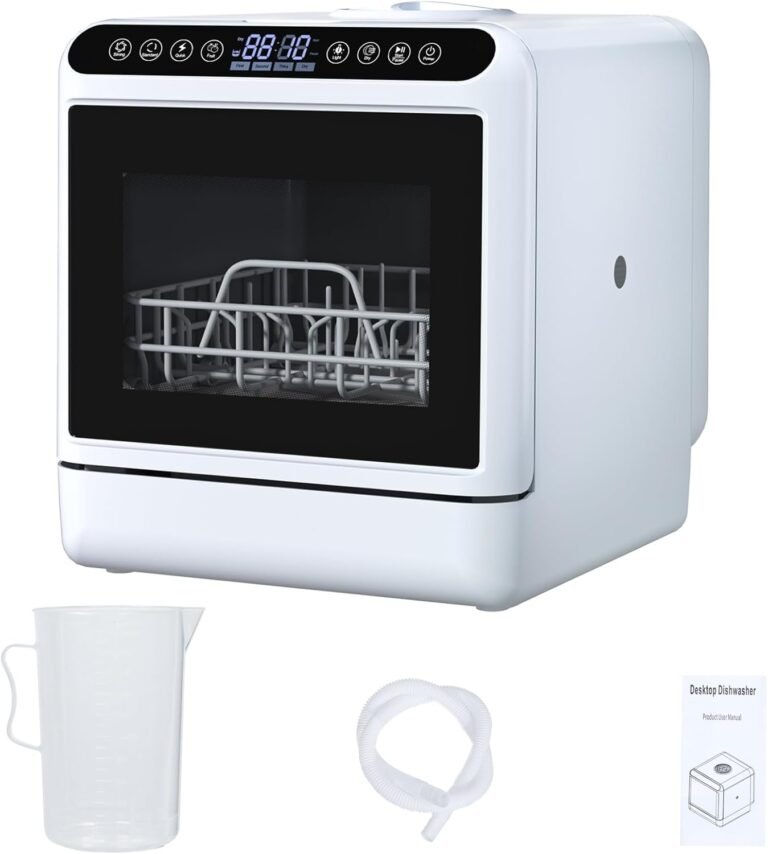
Selecting a countertop dishwasher requires matching cleaning performance, capacity, noise tolerance, and installation flexibility to household routines and kitchen layout. Small households, apartment dwellers, RV owners, and dorm residents commonly prioritize compact footprint, low noise levels for open-plan living, and water- and energy-conscious operation. Countertop models shift installation complexity to portability and ease of use, but buyers must weigh loading patterns, cycle variety, and drying performance against available counter space and frequency of use. Noise sensitivity and proximity to living areas often determine whether a 50 dB rating is acceptable, while the presence of a built-in water tank or faucet connection affects site flexibility. Durability expectations hinge on stainless steel rack and tub components, pump and motor quality, and ease of access for filter maintenance. This review examines the product’s specifications, spray system, drying method, and operational characteristics to help buyers decide whether a compact, countertop portable dishwasher meets household dishwashing needs without hands-on claims.
Quick Overview
| Feature | Details |
|---|---|
| Dishwasher type | Countertop / portable dishwasher |
| Capacity / place settings | Up to 4 full place settings; accommodates dishes up to 12″ angled |
| Built-in water tank | Listed as 4.5 L in technical specs; some product descriptions reference 5 L |
| Water consumption | 1.25 L per wash cycle (manufacturer specification) |
| Wash cycles | Normal, Strong, Rapid, ECO, Fruit wash (5 settings) |
| Drying method | PTC hot-air drying with 60-minute Dry mode and ventilated storage up to 72 hours |
| Spray system | 360° dual spray arm with 13 water ports total |
| Noise level | 50 decibels (manufacturer rating) |
| Materials & racks | Stainless steel basket and racks |
| Dimensions & installation | 17.72″D x 17.32″W x 18.03″H; countertop placement, no hard plumbing required |
| Energy / efficiency certifications | Not specified by manufacturer |
| Warranty | Not specified in product listing |
These specifications point to a compact unit designed for users who need a plug-and-play countertop solution with dual water supply options. The small footprint and built-in tank enable use where a permanent water hookup or extensive installation is not practical, while the 360° spray and multiple cycles aim to balance cleaning coverage and reduced water use for light to moderate dish loads.

Cleaning Performance and Spray Coverage
The dishwasher’s stated 360° dual spray-arm system with 13 water ports is engineered to deliver multi-angle coverage for top-to-bottom rinsing, which is a primary determinant of soil removal in compact dishwashers. Pairing high-coverage spray arms with targeted cycle options (Normal, Strong, Rapid, ECO, Fruit wash) allows the dishwasher to adapt impingement force and duration to different soil loads; higher pump flow and longer cycles increase mechanical action, while ECO and Rapid modes limit water and runtime for lighter loads. Filtration and recirculation behavior influence whether food particulates remain suspended or are trapped; the combination of stainless steel racks and a dedicated filtration path reduces redeposition risk. For buyers, spray geometry and cycle selection are the key engineering levers that govern cleaning results on plate surfaces, bowls, and utensils.
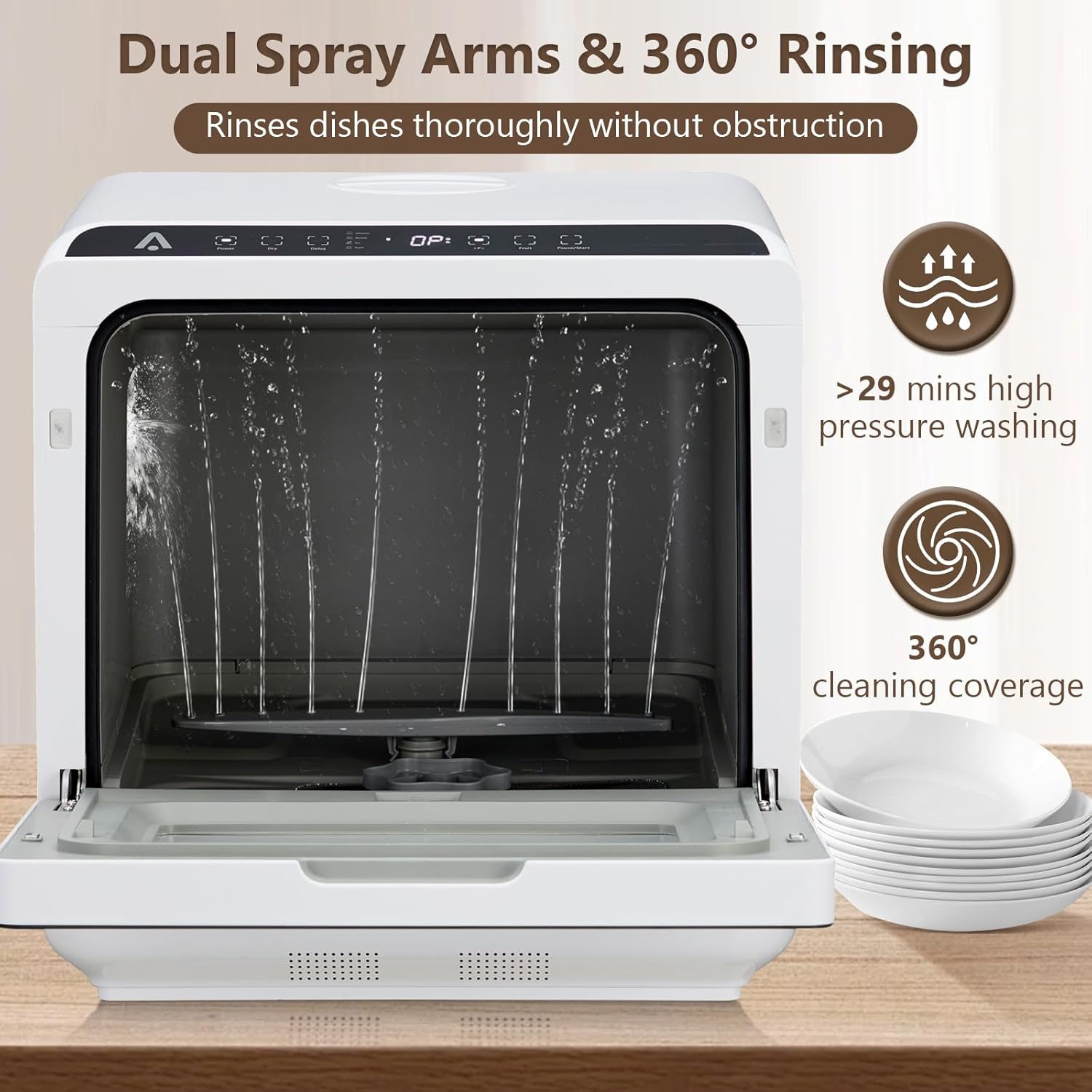
Spray Arm Design and 360° Coverage
The dual spray arms described provide overlapping nozzles to create rotating and multi-directional jets, which improve impingement coverage compared with single-arm layouts. The presence of 13 water ports suggests distributed jetting to reach vertical and angled items; however, spray penetration also depends on pump flow rate and nozzle size. Compact units must balance nozzle pressure against water consumption targets; higher pressure improves soil removal but may increase pump load and noise. In practice, strategic dishwasher loading—angled 12″ plates, separated bowls, and unobstructed utensil placement—optimizes the engineered spray paths to reduce shadowing and blind spots.
Filtration, Water Pressure, and Cycle Selection
Filtration systems in countertop dishwashers typically combine coarse screens and a fine mesh filter to capture larger debris while allowing recirculation of cleaned water. Effective filtration reduces turbidity during a cycle and minimizes redeposition, but it requires periodic manual cleaning. Water pressure and pump design determine jet velocity; models advertising low water consumption often rely on higher jet velocity rather than large water volume to maintain cleaning performance. Cycle selection further tailors soak and spray intervals—Strong cycles increase pump run time and spray frequency for baked-on soils, while ECO and Rapid modes truncate runtime and conserve water for lightly soiled loads.
Capacity, Rack Design, and Place Settings
Capacity is a balance between physical footprint and usable loading geometry. The listed dimensions produce a compact internal volume intended for four full place settings, with the ability to accept plates up to 12″ when positioned at an angle. Double-layer rack designs in compact dishwashers prioritize vertical separation to introduce spray access between stacked items; stainless steel racks improve rigidity and corrosion resistance compared with coated wire. Utensil holders, bowl spacing, and dedicated small-item baskets influence how efficiently the machine can process mixed loads—the presence of a fruit basket and chopstick/utensil box in the included components indicates attention to small-item retention and organization. For households of three to four people, load frequency and stacking strategy determine whether the declared capacity meets daily needs without frequent cycles.

Double-Layer Layout and 12″ Dish Accommodation
The double-layer rack layout increases usable surface area while keeping the machine’s footprint compact, allowing plates and bowls to be angled toward spray arms for better water exposure. Accommodating 12″ dishes at an angle reduces top rack compatibility constraints but requires mindful loading to prevent spray blockage and to preserve clearance for the upper spray arm. Stainless steel rack material improves long-term wear resistance, especially where detergent chemistry and moisture exposure are persistent. Buyers should note that full place setting claims assume standardized plate sizes; oversized cookware or flatware sets with large mugs can reduce effective capacity and may necessitate multiple cycles.
Utensil and Small Item Management
Dedicated utensil baskets and a small fruit basket help prevent lightweight items from shifting under spray and becoming re-soiled. The included chopstick box suggests a compartmentalized approach to flatware, which assists in separating spoons and forks to reduce nesting and shadowing. Effective utensil placement influences drying outcomes and ensures that spray jets access both sides of cutlery. For compact units, securing small items is critical because movement during a cycle can block spray paths and impair both cleaning and drying performance.
Noise Levels and Suitability for Open Kitchens
A manufacturer-listed noise level of 50 dB places the unit in a moderate sound category: notably quieter than many older or budget portable machines but perceptible in very quiet environments. In open-plan kitchens or studio apartments where the counter is adjacent to living and sleeping areas, continuous machine noise can affect perceived comfort; acoustic behavior also depends on motor mounting, pump design, and cabinet vibration damping. Countertop installation on hard surfaces may transmit vibration to countertops and cabinetry, potentially amplifying operational sound. For buyers sensitive to background noise, understanding the 50 dB rating in context—distance to seating areas, typical ambient noise, and expected cycle durations—will clarify whether the unit is compatible with a living space intended for relaxation.

50 dB Rating: Practical Expectations
Noise ratings provide a standardized reference, but perceived loudness depends on frequency distribution and duty cycles of motors and pumps. At 50 dB, continuous operation is similar to a quiet office or moderate rainfall background; intermittent pump spikes during drain and spray phases may be higher. Placement on solid countertops without isolation pads can increase transmitted vibration, so small mitigation measures—anti-vibration pads or rubber feet—improve perceived quietness. Buyers should consider typical use times (daytime cycles versus overnight) and proximity to sleeping areas when evaluating the suitability of a 50 dB countertop dishwasher for open-plan layouts.
Vibration, Placement, and RV or Apartment Use
Countertop models used in RVs or small apartments must contend with uneven mounting surfaces and limited counter depth. Vibration management matters in mobile applications, where movement and engine vibrations can interact with dishwasher operation. The unit’s weight and stainless steel components add stability, but secure placement and ensuring the water tank is drained before relocation are essential product-characteristic guidelines. For stationary apartment use, leveling and placement near a faucet connection or on a dedicated counter section reduce noise transmission to living areas and prevent resonance with adjacent cabinetry.
Drying Systems and Moisture Control
Drying strategy influences turnaround time and moisture control for stored tableware. The model’s PTC (Positive Temperature Coefficient) hot-air drying and a dedicated 60-minute Dry mode add thermal drying capacity after a wash cycle, reducing surface moisture and minimizing reliance on manual towel drying. Ventilated storage for up to 72 hours is presented as a sanitary storage characteristic; passive ventilation coupled with sealing and periodic automatic ventilation cycles reduces stagnation and odor potential. Drying performance depends on residual water load, dishware material, and cycle temperature—ceramic and glass surfaces retain less moisture than plastics. Buyers should balance expectations: thermal drying reduces moisture but may not eliminate all pooling in deep bowls or recessed cutlery slots.

PTC Hot-Air Drying: Mechanism and Limits
PTC hot-air modules deliver controlled heat with self-limiting characteristics, which improves safety and energy stability compared with resistive-only elements. Hot-air drying accelerates evaporation from dish surfaces and increases convective removal of humidity inside the cabinet. Limitations include lower efficacy on deeply recessed items and plastics, which retain heat differently. The added Dry mode of 60 minutes extends the post-wash heating and ventilation period, but complete dryness also requires proper loading to expose surfaces and prevent water traps near rims and utensil compartments.
Ventilated Storage and Odor Management
The advertised ventilated storage function uses intermittent air exchange to limit stagnant humidity and microbial growth risk in stored tableware. Continuous airtight storage is not appropriate for long-term warehousing; instead, controlled ventilation reduces odor buildup while maintaining sanitized surfaces from the wash cycle. Venting effectiveness depends on the path of airflow and sealing; small residual moisture in crevices may still foster localized odors if items are stored wet. Routine filter and interior cleaning maintain ventilation effectiveness and reduce trapped food residue that can contribute to off-odors over time.
Energy & Water Efficiency, Maintenance, and Durability
Water consumption of 1.25 L per cycle suggests a low-flow design intended to minimize water use compared with handwashing volumes, contingent on cycle selection and soil level. Operating power is listed at 850W, which reflects pump and heater load for wash and drying phases—buyers should expect higher instantaneous power during heating but short cycle durations in Rapid and ECO modes. Maintenance requirements center on filter cleaning, spray arm clearance, and the condition of inlets/drain hoses; stainless steel racks and basket materials improve corrosion resistance, while pump and motor longevity depend on build quality and usage patterns. Long-term reliability in countertop units is influenced by part access for filter service and the quality of seals and valves exposed to detergent and heat. Buyers seeking long service life should prioritize models with straightforward filter access, replaceable hoses, and corrosion-resistant internals.

Water and Energy Considerations
Low per-cycle water consumption is achieved by recirculating water through high-velocity jets and minimizing drain cycles. ECO modes reduce runtime and energy use by optimizing pump duty cycles and limiting heater activation, while Strong cycles prioritize soil removal and increase energy intensity. The combination of a small built-in tank and optional faucet supply provides flexibility: tank mode reduces dependence on a faucet but requires manual filling, whereas faucet connection supports continuous water supply for repeated loads. Energy efficiency certifications are not specified, so buyers should interpret manufacturer wattage and cycle descriptions to estimate relative energy use compared with similar compact models.
Filter Maintenance, Build Materials, and Who Should Avoid This Unit
The filtration system and accessibility for routine cleaning are critical for maintaining performance—coarse pre-filters and mesh screens capture solids that, if not removed, can increase turbidity and wear on the pump. Stainless steel racks and basket materials increase resistance to corrosion, but plastic interior components and seals remain wear points. This model suits households seeking a compact, portable solution; it may not meet the needs of large families, frequent heavy cookware cleaning, or users requiring certified energy-star-level efficiency. Buyers who need to wash oversized pots, require ultra-quiet operation below 45 dB, or demand built-in permanent installation should consider larger or built-in alternatives.
Pros & Cons
Pros
- Compact, installation-free design: The countertop form factor and built-in water tank option allow setup without permanent plumbing, which benefits renters, dorm occupants, and RV users. The included faucet hose option provides flexibility for continuous supply when available.
- 360° dual spray arms for targeted coverage: Distributed jetting with 13 water ports is intended to reduce blind spots and improve impingement on angled plates and bowls, supporting effective rinsing across rack levels.
- Multiple wash programs: Five cycle options (Normal, Strong, Rapid, ECO, Fruit wash) enable tailoring to soil levels and item types, balancing cleaning performance and water use depending on load.
- PTC hot-air drying and ventilated storage: The 60-minute Dry mode plus intermittent ventilation supports accelerated moisture removal and short-term odor control for stored tableware.
- Low per-cycle water consumption: Manufacturer-listed 1.25 L water use indicates a design focus on conserving water relative to handwashing and many full-size machines.
- Stainless steel racks and basket: Corrosion-resistant materials for contact surfaces improve long-term wear characteristics compared with coated alternatives.
- Portable and lightweight for small spaces: At approximately 34.4 pounds and compact dimensions, the unit is transportable within a home or to mobile living environments when empty and drained.
Cons
- Limited capacity for larger households: The four-place-setting capacity and internal dimensions restrict effectiveness for families that require washing larger daily loads or bulky cookware in a single cycle.
- Drying limitations on plastics and recessed items: Thermal hot-air drying reduces surface moisture but may not fully dry deep bowls, spouted mugs, or plastic items that retain water.
- Noise perceptible in quiet spaces: A 50 dB rating is moderate and may be noticeable in studio apartments or bedrooms adjacent to kitchen areas; acoustic transmission depends on counter mounting.
- Inconsistent tank capacity reporting: Product listings reference both 4.5 L and 5 L tank capacities, which may confuse buyers comparing fill frequency and cycle planning; verification from the retailer or manufacturer is advisable.
Final Verdict: Who This Dishwasher Is Best For (and Who Should Skip It)
This countertop portable dishwasher is best suited to individuals and small households—renters, dorm residents, RV and boat occupants, or small apartments—seeking a compact, no-installation-required alternative to sink washing. The combination of 360° spray coverage, stainless steel racks, and five wash programs provides a capable cleaning platform for routine tableware, cups, and small plates, while the PTC hot-air drying and ventilated storage reduce dependence on towel drying and address short-term odour control. The dual water modes (built-in tank and faucet connection) increase placement flexibility where plumbing access is intermittent or unavailable.
Those who should consider other options include larger households needing higher capacity or regular cleaning of cookware, buyers requiring ultra-quiet operation below the 50 dB range for adjacent sleeping areas, and users expecting certified high-efficiency ratings or integrated built-in installation. Additionally, anyone with frequent needs to dry deep plastics or large pots will find the thermal drying and compact interior less suitable. For its intended market—a portable, efficient countertop solution—the dishwasher aligns with portability, water conservation, and convenience priorities while presenting the customary trade-offs in capacity and drying completeness compared with full-size built-in models.
Frequently Asked Questions (FAQs)
How well does a countertop dishwasher clean compared with handwashing?
Countertop dishwashers use pressurized jets and programmed cycles to apply mechanical action and heated water, which can remove food soils more consistently than brief hand rinses. The 360° dual spray design increases impingement coverage; however, cleaning effectiveness depends on proper loading, cycle selection, and filter maintenance. Very large or heavily burned-on cookware may still require pre-soaking or an alternate cleaning method.
Can the built-in water tank be used instead of hooking the dishwasher to a faucet?
Yes. The built-in tank (listed at 4.5 L in technical specifications, with some descriptions referencing 5 L) allows operation without a continuous faucet hookup by manually filling the tank. The faucet connection remains an option for extended use or consecutive cycles. Users should follow manufacturer guidance to avoid moving the unit while water is inside and to drain the tank before relocating.
Is a 50 dB noise rating quiet enough for an open-plan living area?
A 50 dB rating is moderate—noticeable in very quiet environments but generally acceptable in kitchens adjacent to living spaces. Perceived loudness depends on distance, surface transmission, and ambient noise levels. Anti-vibration padding and placement away from sleeping areas reduce perceived noise. Buyers sensitive to background sound may prefer models rated below 45 dB.
How effective is the PTC hot-air drying feature for preventing moisture and odors?
PTC hot-air drying accelerates evaporation from dish surfaces and reduces residual moisture compared with passive air drying. The 60-minute Dry mode combined with intermittent ventilated storage supports reduced pooling and short-term odor control. Plastic items and deep recesses may retain moisture, so optimal drying also requires correct loading and occasional manual drying for problematic items.
What maintenance is required to keep a countertop dishwasher working well?
Routine tasks include cleaning the coarse and fine filters to prevent clogging, checking spray arm ports for mineral buildup, inspecting inlet and drain hoses for leaks, and wiping interior seals to reduce residue and odors. Stainless steel racks require less corrosion care than coated racks, but seals and plastic components remain wear points. Regular maintenance preserves pump efficiency and cleaning performance.
Is this dishwasher suitable for RV or boat use?
The countertop form factor, lightweight construction, and built-in water tank option make the dishwasher adaptable for RVs and boats when used under the manufacturer’s relocation and drainage guidelines. The unit should be fully drained before vehicle movement, and secure mounting or padding is advised to minimize vibration and prevent hose strain during transit.
Who should avoid choosing a compact countertop dishwasher?
Buyers requiring frequent washing of large pots, pans, or high-volume daily loads should avoid compact countertop models due to limited internal space and reduced capacity. Those needing ultra-quiet operation below the 50 dB range, or buyers seeking permanent built-in installation with certified energy-star credentials, should consider larger built-in alternatives instead.