
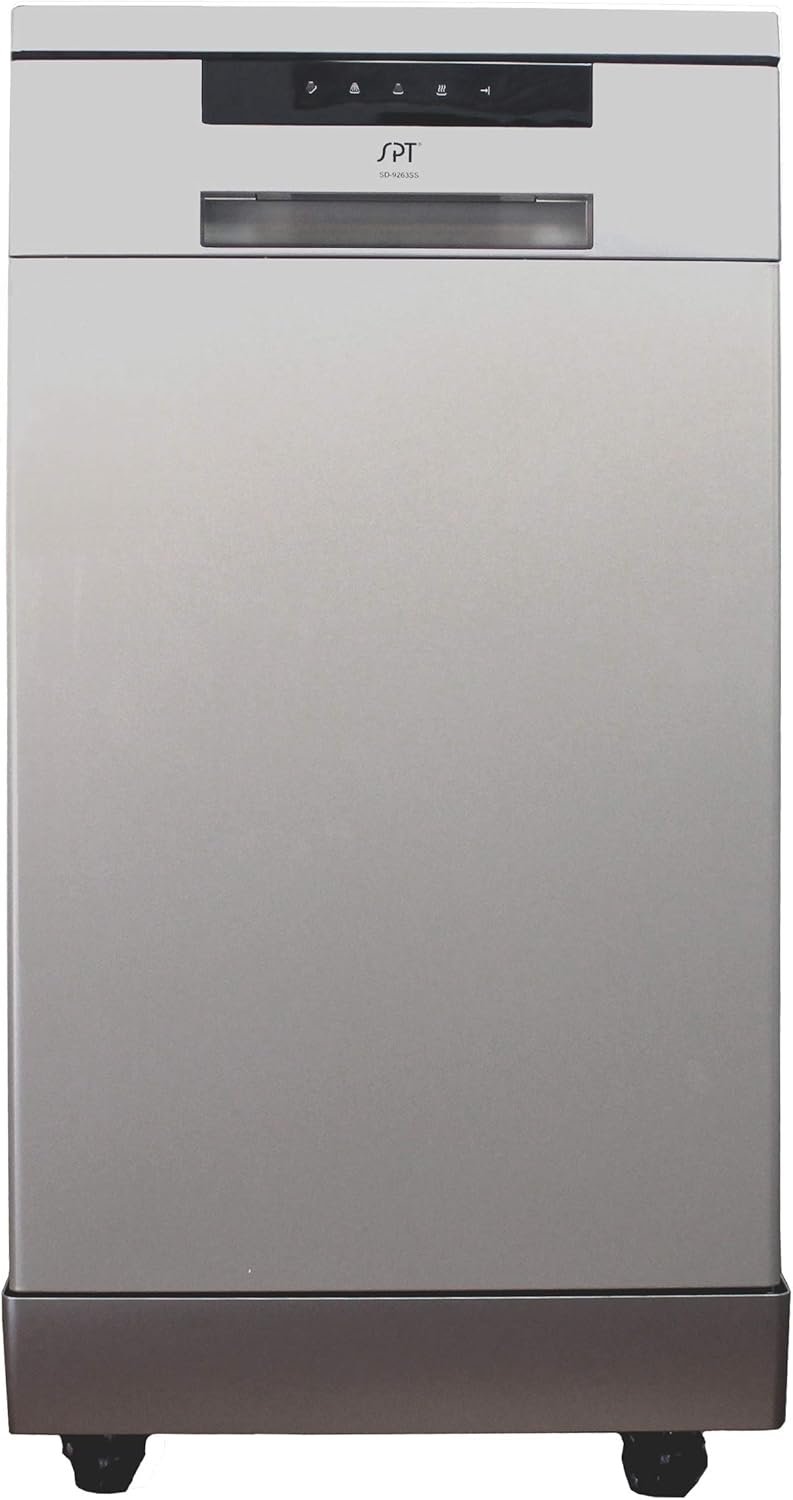
Why dishwasher selection matters for small kitchens and frequent use
Choosing the right dishwasher is a decision that affects daily kitchen workflow, energy and water use, and household noise exposure. Compact and portable units target small households, apartments, and kitchens without hardwired plumbing, but they must still meet baseline expectations for soil removal, drying, and durability. Capacity and rack design determine whether common cookware—plates, glasses, pots, and baking sheets—fit without frequent reloading. Noise output influences placement choices for open-plan layouts where conversations, media, and sleeping spaces are nearby. Energy Star certification and published water consumption figures provide measurable efficiency benchmarks, while stainless steel interiors and filter designs relate to corrosion resistance and service intervals. Understanding these technical and practical trade-offs helps match the SPT SD-9263SSA’s portable form factor, 8-place capacity, and Energy Star rating to specific household routines and noise sensitivity.
Quick Overview
| Feature | Details |
|---|---|
| Dishwasher type | Portable / freestanding 18″ unit |
| Capacity | 8 place settings |
| Wash programs | 6 programs: Heavy, Normal, Eco, Glass, 90 Min, Rapid |
| Drying method | Not specified by manufacturer |
| Noise level | 52 decibels (per manufacturer’s specification) |
| Energy efficiency | ENERGY STAR certified; Annual energy consumption 237 kWh/year |
| Water consumption | 2.07 gallons per cycle (manufacturer specification) |
| Dimensions & installation | 18″D x 24″W x 36″H; quick-connect faucet adapter included |
| Interior material | Stainless steel interior and racks |
| Warranty | Manufacturer warranty not specified in available disclosures |
These specifications position the SPT SD-9263SSA as a compact, portable dishwasher intended for small households or kitchens without permanent plumbing. The 8-place capacity and adjustable upper rack address moderate load needs, the Energy Star certification and low per-cycle water figure support efficiency-focused buyers, and the quick-connect faucet adapter allows temporary hookup without professional plumbing. The stainless steel interior suggests attention to corrosion resistance, but the unspecified drying method and mixed user feedback on cleaning require closer scrutiny relative to household expectations.

Cleaning performance and wash coverage
The SPT SD-9263SSA’s cleaning profile derives from cycle options, spray dynamics typical of compact portables, and its stainless steel interior. Portables that list Heavy, Normal, Eco, Glass, 90 Min, and Rapid cycles generally vary pump runtime, water temperature, and spray intensity to balance soil removal and glass protection. The 90-minute and Heavy cycles imply higher-energy or longer-duration wash actions designed to tackle stuck-on soils, while Eco and Rapid rely on lower water volumes or shorter wash times. Stainless steel interiors help maintain higher wash temperatures and resist staining. However, compact spray arms and lower pump displacement versus full-size dishwashers can limit impact on badly burned-on food and large bakeware surfaces, which may require presoaking or multiple cycles.

Spray system, pump capacity, and coverage
Compact portable dishwashers typically use one or two spray arms and a circulation pump sized for smaller enclosures. Spray arm design and nozzle placement influence coverage across both racks; smaller spray arms produce narrower fan angles and shorter reach than full-size counterparts. In the SPT SD-9263SSA, effective coverage rests on correct loading, use of longer/heavy cycles for heavily soiled items, and the manufacturer-provided cycle options. The listed Heavy and 90 Min cycles suggest longer pump-on time and sustained water temperature, both of which improve soil suspension and rinse-off. For optimal coverage, items should not block the path of spray arms and pots or large plates should be oriented to receive direct jets.
Filtration, soil handling, and rinse aid role
A stainless steel interior commonly pairs with removable filtration to trap food particles and protect pump components. Effective filtration prevents redepositing soils during recirculation but requires periodic cleaning to maintain flow rates and spray pressure. The SPT unit includes a rinse aid warning indicator, which supports drying performance and spot prevention by lowering surface tension during final rinses; consistent use of rinse aid can also reduce mineral spot buildup on glassware. For heavy soil loads, pre-rinsing or scraping solids into a waste bin reduces filter load and helps maintain wash pump efficiency, which is particularly relevant in compact machines with smaller filtration surface area.
Limitations with heavy soils and large cookware
Compact 18″ portables offer space and pump constraints relative to standard 24″ built-in models, so heavily baked-on casseroles, oversized roasting pans, and large baking sheets may receive limited direct spray and may not sit at the spray arm’s optimal height. Customers reporting poor scrubbing ability align with the physics of smaller spray radius and lower water volume per cycle; these units remove many everyday soils but may struggle with caked-on residues without presoaking or repeat cycles. Adjustable rack features can mitigate fit issues for some cookware, but the unit’s 8-place capacity and internal clearance still impose practical limits on the largest pots and pans.
Capacity, rack design, and place settings
Capacity matters for both load turnover and how items are arranged to receive effective wash and rinse coverage. An 8-place setting rating on an 18″ portable dishwasher reflects a compact interior that balances the appliance footprint with the needs of small families or roommates. Rack layout and tines influence the ability to load plates, glasses, utensils, and select cookware; adjustable upper racks increase flexibility for taller items or stacked arrangements. Stainless steel racks and interior surfaces improve durability and heat retention, while the number and placement of cup shelves or fold-down tines determine whether stemware and delicate glassware can be protected. Proper loading technique—spacing items, avoiding overlap, and placing heavily soiled utensils away from delicate glass—optimizes both capacity and wash effectiveness in constrained interiors.

Practical fit: plates, glasses, and cookware
The declared 8-place capacity typically counts standardized place settings (plate, bowl, cup, cutlery) and does not equate to a fixed number of plates or pots that will fit simultaneously. Compact racks will generally accommodate standard dinner plates, everyday glassware, and small to medium pots, but large cookware may reduce the number of usable slots. The adjustable upper rack mentioned in the specifications increases vertical clearance for taller items on the lower rack or allows repositioning to accept stemware. For households that frequently wash large baking sheets or multiple large pots, the 18″ footprint will likely require staging loads across cycles, which impacts convenience and workflow.
Rack materials, adjustability, and protection for delicate items
Stainless steel rack construction indicates resistance to chipping and corrosion compared with vinyl-coated wire racks, and it can also tolerate higher drying temperatures without coating degradation. Adjustable tines and an upper rack that can shift position provide options for taller glasses or short-stacked plates, improving fit without sacrificing spray exposure. Delicate items such as crystal or thin-walled stemware benefit from specific glass cycles and gentle rack placement; the presence of a Glass cycle suggests programmatic mitigation of thermal and mechanical stress. Still, careful placement and use of lower-intensity cycles remain necessary to protect fragile items in a compact spray environment.
Loading strategies to maximize wash coverage
In smaller interiors, loading strategy becomes a performance multiplier. Orienting soiled faces toward spray arms, avoiding stacking that shades surfaces from jets, and distributing pots and bowls so that larger items do not block water paths are essential. Utensils should be placed handle-down when safe to do so, with a mix of items avoiding concentrated clusters that can create re-deposition zones. The included utensil basket location and interior layout determine how many cutlery items can be handled without impeding spray. Where large items must be washed, utilizing adjustable racks to create clearance and selecting the Heavy or 90 Min cycle enhances cleaning outcomes.
Noise levels, installation, and suitability for open-plan kitchens
Decibel ratings provide a standardized way to compare operational noise; at 52 dB, the SPT SD-9263SSA sits in a moderate range for consumer dishwashers, quieter than many older portable models but louder than premium ultra-quiet built-ins that reach into the 40s. For open-plan living spaces, human perception of noise depends on background ambient levels and distance; a 52 dB running dishwasher is audible but may be acceptable during daytime activity. Portables can transmit structure-borne noise differently than built-in appliances because of their freestanding placement and shorter hose connections; vibration dampening and placement on a level, stable floor surface reduce rattles. The convenience of quick-connect faucet hookups must be weighed against potential noise sensitivity and the lack of under-counter insulation common in built-in installation.

Interpreting the 52 dB specification for daily use
A 52 dB rating indicates operation roughly equivalent to moderate background conversation in a living area. In practice, appliance noise perception is influenced by peak tonal frequencies and intermittent pump or motor sounds during cycle transitions. The SPT specification provides a comparative baseline: it is quieter than many legacy portables and countertop units but not in the whisper-quiet category that minimizes ambient disruption. Households with open layouts and frequent entertaining may find the level noticeable during quiet evening hours; scheduling cycles during active daytime periods or relying on time-delay features can reduce interference with conversations or media playback.
Vibration, placement, and the portable form factor
Portable dishwashers sit on the floor and connect to a faucet adapter, so their acoustic behavior can differ from recessed built-ins. Vibration isolation depends on leveling feet, cabinet contact, and floor rigidity; uneven surfaces or loose items touching the appliance can increase perceived noise. Because the unit is designed to be moved and then operated in temporary positions, attention to secure leveling and avoiding direct contact with cabinetry reduces structure-borne transmission. The unit’s included quick-connect hardware simplifies hookup but does not change acoustic characteristics; buyers sensitive to tonal noise or vibration should consider in-home placement tests or opt for built-in models where sound insulation is integrated.
Energy, water efficiency, drying approach, and maintenance needs
Energy Star certification and an annual energy consumption figure offer benchmarks for long-term energy expectations, while a per-cycle water consumption of 2.07 gallons signals low water usage relative to older or larger machines. Lower water consumption and efficient cycle programming are positive for households prioritizing resource conservation, but reduced water volume can trade off against mechanical rinsing power—cycle length and pump runtime compensate to a degree. The listed rinse aid indicator helps manage spotting and drying quality when a dedicated drying method is not specified; proper rinse aid use and selecting longer cycles can improve moisture control. Maintenance expectations hinge on filter access, ease of cleaning the stainless steel interior, and routine checks of hose and adapter seals to prevent leaks.

Energy and water efficiency expectations
A cited annual energy consumption of 237 kWh/year and ENERGY STAR certification indicate compliance with 2026 efficiency baselines for compact dishwashers. The 2.07-gallon per-cycle statistic is low and positions this model among water-efficient options; however, low water volumes place more emphasis on cycle engineering and detergent chemistry to maintain soil removal. Buyers should expect that Eco modes and shorter cycles reduce energy and water use but may require heavier cycles for stubborn soils. For those tracking utility impacts, these published figures provide a reliable comparative basis, though actual energy and water use will vary with cycle choice, load size, and local water hardness.
Drying systems, moisture control, and the role of rinse aid
The manufacturer does not specify a dedicated drying technology such as heat-assisted or condensation drying in available disclosures. In such cases, drying performance often relies on final rinse temperature, rinse aid application, and interior materials—stainless steel retains heat and can enhance condensation drying compared with plastic tubs. The rinse aid warning indicator supports consistent replenishment, which reduces spotting and speeds moisture runoff. Without a declared heated dry cycle, users may find faster cycles leave more residual moisture, particularly on plastics; selecting warmer, longer cycles and using rinse aid typically improves results.
Filter maintenance, corrosion resistance, and long-term serviceability
A stainless steel interior and stainless steel rack materials offer corrosion resistance and shape retention over extended use, reducing the risk of flaking or coating failure. Filtration systems in compact machines usually include a removable coarse filter and sometimes a fine mesh or microfilter; regular removal and cleaning maintain proper flow and spray pressure. The SPT unit’s error alarm and fault code display suggest diagnostic capability for service needs, but the absence of a specified warranty in disclosed materials means buyers should confirm post-purchase support and parts availability. Periodic inspection of the faucet adapter, supply hose, and drain connections is recommended to prevent leaks and ensure consistent performance.

Pros & Cons
Pros
- Compact, portable form factor with quick-connect faucet adapter. This enables use in kitchens without permanent plumbing or as a temporary solution in rental units where built-in installation is not possible. It also supports flexible placement and mobility when needed.
- ENERGY STAR certification and low per-cycle water use. The 2.07 gallons per cycle and an annual energy consumption figure indicate favorable efficiency for resource-conscious households, making the unit suitable for frequent small loads.
- Stainless steel interior and racks. Stainless steel improves heat retention for drying, resists staining and corrosion, and typically increases the longevity of the interior compared with polymer tubs and coated racks.
- Six wash programs including Heavy and a 90-minute option. A range of cycles gives flexibility to address different soil levels and delicate glassware needs, balancing efficiency and cleaning intensity.
- Adjustable upper rack for improved loading flexibility. The ability to reposition the upper rack helps accommodate taller items on the lower rack and increases usable internal configurations for mixed loads.
- Time delay and fault code/error alarm features. Time delay supports off-hours operation to fit household schedules, and error codes aid in troubleshooting potential faults.
Cons
- Mixed customer feedback on cleaning/scrubbing effectiveness. Aggregated reviews report that heavy or baked-on soils sometimes require presoaking or repeat cycles, which reflects inherent limitations of compact spray coverage and smaller pump capacity.
- Limited capacity for large cookware. The 8-place rating and 18″ footprint restrict the simultaneous washing of oversized pans and full baking sheets, potentially requiring staging across multiple cycles for families cooking large meals.
- Noise level measurable at 52 dB may be noticeable in quiet, open-plan living areas. While not excessively loud, the unit is audible and may interfere with quiet evening activities without strategic scheduling or placement.
- Drying method not specified by manufacturer. The lack of an explicitly listed drying system places greater reliance on rinse aid and cycle selection to manage residual moisture, especially on plastics.
- Warranty information not disclosed in available product materials. Buyers should confirm warranty terms and parts/service access prior to purchase to align expectations for long-term support.
Final Verdict: Who This Dishwasher Is Best For (and Who Should Skip It)
The SPT SD-9263SSA portable dishwasher suits small households, renters, and kitchens where permanent installation is not available or desired. Its Energy Star certification, low per-cycle water consumption, and stainless steel interior make it an efficient choice for two- to three-person homes that prioritize compact footprints and resource conservation. The adjustable upper rack and six wash programs give practical flexibility for everyday dishes, glassware, and moderate cookware loads. Time-delay and diagnostic indicators add convenience for scheduling and basic troubleshooting.
Those who should look elsewhere include households that routinely need to clean large baking sheets, multiple oversized pots, or heavily charred bakeware in a single load; the 18″ form factor and reported limitations in scrubbing power reduce effectiveness for such use cases. Buyers requiring ultra-quiet operation for open-plan living rooms or sleeping areas may prefer built-in models with lower decibel ratings and greater sound insulation. Additionally, shoppers who prioritize explicit drying technology disclosures or extended manufacturer warranty details should verify those items before committing, as available specifications do not fully detail drying systems or warranty coverage in 2026.

Frequently Asked Questions (FAQs)
How well does the SPT SD-9263SSA clean heavily soiled pots and pans?
The SPT SD-9263SSA provides Heavy and 90-minute cycles intended to increase pump runtime and wash temperature for tougher soils. However, compact portables have smaller spray arms and lower water volume per cycle compared with full-size models, which can limit mechanical scrubbing on heavily burned-on residues. For best results, scraping, presoaking, and selecting the Heavy or longer cycles are advised to improve soil suspension and rinse-off.
Is the 52 dB noise rating suitable for open-plan living spaces?
A 52 dB rating is moderately audible and typically equivalent to a quiet conversation at a short distance. In many open-plan kitchens the dishwasher will be noticeable but not intrusive during active daytime use. Households sensitive to background noise or those requiring near-silent operation during evenings may prefer models rated in the low 40s decibels with integrated insulation found in built-in units.
What does the Energy Star certification mean for this portable dishwasher?
ENERGY STAR certification indicates the model meets government-backed efficiency standards for energy use; published figures such as the 237 kWh/year annual energy consumption provide a comparative baseline. Combined with the manufacturer’s stated 2.07 gallons per cycle water use, the unit is positioned as water- and energy-efficient among compact dishwashers, which benefits households aiming to reduce utility consumption.
Can large baking sheets and oversized pots fit inside an 18-inch portable dishwasher?
The SPT SD-9263SSA’s 8-place setting capacity and 18-inch footprint limit the simultaneous accommodation of very large baking sheets and oversized pots. Adjustable upper-rack positions can create additional clearance for some taller items, but large flat pans and multiple large pots may require separate loads or manual washing due to internal width and spray arm reach constraints.
How should the filter and interior be maintained to preserve performance?
Regular removal and cleaning of coarse and fine filters prevents clogging and maintains spray pressure and rinse efficacy. Wiping the stainless steel interior to remove residues, clearing drain lines, and inspecting the faucet adapter and supply hose seals reduces leak risk. Periodic checks align with manufacturer-recommended maintenance intervals for compact dishwashers and help sustain long-term performance.
Does the SPT SD-9263SSA include a dedicated drying system?
Manufacturer disclosures for this model do not specify a distinct drying technology such as heat-assisted or condensation drying. Drying effectiveness will therefore rely on final rinse water temperature, the stainless steel interior’s heat retention, and consistent use of rinse aid to promote moisture runoff and reduce spotting, particularly for plastics and deep cups.
Is the quick-connect faucet adapter a reliable long-term hookup method?
Quick-connect faucet adapters are a practical solution for non-permanent installations and rental situations, enabling temporary connection without permanent plumbing. Reliability depends on correct installation, hose integrity, and periodic inspection of seals to prevent leaks. For long-term, permanent use under cabinetry, a hard-plumbed installation or permanently installed dishwasher typically offers greater stability and reduced risk of accidental disconnection.
Who should avoid buying this portable dishwasher?
Households that frequently require washing of large or heavily soiled cookware in single loads, or those that prioritize ultra-quiet operation in open-plan living areas, may find this 18-inch portable less suitable. Also, buyers seeking detailed manufacturer warranty disclosures or a specified advanced drying system should verify those details before purchase, as they are not fully outlined in available specifications.