BLUELAND Plastic-Free Dishwasher Tablets: Clean & Quiet Home
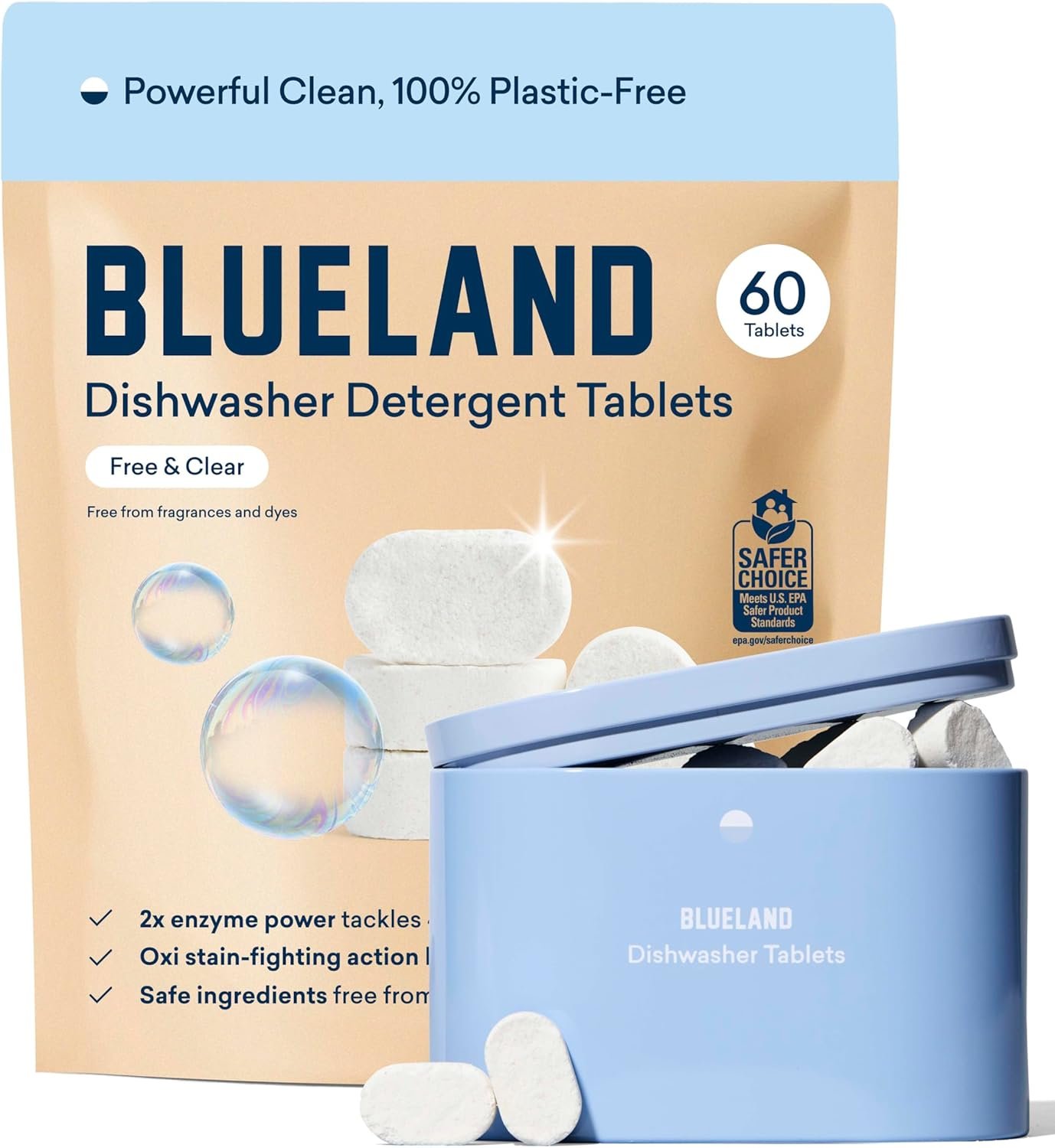
Selecting the right dishwasher detergent affects everyday kitchen performance, household routines, and appliance longevity. For households that run daily cycles or regularly host meals, detergent choice influences cleaning results on baked-on foods, spotting and filming from hard water, and whether additional steps like pre-rinsing or rinse aid are needed. In open-plan kitchens, dishwashing decisions also tie into noise and cycle selection: aggressive cycles that rely on higher temperatures and longer run times change how detergent enzymes and oxidizing agents perform. Environmental and health priorities shape the decision as well; plant- and mineral-derived formulas, plastic-free packaging, and third-party certifications steer buyers toward lower-impact options. Finally, compatibility with specific dishwasher models and dispensing methods matters for dissolution timing and wash coverage, which directly affects residue and drying outcomes. This review synthesizes manufacturer specifications, publicly disclosed ingredients and certifications, and aggregated customer feedback to present an informational evaluation of BLUELAND’s 100% plastic-free dishwasher detergent tablets and their implications for typical U.S. households.
Quick Overview
| Feature | Details |
|---|---|
| Product type | Dishwasher detergent tablets (solid tablet format) |
| Pack & packaging | Starter set, 60-count tablets with reusable tin packaging (plastic-free) |
| Formulation highlights | Fragrance-free, concentrated plant- and mineral-based ingredients, enzyme and oxi stain-fighting action |
| Usage instructions | Drop one tablet into the main dishwasher dispenser; compatible with standard dispensing systems |
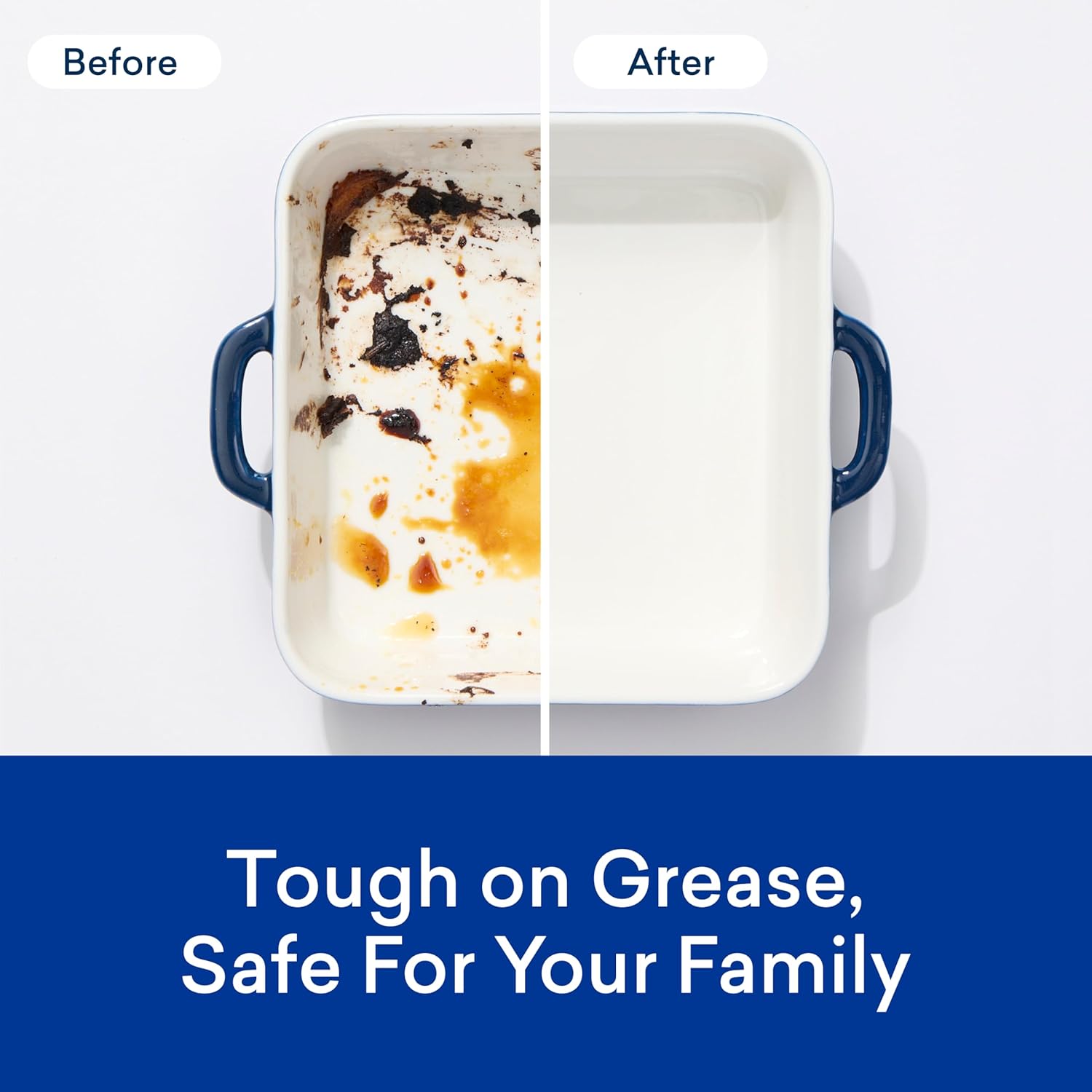
| Performance claims | 2x enzyme power for baked-on soils; oxi action for coffee, tea, and wine stains |
| Certifications & credentials | EPA Safer Choice, USDA BioPreferred, Leaping Bunny Cruelty-Free, Vegan, B Corp Certified, Climate Neutral |
| Septic & microplastic status | Marketed as septic-safe and microplastic-free (no PVA film) |
| Dishwasher compatibility | Intended for built-in, portable, and countertop dishwashers; recommended for use with rinse aid in some water conditions |
| Effect on dishwasher features | No direct effect on machine noise or energy ratings; formulated for compatibility with typical drying systems |
| Warranty / support | Manufacturer customer support available through Blueland customer experience team |
The table condenses product attributes to practical points for household planning: the tablet format and main-dispenser placement suit standard dishwasher designs, the enzyme and oxi combination targets common food and beverage soils, and plastic-free tin packaging addresses sustainability priorities. Compatibility notes emphasize the need to consider water hardness and rinse aid use for optimal residue control in different kitchen environments.

Cleaning performance and wash coverage
Choosing a dishwasher tablet is fundamentally about soil removal and coverage across a load. BLUELAND’s formula combines enzyme boosters and oxidizing stain-fighting agents to address protein- and starch-based soils as well as colored beverage stains; enzymes catalyze the breakdown of organic films while oxi agents provide non-chlorine bleaching to tackle tannin stains. Tablet placement in the main dispenser influences dissolution timing relative to mid-cycle soil release and spray-arm coverage, so compatibility with each dishwasher’s dispensing sequence matters. Cleaning efficacy also depends on wash temperature and cycle duration—the tablet’s concentrated ingredients are designed to work across common cycle settings, but hotter cycles and active soil sensors typically enhance enzyme kinetics. Aggregated customer feedback shows strong results in many machine models, though performance can vary with water chemistry and loading patterns.

Enzyme and oxi chemistry for baked-on soils
Enzymes target specific organic bonds—proteases break down proteins, amylases attack starches, and lipases act on fats—which assists removal of baked-on residues when combined with mechanical action from spray arms. The presence of an oxi agent (percarbonate or similar) provides an oxidative pathway for stain molecules like tannins from coffee and wine, improving whitening without chlorine bleach. Enzyme activity is temperature-sensitive, usually peaking in the 113–140°F (45–60°C) range in typical dishwasher cycles; oxidizers are active across a broader temperature range. Consequentially, cycle selection and water heater set points affect how fully these components contribute to visible soil removal, and concentrated tablets rely on proper exposure to spray and heat for best results.
Spray arm coverage and tablet dissolution timing
A tablet placed in the main dispenser will typically dissolve during the initial or mid wash depending on the dishwasher’s programmed dispense timing. If the dispenser opens while spray arms are blocked by tall items or incorrect loading, wash coverage can suffer and certain load zones may see less detergent contact. Fully dissolved ingredients rely on uniform spray distribution and sufficient water flow to reach upper- and lower-rack items; heavily soiled pots positioned away from primary spray patterns can remain soiled even with a high-performing tablet. Observed customer patterns indicate that correct dispenser placement and mindful loading produce the most consistent outcomes for detergent tablets that dissolve without PVA wrap.
Compatibility with rack design, capacity, and place settings
Detergent choice interacts with how racks are loaded and how many place settings are included in a cycle. For households that maximize capacity—stacking multiple place settings or using cutlery baskets—achieving uniform spray exposure becomes more challenging, which places greater demand on detergent dissolution and distribution. BLUELAND tablets are formulated to be concentrated, so they deliver a fixed dose per cycle and are suited to average-to-full loads rather than intentionally overloaded racks. Rack design features such as adjustable tines, fold-down sections, and dedicated stemware holders help position items within spray paths and mitigate shadowing. Consumer comments indicate satisfactory cleaning in commonly configured racks, particularly when items are spaced to allow spray access and when rinse aid or correct cycle settings are used to manage drying and spotting on glassware.

Tablet dosing relative to load size and soil level
A single tablet delivers a fixed quantity of surfactants, enzymes, and oxidizers; therefore it aligns best with standard household loads rather than very small or extremely large cycles. For light soil or partial loads, some machines and users choose reduced cycles or half-load settings, but a single full-dose tablet still introduces the full cleaning chemistry into the wash. For heavy or baked-on soils, cycle selection that increases temperature and time complements a single concentrated tablet. Since BLUELAND tablets are unwrapped and placed in the main dispenser, users should match tablet dosing to load size and soil level through cycle choice rather than varying tablet count, which could create excess sudsing in some machine designs.
Interaction with rinse aid and hard-water handling
Rinse aid remains relevant to minimize spotting and improve drying, especially in hard-water regions where mineral deposits cause filming. Concentrated enzyme-plus-oxi tablets can reduce some staining, but they do not replace the surface tension-reduction and sheeting effects of a rinse aid during the final rinse and drying phases. When water contains higher total dissolved solids, combine the tablet with rinse aid and consider softening or municipal water treatment adjustments to keep glassware clear and reduce white residues. Reports show users achieving the best visual results when tablets are paired with a consistent rinse aid strategy and correct cycle temperatures.
Residue, hard-water control, and drying interactions
Residue manifests as white film, spotting, or tactile film on glassware and dinnerware. In many cases, mineral scaling from hard water or under-dissolved detergent components cause visible residue. BLUELAND’s microplastic-free, fragrance-free formulation and concentrated enzymes are intended to reduce film and avoid PVA-related wrapping, but dissolution behavior and water chemistry still govern residue outcomes. Drying systems—whether heated elements, condensation drying, or fan-assisted modes—determine final surface wetness and influence how residual minerals crystallize as spots. In kitchens with hard water, residue reports are mixed: some households report sparkling results, while others note white film requiring corrective measures like increased temperature, a robust rinse aid, or water softening. Manufacturer disclosures and customer feedback both indicate that managing water hardness and cycle/drying selection is central to residue control.

Causes of white film and filming on glassware
White film typically originates from dissolved mineral salts (calcium, magnesium) precipitating during drying or from insufficiently dissolved detergent residues redepositing on surfaces. Low wash temperatures, blocked spray patterns, or overloaded racks reduce detergent solubility and mechanical removal, increasing the chance of filming. Enzyme and oxi components help address organic soils and stains but do not chemically soften water; therefore, mineral load remains a separate variable. Where evidence of filming appears, recommended mitigations include increasing wash temperature, ensuring free spray action across racks, using a rinse aid, and testing water hardness to determine whether a salt-based softening system or temporary water treatment is necessary.
Drying system compatibility and moisture control
Different drying methods alter residue appearance: heated dry can raise the rate of mineral crystallization on surfaces, while condensation drying tends to promote more gradual sheeting and may rely more heavily on rinse aid. For condensation or eco-dry modes, the detergent’s surfactant profile and rinse aid become crucial for sheeting water from glassware. BLUELAND’s fragrance-free, concentrated formula is compatible with common drying systems, but users should pair detergent choice with the dishwasher’s recommended drying mode for the best balance of spot-free results and energy use. Where spotting recurs, adjusting the rinse aid dose or using a higher temperature final rinse will often mitigate visible minerals.
Environmental profile, ingredients, and certification implications
Sustainability and ingredient transparency are core selling points for many buyers, and BLUELAND highlights plastic-free tablets, microplastic-free claims, and several third-party certifications. USDA BioPreferred designation signals a percentage of biobased content, while EPA Safer Choice indicates ingredient screening for lower hazard potential. Leaping Bunny and Vegan labels address animal testing and animal-derived ingredients, and B Corp and Climate Neutral statements reflect corporate-level commitments to social and environmental metrics. Plastic-free tablet packaging—using a reusable tin instead of PVA film or single-use plastic—reduces certain litter and microplastic pathways. However, environmental performance in practice also depends on proper dosing, complete dissolution, and the broader lifecycle of energy and water used during dishwasher operation.
What certifications mean for household decision-making
Certifications provide a shorthand for ingredient safety and corporate practices, but they do not change mechanical wash variables such as spray coverage or water hardness effects. EPA Safer Choice suggests the formulation avoids certain higher-concern chemistries; USDA BioPreferred confirms a level of biobased raw material. B Corp and Climate Neutral indicate broader organizational goals rather than direct cleaning performance. For consumers focused on exposure or environmental footprint, these labels support a lower-impact procurement choice, provided the cleaning outcomes meet household standards and the tablets dissolve fully in the local dishwasher and water conditions.
Plastic-free packaging and microplastic considerations
Replacing PVA-wrapped pods with solid tablets contained in a reusable tin reduces reliance on single-use plastic and dispersible polymer films. PVA can raise microplastic-related concerns in some regions, so a plastic-free tablet appeals to households prioritizing reduced polymer discharge. Proper storage to avoid humidity-driven clumping and attention to dispenser compatibility are practical considerations when switching to unwrapped tablets. The tin packaging also supports reuse and reduced waste streams compared with disposable plastic containers, aligning with households that emphasize reusable storage and reduced single-use packaging.
Practical use, maintenance, noise expectations, and efficiency impacts
A detergent tablet is only one part of overall dishwasher performance; maintenance, filter care, and cycle selection interact with detergent effectiveness. Tablets that leave residue can accelerate filter maintenance if particles accumulate or require additional cleaning cycles. Conversely, well-dissolved tablets reduce redeposition and limit the need for extra intervention. Noise levels are a function of dishwasher mechanics and insulation rather than detergent; however, needing to run extra cycles for poor cleaning can increase exposure to operating noise, which matters in open-plan kitchens. Energy and water efficiency expectations remain rooted in the machine’s design and chosen cycles, but detergent efficacy affects whether additional cycles or rinse-only runs are needed, indirectly influencing household resource use over time.

Storage, dosing, and tablet stability considerations
Solid tablets require dry storage to maintain dissolution characteristics; prolonged exposure to humidity can cause partial clumping or slowed dissolution. The included tin provides a reusable, moisture-resistant container if sealed properly. Because each tablet contains a fixed dose, households should align cycle choice with soil load rather than altering tablet counts unpredictably. Stability of enzyme activity over time can be affected by storage conditions, so following manufacturer storage guidance preserves performance. Labels and customer support channels are the primary sources for specific shelf-life or storage guidance.
Maintenance and filter implications
Truly dissolved detergents minimize the amount of undissolved solids that could accumulate in filters or be redeposited onto dishes. If partial dissolution or filming occurs regularly, inspecting and cleaning the dishwasher’s filter and spray arms can restore proper hydraulic flow and spray coverage. Regular maintenance—clearing debris from the bottom of the tub, descaling when indicated by water chemistry, and keeping the dispenser hinge clear—supports reliable detergent performance and reduces the need for corrective cycles that would raise energy and noise exposure.

Pros & Cons
Pros
- Plastic-free packaging and microplastic-free tablets support reduced single-use plastic and avoid PVA film discharge. The reusable tin lowers persistent packaging waste and aligns with sustainability-focused households.
- Concentrated enzyme and oxi combination targets protein- and starch-based soils and tannin stains from beverages. This dual-action approach increases the chemical toolkit available for common kitchen soils.
- Fragrance-free and a suite of third-party credentials (EPA Safer Choice, USDA BioPreferred, Leaping Bunny, Vegan, B Corp, Climate Neutral) provide transparent signals about ingredient selection and corporate practices, useful for health- and ethics-minded buyers.
- Septic-safe formulation broadens compatibility for homes relying on septic systems, reducing concerns about sewer-system impacts compared with some conventional detergents.
- Simple dosing via the main dispenser matches typical dishwasher workflows and reduces user handling complexity compared with measured liquids or powders.
- Positive aggregated customer feedback for many dishwasher models indicates favorable cleaning outcomes when paired with appropriate loading, rinse aid, and cycle selection.
Cons
- Mixed reports of white film and residue in some households indicate variable performance in hard-water conditions; mineral content and dissolution timing remain key limiting factors.
- Single fixed-dose tablets limit flexibility for unusually small or very large loads, meaning cycle selection must compensate for load size rather than adjusting detergent quantity.
- Tablets rely on correct dispenser timing and spray coverage; incorrect loading or blocked spray arms can undermine cleaning performance, requiring attention to rack arrangement.
- Storage sensitivity to humidity means tablets must be kept dry to avoid clumping or slower dissolution; inadequate storage can affect enzyme activity and outcomes.
Final Verdict: Who these detergent tablets are best for (and who should skip them)
BLUELAND’s 100% plastic-free dishwasher detergent tablets are best for households that prioritize sustainability credentials, simplified dosing, and a fragrance-free, plant- and mineral-based formulation. They suit families and individuals who operate standard-to-full loads in built-in, portable, or countertop dishwashers and who are willing to pair the tablets with routine dishwasher practices such as correct loading, periodic filter maintenance, and the use of rinse aid in hard-water regions. For households that primarily run high-temperature cycles and maintain proper spray arm clearance, the enzyme and oxi chemistry provides a strong cleaning toolkit for baked-on foods and beverage stains.
Households that should consider alternatives include those with very hard water that lack water-softening measures and consistently experience mineral filming, users who require flexible dosing for many partial loads, and those with dishwasher models that frequently exhibit dispenser or spray-arm obstructions. For open kitchens where minimizing repeat cycles is critical to reduce noise exposure, pairing the tablets with targeted machine settings and maintenance will be necessary to avoid additional runs. Overall, the product represents a lower-impact, transparent-detergent choice that performs well under appropriate machine and water conditions in 2026.
Frequently Asked Questions (FAQs)
Are plastic-free dishwasher tablets compatible with all standard dishwashers?
Plastic-free dishwasher tablets are compatible with most standard built-in, portable, and countertop dishwashers because they dissolve in the main dispenser or wash chamber like other tablets. Compatibility hinges on proper dispenser timing and adequate spray-arm coverage; if a machine opens the dispenser when spray arms are obstructed or water flow is limited, dissolution and distribution can be compromised. Always follow the dishwasher manufacturer’s guidance for using solid tablets and ensure proper loading to avoid blocked spray paths.
How do enzyme and oxi components in a tablet work together to remove stains?
Enzymes target specific organic molecules—proteases for proteins, amylases for starches, and lipases for fats—breaking them into smaller, more soluble fragments. Oxi components (non-chlorine oxidizers) attack chromophore groups in stains such as tannins from coffee or wine, helping to restore brightness. Combined, enzymes address organic soils while oxi agents reduce colored stains; effectiveness depends on appropriate wash temperature and mechanical spray action to expose soils to these chemistries.
Why do some households still see white film after using these tablets?
White film commonly results from mineral deposits (calcium and magnesium) precipitating during drying or from partially dissolved detergent residue redepositing on surfaces. Water hardness, low wash temperature, blocked spray action, and inadequate rinse aid dosing all contribute to filming. Mitigation strategies include using recommended rinse aid, increasing final rinse temperature or cycle duration, improving loading to allow spray coverage, and considering water softening where mineral levels are high.
Do these tablets affect dishwasher noise or energy efficiency?
Detergent tablets themselves do not change a dishwasher’s intrinsic noise rating or energy efficiency; those characteristics are determined by the appliance’s design and insulation. However, if a detergent produces inconsistent cleaning that requires repeat cycles, the household’s practical energy use and exposure to operating noise will increase. Effective use—correct loading, appropriate cycle selection, and maintenance—helps avoid additional runs and maintains the dishwasher’s designed efficiency and noise profile.
Is a rinse aid still necessary when using concentrated, plastic-free tablets?
Yes, rinse aid remains useful for improving sheeting and drying performance, particularly on glassware and in hard-water areas. While concentrated tablets with enzymes and oxi agents address soils and stains, rinse aid reduces surface tension during the final rinse to promote faster water runoff and reduce spotting. Combining tablets with the appropriate rinse aid dosing often yields clearer glassware and better drying results across drying system types.
How should these tablets be stored to preserve performance?
Tablets should be stored in a dry, cool location sealed against humidity to preserve dissolution and enzyme stability. The included reusable tin offers a moisture-resistant container if kept closed when not in use. Exposure to damp conditions can cause clumping or slower dissolution and may reduce enzyme activity over time; following manufacturer storage instructions helps maintain optimal performance throughout the product’s usable life.
Are these detergent tablets safe for homes with septic systems?
The product is marketed as septic-safe based on formulation choices that avoid certain ingredients that can harm septic system microbial balance. Septic-safe detergents typically avoid harsh antimicrobial agents and favor biodegradable surfactants and enzymes. For households on septic systems, following recommended dosing and avoiding excessive use maintains septic health, and verifying the product’s septic-safe claim against local septic management guidance is advisable.